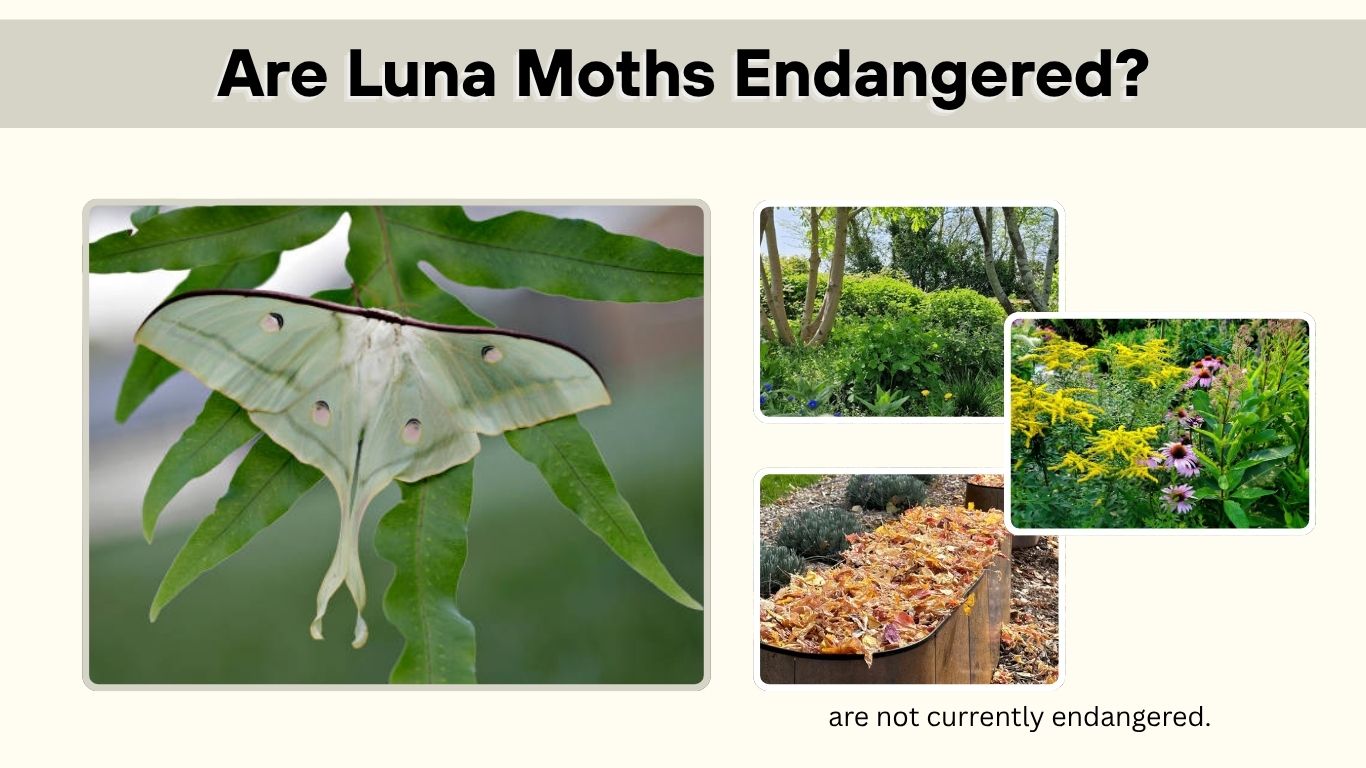
Luna moths (Actias luna) are not currently endangered. As of 2026, the species is not listed as threatened or endangered under the U.S. Endangered Species Act, and NatureServe ranks the Luna moth G5 — Secure globally and N5 — Secure in the United States. Although Luna moths have declined in some parts of New England and face threats such as habitat loss, artificial lighting, pesticides, and introduced parasitoids, they remain widespread across much of eastern North America. Their short adult lifespan and nocturnal habits can make them seem much rarer than they actually are.
Are Luna Moths Endangered?
No. The Luna moth is not considered an endangered species across its overall North American range.
NatureServe currently gives Actias luna a global conservation rank of G5, meaning the species is considered secure. It also has a national rank of N5 in the United States. NatureServe specifically lists its status under the U.S. Endangered Species Act as “None.”
| Conservation Category | Luna Moth Status |
| Scientific name | Actias luna |
| NatureServe global rank | G5 – Secure |
| United States rank | N5 – Secure |
| U.S. Endangered Species Act | Not listed |
| COSEWIC Canada | No status |
| Overall range | Eastern North America |
| Major concern | Regional declines in some areas |
The U.S. Fish and Wildlife Service also maintains a species profile for Actias luna, but it is not included among federally threatened or endangered wildlife.
Why Do People Think Luna Moths Are Endangered?
Seeing a Luna moth can feel like a once-in-a-lifetime experience.
Several factors make them appear rare even where healthy populations exist.
Adults Live for Only a Short Time
Adult Luna moths survive only long enough to reproduce. They emerge from their cocoons, mate, and females lay eggs.
Adults have reduced mouthparts and do not eat, so they rely entirely on energy accumulated during the caterpillar stage.
Their short adult period dramatically reduces the chance that a person will encounter one.
They Are Mostly Nocturnal
Luna moths are active primarily at night.
During daylight hours, they usually remain motionless against:
- Tree trunks
- Leaves
- Shrubs
- Buildings
- Other sheltered surfaces
Their pale green coloration provides excellent camouflage among vegetation.
They Spend Much of Their Life in Other Forms
What people recognize as a Luna moth is only the adult stage.
Much of its life is spent as:
Egg → Caterpillar → Cocoon → Adult
Therefore, many Luna moths may be present in an area without adults being visible at any particular moment.
Where Are Luna Moths Found?
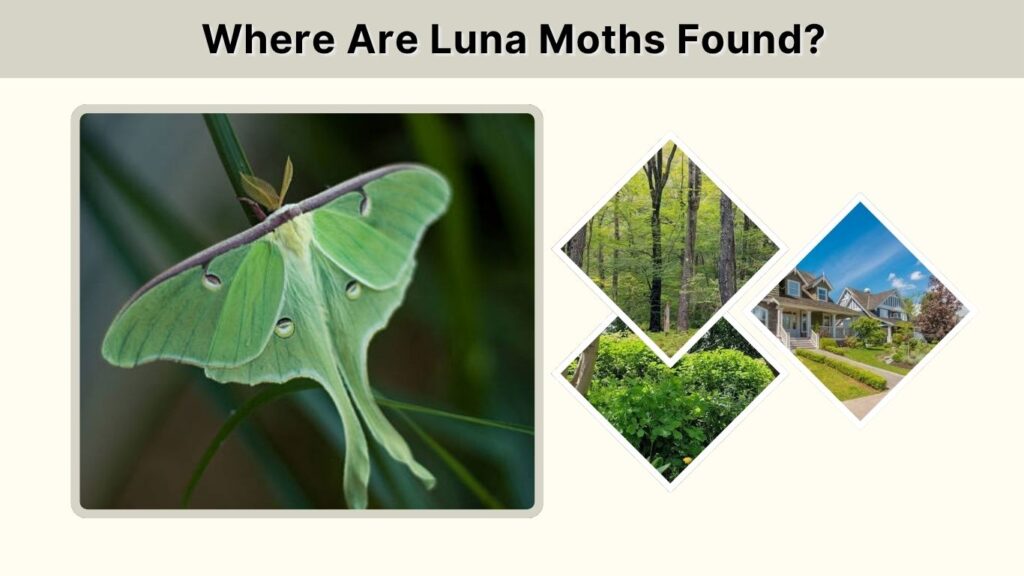
Luna moths are native to eastern North America.
NatureServe describes their range as covering U.S. states east of the Great Plains and adjacent Canadian provinces. They occur across an extremely large geographic area and are associated mainly with deciduous forests.
They can occur in:
- Hardwood forests
- Woodland edges
- Suburban neighborhoods
- Forested parks
- Rural landscapes
- Gardens containing suitable host trees
Their distribution covers well over one million square miles.
Are Luna Moths Endangered in Michigan?
Luna moths are not listed as endangered in Michigan.
Animal Diversity Web specifically notes that Actias luna has no special conservation status under the U.S. federal list or Michigan’s state list. Luna moth sightings continue to be documented in Michigan, including contemporary records from the state.
Suitable Michigan forests provide caterpillars with many of the hardwood trees they require.
Are Luna Moths Endangered in North Carolina?
Luna moths are also not generally considered endangered in North Carolina.
North Carolina’s official moth database describes Actias luna as occurring statewide, from barrier islands and the Coastal Plain through the Piedmont to high mountain forests. It occurs in many hardwood forest types and wooded residential environments.
In much of North Carolina, there can be two generations during a year, although timing varies with elevation and climate.
Are Luna Moths Declining?
Although the species remains secure overall, this does not mean every local population is thriving.
NatureServe reports substantial reductions in portions of southern New England, while noting that Luna moths remain common through most of temperate eastern North America and that there is no evidence the decline has spread throughout the species’ entire range.
This distinction is important:
A species can decline locally without being endangered globally.
Some populations deserve monitoring even when the overall species remains secure.
What Threatens Luna Moths?
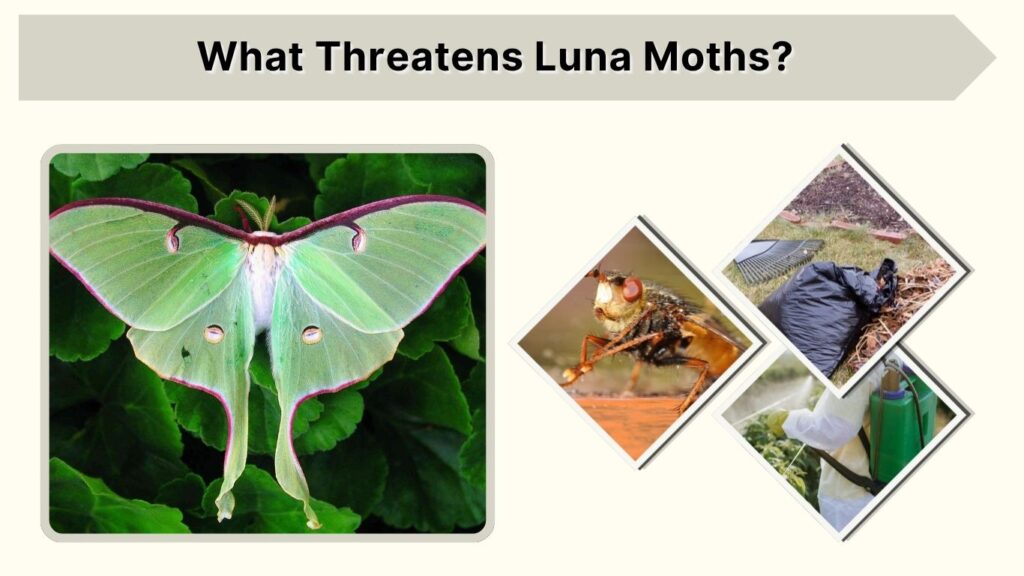
Several environmental pressures may reduce local Luna moth populations.
1. Habitat Loss
Luna moth caterpillars depend on hardwood trees for food.
Removing forests and mature host trees can eliminate both feeding and breeding habitat.
Common host plants include species of:
- Hickory
- Walnut
- Sweetgum
- Persimmon
- Birch
- Other hardwood trees
North Carolina records, for example, confirm sweetgum, persimmon, hickory, walnut, and pecan among host plants.
2. Introduced Parasitoid Flies
One particularly important threat in parts of the northeastern United States is Compsilura concinnata.
This parasitoid fly was introduced to North America as a biological-control agent against other insects. Unfortunately, it can also attack native moth caterpillars.
NatureServe identifies this introduced parasitoid as an important concern for Luna moths and other large native moths in New England.
3. Artificial Light at Night
Luna moths are strongly attracted to lights.
Bright outdoor lighting may interfere with normal nighttime behavior, potentially affecting mating, movement, and reproduction.
Turning unnecessary exterior lights off during moth season can make nighttime habitat more favorable.
4. Pesticides
Broad-spectrum insecticides do not distinguish between pest caterpillars and native moth caterpillars.
Applications to host trees or surrounding vegetation can therefore unintentionally kill Luna moth larvae.
5. Loss of Leaf Litter
Mature Luna moth caterpillars typically spin cocoons involving leaves, and fallen leaves provide important shelter.
Removing every fallen leaf from wooded gardens can reduce available habitat for moths and other overwintering insects.
Are Luna Moth Caterpillars Endangered?
No. A Luna moth caterpillar is simply the immature stage of Actias luna, so it has the same species-level conservation status.
Luna moth caterpillars are large and bright green.
They feed on hardwood leaves and pass through several growth stages before producing a silk cocoon.
Finding one does not mean you have discovered an endangered animal, but avoiding unnecessary handling or pesticide exposure helps it complete its life cycle.
Are Luna Moths Rare?
Luna moths can be locally uncommon or difficult to see, but they are not globally rare.
NatureServe estimates that the species occupies an enormous range and remains secure throughout most of it.
They appear rare to people mainly because:
- Adults are nocturnal.
- Adults live briefly.
- They camouflage well.
- Their seasonal appearance is limited.
- Population density varies by location.
- Adults may remain high in trees.
A person can live within Luna moth habitat for years without noticing one.
How Can You Help Luna Moths?
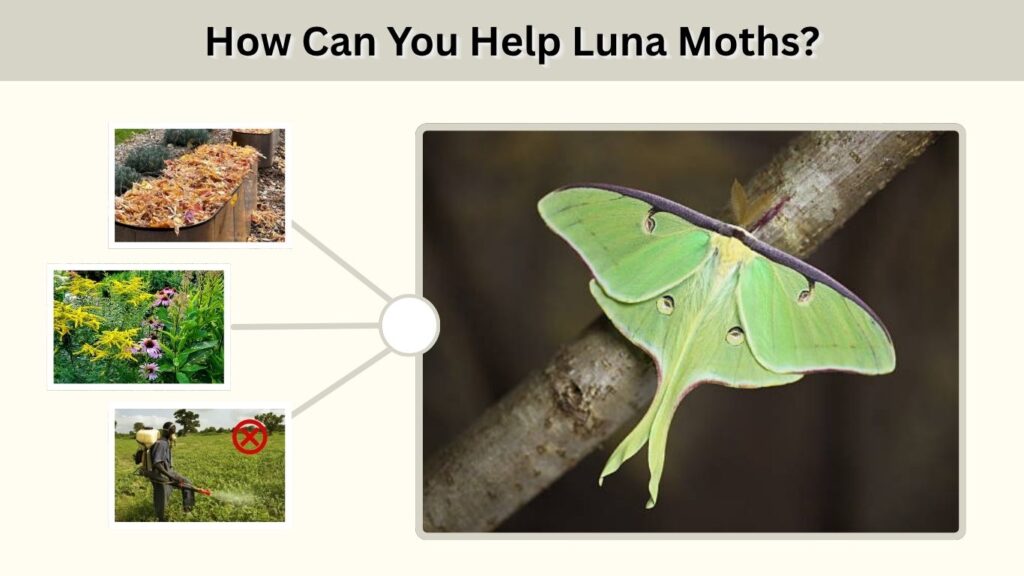
Creating suitable habitat is usually more helpful than attempting to raise or relocate wild moths.
You can:
- Preserve native hardwood trees.
- Plant suitable native host species.
- Reduce unnecessary pesticide use.
- Turn off outdoor lights when they are not needed.
- Leave some fallen leaves in garden beds.
- Maintain native vegetation.
- Avoid disturbing cocoons.
- Allow caterpillars to remain on host plants.
A slightly less manicured landscape can provide substantially more habitat for moths and other native insects.
What Should You Do If You Find a Luna Moth?
Usually, the best option is simply to leave it where it is.
A Luna moth resting during the day is not necessarily injured or dying. Adults typically remain quiet during daylight and become active after dark.
Avoid:
- Pulling on its wings
- Keeping it as a pet
- Spraying pesticides nearby
- Moving it unnecessarily
If it is sitting somewhere immediately dangerous, such as a busy walkway, gently moving it a short distance onto nearby vegetation may be appropriate.
FAQs
1. Is the Luna moth an endangered species?
No. The Luna moth is not federally listed as threatened or endangered in the United States. NatureServe currently ranks Actias luna as G5, or Secure, although some regional populations have experienced declines.
2. Why are Luna moths so rare to see?
Luna moths appear rare because adults are nocturnal, well camouflaged, seasonal, and short-lived. Much of the species’ life is spent as a caterpillar or pupa, so adults are visible for only a relatively brief period.
3. Are Luna moths endangered in Michigan?
No. Luna moths do not currently have special endangered or threatened status in Michigan. The species occurs naturally in the state wherever suitable hardwood habitat and host plants are available.
4. Why are Luna moth populations declining in some places?
Regional declines may result from habitat loss, pesticide exposure, artificial nighttime lighting, and introduced parasitoids. NatureServe identifies the introduced parasitoid fly Compsilura concinnata as an important concern in parts of New England.
5. Should you protect a Luna moth if you find one?
You generally do not need to intervene. Leave healthy Luna moths undisturbed whenever possible, preserve native host trees, minimize pesticide use, and reduce unnecessary nighttime lighting to create better long-term habitat.