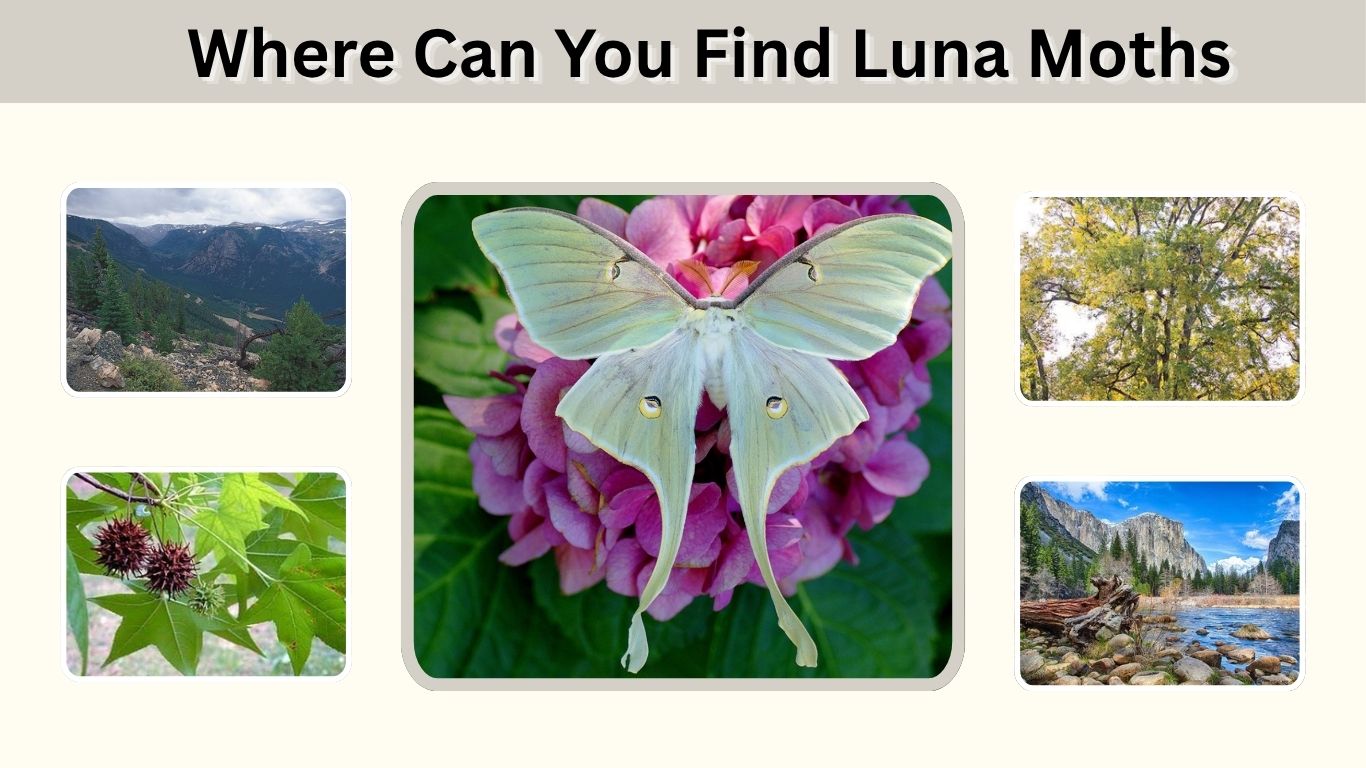
Luna moths, Actias luna, live in forested parts of eastern North America. In the United States, they occur from Maine south to Florida and west to eastern Texas and eastern North Dakota. In Canada, their range extends from Nova Scotia west to Saskatchewan. These large green moths are most often found near deciduous forests containing the trees their caterpillars need for food.
Luna Moth Range at a Glance
| Region | Where luna moths occur |
| United States | Eastern states from Maine to Florida |
| Southern United States | Gulf Coast, Florida, Louisiana, and eastern Texas |
| Midwest | Ohio Valley, Michigan, Missouri, and nearby states |
| Great Plains | East to eastern North Dakota and eastern Texas |
| Canada | Southern areas from Nova Scotia to Saskatchewan |
| Typical habitat | Deciduous forests, woodland edges, and wooded yards |
Luna moths are native to North America. They are not naturally distributed throughout Europe, Africa, Australia, or Asia, although related moon moth species occur in parts of Asia.
Where Can You Find Luna Moths in the United States?
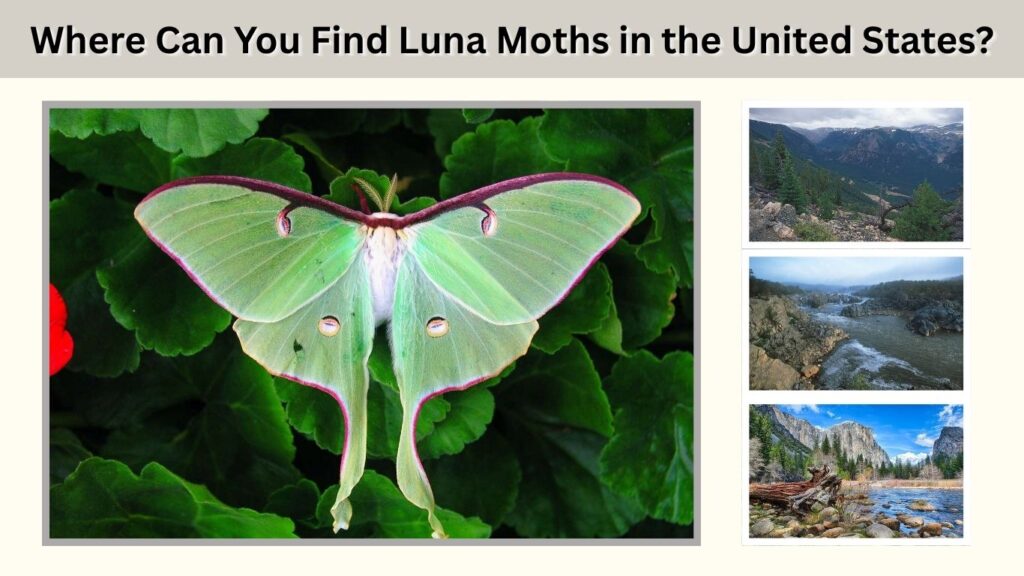
Luna moths can be found in every eastern U.S. state. Their distribution stretches along the Atlantic Coast, throughout the Southeast and Ohio Valley, and westward into parts of the Great Plains.
Northern United States
In northern states, luna moths usually produce one generation annually. Adults are most likely to appear between late spring and midsummer, commonly from May through July. Suitable areas include forests containing white birch, walnut, and other broadleaf trees.
Northeastern and Midwestern States
Parts of the Northeast and Ohio Valley may support two generations each year. Adults can therefore appear during spring and again later in summer. Missouri records adults from early April through August, although local timing depends on weather and latitude.
Southern United States
Luna moths have a longer season in warm southern states. Southern populations may produce two or three generations annually, with adults potentially appearing from March through September. In Louisiana and Florida, adults have been recorded during every month, although sightings are still seasonal and unpredictable.
Where Can You Find Luna Moths in Canada?
In Canada, luna moths inhabit southern forested regions from Nova Scotia west to Saskatchewan. They generally produce only one generation per year because the warm season is shorter than it is farther south.
Possible locations include wooded areas in:
- Nova Scotia
- New Brunswick
- Quebec
- Ontario
- Manitoba
- Saskatchewan
The moths are most likely to be encountered during late spring or summer, particularly around deciduous woodlands and host trees.
What Habitat Do Luna Moths Prefer?
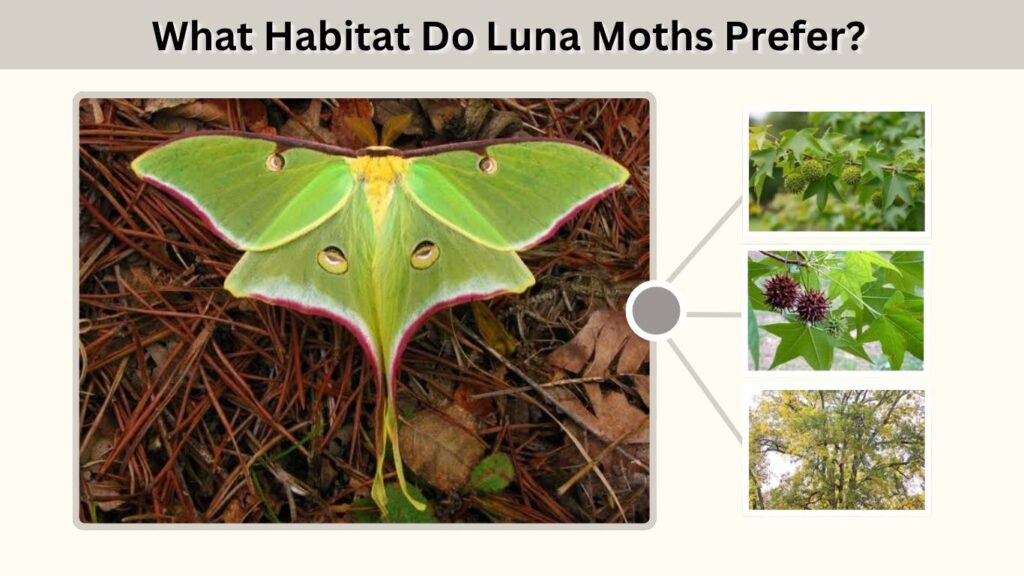
Luna moths are primarily associated with deciduous forests. They can also appear around woodland edges, parks, rural properties, campgrounds, and wooded suburban yards. Their presence depends largely on whether appropriate caterpillar host plants grow nearby.
Trees That Support Luna Moths
Luna moth caterpillars feed on the leaves of several trees and shrubs, including:
- Hickory
- Walnut
- Pecan
- White birch
- Sweetgum
- Persimmon
- Sumac
- Black gum
Host preferences differ geographically. White birch is frequently used in northern areas, while southern populations commonly use hickory, walnut, sweetgum, sumac, and persimmon.
Adult moths do not need nectar-producing flowers because they cannot eat. However, wooded properties containing suitable host trees can support their eggs, caterpillars, cocoons, and future adults.
How to Find a Luna Moth
Luna moths are nocturnal, short-lived, and naturally uncommon to see. Adults remain active for only several days to approximately one week, giving observers a limited opportunity to find them.
Look Near Outdoor Lights
Adults are strongly attracted to artificial light, especially ultraviolet wavelengths. Check walls, window screens, tree trunks, fences, and vegetation around outdoor lights early in the morning. A moth attracted during the night may remain resting nearby after sunrise.
Bright nighttime lighting may interfere with mating behavior, so unnecessary exterior lights should not be left running solely to attract moths. A dedicated moth-observation light should be used briefly and responsibly.
Search Around Host Trees
Look around walnut, hickory, birch, sweetgum, persimmon, and sumac trees. Caterpillars remain among the leaves, while the brown leaf-wrapped cocoons often fall into leaf litter beneath the host tree.
Search During the Right Season
The best month depends on location:
| Area | Typical adult season |
| Southern Canada | Late spring to midsummer |
| Northern United States | May to July |
| Northeast and Midwest | Spring through summer |
| Southern United States | March to September |
| Florida and Louisiana | Possible during much of the year |
Warm, humid nights during the local flight season generally offer the best opportunity for observing adult moths.
How Big Can a Luna Moth Get?
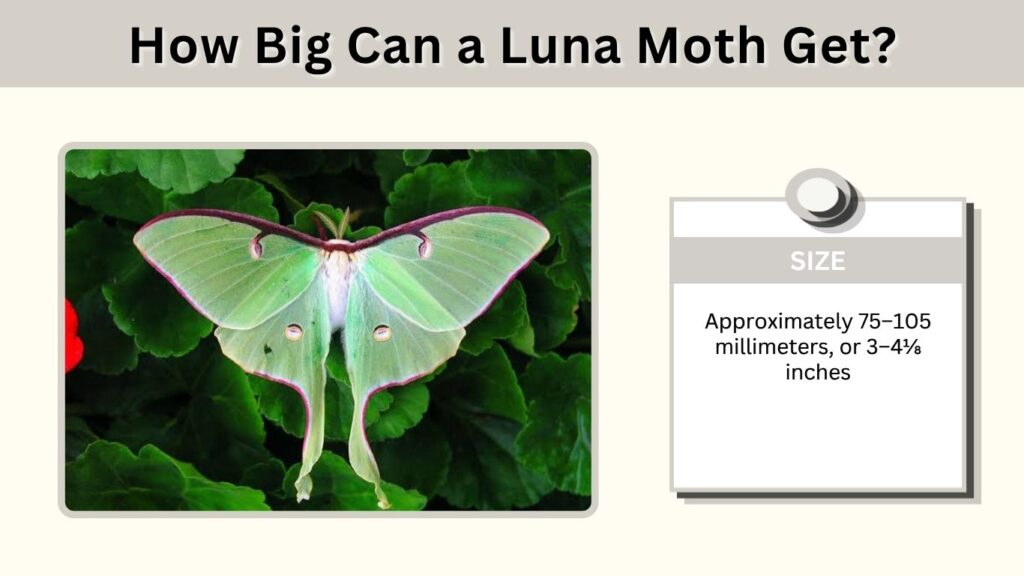
An adult luna moth typically has a wingspan of approximately 75–105 millimeters, or 3–4⅛ inches. Some individuals may approach 4½ inches across, making the luna one of North America’s largest and most recognizable moths.
The adult has:
- Broad green wings
- Long tails extending from the hindwings
- Transparent eyespots on all four wings
- Purple, pink, reddish, or yellow wing margins
- A fuzzy white body
- Feathery antennae
Male antennae are broader and more heavily feathered than female antennae.
Can Luna Moths Be Brown or Yellow?
Healthy adult luna moths are normally pale green, blue-green, or yellow-green. Spring adults may have deeper green wings and reddish-purple margins, while later generations can appear more yellowish with yellow wing borders.
A brown object identified as a luna moth may instead be its cocoon, which is normally brown and wrapped in dry leaves. A completely brown adult is more likely to be another moth species, although lighting, age, and wing damage can affect appearance.
Can Luna Moths Eat?
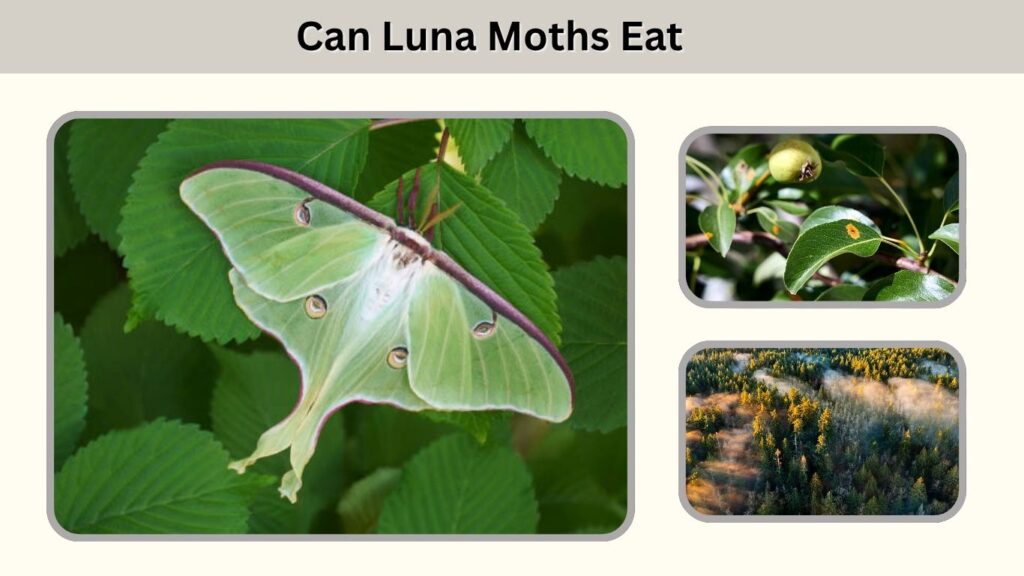
Adult luna moths cannot eat. They have vestigial, nonfunctional mouthparts and survive entirely on energy stored during their caterpillar stage. Their short adult lives are devoted to finding mates and producing eggs.
Luna moth caterpillars do eat. They consume fresh leaves from suitable host trees for approximately a month or longer before spinning cocoons.
Can Luna Moths Bite or Hurt You?
Luna moth adults cannot bite because their mouthparts do not function for feeding. They have no stinger, are not venomous, and do not attack people.
The caterpillar is also not considered a stinging caterpillar. However, a threatened caterpillar may click its mandibles and regurgitate a defensive fluid. It is best observed without unnecessary handling.
Can You Touch or Hold a Luna Moth?
Brief contact is unlikely to harm a person, but handling can harm the moth. Its wings are delicate, and a newly emerged adult requires space to hang while its wings expand and harden. Never hold it by the wings or tails.
When a moth is in danger, allow it to climb onto a hand, leaf, or piece of bark rather than gripping its body. Move it only a short distance to a sheltered surface and let it leave naturally.
A luna moth with a torn wing cannot grow a new one. Minor damage may still allow flight, but a severely damaged wing cannot be repaired by gluing or trimming it.
Can You Raise Luna Moths?
Luna moths can be raised from locally collected eggs or caterpillars when local regulations permit it. They require fresh, pesticide-free leaves from a host plant accepted by their regional population. The enclosure must remain ventilated, clean, and large enough for the adult to expand its wings after emerging.
Purchasing or shipping live eggs, caterpillars, cocoons, or adults may be regulated. In the United States, USDA APHIS requires permits for many imports and interstate movements of live moths and butterflies. Buyers should verify federal and state rules before ordering or releasing them.
Locally raised luna moths should be released only within their native area and during suitable weather. Nonlocal stock should not be released because it may be poorly adapted to the area or create ecological and regulatory concerns.
FAQs
Where is the best place to find a luna moth?
The best place is near a deciduous forest containing walnut, hickory, birch, sweetgum, persimmon, or sumac. Check tree trunks, walls, and screens near outdoor lights early in the morning.
Are luna moths found in Canada?
Yes. Their Canadian range extends through southern areas from Nova Scotia west to Saskatchewan. Canadian populations generally produce one generation annually.
Can you find luna moths during the day?
Yes. Although adults fly at night, they rest during daylight on trees, walls, screens, fences, and vegetation. Their green wings provide camouflage among leaves.
Can luna moths live as pets?
Adults live only about one week and cannot eat, making them unsuitable as conventional pets. Caterpillars can be raised for educational observation when correct food, space, care, and legal permission are available.
What should you do after finding a luna moth?
Leave it undisturbed whenever possible. Keep pets away, avoid touching its wings, and turn off nearby unnecessary lights at night so it can continue its natural mating behavior.