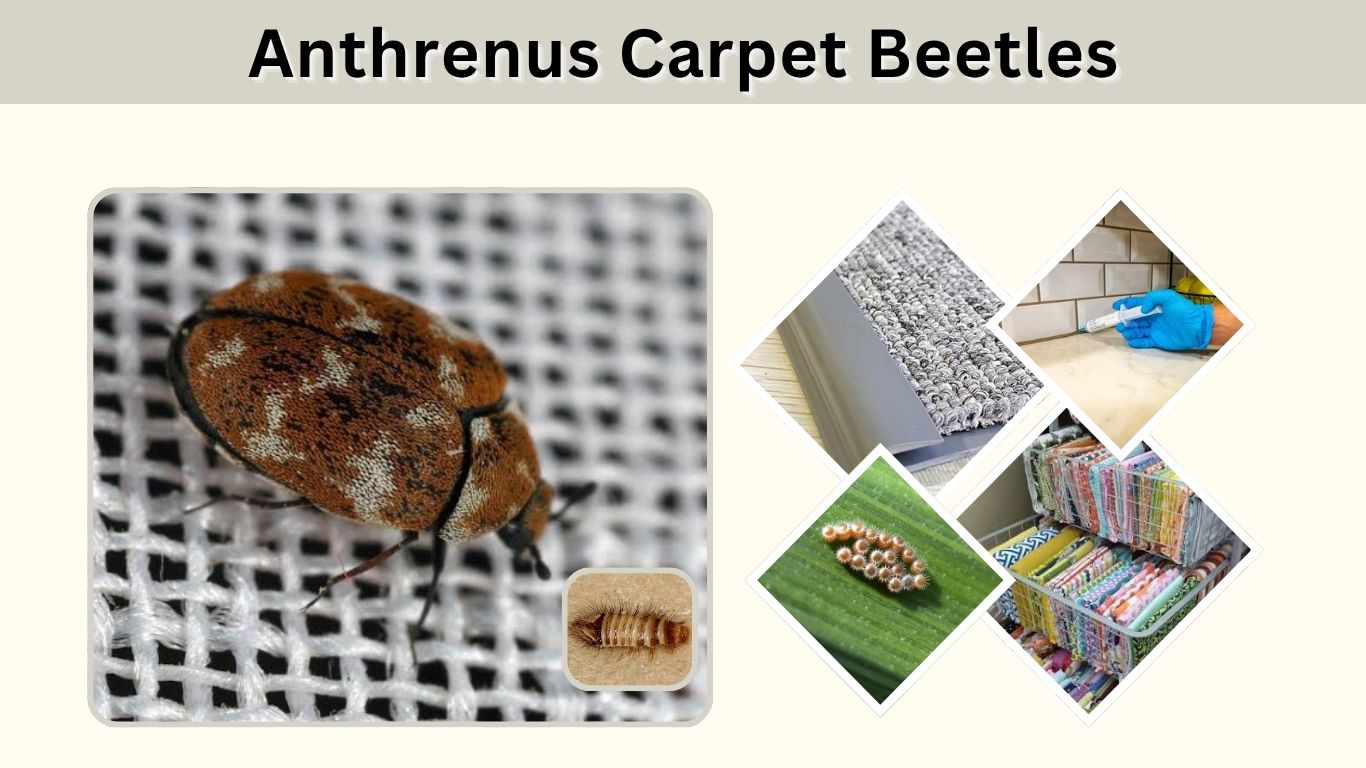
Anthrenus carpet beetles are tiny, rounded beetles whose larvae feed on wool, fur, feathers, hair, dead insects, and other dried organic materials. The group includes the varied carpet beetle, furniture carpet beetle, and common carpet beetle. Adults are often noticed near windows or flowers, but the hairy larvae cause household damage. Although these beetles do not bite, contact with larval hairs can cause an itchy skin reaction in sensitive people.
What Are Anthrenus Carpet Beetles?
Anthrenus is a genus within the carpet beetle family Dermestidae. It includes numerous small, scale-covered species found in homes, museums, warehouses, bird nests, and natural habitats.
The most familiar household species include:
| Common name | Scientific name | Adult appearance |
| Varied carpet beetle | Anthrenus verbasci | Mottled white, brown, yellow, and black |
| Furniture carpet beetle | Anthrenus flavipes | Rounded with white, yellow, and dark scales |
| Common carpet beetle | Anthrenus scrophulariae | Black with white and orange-red markings |
| Brown carpet beetle | Anthrenus fuscus | Small, brown, and less distinctly patterned |
Species can look very similar, especially after their colored scales wear away. Microscopic examination may be necessary for an exact identification.
Anthrenus Carpet Beetle Identification
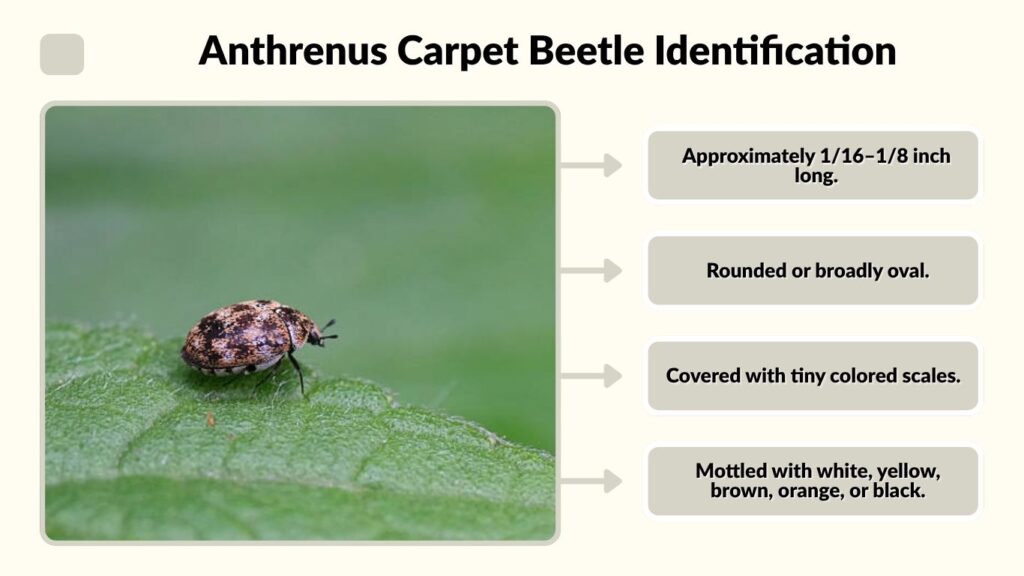
Adult beetles and larvae differ greatly in appearance. Identifying both stages helps confirm whether the insects are merely entering from outdoors or reproducing inside the building.
Adult Appearance
Adult Anthrenus carpet beetles are generally:
- Approximately 1/16–1/8 inch long
- Rounded or broadly oval
- Covered with tiny colored scales
- Mottled with white, yellow, brown, orange, or black
- Equipped with short, clubbed antennae
- Capable of flight
Adults are frequently found on windowsills because they are attracted to light and attempt to move outdoors. Outside, they visit flowers and feed on pollen. Their presence indoors may indicate that larvae are developing somewhere nearby, although an occasional adult may simply have flown through an open window.
Anthrenus Carpet Beetle Larvae
The larvae are brown, tan, or banded and covered with stiff hairs. They may resemble tiny fuzzy caterpillars, but they have only six true legs near the front of the body.
Common features include:
- A segmented, oval or teardrop-shaped body
- Dense brown or golden hairs
- Longer tufts near the rear
- A length of several millimeters
- Brown, hollow skins left after molting
Furniture carpet beetle larvae have a noticeable pencil-like tuft of hairs at the rear. Varied carpet beetle larvae are broader toward the back and covered with bands of light and dark hairs.
Varied Carpet Beetle: Anthrenus Verbasci
The varied carpet beetle, Anthrenus verbasci, is one of the most widespread and frequently encountered members of the genus.
Adult Identification
Adults are approximately 2–3 millimeters long. Their wing covers display an irregular mixture of white, brown, yellow, and black scales, creating a calico or speckled appearance.
Older beetles may look almost solid brown or black because their decorative scales gradually rub away. This can make them difficult to distinguish from other small household beetles.
Larval Identification
The larva is hairy, banded, and shaped somewhat like a small teardrop. It has several distinctive tufts of defensive hairs near the rear.
Larvae commonly hide behind baseboards, beneath furniture, in closets, and along carpet edges. They feed on lint, pet hair, dead insects, food crumbs, feathers, wool, and similar organic debris.
Furniture Carpet Beetle: Anthrenus Flavipes
The furniture carpet beetle, Anthrenus flavipes, is a serious pest of upholstered furniture, particularly in warm regions. It can damage both the outer fabric and animal-based stuffing inside furniture.
Adults are round and patterned with yellow, white, and dark scales. Their coloration resembles that of varied carpet beetles, so close examination may be required.
Furniture carpet beetle larvae can digest keratin, the principal protein in feathers and animal hair. The larval stage may last several months, while the pupa forms inside the final shed larval skin near the food source.
What Do Anthrenus Carpet Beetle Larvae Eat?
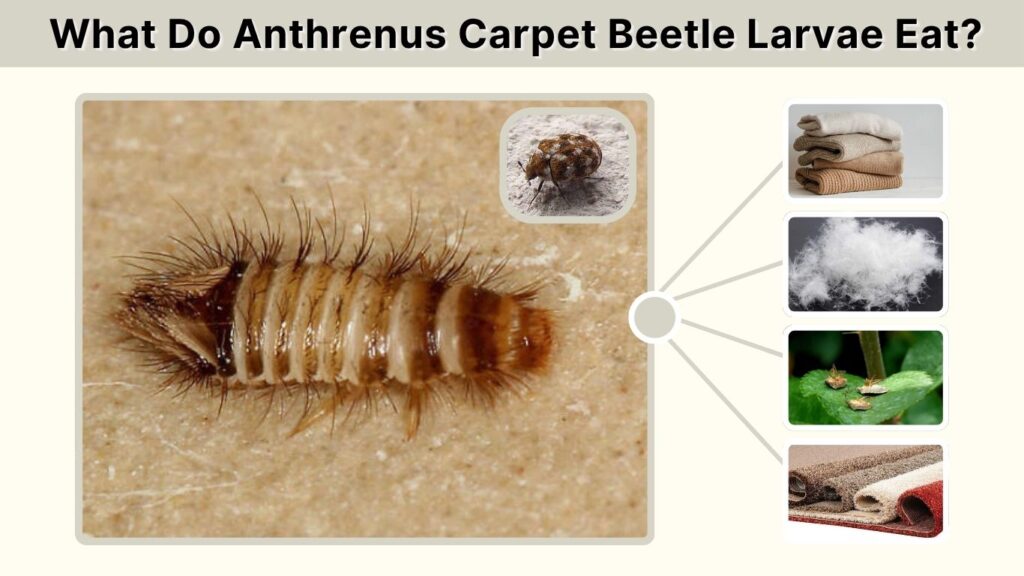
Only the larvae cause meaningful damage to household materials. Adults generally feed on flower pollen and do not consume carpets or clothing.
Common Larval Foods
Anthrenus larvae may feed on:
- Wool carpets and rugs
- Wool sweaters and blankets
- Silk
- Fur and animal skins
- Feathers and down
- Leather
- Pet and human hair
- Natural-bristle brushes
- Dead insects
- Taxidermy specimens
- Bird and rodent nests
- Dried animal or plant products
Clean synthetic fabrics are normally resistant. However, larvae may attack synthetic materials contaminated with perspiration, urine, grease, food, or animal debris. They can also damage fabric blends containing wool or another suitable natural fiber.
Signs of an Anthrenus Infestation
Adult beetles at windows may be the first visible clue, but larvae and feeding damage provide stronger evidence of indoor reproduction.
Look for:
- Hairy larvae in closets or beneath furniture
- Empty brown larval skins
- Irregular holes in wool clothing
- Thin or bare patches on rugs
- Damage concentrated in dark, undisturbed areas
- Larvae inside upholstered furniture
- Beetles repeatedly appearing on windowsills
- Damage to feathers, fur, or preserved insects
Larval skins can remain after living insects have moved elsewhere. Therefore, homeowners should inspect the surrounding area carefully rather than treating only the exact spot where a skin was found.
Anthrenus Carpet Beetle Life Cycle
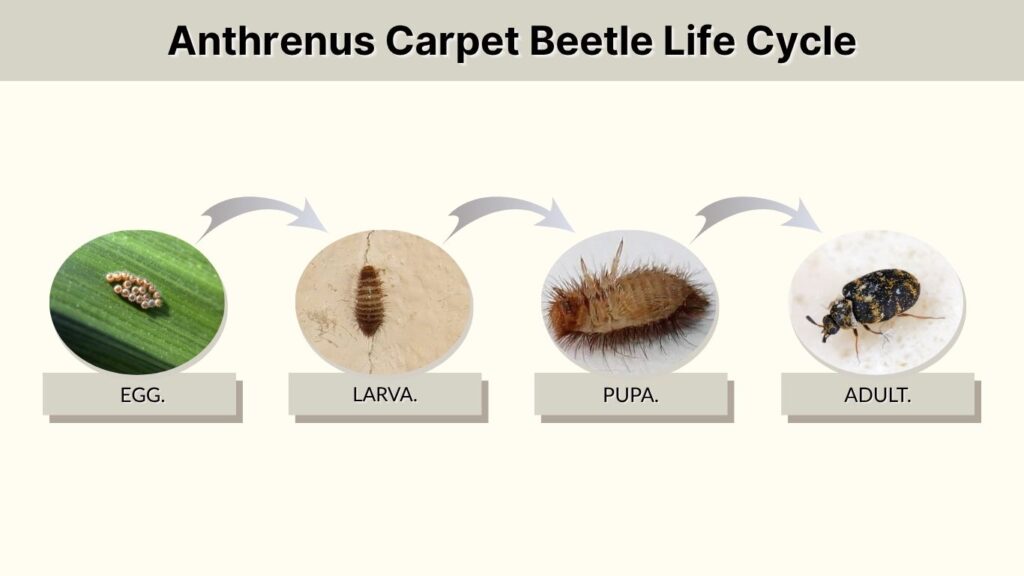
Anthrenus beetles undergo complete metamorphosis through four stages:
- Egg
- Larva
- Pupa
- Adult
Females place eggs near suitable larval food. Indoors, this may include wool, fur, feathers, dead insects, or accumulated lint. Outside, eggs may be placed in bird nests, wasp nests, bee nests, or spider webs containing insect remains.
Eggs hatch into tiny larvae that feed and molt repeatedly. The larval period is the longest stage and may continue for months, especially under cool conditions or when food quality is poor. Varied carpet beetle larvae may remain in this stage substantially longer than furniture carpet beetle larvae. Adults live only long enough to disperse, feed on pollen, mate, and reproduce.
Do Anthrenus Carpet Beetles Bite?
Anthrenus carpet beetles do not bite people or feed on blood. However, their larval hairs can become embedded in bedding, clothing, carpets, or furniture.
Sensitive people may develop carpet beetle dermatitis, which can cause:
- Small red bumps
- Itchy welts
- Burning or irritation
- Blister-like spots
- Eye irritation
- Respiratory discomfort after heavy exposure
The reaction may resemble bed bug bites even though no biting occurred. Removing the insects, shed skins, and loose hairs is essential for preventing repeated exposure. Heavy infestations should be cleaned carefully because airborne hairs may irritate the skin and lungs.
How to Get Rid of Anthrenus Carpet Beetles
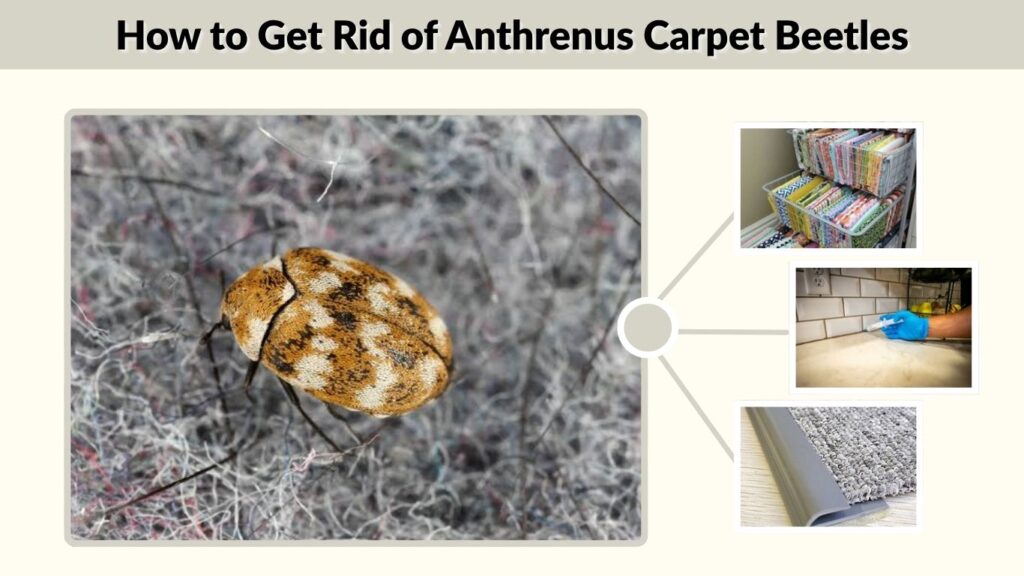
Effective control requires locating the food source rather than simply killing adult beetles near windows.
Find and Remove the Source
Inspect closets, carpet edges, furniture, stored fabrics, pet bedding, air vents, attics, and spaces beneath appliances. Check for abandoned bird or wasp nests, dead rodents, and accumulations of dead insects inside wall voids or light fixtures.
Discard heavily infested materials in a sealed bag. Clean salvageable objects before returning them to storage.
Vacuum Hidden Areas
Vacuum baseboards, closets, rugs, furniture seams, floor cracks, vents, and spaces beneath heavy furniture. Pay particular attention to lint, pet hair, crumbs, and dead insects.
Dispose of the vacuum contents outside immediately. Repeat cleaning regularly until no new larvae or shed skins appear.
Treat Clothing and Fabrics
Wash washable items and dry them using the hottest setting safe for the material. Dry-clean delicate wool, silk, fur, or historic textiles.
Store cleaned clothing in sealed containers or garment bags. Freezing may control all life stages in suitable small objects, but the item must remain thoroughly frozen long enough for the cold to penetrate it completely.
Use Insecticides Carefully
A pesticide labeled for carpet beetles may be applied to carpet edges, cracks, baseboards, or other approved locations. Follow the label exactly.
Do not spray clothing, bedding, food surfaces, toys, or entire rooms unless the product specifically permits that application. Professional treatment may be necessary when larvae originate inside walls, ducts, inaccessible furniture, or multiple rooms.
FAQs
Are all carpet beetles members of Anthrenus?
No. The genus includes varied, furniture, and common carpet beetles, but other carpet beetles belong to different genera. For example, the black carpet beetle belongs to Attagenus, not Anthrenus.
Are Anthrenus beetles harmful?
They do not bite or transmit disease, but their larvae can damage carpets, clothing, furniture, museum specimens, and other animal-based materials. Larval hairs may also trigger dermatitis in sensitive individuals.
Why are adult Anthrenus beetles on my window?
Adults are attracted to sunlight and often move toward windows while attempting to leave the building. Repeated sightings may indicate that larvae have completed development somewhere inside the home.
Can Anthrenus larvae live in a mattress?
They may hide near a mattress when hair, feathers, wool, dead insects, or other organic debris is available. They do not feed on people, but their hairs may cause skin irritation.
What is the fastest way to control Anthrenus carpet beetles?
Locate and remove the larval food source, vacuum hidden areas thoroughly, launder or dry-clean infested fabrics, and seal cleaned materials in secure containers. Insecticide alone rarely resolves an infestation when the source remains.