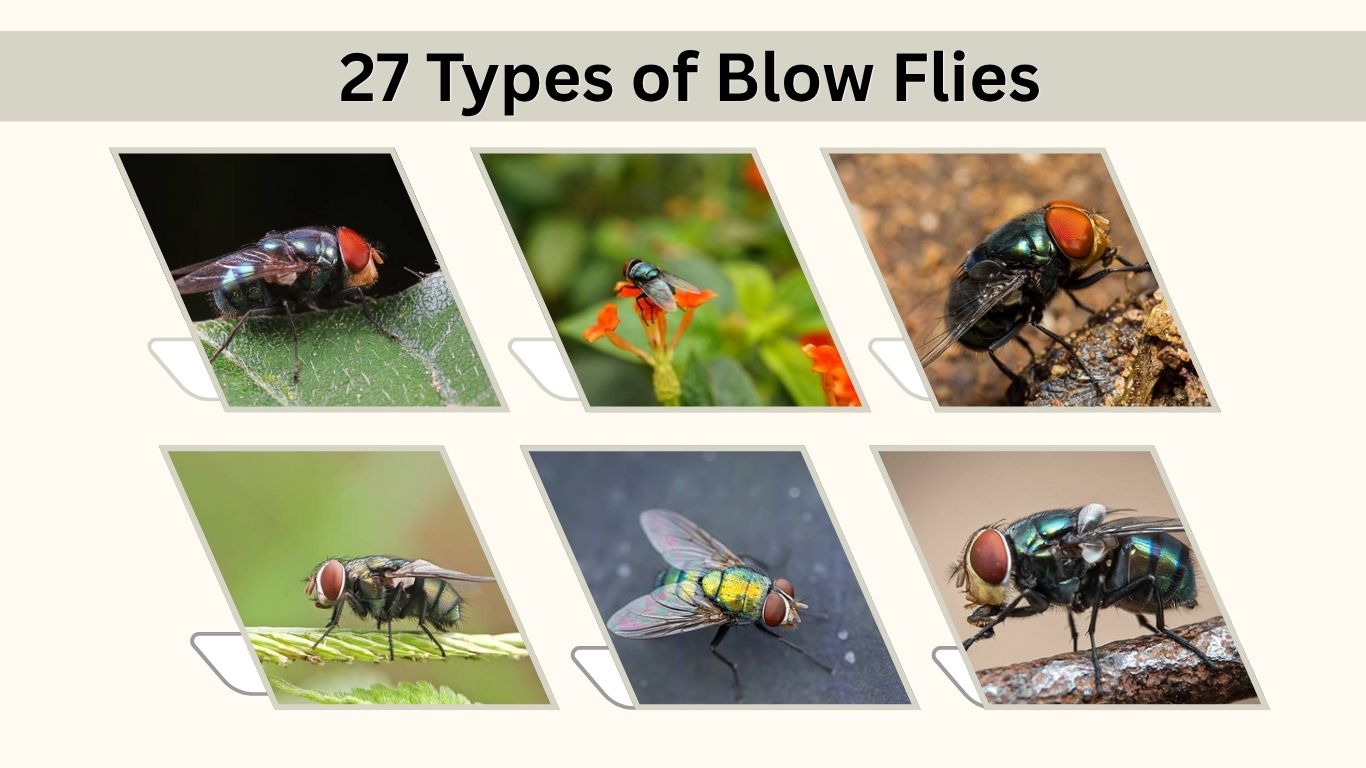
Blow flies are true flies belonging to the family Calliphoridae. Many species have brilliant metallic-green, blue, bronze, or black bodies that make them easy to notice. Adults commonly visit flowers, carrion, garbage, feces, and animal wounds, while their larvae may feed on decomposing tissue or live as parasites. These flies play valuable roles as pollinators, decomposers, and forensic indicators, although some species can cause dangerous wound infestations in animals and humans. This guide explores 27 types of blow flies, covering their identification features, geographic distribution, preferred habitats, feeding habits, life cycles, and distinctive behaviors.
1. Common Green Bottle Fly (Lucilia sericata)
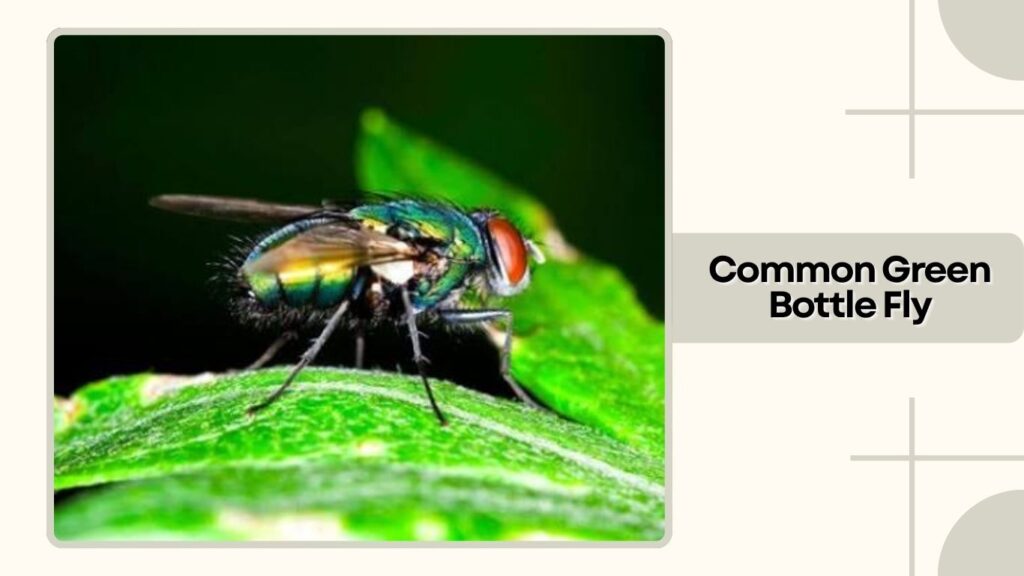
The common green bottle fly is a widespread blow fly recognized by its brilliant metallic-green body. It plays an important role in decomposing dead animals but may also contaminate exposed food. This species is valuable in forensic investigations and is sometimes used in controlled medical treatments.
Identification
- Adult size: About 8–12 millimeters long
- Body color: Metallic green or greenish-gold
- Eyes: Large and reddish
- Legs: Black with noticeable bristles
- Wings: Transparent with visible veins
- Antennae: Short with feathery bristles
Habitat and Distribution
Common green bottle flies occur across much of the world. They inhabit cities, farms, forests, grasslands, and coastal environments. Adults are commonly seen around garbage containers, animal carcasses, manure, pet waste, outdoor markets, and flowering plants.
Diet and Feeding
Adults consume nectar, sugary liquids, feces, carrion fluids, and secretions from animal wounds. Their larvae mainly feed on decomposing animal tissue. Sterile larvae may be used under professional medical supervision to remove dead tissue from difficult wounds.
Life Cycle and Behavior
Females lay clusters of pale eggs on carrion, meat, feces, or infected wounds. The eggs hatch into maggots that feed rapidly before crawling into dry surroundings to pupate. Warm temperatures accelerate development, allowing the life cycle to be completed within several weeks.
2. Australian Sheep Blowfly (Lucilia cuprina)
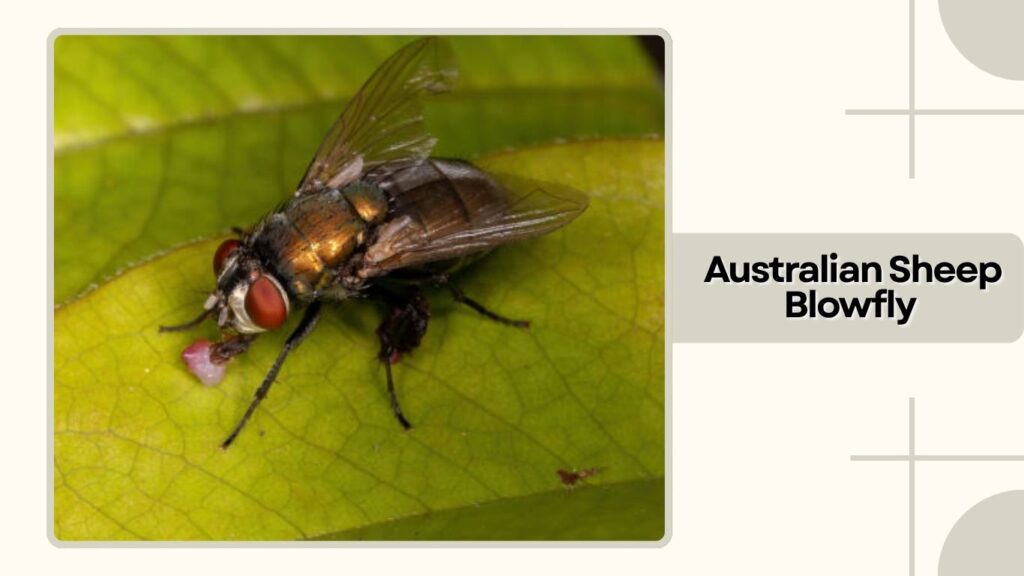
The Australian sheep blowfly is a metallic-green species best known for causing flystrike in sheep. Although its common name refers to Australia, it occurs in many warm regions worldwide. Its larvae can develop in carrion, animal waste, and damaged or contaminated living tissue.
Identification
- Adult size: About 6–10 millimeters long
- Body color: Metallic green or bronze-green
- Eyes: Large and reddish
- Legs: Mostly dark
- Wings: Clear with visible veins
- Body shape: Rounded and compact
Habitat and Distribution
This blowfly occurs in Australia, Africa, Asia, and parts of the Americas. It is especially common in warm agricultural areas containing sheep and other livestock. Adults gather around carrion, manure, garbage, animal wounds, and flowering plants.
Diet and Feeding
Adults consume nectar, animal secretions, fecal fluids, and liquids from decaying tissue. The larvae feed on dead tissue but may also attack living sheep when moisture and contamination collect in the wool.
Life Cycle and Behavior
Females lay eggs in carcasses, wounds, or damp, soiled wool. The larvae hatch and feed together before leaving the host or food source to pupate in soil. Warm, humid conditions support rapid development and increase the risk of livestock flystrike.
3. Blue-Green Bottle Fly (Lucilia coeruleiviridis)
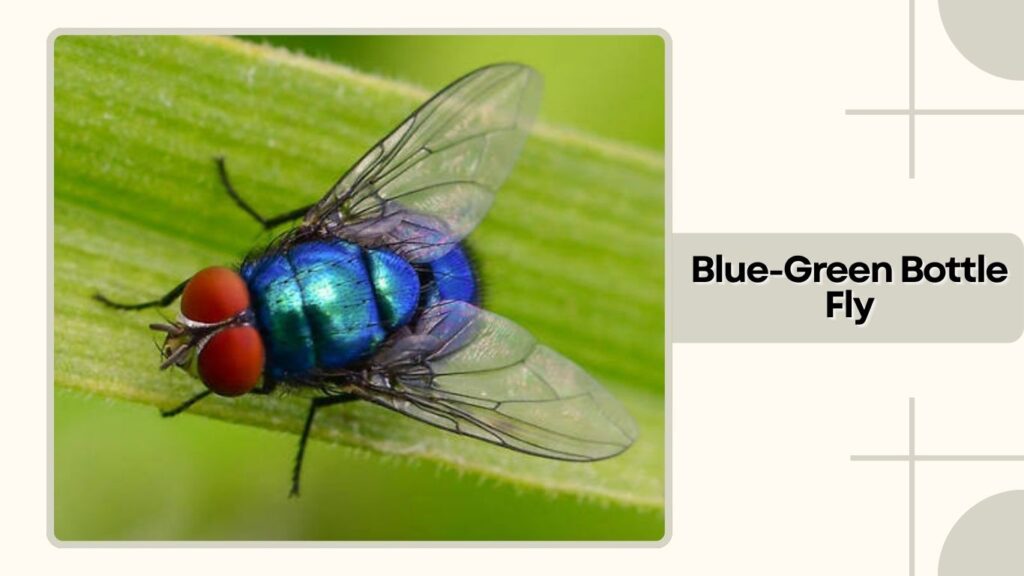
The blue-green bottle fly is a shiny North American blow fly commonly associated with carrion. Its metallic coloration may appear green, blue, or bluish-purple depending on the light. This species contributes to decomposition and can provide useful evidence during forensic investigations.
Identification
- Adult size: About 6–10 millimeters long
- Body color: Metallic blue-green
- Eyes: Large and red
- Wings: Clear with dark veins
- Legs: Black and bristled
- Body: Compact with a glossy surface
Habitat and Distribution
The blue-green bottle fly is mainly found across North America. It occupies forests, grasslands, farms, suburban neighborhoods, and urban areas. Adults are frequently observed near animal carcasses, garbage, pet waste, and other decomposing organic materials.
Diet and Feeding
Adults consume nectar, sugary liquids, carrion fluids, feces, and animal secretions. Females require protein-rich material to support egg development. The larvae mainly consume decomposing animal tissue and help recycle nutrients into the environment.
Life Cycle and Behavior
Females deposit egg clusters in natural openings or moist areas of a carcass. The larvae feed in groups before moving into soil or leaf litter to pupate. Temperature influences their growth rate, making the species useful when estimating how long remains have been exposed.
4. Shiny Green Bottle Fly (Lucilia illustris)
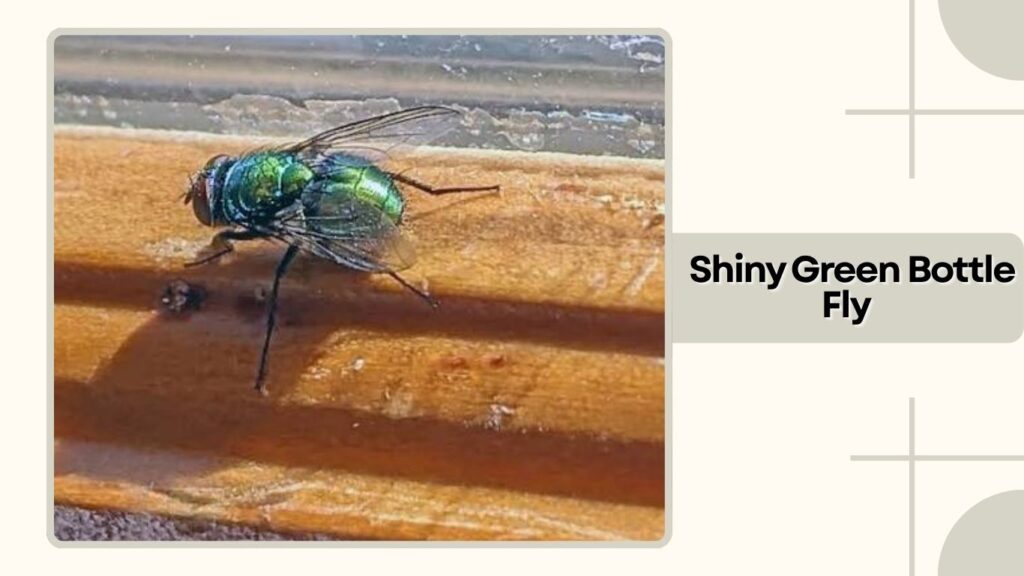
The shiny green bottle fly is a bright metallic blow fly found in many temperate regions. It closely resembles other green bottle species and may require microscopic examination for reliable identification. Adults commonly visit flowers, waste, and carrion, while their larvae primarily develop in decomposing tissue.
Identification
- Adult size: About 7–11 millimeters long
- Body color: Brilliant metallic green
- Abdomen: May show bluish or bronze reflections
- Eyes: Reddish and prominent
- Wings: Transparent
- Body: Covered with short dark bristles
Habitat and Distribution
This species occurs across much of the Northern Hemisphere and also reaches other regions. It inhabits forests, meadows, farms, parks, gardens, and urban environments. Adults are most active during warmer months and frequently gather around carrion.
Diet and Feeding
Adults feed on flower nectar, pollen, honeydew, feces, and liquids released by decaying animals. Their larvae consume decomposing tissue. Adults may transfer microorganisms onto food if they move between carrion or waste and household surfaces.
Life Cycle and Behavior
Females lay eggs on carcasses and other suitable animal material. The maggots pass through several growth stages before leaving the food source and pupating in a sheltered place. Adults are strong fliers and can locate carrion by following odors.
5. Forest Green Bottle Fly (Lucilia silvarum)
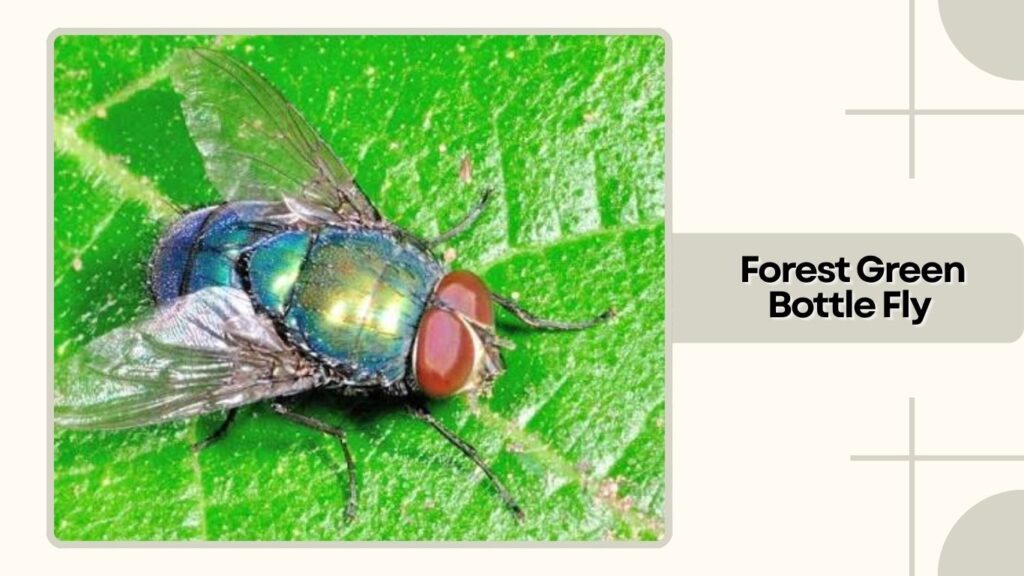
The forest green bottle fly is a metallic species commonly associated with wooded and rural environments. It develops mainly in carrion, although its larvae may occasionally infest injured or vulnerable amphibians. Adults are important decomposers and may also pollinate flowers while feeding.
Identification
- Adult size: About 6–10 millimeters long
- Body color: Metallic green or blue-green
- Eyes: Large and reddish
- Wings: Clear with noticeable veins
- Legs: Dark and bristled
- Antennae: Short with feather-like aristae
Habitat and Distribution
Forest green bottle flies occur throughout northern temperate regions. They inhabit forests, wetlands, meadows, farms, gardens, and areas near ponds. Adults often rest on sunny vegetation and visit carrion or flowers during warm weather.
Diet and Feeding
Adults consume nectar, pollen, fecal fluids, and liquids from decomposing tissue. Larvae generally feed on carrion, but some may develop in wounds or beneath the skin of frogs and toads, especially when the animals are weakened.
Life Cycle and Behavior
Females normally lay eggs on dead animals or other protein-rich material. The larvae feed rapidly before moving into nearby soil to pupate. Adults emerge after development is complete and search for flowers, mates, and appropriate egg-laying sites.
6. Neotropical Green Bottle Fly (Lucilia eximia)
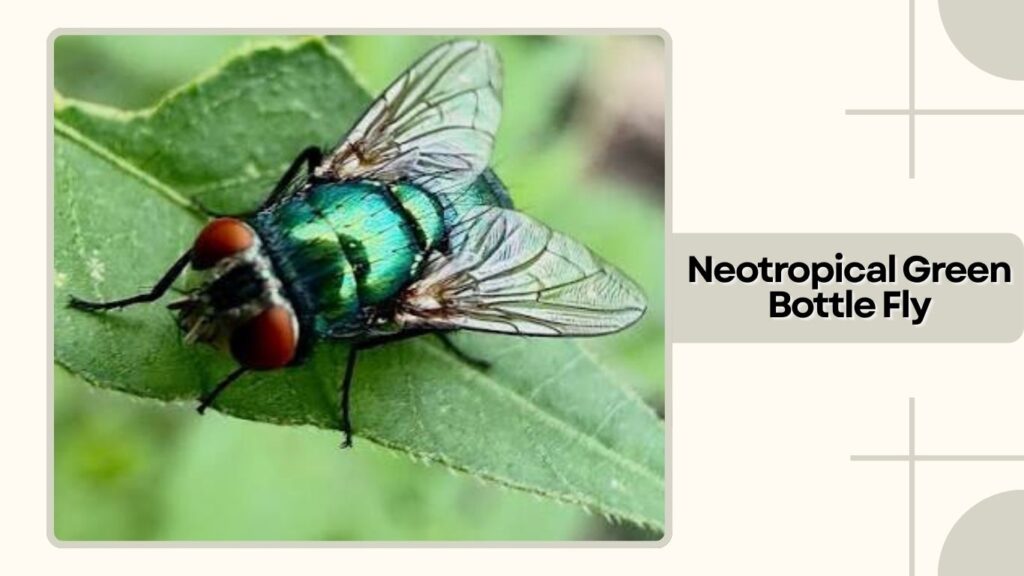
The Neotropical green bottle fly is a brightly colored species commonly found in warmer parts of the Americas. It is one of the blow flies frequently associated with animal remains in tropical and subtropical environments. The species contributes to decomposition and is important in forensic entomology.
Identification
- Adult size: About 6–10 millimeters long
- Body color: Metallic green or blue-green
- Face: Pale or silvery
- Eyes: Large and reddish
- Wings: Clear
- Legs: Dark with strong bristles
Habitat and Distribution
This species ranges from the southern United States through Mexico, Central America, the Caribbean, and South America. It occupies forests, rural communities, farms, and cities. Adults are commonly found around carrion, garbage, animal waste, and flowers.
Diet and Feeding
Adults consume nectar, sugary liquids, feces, and fluids from decaying animals. The larvae mainly feed on carrion and other decomposing animal material. By breaking down tissue, they help recycle nutrients within warm ecosystems.
Life Cycle and Behavior
Females lay eggs on moist sections of a carcass, often near wounds or natural openings. The maggots feed through several developmental stages before leaving to pupate. Because growth is temperature-dependent, investigators may use this species when estimating the minimum period since death.
7. Mexican Green Bottle Fly (Lucilia mexicana)
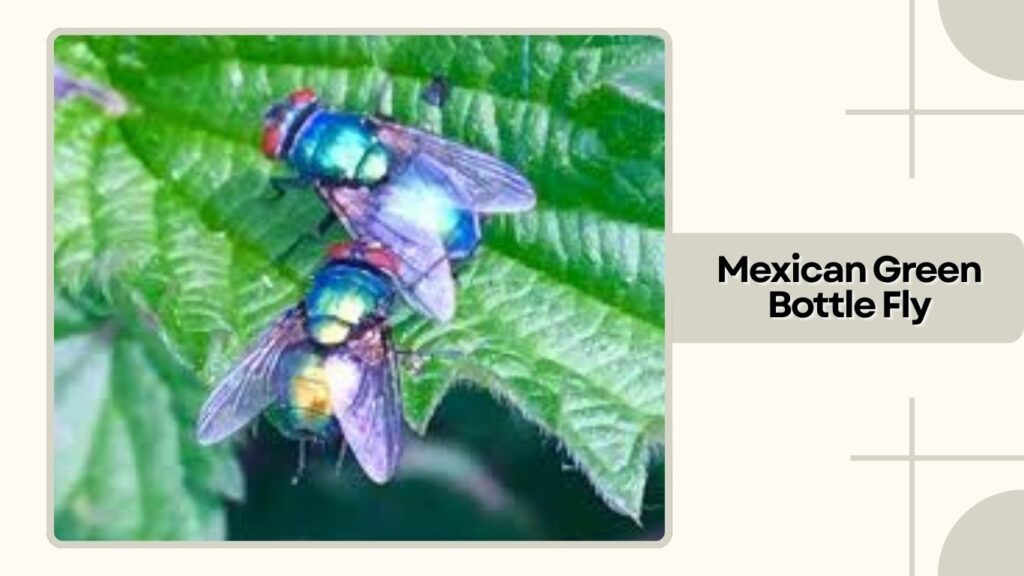
The Mexican green bottle fly is a metallic-colored blow fly found in warmer parts of the Americas. It is commonly associated with carrion and can contribute to the decomposition of animal remains. Its predictable development may also make it useful in certain forensic investigations.
Identification
- Adult size: About 6–9 millimeters long
- Body color: Metallic blue-green
- Eyes: Large and reddish
- Wings: Clear with dark veins
- Legs: Black and bristled
- Appearance: Similar to Lucilia coeruleiviridis
Habitat and Distribution
This species ranges from the southwestern United States through Mexico and parts of Central and South America. It inhabits dry landscapes, forests, farms, towns, and urban environments where carrion or organic waste is available.
Diet and Feeding
Adults consume nectar, sugary liquids, feces, and fluids released by decomposing animals. Their larvae mainly feed on carrion. Adults may also visit garbage and animal waste while searching for food or egg-laying sites.
Life Cycle and Behavior
Females lay eggs on moist animal remains or other suitable protein-rich material. The larvae hatch and pass through three feeding stages before leaving the food source to pupate. Development speed depends heavily on environmental temperature.
8. Toad Fly (Lucilia bufonivora)
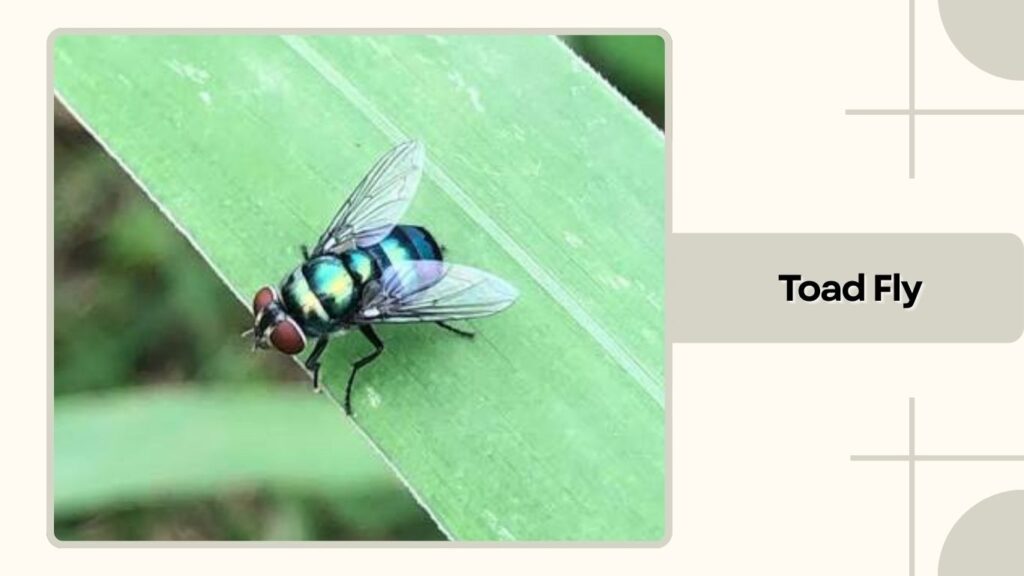
The toad fly is a metallic-green blow fly whose larvae develop as parasites of living amphibians. It most frequently attacks common toads, although other frogs and toads may also serve as hosts. A severe infestation often causes extensive tissue damage and may kill the affected animal.
Identification
- Adult size: About 7–10 millimeters long
- Body color: Bright metallic green
- Eyes: Large and brownish-red
- Wings: Transparent with dark veins
- Body: Covered with short black bristles
- Appearance: Similar to other green bottle flies
Habitat and Distribution
Toad flies are primarily found across Europe, with records from parts of Asia, North Africa, and North America. They inhabit gardens, wetlands, forests, meadows, and other places supporting populations of frogs and toads.
Diet and Feeding
Adults mainly consume flower nectar and pollen. The larvae feed on living amphibian tissue. They commonly invade the nasal passages and surrounding tissues, producing a condition known as amphibian myiasis.
Life Cycle and Behavior
Females deposit eggs near a toad’s nostrils, eyes, or existing wounds. The larvae hatch and enter the surrounding tissue. After completing development, mature larvae leave the host and pupate in soil before emerging as adult flies.
9. Blue Bottle Fly (Calliphora vomitoria)
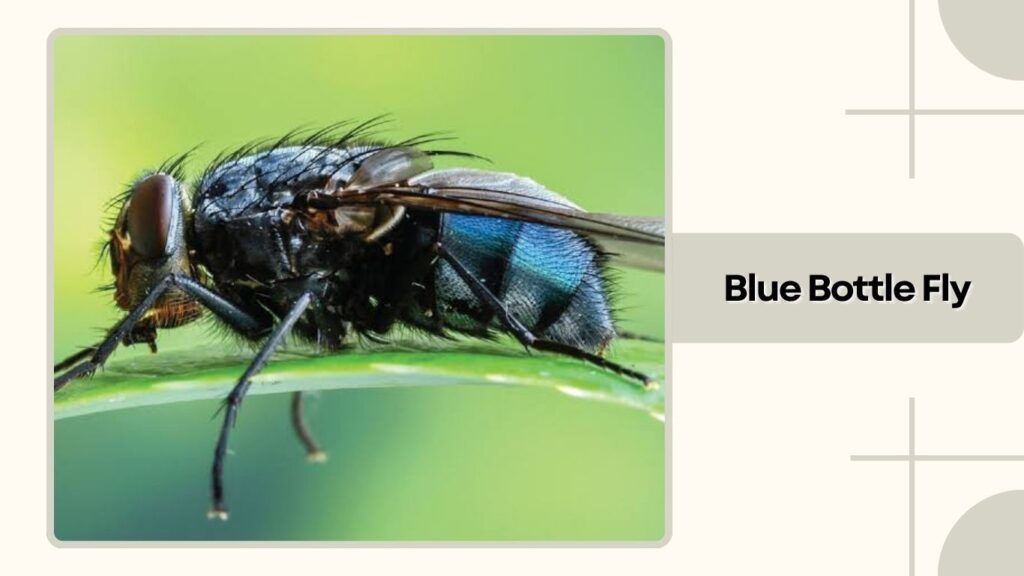
The blue bottle fly is a large blow fly recognized by its metallic-blue abdomen and loud buzzing flight. It commonly visits carrion, garbage, feces, and animal waste. Its larvae contribute to decomposition, while their growth may provide valuable information in forensic investigations.
Identification
- Adult size: About 10–14 millimeters long
- Abdomen: Bright metallic blue
- Thorax: Dull gray or black
- Face: Dark with reddish cheeks
- Body: Thick and strongly bristled
- Wings: Clear with prominent veins
Habitat and Distribution
Blue bottle flies occur across much of the Northern Hemisphere and have reached several other regions. They prefer cool or moderate climates and are common in forests, farmland, towns, gardens, garbage areas, and around animal carcasses.
Diet and Feeding
Adults consume nectar, feces, carrion fluids, and other sugary or protein-rich liquids. Females need protein before producing eggs. Their larvae feed mainly on decomposing animal tissue and occasionally develop within contaminated wounds.
Life Cycle and Behavior
Females lay egg clusters on carrion, meat, garbage, or animal waste. The maggots feed together before leaving the material to pupate in soil. Adults are strong fliers and can detect decomposition odors from considerable distances.
10. Urban Blue Bottle Fly (Calliphora vicina)
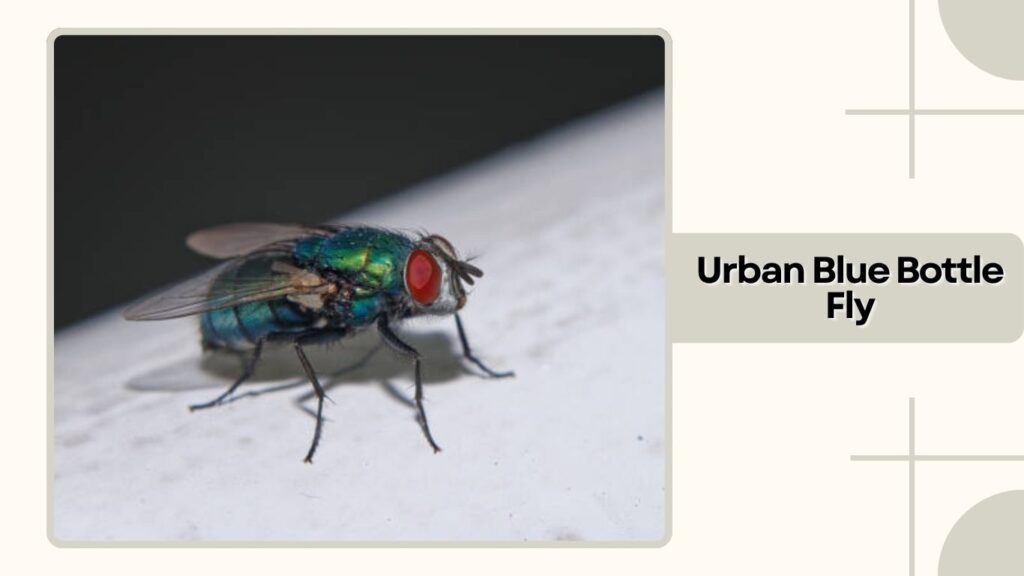
The urban blue bottle fly is a common carrion-feeding species frequently encountered in cities and residential areas. It is especially active during cooler seasons when many other blow flies become less abundant. Adults may enter buildings after detecting garbage, meat, or hidden animal remains.
Identification
- Adult size: About 9–12 millimeters long
- Abdomen: Metallic blue-gray
- Thorax: Dark and dull
- Cheeks: Bright orange or reddish
- Eyes: Large and red
- Wings: Clear with dark veins
Habitat and Distribution
This species occurs across Europe, North America, and many other regions. It thrives in cities, forests, grasslands, and agricultural areas. Its tolerance for cooler weather allows it to remain active during early spring, autumn, and mild winter periods.
Diet and Feeding
Adults consume flower nectar, feces, garbage fluids, carrion liquids, and other soft organic material. The larvae mainly feed on decomposing animal tissue. Adults can contaminate exposed food after landing on waste or carcasses.
Life Cycle and Behavior
Females lay hundreds of eggs on carrion, meat, or wounds. The larvae pass through three stages before moving away to pupate. Because its development is temperature-dependent and well studied, this species is frequently used in forensic investigations.
11. Livid Blue Bottle Fly (Calliphora livida)
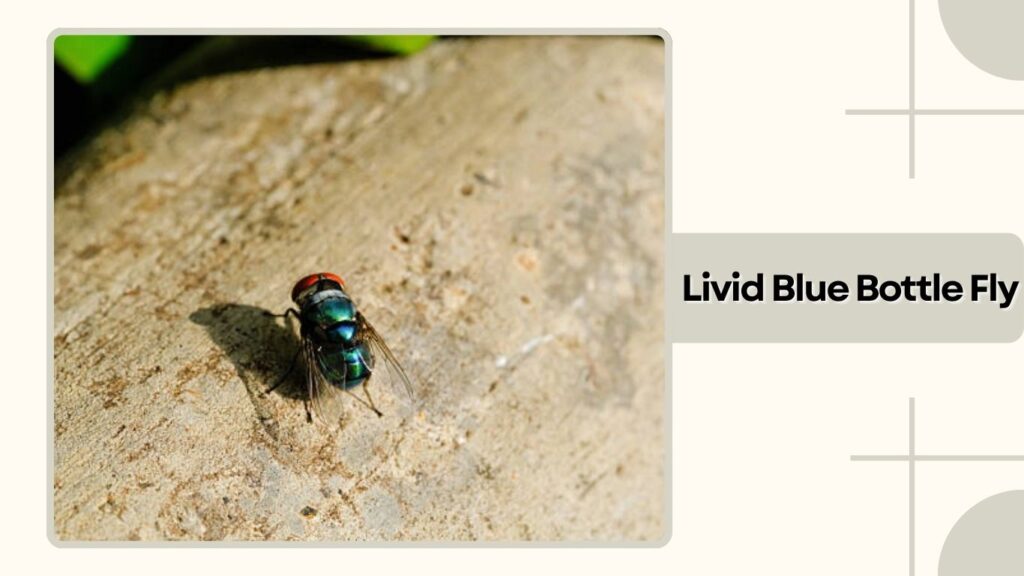
The livid blue bottle fly is a metallic-blue blow fly found across North America. It prefers cooler, shaded habitats and commonly visits carrion and garbage. The species may be among the earlier insects to colonize animal remains, particularly during cool weather.
Identification
- Adult size: About 8–12 millimeters long
- Body color: Dull metallic blue
- Cheeks: Usually black
- Body shape: Large and robust
- Wings: Clear or slightly smoky
- Flight: Slow with loud buzzing
Habitat and Distribution
This species is widely distributed throughout North America. It inhabits forests, shaded urban areas, farms, parks, and other cool environments. Adults may gather around garbage containers, animal carcasses, excrement, and spoiled meat.
Diet and Feeding
Adults consume nectar, carrion fluids, feces, and sugary liquids. Their larvae primarily eat decomposing animal tissue. Adults may transport bacteria to food and preparation surfaces after visiting contaminated materials.
Life Cycle and Behavior
Females place eggs on suitable animal remains. The maggots hatch, feed through three developmental stages, and eventually leave the carcass to pupate. Temperature, food quality, and moisture affect their growth rate and the length of their life cycle.
12. Graham’s Blow Fly (Calliphora grahami)
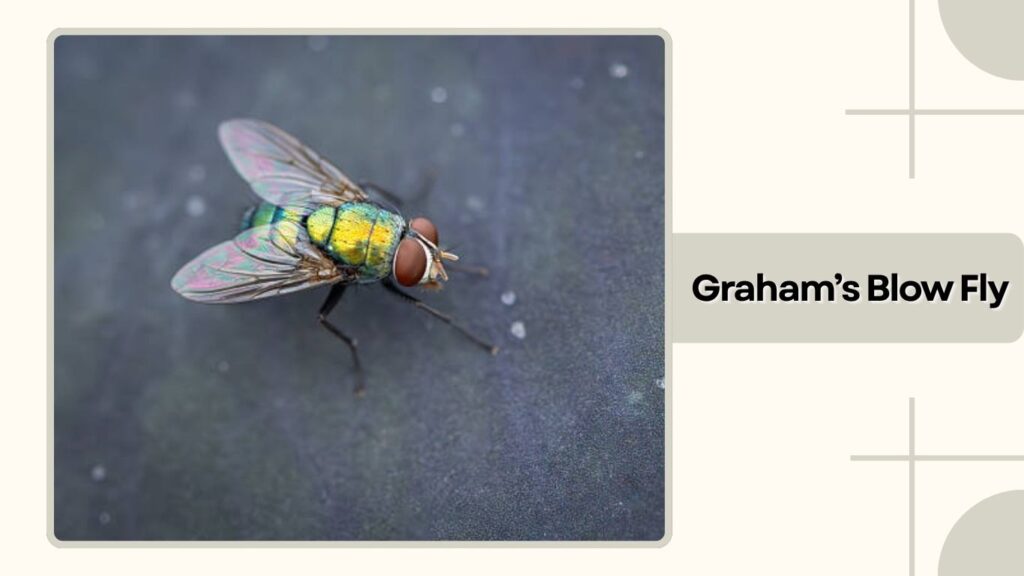
Graham’s blow fly is a dark metallic-blue species associated with carrion and other decomposing animal material. Originally described from East Asia, it now occurs in several regions. Its attraction to remains and temperature-dependent development give it potential value in forensic investigations.
Identification
- Adult size: About 8–12 millimeters long
- Abdomen: Metallic blue
- Thorax: Dark gray or black
- Face: Usually dark with reddish areas
- Wings: Transparent with visible veins
- Body: Robust and strongly bristled
Habitat and Distribution
This species is most strongly associated with eastern and southeastern Asia but has been recorded elsewhere. It occurs in forests, agricultural areas, mountains, and urban environments. Adults usually prefer cooler or shaded locations containing carrion or organic waste.
Diet and Feeding
Adults consume flower nectar, feces, carrion fluids, and sugary substances. Their larvae mainly feed on decomposing animal tissue. Adults may carry microorganisms after moving between waste, carcasses, and exposed food.
Life Cycle and Behavior
Females lay eggs on carcasses, meat, or other protein-rich material. The larvae feed through several stages before moving into soil to pupate. Temperature influences their development, seasonal activity, and usefulness when estimating the age of insect evidence.
13. Colorado Blow Fly (Calliphora coloradensis)
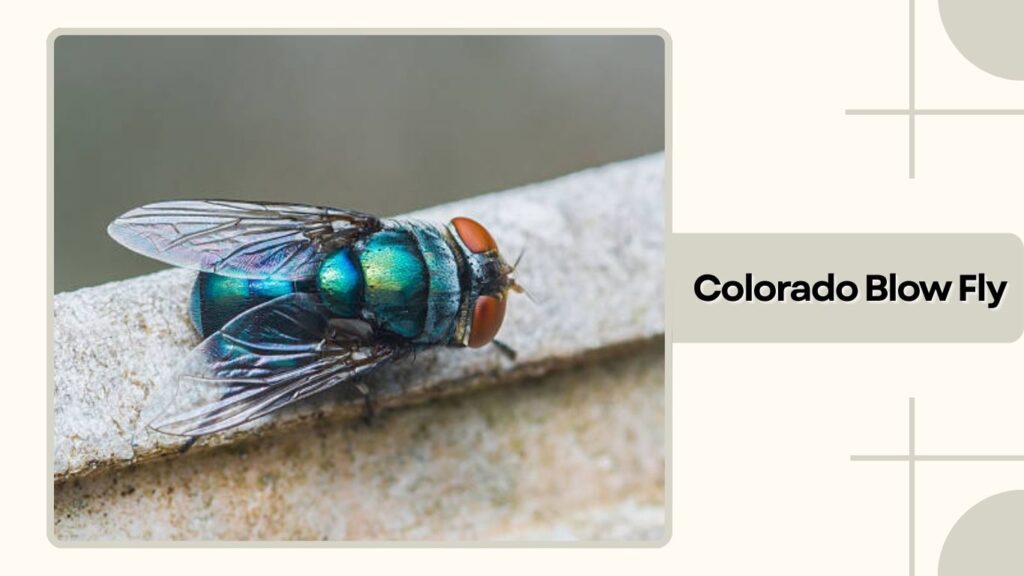
The Colorado blow fly is a metallic-blue species native to North America. It is particularly associated with cool western landscapes and elevated areas. Like other carrion-feeding blow flies, it contributes to decomposition and may be useful in forensic investigations conducted within its geographic range.
Identification
- Adult size: About 8–12 millimeters long
- Body color: Metallic blue
- Cheeks: Usually reddish or orange
- Thorax: Dark and slightly dusty
- Wings: Clear with dark veins
- Body shape: Thick and bristled
Habitat and Distribution
Colorado blow flies occur mainly in western North America. They inhabit mountainous regions, forests, grasslands, valleys, and cool rural environments. Their preference for lower temperatures may make them more noticeable during spring, autumn, and at higher elevations.
Diet and Feeding
Adults consume nectar, carrion fluids, feces, and other liquid organic substances. The larvae develop in decomposing animal tissue. By breaking down remains, they help return nutrients to the surrounding soil and ecosystem.
Life Cycle and Behavior
Females deposit egg clusters on fresh carrion or exposed animal tissue. The maggots feed together before dispersing to pupate in nearby soil. Local temperature and elevation can strongly influence their development time and seasonal activity.
14. Broad-Faced Blow Fly (Calliphora latifrons)
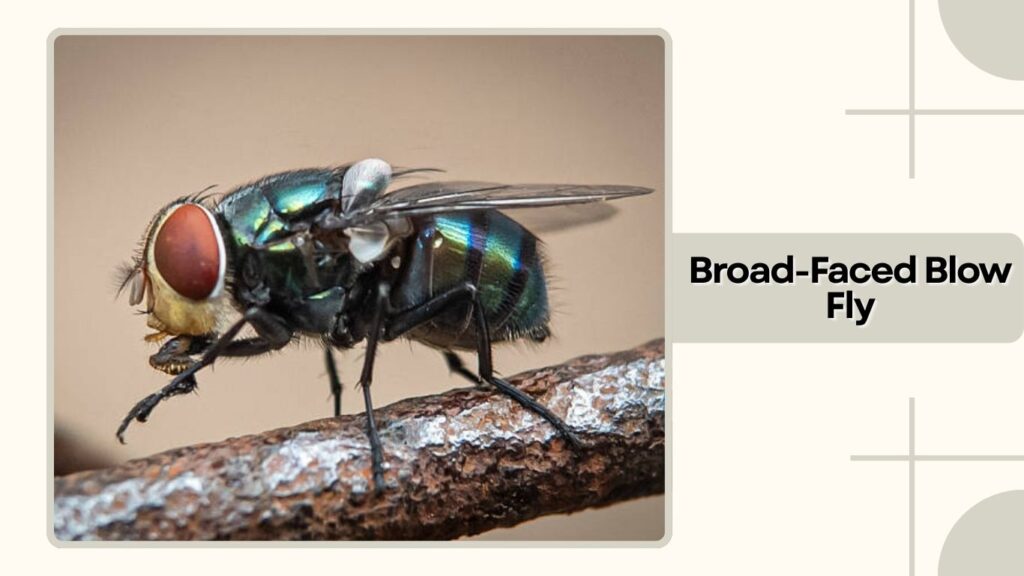
The broad-faced blow fly is a North American blue bottle species known for its relatively wide head. It develops mainly in animal remains and is sometimes collected during forensic investigations. Adults are strong fliers but may be less noticeable than more abundant urban blow flies.
Identification
- Adult size: About 9–13 millimeters long
- Abdomen: Metallic dark blue
- Face: Broad and usually reddish-orange
- Thorax: Dark gray or black
- Wings: Clear or lightly smoky
- Body: Large and strongly bristled
Habitat and Distribution
This species is mainly found in western and central portions of North America. It occupies forests, grasslands, dry valleys, agricultural areas, and mountainous environments. Adults are attracted to carrion but may also visit flowers and animal waste.
Diet and Feeding
Adults consume nectar, fecal fluids, carrion liquids, and other sugary substances. Their larvae feed primarily on decomposing animal tissue. Adults may also obtain moisture and nutrients from animal secretions or damp organic material.
Life Cycle and Behavior
Females lay eggs on carcasses or exposed meat. After hatching, the larvae pass through three feeding stages before leaving the remains to pupate. Adults may be active during relatively cool weather, although seasonal patterns vary across their range.
15. Newfoundland Blow Fly (Calliphora terraenovae)
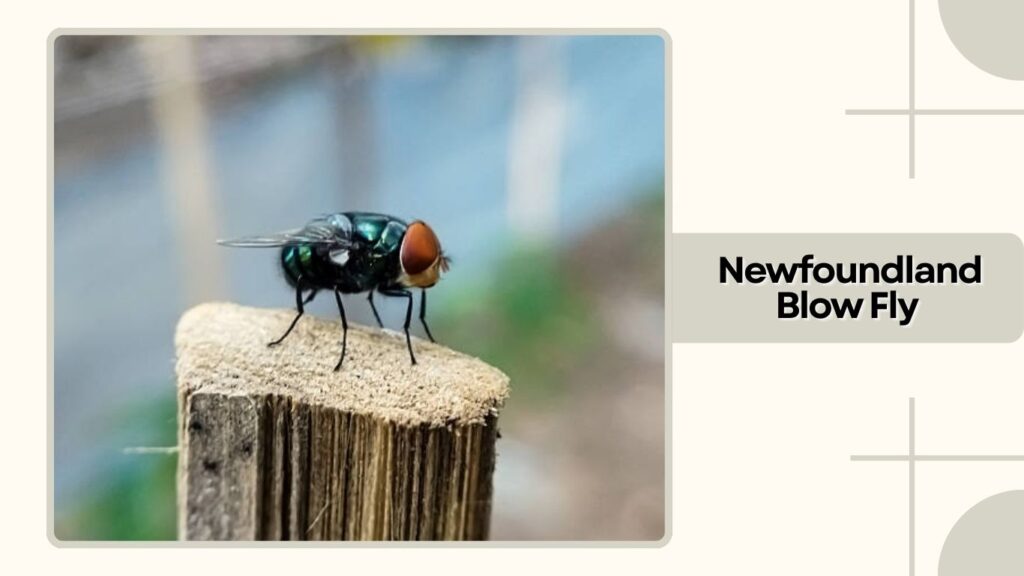
The Newfoundland blow fly is a metallic-blue species adapted to cool northern environments. It is associated with carrion and helps decompose dead animals in regions where low temperatures limit many other insects. It should not be confused with Protophormia terraenovae, another northern blow fly.
Identification
- Adult size: About 8–12 millimeters long
- Body color: Metallic blue
- Thorax: Dark and dull
- Eyes: Large and reddish
- Wings: Transparent
- Body shape: Robust with strong bristles
Habitat and Distribution
This species occurs in northern parts of North America, including Canada and cooler regions of the United States. It inhabits boreal forests, coastal areas, tundra edges, grasslands, and other environments where animal remains become available.
Diet and Feeding
Adults consume nectar, carrion fluids, feces, and sugary liquids. Their larvae mainly feed on decomposing animal tissue. In northern ecosystems, they contribute to nutrient recycling during the relatively short warm season.
Life Cycle and Behavior
Females lay eggs on suitable carrion. The larvae feed rapidly when temperatures permit, then move into nearby soil or sheltered material to pupate. Their tolerance of cool weather allows them to become active earlier than many warm-adapted blow flies.
16. Loew’s Blow Fly (Calliphora loewi)
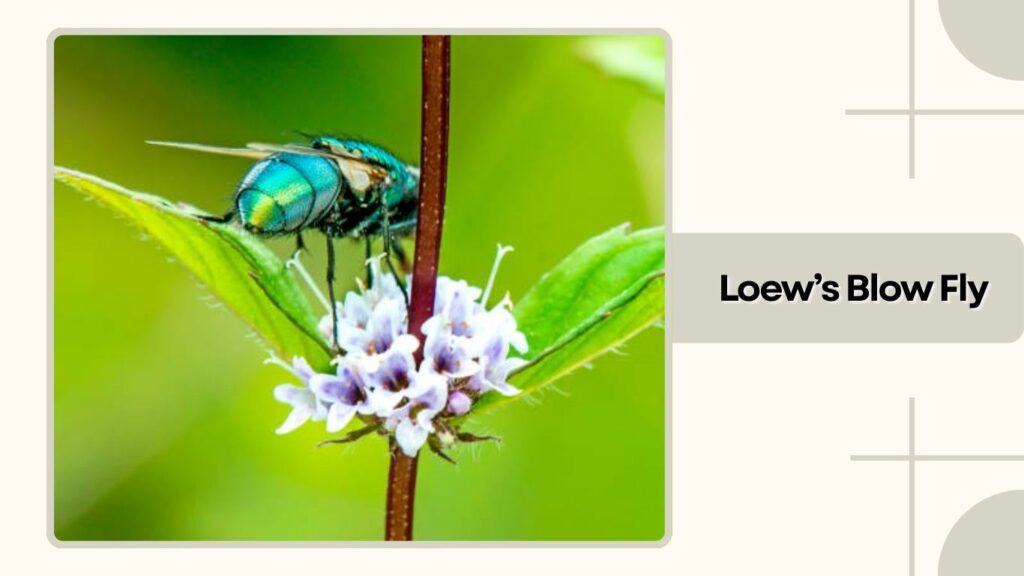
Loew’s blow fly is a dark blue bottle fly found across cooler areas of the Northern Hemisphere. It is generally associated with forests, carrion, and shaded habitats. This species contributes to decomposition but is encountered less frequently than several other members of the genus Calliphora.
Identification
- Adult size: About 8–12 millimeters long
- Abdomen: Metallic dark blue
- Thorax: Blackish or dark gray
- Cheeks: Dark or reddish
- Wings: Clear with noticeable veins
- Body: Thick and covered with bristles
Habitat and Distribution
Loew’s blow fly has a northern distribution across portions of Europe, Asia, and North America. It favors cool forests, mountainous areas, meadows, and rural habitats. Adults are often associated with shaded locations rather than hot, exposed environments.
Diet and Feeding
Adults feed on nectar, honeydew, carrion fluids, feces, and other organic liquids. Their larvae consume decomposing animal remains. This feeding activity helps remove carcasses and return nutrients to forest and soil ecosystems.
Life Cycle and Behavior
Females place egg clusters on moist sections of carrion. The larvae hatch, feed through three growth stages, and then disperse to pupate. Temperature regulates their development and seasonal activity, with adults generally favoring cool conditions.
17. Oriental Latrine Fly (Chrysomya megacephala)
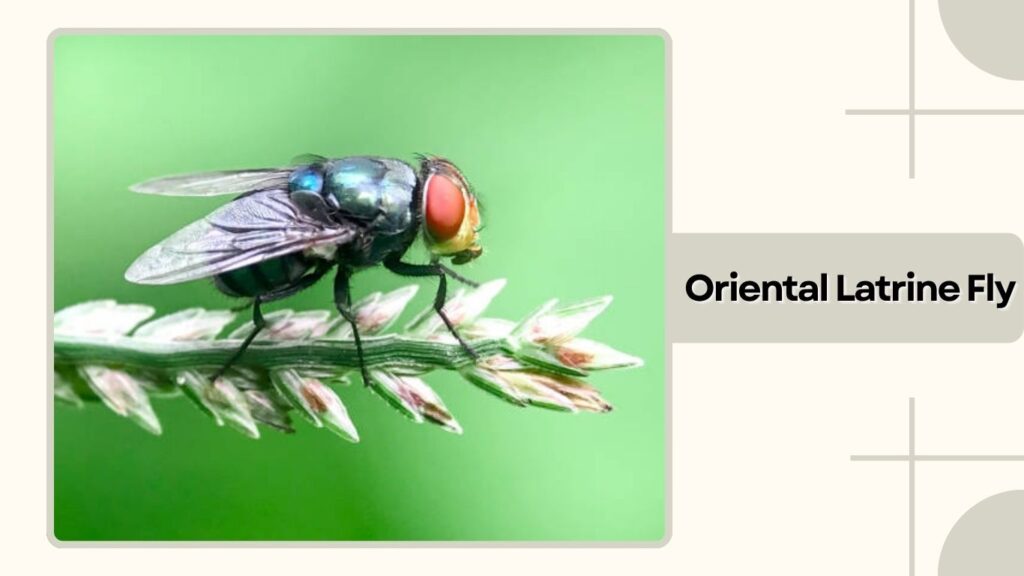
The Oriental latrine fly is a metallic blow fly commonly associated with carrion, feces, garbage, and other decomposing materials. It thrives in warm environments and frequently occurs near human settlements. Its rapid development and early arrival at remains make it important in forensic investigations.
Identification
- Adult size: About 8–12 millimeters long
- Body color: Metallic blue-green
- Face: Yellowish or orange
- Eyes: Large and reddish
- Wings: Clear with dark veins
- Thorax: Dark with a glossy appearance
Habitat and Distribution
This species originated in tropical parts of Asia but now occurs across many warm regions. It inhabits cities, farms, forests, markets, slaughterhouses, garbage sites, and outdoor toilets. Adults are especially abundant in hot, humid conditions.
Diet and Feeding
Adults consume nectar, feces, carrion fluids, garbage liquids, and sugary substances. The larvae feed mainly on decomposing animal tissue. Adults may transport harmful microorganisms after visiting waste and then landing on food.
Life Cycle and Behavior
Females lay egg clusters on carrion, feces, meat, or animal remains. The maggots feed rapidly before leaving the material to pupate in soil. Warm temperatures allow the species to complete its development quickly and produce multiple generations.
18. Hairy Maggot Blow Fly (Chrysomya rufifacies)
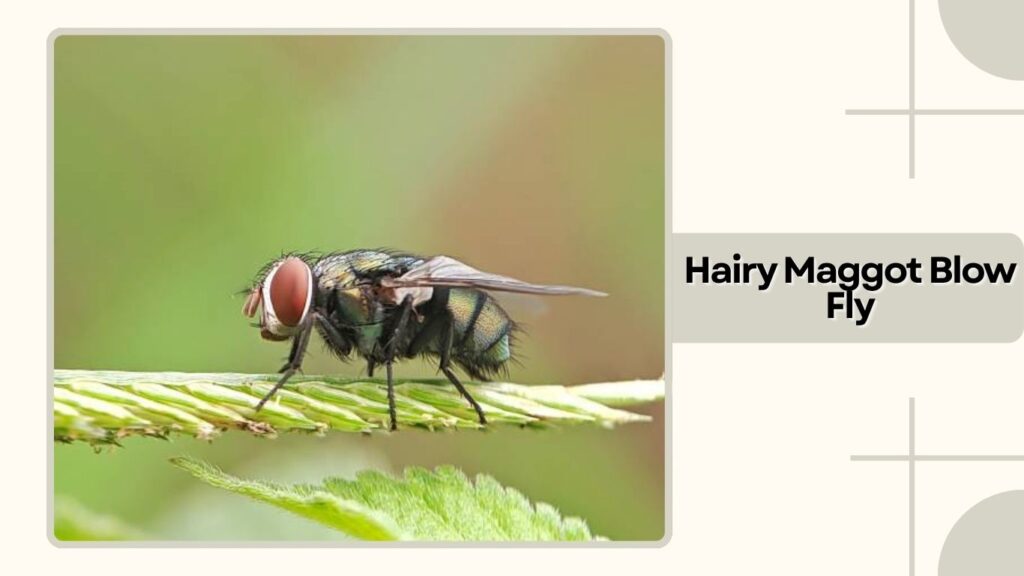
The hairy maggot blow fly is named for the fleshy, spine-like projections covering its larvae. Adults are metallic blue-green and strongly attracted to carrion. Older larvae become predators and may consume competing maggots, affecting which fly species remain on an animal carcass.
Identification
- Adult size: About 7–12 millimeters long
- Body color: Metallic blue-green
- Face: Yellowish or orange
- Eyes: Large and reddish-brown
- Wings: Clear or lightly smoky
- Larvae: Covered with prominent fleshy projections
Habitat and Distribution
Originally associated with Australia and parts of Asia, this species has spread to many warm regions. It inhabits urban areas, farms, forests, grasslands, and locations containing animal remains, garbage, or exposed meat.
Diet and Feeding
Adults consume nectar, carrion fluids, feces, and other liquid organic matter. Young larvae feed on decomposing tissue. Older larvae may prey on the maggots of other blow flies while continuing to consume carrion.
Life Cycle and Behavior
Females lay eggs on fresh or decomposing carcasses. The larvae pass through three stages before dispersing to pupate. Because predatory larvae can remove competing species from remains, investigators must consider their behavior when interpreting forensic evidence.
19. White-Headed Blow Fly (Chrysomya albiceps)
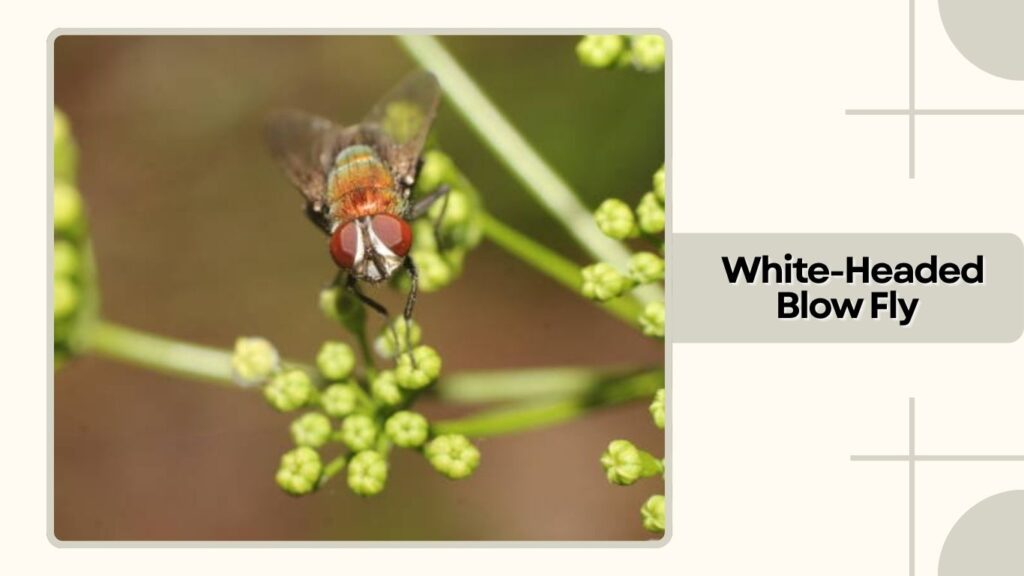
The white-headed blow fly is a metallic species closely related to the hairy maggot blow fly. Its larvae have fleshy projections and may become predators of other maggots. The species contributes to decomposition but can occasionally cause wound infestations in livestock or other animals.
Identification
- Adult size: About 7–12 millimeters long
- Body color: Metallic green or blue-green
- Face: Pale yellow or whitish
- Eyes: Large and reddish
- Wings: Transparent or slightly smoky
- Larvae: Spiny with fleshy body projections
Habitat and Distribution
This blow fly occurs naturally across Africa, southern Europe, and parts of Asia. It has also spread into regions of South America. Adults inhabit warm grasslands, farms, urban areas, forests, slaughterhouses, and sites containing carrion.
Diet and Feeding
Adults feed on flower nectar, feces, carrion fluids, and other sugary or protein-rich liquids. Young larvae consume decomposing tissue. Later larval stages may prey on other fly larvae sharing the same carcass.
Life Cycle and Behavior
Females deposit eggs on dead animals, meat, or contaminated wounds. The larvae feed rapidly and later leave the material to pupate in dry soil. Warm weather promotes fast reproduction. The species is useful in forensic investigations within areas where it occurs.
20. New World Screwworm Fly (Cochliomyia hominivorax)
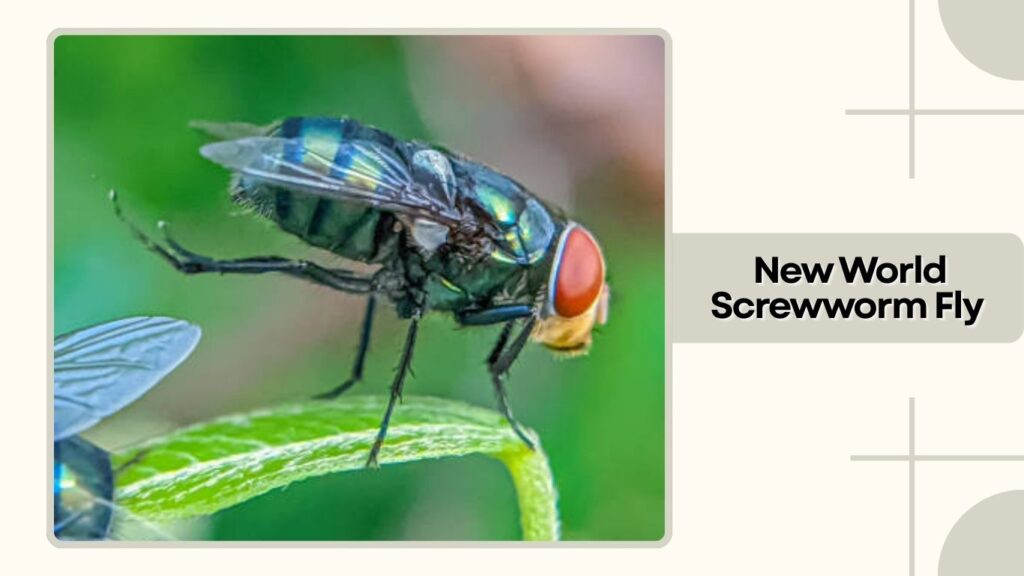
The New World screwworm fly is a dangerous parasitic blow fly whose larvae consume the living tissue of warm-blooded animals. It can infest livestock, wildlife, pets, and humans. Untreated infestations may enlarge rapidly, cause serious infection, and sometimes become fatal.
Identification
- Adult size: About 8–10 millimeters long
- Body color: Metallic blue-green
- Thorax: Three dark longitudinal stripes
- Face: Yellowish or orange
- Eyes: Reddish-brown
- Wings: Clear with dark veins
Habitat and Distribution
This species is native to tropical and subtropical parts of the Americas. Large-scale control programs have changed its distribution considerably. Adults favor warm environments containing livestock, wildlife, and other suitable mammal hosts.
Diet and Feeding
Adults consume nectar, plant liquids, and fluids from wounds. Their larvae feed exclusively on living tissue. They burrow deeply into an open wound in a screw-like formation, causing a condition called traumatic myiasis.
Life Cycle and Behavior
Females lay tightly packed egg masses along the edges of wounds or natural body openings. The larvae hatch and enter the tissue to feed. Mature larvae fall to the ground, burrow into soil, and pupate before emerging as adults.
21. Secondary Screwworm Fly (Cochliomyia macellaria)
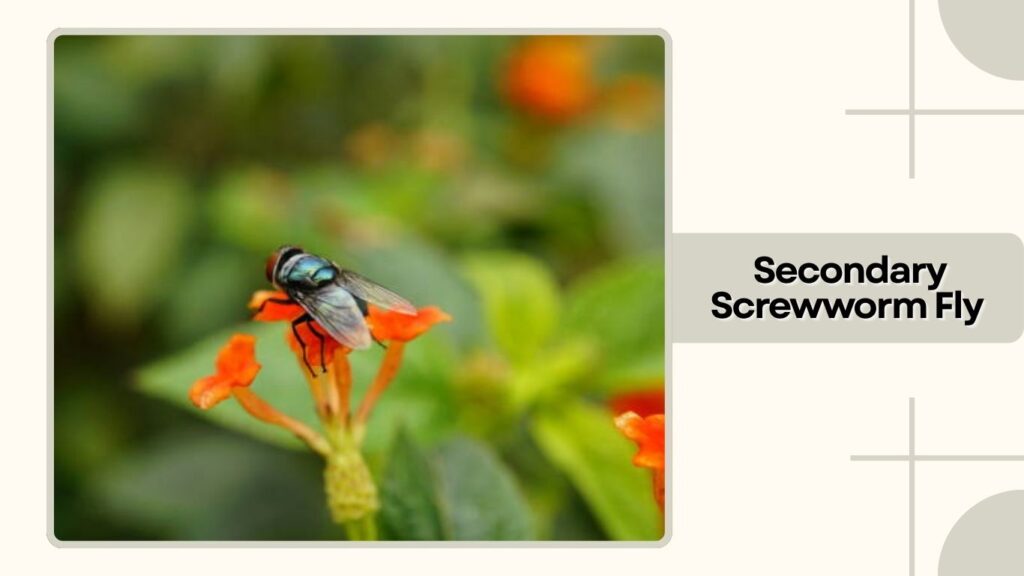
The secondary screwworm fly is a metallic-green blow fly native to the Americas. Unlike the New World screwworm, its larvae usually feed on carrion or dead tissue rather than attacking healthy living flesh. However, they may infest wounds already damaged by another organism.
Identification
- Adult size: About 6–9 millimeters long
- Body color: Metallic green or blue-green
- Thorax: Three dark longitudinal stripes
- Face: Yellowish-orange
- Eyes: Large and reddish
- Wings: Clear with visible veins
Habitat and Distribution
Secondary screwworm flies occur from parts of Canada and the United States through Central and South America. They inhabit farms, forests, cities, markets, slaughterhouses, and other areas containing carcasses, garbage, or animal waste.
Diet and Feeding
Adults consume nectar, fecal fluids, carrion liquids, and other soft organic material. Larvae mainly feed on dead or decomposing tissue. They may also develop in neglected wounds where damaged tissue is already present.
Life Cycle and Behavior
Females lay eggs on carrion, exposed meat, feces, or wounded tissue. The maggots feed together and later leave the material to pupate in soil. Their attraction to animal remains makes them ecologically important decomposers and useful forensic indicators.
22. Black Blow Fly (Phormia regina)
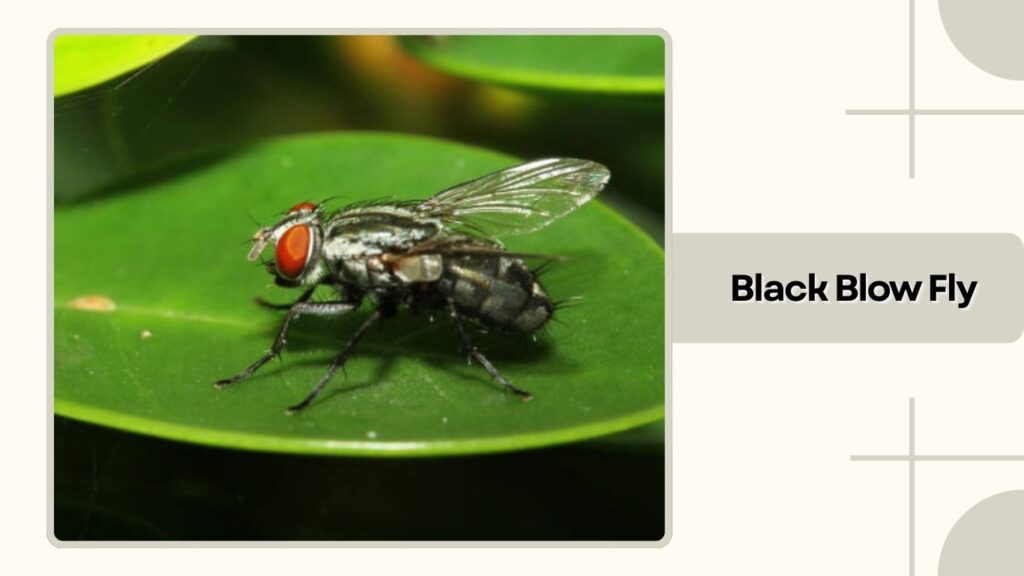
The black blow fly is a dark metallic species commonly associated with carrion throughout North America. Despite its name, its body may show blue, green, or bronze reflections under bright light. It is an important decomposer and one of the most frequently studied flies in forensic entomology.
Identification
- Adult size: About 7–12 millimeters long
- Body color: Shiny black or dark blue-green
- Head: Dark with reddish-brown eyes
- Wings: Clear or slightly smoky
- Legs: Black and strongly bristled
- Body shape: Thick and compact
Habitat and Distribution
Black blow flies occur widely across North America and have been recorded in other regions. They inhabit forests, farms, grasslands, cities, and coastal environments. Adults gather near carcasses, garbage, manure, slaughterhouses, and outdoor markets.
Diet and Feeding
Adults consume nectar, feces, carrion fluids, and other liquid organic substances. Their larvae feed mainly on decomposing animal tissue. Large groups of maggots can generate considerable heat while feeding together.
Life Cycle and Behavior
Females lay egg clusters on moist sections of carrion or exposed meat. The larvae feed through three developmental stages before dispersing into soil to pupate. Temperature affects their growth, making them useful for estimating the age of insect evidence.
23. Northern Blow Fly (Protophormia terraenovae)
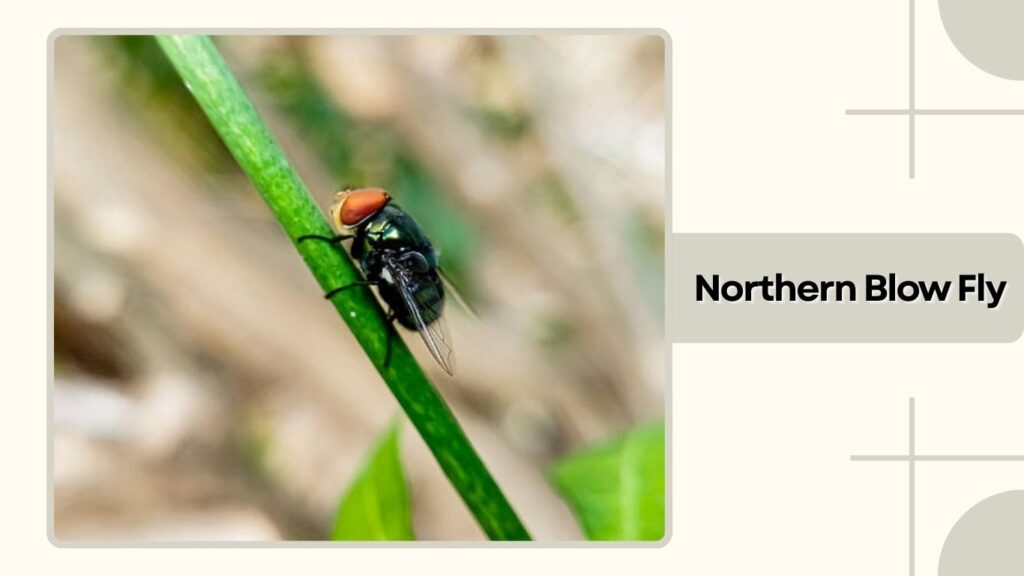
The northern blow fly is a cold-adapted species found throughout northern portions of the world. It develops mainly in carrion but may occasionally infest wounds on livestock, wildlife, or people. It can remain active under conditions that are too cold for many other blow flies.
Identification
- Adult size: About 7–12 millimeters long
- Body color: Metallic blue, green, or black
- Thorax: Dark and glossy
- Eyes: Large and reddish-brown
- Wings: Transparent with dark veins
- Legs: Black and bristled
Habitat and Distribution
This species has a broad northern distribution across North America, Europe, and Asia. It inhabits tundra, boreal forests, mountains, coastal areas, farms, and northern cities. Adults are most strongly associated with cool climates and seasons.
Diet and Feeding
Adults consume flower nectar, feces, carrion fluids, and other sugary substances. Their larvae primarily feed on decomposing animal tissue. Under certain conditions, they may develop in contaminated wounds and cause myiasis.
Life Cycle and Behavior
Females deposit egg clusters on carcasses, meat, or wounds. The larvae feed together before leaving the material to pupate in soil. Their cold tolerance and predictable development make this species valuable in forensic investigations conducted in northern environments.
24. American Carrion Fly (Cynomya cadaverina)
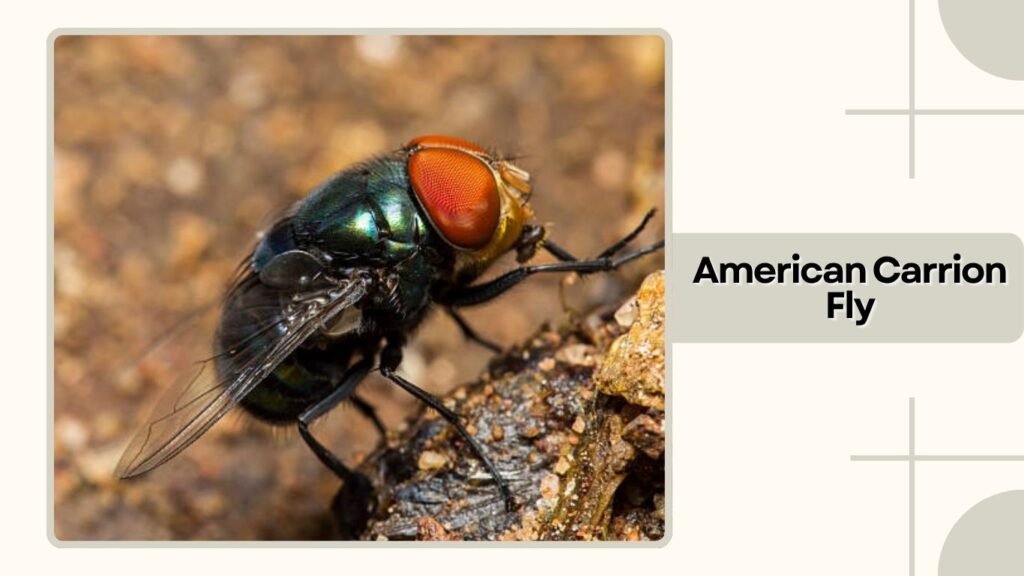
The American carrion fly is a large metallic blow fly commonly found around animal remains. Its scientific name reflects its strong association with carcasses. It plays an important role in decomposition and may arrive relatively early at remains during cool or moderate weather.
Identification
- Adult size: About 9–14 millimeters long
- Body color: Metallic blue-green
- Head: Yellowish, orange, or reddish
- Eyes: Large and red
- Wings: Clear or lightly smoky
- Body: Broad and strongly bristled
Habitat and Distribution
American carrion flies are widely distributed across North America. They inhabit forests, grasslands, farms, parks, cities, and coastal regions. Adults are frequently found near carrion, animal waste, garbage, and other protein-rich decomposing material.
Diet and Feeding
Adults consume nectar, feces, carrion fluids, and sugary liquids. Their larvae feed mainly on decomposing animal tissue. By breaking down carcasses, they help recycle nutrients and support other organisms within decomposer communities.
Life Cycle and Behavior
Females lay eggs in wounds or moist openings of a carcass. The maggots hatch and feed rapidly before moving away to pupate. Their seasonal activity and temperature-dependent growth can help forensic investigators interpret insect evidence from animal or human remains.
25. European Carrion Fly (Cynomya mortuorum)
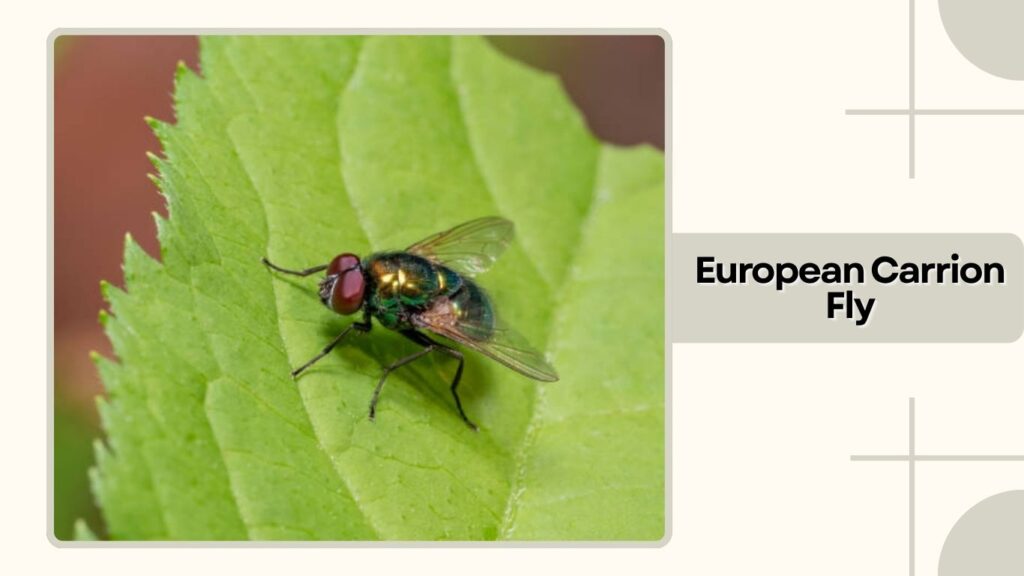
The European carrion fly is a striking blow fly with a metallic-blue body and a yellowish or orange head. It is strongly attracted to dead animals and other decomposing material. Its species name, mortuorum, refers to its close association with the dead.
Identification
- Adult size: About 8–14 millimeters long
- Abdomen: Metallic blue or blue-green
- Head: Yellow, orange, or reddish
- Eyes: Large and red
- Thorax: Dark with visible bristles
- Wings: Clear with strong veins
Habitat and Distribution
This species occurs across much of Europe and northern Asia, with records from parts of North America. It inhabits forests, meadows, farms, mountains, gardens, and rural settlements. Adults often prefer cool or moderately warm conditions.
Diet and Feeding
Adults consume nectar, animal waste, carrion fluids, and other liquid organic substances. Their larvae feed primarily on decomposing animal tissue. Adults may also visit flowers, where they obtain sugar and potentially contribute to pollination.
Life Cycle and Behavior
Females place eggs on carcasses or exposed meat. The larvae feed through several stages before dispersing to pupate in soil or leaf litter. Adults use their strong sense of smell to locate suitable carrion and breeding sites.
26. Western Blow Fly (Compsomyiops callipes)
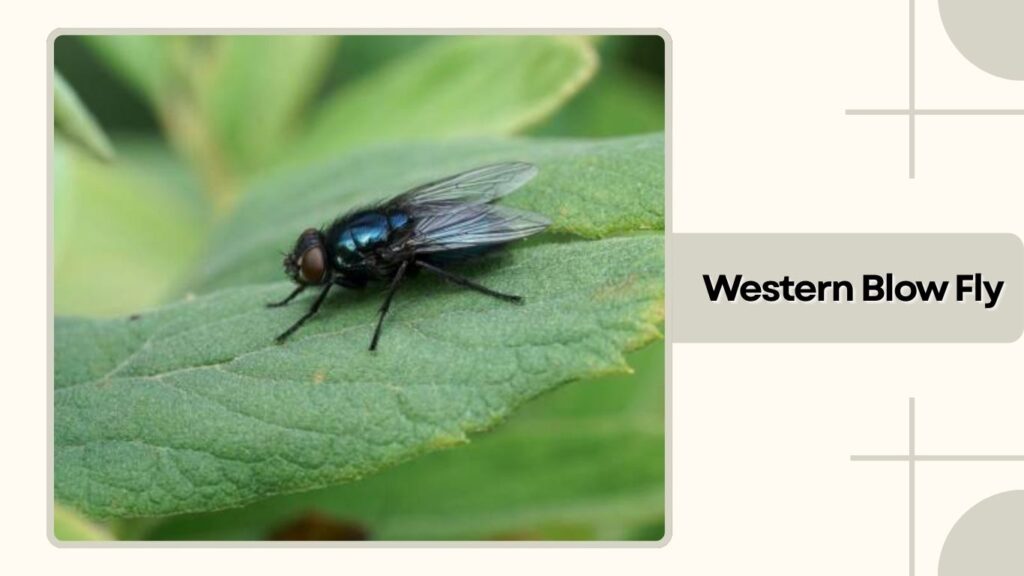
The western blow fly is a robust metallic species found primarily in western parts of the Americas. It closely resembles some members of Calliphora but can be distinguished through its coloration and arrangement of body bristles. Its larvae mainly develop in carrion.
Identification
- Adult size: About 9–14 millimeters long
- Body color: Metallic blue, green, or purple
- Face: Orange or reddish
- Eyes: Large and dark red
- Wings: Clear or slightly smoky
- Body: Thick with numerous bristles
Habitat and Distribution
Western blow flies occur from western North America into Mexico and portions of Central America. They inhabit forests, mountains, dry grasslands, farms, and suburban environments. Adults may visit carrion, garbage, animal waste, and flowers.
Diet and Feeding
Adults consume nectar, fecal fluids, carrion liquids, and other sugary or protein-rich substances. Their larvae primarily eat decomposing animal tissue. This feeding activity helps break down remains and return nutrients to the environment.
Life Cycle and Behavior
Females lay eggs on suitable carcasses or meat. The larvae feed in groups, pass through three growth stages, and eventually leave the material to pupate. Their distribution and seasonal activity must be considered when using them as forensic evidence.
27. Green Chloroprocta Blow Fly (Chloroprocta idioidea)
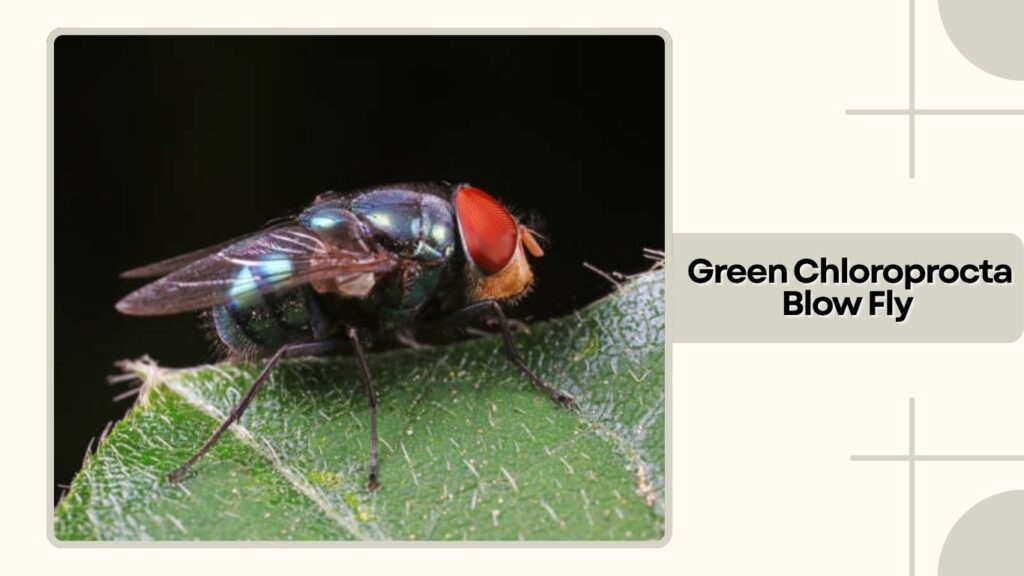
Chloroprocta idioidea is a bright metallic-green blow fly native to warm regions of the Americas. It is commonly associated with animal remains, garbage, and feces. Its attraction to carrion makes it an important decomposer and a potentially useful species in forensic investigations.
Identification
- Adult size: About 6–10 millimeters long
- Body color: Metallic green or bronze-green
- Eyes: Large and reddish
- Face: Pale or yellowish
- Wings: Clear with dark veins
- Body shape: Compact and glossy
Habitat and Distribution
This species occurs mainly in tropical and subtropical regions extending from the southern United States through Central and South America. It inhabits forests, farms, urban areas, markets, and locations containing carrion or organic waste.
Diet and Feeding
Adults consume nectar, feces, carrion fluids, garbage liquids, and other sugary substances. Their larvae feed primarily on decomposing animal material. Adults may carry microorganisms after visiting unsanitary breeding and feeding sites.
Life Cycle and Behavior
Females lay eggs on moist animal remains, feces, or exposed meat. The maggots hatch, feed through several stages, and leave the food source to pupate. Warm temperatures speed their development and allow multiple generations to occur throughout the year.