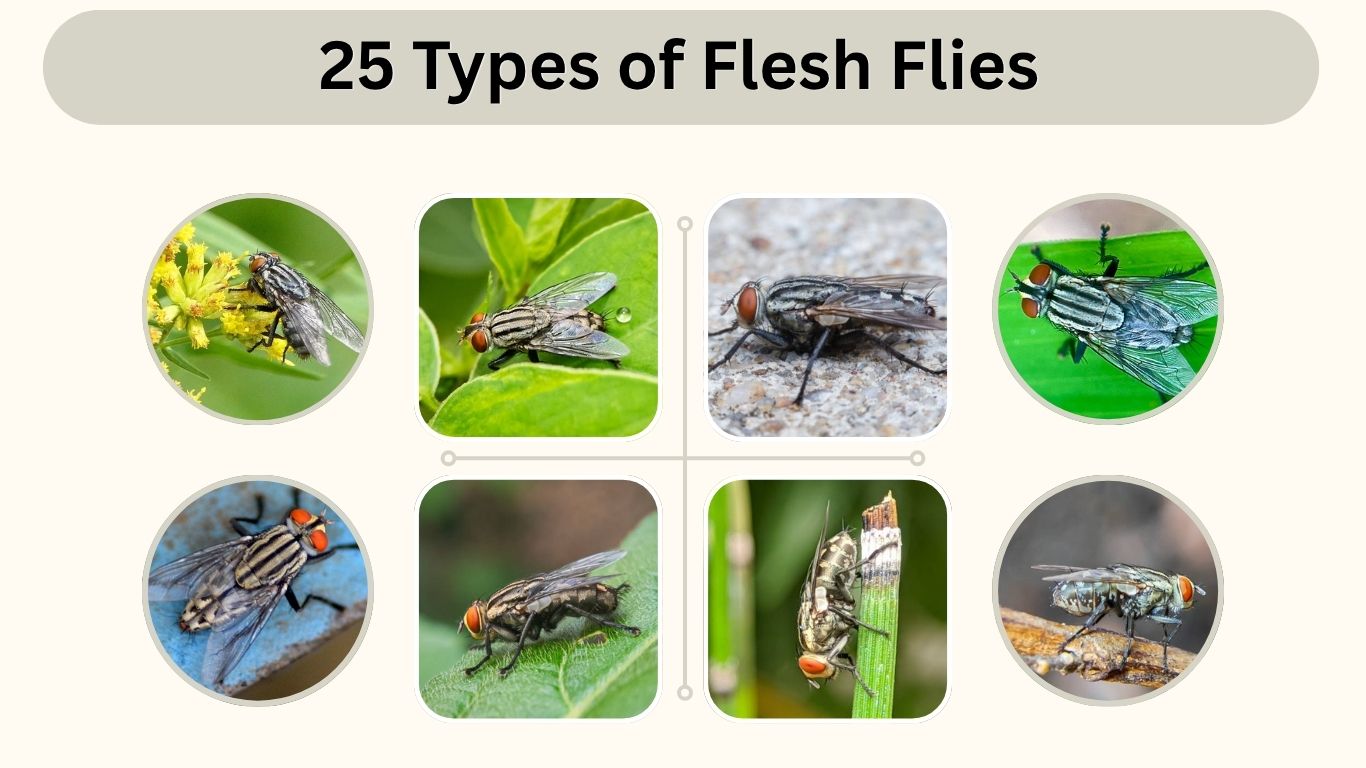
Flesh flies are true flies belonging to the family Sarcophagidae. Most have gray bodies, three dark thoracic stripes, red eyes, and checkered abdomens. Despite their name, not every species feeds exclusively on flesh. Their larvae may consume carrion, feces, animal waste, earthworms, snails, insects, or living vertebrate tissue. Most females deposit live larvae directly onto a suitable food source instead of laying exposed eggs. Flesh flies are important as decomposers, forensic indicators, predators, parasites, and occasional causes of myiasis. This guide covers 25 flesh fly species, including their identification, distribution, habitats, diets, life cycles, and behaviors.
1. Common Flesh Fly (Sarcophaga carnaria)
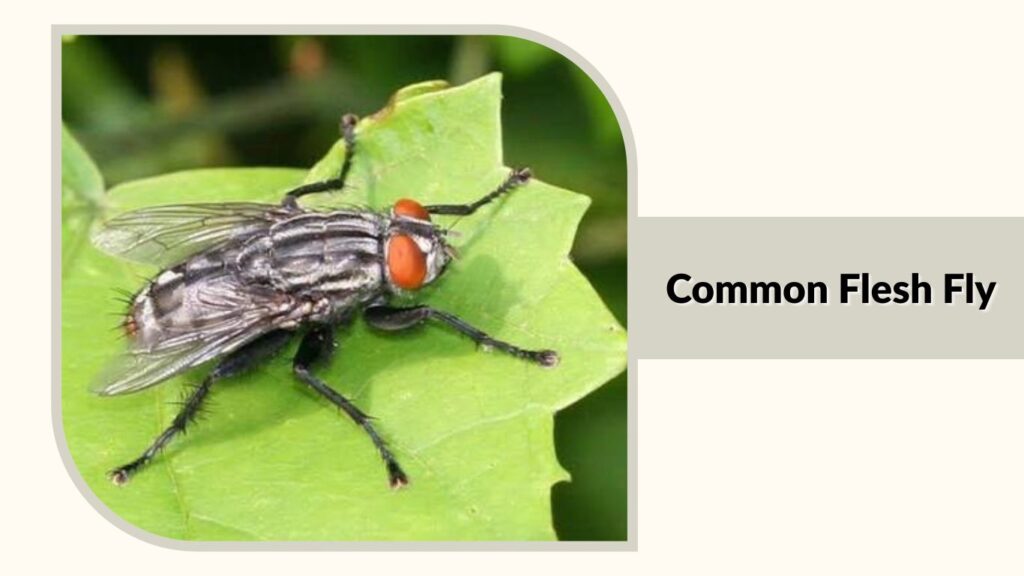
The common flesh fly is a large gray-and-black species native to Europe. Despite its name, its larvae primarily develop as parasites or predators of earthworms rather than feeding entirely on carrion. Adults frequently visit flowers, dung, animal remains, and other strong-smelling organic materials.
Identification
- Adult size: About 10–18 millimeters long
- Body color: Gray and black
- Thorax: Three dark longitudinal stripes
- Abdomen: Gray-and-black checkered pattern
- Eyes: Large and reddish
- Identification: Males require microscopic examination for confirmation
Habitat and Distribution
This species occurs throughout much of Europe, extending into parts of western and central Asia. It inhabits gardens, meadows, farmland, woodland edges, parks, and urban green spaces. Adults often bask on walls, paths, rocks, and other sun-warmed surfaces.
Diet and Feeding
Adults consume flower nectar, plant juices, ripe fruit, dung fluids, and liquids from carrion. The larvae mainly attack living earthworms, using their tissues as food while developing. This behavior distinguishes the species from flesh flies whose larvae primarily consume carcasses.
Life Cycle and Behavior
Females retain their eggs until the larvae are ready to hatch and then deposit live larvae in suitable habitats. The larvae locate earthworms and develop at their expense. Mature larvae eventually leave the host, pupate in soil, and later emerge as adults.
2. Bull’s Flesh Fly (Sarcophaga bullata)
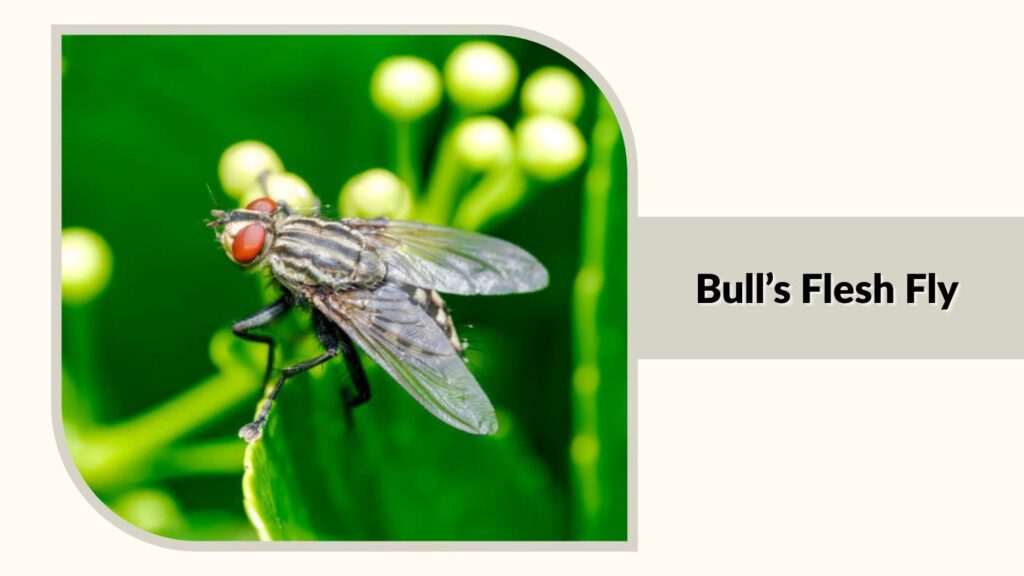
Bull’s flesh fly is a large, gray species commonly used in scientific research. Its easily maintained colonies have helped researchers study insect development, physiology, reproduction, and cold tolerance. In nature, its larvae primarily consume carrion and other decomposing animal material.
Identification
- Adult size: About 8–17 millimeters long
- Body color: Ash-gray and black
- Thorax: Three dark longitudinal stripes
- Abdomen: Black-and-gray checkered pattern
- Eyes: Bright red
- Body: Thick and strongly bristled
Habitat and Distribution
This species is widely distributed across North America. It inhabits forests, fields, farms, gardens, cities, and suburban areas. Adults are commonly observed resting on sunlit walls, fences, vegetation, and rocks near suitable food sources.
Diet and Feeding
Adults consume nectar, honeydew, fruit juices, fecal fluids, and liquids from animal remains. The larvae mainly feed on carrion. They may also develop in other protein-rich decomposing material when animal remains are unavailable.
Life Cycle and Behavior
Females deposit living larvae directly onto suitable food. The maggots immediately begin feeding and pass through three larval stages. Mature larvae leave the food source, seek a dry location, and form dark puparia before emerging as adults.
3. Thick-Palped Flesh Fly (Sarcophaga crassipalpis)
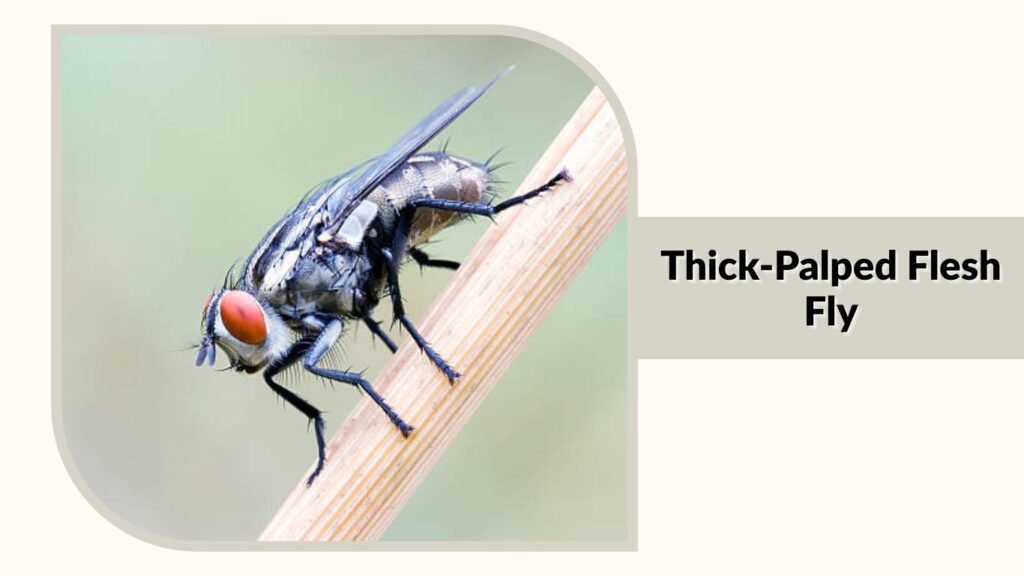
The thick-palped flesh fly is a widely distributed species associated with carrion and decomposing animal material. It is especially well known as a laboratory research insect. Scientists frequently use it to study diapause, stress tolerance, development, aging, and insect hormonal systems.
Identification
- Adult size: About 10–15 millimeters long
- Body color: Gray and black
- Thorax: Three dark stripes
- Abdomen: Distinct checkered pattern
- Eyes: Reddish-brown
- Body: Stout with numerous black bristles
Habitat and Distribution
This flesh fly occurs across many temperate and warm regions worldwide. It inhabits urban neighborhoods, farms, woodlands, grasslands, and coastal environments. Adults frequently gather around carrion, garbage, feces, animal waste, and flowering plants.
Diet and Feeding
Adults consume nectar, fruit juices, honeydew, and liquids released by decomposing organic matter. The larvae mainly feed on dead vertebrates and insects. Rarely, they may develop in contaminated living tissue and cause myiasis.
Life Cycle and Behavior
Females retain eggs until they hatch, then place live larvae onto carrion. The maggots grow rapidly and may reach their final feeding stage within several days. Mature larvae disperse, form puparia, and may enter diapause when environmental conditions become unfavorable.
4. Asian Flesh Fly (Sarcophaga peregrina)
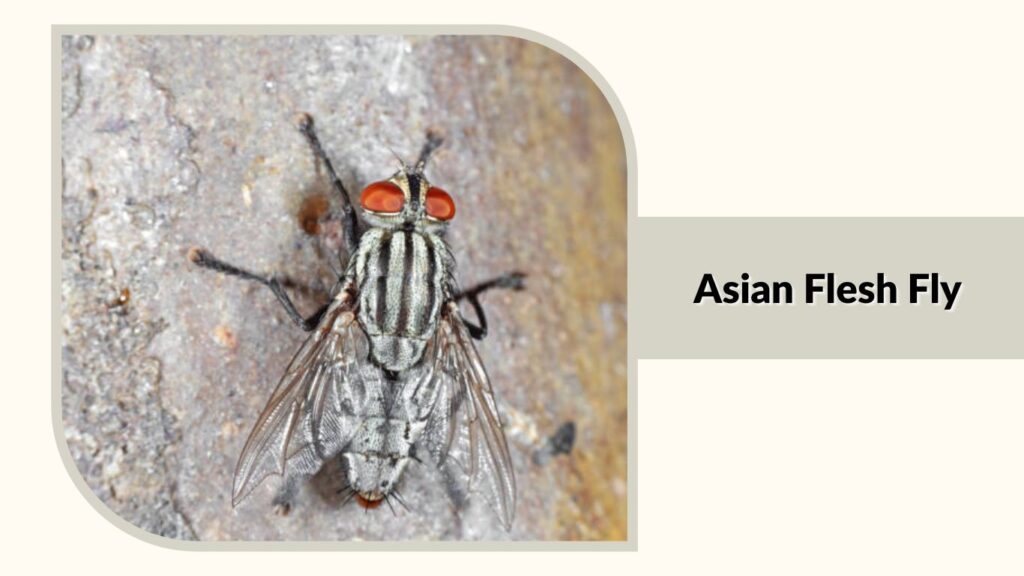
The Asian flesh fly is a human-associated species commonly found around garbage, feces, manure, carrion, and food waste. It is medically and forensically important because it may carry microorganisms, colonize human remains, and occasionally cause myiasis in people or animals.
Identification
- Adult size: About 8–14 millimeters long
- Body color: Gray and black
- Thorax: Three dark longitudinal stripes
- Abdomen: Gray-and-black checkered pattern
- Eyes: Large and red
- Tip of abdomen: Often reddish in males
Habitat and Distribution
This species occurs widely across Asia and has reached several Pacific and other warm regions. It thrives in cities, villages, markets, farms, livestock facilities, garbage areas, outdoor toilets, and natural habitats containing decomposing organic material.
Diet and Feeding
Adults consume flower nectar, fruit juices, feces, carrion fluids, and liquids from garbage. The larvae feed on decomposing tissue, manure, and other organic waste. They may occasionally develop in wounds or body cavities.
Life Cycle and Behavior
Females deposit live first-stage larvae directly onto suitable material. The larvae feed immediately, pass through three growth stages, and then move into dry surroundings to pupate. Warm temperatures can support rapid development and several generations each year.
5. Silver-Tailed Flesh Fly (Sarcophaga argyrostoma)
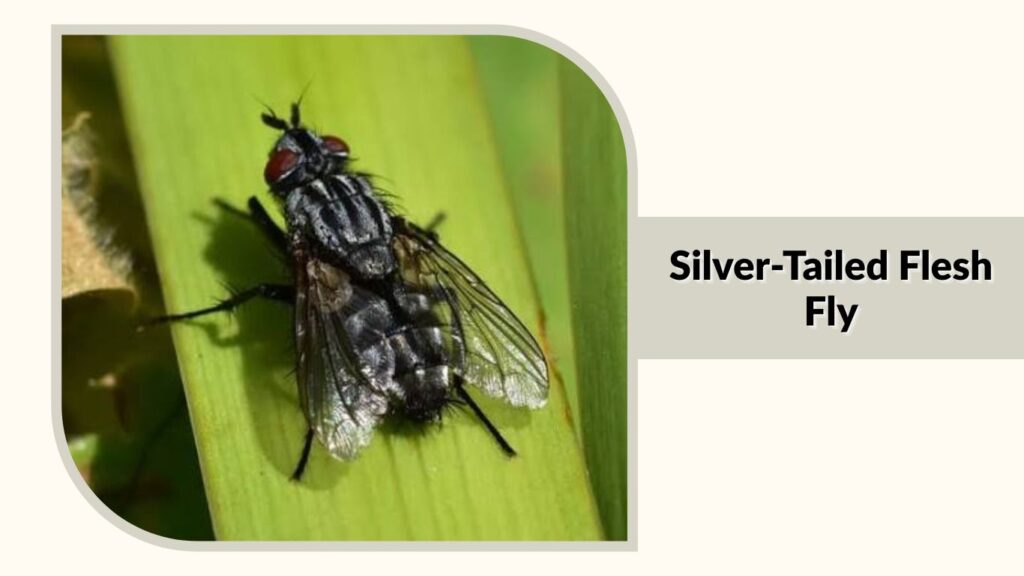
The silver-tailed flesh fly is a large species frequently associated with human settlements and animal remains. It may enter buildings to reach carrion and can colonize concealed bodies. Its predictable larval growth gives the species considerable importance in forensic entomology.
Identification
- Adult size: About 8–15 millimeters long
- Body color: Gray and black
- Thorax: Three prominent dark stripes
- Abdomen: Checkered pattern
- Eyes: Bright red
- Abdominal tip: Silvery-gray or reddish
Habitat and Distribution
This species occurs across Europe, Africa, Asia, and several other regions. It inhabits cities, farms, forests, grasslands, and coastal areas. Adults are frequently seen near garbage, carrion, feces, slaughterhouses, and animal facilities.
Diet and Feeding
Adults feed on nectar, fruit juices, fecal liquids, carrion fluids, and sugary plant secretions. Their larvae mainly consume decomposing animal tissue. Under unusual circumstances, larvae may infest damaged living tissue and produce myiasis.
Life Cycle and Behavior
Females deposit live larvae instead of laying exposed eggs. The larvae immediately burrow into suitable tissue and begin feeding. After completing three growth stages, they leave the food source and pupate in soil or another dry, protected location.
6. Dux Flesh Fly (Sarcophaga dux)
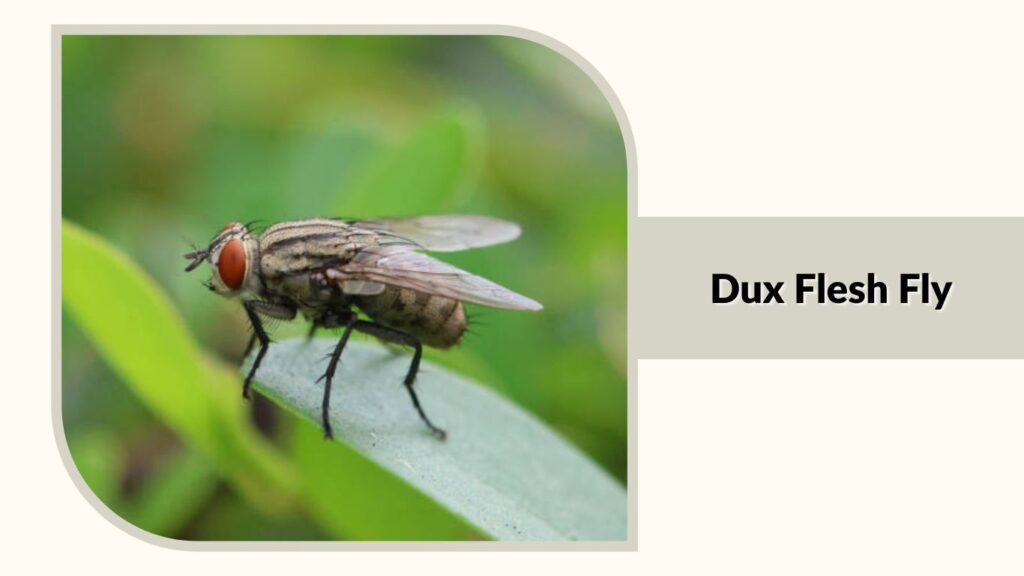
The dux flesh fly is a large, widely distributed species associated with carrion, feces, and decomposing organic matter. It is important in medical and forensic entomology because its larvae may colonize remains or occasionally infest living humans and animals.
Identification
- Adult size: About 9–16 millimeters long
- Body color: Gray or silvery-gray
- Thorax: Three black longitudinal stripes
- Abdomen: Dark checkered pattern
- Eyes: Large and reddish
- Body: Robust and heavily bristled
Habitat and Distribution
This species occurs throughout many tropical and subtropical regions of Asia, Africa, Australia, and nearby islands. Adults occupy cities, farms, forests, markets, livestock facilities, and coastal environments where organic waste is readily available.
Diet and Feeding
Adults consume nectar, fruit juices, feces, carrion fluids, and liquids from garbage. The larvae typically feed on decomposing animal matter. However, they may occasionally develop in wounds, body openings, or contaminated food and cause myiasis.
Life Cycle and Behavior
Females place living larvae directly onto carrion or another suitable feeding source. The maggots develop rapidly before leaving to pupate in dry soil. Their growth rate varies with temperature, making accurate species-level data necessary when interpreting forensic evidence.
7. Red-Horned Flesh Fly (Sarcophaga ruficornis)
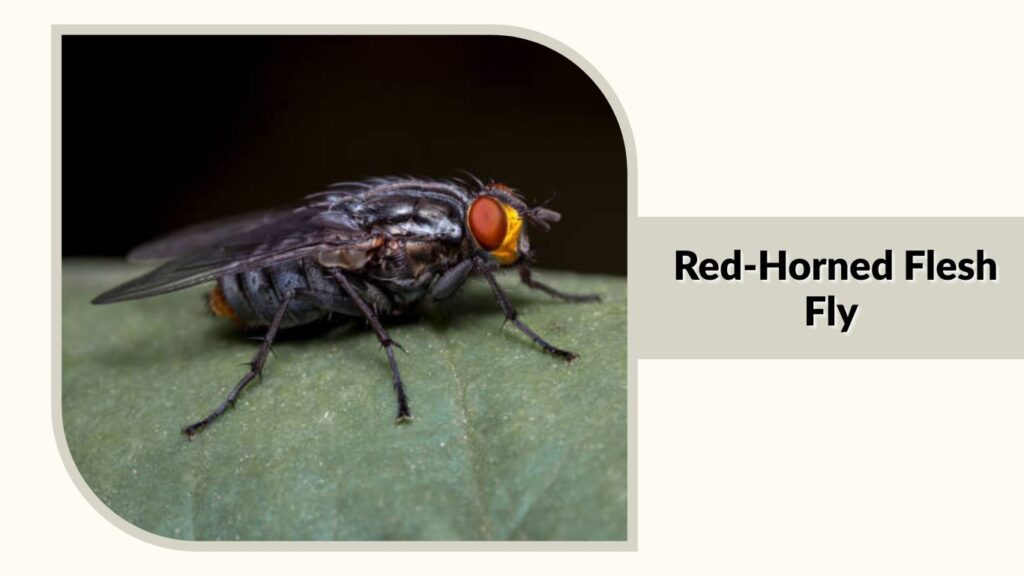
The red-horned flesh fly is a widespread species associated with feces, carrion, animal waste, and human settlements. Its larvae contribute to decomposition but can occasionally infest living tissue. The species is important in public health, veterinary medicine, and forensic investigations.
Identification
- Adult size: About 8–14 millimeters long
- Body color: Gray and black
- Thorax: Three dark longitudinal stripes
- Abdomen: Gray-and-black checkered pattern
- Eyes: Large and reddish
- Antennae: Often reddish or orange
Habitat and Distribution
This flesh fly occurs across many tropical and subtropical parts of Asia, Africa, Australia, and the Americas. It inhabits cities, farms, villages, markets, forests, livestock facilities, and locations containing organic waste.
Diet and Feeding
Adults consume flower nectar, fruit juices, fecal fluids, and liquids from carrion. The larvae develop in feces, animal remains, fish, meat, and other protein-rich material. They may occasionally infest wounds on humans or animals.
Life Cycle and Behavior
Females place living larvae directly onto suitable food. The larvae begin feeding immediately and develop through three stages before leaving to pupate. Temperature controls their growth rate, making accurate identification valuable when they are collected from remains.
8. Tibial Flesh Fly (Sarcophaga tibialis)
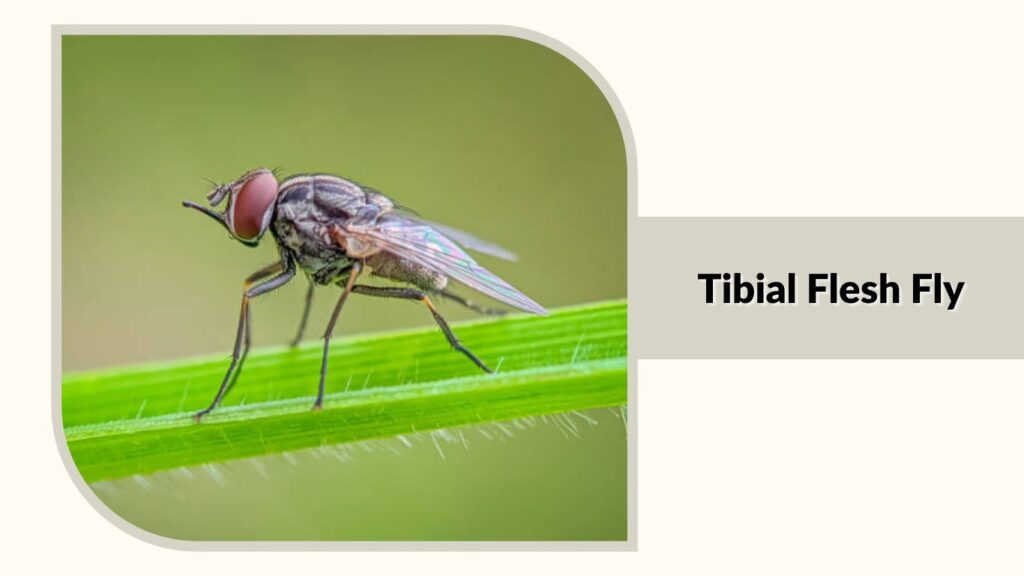
The tibial flesh fly is a carrion-breeding species that can develop in several types of animal tissue. Its larvae have been reared from fish, liver, birds, snails, and insects. Their predictable development makes this species potentially valuable in forensic entomology.
Identification
- Adult size: About 7–13 millimeters long
- Body color: Gray or silvery-gray
- Thorax: Three dark stripes
- Abdomen: Checkered black-and-gray pattern
- Eyes: Reddish-brown
- Legs: Dark and strongly bristled
Habitat and Distribution
This species has been recorded across parts of Africa, southern Europe, Asia, and other warm regions. It occupies grasslands, urban environments, farms, coastal areas, and locations where carrion or discarded animal material is available.
Diet and Feeding
Adults consume nectar, fruit juices, feces, and liquids from decomposing material. The larvae feed on carrion, including mammal, bird, fish, snail, and insect remains. They may colonize both exposed and partially sheltered animal tissue.
Life Cycle and Behavior
Females retain developing eggs and release live larvae onto suitable material. The maggots feed rapidly before entering a wandering stage and seeking dry soil for pupation. Development is most successful within a moderate temperature range.
9. Similar Flesh Fly (Sarcophaga similis)
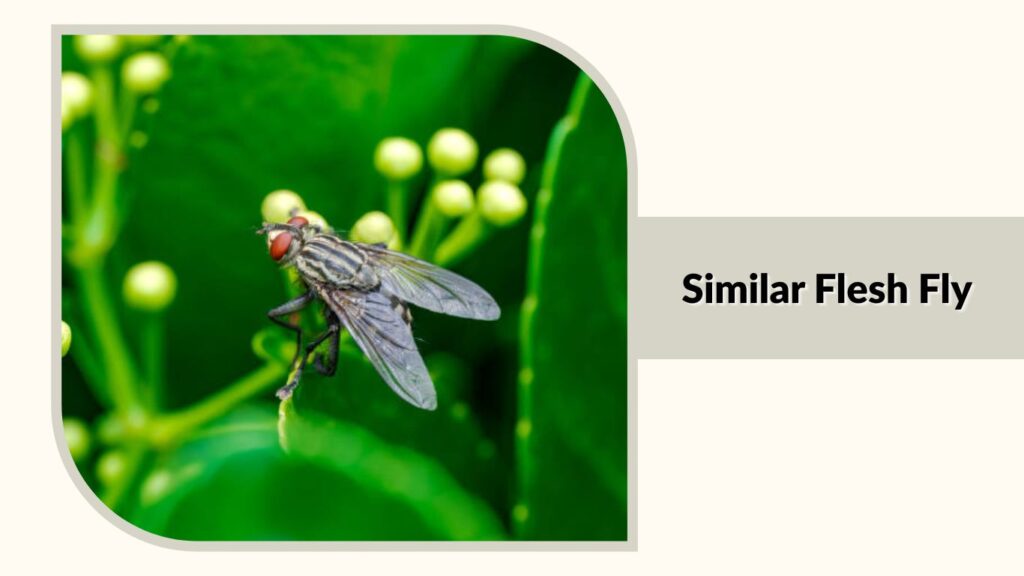
The similar flesh fly is a medium-to-large species named for its close resemblance to other members of the genus Sarcophaga. External appearance alone is usually insufficient for reliable identification. The species is associated with carrion and has forensic importance in areas where it occurs.
Identification
- Adult size: About 9–15 millimeters long
- Body color: Gray and black
- Thorax: Three dark longitudinal stripes
- Abdomen: Strong checkered pattern
- Eyes: Bright red
- Identification: Male genitalia usually require examination
Habitat and Distribution
This species occurs across parts of Europe and Asia, including several temperate regions. Adults inhabit forests, grasslands, farms, gardens, parks, and urban areas. They are often active during warm weather and rest on sunny vegetation or walls.
Diet and Feeding
Adults consume flower nectar, plant secretions, ripe fruit, fecal fluids, and carrion liquids. Their larvae mainly feed on decomposing animal remains. This association allows the species to participate in nutrient recycling and carcass breakdown.
Life Cycle and Behavior
Females deposit live larvae rather than exposed eggs. The larvae immediately enter the food source and pass through three growth stages. Mature maggots disperse into soil or leaf litter to pupate. Their temperature-dependent development may assist forensic estimates.
10. Orange-Tailed Flesh Fly (Sarcophaga africa)
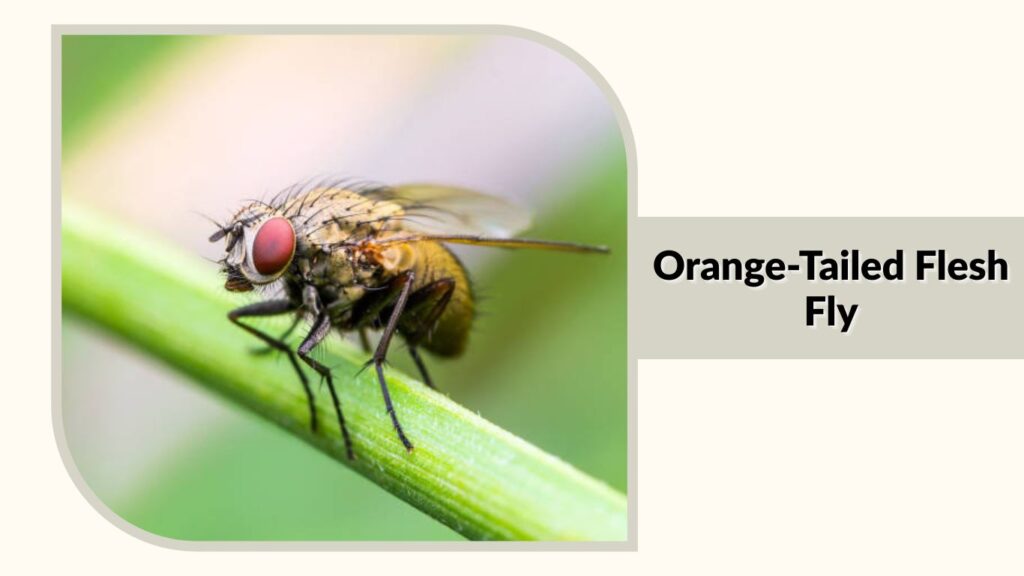
The orange-tailed flesh fly is a large, human-associated species recognized by the reddish-orange tip of its abdomen. It frequently visits feces, carrion, garbage, and other decomposing materials. Its larvae can occasionally infest living tissue and cause myiasis.
Identification
- Adult size: About 8–15 millimeters long
- Body color: Gray and black
- Thorax: Three dark stripes
- Abdomen: Checkered pattern
- Abdominal tip: Orange or reddish
- Eyes: Large and red
Habitat and Distribution
This species occurs widely across Europe, Africa, Asia, and parts of other regions. It thrives in warm urban and rural environments, including farms, gardens, markets, animal facilities, garbage areas, and outdoor toilets.
Diet and Feeding
Adults consume nectar, ripe fruit, fecal fluids, carrion liquids, and other sugary substances. Larvae develop in feces, carrion, snails, decomposing matter, and occasionally living tissue. Their feeding habits make them medically and forensically significant.
Life Cycle and Behavior
Females place newly hatched larvae directly onto a food source. The maggots feed through three developmental stages before leaving to pupate in dry material. Adults are active in sunshine and frequently rest on walls, rocks, vegetation, and fences.
11. Variegated Flesh Fly (Sarcophaga variegata)
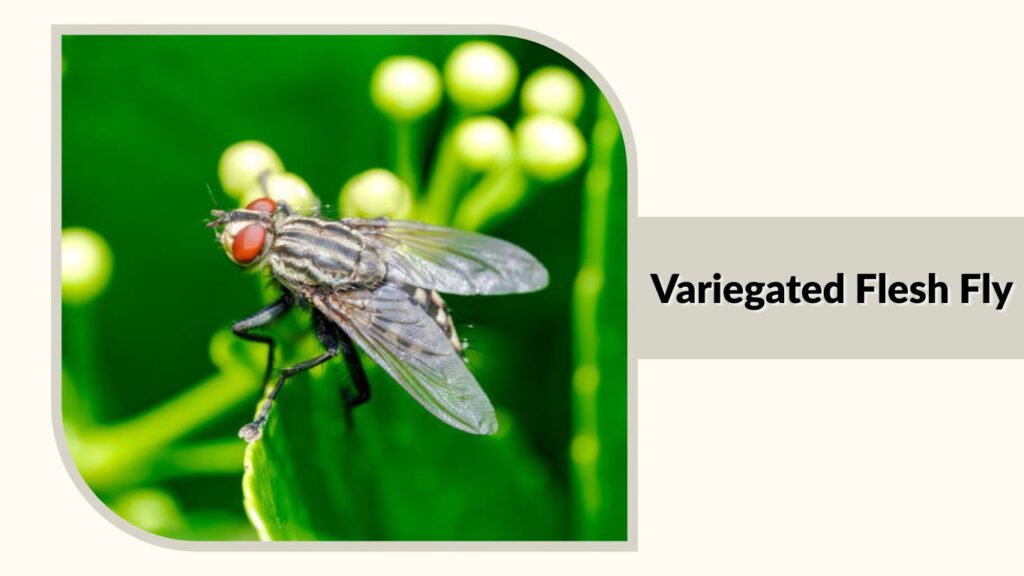
The variegated flesh fly is a large European species with the gray, striped thorax and checkered abdomen typical of its family. It is found in natural and human-modified habitats. Its larvae have been recorded from small mammal remains, meat, and dead slugs.
Identification
- Adult size: About 9–16 millimeters long
- Body color: Gray and black
- Thorax: Three prominent dark stripes
- Abdomen: Varied checkered pattern
- Eyes: Reddish
- Body: Robust with strong black bristles
Habitat and Distribution
This species occurs throughout much of Europe and into parts of western Asia. It inhabits meadows, woodland edges, farms, gardens, coastal areas, and urban green spaces. Adults often bask on warm paths, rocks, and walls.
Diet and Feeding
Adults consume flower nectar, fruit juices, dung fluids, carrion liquids, and honeydew. The larvae feed on decomposing animal material, including small mammal carcasses and dead slugs. They can also develop on meat under controlled conditions.
Life Cycle and Behavior
Females deposit living larvae on appropriate animal material. The larvae begin feeding immediately, pass through three growth stages, and then disperse to pupate. Adults visit flowers regularly but are also strongly attracted to carrion and feces.
12. White-Headed Flesh Fly (Sarcophaga albiceps)
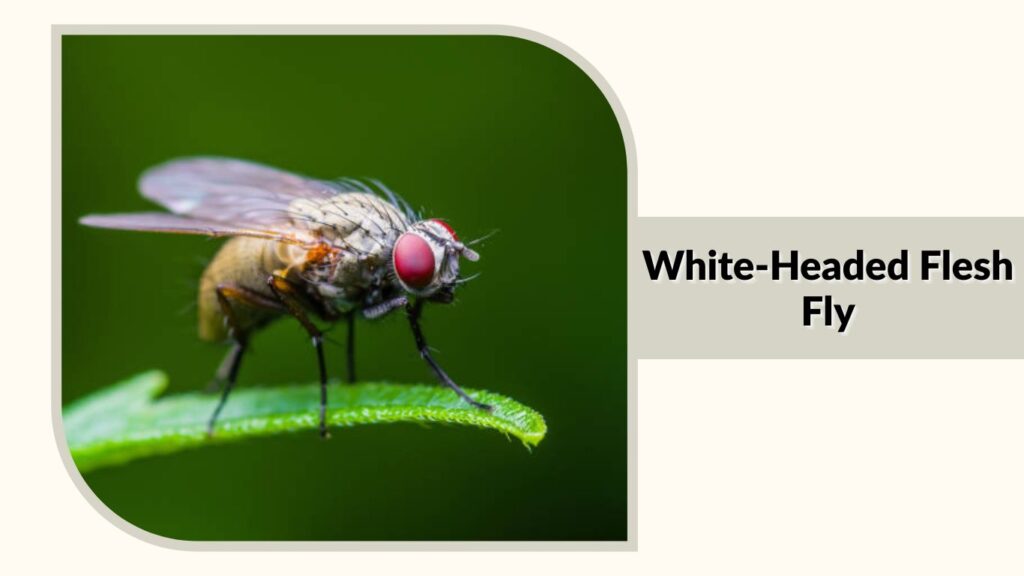
The white-headed flesh fly is a widespread species associated with carrion, feces, fish, meat, and other decomposing organic materials. It can colonize remains quickly and is therefore important in forensic investigations. Reliable identification often requires examination of microscopic features.
Identification
- Adult size: About 8–14 millimeters long
- Body color: Gray and black
- Head: Pale gray or silvery
- Thorax: Three dark longitudinal stripes
- Abdomen: Checkered pattern
- Eyes: Large and reddish
Habitat and Distribution
This species occurs across parts of Asia and Europe, including China, India, Malaysia, Germany, and Poland. It inhabits cities, villages, farms, markets, forests, grasslands, and places where carrion or organic waste accumulates.
Diet and Feeding
Adults consume nectar, fruit juices, fecal fluids, and liquids from decomposing tissue. The larvae develop in carrion, mutton, fish, feces, and other decaying animal material. They may colonize remains during daylight or nighttime.
Life Cycle and Behavior
Females deposit live larvae directly onto a suitable food source. The maggots immediately begin feeding and pass through three developmental stages. Mature larvae leave the material and pupate in dry soil. Their development rate changes according to environmental temperature.
13. Bluish Flesh Fly (Sarcophaga caerulescens)
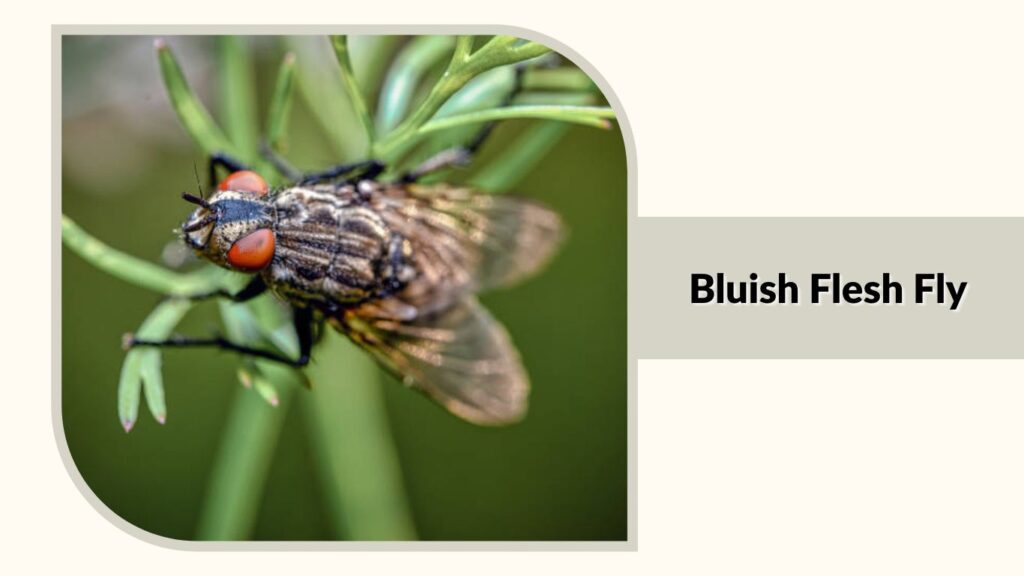
The bluish flesh fly is a large species with subtle blue-gray coloring. It is not strongly associated with people and is more commonly encountered in natural habitats. Its larvae consume animal remains and may also attack the pupae of moths.
Identification
- Adult size: About 9–15 millimeters long
- Body color: Bluish-gray and black
- Thorax: Three dark longitudinal stripes
- Abdomen: Gray-and-black checkered pattern
- Eyes: Large and red
- Body: Robust with strong bristles
Habitat and Distribution
This species occurs across much of Europe and into parts of Asia. It inhabits woodland clearings, wetlands, meadows, coastal dunes, and other relatively undisturbed environments. Adults are generally active from late spring through early autumn.
Diet and Feeding
Adults consume flower nectar, honeydew, fruit juices, dung fluids, and liquids from carrion. Their larvae feed on decomposing vertebrate and invertebrate tissue. They may also attack and consume moth pupae when suitable opportunities occur.
Life Cycle and Behavior
Females place living larvae on carrion or another appropriate food source. The larvae feed through three growth stages before leaving to pupate. Adults frequently visit flowers and rest on sunny vegetation, but they are also attracted to animal remains.
14. Prince Flesh Fly (Sarcophaga princeps)
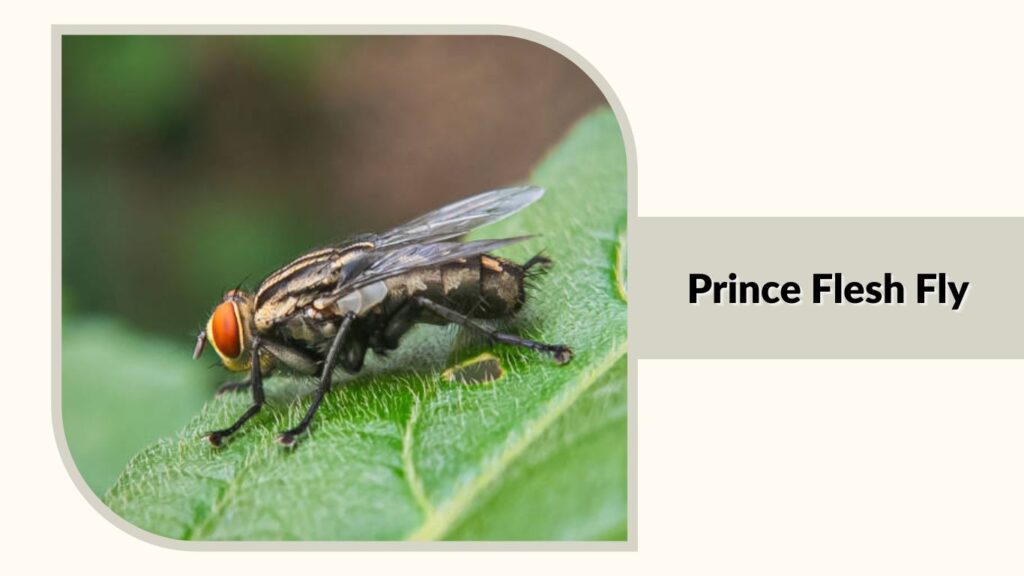
The prince flesh fly is an Asian carrion-feeding species with growing importance in forensic research. It can colonize exposed or partially buried remains, making it useful in investigations where a body has been concealed beneath soil or other material.
Identification
- Adult size: About 9–15 millimeters long
- Body color: Gray and black
- Thorax: Three prominent dark stripes
- Abdomen: Strong checkered pattern
- Eyes: Reddish-brown
- Body: Large and heavily bristled
Habitat and Distribution
This species occurs in several parts of East, South, and Southeast Asia. It inhabits forests, farms, urban areas, grasslands, and rural communities. Adults search for carrion, feces, and other decomposing animal material suitable for larval development.
Diet and Feeding
Adults consume flower nectar, plant sugars, fecal fluids, and liquids released by decomposing tissue. Their larvae primarily feed on animal remains. They can reach buried material when odors and accessible soil openings reveal a suitable feeding source.
Life Cycle and Behavior
Females release live larvae directly onto remains rather than depositing exposed eggs. The larvae immediately begin feeding before leaving to pupate. Their temperature-dependent development is being studied to improve estimates of insect age in forensic cases.
15. Lesser Worm Flesh Fly (Sarcophaga subvicina)
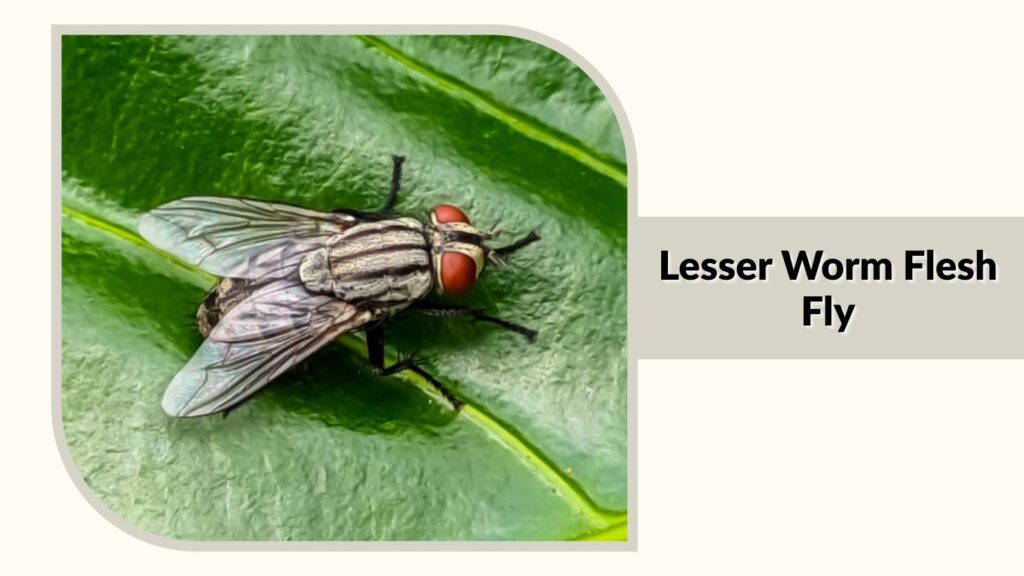
The lesser worm flesh fly is a large Palearctic species closely related to Sarcophaga carnaria. Its larvae primarily develop as parasites of earthworms, although they can sometimes survive in dead slugs or animal tissue. Adults commonly visit flowers, dung, and carrion.
Identification
- Adult size: About 8–15 millimeters long
- Body color: Gray and black
- Thorax: Three dark stripes
- Abdomen: Checkered gray-and-black pattern
- Eyes: Large and red
- Identification: Usually requires examination of male genitalia
Habitat and Distribution
This species occurs throughout much of Europe and other parts of the Palearctic region. It inhabits forests, shaded woodland edges, meadows, gardens, parks, and urban green spaces where earthworms are plentiful.
Diet and Feeding
Adults consume nectar, ripe fruit, honeydew, dung fluids, and carrion liquids. The larvae mainly parasitize earthworms, including several common soil-dwelling species. They have also been reared from dead slugs and mammal flesh.
Life Cycle and Behavior
Females deposit living larvae in places where earthworms can be reached. After entering a host, the larvae feed and grow before leaving to pupate in soil. Adults are often active during summer and may prefer shaded forest environments.
16. Spotted Flesh Fly (Wohlfahrtia magnifica)
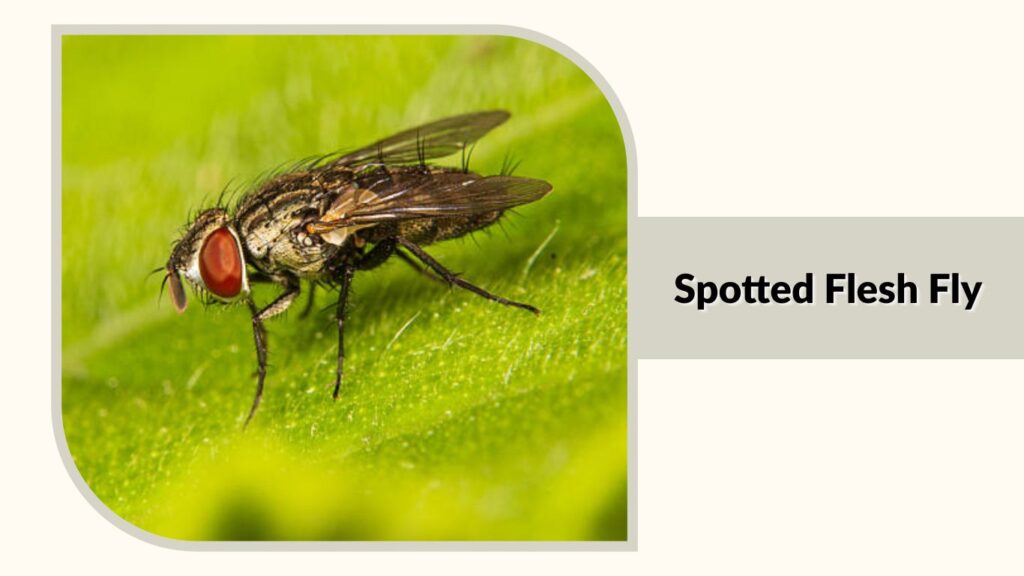
The spotted flesh fly is an obligate parasite whose larvae must feed on living tissue. It causes traumatic myiasis in livestock, wildlife, and occasionally humans. Infestations can produce deep wounds, severe tissue damage, secondary infection, and serious economic losses on farms.
Identification
- Adult size: About 8–14 millimeters long
- Body color: Gray or silvery-gray
- Thorax: Three dark longitudinal stripes
- Abdomen: Rows of distinct black spots
- Eyes: Reddish-brown
- Body: Strong and bristled
Habitat and Distribution
This species occurs across the Mediterranean region, the Middle East, southeastern Europe, North Africa, and parts of Asia. It is most common in warm, dry livestock-producing areas containing sheep, goats, cattle, horses, or other mammals.
Diet and Feeding
Adults consume nectar and other sugary plant liquids. Their larvae feed exclusively on living animal tissue. Females place them in wounds, mucous membranes, or natural body openings, where they burrow and enlarge the damaged area.
Life Cycle and Behavior
Females release live larvae directly onto a suitable host. The larvae feed rapidly before falling to the ground and pupating in soil. Because infestations can worsen quickly, affected people or animals require prompt professional medical or veterinary treatment.
17. Fox Maggot Fly (Wohlfahrtia vigil)
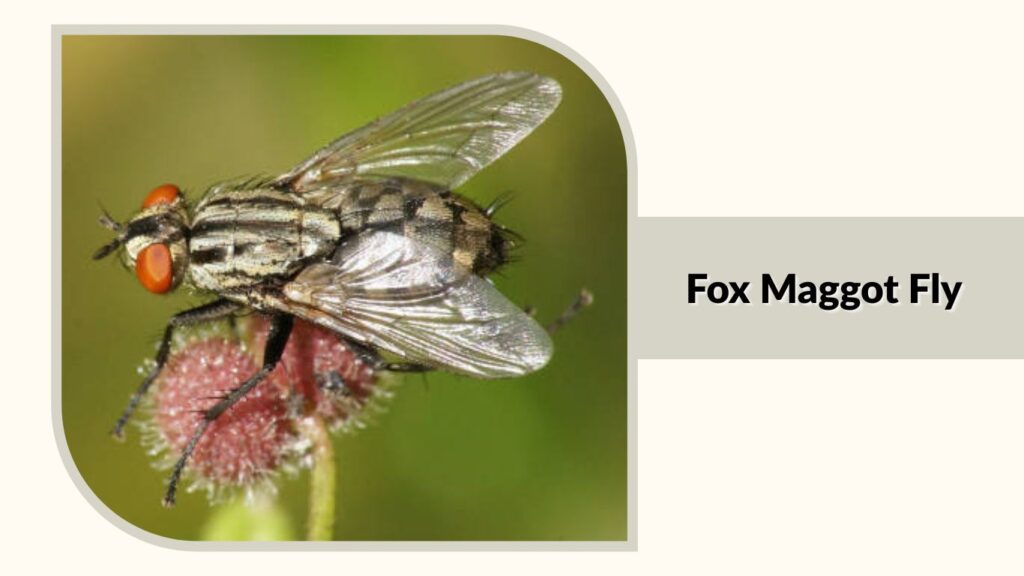
The fox maggot fly is a North American flesh fly whose larvae cause furuncular myiasis in mammals. Females may place larvae directly on a host or nearby surfaces. The larvae penetrate the skin and create swollen, boil-like lesions while developing beneath it.
Identification
- Adult size: About 8–13 millimeters long
- Body color: Gray or silvery-gray
- Thorax: Three dark longitudinal stripes
- Abdomen: Rows of dark spots
- Eyes: Reddish-brown
- Body: Strongly bristled
Habitat and Distribution
This species occurs mainly across Canada and the northern United States. It inhabits forests, grasslands, farms, animal dens, and suburban areas. Infestations are more frequently reported during warmer months when adult flies are active.
Diet and Feeding
Adults consume nectar and other sugary plant liquids. Their larvae feed on living tissue beneath the skin of mammals. Hosts can include foxes, mink, rabbits, dogs, cats, and occasionally humans, particularly infants.
Life Cycle and Behavior
Females deposit live larvae near or directly on a host. The larvae penetrate the skin individually and develop within boil-like swellings. Mature larvae leave the host, fall onto the ground, and pupate in soil before emerging as adults.
18. Nuba Flesh Fly (Wohlfahrtia nuba)
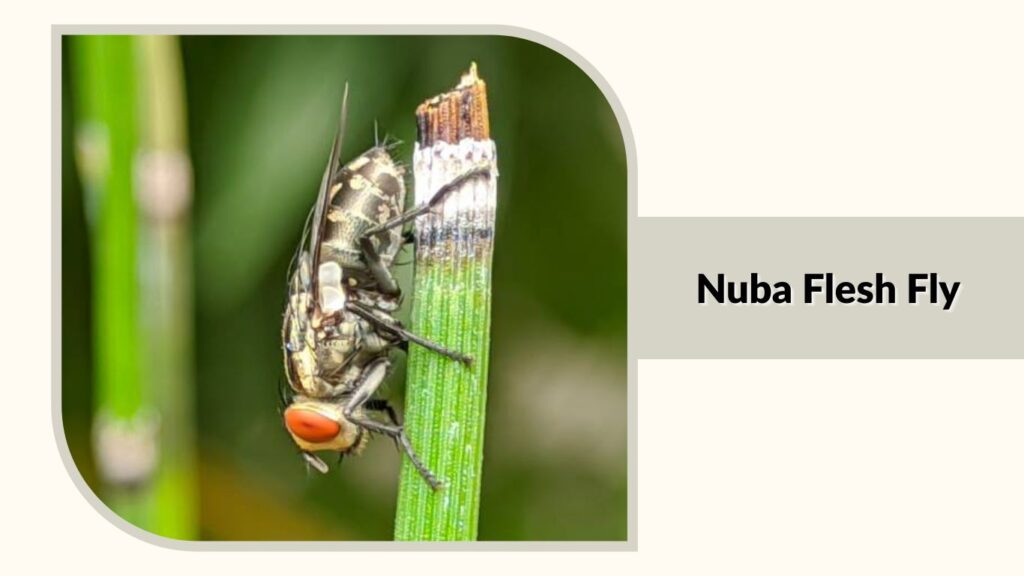
The Nuba flesh fly is a warm-climate species associated with carrion, wounds, and decaying animal material. Its larvae may cause facultative myiasis in livestock and humans, generally developing in dead, diseased, or damaged tissue rather than healthy flesh.
Identification
- Adult size: About 7–13 millimeters long
- Body color: Gray or silvery
- Thorax: Three dark stripes
- Abdomen: Dark spots or checkered markings
- Eyes: Large and reddish
- Body: Robust with black bristles
Habitat and Distribution
This species is widely distributed across North and East Africa, the Middle East, and parts of South Asia. It inhabits deserts, dry grasslands, farms, livestock facilities, villages, and urban areas where animal remains or wounds are available.
Diet and Feeding
Adults feed on nectar, fruit juices, and other sugary liquids. Their larvae consume carrion and damaged animal tissue. They may infest neglected livestock wounds and occasionally affect humans, particularly where injuries remain exposed.
Life Cycle and Behavior
Females deposit living larvae onto carrion, diseased tissue, or contaminated wounds. The larvae feed rapidly before leaving the material and pupating in dry soil. Warm conditions can support repeated generations and extend the period of adult activity.
19. Golden-Mouthed Flesh Fly (Peckia chrysostoma)
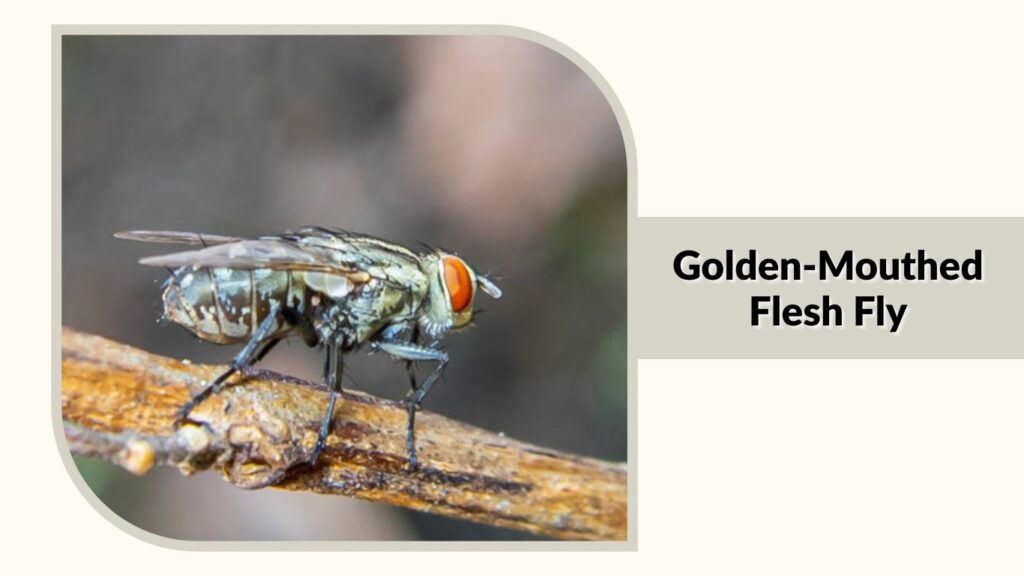
The golden-mouthed flesh fly is a large Neotropical species strongly associated with carrion and human-modified environments. It is an important decomposer and forensic indicator because its larvae frequently colonize animal and human remains in tropical and subtropical regions.
Identification
- Adult size: About 9–15 millimeters long
- Body color: Gray and black
- Thorax: Three dark longitudinal stripes
- Abdomen: Checkered pattern
- Eyes: Large and red
- Mouthparts: Yellowish or golden
Habitat and Distribution
This species ranges from the southern United States through Central America and much of South America. It inhabits forests, farms, cities, grasslands, markets, and coastal environments. Adults are frequently attracted to carrion, feces, and decomposing fish.
Diet and Feeding
Adults consume flower nectar, fruit juices, fecal fluids, and carrion liquids. Their larvae feed mainly on decomposing animal tissue. The species can thrive in both forests and heavily modified urban environments.
Life Cycle and Behavior
Females usually place living larvae directly onto suitable remains, although egg deposition has occasionally been observed. The larvae feed through three stages and then disperse rapidly, burrowing into soil to pupate. Temperature strongly influences their development.
20. Intermutans Flesh Fly (Peckia intermutans)
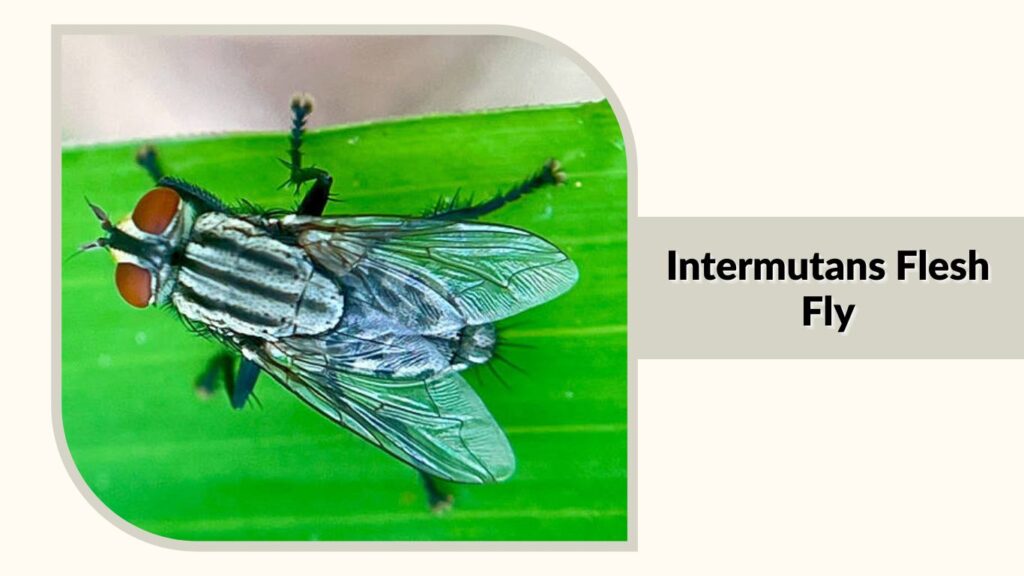
Peckia intermutans is a large Neotropical flesh fly associated with animal remains. It commonly occurs in forensic insect communities and may help investigators estimate when decomposition began. Adults are difficult to distinguish from related species without close examination.
Identification
- Adult size: About 9–15 millimeters long
- Body color: Gray or silvery-gray
- Thorax: Three dark stripes
- Abdomen: Black-and-gray checkered pattern
- Eyes: Large and red
- Body: Robust with prominent bristles
Habitat and Distribution
This species occurs across several parts of South America, particularly in Brazil and surrounding countries. It inhabits Atlantic forests, grasslands, farms, cities, and coastal areas. Adults may occur in both preserved habitats and locations altered by people.
Diet and Feeding
Adults consume nectar, fruit juices, fecal fluids, and liquids from decomposing tissue. Their larvae primarily feed on carrion. They may develop in mammal, bird, or other vertebrate remains when sufficient moisture and protein are available.
Life Cycle and Behavior
Females release live larvae onto suitable animal material. The maggots begin feeding immediately and develop through three stages before dispersing. Mature larvae burrow into soil or sheltered debris, form puparia, and later emerge as adults.
21. Lambens Flesh Fly (Peckia lambens)
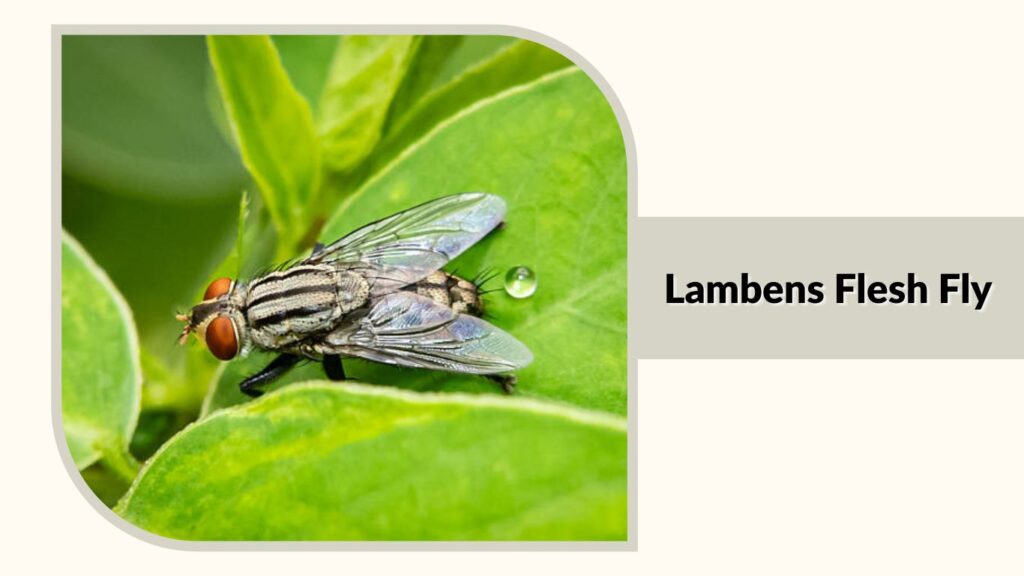
The lambens flesh fly is a widespread Neotropical species associated with carrion and advanced decomposition. It has a strong relationship with human-modified habitats and is important in medical, veterinary, and forensic entomology. Its larvae may occasionally produce myiasis.
Identification
- Adult size: About 7–13 millimeters long
- Body color: Gray and black
- Thorax: Three dark longitudinal stripes
- Abdomen: Checkered gray-and-black pattern
- Eyes: Reddish
- Body: Bristled and moderately robust
Habitat and Distribution
This species occurs from warmer portions of North America through Central America, the Caribbean, and South America. It inhabits forests, farms, cities, garbage areas, livestock facilities, and places containing decomposing animal material.
Diet and Feeding
Adults consume flower nectar, fruit juices, feces, and carrion fluids. Their larvae mainly feed on decomposing tissue and are often associated with later stages of decay. Rarely, they may develop in wounds and cause myiasis.
Life Cycle and Behavior
Females place living larvae directly on carrion or damaged tissue. The larvae feed, disperse from the source, and quickly burrow after reaching suitable soil. They pupate underground before emerging as adults, with development speed controlled by temperature.
22. Comb-Legged Flesh Fly (Ravinia pernix)
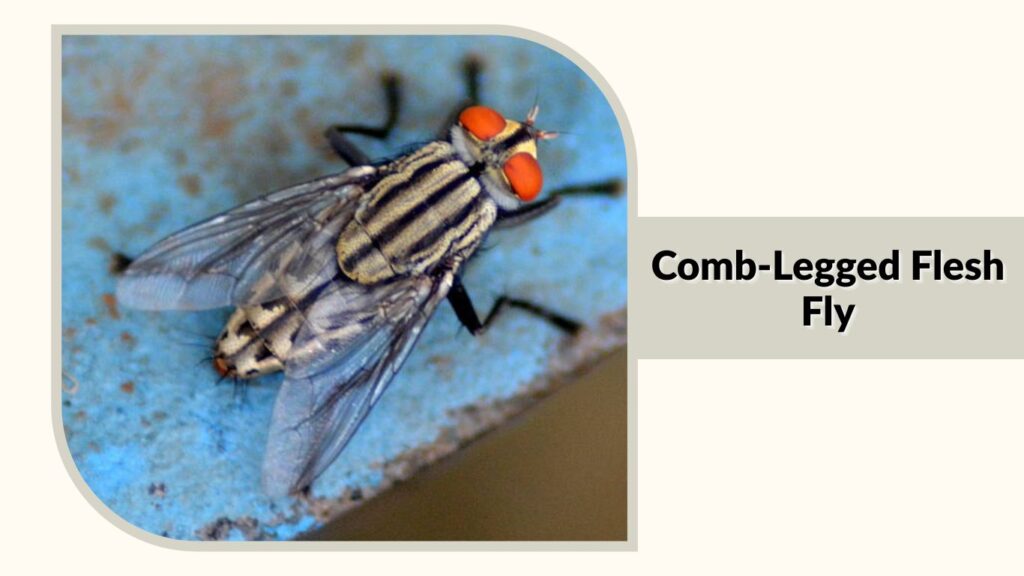
The comb-legged flesh fly is a relatively small species associated mainly with feces, dung, and carrion. Its larvae may also prey on other insects developing within these materials. Adults can visit human environments, potentially carrying microorganisms from waste onto exposed surfaces.
Identification
- Adult size: About 4–10 millimeters long
- Body color: Gray and black
- Thorax: Three dark longitudinal stripes
- Abdomen: Checkered pattern
- Abdominal tip: Often reddish
- Legs: Males have distinctive comb-like structures
Habitat and Distribution
This species is widely distributed across Europe and parts of Asia, with records from other regions. It inhabits grasslands, coastal dunes, grazing marshes, farms, brownfield sites, wetlands, and urban green spaces.
Diet and Feeding
Adults consume nectar, fruit juices, fecal fluids, and carrion liquids. The larvae feed in dung, feces, and animal remains. They may also consume other dung-dwelling larvae and occasionally parasitize immature moths, beetles, or grasshoppers.
Life Cycle and Behavior
Females place live larvae directly into suitable organic material. The larvae feed rapidly and may behave as both scavengers and predators. After completing development, they leave the breeding material and pupate in dry soil or sheltered debris.
23. Lherminier’s Flesh Fly (Ravinia lherminieri)
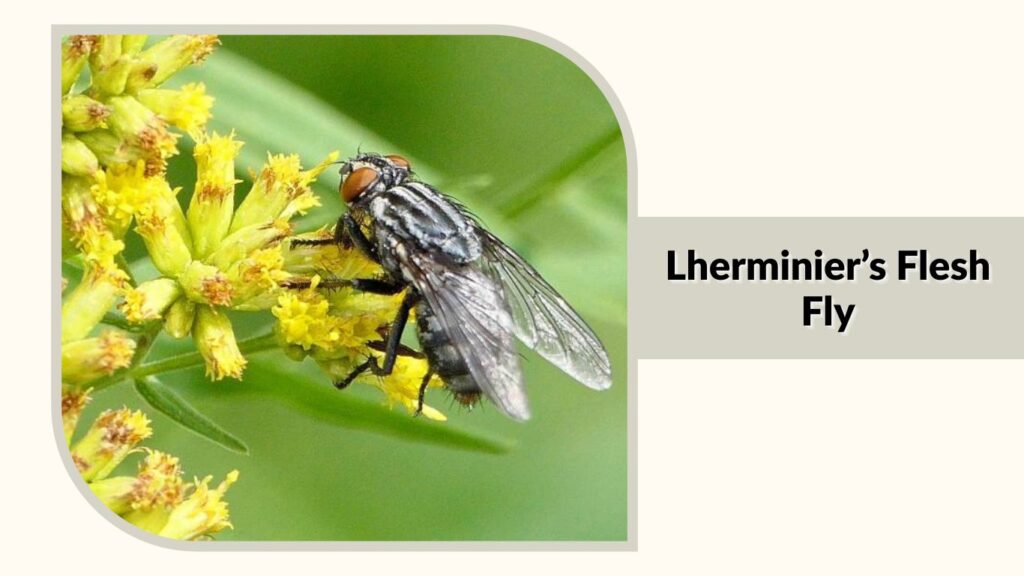
Lherminier’s flesh fly is a North American dung-breeding species whose larvae act as scavengers and predators. They can survive on cattle feces alone but develop more successfully when other fly eggs or larvae are available as prey.
Identification
- Adult size: About 5–10 millimeters long
- Body color: Gray or silvery-gray
- Thorax: Three dark stripes
- Abdomen: Black-and-gray checkered pattern
- Eyes: Large and reddish
- Body: Compact with strong bristles
Habitat and Distribution
This species occurs across the United States, Canada, and several other parts of the Americas. It inhabits cattle pastures, farms, grasslands, livestock facilities, and natural areas where mammal dung is readily available.
Diet and Feeding
Adults consume flower nectar, fruit juices, dung fluids, and other sugary liquids. The larvae develop mainly in cattle feces. They also prey on face fly eggs and maggots, potentially reducing the number of these livestock pests.
Life Cycle and Behavior
Females deposit living larvae in fresh dung. The larvae consume fecal material and attack competing immature flies. Mature larvae leave the dung, burrow into nearby soil, and form puparia. Adults later emerge and search for mates and new dung deposits.
24. Thornax Flesh Fly (Oxysarcodexia thornax)
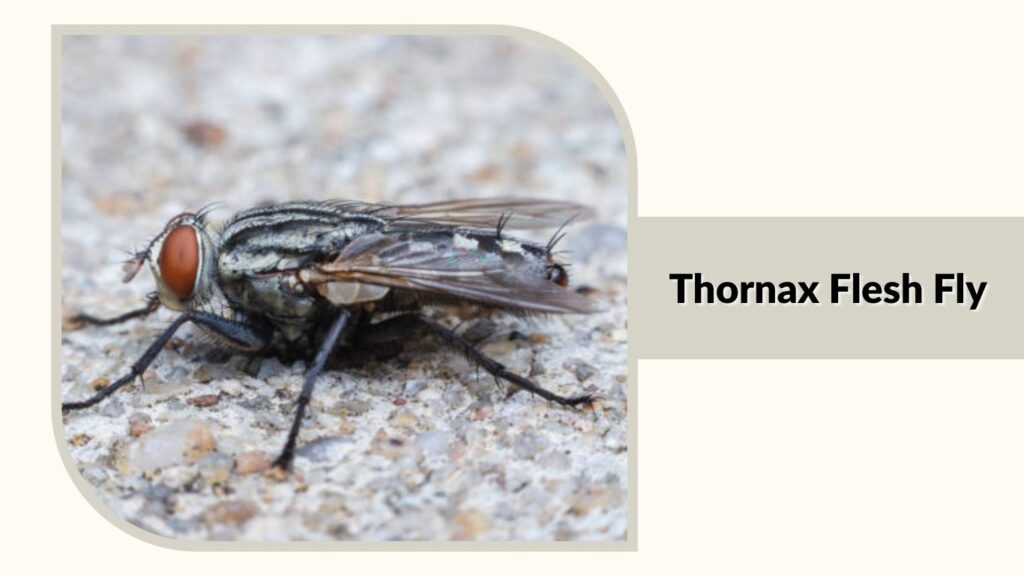
The thornax flesh fly is a small New World species associated primarily with dung and feces. It also visits carrion and other decomposing animal material. Its larvae contribute to waste breakdown, while adults may participate in forensic insect communities around animal remains.
Identification
- Adult size: About 5–10 millimeters long
- Body color: Gray or silvery
- Thorax: Three dark longitudinal stripes
- Abdomen: Checkered or spotted pattern
- Eyes: Large and red
- Body: Small but strongly bristled
Habitat and Distribution
This species occurs widely across tropical and subtropical parts of the Americas. It inhabits forests, grasslands, farms, cities, livestock areas, and coastal environments. Adults are particularly abundant where human or animal feces accumulate.
Diet and Feeding
Adults consume nectar, fruit juices, fecal fluids, and liquids from carrion. The larvae primarily develop in dung and human feces, although they have also been collected from fish and decomposing cattle organs.
Life Cycle and Behavior
Females deposit live larvae directly onto suitable waste. The larvae immediately begin feeding and pass through several developmental stages. They later disperse into soil or dry debris to pupate. Warm temperatures can support multiple generations throughout the year.
25. Western Tricharaea Flesh Fly (Tricharaea occidua)
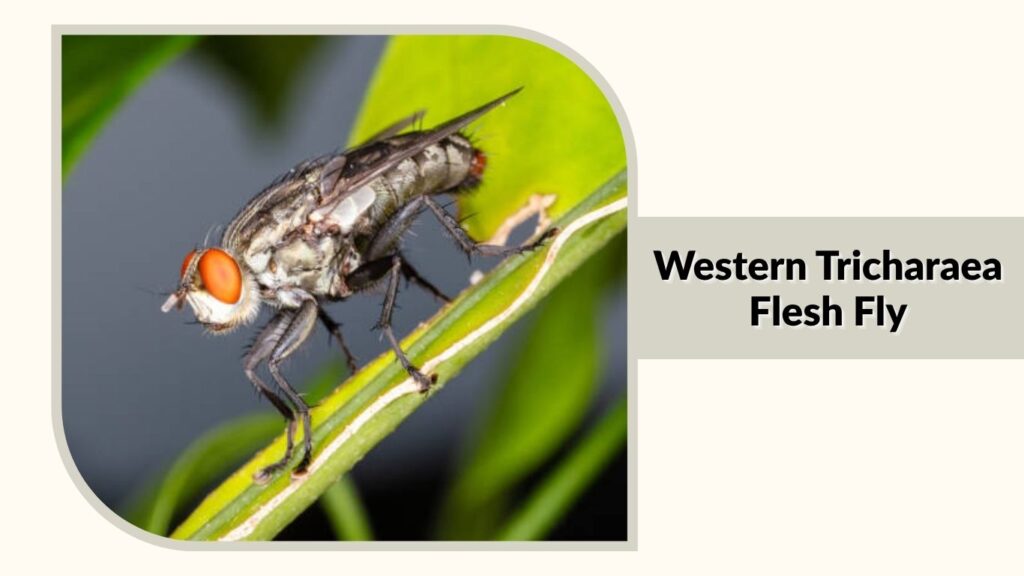
Tricharaea occidua is a small, widespread flesh fly associated with dung, carrion, and tropical decomposition. It can become one of the most abundant sarcophagid species in dry forests and human-modified landscapes. Its larvae may provide valuable forensic evidence.
Identification
- Adult size: About 4–9 millimeters long
- Body color: Gray and black
- Thorax: Dark longitudinal stripes
- Abdomen: Gray-and-black checkered pattern
- Eyes: Reddish
- Body: Small and moderately bristled
Habitat and Distribution
This species occurs widely throughout the Americas, particularly in tropical and subtropical regions. It inhabits dry forests, grasslands, farms, urban communities, coastlines, and rural areas containing carrion, dung, or organic waste.
Diet and Feeding
Adults consume nectar, fruit liquids, fecal fluids, and moisture from decomposing tissue. The larvae develop in animal remains and dung. Their carrion-feeding behavior makes the species relevant to ecological decomposition studies and forensic investigations.
Life Cycle and Behavior
Females place living larvae onto suitable feeding material. The maggots grow through three stages before leaving to pupate. Development varies with temperature, habitat, and food quality. Adults frequently visit bait, feces, and carcasses while searching for nutrients or breeding sites.