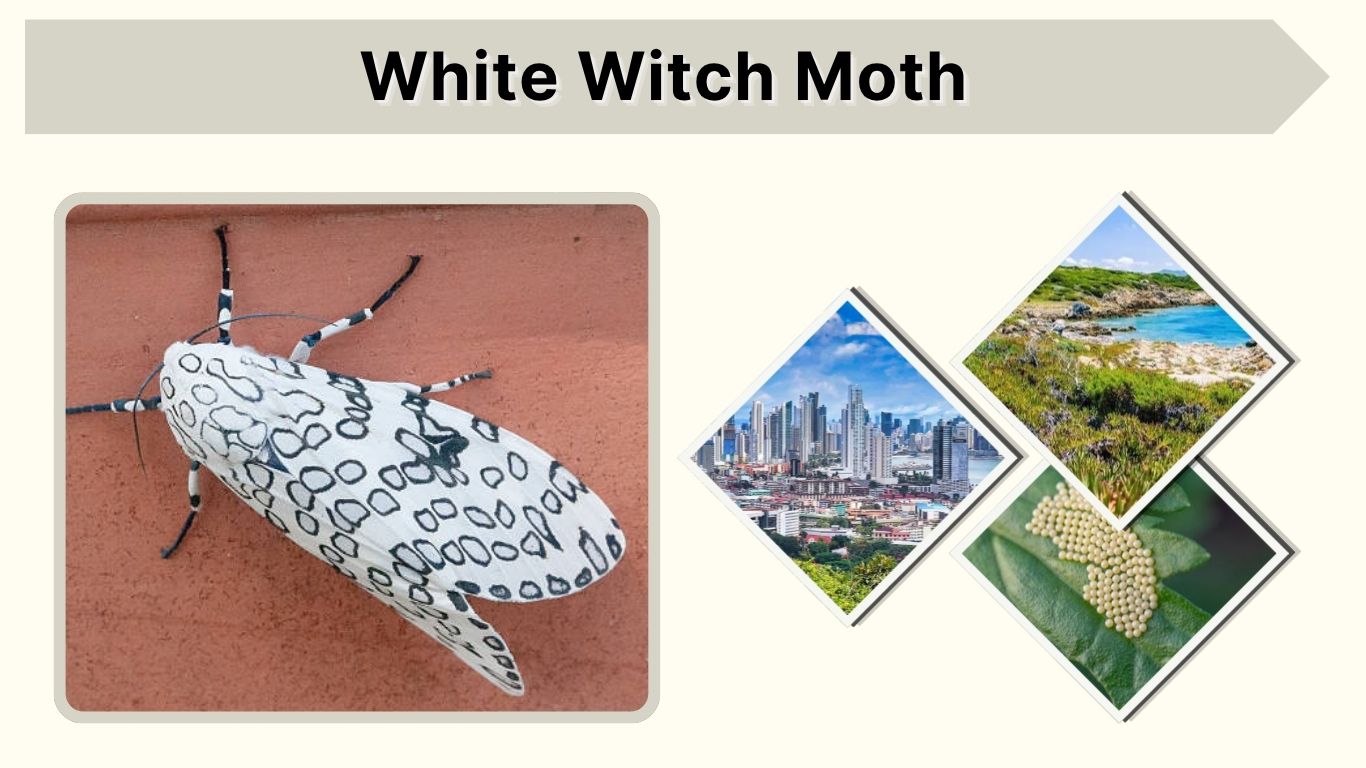
The white witch moth (Thysania agrippina) is one of the largest and most impressive moths in the world. Famous for its enormous wingspan and beautifully patterned gray-white wings, this tropical moth is found mainly in Central and South America. Its remarkable size, unusual appearance, and nocturnal habits have made it popular among insect enthusiasts. Below, you’ll learn about the white witch moth’s size, caterpillar, habitat, diet, lifespan, life cycle, symbolism, and how it compares with the Atlas moth.
What Is a White Witch Moth?
The white witch moth is a giant nocturnal moth belonging to the family Erebidae. Its scientific name is Thysania agrippina. It is also sometimes called the great gray witch, ghost moth, or birdwing moth because of its enormous wings. Despite its dramatic appearance and name, the species is harmless to humans.
White Witch Moth Identification
You can recognize an adult white witch moth by several distinctive characteristics:
- Scientific name: Thysania agrippina
- Family: Erebidae
- Extremely broad wings
- Pale gray, white, or cream coloration
- Numerous dark brown or black zigzag markings
- Flattened resting posture against tree trunks
- Long, relatively narrow body compared with its wings
- Large compound eyes adapted for nighttime activity
The intricate patterns on its wings help the moth blend with tree bark during daylight hours.
White Witch Moth Face
When viewed closely, the white witch moth has a surprisingly detailed face. Its two large compound eyes allow it to detect movement and limited light during nighttime activity.
The antennae help it detect chemical signals in the environment, particularly pheromones released by potential mates. Its face and body are covered with tiny scales and hair-like structures that give it a soft appearance.
White Witch Moth Size and Wingspan
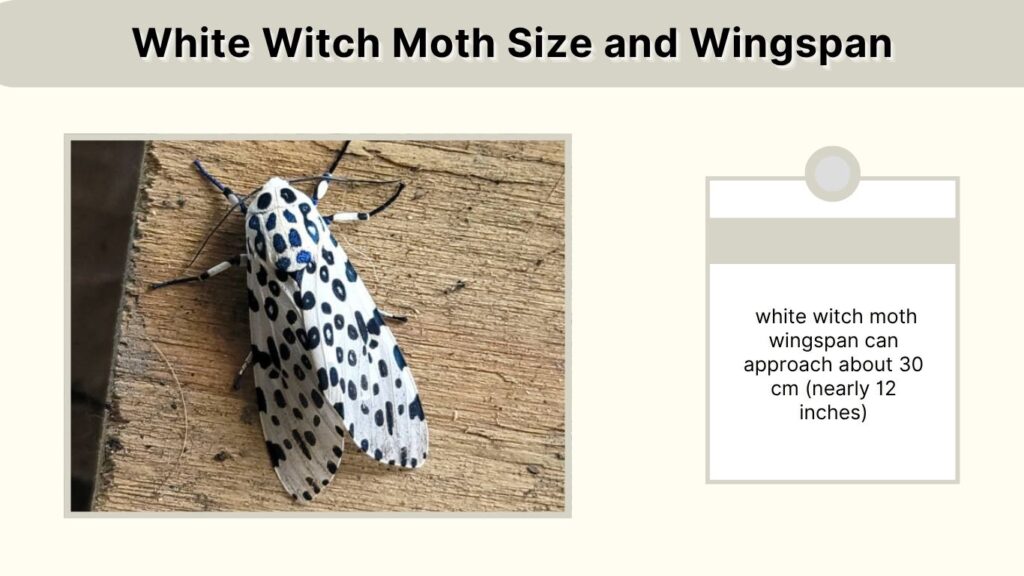
Size is the feature that makes the white witch moth especially famous. Although its body itself is not extraordinarily long, the enormous wings can make an adult appear much larger than most other moth species.
Some exceptionally large specimens have achieved wingspans that rival those of small birds.
How Big Is a White Witch Moth?
An adult white witch moth generally has a relatively slender body combined with extremely long wings. When resting with its wings spread across a tree trunk, it can cover a surprisingly large area.
Females may grow particularly large because they need enough body mass to produce eggs.
White Witch Moth Wingspan
The white witch moth wingspan can approach about 30 cm (nearly 12 inches) in exceptional specimens. More typical individuals may be somewhat smaller.
Its immense wingtip-to-wingtip measurement has earned it recognition as one of the world’s largest moths by wingspan.
The broad wings allow the moth to fly efficiently through tropical forests while searching for mates and suitable habitat.
White Witch Moth Caterpillar and Life Cycle
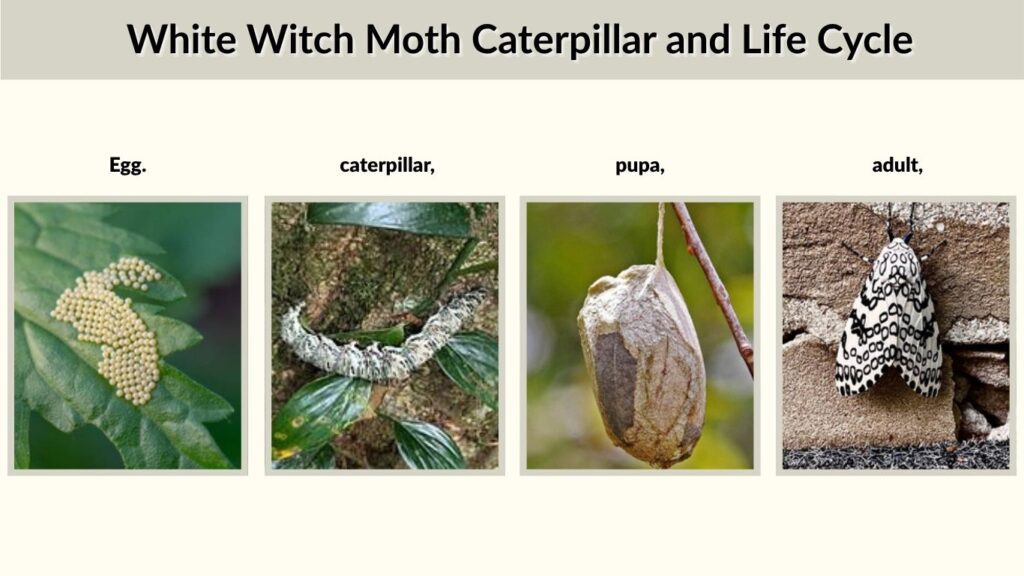
Like other moths, the white witch goes through complete metamorphosis. Its life begins as an egg before progressing through larval, pupal, and adult stages.
Much of its physical growth occurs during the caterpillar stage rather than after becoming an adult.
White Witch Moth Caterpillar
The white witch moth caterpillar is considerably different from the elegant adult. The larvae are large-bodied caterpillars adapted for feeding heavily on vegetation.
During this period, their main purpose is to consume enough plant material to support rapid growth and store energy for metamorphosis.
They molt several times as their bodies increase in size.
White Witch Moth Pupa
Once fully grown, the caterpillar enters the pupal stage. Inside the pupa, its body undergoes a dramatic transformation.
Larval tissues are reorganized as adult structures such as wings, antennae, and reproductive organs develop.
After metamorphosis is complete, the adult moth emerges and allows its wings to expand and harden before flying.
White Witch Moth Life Cycle
The four basic life stages are:
- Egg: Females lay eggs on or around suitable host plants.
- Larva: Caterpillars hatch and feed heavily on vegetation.
- Pupa: The mature caterpillar transforms into a pupa.
- Adult: The giant winged moth emerges and begins searching for mates.
Environmental conditions such as temperature, rainfall, and food availability can influence development.
White Witch Moth Habitat and Range
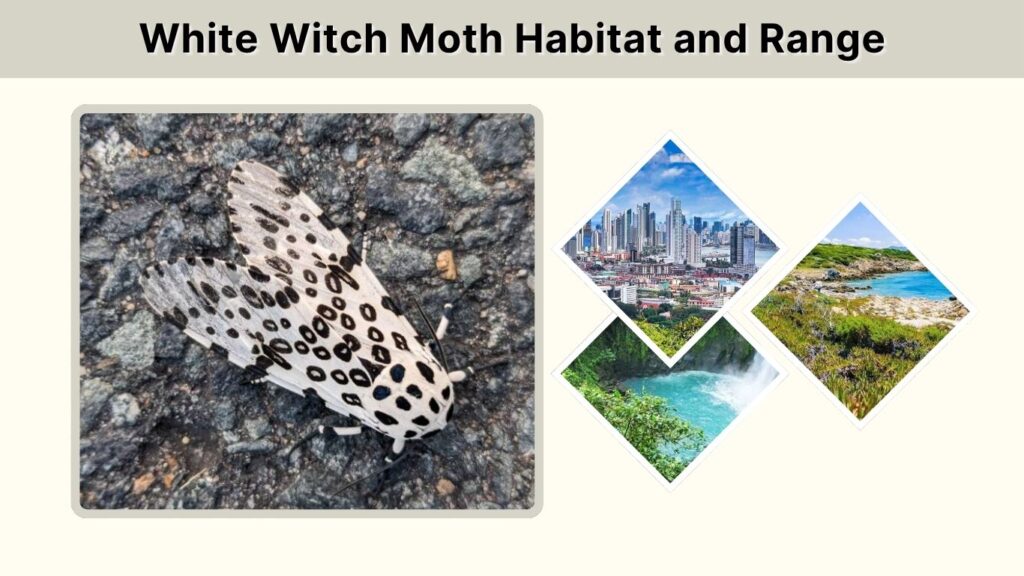
White witch moths are strongly associated with warm tropical and subtropical environments. Dense vegetation provides caterpillar food, daytime hiding places, and suitable conditions for reproduction.
The species occurs across a large portion of the tropical Americas and can occasionally appear outside its usual range.
Where Do White Witch Moths Live?
The white witch moth range extends through parts of:
- Mexico
- Central America
- Costa Rica
- Panama
- Colombia
- Venezuela
- Ecuador
- Peru
- Brazil
- Other tropical areas of South America
Occasional individuals may wander considerably beyond their usual tropical distribution.
White Witch Moth Habitat
Typical habitat includes tropical forests and other heavily vegetated environments.
Adults often rest flat against large tree trunks during daylight. Their pale gray and brown patterns closely resemble bark, making the moth difficult for predators to detect.
At night, adults become much more active.
White Witch Moth Habitat Temperature
White witch moths are adapted primarily to warm climates. Tropical environments provide the temperatures and humidity needed for larval development and year-round plant growth.
They are therefore much less common in locations experiencing long periods of freezing weather.
White Witch Moth Diet and Feeding Behavior
Diet changes dramatically during the moth’s development. Caterpillars are the main feeding stage, while adult moths devote considerably more energy to reproduction and finding mates.
Host-plant availability is especially important because developing larvae require substantial amounts of vegetation.
What Do White Witch Caterpillars Eat?
White witch moth larvae feed on plant leaves. They are associated with tropical vegetation and are believed to use plants from groups including the legume family.
Their strong chewing mouthparts allow them to consume leaves rapidly while growing.
What Do Adult White Witch Moths Eat?
Adult feeding behavior is less prominent than caterpillar feeding. Like many large moths, adults have limited nutritional demands compared with rapidly growing larvae.
The energy stored during the caterpillar stage therefore plays an important role during adulthood.
White Witch Moth Lifespan and Behavior
The complete lifespan of a white witch moth includes its egg, caterpillar, pupal, and adult stages. Exact development time can vary considerably depending on climate and environmental conditions.
The adult portion represents only one phase of its overall life cycle.
Are White Witch Moths Nocturnal?
Yes. White witch moths are primarily active at night.
During daylight hours, they commonly remain motionless against tree trunks or similar surfaces. Their camouflage makes them exceptionally difficult to notice.
Once darkness arrives, they may fly through the forest searching for mates.
Is the White Witch Moth Dangerous?
No. White witch moths are not dangerous to humans.
They do not have a venomous sting and are not aggressive. Their enormous wingspan can appear intimidating when one suddenly flies nearby, but the moth normally attempts to escape rather than defend itself.
White Witch Moth vs Atlas Moth
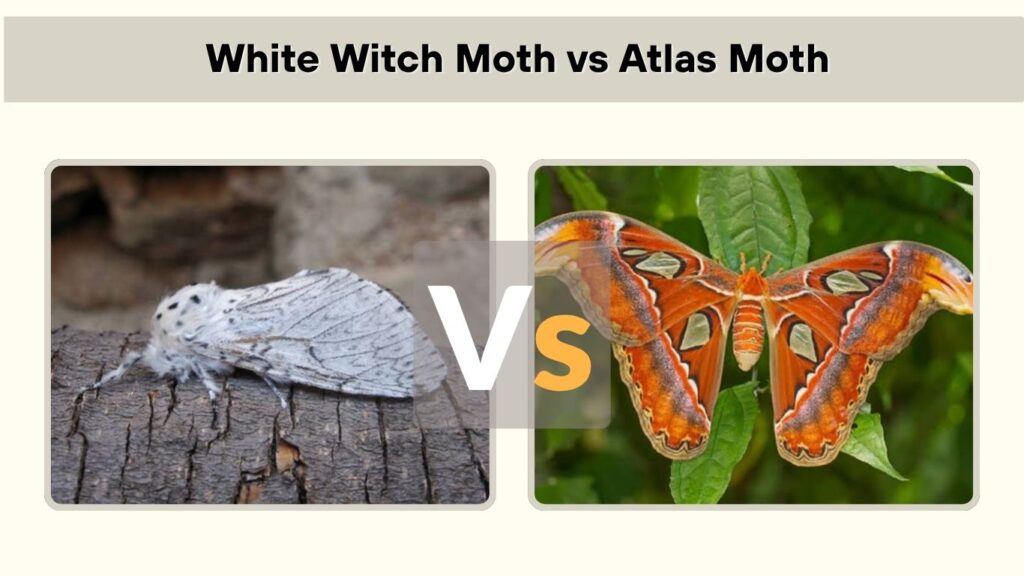
The white witch and Atlas moth are frequently compared because both rank among the world’s largest moths. However, “largest” depends on exactly which measurement is being considered.
The white witch generally attracts attention for wingspan, while the Atlas moth is famous for its tremendous overall wing area.
White Witch Moth
The white witch moth can reach exceptional wingspans approaching 30 cm. Its wings are relatively elongated and covered with delicate gray, white, and brown patterns.
Its natural range is mainly within Central and South America.
Atlas Moth
The Atlas moth (Attacus atlas) lives primarily in tropical and subtropical regions of Asia.
It has enormous reddish-brown wings with distinctive translucent markings. Although its maximum wingspan can rival that of the white witch, its exceptionally broad wings give it one of the greatest wing surface areas among moths.
Therefore, either species may be called the “largest moth” depending on whether wingspan or total wing area is being measured.
White Witch Moth Meaning and Symbolism
Because of its unusual name, huge wings, nocturnal lifestyle, and ghostlike coloration, the white witch moth has attracted various symbolic interpretations.
These meanings are cultural or personal rather than biological characteristics of the insect.
Common White Witch Moth Symbolism
People sometimes associate the white witch moth with:
- Transformation and personal change
- Mystery
- Night and darkness
- Intuition
- Rebirth
- Hidden beauty
- Spiritual transformation
Moths in general are often used symbolically because their metamorphosis provides an obvious representation of change.
White Witch Moth Tattoo Meaning
A white witch moth tattoo may represent transformation, resilience, mystery, or entering a new stage of life.
Others simply choose the design because the moth’s enormous patterned wings create an impressive and highly detailed piece of artwork.
Interesting White Witch Moth Facts
The white witch moth has several characteristics that distinguish it from ordinary backyard moths.
1. It Has One of the Largest Moth Wingspans
Exceptional specimens can approach approximately 30 cm from wingtip to wingtip.
2. Its Camouflage Is Extremely Effective
Its pale, wavy wing markings resemble weathered tree bark, allowing a resting moth to nearly disappear against a trunk.
3. It Is Mostly Nocturnal
Adults typically hide during the day and become active after darkness arrives.
4. It Is Harmless
Despite its extraordinary size, the white witch moth does not pose a significant threat to people.
5. It Lives in the Tropical Americas
Its range includes much of Central and South America, including countries such as Costa Rica and Brazil.
FAQs
What is the scientific name of the white witch moth?
The scientific name of the white witch moth is Thysania agrippina. It belongs to the moth family Erebidae.
How big can a white witch moth get?
Exceptional white witch moths can have wingspans approaching 30 cm, or nearly 12 inches, making them among the largest moths measured by wingspan.
Where does the white witch moth live?
It occurs mainly in tropical regions of Mexico, Central America, and South America, including Costa Rica, Colombia, Peru, Ecuador, and Brazil.
Are white witch moths poisonous?
No. White witch moths are not poisonous or venomous and pose little danger to humans.
Which is bigger, the white witch moth or Atlas moth?
The white witch can exceed the Atlas moth in wingspan, while the Atlas moth is famous for having an exceptionally large total wing surface area. Both are among the world’s largest moths.