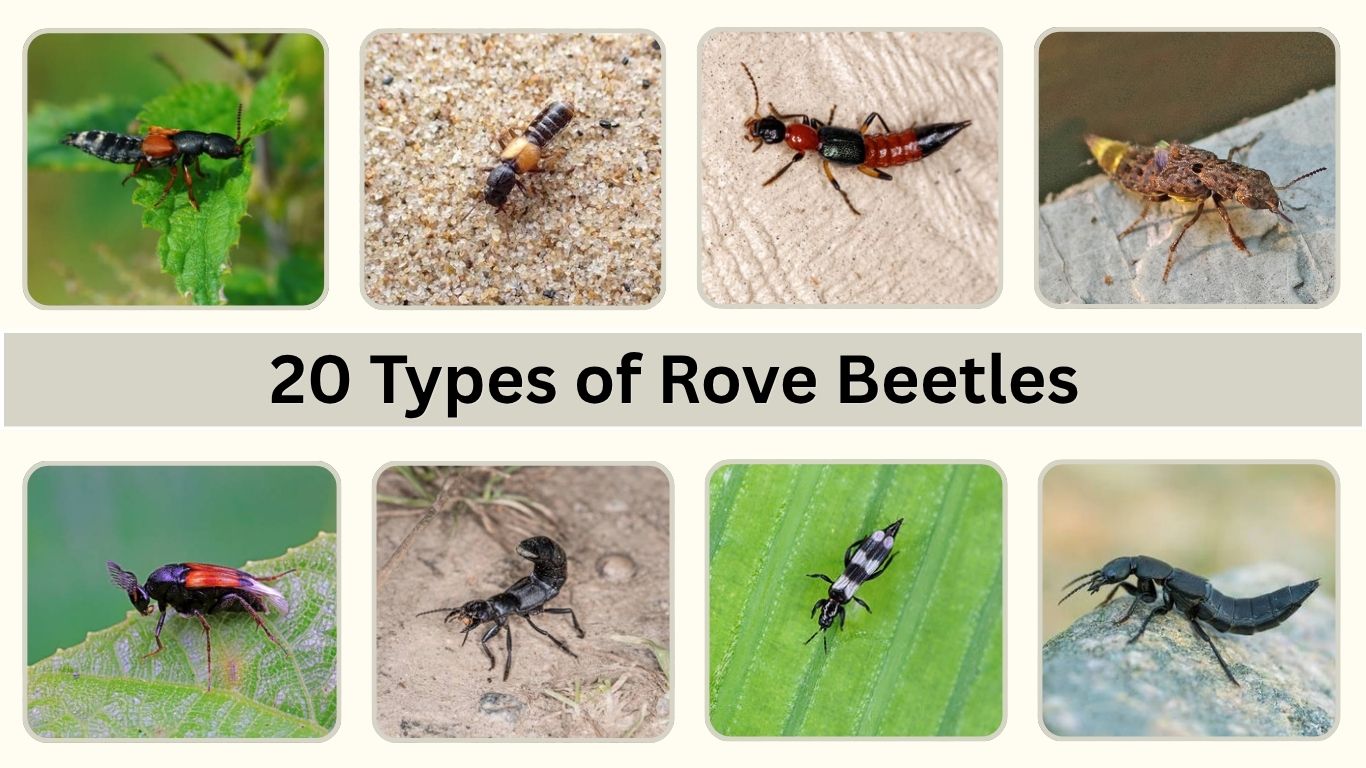
Rove beetles are one of the most diverse groups of beetles, with thousands of species living in forests, gardens, wetlands, beaches, farms, and other habitats. They are easily recognized by their elongated bodies, short wing covers, and exposed abdomens. Many rove beetles are beneficial predators that feed on insect larvae, mites, eggs, and other small invertebrates. In this guide, you’ll discover 20 types of rove beetles along with their identification features, habitats, diets, behavior, lifespan, and lifecycle.
1. Devil’s Coach Horse Beetle
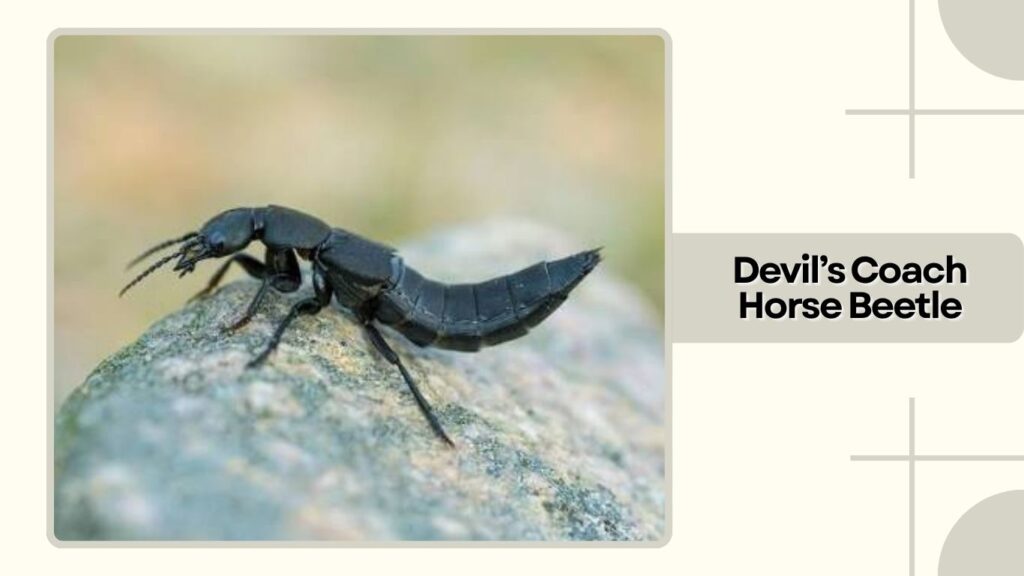
The Devil’s Coach Horse Beetle is one of the best-known rove beetles, recognized for its dark body and intimidating defensive posture. Despite its appearance, it is not dangerous to humans. This predatory beetle is especially useful in natural ecosystems because it feeds on many small invertebrates found in soil, leaf litter, and decaying organic material.
Identification
- Usually shiny black or very dark brown
- Long, narrow body with very short wing covers
- Abdomen remains largely exposed
- Adults commonly reach about 20–30 mm long
- Strong jaws are clearly visible
- Often raises its abdomen like a scorpion when threatened
- Has long antennae and well-developed legs
Habitat and Distribution
Devil’s Coach Horse Beetles are widely associated with damp habitats. They can be found beneath stones, logs, fallen leaves, compost, and other decomposing materials. They are particularly common in gardens, woodland edges, grasslands, and agricultural areas. The species is native to Europe and parts of North Africa but has also been introduced into some other regions.
Behavior and Diet
This beetle is mainly nocturnal and spends much of the daytime hiding under debris. At night, it actively searches for prey. Its diet includes slugs, worms, insect larvae, small insects, and other soft-bodied invertebrates. When disturbed, it may open its jaws and curl its abdomen upward as a defensive display. It can also release an unpleasant-smelling defensive secretion.
Lifespan and Lifecycle
Females lay eggs in protected areas in or near the soil. The larvae are active predators and resemble elongated versions of the adults. They pass through several larval stages before forming a pupa in the soil. After emerging as adults, they continue hunting small invertebrates. Depending on environmental conditions, the complete lifecycle may take several months.
2. Hairy Rove Beetle
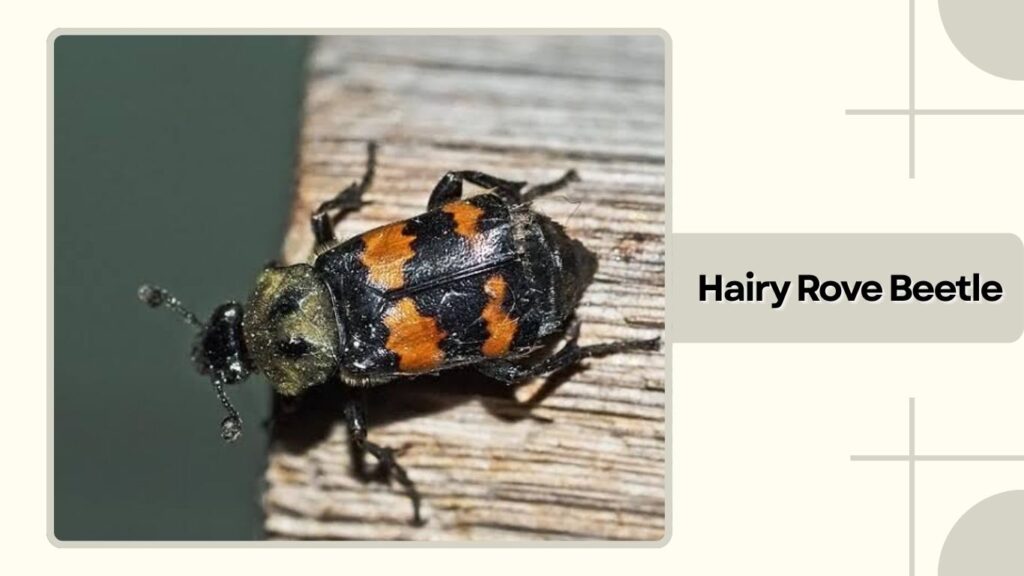
Hairy Rove Beetles are recognizable by the fine hairs covering portions of their bodies. Like many members of the rove beetle family, they have short wing covers and an exposed, flexible abdomen. They commonly live around decaying organic matter, where they hunt insects and other small organisms.
Identification
- Elongated rove-beetle body shape
- Body may be brown, black, or a mixture of darker shades
- Fine hairs visible across the body
- Short wing covers expose much of the abdomen
- Long antennae used for exploring surroundings
- Strong running legs
- Size varies considerably depending on species
Habitat and Distribution
Hairy rove beetles occur in many temperate and subtropical environments. They may be found underneath logs, stones, bark, dead leaves, and decomposing vegetation. Some species are especially common around compost piles, animal dung, fungi, and carrion, where insect prey can be abundant.
Behavior and Diet
Most hairy rove beetles are active predators. They move rapidly through litter and decomposing materials while searching for fly larvae, mites, small beetles, springtails, and other tiny invertebrates. Some species may also consume fungi or decaying organic matter. Their flexible abdomen helps them maneuver through narrow spaces.
Lifespan and Lifecycle
The lifecycle begins when females deposit eggs in moist, protected environments. Larvae hatch and immediately begin feeding on small prey or organic materials. After several developmental stages, the larvae pupate in soil or concealed cavities. Adults then emerge and continue feeding and reproducing. Several generations may occur where temperatures remain favorable for long periods.
3. Gold-and-Brown Rove Beetle
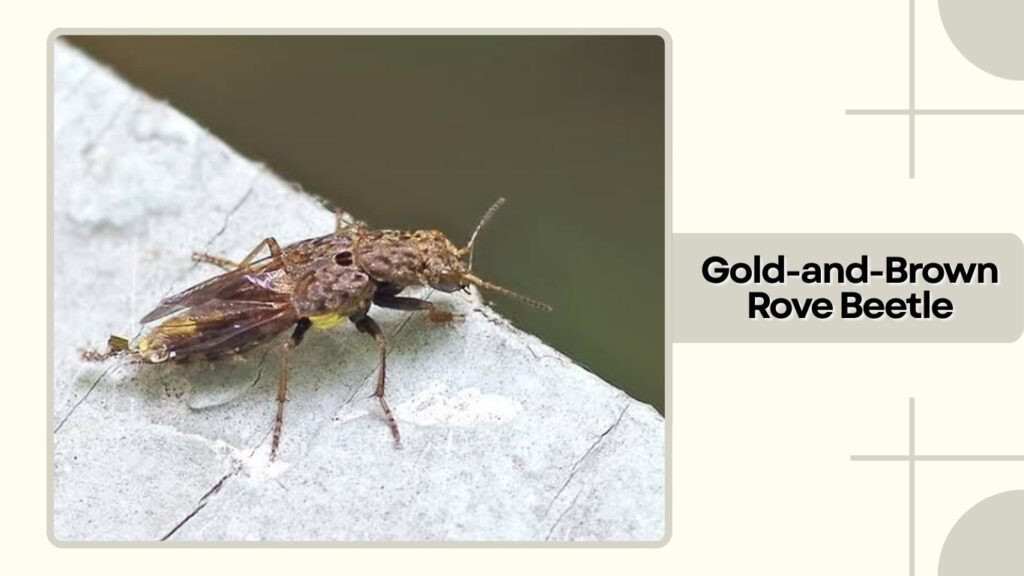
Gold-and-Brown Rove Beetles are distinctive rove beetles characterized by combinations of golden, brown, or darker coloration. Their elongated bodies and abbreviated wing covers make them easy to recognize as members of the rove beetle family. They are often associated with leaf litter and other moist ground habitats.
Identification
- Slender and elongated body
- Brown to dark brown background coloration
- Golden or yellowish hairs may be visible
- Short wing covers leave the abdomen exposed
- Long segmented antennae
- Fast-moving legs
- Abdomen is flexible and often curved when disturbed
Habitat and Distribution
These beetles are generally associated with woodland floors, grasslands, gardens, and areas containing abundant organic debris. They may hide under rotting logs, stones, bark, moss, and dead vegetation. Moisture is important because both adults and larvae can dry out quickly in exposed conditions.
Behavior and Diet
Gold-and-brown rove beetles usually hunt close to the ground. Their prey can include mites, springtails, fly larvae, small insect eggs, and other soft-bodied arthropods. They often move rapidly when exposed to light. During the day they generally remain concealed, becoming more active during cloudy conditions or at night.
Lifespan and Lifecycle
Females usually lay eggs individually in protected soil or litter. The larvae are elongated, mobile predators that undergo several molts while growing. Mature larvae create protected spaces in which they pupate. Adult beetles emerge after pupal development and begin searching for food and mates. Development speed varies considerably with temperature, moisture, and food availability.
4. Red-Necked Rove Beetle
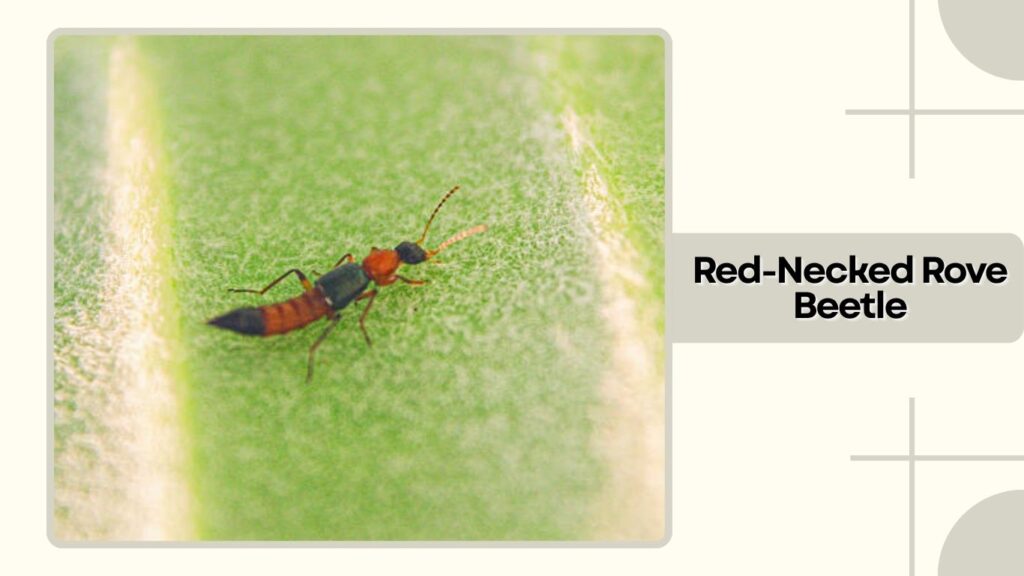
Red-Necked Rove Beetles are named for the reddish or orange coloration around the thorax or neck-like area behind the head. Their contrasting coloration makes them particularly noticeable among darker species. They are agile predators that play an important role in controlling smaller invertebrate populations.
Identification
- Reddish, orange, or reddish-brown thorax
- Head and abdomen often darker
- Long and narrow body
- Very short wing covers
- Exposed, segmented abdomen
- Long antennae
- Prominent jaws in some species
Habitat and Distribution
Red-necked rove beetles may occur in forests, meadows, agricultural areas, river margins, gardens, and wetlands. They are usually found close to the ground underneath vegetation, logs, stones, or decomposing organic matter. Their distribution depends on the particular species, with related rove beetles occurring in many parts of the world.
Behavior and Diet
These beetles are usually predators of small insects and other arthropods. They may consume fly larvae, insect eggs, mites, springtails, and tiny caterpillars. Their excellent running ability allows them to quickly pursue prey. When threatened, they may raise the abdomen, run for cover, or use their jaws defensively.
Lifespan and Lifecycle
Eggs are normally deposited in moist soil or decaying vegetation. The larvae are also predators and move actively through the ground layer in search of food. After several molts, mature larvae pupate in sheltered locations. Adults emerge afterward and continue the cycle. Seasonal species often overwinter as adults or immature stages before becoming active again in warmer weather.
5. Black Rove Beetle
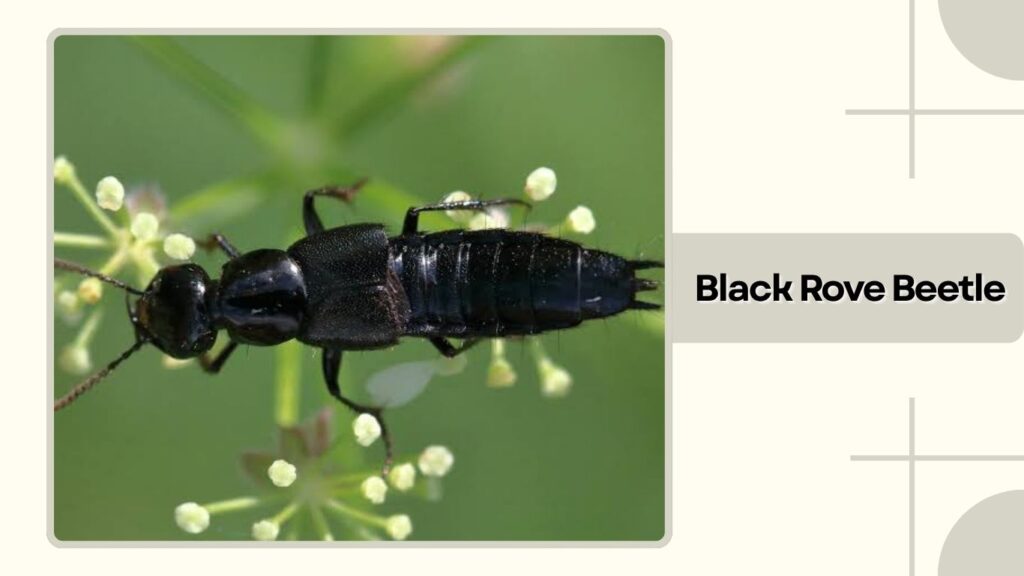
Black Rove Beetles include many dark-colored members of the rove beetle family. They range from tiny species only a few millimeters long to comparatively large species. Their exposed abdomen and rapid movements are two of the most useful characteristics for recognizing them.
Identification
- Body usually black or very dark brown
- Long, narrow shape
- Short wing covers
- Most abdominal segments remain visible
- Segmented antennae
- Strong running legs
- Abdomen is highly flexible
- Size differs substantially among species
Habitat and Distribution
Black rove beetles occur in a remarkable range of environments around the world. Common habitats include forests, fields, gardens, compost piles, riverbanks, wetlands, beaches, and agricultural land. Many species prefer moist microhabitats underneath stones, wood, vegetation, or soil debris.
Behavior and Diet
Many black rove beetles are predators and consume small arthropods such as mites, insect larvae, springtails, aphids, and eggs. Others specialize in fungi or decaying materials. Adults are generally fast runners and quickly disappear into cracks when disturbed. Some species can fly well despite their unusually short wing covers.
Lifespan and Lifecycle
Females lay small eggs in suitable protected habitats. The larvae have elongated bodies and are often active hunters just like the adults. They progress through multiple larval stages before pupating, usually in soil or decomposing material. Adult lifespan varies by species and climate, while the full lifecycle can range from weeks to many months.
6. Spotted Rove Beetle
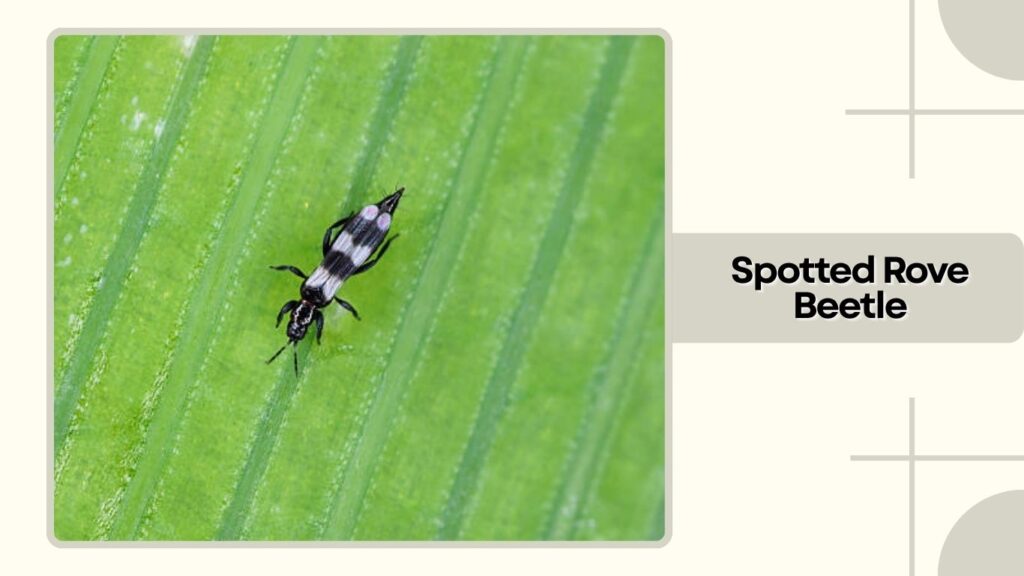
Spotted Rove Beetles are recognized by contrasting spots or patches on the body or wing covers. The markings can range from pale yellow to reddish or brown depending on the species. Like other rove beetles, they have an elongated appearance and much of the abdomen remains uncovered.
Identification
- Elongated, narrow body
- Short wing covers
- Contrasting spots, patches, or bands
- Abdomen largely exposed
- Long segmented antennae
- Strong, fast-moving legs
- Color may include black, brown, yellow, or reddish markings
- Flexible abdominal segments
Habitat and Distribution
Spotted rove beetles can occur in woodland litter, grasslands, wetlands, farmland, gardens, and around decomposing organic matter. They commonly shelter beneath logs, stones, loose bark, leaves, mushrooms, and plant debris. Different species have different geographic ranges, and rove beetles with spotted patterns occur in several regions worldwide.
Behavior and Diet
Most species spend much of their time running across soil and through organic debris in search of prey. Small fly larvae, mites, insect eggs, springtails, and other tiny arthropods may form an important part of their diet. Some may also feed on fungi or decaying materials. When exposed, they usually run quickly toward cover rather than remain in open areas.
Lifespan and Lifecycle
Females deposit eggs in protected places where the young will have access to moisture and food. Larvae hatch as elongated, mobile insects and pass through several developmental stages. Mature larvae eventually pupate within soil or litter. Adults emerge after metamorphosis and begin feeding and mating. Temperature, humidity, and food availability strongly influence how quickly each stage develops.
7. Narrow Rove Beetle
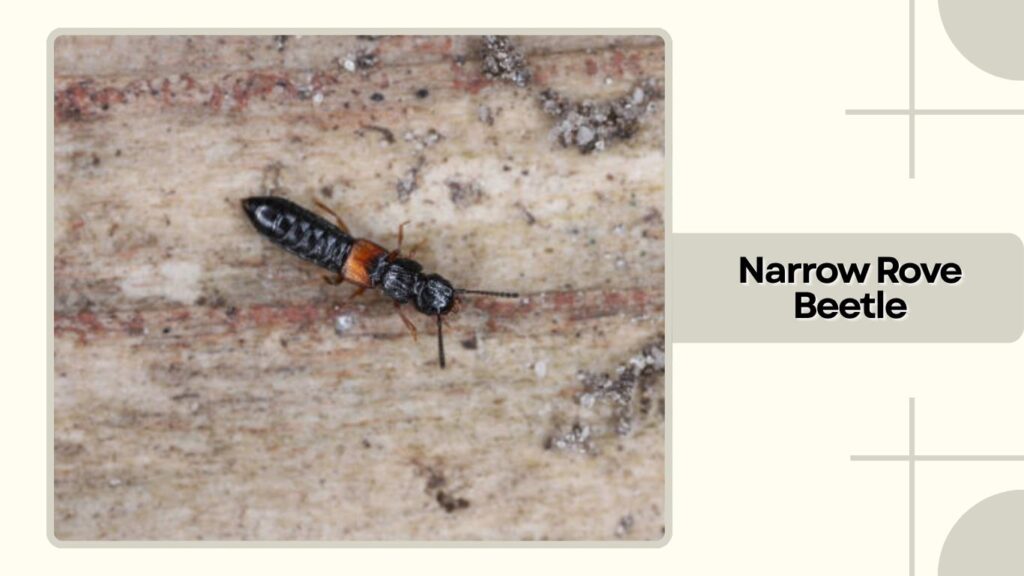
Narrow Rove Beetles have an especially slender body that helps them move easily through soil particles, leaf litter, and other tight spaces. Their abbreviated wing covers and exposed abdomen give them the characteristic appearance of the rove beetle family. These small predators are commonly found close to the ground where moisture and prey are readily available.
Identification
- Very slender and elongated body
- Usually brown, dark brown, or black
- Short wing covers expose much of the abdomen
- Narrow head and thorax
- Long, segmented antennae
- Thin but well-developed legs
- Flexible abdominal segments
- Typically small to medium in size
Habitat and Distribution
Narrow rove beetles are commonly found in forests, gardens, grasslands, agricultural fields, and wetlands. They prefer humid areas containing loose soil, moss, fallen leaves, rotting wood, or other organic debris. Their thin bodies allow them to penetrate small cracks and spaces where larger beetles cannot easily travel.
Behavior and Diet
These beetles are usually fast-moving predators. They hunt springtails, mites, tiny insect larvae, eggs, and other small arthropods. Adults often remain hidden during bright daylight and become more active in shaded conditions or at night. Their narrow bodies help them pursue prey deep inside litter and soil.
Lifespan and Lifecycle
Females generally place their eggs in moist, protected locations. The larvae hatch with elongated bodies and begin feeding on small organisms. They pass through several larval stages before pupating in soil or organic material. Adults emerge after pupation and continue feeding and reproducing. Development time depends greatly on temperature and moisture.
8. Large Rove Beetle
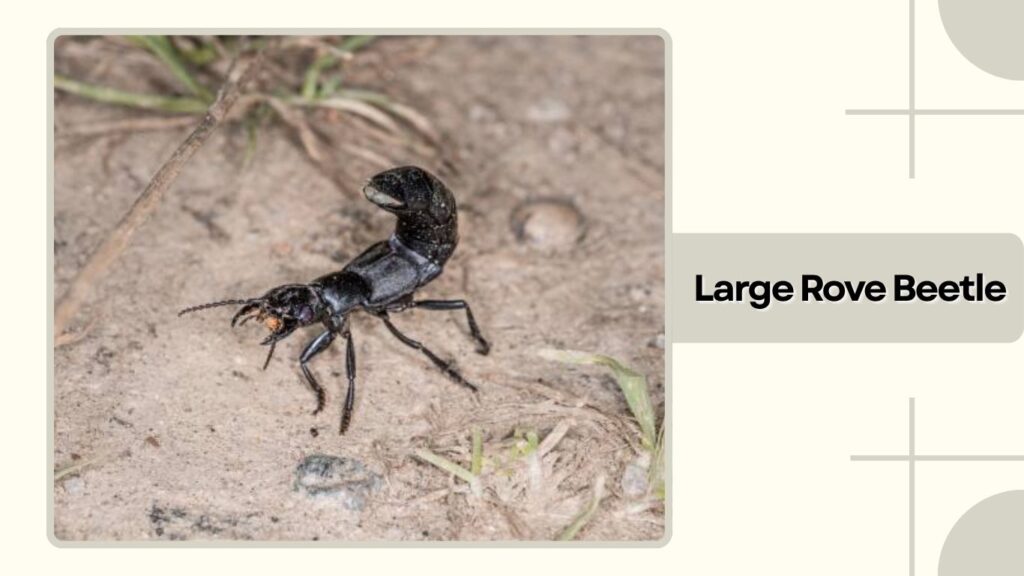
Large Rove Beetles are among the more noticeable members of the family because of their greater body size, strong jaws, and active movements. Although they may look intimidating, most simply use their powerful mouthparts to capture prey. Their predatory habits make them valuable members of forest, garden, and agricultural ecosystems.
Identification
- Relatively large body compared with many rove beetles
- Long and muscular appearance
- Short wing covers
- Broad, exposed abdomen
- Strong and visible jaws
- Usually black, brown, or reddish-brown
- Long antennae
- Strong running legs
Habitat and Distribution
Large rove beetles occur in woodland, grassland, gardens, farmland, compost heaps, and around decomposing organic matter. They frequently shelter beneath stones, fallen logs, bark, and thick layers of leaf litter. Some species are particularly common where slugs, worms, and insect larvae are abundant.
Behavior and Diet
Most large rove beetles are active hunters. They may feed on insect larvae, caterpillars, slugs, worms, beetles, and other small invertebrates. Their powerful jaws help them subdue relatively large prey. Many are nocturnal and spend daylight hours hidden beneath debris. When disturbed, some raise their abdomen or open their jaws defensively.
Lifespan and Lifecycle
Eggs are deposited in moist soil or protected organic material. Larvae are predatory and resemble smaller, softer-bodied versions of adults. After undergoing several molts, they pupate in concealed chambers. Adults emerge after metamorphosis and may live for several months depending on species, climate, and available food.
9. Small Rove Beetle
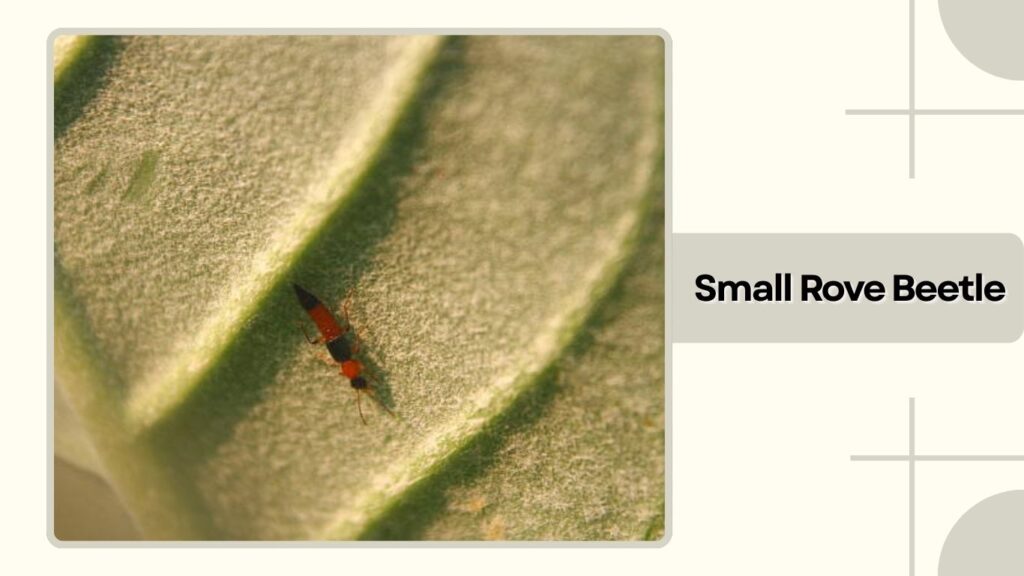
Small Rove Beetles represent many of the tiniest members of the rove beetle family. Because of their size, they often go unnoticed even when they are abundant. They play an important ecological role by feeding on extremely small arthropods and helping break down communities associated with decaying plant and animal material.
Identification
- Very small, elongated body
- Often only a few millimeters long
- Brown, reddish-brown, or black coloration
- Short wing covers
- Exposed segmented abdomen
- Fine antennae
- Small, fast-moving legs
- May require close observation for identification
Habitat and Distribution
Small rove beetles occur worldwide and occupy an enormous variety of habitats. They can be found in soil, compost, mushrooms, leaf litter, moss, dung, carrion, animal nests, and beneath loose bark. Moist microhabitats are especially important because their small bodies can lose moisture rapidly.
Behavior and Diet
These tiny beetles frequently feed on mites, springtails, insect eggs, microscopic larvae, and other small organisms. Some species also consume fungal spores or decaying organic matter. They move rapidly through tiny spaces and often disappear quickly when their shelter is disturbed.
Lifespan and Lifecycle
Females lay minute eggs in areas rich in moisture and food. The larvae are also very small and usually remain hidden inside soil, litter, or decomposing materials. After several molts, larvae pupate and transform into adults. Warm conditions may allow some species to produce multiple generations during a single year.
10. Shiny Rove Beetle
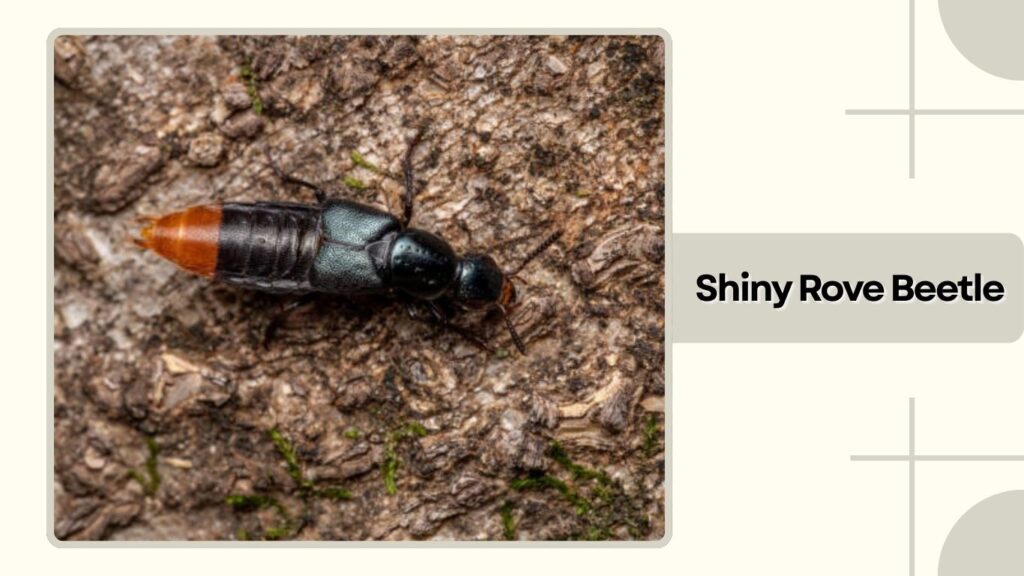
Shiny Rove Beetles are distinguished by their smooth, reflective body surfaces. Depending on the species, their bodies may appear glossy black, dark brown, reddish, or even slightly metallic. Their polished appearance combined with the typical short wing covers makes them relatively easy to recognize among ground-dwelling beetles.
Identification
- Smooth and glossy body surface
- Usually black or dark brown
- Sometimes reddish or metallic in appearance
- Short wing covers
- Long exposed abdomen
- Slender antennae
- Fast-running legs
- Body may reflect light strongly
Habitat and Distribution
Shiny rove beetles commonly inhabit woodland floors, fields, gardens, riverbanks, wetlands, and agricultural environments. They shelter underneath stones, logs, dead vegetation, and other ground debris. Some are particularly associated with moist soil around ponds, streams, or marshes.
Behavior and Diet
Most species are predators that hunt small insects and other arthropods. Their diet may include mites, fly larvae, springtails, insect eggs, and tiny worms. Adults are generally quick runners and may also fly when searching for new habitats. Their activity often increases during humid or nighttime conditions.
Lifespan and Lifecycle
The female deposits eggs in sheltered, moisture-rich environments. Larvae hatch and begin hunting small prey almost immediately. They grow through multiple stages before forming pupae in soil or litter. Once adults emerge, they disperse, feed, and reproduce. Their exact lifespan varies considerably among species.
11. Ant-Loving Rove Beetle
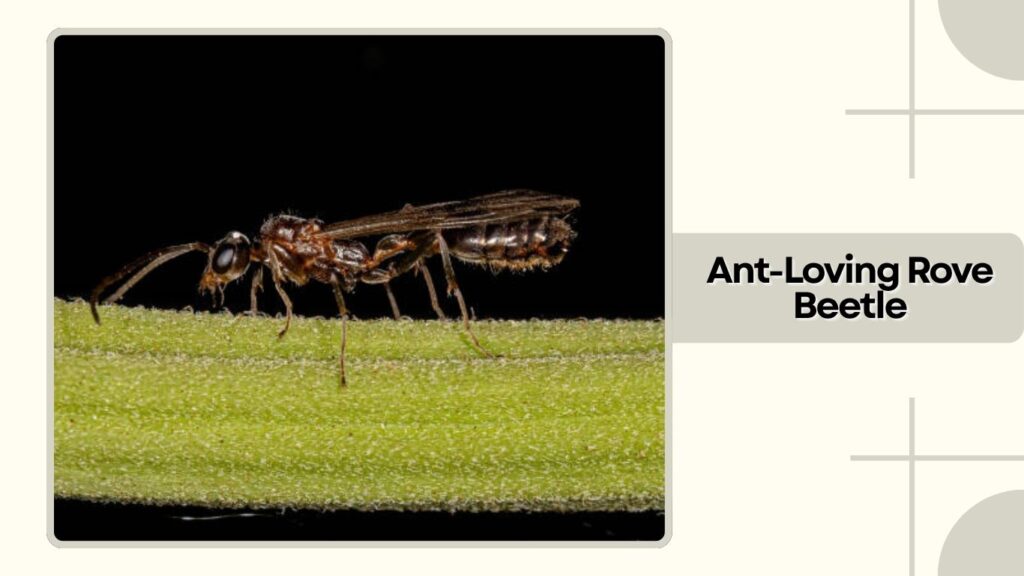
Ant-Loving Rove Beetles are fascinating species that live in close association with ant colonies. Some can enter ant nests and survive among the workers by using chemical or behavioral adaptations. Their relationship with ants ranges from simple nest sharing to highly specialized interactions involving food, shelter, and mimicry.
Identification
- Usually small to medium-sized
- Elongated rove beetle body
- Short wing covers
- Brown, reddish-brown, or dark coloration
- Ant-like body shape in some species
- Long antennae
- Flexible abdomen
- Some species possess specialized hairs or glands
Habitat and Distribution
These beetles occur wherever their preferred host ants are found. They may inhabit woodland, grasslands, deserts, gardens, and tropical forests. Rather than living freely in leaf litter, many spend much of their lives inside or near ant nests, beneath stones, in rotting wood, or underground.
Behavior and Diet
Ant-loving rove beetles have developed remarkable ways to avoid attacks from their hosts. Some produce chemicals that imitate or manipulate ant colony odors. Depending on the species, they may feed on mites, insect larvae, ant brood, food scraps, or materials collected by the ants. Certain species even receive food directly from worker ants.
Lifespan and Lifecycle
Females generally lay their eggs close to or within suitable ant colonies. Larvae may develop inside the nest while benefiting from stable temperatures, food, and protection. They pass through several larval stages before pupating. Adults may remain associated with the same ant colony or disperse in search of another suitable nest.
12. Fungus Rove Beetle
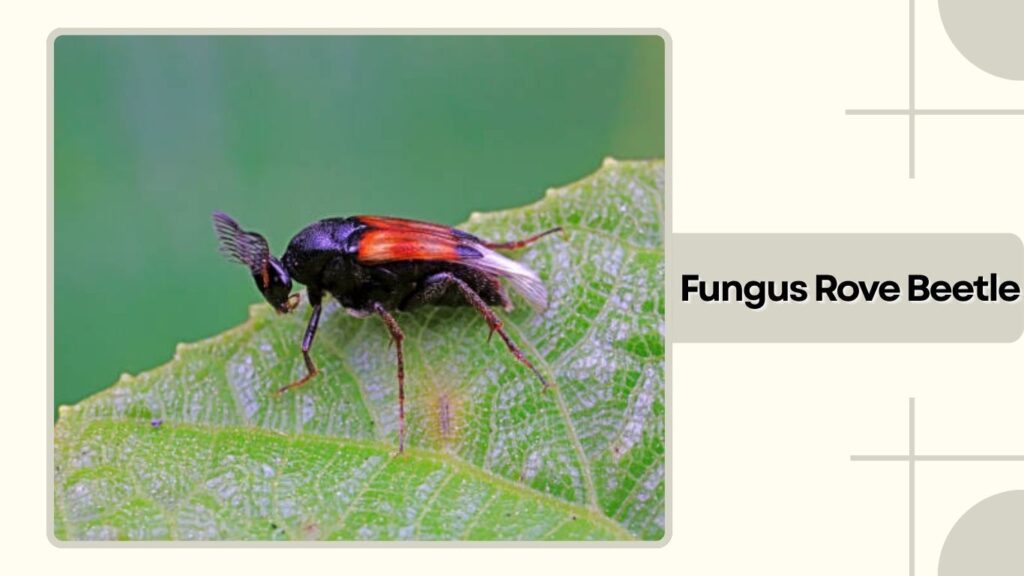
Fungus Rove Beetles are closely associated with mushrooms, molds, and decaying plant materials where fungi grow abundantly. Some species eat fungal tissue or spores directly, while others hunt tiny animals living within fungal habitats. Their presence is common in damp forests and other environments rich in decomposition.
Identification
- Usually small to medium in size
- Slender or somewhat compact body
- Brown, reddish-brown, or dark coloration
- Short wing covers
- Flexible exposed abdomen
- Long antennae
- Often found directly on mushrooms or rotting wood
- May have fine body hairs
Habitat and Distribution
Fungus rove beetles are commonly found in damp forests, woodland litter, rotting logs, compost, and areas with abundant mushrooms. Many species are strongly attracted to fungal fruiting bodies. They can occur in both temperate and tropical regions wherever suitable fungi and moist organic matter are available.
Behavior and Diet
Their feeding habits vary. Some species eat fungal spores, hyphae, or decaying mushroom tissue, while predatory species hunt mites, fly larvae, springtails, and other organisms attracted to fungi. Adults may rapidly colonize newly developing mushrooms and leave once the fungal material dries or disappears.
Lifespan and Lifecycle
Females usually lay eggs in or near fungi and decaying organic matter. Larvae develop in the same food-rich habitat and may feed on fungi or small invertebrates. After several molts, they pupate in nearby soil, wood, or litter. Their lifecycle can be relatively rapid when warm temperatures and abundant fungi are present.
13. Shore Rove Beetle
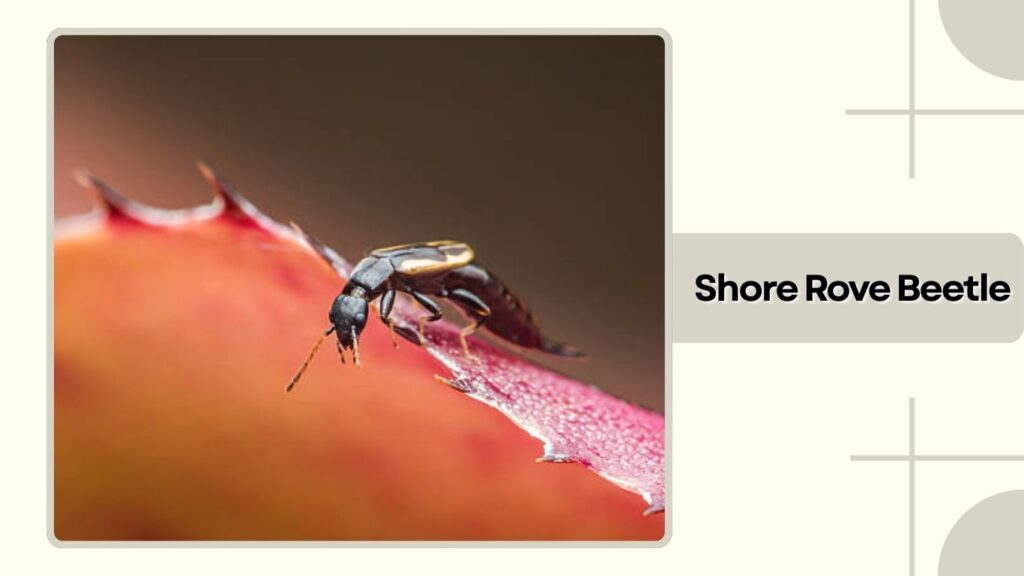
Shore Rove Beetles are adapted to habitats along the edges of rivers, lakes, ponds, marshes, and coastlines. Their small, streamlined bodies allow them to move rapidly across wet sand and mud. Many are important predators of tiny organisms living along the boundary between land and water.
Identification
- Small to medium-sized elongated body
- Often dark brown, black, or reddish-brown
- Short wing covers
- Exposed flexible abdomen
- Long legs suited for rapid movement
- Slender antennae
- Often seen running across mud or wet sand
- Some species have flattened bodies
Habitat and Distribution
These beetles live along freshwater and marine shorelines. Typical habitats include sandy beaches, muddy riverbanks, pond edges, marshes, tidal areas, and vegetation near water. They often hide beneath driftwood, stones, algae, or plant debris when inactive.
Behavior and Diet
Shore rove beetles are active hunters that search wet ground for small prey. They may feed on fly larvae, insect eggs, mites, springtails, worms, and other tiny invertebrates. Many can run extremely quickly across open mud or sand. Some species are capable flyers and move between suitable shoreline habitats when conditions change.
Lifespan and Lifecycle
Females deposit eggs in moist sand, soil, or debris near water. Larvae develop in these damp habitats and hunt small organisms much like the adults. After several developmental stages, larvae pupate in protected soil chambers. Adults later emerge and return to shoreline environments to feed, mate, and reproduce.
14. Carrion Rove Beetle
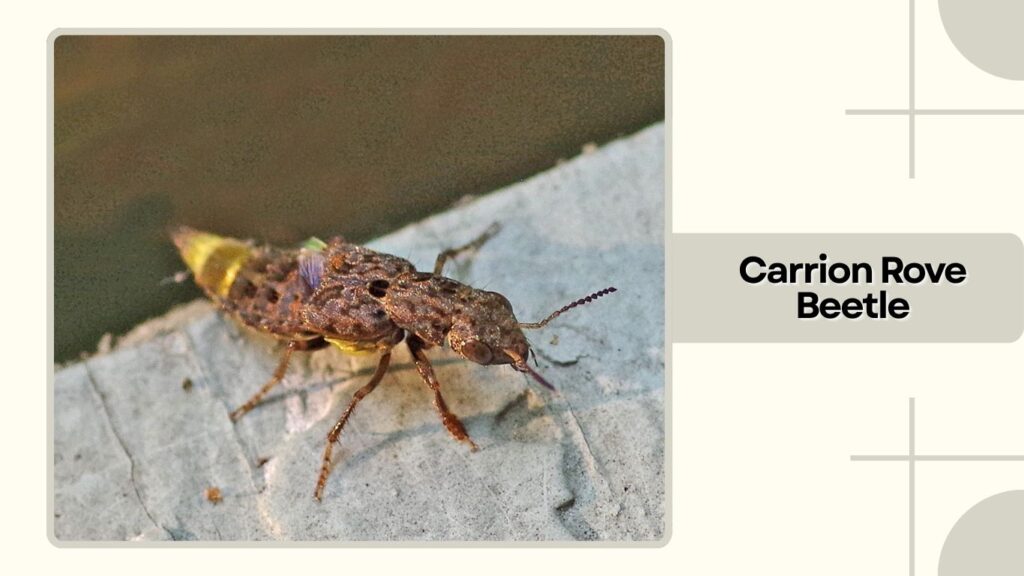
Carrion Rove Beetles are commonly associated with dead animals and other decomposing organic matter. Rather than feeding only on the carrion itself, many species prey on fly larvae, mites, and other small organisms attracted to decaying material. Their activity helps regulate insect populations and contributes to the natural decomposition process.
Identification
- Elongated and somewhat flattened body
- Usually black, dark brown, or reddish-brown
- Short wing covers expose much of the abdomen
- Strong jaws for capturing prey
- Long, segmented antennae
- Fast-running legs
- Flexible abdomen
- Often encountered around animal remains
Habitat and Distribution
Carrion rove beetles occur in forests, grasslands, agricultural areas, and other places where dead animals or decomposing organic material can be found. They frequently hide underneath carcasses, leaf litter, logs, or nearby soil. Many species have broad distributions and can quickly locate temporary food sources.
Behavior and Diet
These beetles are often active predators. They commonly feed on maggots, fly eggs, mites, and other small invertebrates living in carrion. Some species may also consume decaying material. Because they can reduce populations of fly larvae, carrion rove beetles play an important role in decomposition communities.
Lifespan and Lifecycle
Females generally lay eggs in soil or decaying material near suitable food sources. The larvae hatch and begin hunting small organisms. After passing through several larval stages, they pupate in nearby soil. Adults then emerge and search for new carrion or other nutrient-rich habitats where they can feed and reproduce.
15. Dung Rove Beetle
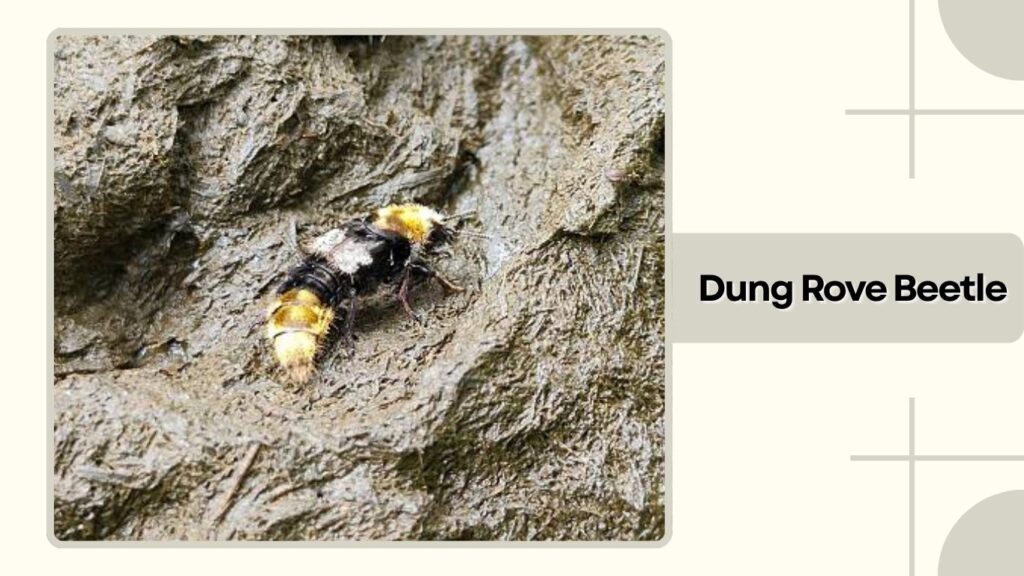
Dung Rove Beetles live in and around animal dung, where they take advantage of the abundant insects and organic material found there. They are especially important predators of fly eggs and larvae. Their activity can help reduce pest populations while contributing to the breakdown of animal waste.
Identification
- Small to medium-sized body
- Usually black, brown, or reddish-brown
- Short wing covers
- Exposed segmented abdomen
- Long antennae
- Strong running legs
- Slender or moderately broad body
- Commonly found beneath or inside dung
Habitat and Distribution
Dung rove beetles can be found in pastures, farms, grasslands, livestock areas, and wildlife habitats. They are often most abundant where fresh dung is regularly available. Different species occur in many regions worldwide, especially in environments supporting large populations of grazing mammals.
Behavior and Diet
Many dung rove beetles are predators rather than direct dung feeders. They hunt fly eggs, maggots, mites, and other tiny invertebrates attracted to animal waste. Some species may also consume fungi or decomposing organic material. Adults often arrive at fresh dung shortly after it is deposited.
Lifespan and Lifecycle
Females lay eggs in or near dung where food is plentiful. Larvae develop rapidly and prey on small organisms within the dung or surrounding soil. Once mature, they usually leave the dung and pupate underground. Adults later emerge and fly or walk to new dung deposits, where another generation may begin.
16. Bark Rove Beetle
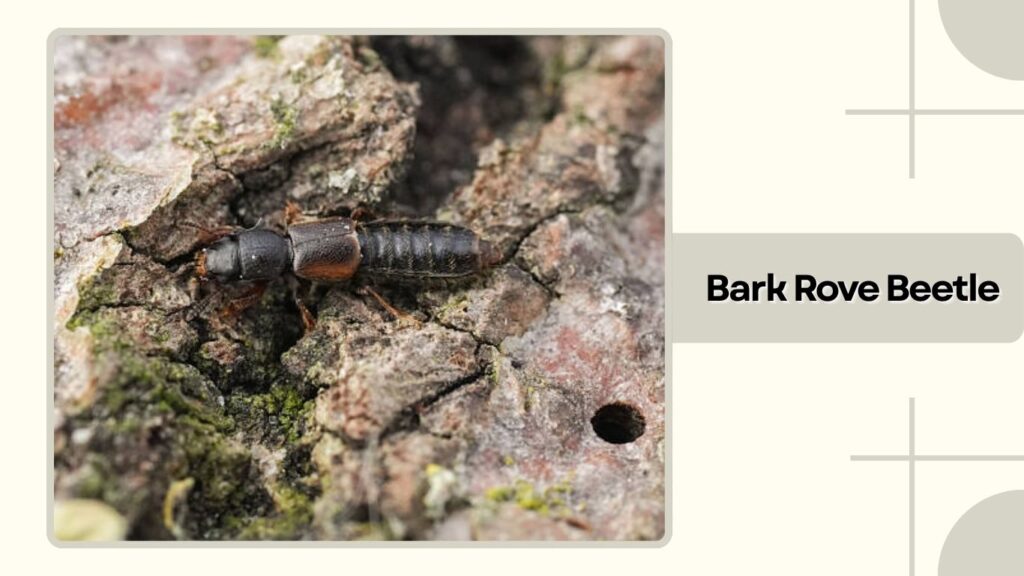
Bark Rove Beetles are commonly found beneath loose bark and inside decaying wood. Their narrow, flexible bodies allow them to move through small crevices where they search for mites, insect larvae, and other tiny prey. They are important components of woodland ecosystems and help regulate organisms living in dead or dying trees.
Identification
- Narrow, flattened body
- Usually brown, black, or reddish-brown
- Short wing covers
- Exposed abdominal segments
- Slender antennae
- Strong but relatively short legs
- Body adapted for moving beneath bark
- Often small and difficult to notice
Habitat and Distribution
These beetles are most often associated with forests, wooded gardens, fallen trees, and decaying logs. They shelter underneath loose bark, inside rotting wood, and in cracks around tree trunks. Bark rove beetles occur in both temperate and tropical regions where suitable woody habitats are available.
Behavior and Diet
Bark rove beetles actively search narrow spaces for mites, beetle larvae, springtails, insect eggs, and other small prey. Some may also feed on fungi associated with decaying wood. Their flattened body allows them to reach prey hidden deep beneath bark where larger predators cannot easily enter.
Lifespan and Lifecycle
Females place their eggs in cracks beneath bark or within decaying wood. The larvae develop in the same protected habitat, feeding on small invertebrates or fungal material. After several molts, larvae pupate in wood debris or soil. Adults emerge and continue living beneath bark or disperse to new trees.
17. Leaf-Litter Rove Beetle
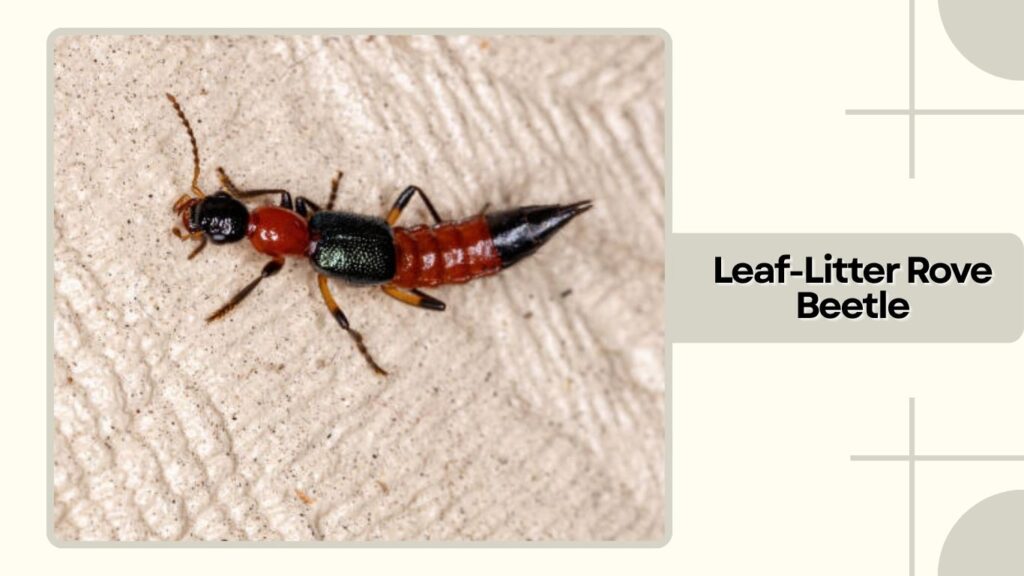
Leaf-Litter Rove Beetles are among the most common small predators found on forest floors. They live among fallen leaves, twigs, moss, and decomposing plant material. Although often overlooked because of their size, they play an important role in controlling tiny invertebrates and supporting nutrient cycling.
Identification
- Small to medium-sized elongated body
- Brown, reddish-brown, or black coloration
- Short wing covers
- Exposed flexible abdomen
- Fine segmented antennae
- Rapid-running legs
- Often camouflaged against dead leaves
- Body may have fine hairs
Habitat and Distribution
Leaf-litter rove beetles are widespread in forests, woodland edges, gardens, parks, and shaded areas containing decomposing vegetation. They are especially common where the litter remains moist. Many species live beneath the upper layer of leaves and rarely appear in exposed areas.
Behavior and Diet
These beetles search continuously through litter for springtails, mites, tiny larvae, insect eggs, and other small prey. Some species also consume fungi or decomposing organic matter. They usually avoid bright light and retreat deeper into the litter when disturbed.
Lifespan and Lifecycle
Females deposit eggs inside moist leaf litter or soil. Larvae develop within the same environment and feed on small organisms. After growing through several stages, they pupate in protected spaces in the soil or litter. Adults may remain active for several months, particularly when temperatures and moisture levels remain favorable.
18. Marsh Rove Beetle
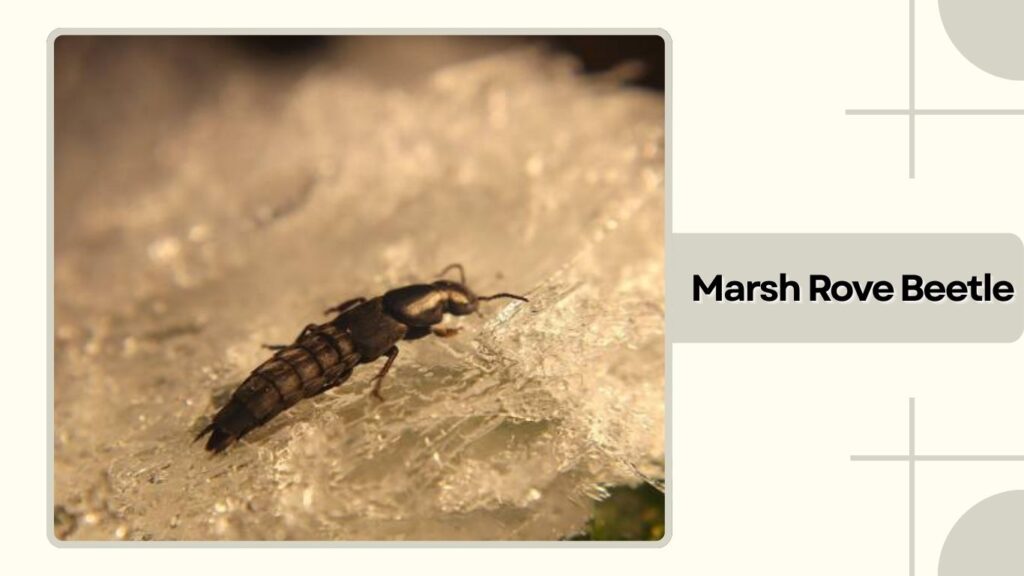
Marsh Rove Beetles are adapted to wet environments such as marshes, swamps, ponds, and saturated soil. Their preference for damp habitats makes them common predators of small insects living around aquatic vegetation. They often occupy the transition zone between land and shallow water.
Identification
- Slender, elongated body
- Commonly black or dark brown
- Short wing covers
- Flexible exposed abdomen
- Long antennae
- Fast-moving legs
- Often relatively small
- Frequently found on mud or wet vegetation
Habitat and Distribution
Marsh rove beetles live in wetlands, swamps, marshes, pond margins, riverbanks, and other areas with consistently moist soil. They may hide underneath waterlogged leaves, stones, reeds, or decomposing vegetation. Some species tolerate habitats that are temporarily flooded.
Behavior and Diet
These beetles are active predators of small wetland invertebrates. Their diet may include mosquito larvae near shorelines, fly larvae, springtails, mites, insect eggs, and tiny worms. They move rapidly across damp soil and vegetation while searching for prey and quickly hide when disturbed.
Lifespan and Lifecycle
Females usually lay eggs in moist soil or plant debris above the waterline. Larvae remain in humid environments and feed on small prey as they grow. After several molts, they pupate in protected soil chambers. Adults later emerge and continue feeding around marsh edges and wet vegetation.
19. Sand Rove Beetle
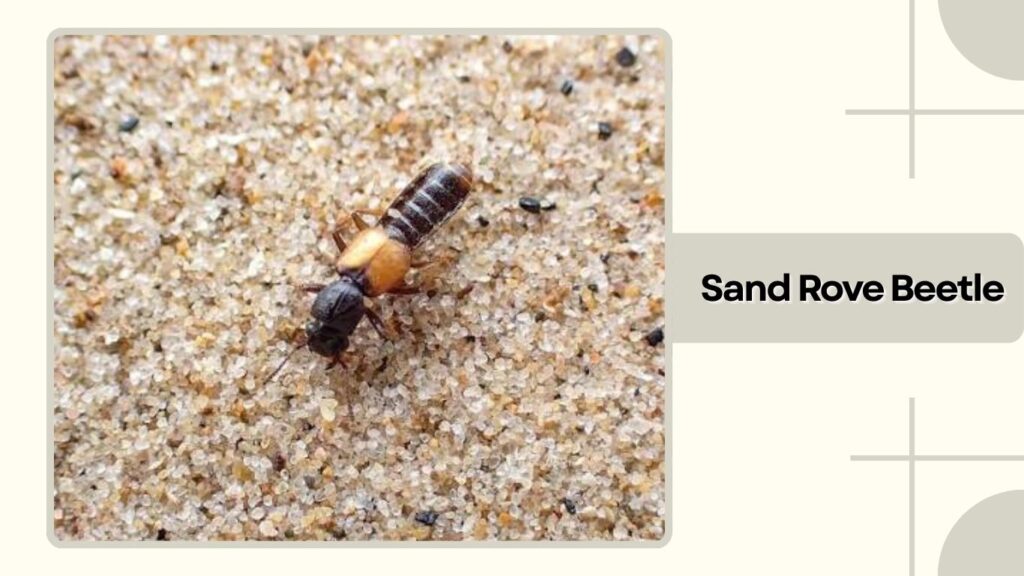
Sand Rove Beetles are specialized for life on sandy ground. They may be found along beaches, dunes, riverbanks, or dry sandy areas where their coloration and body shape help them blend with the substrate. Many are quick predators that hunt insects and other small animals close to the surface.
Identification
- Slender or flattened body
- Often tan, brown, gray, or dark colored
- Short wing covers
- Long exposed abdomen
- Strong legs suited for running
- Long antennae
- Small to medium-sized
- Some species blend closely with sand
Habitat and Distribution
Sand rove beetles inhabit beaches, coastal dunes, sandy riverbanks, lake shores, and inland sandy soils. They often shelter beneath driftwood, stones, vegetation, or slightly buried organic debris. Coastal species may tolerate salt spray and rapidly changing moisture conditions.
Behavior and Diet
These beetles run quickly across sand while hunting small insects, larvae, mites, and other arthropods. Some become particularly active during cooler evening or nighttime hours. Others remain beneath debris during the hottest part of the day to reduce water loss and avoid predators.
Lifespan and Lifecycle
Females lay their eggs in damp sand or protected soil cavities. Larvae develop close to the ground and feed on tiny invertebrates. After several growth stages, they pupate beneath the surface. Adults emerge and continue hunting around sandy habitats, often producing new generations when environmental conditions are favorable.
20. Forest Rove Beetle
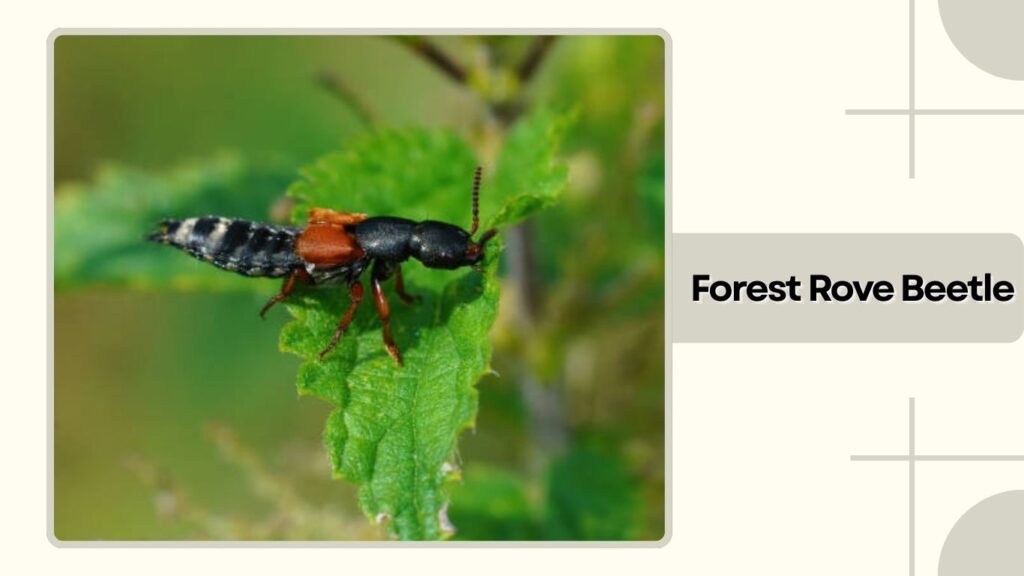
Forest Rove Beetles represent the many rove beetle species that depend on woodland environments. They occupy leaf litter, dead wood, fungi, soil, and other microhabitats. As predators and decomposer-associated insects, they are an important part of forest food webs and help maintain healthy populations of smaller invertebrates.
Identification
- Elongated body with short wing covers
- Usually brown, black, or reddish-brown
- Exposed segmented abdomen
- Long antennae
- Strong running legs
- Size varies from tiny to relatively large
- Some species have glossy bodies
- Often hidden beneath forest debris
Habitat and Distribution
Forest rove beetles are found in deciduous, coniferous, and tropical forests around the world. They occur beneath logs, stones, loose bark, moss, fungi, and deep layers of leaf litter. Moist and shaded areas usually support the greatest numbers and diversity.
Behavior and Diet
Many forest rove beetles are predators that consume mites, springtails, insect larvae, eggs, and other small invertebrates. Others are associated with fungi or decomposing plant material. They spend much of their time moving through litter and soil, helping regulate populations of organisms living on the forest floor.
Lifespan and Lifecycle
Females lay eggs in protected locations such as soil, leaf litter, or decaying wood. Larvae generally occupy similar habitats and feed actively while growing. After several molts, they pupate in sheltered spaces. Adults may live for weeks or months, with some species overwintering before becoming active again in spring.
FAQs
1. What is the most recognizable feature of a rove beetle?
The most recognizable feature is its unusually short wing covers. Unlike most beetles, these covers leave a large portion of the segmented abdomen exposed. Rove beetles also typically have elongated bodies and are fast runners.
2. Are rove beetles dangerous to humans?
Most rove beetles are not dangerous and generally avoid people. Some larger species can use their jaws defensively if handled. Certain rove beetles can also produce irritating defensive chemicals, so handling unfamiliar species with bare hands is best avoided.
3. What do rove beetles eat?
Many rove beetles are predators that feed on mites, springtails, fly larvae, insect eggs, small worms, and other tiny invertebrates. Some species also eat fungi, decaying vegetation, or other organic material.
4. Where are rove beetles commonly found?
Rove beetles occur in many habitats, including forests, gardens, farmland, wetlands, beaches, compost, dung, carrion, fungi, and beneath tree bark. Most species prefer moist, protected areas containing abundant food and organic matter.
5. Are rove beetles beneficial?
Yes. Many rove beetles are beneficial predators that naturally reduce populations of fly larvae, mites, insect eggs, and other small pests. They also participate in decomposition and nutrient cycling, making them valuable members of healthy ecosystems.