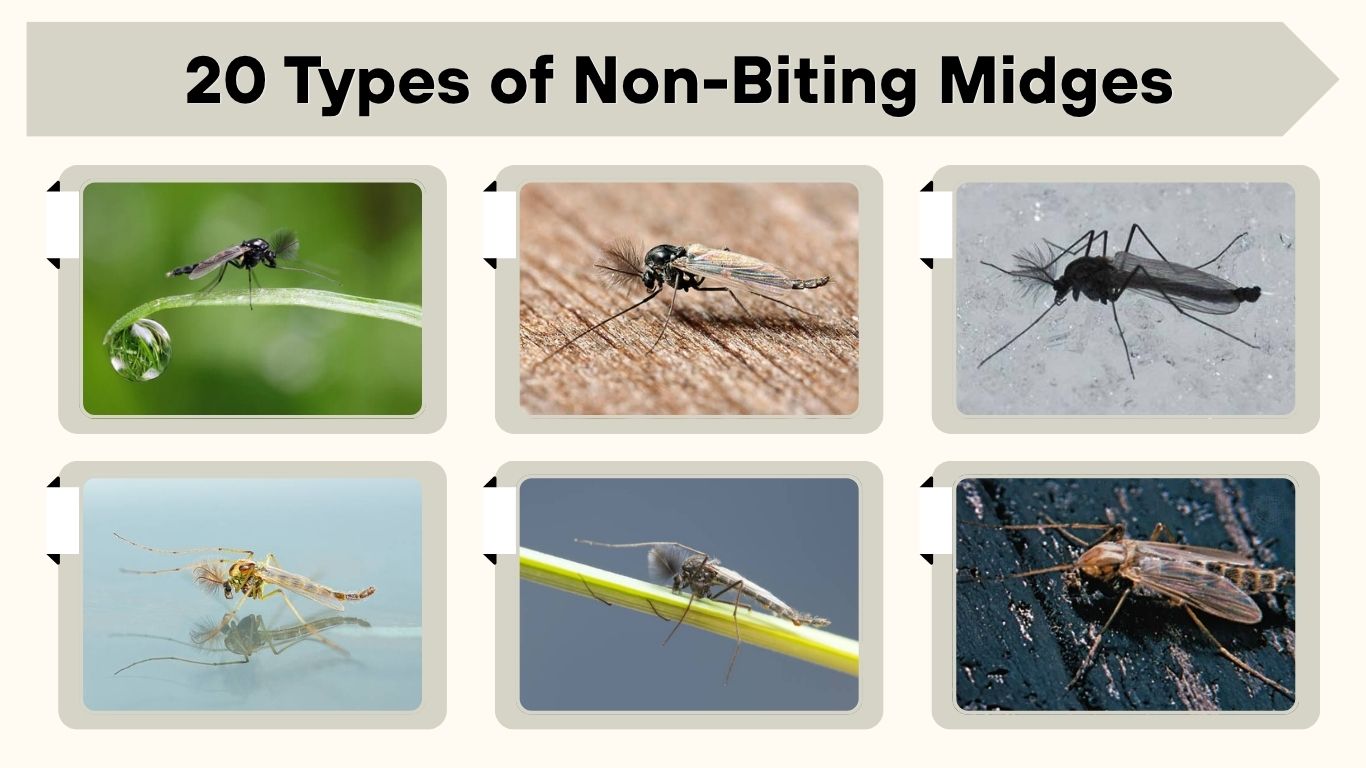
Non-biting midges are small, mosquito-like flies commonly found near lakes, ponds, rivers, wetlands, and other aquatic habitats. Despite their appearance, they do not bite humans, pets, or livestock because they lack piercing mouthparts. These harmless insects often gather in large swarms, especially during warm weather and seasonal emergences. Their aquatic larvae play an important role in freshwater ecosystems by recycling organic matter and providing food for fish, amphibians, and birds. This guide covers 20 common types of non-biting midges, including their identification, habitats, feeding behavior, and life cycles.
1. Lake Midge
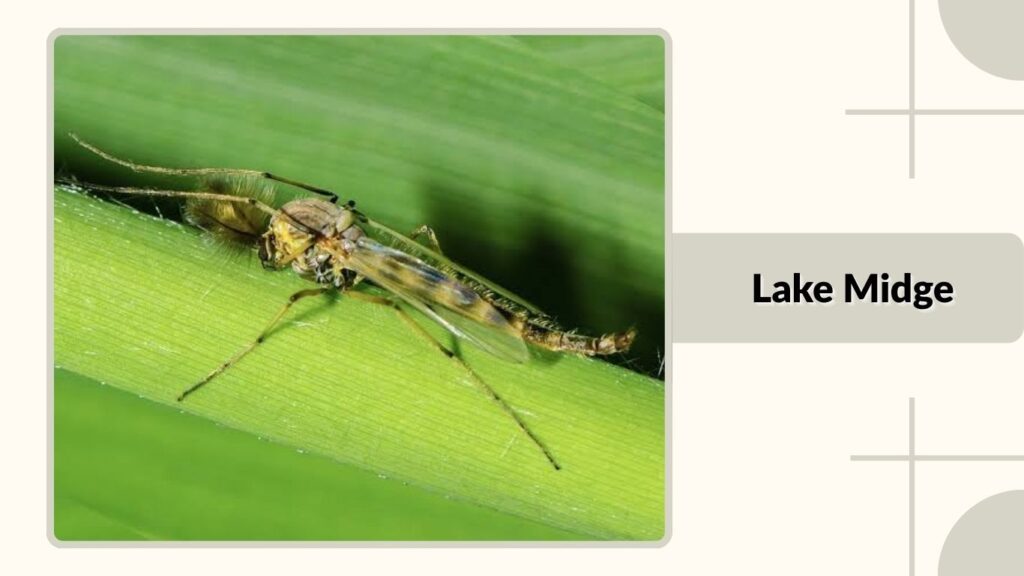
The lake midge is a small, non-biting fly commonly found around lakes, reservoirs, ponds, and other freshwater habitats. It belongs to the family Chironomidae and is often mistaken for a mosquito because of its slender body and long legs. However, adult lake midges do not bite or feed on blood.
Identification
- Usually measures about 2–10 millimeters long
- Has a slender green, brown, gray, or dark-colored body
- Possesses long, delicate legs
- Features narrow, transparent wings
- Males often have feathery antennae
- Lacks the long, piercing mouthpart of a mosquito
- Commonly forms large swarms near water
Habitat and Distribution
Lake midges are found around freshwater lakes, reservoirs, ponds, wetlands, and slow-moving waterways. Their larvae live in the soft mud and sediment at the bottom of the water.
Adults often gather near shorelines, aquatic plants, docks, lights, and buildings close to water. Large seasonal emergences may cover walls, windows, vehicles, and outdoor furniture, especially during warm weather.
Feeding and Behavior
Adult lake midges do not bite humans, pets, or livestock. Many adults eat little or nothing during their short lives, while some may consume nectar, pollen, or plant fluids.
Males often form visible mating swarms above the water or near landmarks such as trees and buildings. Although these swarms may look alarming, the insects are harmless. Their greatest impact is usually the nuisance caused by large numbers.
Life Cycle and Reproduction
Females lay clusters of eggs on the water’s surface. After hatching, the larvae sink to the bottom and live in mud, decaying vegetation, or small protective tubes.
The larvae feed on algae, microorganisms, and organic debris before becoming pupae. Adults later rise to the surface and emerge from the water. Their life cycle may take several weeks or months, depending on temperature, food, and water conditions.
2. River Midge
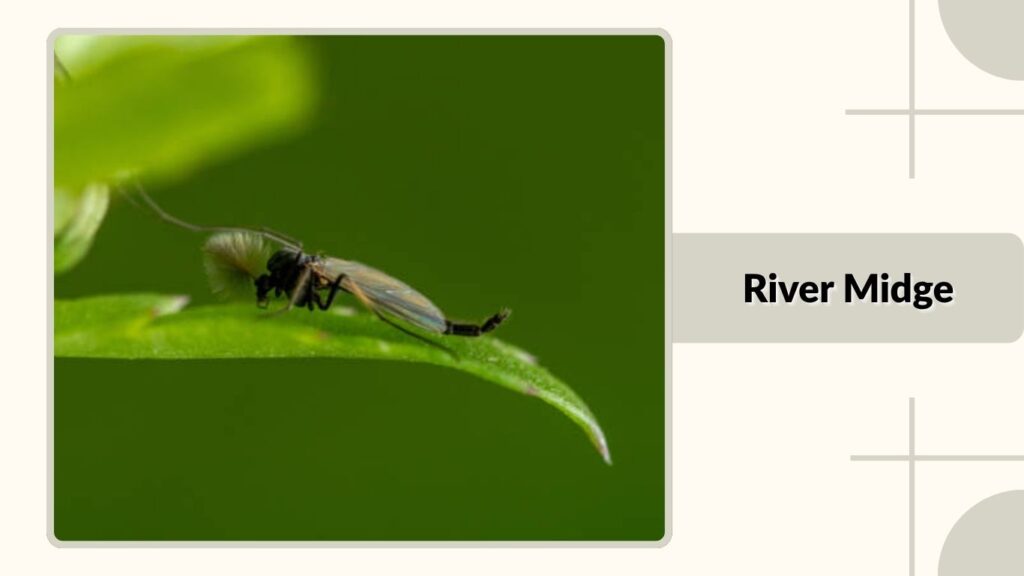
The river midge is a harmless, non-biting fly commonly found near rivers, canals, and other flowing freshwater habitats. It belongs to the family Chironomidae and may appear in large swarms during seasonal adult emergence. Although it resembles a mosquito, it does not bite humans or animals.
Identification
- Usually measures about 2–8 millimeters long
- Has a slender gray, brown, green, or dark body
- Possesses long, delicate legs
- Features narrow, transparent wings
- Males often have feathery antennae
- Lacks a long biting proboscis
- Frequently rests with its front legs raised
Habitat and Distribution
River midges occur along rivers, streams, canals, and drainage channels. Their larvae live in bottom sediment, submerged vegetation, and organic material where the current is slow enough for them to remain in place.
Adults gather around riverbanks, bridges, docks, streetlights, and nearby buildings. They are often most noticeable during warm weather when large numbers emerge from the water at the same time.
Feeding and Behavior
Adult river midges do not feed on blood and cannot bite. Many adults consume little or no food, while others may take nectar, pollen, or plant fluids.
Males commonly form mating swarms above the water, vegetation, or prominent landmarks. These swarms may contain thousands of insects but are harmless to people and animals.
Life Cycle and Reproduction
Females lay gelatinous masses of eggs on the water. The larvae hatch and settle in mud, sand, vegetation, or protective tubes on the riverbed.
They feed on algae, microorganisms, and decaying organic matter before becoming pupae. Mature pupae rise to the surface, where the adults emerge and begin their short reproductive stage.
3. Pond Midge
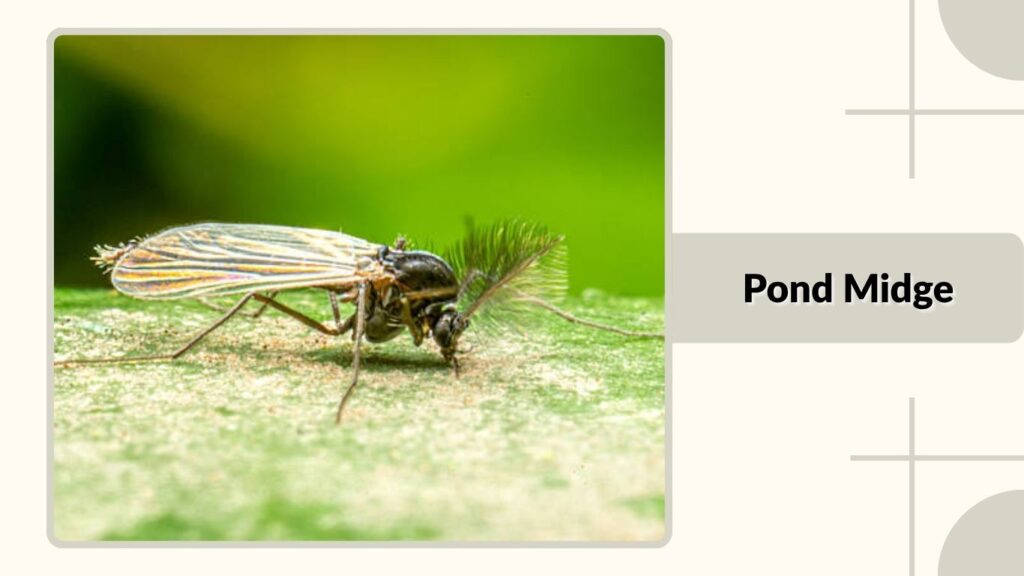
The pond midge is a small non-biting fly associated with ponds, garden pools, wetlands, and other still or slow-moving freshwater habitats. It is often mistaken for a mosquito because of its thin body and long legs, but it lacks the mouthparts needed to bite.
Identification
- Usually measures approximately 2–10 millimeters
- Has a pale green, tan, brown, or dark body
- Possesses narrow wings and long legs
- Males have bushy, feather-like antennae
- Has no visible mosquito-like proboscis
- Often appears in swarms above ponds
- May rest on plants near the water
Habitat and Distribution
Pond midges live around natural ponds, ornamental pools, marshes, drainage basins, and shallow wetlands. Their larvae develop in soft sediment, algae, and decaying plant material beneath the water.
Adults may gather on reeds, grasses, garden plants, walls, and windows close to the pond. Artificial lighting can attract them into nearby patios and buildings at night.
Feeding and Behavior
These midges do not bite humans, pets, fish, or livestock. Adult feeding is limited because their primary purpose is to mate and reproduce.
Males form dancing swarms over ponds, paths, and vegetation. These gatherings are often more visible in the late afternoon or evening, especially when the air is calm and warm.
Life Cycle and Reproduction
Females release egg masses onto the pond surface. The larvae sink and live in mud, plant debris, or small tubes constructed from sediment.
They feed on algae, microorganisms, and decomposing material. After pupation, the adults emerge at the water’s surface. Several generations may develop during a warm season.
4. Stream Midge
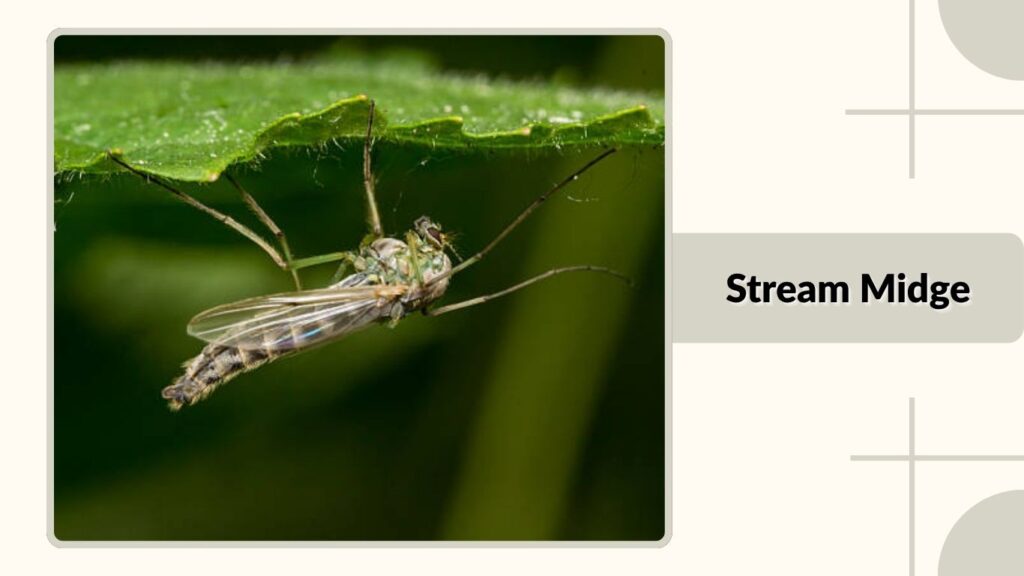
The stream midge is a non-biting aquatic fly that develops in creeks, streams, and other shallow flowing-water habitats. It plays an important ecological role because its larvae recycle organic matter and provide food for fish and other aquatic animals.
Identification
- Commonly measures about 2–8 millimeters long
- Has a slender brown, gray, green, or black body
- Features long legs and clear wings
- Males usually possess feathery antennae
- Does not have piercing mouthparts
- Resembles a small mosquito
- Often gathers near streamside vegetation
Habitat and Distribution
Stream midges inhabit creeks, springs, shallow rivers, and forest streams. Their larvae live among stones, gravel, aquatic plants, mud, and leaf litter on the streambed.
Adults usually remain close to the water and rest on grasses, shrubs, rocks, and tree trunks. They may also be attracted to outdoor lights near bridges, cabins, and homes.
Feeding and Behavior
Adult stream midges are harmless and do not bite. Some feed lightly on nectar or plant fluids, while many survive on energy stored during the larval stage.
Males gather in aerial swarms to attract females. These swarms often appear above streambanks and open spaces during calm periods around sunset.
Life Cycle and Reproduction
Females lay eggs in gelatinous strings or clusters on the water. The larvae hatch and settle among streambed materials, where they feed on algae and organic particles.
After completing several larval stages, they pupate underwater. The pupae eventually rise to the surface, allowing the winged adults to emerge.
5. Marsh Midge
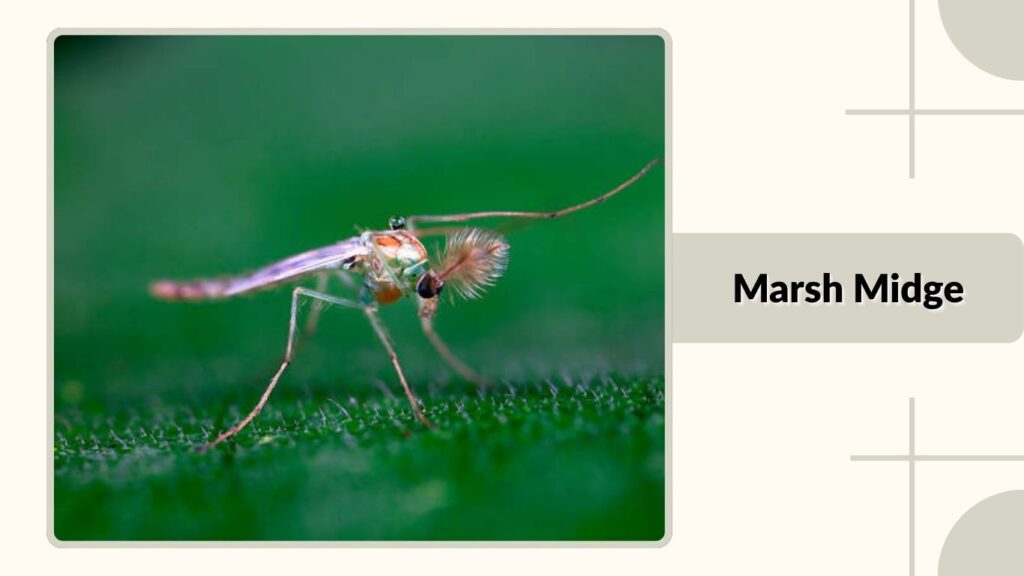
The marsh midge is a harmless non-biting fly found around freshwater marshes, wetlands, and waterlogged grasslands. Large numbers may emerge from shallow water and collect around vegetation, homes, and outdoor lights, but they do not attack humans or animals.
Identification
- Usually measures about 2–10 millimeters long
- Has a thin green, gray, brown, or black body
- Possesses narrow, transparent wings
- Features long, fragile legs
- Males commonly have plume-like antennae
- Lacks biting mouthparts
- Often forms dense swarms near wetlands
Habitat and Distribution
Marsh midges occur in reed beds, shallow wetlands, flooded fields, marsh pools, and slow-moving channels. Their larvae live in muddy sediment and decomposing vegetation.
Adults rest on reeds, grasses, shrubs, fences, and structures near the wetland. They may travel into nearby neighborhoods, especially when attracted to bright lights at night.
Feeding and Behavior
Marsh midges do not bite or drink blood. Adults may feed on nectar and plant secretions, but many have a very short life and focus mainly on reproduction.
Their swarms can become a nuisance when insects cover windows, lights, walls, or outdoor furniture. However, they are not harmful and usually disappear after a short seasonal emergence.
Life Cycle and Reproduction
Females lay egg masses on shallow water or wet vegetation. The larvae hatch and burrow into marsh sediment, where they consume algae, microorganisms, and decaying plant matter.
They later become pupae and rise toward the water surface. Adults emerge, mate, and lay eggs, completing the cycle in several weeks or months.
6. Coastal Midge
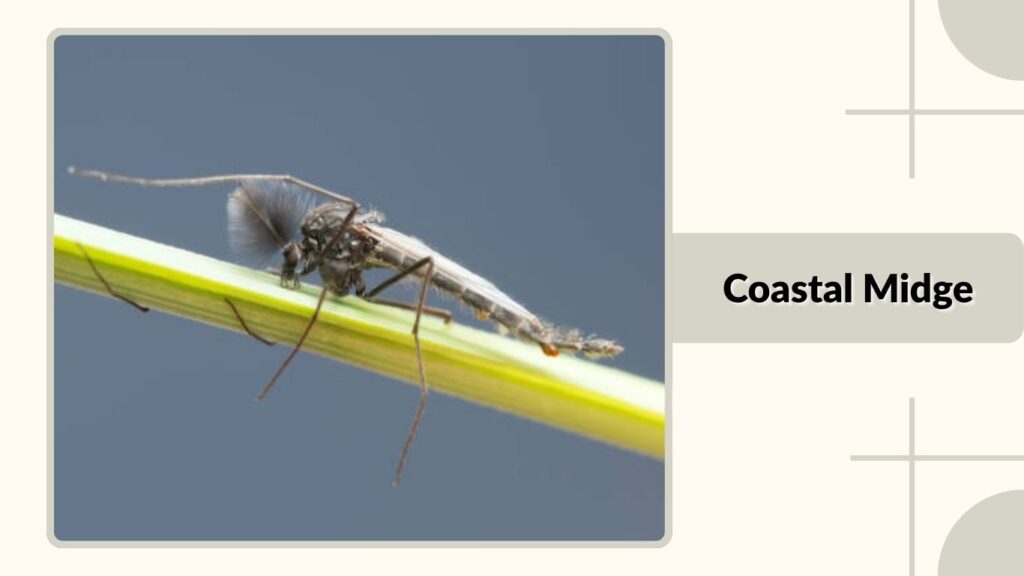
The coastal midge is a non-biting fly commonly found around estuaries, coastal lagoons, tidal wetlands, and shoreline pools. Although it may resemble a mosquito, it cannot bite humans or animals. Large adult swarms can become a temporary nuisance near homes, lights, and waterfront structures.
Identification
- Usually measures about 2–8 millimeters long
- Has a slender gray, brown, green, or black body
- Possesses long, delicate legs
- Features narrow, transparent wings
- Males often have feathery antennae
- Lacks piercing mouthparts
- Commonly forms swarms near coastal water
Habitat and Distribution
Coastal midges live near estuaries, salt-influenced wetlands, tidal ponds, lagoons, and sheltered shoreline waters. Their larvae develop in wet sediment, algae, and decomposing organic material.
Adults may gather around reeds, docks, boats, seawalls, windows, and outdoor lights. They are often most noticeable during warm evenings when large numbers emerge at the same time.
Feeding and Behavior
Adult coastal midges do not feed on blood. Many eat very little, while some consume nectar, pollen, or plant fluids during their short adult lives.
Males form mating swarms over shoreline vegetation, paths, and open water. Although these swarms may look like clouds of mosquitoes, they are harmless and usually remain active for only a limited period.
Life Cycle and Reproduction
Females lay gelatinous egg masses on or near the water. The larvae hatch and settle into soft coastal sediment, where they feed on algae, microorganisms, and organic debris.
After developing through several larval stages, they pupate underwater. Adults emerge at the surface, mate, and begin another generation.
7. Freshwater Midge
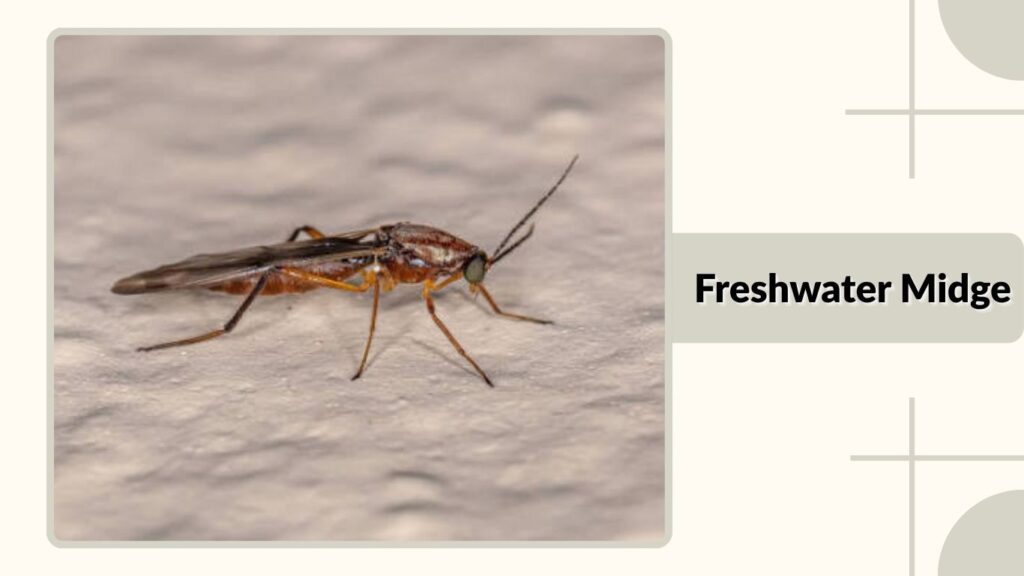
The freshwater midge is a general name for non-biting midges that develop in lakes, ponds, streams, wetlands, and reservoirs. These insects are important parts of aquatic food webs because their larvae provide food for fish, amphibians, insects, and water birds.
Identification
- Usually measures approximately 2–10 millimeters
- Has a thin green, brown, gray, or dark-colored body
- Possesses narrow wings and long legs
- Males have plume-like antennae
- Lacks a mosquito-like biting proboscis
- Often rests with the front legs raised
- May appear in large waterside swarms
Habitat and Distribution
Freshwater midges occur in nearly every type of inland aquatic habitat. Their larvae live in mud, sand, gravel, aquatic plants, and decaying material at the bottom of the water.
Adults remain near shorelines, reeds, trees, bridges, docks, and buildings. Artificial lights often attract them in large numbers during the evening.
Feeding and Behavior
These midges do not bite people, pets, or livestock. Many adults rely on energy stored during their larval stage and survive only long enough to mate and lay eggs.
Males often gather in visible aerial swarms. These swarms are a normal reproductive behavior and do not indicate that the insects are aggressive or dangerous.
Life Cycle and Reproduction
Females deposit egg masses on the surface of the water. The larvae hatch and settle into bottom sediment or build small protective tubes from mud and organic material.
They feed on algae, bacteria, microorganisms, and decomposing matter. After pupation, adults rise to the surface and leave the water.
8. Brackish-Water Midge
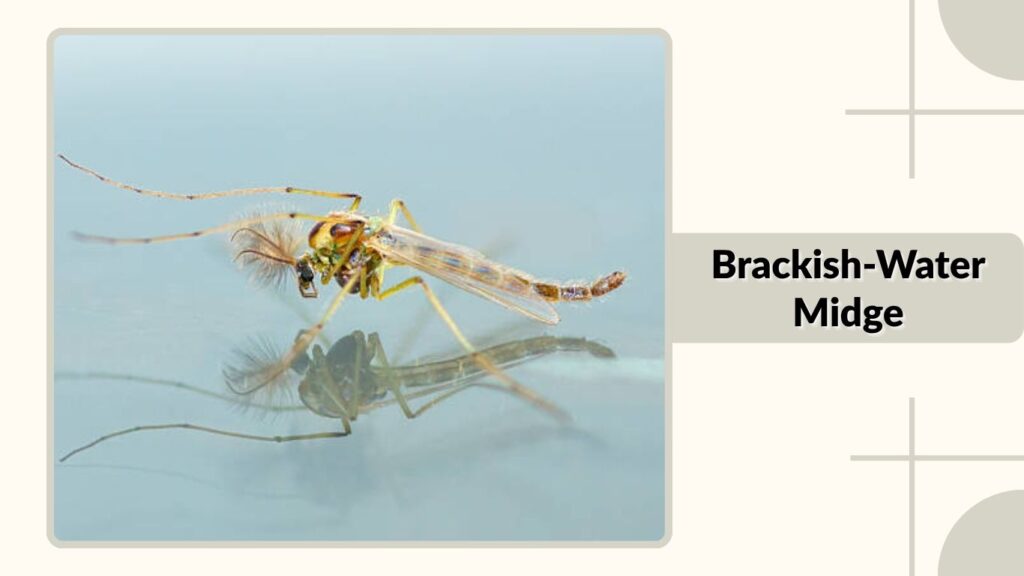
The brackish-water midge is a non-biting fly adapted to water containing a mixture of fresh and salt water. It commonly occurs in estuaries, coastal marshes, tidal creeks, and lagoons. Adults may emerge in large numbers but are harmless to humans and animals.
Identification
- Usually measures around 2–8 millimeters long
- Has a slender brown, gray, green, or black body
- Features long legs and narrow wings
- Males commonly have bushy antennae
- Does not possess biting mouthparts
- Often gathers near tidal or estuarine water
- Resembles a small mosquito
Habitat and Distribution
Brackish-water midges inhabit estuaries, tidal pools, coastal wetlands, and river mouths. Their larvae tolerate changing salinity levels and live in mud, algae, and decaying vegetation.
Adults may gather around mangroves, marsh grasses, docks, homes, and waterfront businesses. They are often attracted to bright lights after sunset.
Feeding and Behavior
Adult brackish-water midges do not bite or drink blood. Some may feed on nectar or plant secretions, while others eat very little.
Males form mating swarms above open water, vegetation, and shoreline structures. Large swarms may create a nuisance, but they do not spread disease or cause direct injury.
Life Cycle and Reproduction
Females lay eggs in gelatinous clusters on brackish water. The larvae sink into soft sediment, where they consume algae, microorganisms, and decomposing organic matter.
They later develop into pupae and rise toward the surface. Adults emerge, mate, and reproduce within a relatively short period.
9. Winter Midge
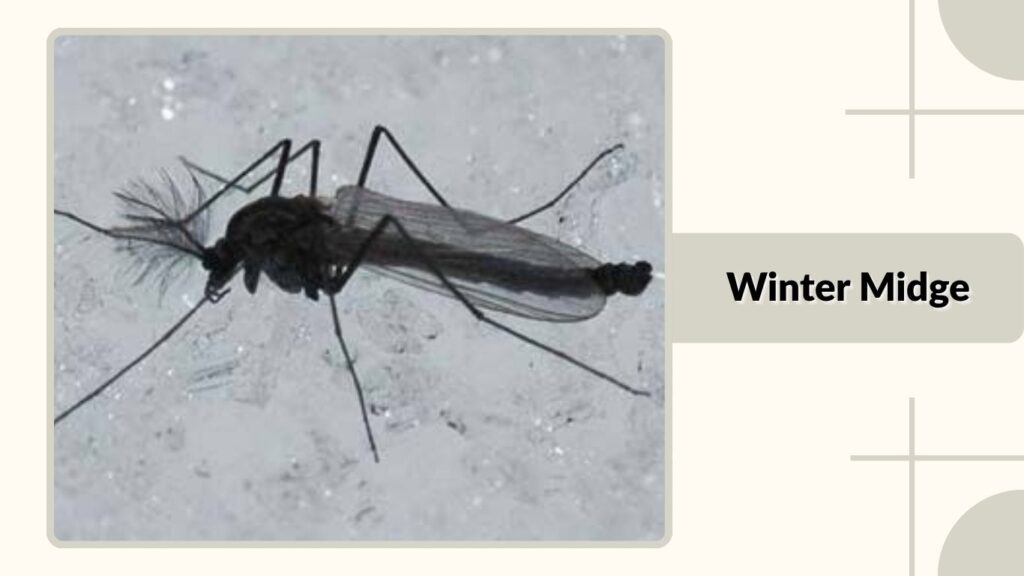
The winter midge is a cold-tolerant non-biting fly that may remain active during late autumn, winter, or early spring. Unlike many insects, some species can emerge when temperatures are low and may even be seen walking on snow or resting near cold streams.
Identification
- Usually measures about 3–10 millimeters long
- Has a dark brown, gray, or black body
- Possesses long legs and narrow wings
- Males may have feathery antennae
- Lacks piercing or biting mouthparts
- Often moves slowly in cold conditions
- May be seen near snow, ice, or winter streams
Habitat and Distribution
Winter midges occur near cold rivers, springs, streams, ponds, and wetlands. Their larvae develop in water or saturated sediment where temperatures remain relatively stable.
Adults may appear on mild winter days and gather near streambanks, bridges, tree trunks, and snow-covered surfaces. Their cold tolerance allows them to avoid competition from many warm-season insects.
Feeding and Behavior
Adult winter midges are harmless and do not bite. Many feed very little during their short adult lives and depend on stored energy from the larval stage.
Males may form small mating swarms during calm winter afternoons. They are usually less numerous than summer midges but can still be noticeable near cold-water habitats.
Life Cycle and Reproduction
Females lay eggs in or near cold water. The larvae live in sediment, aquatic vegetation, or submerged organic debris and feed on microorganisms and decaying material.
Development may continue slowly during cold months. Adults emerge when conditions are suitable, mate, and lay eggs before temperatures change.
10. Spring Midge
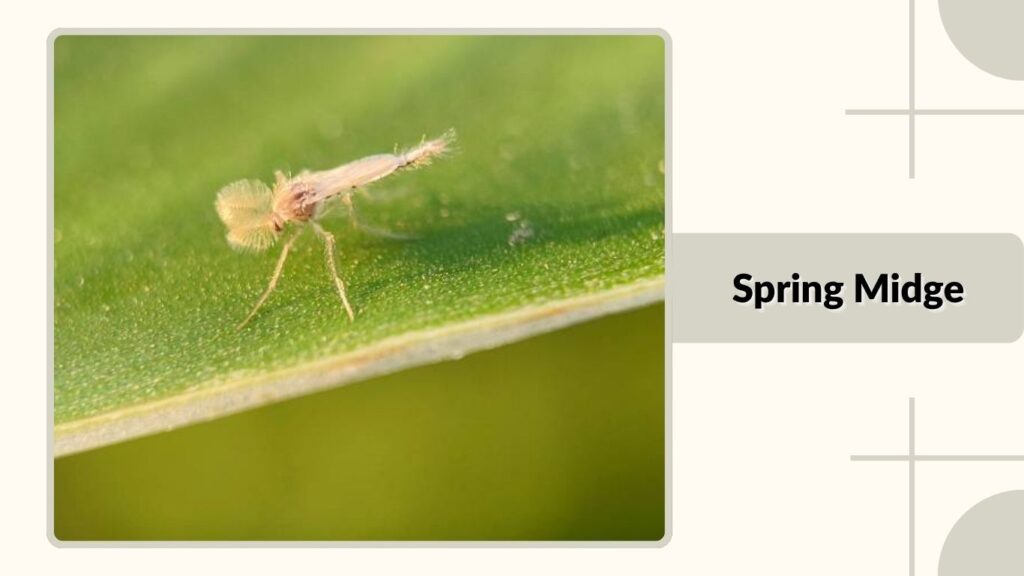
The spring midge is a non-biting fly that becomes especially noticeable during spring as water temperatures rise. Large numbers may emerge from ponds, lakes, rivers, and wetlands, creating visible swarms around shorelines and nearby buildings.
Identification
- Usually measures between 2 and 10 millimeters
- Has a slender green, brown, gray, or dark body
- Possesses long, fragile legs
- Features narrow, transparent wings
- Males often have plume-like antennae
- Lacks biting mouthparts
- Commonly appears in springtime swarms
Habitat and Distribution
Spring midges develop in freshwater lakes, ponds, rivers, marshes, and reservoirs. Their larvae spend winter or early spring in bottom sediment and aquatic debris.
Adults emerge as temperatures warm and may gather near reeds, docks, trees, bridges, and buildings. Outdoor lights can attract large numbers during evening hours.
Feeding and Behavior
Spring midges cannot bite humans or animals. Many adults eat little or nothing and live primarily to reproduce.
Males form dense mating swarms above water, roads, lawns, and vegetation. Although these swarms can be inconvenient, they are temporary and usually decline after the main emergence period.
Life Cycle and Reproduction
Females lay egg masses on the water after mating. The larvae hatch, sink to the bottom, and feed on algae, microorganisms, and decomposing organic material.
They pass through several growth stages before pupating. Adults emerge at the surface, often in synchronized groups during favorable spring conditions.
11. Summer Midge
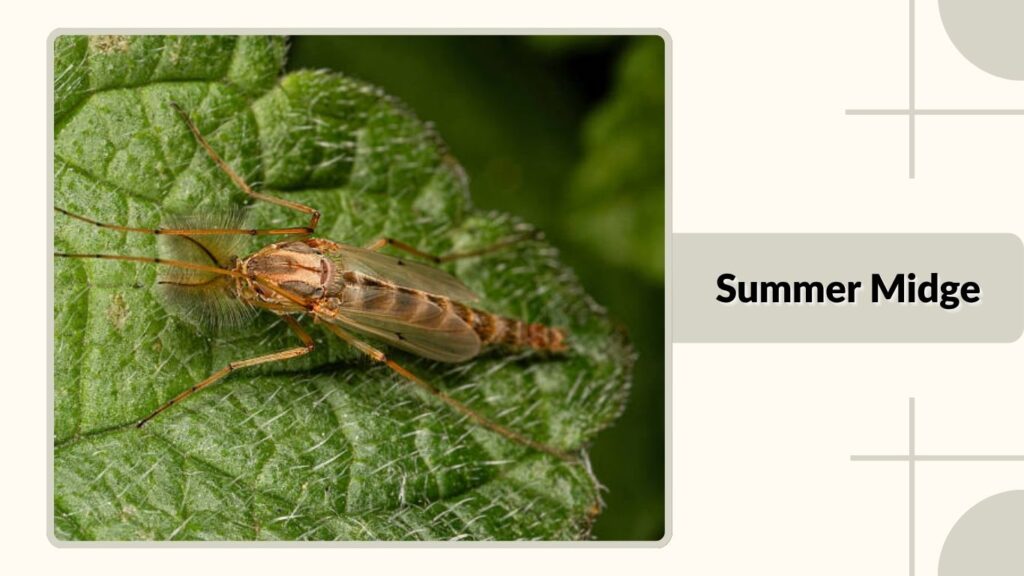
The summer midge is a non-biting fly that becomes especially abundant during warm summer months. Large groups often emerge from lakes, ponds, marshes, and rivers, forming visible swarms near water, vegetation, and outdoor lights. Although they may resemble mosquitoes, summer midges do not bite humans or animals.
Identification
- Usually measures about 2–10 millimeters long
- Has a slender green, gray, brown, or black body
- Possesses narrow, transparent wings
- Features long, delicate legs
- Males often have feathery antennae
- Lacks a piercing proboscis
- Frequently appears in large summer swarms
Habitat and Distribution
Summer midges are common around freshwater lakes, ponds, rivers, wetlands, canals, and reservoirs. Their larvae live in mud, algae, and decaying vegetation beneath the water.
Adults often gather around docks, bridges, trees, walls, windows, and outdoor lights. Warm water temperatures can trigger the simultaneous emergence of thousands of adults.
Feeding and Behavior
Adult summer midges are harmless and do not consume blood. Many adults eat little or nothing, while some may feed on nectar, pollen, or plant fluids.
Males form dancing mating swarms during calm mornings and evenings. These swarms may be inconvenient around homes and recreational areas, but they usually disappear within a few days.
Life Cycle and Reproduction
Females lay gelatinous egg masses on the water’s surface. After hatching, the larvae settle into bottom sediment or construct small tubes from mud and organic particles.
The larvae feed on algae, bacteria, and decomposing matter before pupating. Adults later rise to the surface, emerge, mate, and lay eggs.
12. Giant Midge
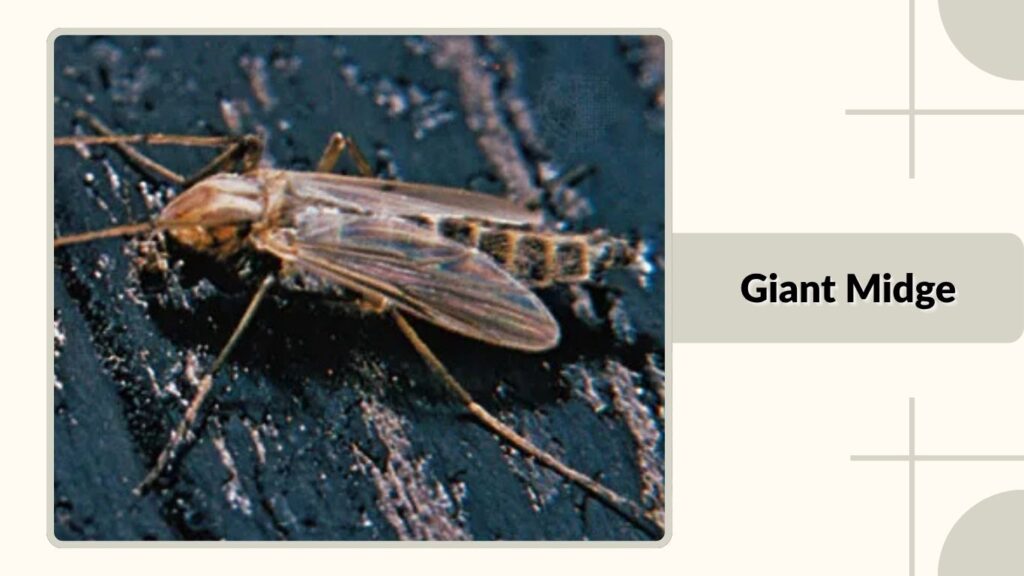
The giant midge is larger than most other non-biting midges and may be mistaken for a mosquito or small crane fly. Despite its size, it is harmless and lacks the mouthparts required to bite. These midges are usually found near freshwater habitats with abundant organic material.
Identification
- Commonly measures about 8–15 millimeters long
- Has a slender brown, gray, green, or black body
- Possesses long legs and relatively broad wings
- Males may have bushy antennae
- Lacks a long, piercing mouthpart
- Has a larger body than most chironomid midges
- Often rests near shoreline vegetation
Habitat and Distribution
Giant midges live near lakes, ponds, marshes, rivers, and reservoirs. Their larvae develop in soft sediment, submerged vegetation, and organic debris.
Adults often rest on reeds, grasses, shrubs, walls, and structures near water. They may be attracted to porch lights, streetlights, and illuminated windows after dark.
Feeding and Behavior
Adult giant midges do not bite or sting. Some may feed on nectar or plant fluids, while others rely entirely on energy stored during the larval stage.
Males gather in loose mating swarms near water or prominent objects. Their large size can make them look intimidating, but they pose no direct threat to people, pets, or livestock.
Life Cycle and Reproduction
Females place egg masses on or just beneath the water’s surface. The larvae hatch and settle into mud or decaying plant material.
After feeding and growing through several larval stages, they pupate underwater. The adults emerge at the surface and survive for a short period focused mainly on reproduction.
13. Small Lake Midge
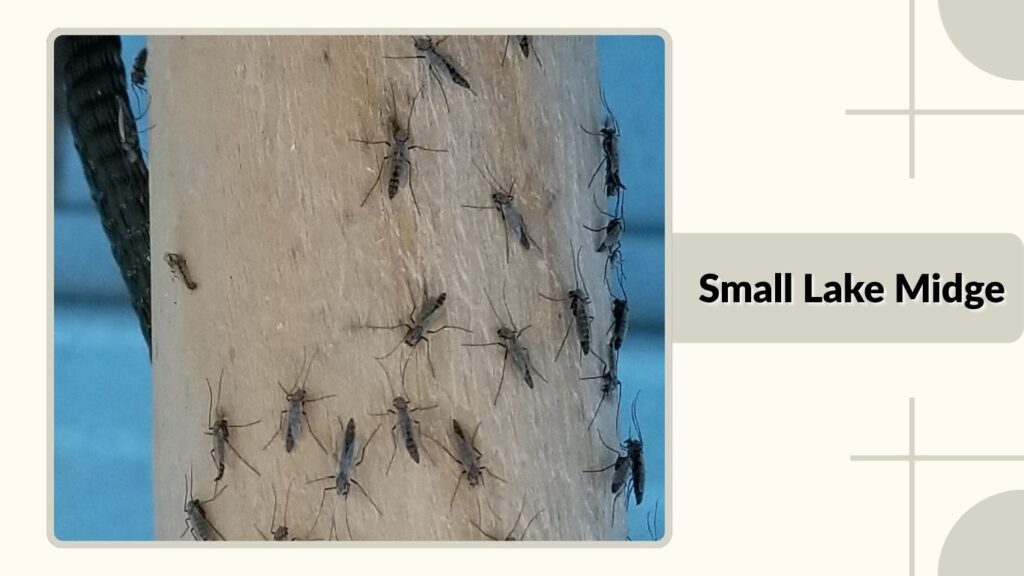
The small lake midge is a tiny non-biting fly found around lakes, ponds, and reservoirs. It may appear in large numbers during seasonal emergence periods. Its small size makes it easy to confuse with a mosquito or biting gnat, but it does not feed on blood.
Identification
- Usually measures approximately 1–4 millimeters
- Has a slender pale green, gray, brown, or dark body
- Possesses tiny transparent wings
- Features delicate legs
- Males may have feathery antennae
- Lacks biting mouthparts
- Commonly gathers in dense shoreline swarms
Habitat and Distribution
Small lake midges live around freshwater lakes, ponds, reservoirs, and shallow wetlands. Their larvae inhabit muddy bottom sediment and areas containing algae or decomposing vegetation.
Adults gather near aquatic plants, docks, boats, walls, trees, and outdoor lights. They may enter buildings through open windows and doors but cannot reproduce indoors without suitable aquatic habitat.
Feeding and Behavior
These midges do not bite people or animals. Adult feeding is usually limited, although some individuals may consume nectar or other plant sugars.
Males form compact swarms above water and shoreline vegetation. Large emergences may create nuisance conditions, especially when dead adults accumulate around windows, lights, and outdoor furniture.
Life Cycle and Reproduction
Females lay egg masses directly on lake water. The larvae hatch, sink, and begin feeding on algae, microorganisms, and organic material.
They later become pupae and rise toward the water’s surface. Adult emergence may occur in synchronized waves during warm, calm weather.
14. Green Midge
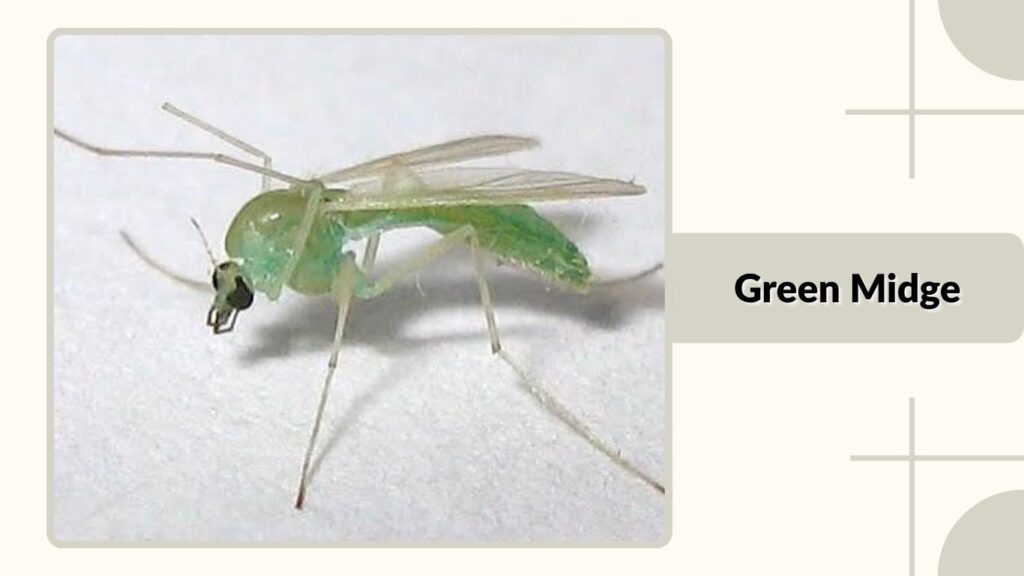
The green midge is a non-biting fly identified by its pale green or yellowish-green body. It is commonly found around freshwater habitats and is often attracted to lights at night. Despite its mosquito-like shape, it is harmless to humans and animals.
Identification
- Usually measures about 2–8 millimeters long
- Has a pale green or yellowish-green body
- Possesses long, delicate legs
- Features narrow, transparent wings
- Males often have feathery antennae
- Lacks a biting proboscis
- May become darker after death
Habitat and Distribution
Green midges occur around ponds, lakes, streams, wetlands, and reservoirs. Their larvae live in mud, aquatic vegetation, algae, and organic material beneath the water.
Adults are frequently seen on reeds, grasses, walls, ceilings, windows, and outdoor lights. They may become particularly noticeable during warm evenings.
Feeding and Behavior
Adult green midges do not bite or drink blood. Some feed lightly on nectar and plant secretions, while many survive without eating during their brief adult stage.
Males gather in mating swarms over water or vegetation. These swarms may resemble clouds of mosquitoes but do not pose a health risk.
Life Cycle and Reproduction
Females deposit gelatinous egg clusters on the water. The larvae hatch and live among sediment, algae, and decomposing plant debris.
After completing their larval growth, they pupate underwater. Adults emerge at the surface and usually live only long enough to mate and reproduce.
15. Black Midge
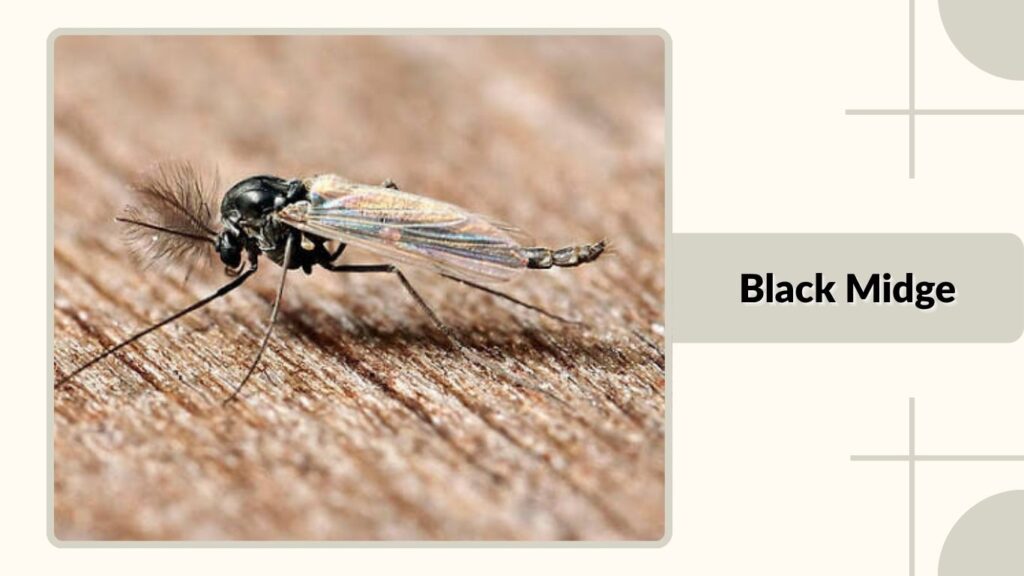
The black midge is a dark-colored non-biting fly commonly found near lakes, rivers, ponds, and wetlands. Its appearance may cause it to be mistaken for a small mosquito or biting black fly, but it lacks functional piercing mouthparts and cannot bite.
Identification
- Usually measures around 2–10 millimeters long
- Has a dark brown, charcoal, or black body
- Possesses long, slender legs
- Features narrow, transparent or smoky wings
- Males commonly have plume-like antennae
- Lacks a mosquito-like proboscis
- Often forms dark swarms near water
Habitat and Distribution
Black midges inhabit freshwater ponds, lakes, streams, rivers, reservoirs, and marshes. Their larvae develop in muddy sediment, organic debris, and aquatic vegetation.
Adults rest on shoreline plants, rocks, trees, bridges, walls, and windows. Artificial lighting may attract large numbers into residential and commercial areas near water.
Feeding and Behavior
Adult black midges are harmless and do not bite people, pets, or livestock. Many adults do not feed, while some consume small amounts of nectar or plant fluid.
Males gather in mating swarms, often during the morning or evening. Although dense swarms may be annoying, they usually last only a short time.
Life Cycle and Reproduction
Females lay clusters or strings of eggs on freshwater surfaces. The larvae hatch and settle into bottom sediment, where they feed on algae, bacteria, and decaying matter.
They eventually develop into pupae and rise toward the surface. Adults emerge from the water, mate, and complete the reproductive cycle.
16. Bloodworm Midge
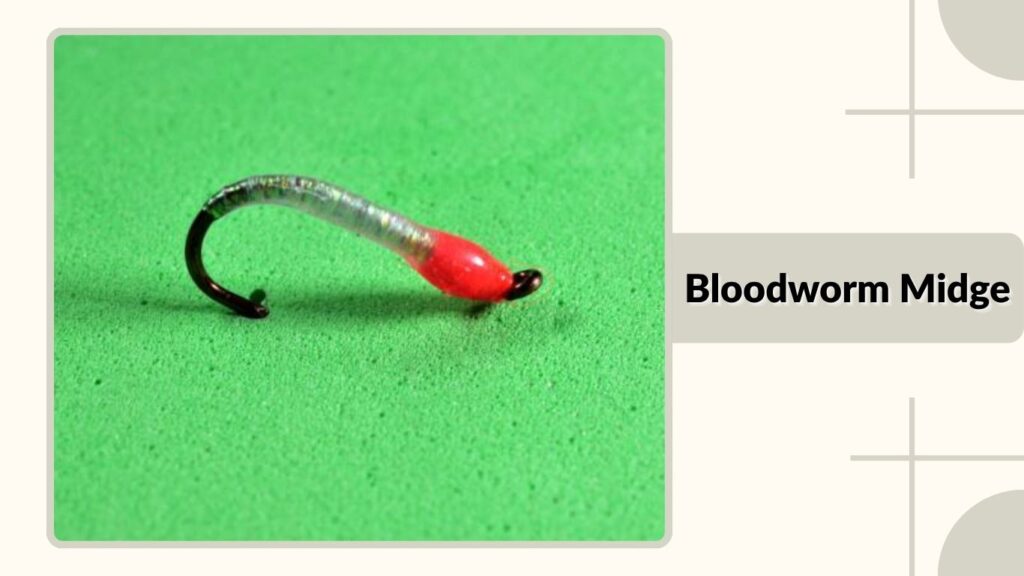
The bloodworm midge is a non-biting fly whose aquatic larvae are commonly called bloodworms. The larvae are usually bright red because they contain a hemoglobin-like pigment that helps them survive in water with low oxygen levels. Adults resemble mosquitoes but cannot bite humans or animals.
Identification
- Adults usually measure about 3–10 millimeters long
- Has a slender gray, brown, green, or dark body
- Possesses narrow wings and long legs
- Males often have feathery antennae
- Larvae are bright red, slender, and worm-like
- Adults lack piercing mouthparts
- Often forms swarms near ponds and lakes
Habitat and Distribution
Bloodworm midges occur around ponds, lakes, wetlands, ditches, reservoirs, and slow-moving streams. Their larvae live in soft mud, organic sediment, and decaying vegetation.
They are especially common in water with low oxygen and high levels of organic matter. Adults often gather near shorelines, lights, docks, and buildings close to freshwater.
Feeding and Behavior
Adult bloodworm midges do not bite or drink blood. Many adults feed very little, although some may consume nectar or plant fluids.
The larvae feed on algae, bacteria, microorganisms, and decomposing organic matter. They are also an important food source for fish, amphibians, and aquatic insects.
Life Cycle and Reproduction
Females lay gelatinous egg masses on the water. The larvae hatch and settle into muddy sediment, where they may build protective tubes.
After several growth stages, they become pupae and rise toward the surface. Adults emerge, form mating swarms, reproduce, and usually live only a few days.
17. Plume Midge
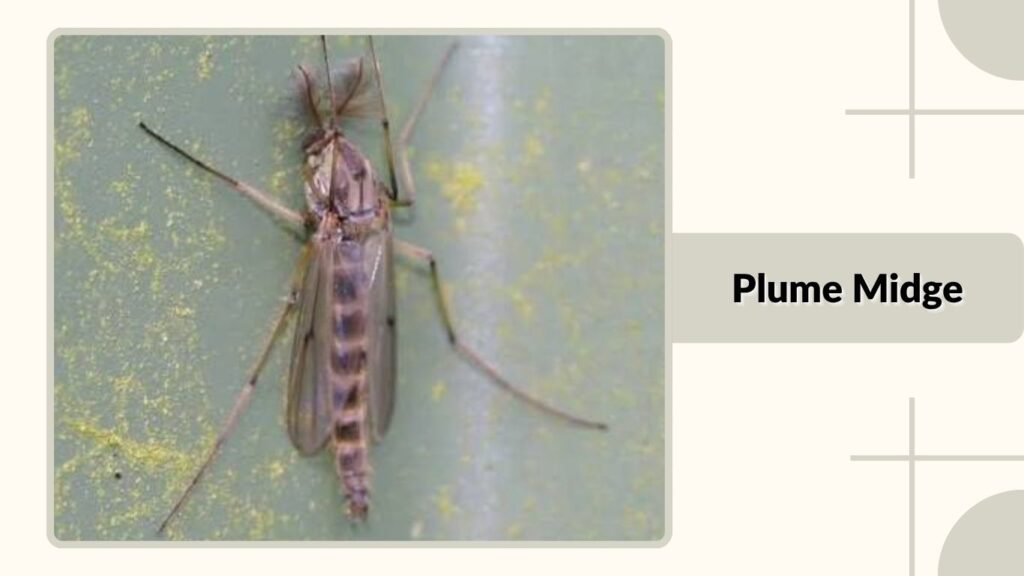
The plume midge gets its common name from the large, feather-like antennae found on adult males. These sensitive antennae help males detect the wing vibrations of females during mating swarms. Plume midges are harmless and commonly occur near freshwater.
Identification
- Usually measures approximately 2–10 millimeters
- Has a slender green, brown, gray, or black body
- Males possess large, plume-like antennae
- Features long legs and narrow wings
- Females have less-feathery antennae
- Lacks a biting proboscis
- Often mistaken for a mosquito
Habitat and Distribution
Plume midges are found near lakes, ponds, rivers, streams, marshes, and reservoirs. Their larvae live in mud, sediment, aquatic plants, and decomposing organic material.
Adults often gather around vegetation, bridges, docks, windows, and outdoor lights. They are especially noticeable during large seasonal emergences.
Feeding and Behavior
Plume midges do not bite humans or animals. Many adults consume little or no food and focus mainly on reproduction.
Males use their feathery antennae to locate females in dense swarms. These mating clouds often appear above water, lawns, roads, and other open spaces during calm evenings.
Life Cycle and Reproduction
Females lay clusters or strings of eggs on the water’s surface. The larvae hatch and settle into sediment, where they feed on algae and decaying material.
They later form pupae underwater. Adults emerge at the surface and quickly join mating swarms before completing their short adult lives.
18. Net-Winged Midge
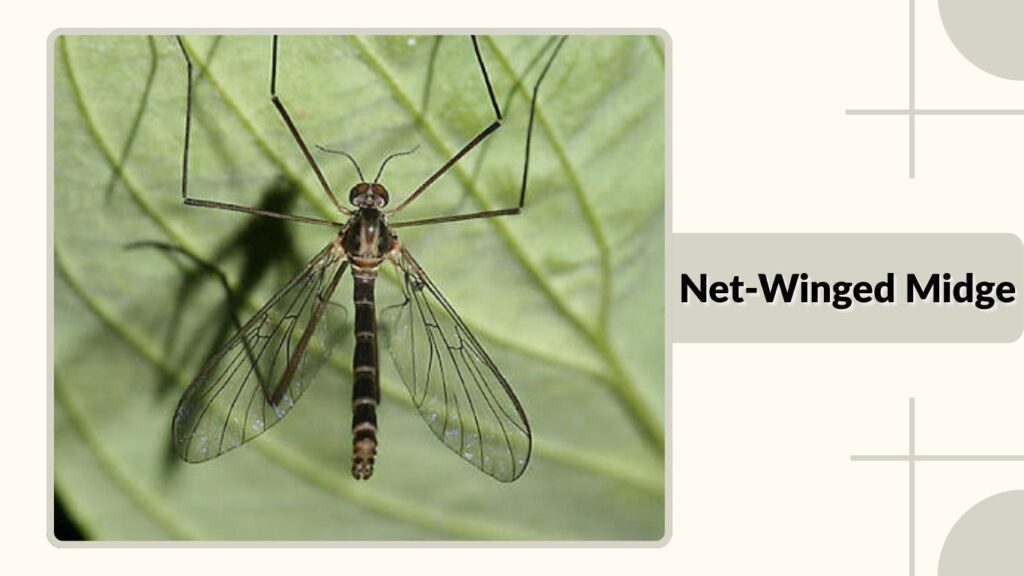
The net-winged midge is a small non-biting fly recognized by the visible network of veins in its wings. It is often associated with clean streams, waterfalls, and fast-flowing water. Its larvae are adapted to clinging to rocks in strong currents.
Identification
- Usually measures around 3–8 millimeters long
- Has a slender gray, brown, or dark body
- Wings show a noticeable network of veins
- Possesses long legs and delicate antennae
- Lacks piercing or biting mouthparts
- May have broader wings than typical midges
- Often rests near rocks and flowing water
Habitat and Distribution
Net-winged midges are commonly found near mountain streams, waterfalls, rivers, and splash zones. Their larvae attach themselves to wet rocks where water flows continuously.
Adults usually remain close to the breeding area and rest on stones, moss, tree trunks, and streamside vegetation. They are more common in cool, clean aquatic habitats.
Feeding and Behavior
Adult net-winged midges are harmless and do not bite. Some may consume nectar or plant fluids, while others feed very little.
Their larvae graze on algae, microorganisms, and organic films growing on submerged rocks. They are an important part of healthy stream ecosystems.
Life Cycle and Reproduction
Females place eggs on wet rocks or in flowing water. The larvae hatch and use specialized structures to remain attached in strong currents.
After completing their larval growth, they pupate near the water. Adults emerge, mate close to the stream, and begin another generation.
19. Mountain Midge
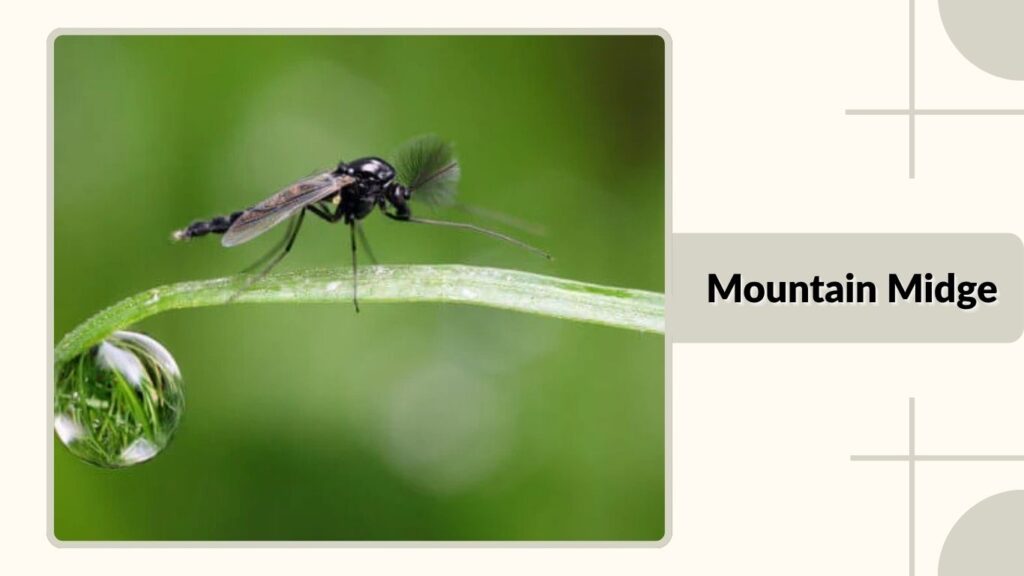
The mountain midge is a non-biting fly adapted to cool, high-elevation habitats. It commonly occurs near mountain lakes, streams, snowmelt pools, and damp alpine meadows. Adults may appear in large swarms during short periods of warm weather.
Identification
- Usually measures about 2–8 millimeters long
- Has a dark gray, brown, green, or black body
- Possesses long legs and narrow wings
- Males may have feathery antennae
- Lacks a mosquito-like biting proboscis
- Often appears near cold streams and lakes
- May have a compact, dark-colored body
Habitat and Distribution
Mountain midges inhabit alpine lakes, cold streams, waterfalls, wet meadows, and snowmelt pools. Their larvae develop in cold water, sediment, moss, and submerged organic matter.
Adults gather near rocks, grasses, shrubs, cabins, and hiking trails. Their activity is usually concentrated in the warmer part of the mountain summer.
Feeding and Behavior
Adult mountain midges do not bite humans or animals. Many survive on stored energy and live only long enough to mate.
Males form swarms above water, vegetation, and open ground. These gatherings may be especially noticeable on calm, sunny days at high elevations.
Life Cycle and Reproduction
Females lay eggs in cold water or on wet surfaces. The larvae feed on algae, bacteria, and decomposing organic material.
Development may be slow because of low temperatures. After pupation, adults emerge quickly during favorable weather and reproduce before colder conditions return.
20. Arctic Midge
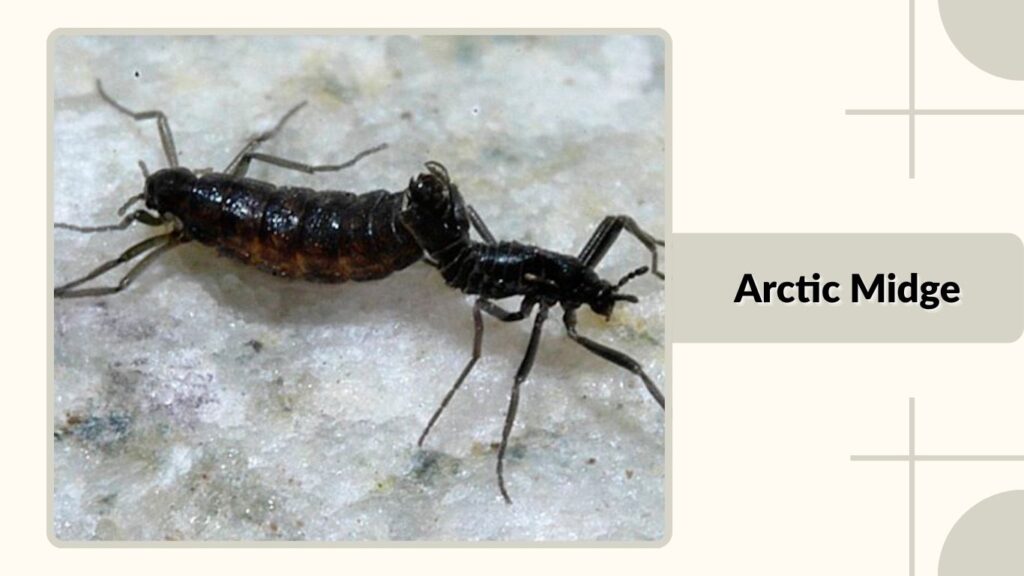
The Arctic midge is a cold-adapted non-biting fly found in tundra, polar wetlands, and northern freshwater habitats. Some species can survive extreme freezing conditions and spend most of their lives as larvae beneath ice, snow, or frozen soil.
Identification
- Usually measures around 2–8 millimeters long
- Has a dark brown, gray, or black body
- Possesses long legs and narrow wings
- Males may have plume-like antennae
- Lacks piercing mouthparts
- Often has a compact, dark appearance
- Adults appear during the brief Arctic summer
Habitat and Distribution
Arctic midges occur in tundra ponds, meltwater pools, cold rivers, wetlands, and shallow northern lakes. Their larvae live in mud, moss, sediment, and submerged organic matter.
Adults emerge during short periods of mild weather. They may gather around water, tundra plants, rocks, and research or residential buildings in northern regions.
Feeding and Behavior
Arctic midges are harmless and do not bite. Adults often eat little or nothing because their lives are brief and focused on reproduction.
Their larvae play an important ecological role by recycling organic material and providing food for fish, birds, and other Arctic wildlife.
Life Cycle and Reproduction
Females lay eggs in cold water or saturated soil. The larvae may grow slowly over several months or even years, depending on the species and climate.
They survive freezing temperatures through special physiological adaptations. When summer arrives, the larvae pupate and adults emerge rapidly to mate and reproduce.
FAQs
1. Do non-biting midges bite humans?
No, non-biting midges do not bite humans, pets, or livestock. Although they closely resemble mosquitoes, they lack the piercing mouthparts needed to feed on blood. Large swarms may be annoying, but these insects are generally harmless.
2. Why do non-biting midges gather in large swarms?
Male midges form large aerial swarms to attract females for mating. These swarms usually appear near lakes, rivers, ponds, wetlands, vegetation, or outdoor lights. They are especially common during warm, calm mornings and evenings.
3. Are non-biting midges dangerous?
Non-biting midges are not considered dangerous because they do not bite, sting, or directly transmit diseases to humans. However, very large numbers can create nuisance problems by covering walls, windows, vehicles, lights, and outdoor furniture.
4. Where do non-biting midges lay their eggs?
Female non-biting midges usually lay gelatinous egg masses on the surface of freshwater, brackish water, wet sediment, or aquatic vegetation. The larvae hatch and develop in mud, organic debris, algae, or bottom sediment.
5. How can you reduce non-biting midges around your home?
Reduce outdoor lighting near doors and windows, use yellow or warm-colored bulbs, repair window screens, and remove unnecessary standing water. Fans can also help keep adult midges away from patios because these delicate insects are weak fliers.