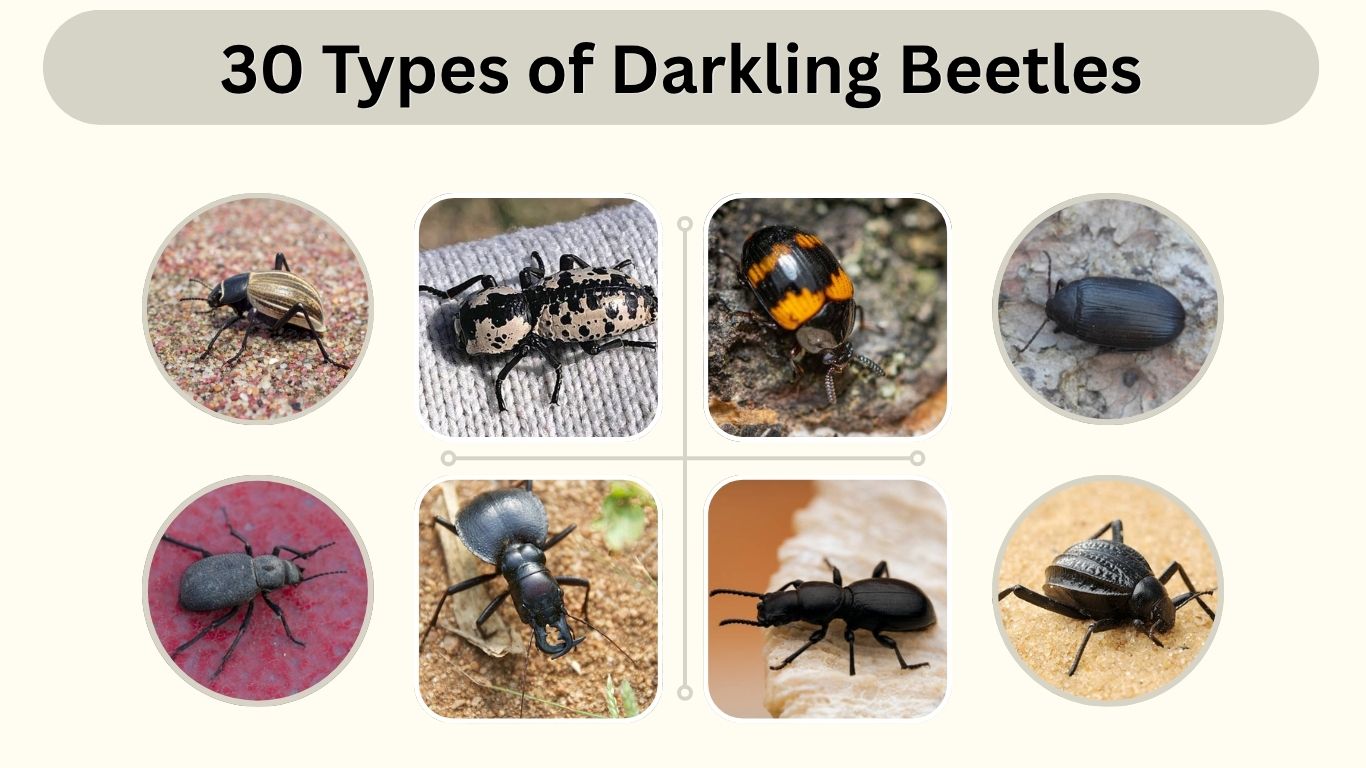
Darkling beetles are a highly diverse group of insects found in deserts, forests, grasslands, stored foods, decaying wood, and many other habitats around the world. Some species, such as mealworm and flour beetles, are closely associated with human food storage, while others thrive in dunes, fungi, or dry desert environments. In this guide, you’ll discover 30 types of darkling beetles along with their key identification features, habitat and distribution, behavior and diet, and lifespan and life cycle.
1. Yellow Mealworm Beetle
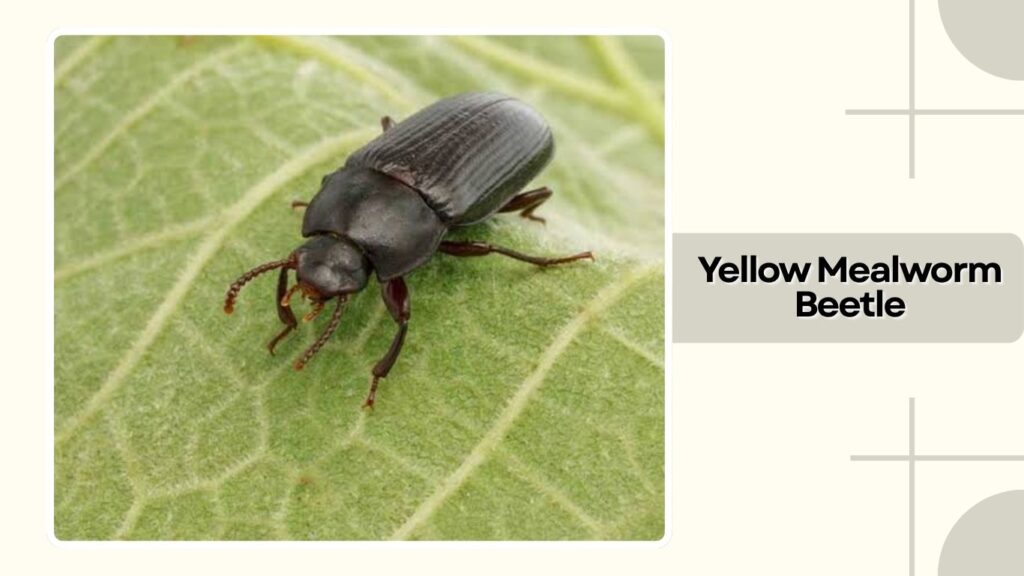
The Yellow Mealworm Beetle is one of the best-known members of the darkling beetle family. Its larvae, commonly called mealworms, are widely used as food for reptiles, birds, fish, and other animals. In nature and around human structures, these beetles are typically associated with stored grain, decaying plant material, and other dry organic matter.
Identification
- Scientific name: Tenebrio molitor
- Adult length: about 12–20 mm
- Newly emerged adults are pale brown
- Mature adults become dark brown to almost black
- Long, narrow, slightly flattened body
- Wing covers have noticeable longitudinal grooves
- Larvae are golden-yellow to brown and elongated
- Larvae may reach about 25–30 mm long
Habitat and Distribution
Yellow mealworm beetles are now found across much of the world, especially where grain and dry organic materials are stored. They occur in warehouses, grain-storage areas, barns, poultry facilities, old buildings, and occasionally household pantries.
Outdoors, they may be found beneath decaying wood, leaf litter, bark, or other organic debris.
Behavior and Diet
Both adults and larvae are scavengers. They consume grain products, cereals, flour, bran, decaying vegetation, and other organic material.
Mealworm larvae are particularly well known because they can be commercially raised as animal feed. Adults are mostly active under dark conditions and often hide beneath objects during daylight.
Lifespan and Life Cycle
The life cycle includes egg, larva, pupa, and adult stages. Females place small eggs in suitable food material.
The larval period is the longest stage and includes numerous molts. When fully developed, the larva transforms into a pale pupa before becoming an adult beetle.
Development speed varies greatly with temperature, moisture, and food availability.
2. Dark Mealworm Beetle
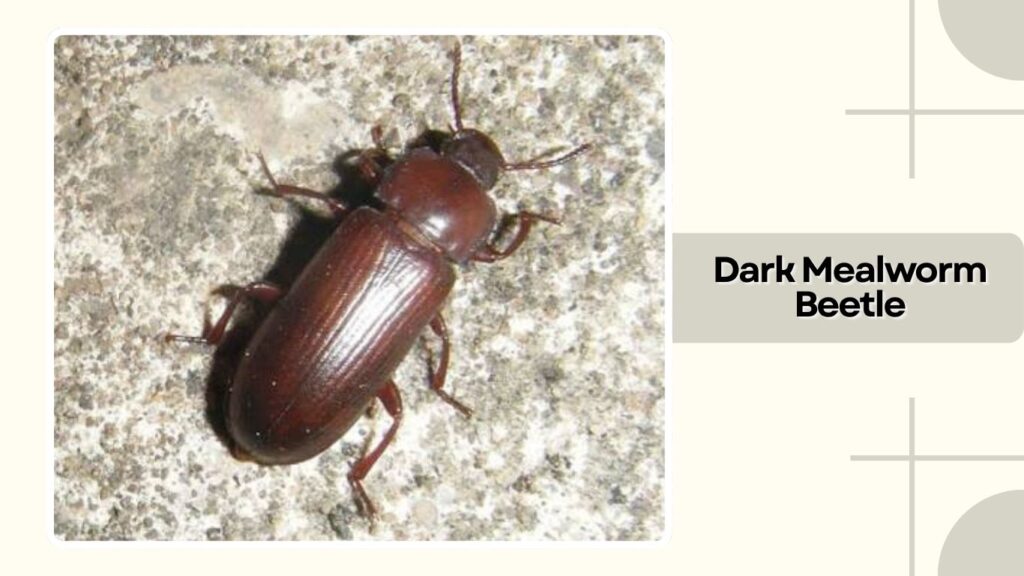
The Dark Mealworm Beetle closely resembles the more familiar Yellow Mealworm Beetle but is recognized as a separate species. It is associated mainly with stored grain products and organic debris. Both adults and larvae can contaminate stored commodities when populations become established. Adults are sturdy darkling beetles with an elongated body and strongly grooved wing covers.
Identification
- Scientific name: Tenebrio obscurus
- Adult length: roughly 12–18 mm
- Dark brown to nearly black coloration
- Elongated, parallel-sided body
- Dense punctures on the head and thorax
- Longitudinal grooves on the wing covers
- Larvae are cylindrical and yellowish-brown
- Mature larvae may reach approximately 25–30 mm
Habitat and Distribution
Dark mealworm beetles are associated with grain-storage facilities, mills, barns, poultry buildings, warehouses, and places where dry food or organic debris accumulates.
They may also survive in sheltered outdoor environments containing decomposing plant or animal material.
Behavior and Diet
Adults and larvae feed on stored grains, grain-based products, deteriorating food, and organic debris. They are generally considered secondary stored-product pests because they often exploit material that has already been broken or damaged.
Like many darkling beetles, adults prefer concealed, relatively dark locations.
Lifespan and Life Cycle
Females deposit eggs around food materials and protected cracks. Larvae hatch and begin feeding before passing through multiple molts.
Mature larvae pupate in protected areas. Newly formed adults are initially lighter in color before gradually darkening.
The entire development period varies according to temperature and food quality, with warmer favorable environments generally speeding development.
3. Lesser Mealworm Beetle
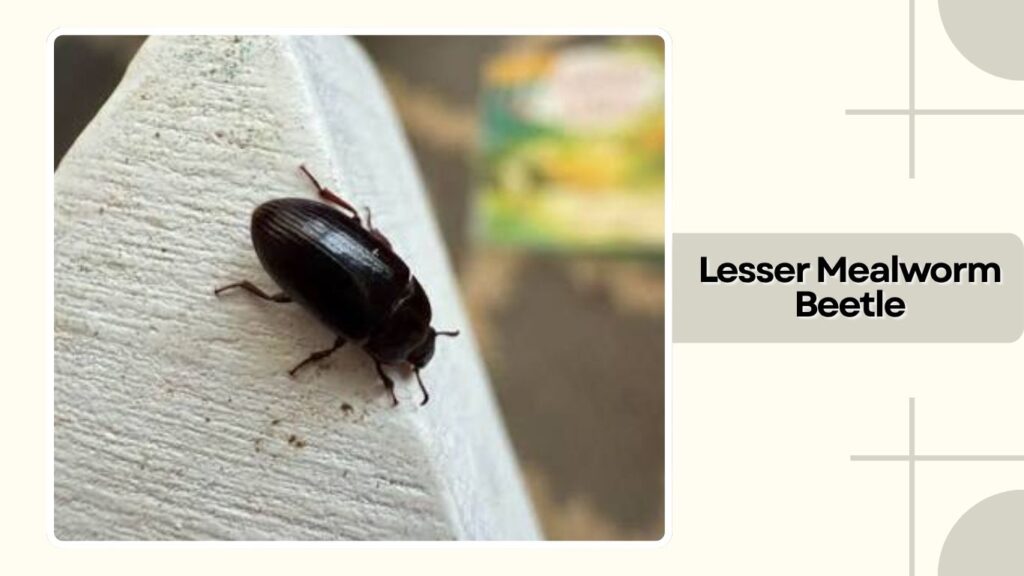
The Lesser Mealworm Beetle, also called the litter beetle, is considerably smaller than true mealworm beetles. It is especially important in poultry facilities, where adults and larvae can occur in enormous numbers within litter and manure. Besides damaging insulation and other materials, the species is also significant because it can carry several poultry pathogens.
Identification
- Scientific name: Alphitobius diaperinus
- Adult length: about 5–7 mm
- Black to dark reddish-brown body
- Broadly oval and moderately convex shape
- Smooth, often shiny appearance
- Adults move relatively quickly
- Larvae are yellowish-brown and elongated
- Larvae grow to roughly 8–10 mm
Habitat and Distribution
The Lesser Mealworm Beetle is now distributed worldwide. It is particularly associated with poultry houses, livestock buildings, manure, damp litter, grain, spoiled feed, and decomposing organic material.
Warm poultry environments provide excellent conditions for year-round populations.
Behavior and Diet
Adults and larvae are opportunistic feeders. They consume moldy grain, spilled feed, poultry litter, manure, dead animals, and other decomposing organic matter.
When populations become large, larvae may burrow into insulation and structural materials when searching for protected pupation sites.
Lifespan and Life Cycle
Females lay eggs in litter, grain, manure, or cracks and crevices. Eggs can hatch within several days under warm conditions.
Larvae pass through several stages before seeking sheltered places to pupate. Adults emerge after pupation and can reproduce rapidly where warmth, moisture, and food remain abundant.
4. Superworm Beetle
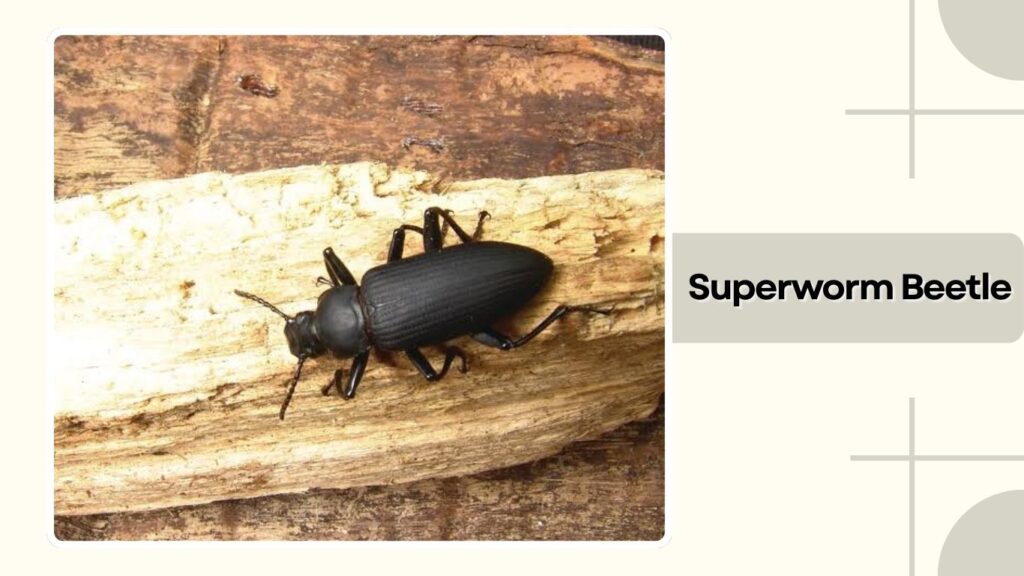
The Superworm Beetle is a large tropical darkling beetle whose larvae are widely sold as “superworms.” These larvae are popular feeder insects for reptiles, amphibians, birds, and fish because they are considerably larger than ordinary mealworms. In nature, the species is associated with organic litter and other decomposing materials in tropical environments.
Identification
- Scientific name: Zophobas morio (also treated as Zophobas atratus)
- Adult length: commonly about 18–25 mm
- Adult body becomes dark brown or black
- Elongated, robust shape
- Distinct longitudinal grooves on wing covers
- Larvae are yellow to golden-brown
- Larvae have darker head and tail regions
- Mature larvae may reach 50–60 mm
Habitat and Distribution
Superworm beetles originated in tropical Central and South America but have been introduced elsewhere through commercial breeding. Research reports natural associations with organic litter and fruit-bat guano.
Today, they are commonly maintained in captive insect colonies worldwide.
Behavior and Diet
Larvae are scavengers that consume decaying plant matter, grains, bran, vegetables, and various organic materials. Adults also feed on organic material.
Unlike ordinary mealworms, superworm larvae typically need to be isolated from one another before they successfully pupate, a characteristic well known in commercial breeding.
Lifespan and Life Cycle
Females lay numerous small eggs in suitable substrate. After hatching, larvae grow through many molts and can remain in the larval stage for an extended period.
Once conditions trigger pupation, the larva becomes a pale pupa. The adult emerges light-colored before gradually turning dark.
Under suitable captive conditions, the entire cycle can take several months.
5. Red Flour Beetle
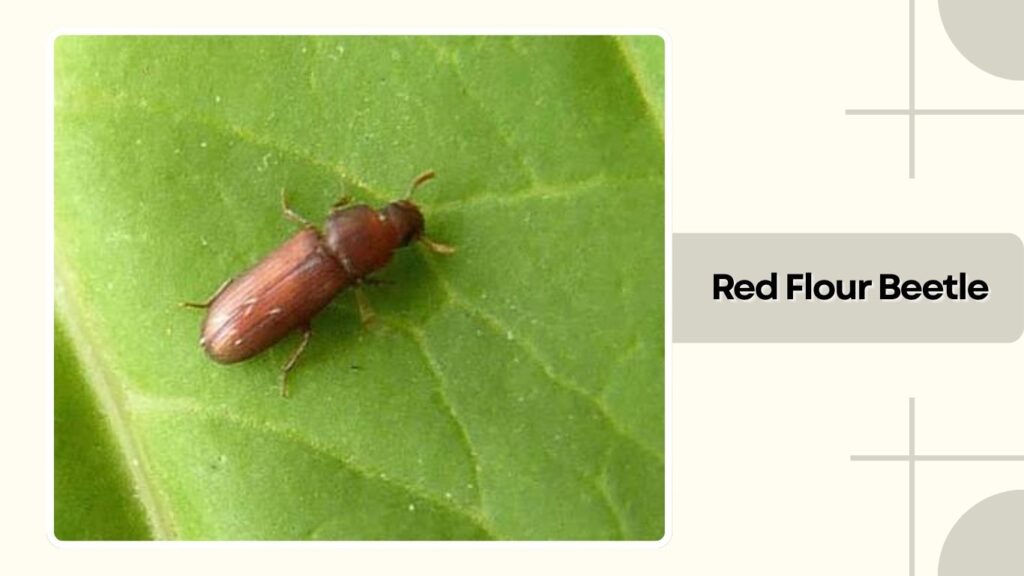
The Red Flour Beetle is a small reddish-brown darkling beetle and one of the world’s best-known stored-product pests. It commonly infests flour, cereals, bran, nuts, dried fruits, chocolate, and other processed foods. Unlike many grain pests, it generally cannot penetrate healthy whole kernels and instead thrives on broken grain and milled products.
Identification
- Scientific name: Tribolium castaneum
- Adult length: roughly 3–5 mm
- Reddish-brown coloration
- Slender, flattened body
- Last three antennal segments form a distinct club
- Wing covers have fine longitudinal grooves
- Adults are capable of flight
- Larvae are cream-colored and slender with two small tail projections
Habitat and Distribution
Red Flour Beetles occur worldwide and thrive in warm grain-storage environments. They are commonly found in flour mills, warehouses, food-processing facilities, grocery stores, and household pantries.
They may spread between packages after an infestation becomes established.
Behavior and Diet
The beetles feed on flour, meal, bran, cereals, nuts, dried fruit, spices, and other processed plant materials.
Both adults and larvae contaminate food. Heavy infestations can also give flour an unpleasant odor or taste because the beetles produce defensive chemicals.
Lifespan and Life Cycle
Females lay tiny eggs directly in food material. Larvae hatch and begin feeding before pupating in or near the infested product.
Warm conditions can allow the complete life cycle to occur relatively quickly, enabling populations to increase rapidly.
Adults are comparatively long-lived and may survive for many months under favorable storage conditions.
6. Confused Flour Beetle
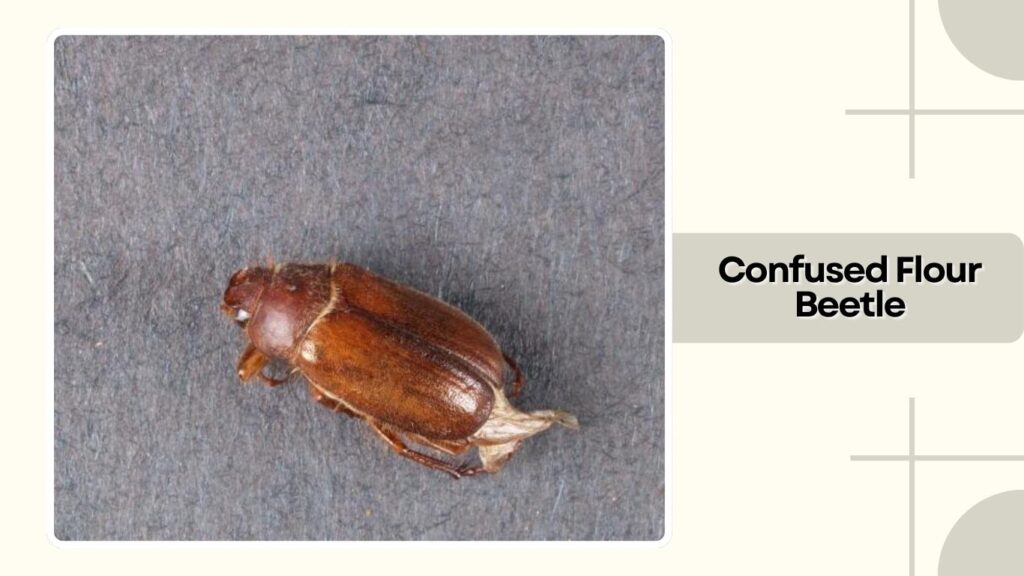
The Confused Flour Beetle is extremely similar to the Red Flour Beetle and gets its common name from the difficulty of distinguishing the two species. It is an important pest of flour mills, warehouses, and stored foods. Although its appearance and feeding habits resemble those of the Red Flour Beetle, antenna shape and flight ability provide useful identification clues.
Identification
- Scientific name: Tribolium confusum
- Adult length: approximately 3–5 mm
- Uniform reddish-brown coloration
- Elongated, flattened body
- Antennae gradually enlarge toward the tip
- Does not normally fly
- Larvae are whitish to cream-colored
- Larvae possess small pointed projections at the rear
Habitat and Distribution
Confused Flour Beetles are widely distributed and are especially common in flour mills and commercial food-storage environments.
They also occur in warehouses, bakeries, grocery facilities, and homes where flour, cereals, pet food, nuts, spices, or other dry products are stored.
Behavior and Diet
Adults and larvae feed on milled grain products and many dry foods, including flour, cereals, beans, dried fruits, nuts, chocolate, and spices.
Unlike beetles that bore directly into intact grain kernels, flour beetles mainly exploit processed, broken, or damaged food products.
Lifespan and Life Cycle
Females can lay hundreds of eggs during their lifetime. Under favorable conditions, development from egg through larva and pupa to adult may take roughly one to four months.
Adults can live for a long time compared with many other pantry insects, sometimes surviving well over a year in suitable conditions.
Because generations can overlap, eggs, larvae, pupae, and adults may all be present in the same infested food material at once.
7. Broad-Horned Flour Beetle
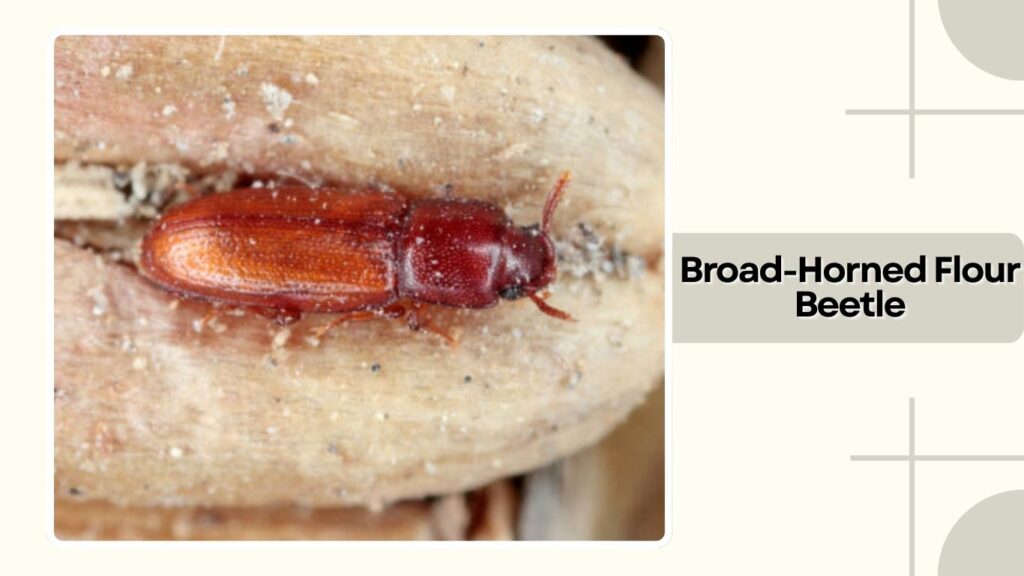
The Broad-Horned Flour Beetle is a small reddish-brown darkling beetle associated with stored grain and flour products. Males are especially distinctive because their enlarged mandibles form two broad horn-like projections. Although only a few millimeters long, the species is easy to distinguish from many other flour beetles once the male head structure is visible.
Identification
- Scientific name: Gnatocerus cornutus
- Adult length: about 3–4.5 mm
- Reddish-brown coloration
- Compact, elongated body
- Males have two broad horn-like mandibles
- Females resemble other small flour beetles
- Larvae are yellowish-brown with darker heads
- Belongs to the darkling beetle family Tenebrionidae
Habitat and Distribution
Broad-Horned Flour Beetles have a broad distribution and are mainly associated with places where dry stored foods accumulate. They occur in flour mills, grain warehouses, bakeries, food factories, storage rooms, and other locations containing flour or meal.
They can reproduce in spilled flour and other food debris inside processing facilities, making sanitation important for preventing persistent populations.
Behavior and Diet
Adults and larvae feed on flour, cereals, grain products, yeast, and some dry animal products. They are considered secondary stored-product pests because they usually exploit processed or damaged material rather than intact grain.
Male beetles are also notable for fighting one another with their enlarged jaws, particularly during competition for territory and females.
Lifespan and Life Cycle
Females lay eggs among the food material, and larvae develop freely within the substrate. Larvae pass through several molts before becoming pupae.
Under favorable conditions, development from egg to adult may take roughly six to eight weeks. Adults can survive for a year or longer, although temperature, crowding, and food conditions strongly influence development.
8. Small-Eyed Flour Beetle
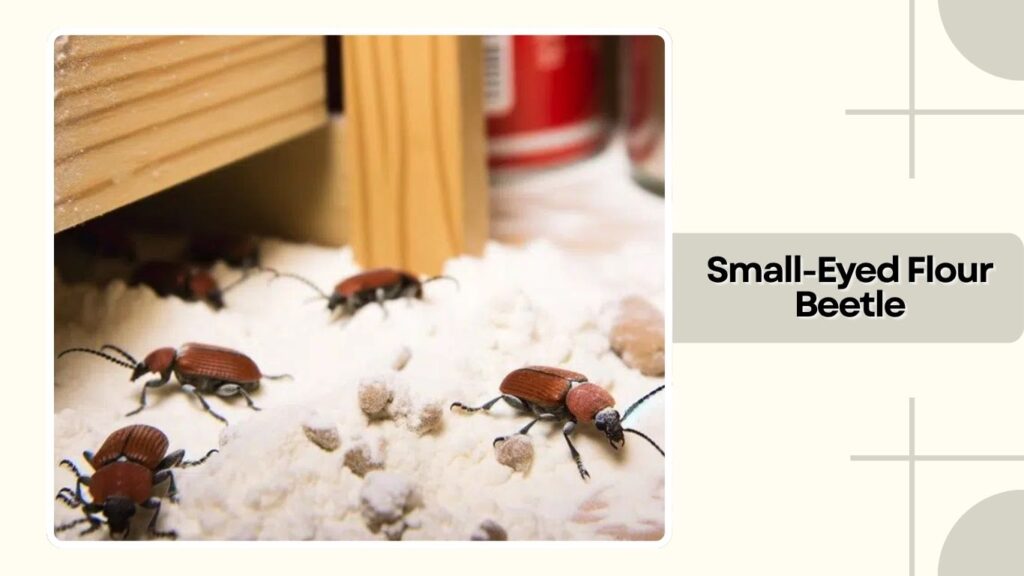
The Small-Eyed Flour Beetle is another tiny darkling beetle associated with stored grains and milled cereal products. Its small eyes help distinguish it from similar stored-product beetles. It is considered a secondary pest and is especially likely to occur where broken grain, flour, and food debris provide suitable feeding conditions.
Identification
- Scientific name: Palorus ratzeburgii
- Small, narrow body
- Brown to reddish-brown coloration
- Eyes noticeably small
- Body slightly flattened
- Antennae relatively short
- Larvae are pale and elongated
- Adults measure only a few millimeters long
Habitat and Distribution
Small-Eyed Flour Beetles have a cosmopolitan distribution and occur in many regions where grain is stored or processed.
Typical habitats include mills, warehouses, basements, grain-storage facilities, food-processing buildings, and other places containing flour or broken cereal products. They are generally considered less economically important than Red or Confused Flour Beetles.
Behavior and Diet
Both adults and larvae feed mainly on grain and milled cereal products. They prefer damaged grain, flour, and processed material rather than attacking healthy intact kernels.
Their small size allows them to hide in cracks, beneath grain residues, and inside storage structures where food dust has accumulated.
Lifespan and Life Cycle
Females deposit eggs in or around food material. Eggs hatch into free-living larvae that feed within the stored commodity before eventually pupating.
Development becomes faster under warm conditions. FAO information indicates that the species can complete development particularly efficiently in warm storage environments, which helps explain its presence in heated buildings and tropical or subtropical regions.
9. Desert Stink Beetle
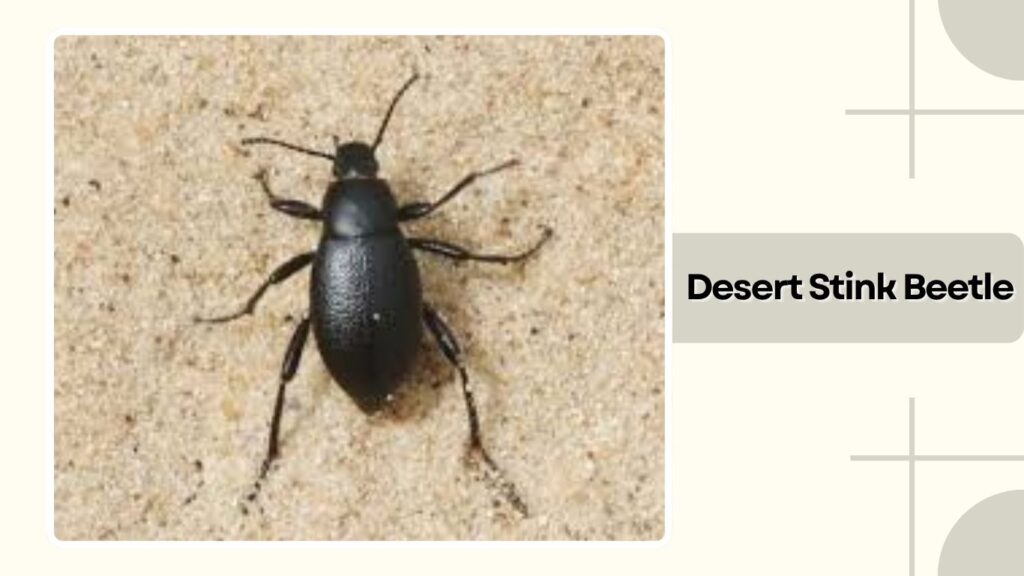
The name Desert Stink Beetle is commonly applied to several darkling beetles in the genus Eleodes. These black, long-legged beetles are famous for standing on their heads and raising their abdomens when threatened. They can then release an unpleasant defensive secretion that discourages many predators.
Identification
- Usually belongs to the genus Eleodes
- Adult body generally black or very dark brown
- Elongated to oval body shape
- Long legs hold the body above hot ground
- Thick, waxy outer covering
- Abdomen is often raised when threatened
- Many species release a strong-smelling defensive chemical
- Size varies considerably among species
Habitat and Distribution
Desert stink beetles are characteristic insects of western North America. They occur from parts of southern Canada through the western United States and into Mexico.
They are especially common in deserts, semi-deserts, scrublands, sandy areas, and dry grasslands. Their waxy exoskeleton reduces moisture loss and helps them survive extremely dry environments.
Behavior and Diet
These beetles are primarily scavengers. They feed on decomposing plant material, seeds, dead insects, and other organic debris encountered while walking across the desert floor.
When disturbed, many Eleodes species point their abdomen upward and release a foul-smelling chemical from defensive glands. This posture has earned them names such as stink beetle and headstander beetle.
Lifespan and Life Cycle
Females lay eggs in soil, where larvae hatch and remain mostly underground. The larvae feed on organic material and plant matter before pupating in the soil.
Development time varies considerably between Eleodes species and with temperature. Adults are generally most active when desert conditions are moderate, often avoiding the hottest parts of the day by sheltering underground or beneath objects.
10. Pinacate Beetle
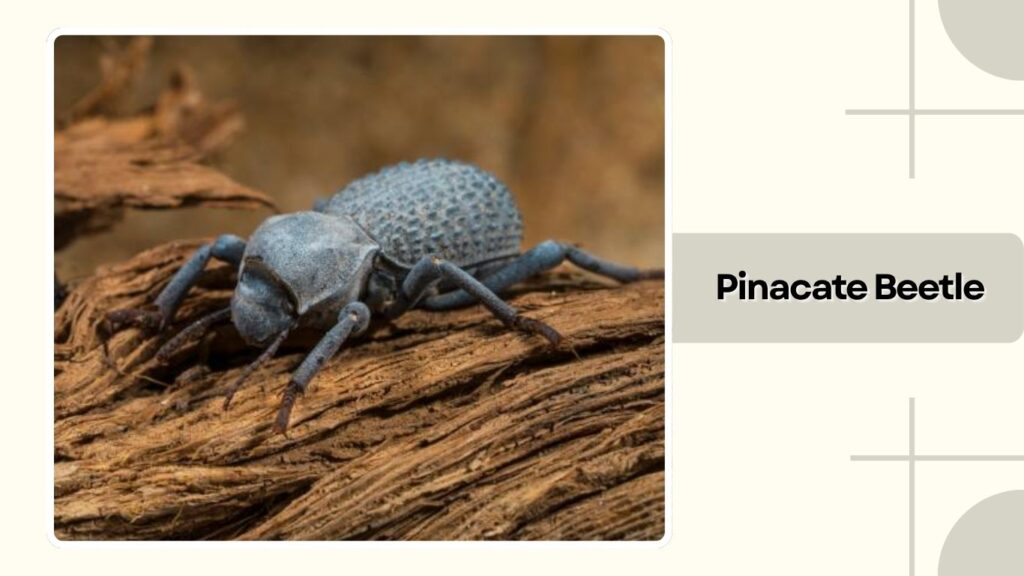
Pinacate Beetle is another common name used for members of the genus Eleodes, so it overlaps with the term Desert Stink Beetle. These beetles are among the most recognizable insects of western North American deserts because of their characteristic defensive headstand and strong-smelling chemical spray.
Identification
- Scientific group: Eleodes spp.
- Usually glossy or matte black
- Elongated, sturdy body
- Long, well-developed legs
- Thick and water-resistant exoskeleton
- Raises the rear of the body when threatened
- Able to burrow into loose soil
- Adults vary in size depending on species
Habitat and Distribution
Pinacate Beetles live mainly in arid and semi-arid western North America. They are common in desert regions of the southwestern United States and Mexico.
Their long legs lift the body above extremely hot ground, while their thick waxy cuticle limits water loss. They may retreat into soil or shaded shelters when surface temperatures become excessive.
Behavior and Diet
Pinacate Beetles feed on decaying vegetation, plant debris, seeds, and dead insects. This scavenging behavior makes them useful decomposers in desert ecosystems.
Their best-known defense involves lowering the head and lifting the abdomen. From this position, they can discharge an unpleasant-smelling chemical that makes them unattractive to many predators.
Lifespan and Life Cycle
Eggs are deposited in or near the soil. After hatching, larvae live underground and feed before eventually pupating.
One educational reference for Eleodes reports an egg period of roughly 10 days, juvenile development of several months, and an adult stage lasting a few months, though the exact timing differs significantly among species and environmental conditions.
11. Woolly Darkling Beetle
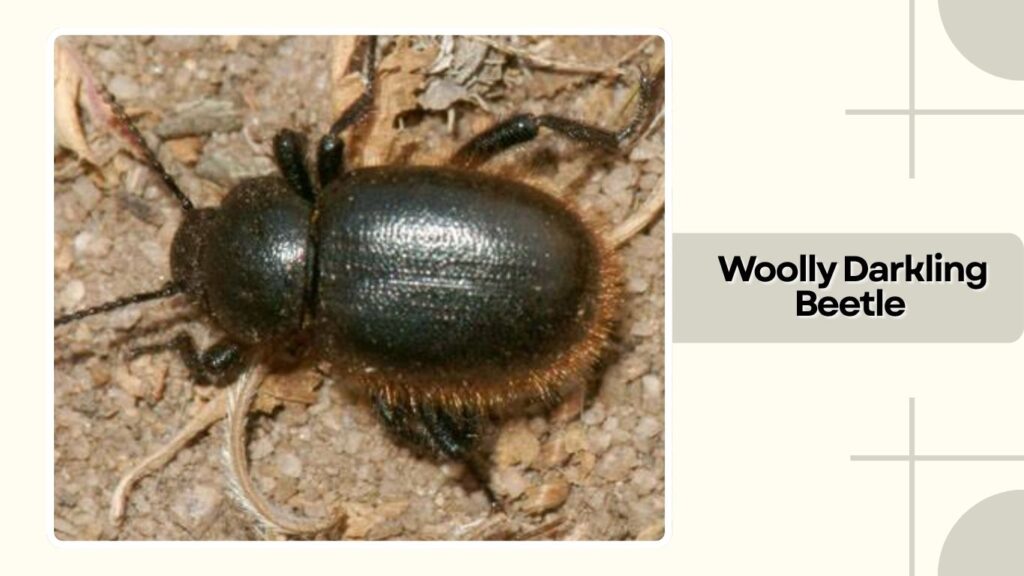
The Woolly Darkling Beetle is unusual among North American darkling beetles because its dark body is covered with clearly visible reddish-brown hairs. It belongs to the same Eleodes group as many desert stink beetles but has a much fuzzier appearance. It is largely nocturnal and is particularly associated with coastal southern California.
Identification
- Scientific name: Eleodes osculans
- Black underlying body
- Noticeable reddish-brown hairs on the wing covers
- Elongated darkling beetle shape
- Relatively long legs
- Body may appear brown because of the dense hairs
- Raises its abdomen defensively
- Can produce an unpleasant defensive odor
Habitat and Distribution
The Woolly Darkling Beetle is especially associated with coastal southern California. It inhabits dry scrub, open ground, sandy areas, and other environments where plant litter and organic debris accumulate.
Like other Eleodes, it spends much of its time close to the ground and may hide beneath vegetation, stones, or debris during unfavorable conditions.
Behavior and Diet
Woolly Darkling Beetles are primarily nocturnal. They come out after dark to search for decomposing vegetation and other organic material.
When threatened, they use the familiar Eleodes defense: the beetle lifts the rear of its body and can release a disagreeable-smelling secretion. This behavior helps protect it from predators.
Lifespan and Life Cycle
Females deposit eggs in suitable soil. The larvae develop underground, feeding on organic matter and plant material before entering the pupal stage.
After metamorphosis, adults emerge and adopt the largely ground-dwelling, nocturnal lifestyle characteristic of the species. Exact development time can vary with temperature, soil moisture, and food availability.
12. Blue Death-Feigning Beetle
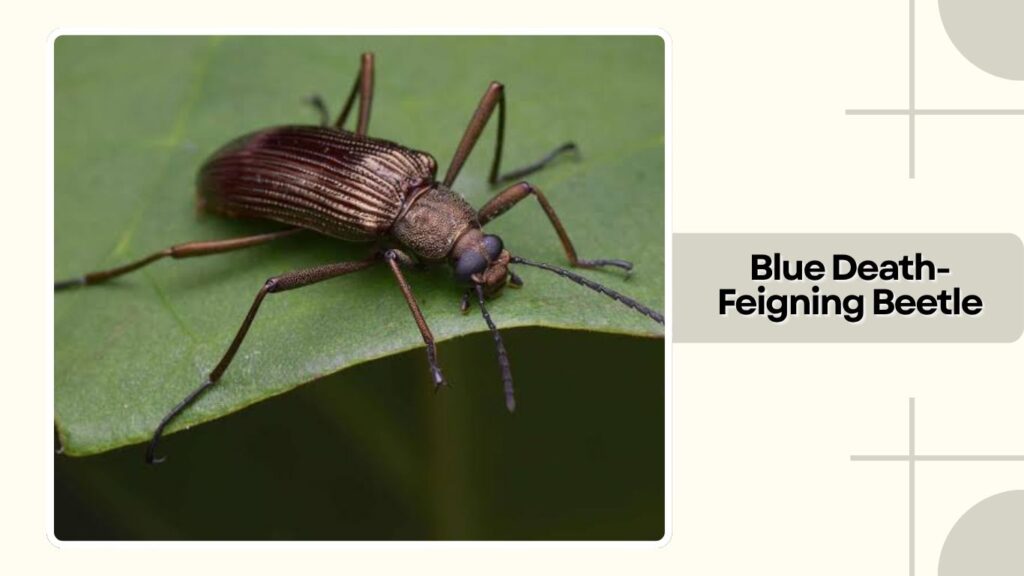
The Blue Death-Feigning Beetle is one of the most distinctive darkling beetles in North America. Its powdery blue-gray appearance comes from a waxy surface coating that helps reduce water loss. When threatened, it dramatically rolls onto its back, pulls in its legs, and remains motionless—sometimes for an extended period—to convince predators that it is dead.
Identification
- Scientific name: Asbolus verrucosus
- Adult length: about 18–21 mm
- Powdery blue to blue-gray coloration
- Rough, heavily textured wing covers
- Broad, oval body
- Long dark legs
- Waxy coating helps conserve moisture
- Famous for feigning death when disturbed
Habitat and Distribution
Blue Death-Feigning Beetles are native to the deserts of the southwestern United States and northwestern Mexico. They are particularly associated with the Sonoran and Mojave Desert regions.
They inhabit dry, sandy, rocky landscapes and are exceptionally well adapted to low-moisture conditions.
Behavior and Diet
These beetles are omnivorous scavengers. They consume dead insects, fruit, lichen, and a variety of plant material.
Their best-known behavior is thanatosis, or death-feigning. When frightened, the beetle falls over and becomes rigid and motionless. It may maintain this pose until it senses that the danger has passed.
Lifespan and Life Cycle
Females lay eggs in suitable desert substrate. Larvae live below the surface, where they feed and grow before eventually pupating.
Adults are unusually long-lived compared with many beetles. Reports indicate that Blue Death-Feigning Beetles can survive for many years under favorable conditions, which—along with their hardy nature and unusual appearance—has made them popular among insect keepers.
13. Smooth Death-Feigning Beetle
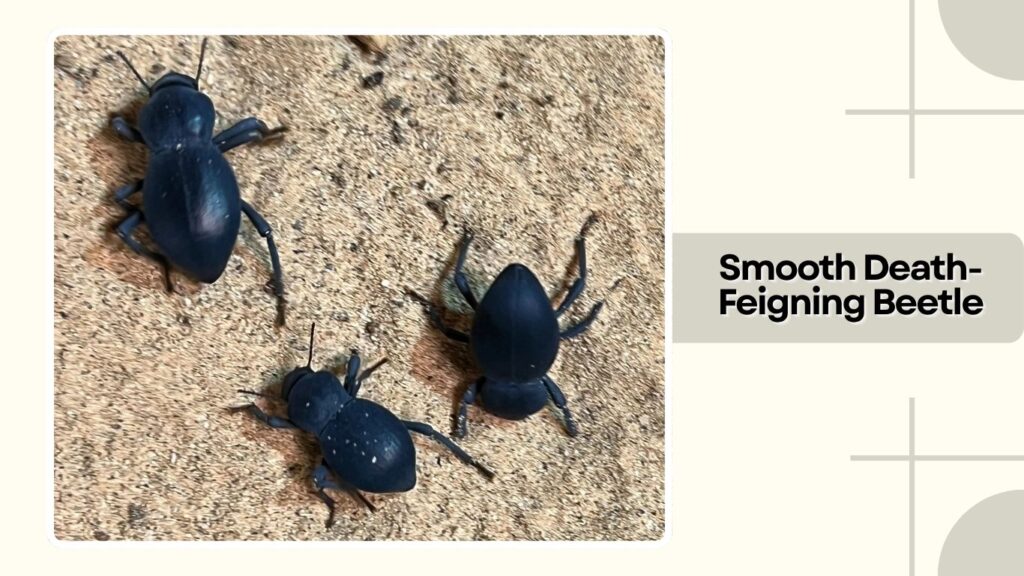
The Smooth Death-Feigning Beetle is a desert-adapted darkling beetle recognized by its smooth, dark body and unusual defensive behavior. When threatened, it may become motionless and pretend to be dead until danger passes. It is closely related to the Blue Death-Feigning Beetle but lacks the strongly textured, powdery-blue appearance of that better-known species.
Identification
- Scientific name: Asbolus laevis
- Dark gray to black coloration
- Smooth or only lightly textured wing covers
- Broad, oval body
- Strong legs adapted for walking on sand
- Thick exoskeleton
- Usually lacks the obvious blue wax coating of Asbolus verrucosus
- Feigns death when seriously disturbed
Habitat and Distribution
Smooth Death-Feigning Beetles occur in desert environments of the southwestern United States. Research from California’s Coachella Valley has found them particularly associated with active sand dunes, distinguishing their habitat preference from the closely related Blue Death-Feigning Beetle, which is more common in stabilized sandy areas.
Their dry habitat has shaped many of their physical adaptations, including a tough outer covering that helps limit moisture loss.
Behavior and Diet
These beetles are scavengers that feed on dead plant material, seeds, fruit, and other available organic matter.
Their best-known defense is thanatosis, or death-feigning. When disturbed, the beetle may pull in its legs and remain completely motionless. This can discourage predators that prefer moving prey.
They are generally slow-moving and spend much of their time walking across the desert floor in search of food.
Lifespan and Life Cycle
Females deposit eggs in suitable sandy substrate. The larvae remain mostly underground, where they feed and grow before pupating.
Development depends heavily on temperature and moisture. Adults can be relatively long-lived compared with many small beetles, particularly under stable captive conditions.
The combination of slow metabolism, desert adaptations, and strong exoskeleton helps adults survive prolonged dry periods.
14. Rough Death-Feigning Beetle
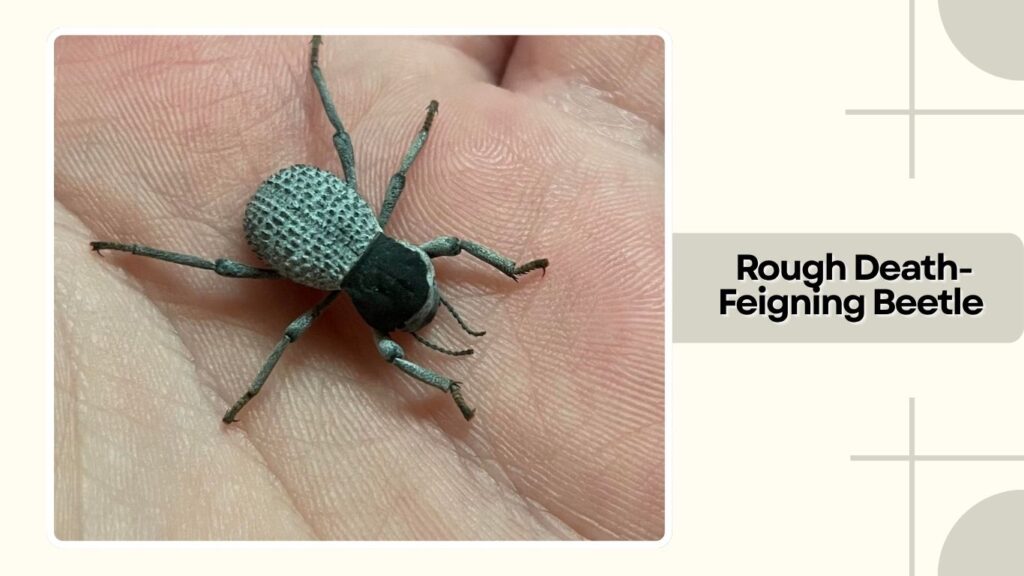
The Rough Death-Feigning Beetle is a rugged desert darkling beetle with a heavily textured black body. It is often kept alongside Blue and Smooth Death-Feigning Beetles because all share similar dry-habitat requirements and defensive behaviors. The rough body surface is one of the easiest characteristics for separating it from smoother relatives.
Identification
- Scientific name: Cryptoglossa muricata
- Dark brown to black coloration
- Strongly roughened, textured wing covers
- Thick, armored appearance
- Oval to slightly elongated body
- Strong walking legs
- Flightless or reluctant to fly
- May feign death when threatened
Habitat and Distribution
Rough Death-Feigning Beetles inhabit arid regions of southwestern North America. They favor dry sandy or rocky areas where daytime temperatures can become extreme.
During the hottest part of the day, beetles may remain beneath rocks, woody debris, or inside shallow burrows. Greater activity often occurs during cooler morning, evening, or nighttime periods.
Behavior and Diet
The species is an opportunistic scavenger. Adults consume dry plant material, fallen fruit, seeds, dead insects, and other organic debris encountered on the desert floor.
When danger approaches, the beetle may freeze or enter a death-feigning posture. This behavior can cause predators to lose interest.
Its armored body also provides physical protection against both predators and harsh desert conditions.
Lifespan and Life Cycle
Eggs are laid in soil or sandy substrate. Larvae remain below the surface and pass through several growth stages while feeding on organic matter.
Once mature, larvae pupate underground. Adults later emerge and spend most of their lives above or near the soil surface.
Exact development times vary with temperature and food, and the adult stage can be quite long compared with many other beetles.
15. Desert Ironclad Beetle
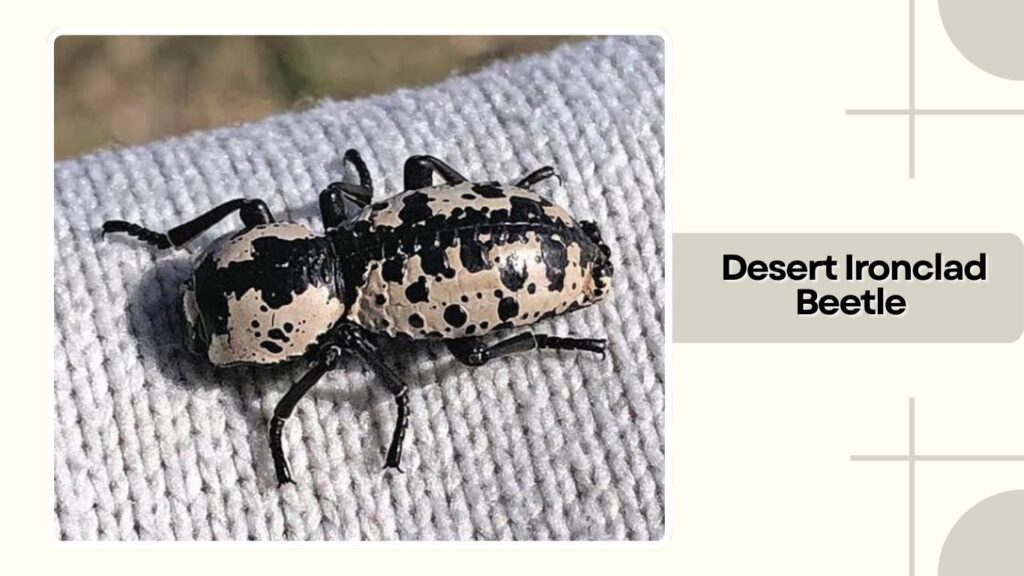
The Desert Ironclad Beetle is a tough, heavily armored darkling beetle native to dry parts of western North America. Its dense exoskeleton provides protection from predators and reduces water loss. Although the name “ironclad beetle” is also used for members of another beetle family, this desert species belongs to the darkling beetle family Tenebrionidae.
Identification
- Scientific name: Cryptoglossa variolosa
- Dark gray to black coloration
- Thick, strongly hardened exoskeleton
- Rough or pitted surface
- Broad, robust body
- Strong legs adapted to desert ground
- Generally flightless
- Similar overall appearance to other desert death-feigning beetles
Habitat and Distribution
Desert Ironclad Beetles occur in arid areas of the southwestern United States and neighboring regions of Mexico.
Typical habitats include sandy desert flats, rocky washes, scrublands, and dry open areas with scattered vegetation.
Their tough body covering helps them tolerate very low humidity. During extreme daytime heat, they typically remain in shaded or protected microhabitats.
Behavior and Diet
These beetles are scavengers rather than active predators. They consume dried vegetation, seeds, fallen fruit, dead insects, and other organic material.
Much of their activity occurs during cooler periods. Their slow movement and hard exoskeleton provide a different survival strategy from insects that rely primarily on speed.
When threatened, individuals may become motionless or adopt defensive postures rather than attempting long-distance escape.
Lifespan and Life Cycle
Females lay eggs in soil, where the young larvae remain protected from harsh surface conditions.
Larvae feed on organic material and pass through several molts before forming underground pupal chambers.
Adults emerge after metamorphosis and may survive for extended periods in suitable dry conditions. Their full development is strongly influenced by temperature and moisture availability.
16. Forked Fungus Beetle
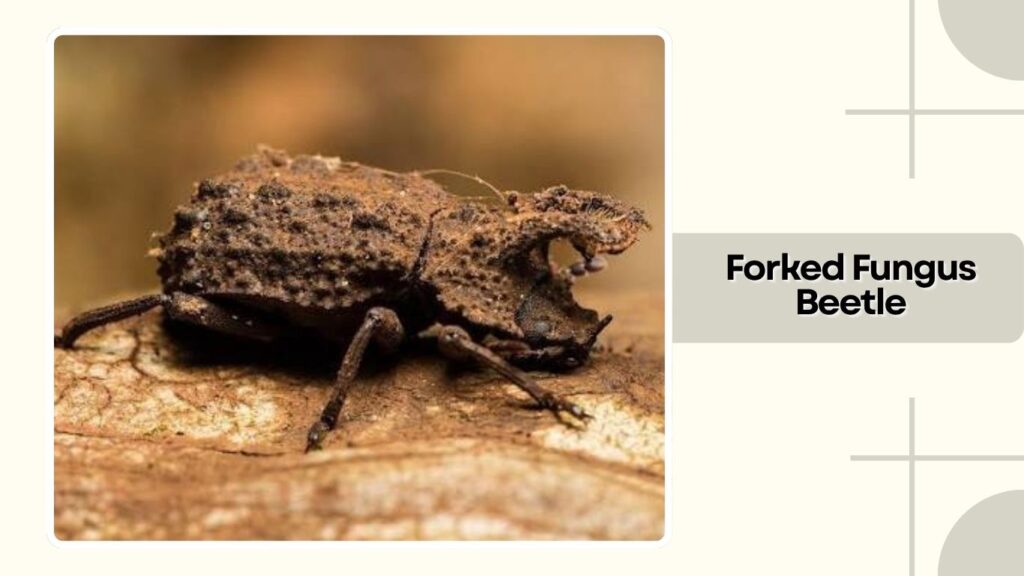
The Forked Fungus Beetle is one of the most unusual darkling beetles because virtually its entire life revolves around shelf fungi growing on dead and decaying trees. Adult males possess dramatic forward-pointing horns used in competition for females. Their rough brown bodies provide excellent camouflage against fungus and tree bark.
Identification
- Scientific name: Bolitotherus cornutus
- Adult length: about 10–15 mm
- Dark brown to reddish-brown body
- Rough, bark-like surface texture
- Males possess prominent curved thoracic horns
- Males also have a forked projection on the head
- Females lack the large male horns
- Larvae are pale and cylindrical
- Member of the darkling beetle family Tenebrionidae
Habitat and Distribution
Forked Fungus Beetles occur widely across eastern North America, including parts of the eastern United States and Canada.
They inhabit forests containing dead trees and shelf fungi, especially species of Ganoderma. Adults may remain on the same fungus-covered log or tree for long periods.
Their coloration and rough texture make them difficult to detect when resting against bark or fungal surfaces.
Behavior and Diet
Adults and larvae feed primarily on shelf fungi. Important hosts include Ganoderma applanatum, Ganoderma tsugae, and other polypore fungi.
Adults are mainly nocturnal. Males use their large horns when competing with rivals for access to females, pushing or lifting opponents from favorable positions.
Lifespan and Life Cycle
Females normally lay individual eggs on the surface of host fungi and cover them with a dark secretion.
Eggs hatch after roughly two weeks under suitable conditions. Larvae tunnel through fungal tissue, where they feed and develop through several stages.
Larvae may overwinter within the fungus before emerging as adults the following year. Remarkably, adult Forked Fungus Beetles can live for several years, with documented lifespans of up to about eight years.
17. Armored Darkling Beetle
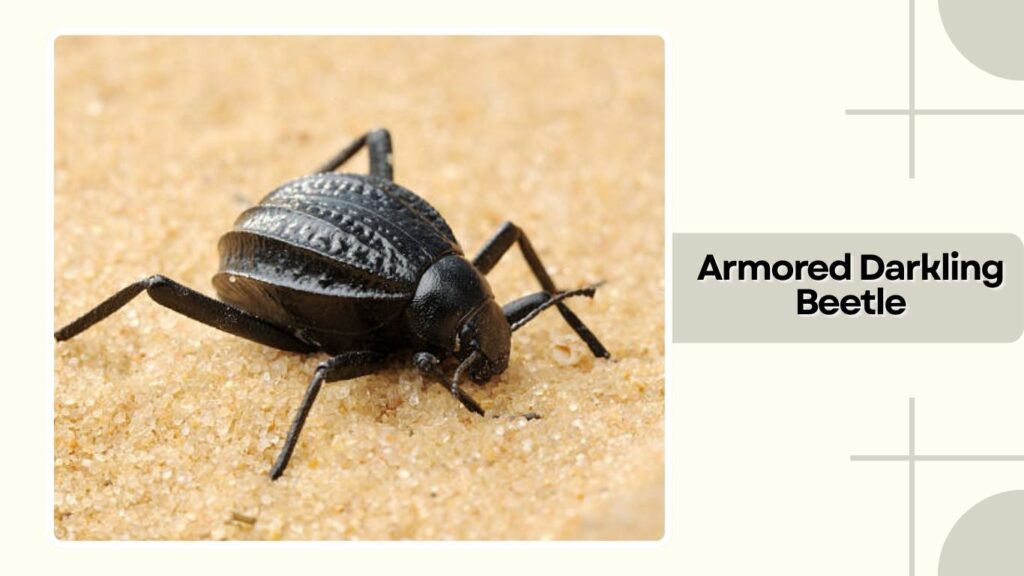
The Armored Darkling Beetle is a large, glossy black desert beetle with a long-legged appearance. It belongs to the genus Eleodes, whose members are famous for raising the rear of their bodies when threatened. Despite the intimidating posture, the beetle’s main defenses are chemical secretions and its tough outer body rather than aggression.
Identification
- Scientific name: Eleodes armata
- Large, shiny black body
- Elongated oval shape
- Long, relatively slender legs
- Noticeable spurs on the legs
- Strong, hardened wing covers
- Abdomen raised when threatened
- Sometimes called the Armored Stink Beetle
Habitat and Distribution
Armored Darkling Beetles inhabit arid western North America, including desert regions of the western United States and Mexico.
They occur on sandy desert floors, dry washes, scrublands, and rocky areas where decomposing plant material is available.
Like many Eleodes, they avoid extreme surface temperatures by sheltering beneath objects or becoming more active at night.
Behavior and Diet
Adults are scavengers and feed mainly on decaying vegetation, dry plant material, seeds, and occasional animal matter.
When threatened, an Armored Darkling Beetle may lower its head and point the tip of its abdomen upward. Defensive glands near the rear of the body can release unpleasant chemicals that discourage predators.
This behavior is characteristic of many desert stink beetles.
Lifespan and Life Cycle
Females lay eggs in soil. Larvae live underground and resemble false wireworms, feeding on plant and organic material.
After passing through several larval stages, they pupate beneath the soil surface.
Adults later emerge and may remain active for extended periods during favorable seasons. Most surface activity occurs when desert temperatures are moderate.
18. Three-Ribbed Darkling Beetle
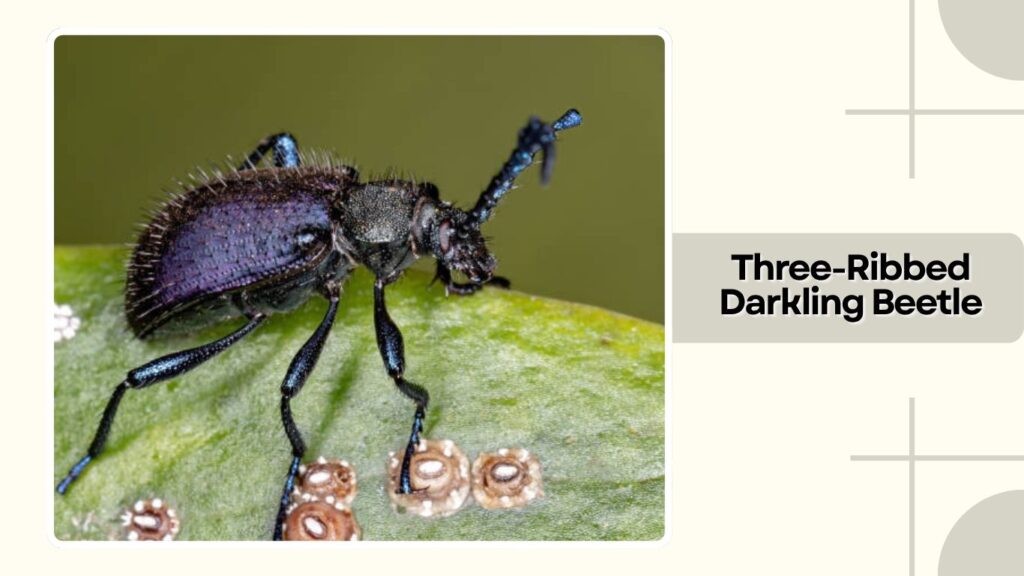
The Three-Ribbed Darkling Beetle is a desert-adapted member of the genus Eleodes. Its name comes from the prominent raised ridges running along the hardened wing covers. Like many related species, it is dark, flightless, and adapted for life on dry ground where moisture and food can be unpredictable.
Identification
- Scientific name: Eleodes tricostata
- Black to dark brown coloration
- Elongated, robust body
- Three prominent longitudinal ridges on each side of the wing-cover region
- Strong walking legs
- Thick, hardened exoskeleton
- Antennae relatively short
- Typical Eleodes defensive posture when threatened
Habitat and Distribution
Three-Ribbed Darkling Beetles occur in dry western North American environments, particularly sandy and semi-arid landscapes.
They may be found in desert scrub, dunes, dry grasslands, and open ground containing scattered plant debris.
During hot daylight hours they often seek shelter under vegetation, stones, or other objects where temperatures are lower.
Behavior and Diet
Adults are mainly scavengers. Their diet includes dry plant tissue, seeds, dead vegetation, and other available organic matter.
When approached by a predator, the beetle can raise its abdomen in the characteristic Eleodes headstand posture. Chemical defenses can then help make it unpleasant or unappealing to predators.
Most feeding and walking activity occurs during cooler parts of the day or at night.
Lifespan and Life Cycle
Females deposit eggs in soil, and larvae develop underground. The larvae are elongated and hardened and are often described generally as false wireworms.
They feed on roots, seeds, and decomposing organic material before eventually pupating in the soil.
Adults emerge after metamorphosis and may survive across extended seasonal periods, depending on food, moisture, and temperature.
19. Eleodes Beetle
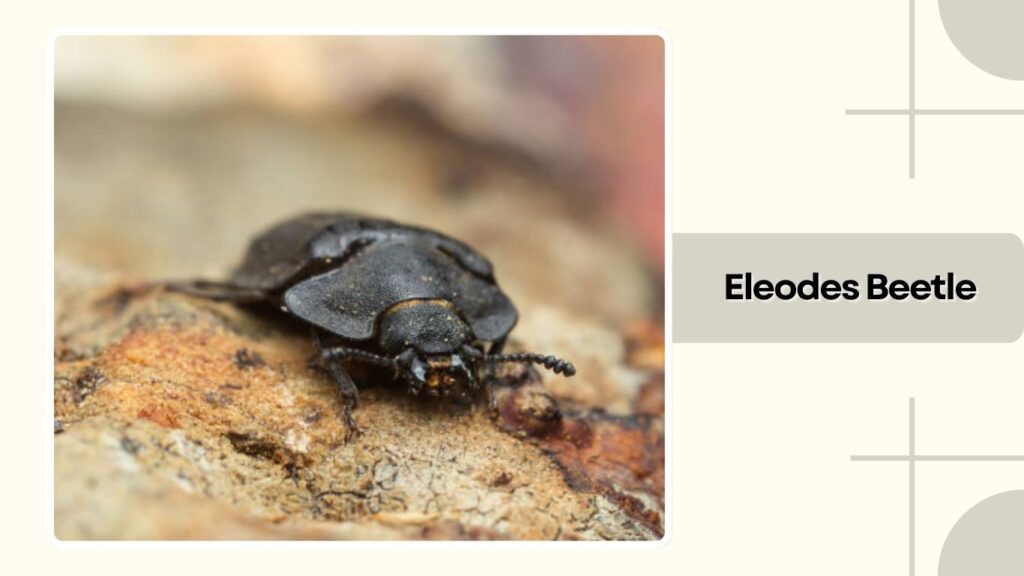
Eleodes beetles are a large group of darkling beetles commonly called desert stink beetles or pinacate beetles. More than one species falls under this name, so “Eleodes beetle” refers to the genus Eleodes rather than a single species. These beetles are especially well adapted to dry western North American environments and are famous for raising their abdomens when threatened.
Identification
- Scientific group: Eleodes spp.
- Adult length: roughly 10–50 mm, depending on species
- Usually black or very dark brown
- Elongated to oval body
- Thick, hardened wing covers
- Many species are flightless
- Long, sturdy walking legs
- Often raises abdomen when disturbed
- May release an unpleasant defensive secretion
Habitat and Distribution
Eleodes beetles are native mainly to western North America, ranging from portions of Canada south through the United States into Mexico. The genus is particularly diverse in California and the desert Southwest.
They commonly inhabit deserts, dry grasslands, scrublands, sandy areas, and open woodland. Many species shelter beneath rocks, vegetation, or debris during extreme daytime heat.
Behavior and Diet
Most Eleodes beetles are scavengers that consume decaying vegetation, seeds, dead insects, and other organic material.
Their most recognizable behavior is the defensive “headstand.” When disturbed, a beetle lowers its head and points its abdomen upward. Many species can then release chemicals from the rear of the body that deter predators.
Lifespan and Life Cycle
Females lay eggs in soil or loose organic material. Larvae live underground and generally have elongated, hardened bodies resembling wireworms.
Larvae may feed on detritus, roots, seeds, and underground plant material. Some species can become minor agricultural pests.
After several larval stages, they pupate underground and later emerge as adults. Development time differs significantly among species and environmental conditions.
20. Desert Darkling Beetle
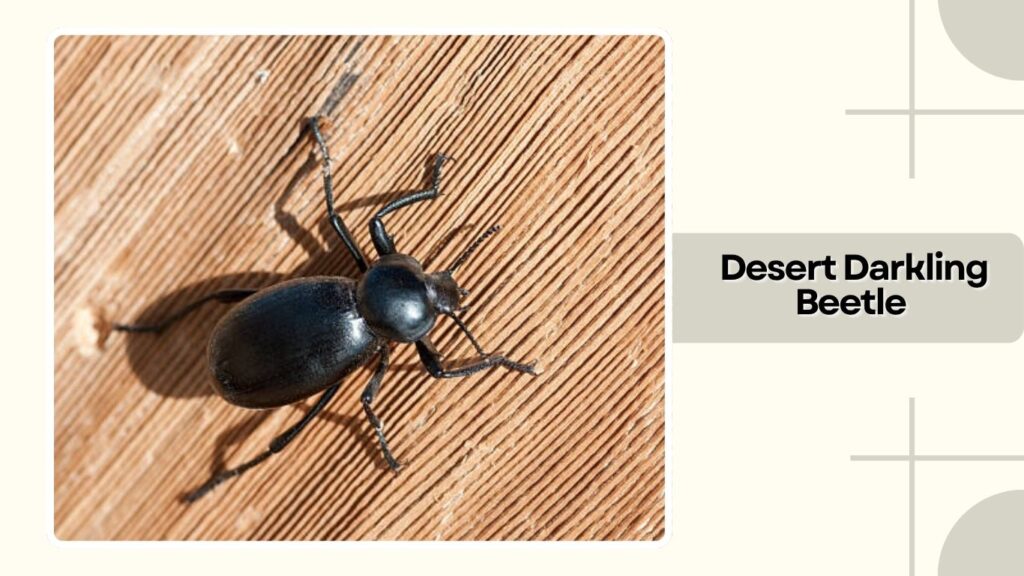
“Desert Darkling Beetle” is a general name used for several members of the family Tenebrionidae adapted to arid environments rather than one single species. Darkling beetles are particularly diverse in deserts, where their tough bodies and mostly nocturnal habits help them survive extreme heat and limited water.
Identification
- Family: Tenebrionidae
- Usually black or very dark brown
- Adults may reach several centimeters long
- Wing covers may be smooth, ridged, or bumpy
- Thick outer body covering
- Many desert species are flightless
- Strong legs for walking over sand and rocky ground
- Some species raise the abdomen defensively
Habitat and Distribution
Desert darkling beetles occur in arid environments around the world. In North America, they are especially conspicuous throughout the southwestern United States.
At Grand Canyon National Park alone, numerous darkling beetle species occur in sandy areas surrounded by desert scrub and pinyon-juniper vegetation.
Behavior and Diet
Most desert darkling beetles are scavengers. They consume dead leaves, dry vegetation, seeds, fungi, and other decomposing organic material.
Many become active at night or during cooler periods to avoid extreme daytime temperatures. Some species release foul-smelling defensive compounds when threatened.
Lifespan and Life Cycle
Adults lay eggs in soil or among loose plant debris. Larvae hatch and generally remain beneath the ground, feeding on available plant material and detritus.
The larvae pass through several molts before pupating in protected soil chambers.
Environmental temperature and moisture strongly affect development, and many desert species can survive extended dry periods by remaining sheltered during unfavorable conditions.
21. Dune Darkling Beetle
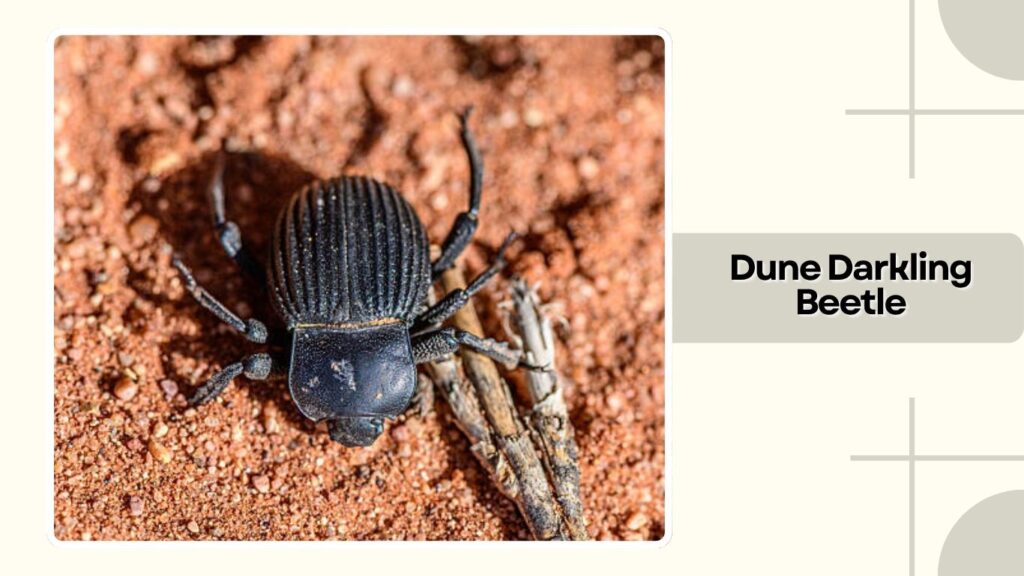
Dune darkling beetles are darkling beetles specially adapted to loose sandy habitats. A good representative is the Globose Dune Beetle, Coelus globosus, a California species found primarily in coastal dunes. Its compact body and burrowing behavior help it survive in shifting sand close to the shoreline.
Identification
- Representative species: Coelus globosus
- Small, rounded body
- Dark brown to black coloration
- Strongly convex appearance
- Shorter legs than many Eleodes beetles
- Thick, hardened wing covers
- Adapted for moving through loose sand
- Adults are often around 7–10 mm long in observed populations
Habitat and Distribution
The Globose Dune Beetle occurs in California coastal dunes. BugGuide describes its habitat as foredunes and sand hummocks, usually within about 50 meters of the coastal dune environment.
These sandy habitats can be harsh because of wind, shifting substrate, salt exposure, and limited vegetation.
Behavior and Diet
Dune darkling beetles typically remain close to the sand surface or burrow beneath it to avoid predators and extreme temperatures.
Like many darkling beetles, they feed largely on organic debris. Plant fragments, dried vegetation, seeds, and other material deposited among dunes provide potential food.
Burrowing also helps conserve moisture and protects them from strong winds and hot surface conditions.
Lifespan and Life Cycle
Females deposit eggs in suitable sandy substrate. Larvae develop beneath the surface, where conditions are more stable than on exposed dune sand.
Larvae feed on available organic matter before pupating underground.
Adults later emerge and continue their ground-dwelling lifestyle. Seasonal activity varies with coastal temperature, moisture, and availability of plant debris.
22. Coastal Darkling Beetle
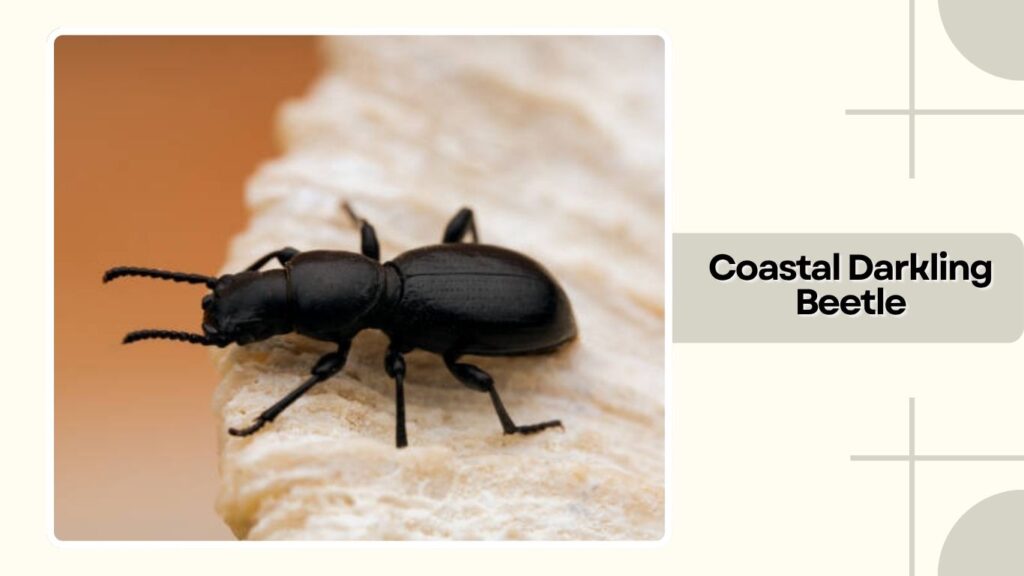
“Coastal Darkling Beetle” is another broad descriptive name rather than a universally standardized species name. One suitable representative is Eleodes littoralis, a California darkling beetle associated with shaded coastal or near-coastal environments. Related Eleodes species also occur on beaches, dunes, and coastal wetlands.
Identification
- Representative species: Eleodes littoralis
- Dark brown to black body
- Elongated oval shape
- Hardened wing covers
- Strong walking legs
- Typical darkling beetle antennae
- Thick exoskeleton
- Similar in appearance to several related coastal Eleodes
Habitat and Distribution
Eleodes littoralis occurs in California and is often found in shaded places beneath bark or fallen logs. Related species such as Eleodes nigropilosus are more strongly associated with coastal beaches, dunes, and wetlands.
These habitats provide shelter, organic debris, and moist microhabitats despite the generally dry surface environment.
Behavior and Diet
Coastal darkling beetles spend much of their time walking along the ground or hiding beneath logs, bark, stones, or vegetation.
Their diet consists mainly of decomposing plant matter and other organic debris. Some may also consume seeds, fungi, or dead insects when available.
Sheltering during hot daylight periods helps reduce water loss and exposure to predators.
Lifespan and Life Cycle
Eggs are deposited in soil, litter, or protected substrate. Larvae remain mostly underground or within loose debris.
They develop through several larval stages while feeding on organic material.
After pupating, adults emerge and may remain active throughout suitable seasons. Their life cycle is closely influenced by moisture, temperature, and the availability of protected coastal habitat.
23. Black Darkling Beetle
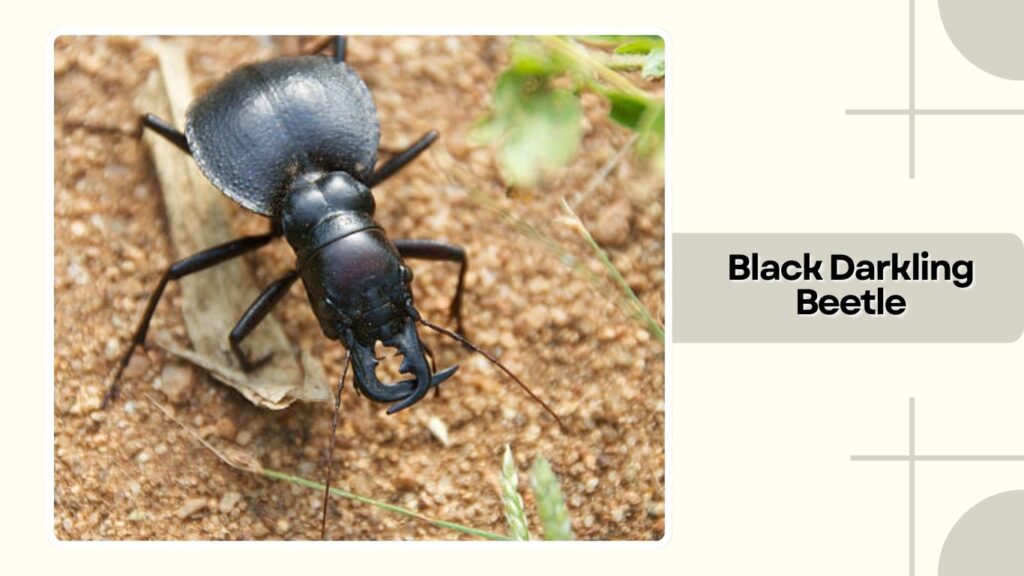
“Black Darkling Beetle” is a descriptive label that can apply to many members of Tenebrionidae because black coloration is extremely common in the family. One representative is Eleodes carbonaria, a dark species found in western North America. Individuals have been recorded sheltering beneath rocks in grassland environments.
Identification
- Representative species: Eleodes carbonaria
- Glossy to matte black coloration
- Elongated oval body
- Strongly hardened wing covers
- Long walking legs
- Club-free, beadlike antennae
- Thick exoskeleton
- Generally ground-dwelling
Habitat and Distribution
Black-colored darkling beetles occur in a huge variety of terrestrial habitats worldwide. Members of Eleodes are concentrated in western North America, where they inhabit deserts, grasslands, scrublands, and woodland edges.
Eleodes carbonaria has been documented beneath rocks in California grassland habitat.
Behavior and Diet
Adults generally walk across the ground in search of decaying vegetation, seeds, fungi, and other organic matter.
Many species become active during evening or nighttime hours. The black body and heavy exoskeleton can be useful in dry habitats, although beetles usually avoid prolonged exposure to extreme midday heat.
Defensive chemicals are also common among large darkling beetles.
Lifespan and Life Cycle
Females lay eggs in soil or organic debris. The larvae are generally cylindrical, hard-bodied, and live beneath the surface.
They feed before entering a pupal stage in protected soil or substrate.
Adults emerge after metamorphosis and may survive for months or longer depending on species, food, temperature, and moisture conditions.
24. Shiny Darkling Beetle
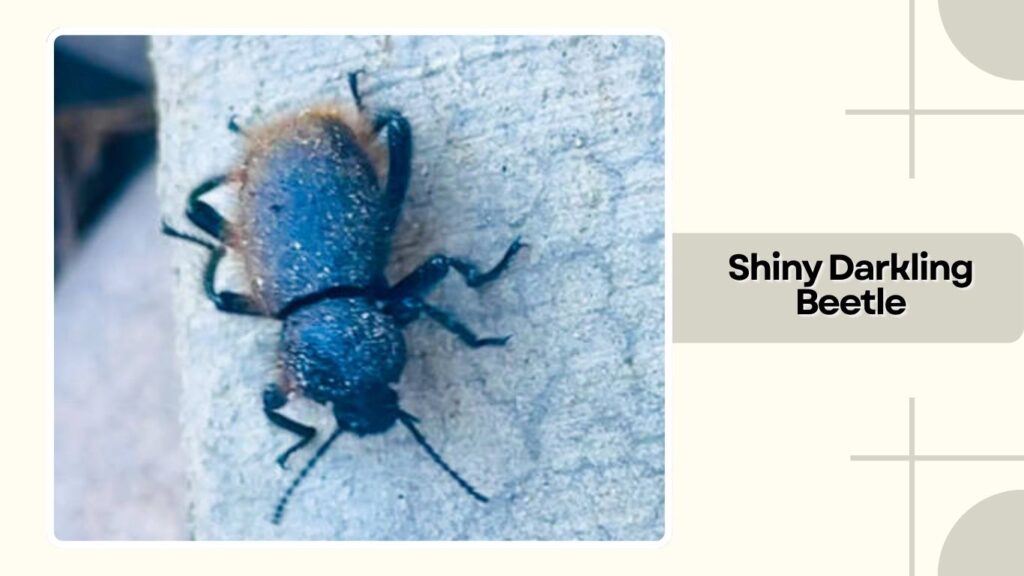
“Shiny Darkling Beetle” is not a precise taxonomic common name and can refer informally to several smooth, glossy species. Many darkling beetles have polished black or dark-brown wing covers, particularly within groups such as Eleodes. For this reason, identification to species usually requires more than body shine alone.
Identification
- Family: Tenebrionidae
- Glossy black or dark-brown coloration
- Smooth or finely punctured wing covers
- Oval to elongated body
- Hardened exoskeleton
- Strong walking legs
- Antennae usually beadlike
- Species-level identification may require examination of body structure
Habitat and Distribution
Glossy darkling beetles occur across numerous terrestrial habitats worldwide. They can be found in deserts, grasslands, forests, beneath bark, under stones, inside decaying wood, or around organic debris.
In arid western North America, shiny black Eleodes species are especially conspicuous on open ground.
Behavior and Diet
Most are scavengers and consume decaying plant matter, fungi, seeds, and occasionally dead animal material.
Adults are frequently nocturnal, spending daylight hours beneath rocks, logs, bark, or vegetation. Many large species rely on chemical defenses when disturbed.
Lifespan and Life Cycle
Females generally deposit eggs in soil, wood debris, or other suitable substrate. Larvae are elongated and hard-bodied and spend most of their development hidden from view.
After feeding and completing several molts, larvae form pupae. Adults then emerge and begin their ground-dwelling or litter-associated lifestyle.
The exact lifespan varies dramatically because “Shiny Darkling Beetle” can refer to multiple species rather than one defined beetle.
25. Long-Legged Darkling Beetle
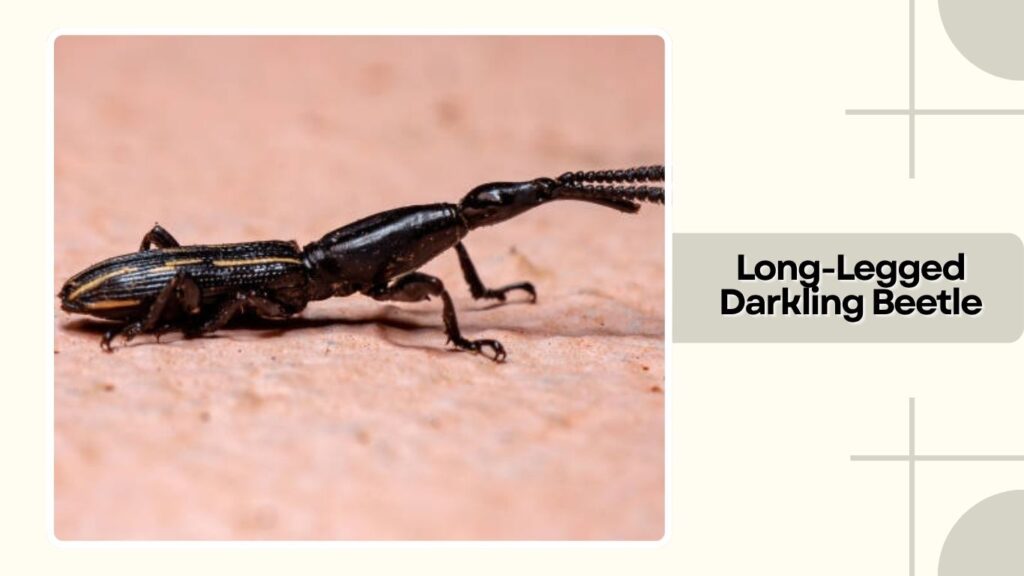
The Long-Legged Darkling Beetle is a desert-adapted member of the darkling beetle family distinguished by its elongated legs and dark, hardened body. One species that carries this common name is Stenocara dentata. Long legs help desert darkling beetles move efficiently across hot, loose ground while keeping much of the body away from the heated surface.
Identification
- Scientific name: Stenocara dentata
- Black to dark brown body
- Elongated oval shape
- Noticeably long legs
- Hardened wing covers
- Strong walking rather than jumping movement
- Well adapted to dry conditions
- Member of the family Tenebrionidae
Habitat and Distribution
Long-legged darkling beetles are especially associated with dry environments. Related long-legged forms occur in deserts and semi-deserts of southern Africa, where darkling beetles have evolved body shapes suited to sand, intense sunlight, and limited moisture.
They spend much of their time walking on open ground but may shelter beneath vegetation, stones, or other objects when conditions become excessively hot.
Behavior and Diet
Like many darkling beetles, they are largely scavengers. Their diet can include dried vegetation, seeds, dead plant material, and other organic debris.
Long legs are particularly useful on loose sand and hot ground. Rather than remaining exposed during the hottest part of the day, many desert tenebrionids time their activity for more favorable temperatures.
Lifespan and Life Cycle
Females lay eggs in soil or protected substrate. Larvae develop beneath the surface, feeding on organic material before pupating underground.
The beetle passes through four stages—egg, larva, pupa, and adult. Development speed depends greatly on temperature, moisture, and available food. Adults are better adapted to exposed desert conditions than the softer immature stages.
26. Flat Darkling Beetle
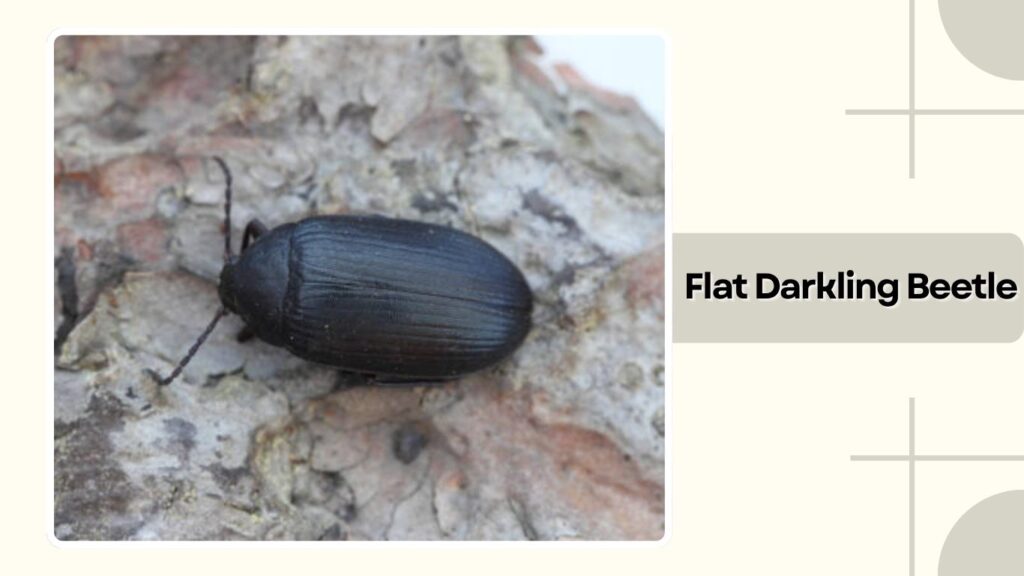
“Flat Darkling Beetle” is better treated as a descriptive group name than as one standardized species. A useful example is the genus Hypogena, whose members are distinctly flattened from top to bottom and live beneath the bark of dead trees. Their thin bodies allow them to occupy narrow spaces unavailable to more rounded beetles.
Identification
- Representative group: Hypogena spp.
- Strongly flattened body
- Usually brown to dark brown
- Elongated overall shape
- Hardened but relatively thin profile
- Males of many species possess head horns
- Adapted for moving beneath loose bark
- Family: Tenebrionidae
Habitat and Distribution
Hypogena species are subcortical beetles, meaning they live beneath the bark of dead trees. Their flattened body shape is closely associated with this habitat.
Other flattened darkling beetles occur beneath loose bark, inside dead wood, or in narrow spaces between decaying plant material. These protected microhabitats provide food, moisture, and shelter from predators.
Behavior and Diet
Flat darkling beetles spend much of their lives hidden. Many consume decomposing plant material, fungal growth, or organic matter associated with dead wood.
Their flattened bodies make them excellent at moving through tight crevices. Some male Hypogena also possess distinctive horns, which help differentiate them from otherwise similar bark-dwelling beetles.
Lifespan and Life Cycle
Females place eggs in or near suitable dead wood. Larvae then develop in protected woody material or beneath bark.
After passing through several larval stages, they pupate in concealed locations. Adults emerge but may continue spending most of their time under bark rather than walking openly on the ground.
Development varies considerably among species because “Flat Darkling Beetle” covers multiple forms rather than one single beetle.
27. Ground Darkling Beetle
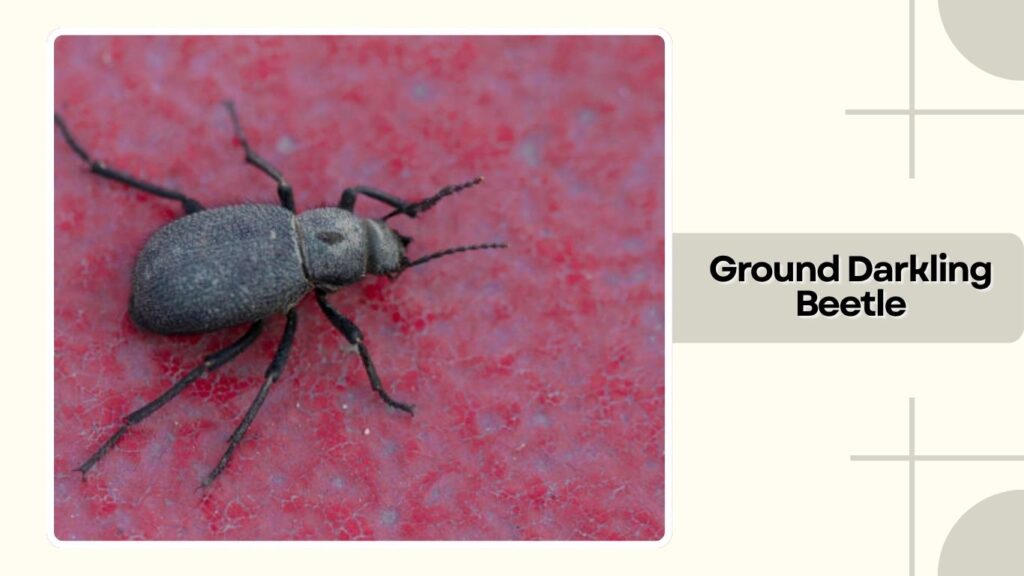
Ground Darkling Beetle is a broad descriptive name for terrestrial tenebrionids that spend most of their adult lives walking through leaf litter or across soil. A representative species is Adelium similatum, an Australian darkling beetle commonly found on the ground beneath rocks, bark, fallen logs, and forest litter.
Identification
- Representative species: Adelium similatum
- Adult length: up to about 20 mm
- Black, shiny body
- Distinct lines along the wing covers
- Small jaws
- Oval to elongated body
- Strong walking legs
- Usually encountered close to the ground
Habitat and Distribution
Adelium similatum occurs in southeastern mainland Australia and Tasmania. It occupies forests, woodland, heath, wetlands, grassland, and even some urban environments.
More broadly, ground-dwelling darkling beetles occur worldwide. Many hide during daylight beneath rocks, bark, logs, and vegetation before emerging when conditions are cooler.
Behavior and Diet
Ground darkling beetles are generally scavengers. Adelium similatum feeds on dead plant material and fungi and is primarily nocturnal.
This scavenging role makes darkling beetles important recyclers. By consuming dead organic matter, they help break larger debris into material that can be further decomposed by fungi and microorganisms.
Lifespan and Life Cycle
Eggs are typically deposited in soil, litter, or other protected substrates. Larvae spend much of their development hidden beneath the surface.
They feed and molt repeatedly before pupating. The adult eventually emerges and adopts the ground-dwelling lifestyle characteristic of the group.
Season, temperature, food availability, and species determine how rapidly the complete cycle occurs.
28. Fungus Darkling Beetle
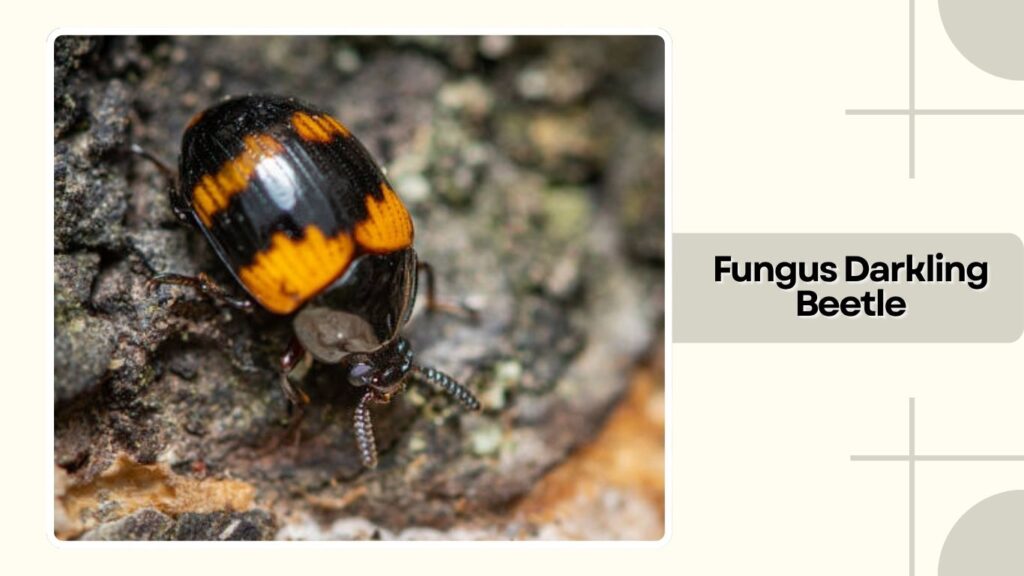
The Fungus Darkling Beetle is represented particularly well by Diaperis boleti, a distinctive species that spends both its adult and larval stages closely associated with bracket fungi. Unlike the plain black appearance typical of many darkling beetles, this species can have conspicuous black and orange or yellowish markings.
Identification
- Scientific name: Diaperis boleti
- Rounded, strongly convex body
- Glossy black coloration
- Orange or yellow bands or patches on the wing covers
- Relatively short legs
- Clubbed antennae
- Larvae develop inside fungi
- Family: Tenebrionidae
Habitat and Distribution
Diaperis boleti is associated with woodland containing mature or decaying trees and large bracket fungi. Records include birch polypore and several other shelf fungi. Adults, larvae, and pupae can all occur within fungal fruiting bodies.
This close association means healthy populations depend on habitats where dead wood and mature fungi are allowed to remain.
Behavior and Diet
Both adults and larvae feed on fungal tissue. Larvae may live directly inside the fruiting body, where food and shelter are available at the same time.
Adults can move between fungi on dead or weakened trees, but they remain strongly tied to woodland decomposition systems.
Lifespan and Life Cycle
Females deposit eggs on or near suitable bracket fungi. Larvae hatch and feed within the fungal fruiting body.
They may remain inside the fungus through much of their immature development. Pupation can also occur within excavated spaces inside the fungus.
New adults eventually emerge and search for additional fungal hosts. Their entire life cycle demonstrates how specialized some darkling beetles have become compared with general scavenging species.
29. Tree Darkling Beetle
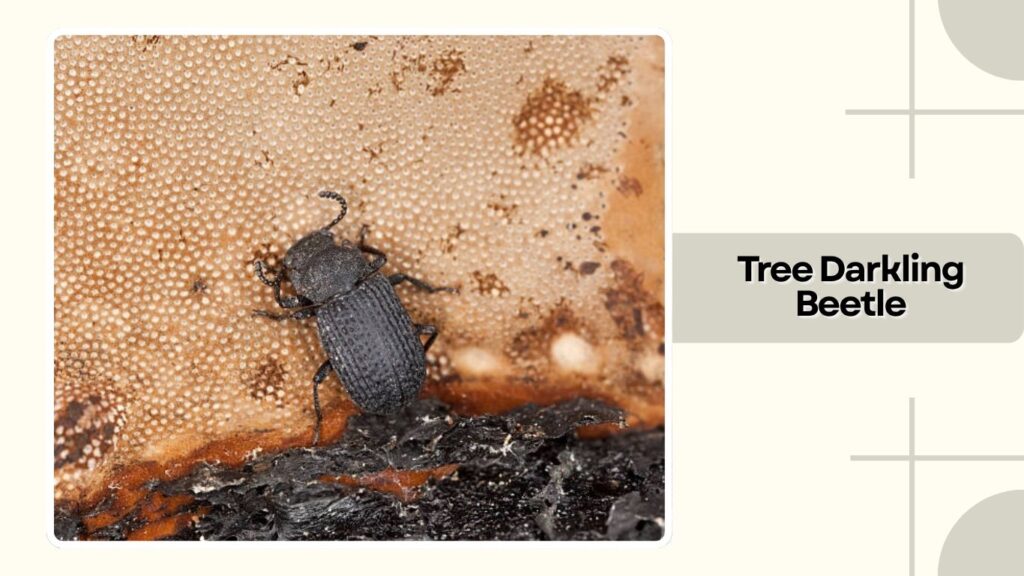
“Tree Darkling Beetle” is another descriptive name rather than a single formally standardized species. A useful representative is Neatus tenebrioides, a North American darkling beetle that can be found beneath bark on standing dead trees. Many woodland tenebrionids depend on dead and decaying trees rather than healthy living wood.
Identification
- Representative species: Neatus tenebrioides
- Adult length around 14 mm in documented specimens
- Dark brown to black coloration
- Elongated body
- Hardened wing covers
- Strong legs
- Often discovered beneath bark
- Family: Tenebrionidae
Habitat and Distribution
Tree-associated darkling beetles inhabit forests, woodland, parks, and other environments containing dead trees, fallen logs, and loose bark.
Neatus tenebrioides has been documented beneath pine bark on standing dead trees in eastern North America.
Dead trees provide a relatively stable microhabitat with protection from sunlight and predators as well as abundant decaying material and fungal growth.
Behavior and Diet
Most tree-associated darkling beetles are scavengers or decomposers rather than pests of living trees. They can feed on dead wood, fungi, decomposing plant matter, or material beneath bark.
Adults often remain concealed during daylight and emerge during favorable periods to search for food or mates.
Their presence in dead wood is generally part of the natural decomposition process.
Lifespan and Life Cycle
Females lay eggs in protected cracks, bark, or decaying woody material. Larvae develop in or around the dead tree and consume available organic material.
Once mature, larvae pupate in protected cavities. Adults later emerge but may continue living beneath bark.
Because this common name covers multiple tree-associated species, development time varies considerably.
30. Sand Darkling Beetle
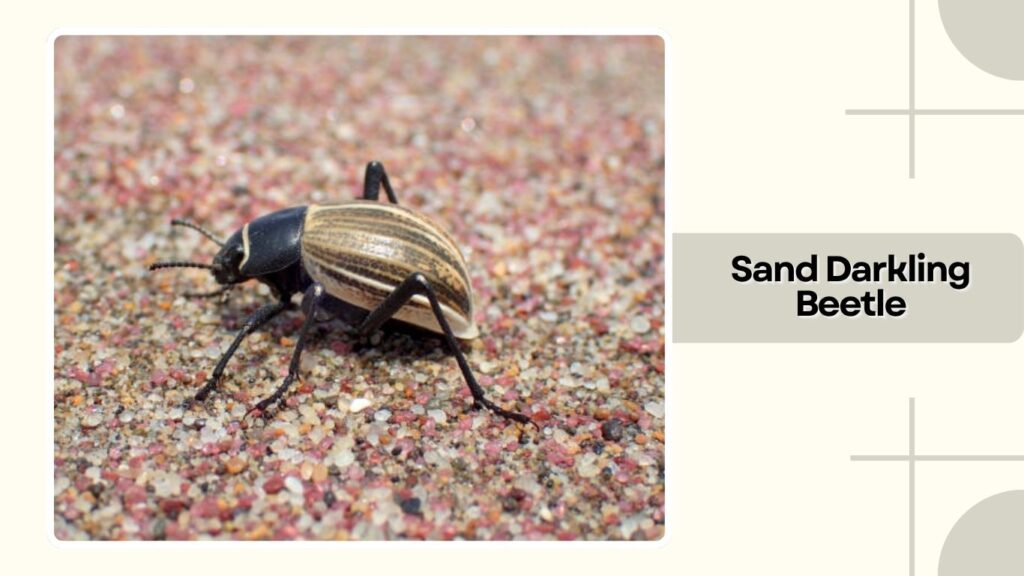
Sand Darkling Beetles include species adapted specifically to loose sandy environments. Members of the genus Eusattus are commonly identified as sand darkling beetles in North America. Their compact, strongly armored bodies and ground-dwelling habits make them well suited to dunes, sandy plains, and other dry landscapes.
Identification
- Representative genus: Eusattus
- Usually black or very dark brown
- Broad, oval body
- Thick hardened wing covers
- Strong legs for moving through loose substrate
- Generally flightless or strongly ground-oriented
- Compact body minimizes exposed surface area
- Family: Tenebrionidae
Habitat and Distribution
Eusattus species occur in sandy habitats in western North America, with records extending into places such as Colorado. Darkling beetles are particularly diverse in large dune systems, including California’s Algodones Dunes.
At White Sands National Park, numerous darkling beetle species specialize in particular dune habitats and even leave distinctive tracks in the sand.
Behavior and Diet
Sand darkling beetles are largely scavengers, feeding on dead vegetation and organic material deposited on or beneath the sand.
Many are most active at night, when sand temperatures are lower and moisture loss is reduced. At White Sands, darkling beetles commonly wander after dark and may raise the abdomen as a warning when threatened.
Lifespan and Life Cycle
Adults deposit eggs in soil, sand, or loose plant debris. Larvae hatch beneath the surface, where temperatures and humidity are more stable than on exposed dunes.
The larvae consume plant debris and other organic material before pupating underground.
Adults emerge later and spend much of their lives walking across or burrowing through sandy ground.
FAQs
1. What are darkling beetles?
Darkling beetles are members of the family Tenebrionidae, an extremely diverse beetle family with tens of thousands of species worldwide. They include mealworm beetles, flour beetles, desert stink beetles, fungus-associated species, and many other forms.
2. What do darkling beetles eat?
Most darkling beetles are scavengers. They commonly eat dead vegetation, seeds, fungi, decaying organic matter, and sometimes dead insects. Some species specialize in stored grain or fungi, while certain larvae may feed on plant roots.
3. Are darkling beetles harmful to humans?
Most darkling beetles are harmless to people and do not bite or sting as a normal defensive response. Some desert species can release foul-smelling defensive chemicals when threatened, while stored-product species can become pests by contaminating food or animal feed.
4. Where do darkling beetles live?
Darkling beetles occupy an enormous range of habitats, including deserts, dunes, forests, woodlands, leaf litter, dead trees, fungi, barns, poultry houses, and grain-storage facilities. They are particularly diverse in dry and semi-arid environments.
5. How long do darkling beetles live?
Lifespan varies greatly by species. Small stored-product species may complete development relatively quickly under warm conditions, while some desert and fungus-associated darkling beetles can live for several years as adults. In all species, the basic life cycle consists of egg, larva, pupa, and adult stages.