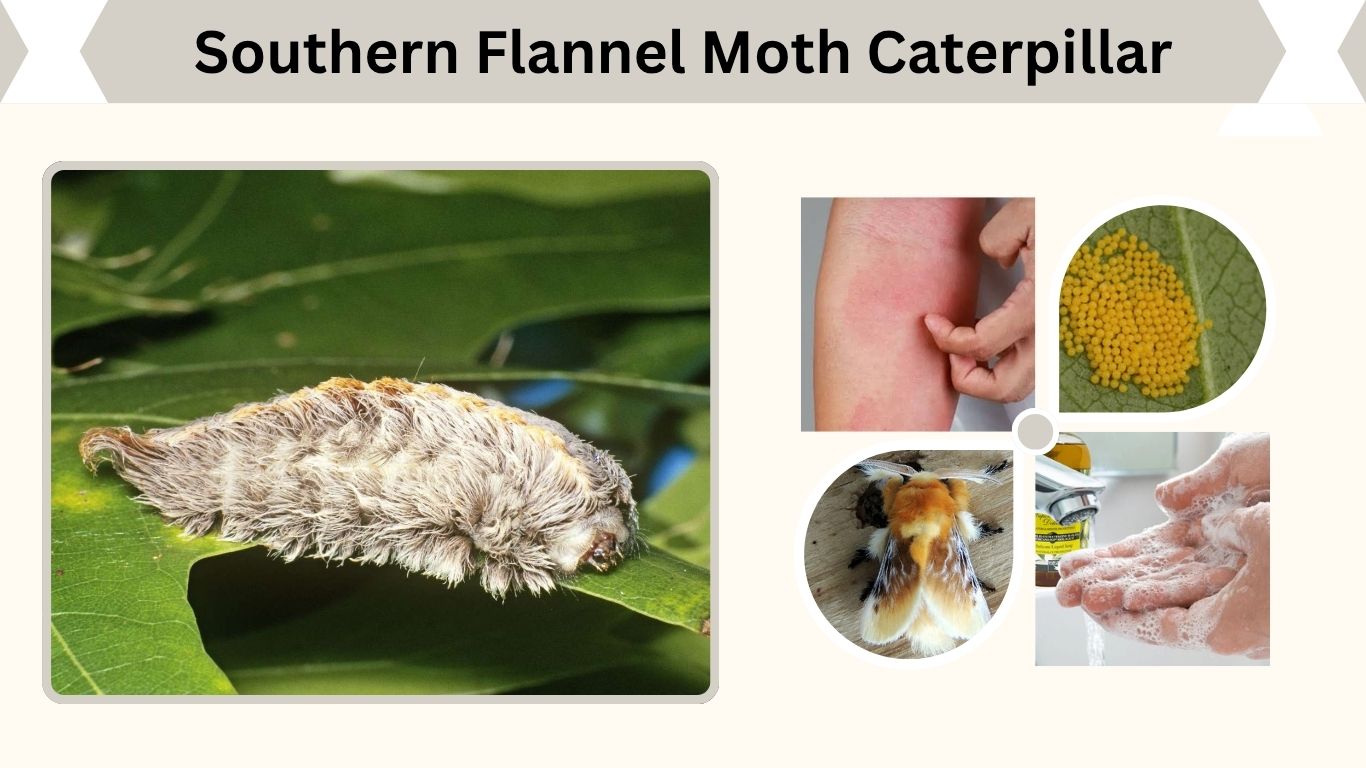
The southern flannel moth caterpillar is one of the most recognizable stinging caterpillars in the southern United States. It is also called the puss caterpillar, asp caterpillar, tree asp, or woolly slug. Its adult form is the southern flannel moth, but the caterpillar stage is the dangerous stage. Although it looks soft and furry, hidden venomous spines under the hairs can cause an extremely painful sting. This guide explains identification, habitat, range, sting symptoms, treatment, and control.
What Is a Southern Flannel Moth Caterpillar?
The southern flannel moth caterpillar is the larval stage of Megalopyge opercularis. The adult moth is fuzzy and harmless, but the caterpillar can sting when touched. It is often called a puss caterpillar because its thick hair-like covering can look like a tiny patch of cat fur.
These caterpillars are usually found on trees and shrubs. They may also drop onto sidewalks, patios, porches, outdoor furniture, or clothing under trees.
What Does a Southern Flannel Moth Caterpillar Look Like?
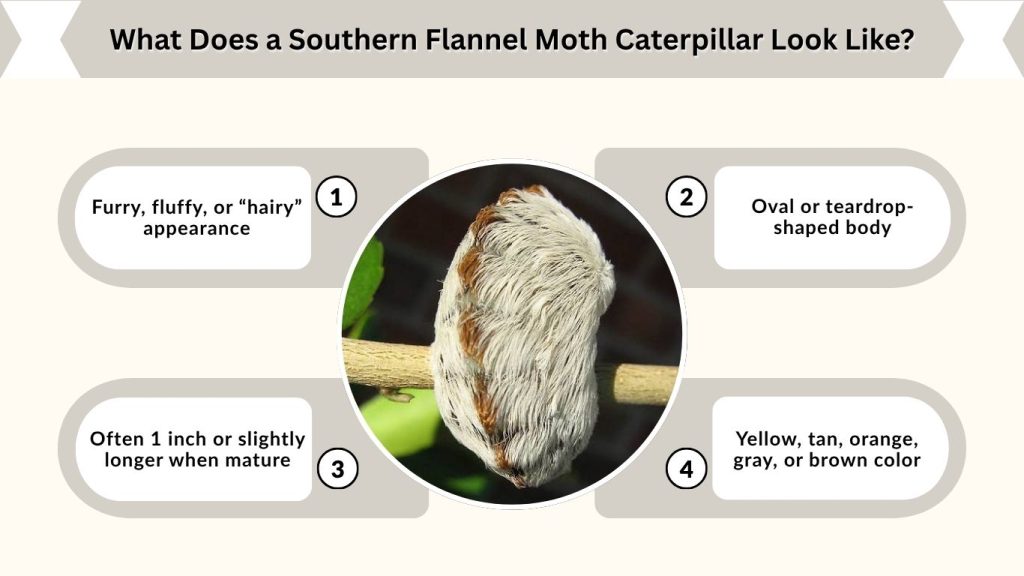
Southern flannel moth caterpillars look like small, furry, oval caterpillars. Their body is covered in long silky hairs, which hide venomous spines underneath. The color can vary from yellow, tan, orange-brown, gray, or dark brown.
Southern Flannel Moth Caterpillar Identification
Look for these signs:
- Furry, fluffy, or “hairy” appearance
- Oval or teardrop-shaped body
- Often 1 inch or slightly longer when mature
- Yellow, tan, orange, gray, or brown color
- Tapered rear end that may look like a tail
- Slow movement on leaves, bark, walls, or sidewalks
- No obvious legs visible under the dense hairs
The caterpillar may look cute, but it should never be touched. The soft-looking hairs are not the main problem; the painful venomous spines are hidden beneath them.
Southern Flannel Moth Caterpillar Face
The face of a southern flannel moth caterpillar is hard to see because the body is covered by dense hairs. From above, it may look like a moving tuft of fur. One end often appears tapered or tail-like, which can make it difficult to tell the head from the rear.
This confusing shape is one reason people accidentally touch it. If you see a fuzzy, oval caterpillar on a tree, bench, railing, or sidewalk, avoid handling it.
Is the Southern Flannel Moth Caterpillar Poisonous?
The southern flannel moth caterpillar is better described as venomous, not poisonous. Poisonous animals cause harm when eaten or touched because toxins are on or inside the body. Venomous animals deliver toxin through a sting, bite, spine, or similar structure.
The puss caterpillar has hollow or sharp spines hidden under its hairs. When the caterpillar is pressed against skin, the spines can break off and inject venom. Texas A&M AgriLife describes these asps and other stinging caterpillars as insects that can cause painful reactions and recommends removing spines and using cold packs for relief.
Southern Flannel Moth Caterpillar Sting
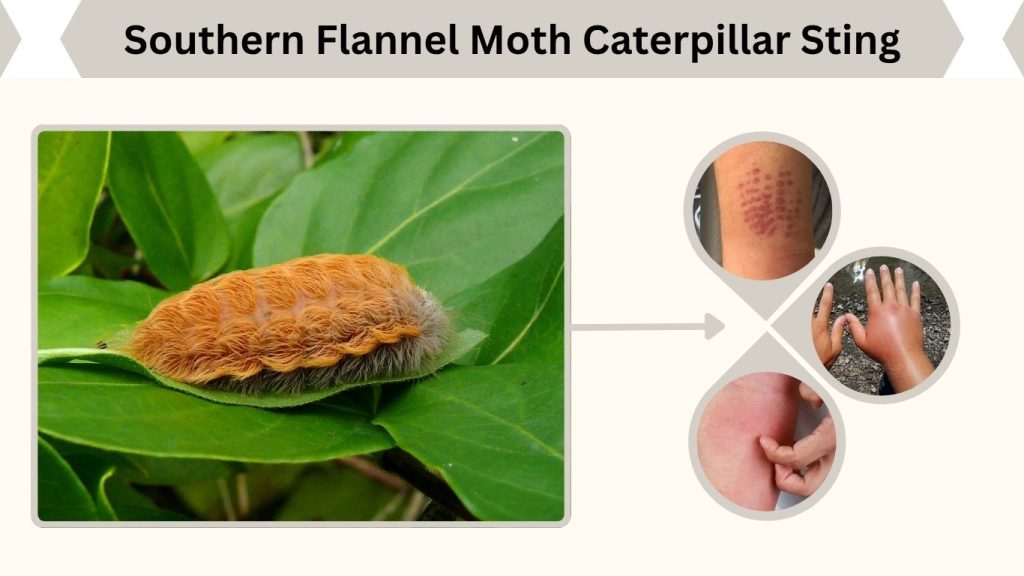
A southern flannel moth caterpillar sting can be very painful. Some people describe the pain as burning, throbbing, or similar to a strong bee sting. The pain may spread from the sting site to nearby areas.
Sting Symptoms
Symptoms may include:
- Immediate burning pain
- Redness
- Swelling
- Raised bumps or welts
- Itching
- Numbness or tingling
- Headache
- Nausea
- Muscle cramps
- Tender lymph nodes
- Blistering in some cases
Poison Control notes that caterpillar venom exposure can cause redness, itching, swelling, welts, blisters, headache, and nausea, and that more serious allergic reactions can involve breathing or swallowing trouble.
Southern Flannel Moth Caterpillar Bite
The southern flannel moth caterpillar does not bite like a mosquito, ant, or spider. What people call a “bite” is usually a sting from the hidden venomous spines.
If you brushed against a fuzzy caterpillar and felt sudden burning pain, it was likely a sting, not a bite.
Southern Flannel Moth Caterpillar Sting Treatment
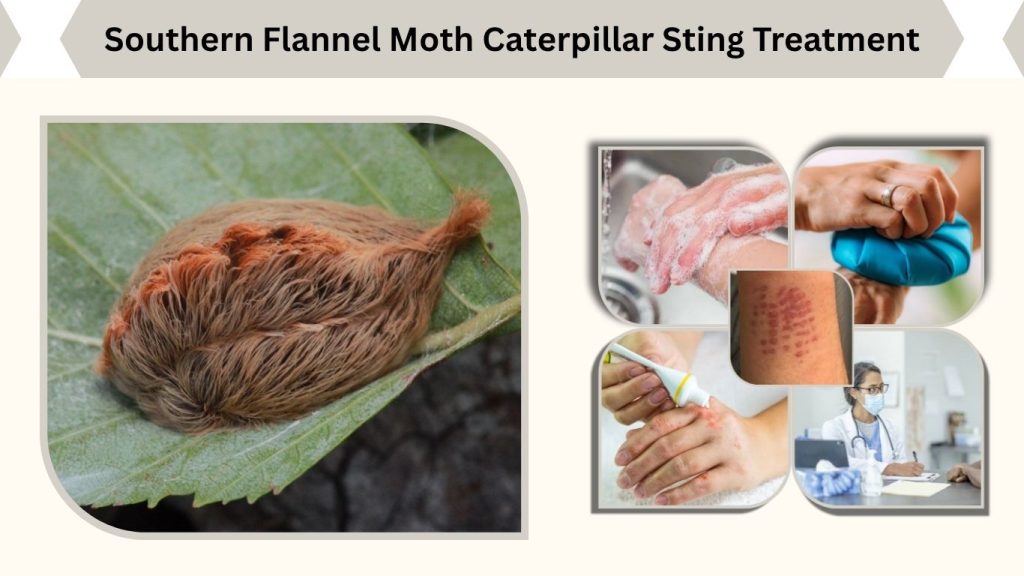
Stings can be painful, but mild cases can often be treated at home. Severe reactions need medical help.
First Aid Steps
- Do not rub the area.
- Use tape to gently remove embedded spines.
- Wash the area with soap and water.
- Apply an ice pack wrapped in cloth.
- Use an oral antihistamine for itching if appropriate.
- Apply hydrocortisone cream for mild inflammation.
- Take pain relief medicine if safe for you.
- Seek medical help for severe pain or allergic symptoms.
Missouri Department of Conservation recommends washing the area, using tape to remove hairs or spines, applying ice, and using hydrocortisone or baking soda paste for discomfort.
When to Get Medical Help
Get urgent medical attention if there is:
- Trouble breathing
- Trouble swallowing
- Swelling of the face, lips, or throat
- Severe pain that does not improve
- Dizziness or fainting
- Chest tightness
- Widespread rash
- Eye exposure
- Symptoms in a young child, older adult, or sensitive person
Texas A&M AgriLife advises seeing a physician immediately for allergic reactions such as generalized itching or difficulty breathing.
Southern Flannel Moth Caterpillar Range
The southern flannel moth caterpillar is mainly found in the southern and eastern United States. Its range includes much of the Southeast, parts of the Mid-Atlantic, and areas west toward Texas and nearby states.
Where Do They Live?
Southern flannel moth caterpillars are reported in states such as:
- Florida
- Georgia
- South Carolina
- North Carolina
- Alabama
- Mississippi
- Louisiana
- Texas
- Arkansas
- Oklahoma
- Tennessee
- Missouri
- Virginia
- Maryland
- New Jersey and nearby eastern states in parts of the range
NC State Extension identifies the puss caterpillar as Megalopyge opercularis and describes it as a stinging caterpillar associated with flannel moths. Some sources describe its range from New Jersey to Florida and west to Arkansas and Texas.
Southern Flannel Moth Caterpillar in Florida, Texas and Georgia
Southern flannel moth caterpillars are especially well known in warm southern states.
In Florida, they are often found on oaks and elms. The University of Florida IFAS notes that in north central Florida, puss caterpillars are common on oaks and elms, with young larvae skeletonizing leaves and older larvae feeding along leaf edges.
In Texas, they are commonly called “asps.” They may appear in yards, school grounds, parks, and under shade trees. Texas A&M resources warn that asps can cause painful stings and should not be handled.
In Georgia and the Southeast, they may be found around hardwood trees, ornamental shrubs, and wooded neighborhoods, especially during warm months.
Southern Flannel Moth Caterpillar Habitat
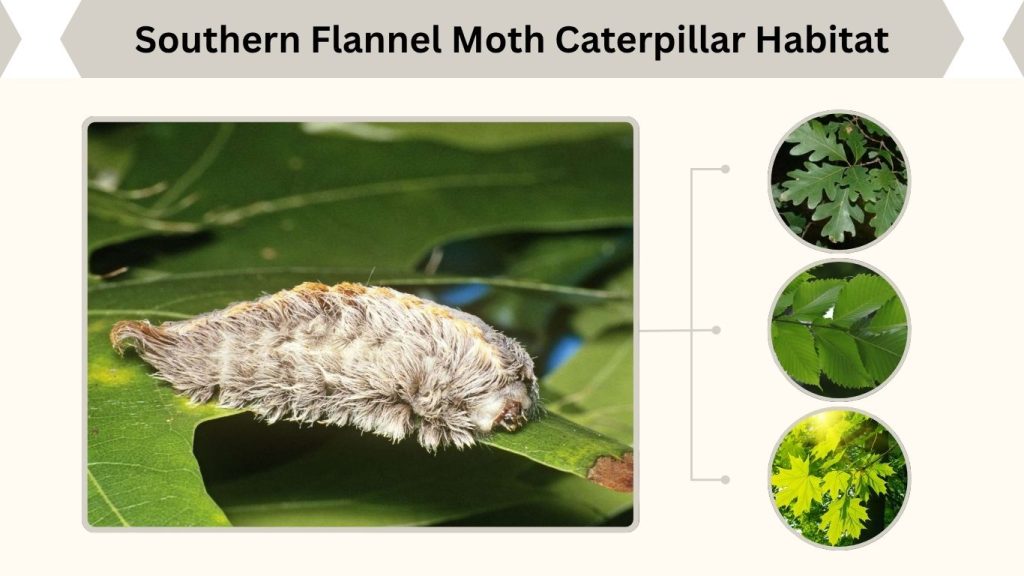
Southern flannel moth caterpillars live where their host plants grow. They are most often found in trees and shrubs, but they may wander when mature or when searching for a place to pupate.
Common Habitat Areas
- Oak trees
- Elm trees
- Maple trees
- Hackberry
- Sycamore
- Holly
- Shrubs
- Parks
- Backyards
- Wooded neighborhoods
- Schoolyards
- Sidewalks under trees
- Porches and patios near host plants
They are more likely to be noticed where people walk, sit, garden, or play under infested trees.
Southern Flannel Moth Caterpillar Life Cycle
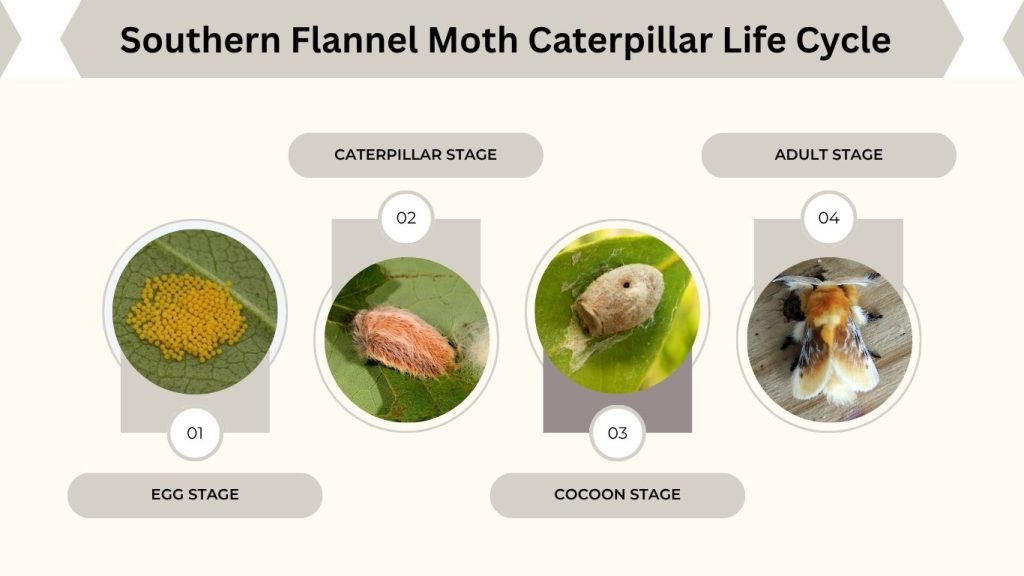
The southern flannel moth has four life stages: egg, larva, pupa, and adult. The caterpillar stage is the stinging stage.
| Stage | Description | Risk to People |
| Egg | Laid on leaves or host plants | Low |
| Caterpillar | Furry larva with venomous spines | High if touched |
| Cocoon | Tough protective case | Can still contain irritating hairs |
| Adult moth | Fuzzy yellow-orange moth | Harmless |
The adult moth does not sting. The caterpillar and sometimes the cocoon are the stages people should avoid touching.
Southern Flannel Moth Caterpillar Cocoon
The caterpillar spins a tough cocoon before becoming an adult moth. The cocoon may be found on bark, branches, or sheltered surfaces. Old hairs can be attached to the cocoon, so it may still irritate skin.
Do not handle cocoons with bare hands. Use gloves, tools, or professional pest help if removal is needed.
What Do Southern Flannel Moth Caterpillars Eat?
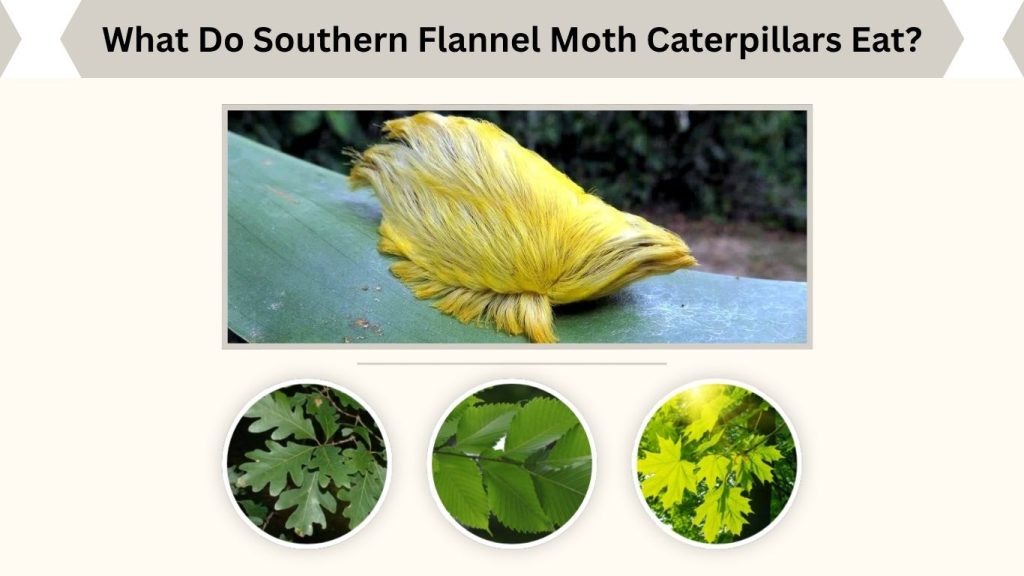
Southern flannel moth caterpillars feed on leaves of many trees and shrubs. They are not usually major tree killers, but they can chew foliage.
Common Food Plants
- Oak
- Elm
- Maple
- Hackberry
- Sycamore
- Holly
- Citrus
- Rose
- Pecan
- Persimmon
- Various ornamental shrubs
NC State Extension says young larvae may feed in groups on leaf surfaces, while older larvae can consume entire leaves.
How Dangerous Is the Southern Flannel Moth Caterpillar?
The southern flannel moth caterpillar is dangerous mainly because of its painful sting. For most people, the reaction is local and temporary. For sensitive people, children, or anyone with allergic symptoms, it can be more serious.
The caterpillar is not aggressive. It stings only when touched, brushed, pressed, or accidentally handled.
How to Get Rid of Southern Flannel Moth Caterpillars
Do not pick them up with bare hands. If you find them around your home, use safe removal methods.
Safe Removal Tips
- Wear thick gloves, long sleeves, and eye protection.
- Use tongs or a stick to move individual caterpillars.
- Drop them into soapy water if control is necessary.
- Keep children and pets away from infested trees.
- Check outdoor chairs, railings, toys, and clothing.
- Avoid shaking branches over people.
- Contact pest control for heavy infestations.
For ornamental plants, labeled caterpillar control products may be used when infestations are high. Texas A&M notes that residual sprays labeled for caterpillars on ornamental plants can be used when puss moth caterpillars become abundant. Always follow the product label and local pesticide rules.
Southern Flannel Moth Caterpillar Prevention
Prevention is mostly about avoiding contact. These caterpillars may appear suddenly under host trees, especially during seasonal peaks.
Prevention Tips
- Teach children not to touch fuzzy caterpillars.
- Wear gloves when gardening.
- Inspect outdoor furniture before sitting.
- Keep pets away from caterpillars.
- Avoid handling cocoons.
- Trim branches near play areas when needed.
- Monitor oak and elm trees during warm months.
FAQs
Is the southern flannel moth caterpillar dangerous?
Yes, the caterpillar can be dangerous if touched because it has venomous spines hidden under its fur-like hairs. The sting can cause intense pain, redness, swelling, itching, and sometimes nausea or headache.
What happens if you touch a southern flannel moth caterpillar?
You may feel sudden burning pain, followed by redness, swelling, bumps, or itching. Some people have stronger reactions, including nausea, headache, or allergic symptoms. Severe reactions need medical attention.
Where does the southern flannel moth caterpillar live?
It lives mostly in the southern and eastern United States, including Florida, Georgia, the Carolinas, Louisiana, Texas, Arkansas, Oklahoma, Tennessee, and nearby states. It is often found on oak, elm, maple, and other trees.
How do you treat a southern flannel moth caterpillar sting?
Use tape to remove spines, wash the area, apply an ice pack, and use anti-itch or pain relief products if safe for you. Get medical help for breathing trouble, severe swelling, eye exposure, or intense pain.
Is the adult southern flannel moth poisonous?
No, the adult southern flannel moth is not the dangerous stage. The caterpillar, also called the puss caterpillar or asp, is the stage with venomous spines.