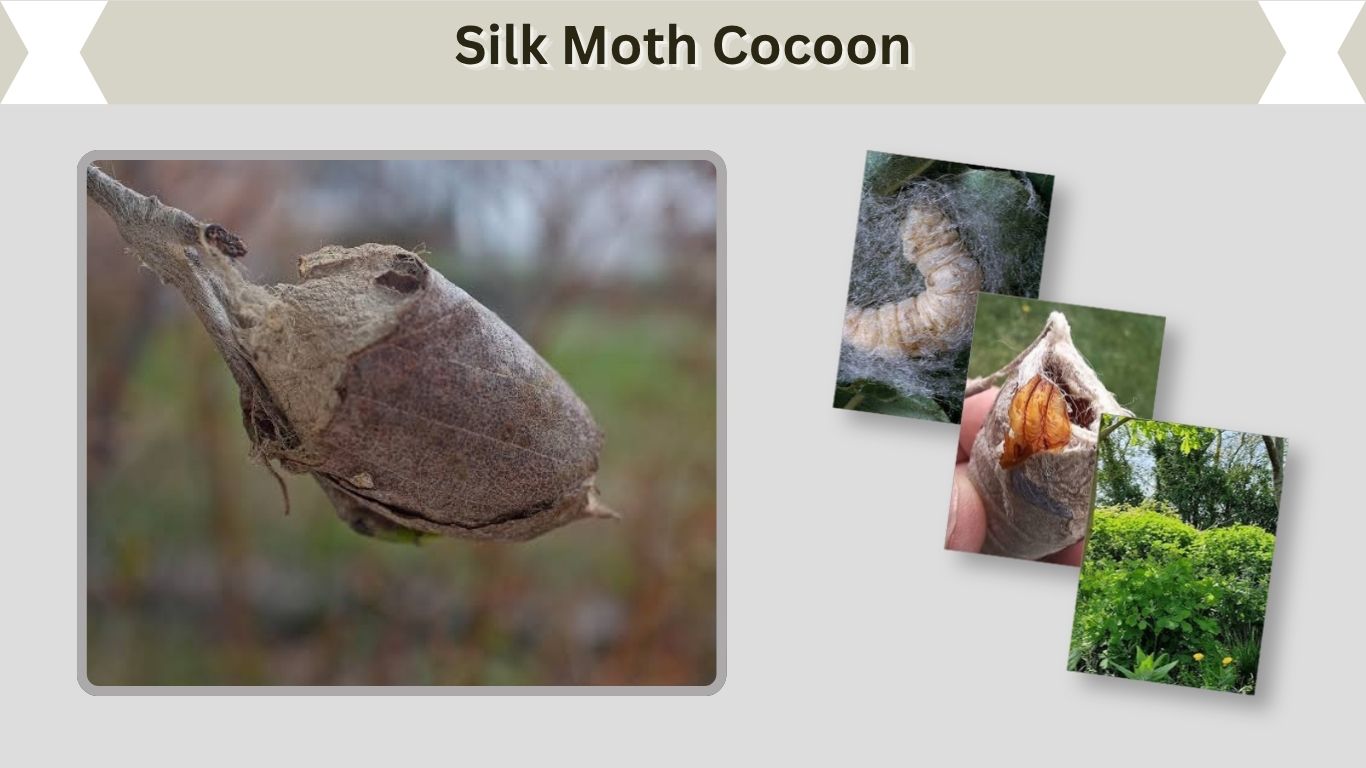
A silk moth cocoon is the protective structure a mature caterpillar creates before transforming into a pupa and eventually an adult moth. Depending on the species, cocoons may be white, brown, tan, papery, or wrapped in leaves. Domestic silk moths produce the famous silk cocoons used in textile production, while giant silk moths make tougher natural cocoons outdoors. Learning how silk moth cocoons form, how long moths remain inside, and how adults emerge makes their life cycle easier to understand.
What Is a Silk Moth Cocoon?
A silk moth cocoon is made by a caterpillar preparing for pupation. The caterpillar releases liquid silk from specialized glands near its mouth and moves its head repeatedly while laying down fibers. These strands gradually form a protective covering around its body, helping shield the developing pupa from weather, predators, and environmental changes.
Silk Moth Cocoon Identification
Common features of silk moth cocoons include:
- Oval, spindle-shaped, or rounded appearance
- Silk fibers covering the outside
- White, cream, tan, gray, or brown coloration
- Firm or papery outer texture
- Usually attached to leaves, twigs, branches, or vegetation
- Pupa enclosed inside
- Size varying considerably by moth species
Wild silk moth cocoons can be especially difficult to spot because their coloration often blends into surrounding leaves and branches.
Domestic Silk Moth Cocoon
The domestic silk moth, Bombyx mori, produces one of the best-known cocoons. Silkworm caterpillars commonly create compact white or yellowish cocoons made from a long continuous silk filament.
These cocoons have been harvested for silk production for thousands of years. Their fibers can be unwound and processed into silk thread.
Giant Silk Moth Cocoon
Giant silk moths such as cecropia, polyphemus, and related species also make silk cocoons. Their cocoons are generally tougher and more natural-looking than domestic silkworm cocoons.
Many are brown or tan and may be attached to branches, wrapped in leaves, or hidden among vegetation where they remain protected until the adult moth develops.
How Does a Silk Moth Make a Cocoon?
Cocoon construction begins when a fully grown caterpillar stops feeding and searches for a suitable place to pupate. It then releases silk and repeatedly moves its head in controlled patterns. The process gradually surrounds the caterpillar with layers of silk until the body becomes hidden inside the finished structure.
How a Silk Moth Weaves Its Cocoon
The basic process includes:
- The mature caterpillar stops eating.
- It searches for a protected location.
- Silk begins flowing from specialized glands.
- The caterpillar attaches initial silk threads.
- It repeatedly moves its head while spinning.
- Silk layers gradually surround the body.
- The caterpillar seals itself inside.
- It molts into a pupa within the cocoon.
The entire structure may contain an enormous length of fine silk fiber.
How Long Does Cocoon Spinning Take?
Cocoon construction generally takes several days, although the exact time varies among species and environmental conditions. During this period, the caterpillar works continuously or in repeated intervals.
Once the cocoon is complete, the larva changes into a pupa and begins the major internal transformation that eventually produces the adult moth.
How Long Do Silk Moths Stay in Their Cocoon?
The time spent inside a cocoon depends strongly on species, temperature, season, and whether the insect enters diapause. Some silk moths emerge after only a few weeks, while others remain inside their cocoons throughout winter and emerge during warmer conditions the following season.
Domestic Silk Moth Cocoon Time
Under warm controlled conditions, domestic silk moths may spend roughly two weeks in the pupal stage before adults emerge.
However, breeding strain and temperature can alter the timing. In silk production, cocoons may be processed before adult emergence because the emerging moth breaks the continuous silk filament.
Wild Silk Moth Cocoon Time
Wild silk moths can remain inside their cocoons considerably longer. Species that form cocoons late in the season may overwinter as pupae.
This means a cocoon discovered during fall or winter may contain a healthy living pupa that does not emerge until spring or early summer.
Signs the Moth May Be Ready to Emerge
Possible signs include:
- Cocoon becoming slightly softer
- Changes near one end of the cocoon
- Seasonal temperatures becoming warmer
- Subtle movement inside
- Darkening or visible moisture shortly before emergence
Not every cocoon shows obvious external signs before the adult appears.
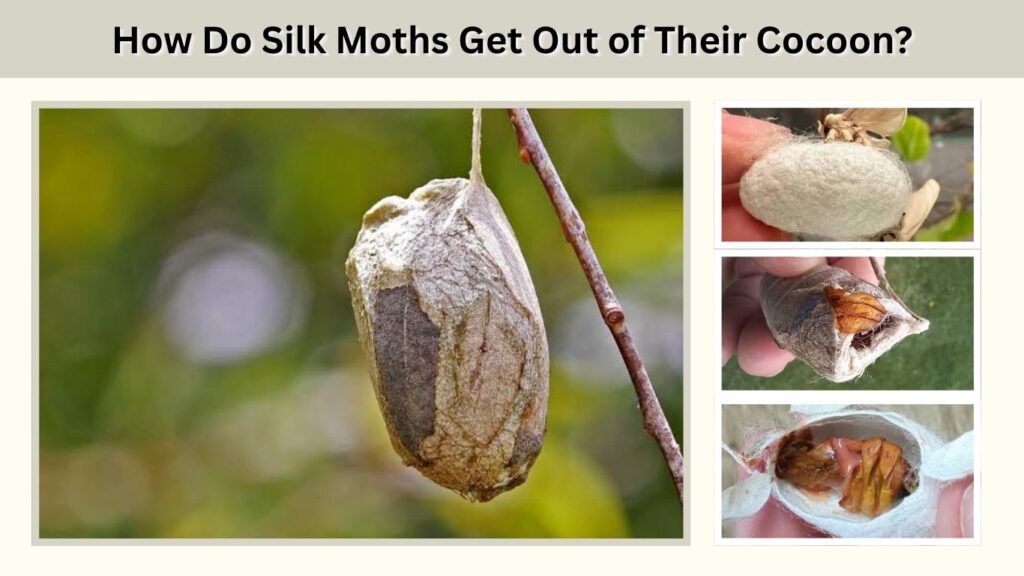
How Do Silk Moths Get Out of Their Cocoon?
Adult silk moths do not simply chew through thick silk using strong jaws. Instead, many species produce fluid that helps soften the silk fibers around one end of the cocoon. The moth then pushes repeatedly until it creates an opening large enough to crawl outside.
Silk Moth Emerging From Cocoon
When the moth begins emerging, it may appear weak, damp, and crumpled. This is normal.
After leaving the cocoon, the adult must:
- Find a stable surface
- Hang or rest securely
- Expand its wings
- Pump fluid into the wing veins
- Allow the wings to harden
- Rest before becoming fully active
Disturbing the moth during this stage can interfere with proper wing expansion.
Why Is My Silk Moth Stuck in Its Cocoon?
A moth may occasionally have difficulty emerging if the cocoon is damaged, abnormally dry, or the insect itself is weak.
Intervening can also be risky because opening a cocoon too early may damage a healthy developing pupa. Unless the species is being deliberately raised under controlled conditions, allowing natural emergence is usually safest.
Wild Silk Moth vs Domestic Silk Moth Cocoon
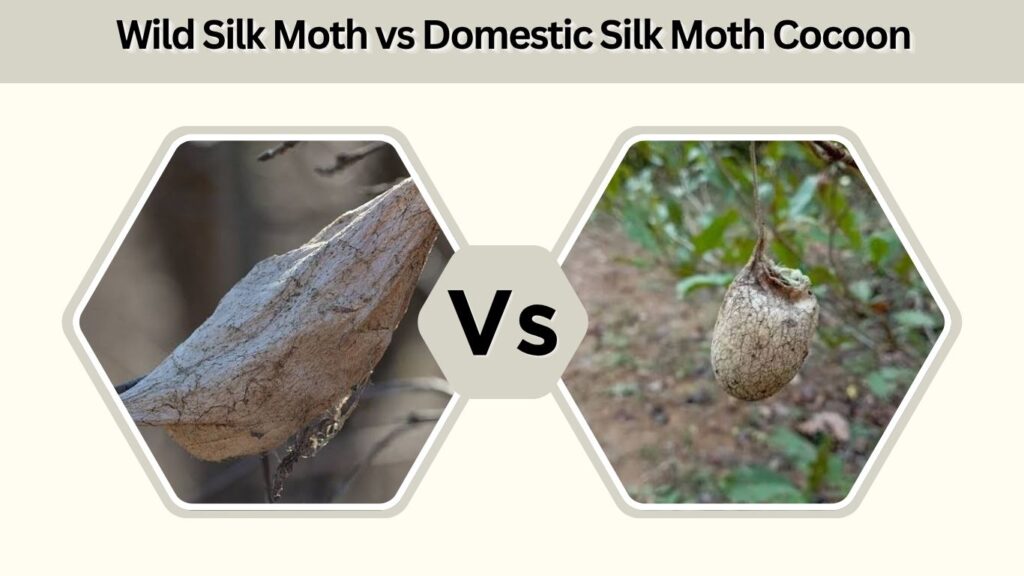
Domestic and wild silk moth cocoons perform the same basic function, but they can differ noticeably in texture, color, location, and durability. Domestic silkworms have been selectively bred for silk production, while wild species create cocoons primarily designed to survive natural weather conditions and predators.
Main Differences
Typical differences include:
- Domestic cocoon: Often white or yellowish
- Wild cocoon: Frequently brown, tan, gray, or leaf-colored
- Domestic cocoon: Usually compact and uniform
- Wild cocoon: Often rougher and irregular
- Domestic cocoon: Produced under human care
- Wild cocoon: Attached to natural vegetation
- Domestic cocoon: Selected for usable silk fiber
- Wild cocoon: Adapted mainly for protection
Some wild species also strengthen their cocoons with leaves or other surrounding material.
Cecropia Silk Moth Cocoon
Cecropia moth caterpillars produce strong brownish cocoons that are typically attached to twigs or branches. The cocoon can survive cold winter conditions while the pupa remains inside.
The adult giant silk moth later emerges when seasonal conditions become favorable.
Ceanothus Silk Moth Cocoon
Ceanothus silk moths also produce sturdy cocoons associated with vegetation. Their cocoons may be attached to branches or leaves and can blend well with the surrounding environment.
Like other wild silk moths, their pupal stage can help them survive unfavorable seasonal conditions.
Can Silk Be Harvested After the Moth Leaves?
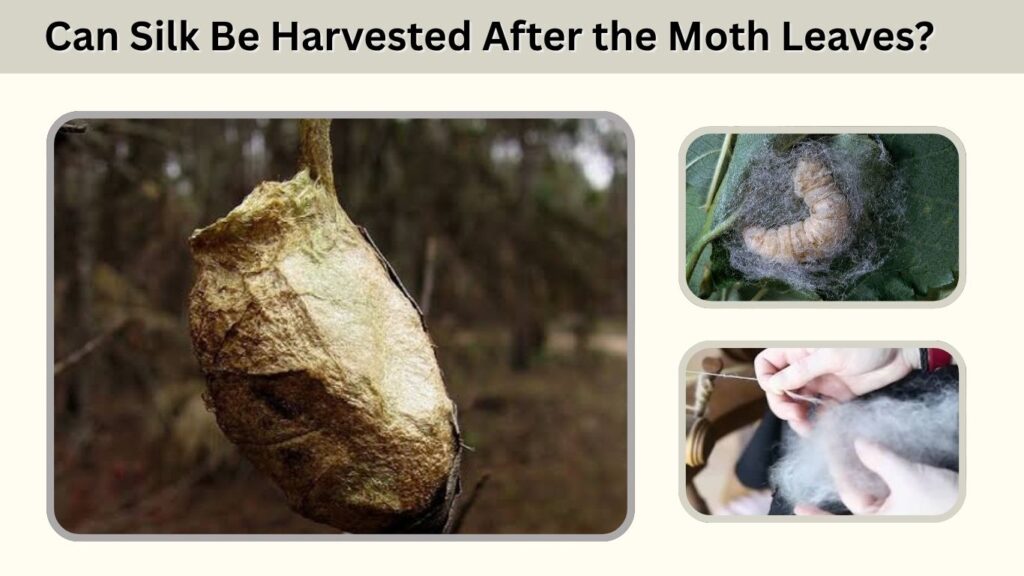
Silk can still be collected from a cocoon after adult emergence, but the resulting fiber differs from silk obtained from an intact cocoon. When the moth escapes, it breaks through the continuous silk filament, leaving shorter fibers instead of one long thread.
Intact vs Emerged Cocoon Silk
Important differences include:
- Intact cocoons contain longer continuous fibers.
- Emerged cocoons have broken silk strands.
- Continuous filament is easier to reel.
- Broken fibers can still be spun.
- Emerged cocoons allow the moth to complete its life cycle naturally.
Different silk-production methods use cocoons in different ways depending on the desired material.
How to Find Silk Moth Cocoons
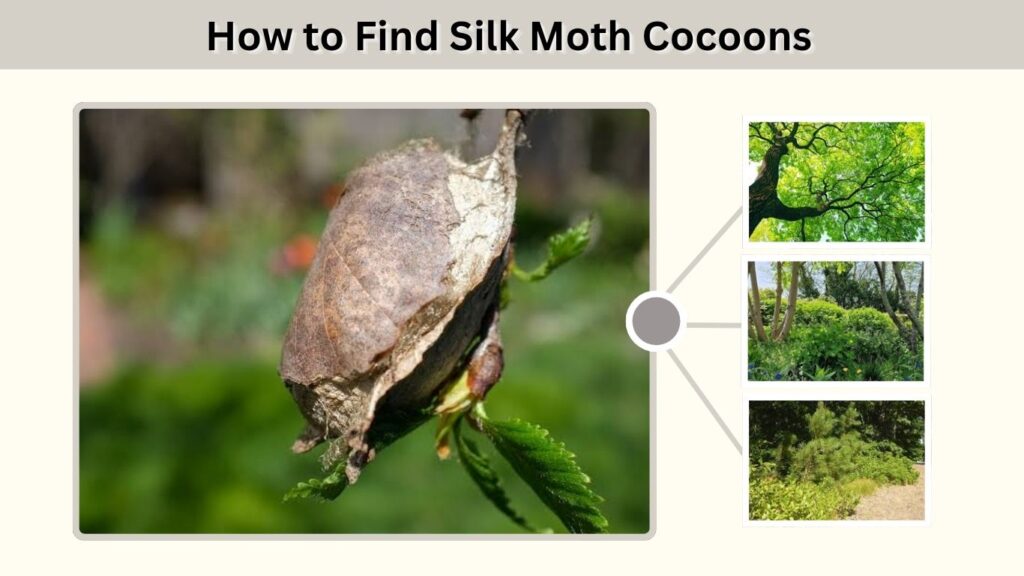
Wild silk moth cocoons are often discovered after leaves fall from trees because the structures become easier to see. They may remain attached to twigs, branches, shrubs, or dried leaves throughout colder months.
Common Places to Look
Check:
- Small tree branches
- Shrubs
- Woodland edges
- Dried leaves attached to plants
- Low vegetation
- Tree trunks
- Protected garden areas
- Areas where large caterpillars were previously seen
Avoid removing wild cocoons unnecessarily, since a living pupa may still be developing inside.
FAQs
1. How long does a silk moth stay in its cocoon?
The time varies by species. Domestic silk moths may remain in the pupal stage for around two weeks under suitable warm conditions. Wild silk moths can remain inside much longer, especially species that overwinter in their cocoons and emerge the following spring.
2. What does a silk moth cocoon look like?
A silk moth cocoon is usually oval or spindle-shaped and covered with dense silk fibers. Domestic silkworm cocoons are commonly white or yellowish, while wild silk moth cocoons are often brown, tan, gray, or wrapped partly in leaves.
3. How does a silk moth get out of its cocoon?
The adult moth often releases fluid that helps soften silk fibers near one end of the cocoon. It then pushes repeatedly against the weakened area until an opening forms, allowing the moth to crawl out and expand its wings.
4. Is a silk moth cocoon alive?
The cocoon itself is not alive, but it may contain a living pupa. Inside, the insect undergoes metamorphosis before becoming an adult moth. A motionless cocoon should therefore not automatically be assumed to be empty or dead.
5. Can you move a silk moth cocoon?
A cocoon can sometimes be moved carefully, but unnecessary handling is best avoided. Wild cocoons should remain in protected outdoor conditions similar to where they were found. Improper temperature, humidity, or handling can interfere with normal development and emergence.