
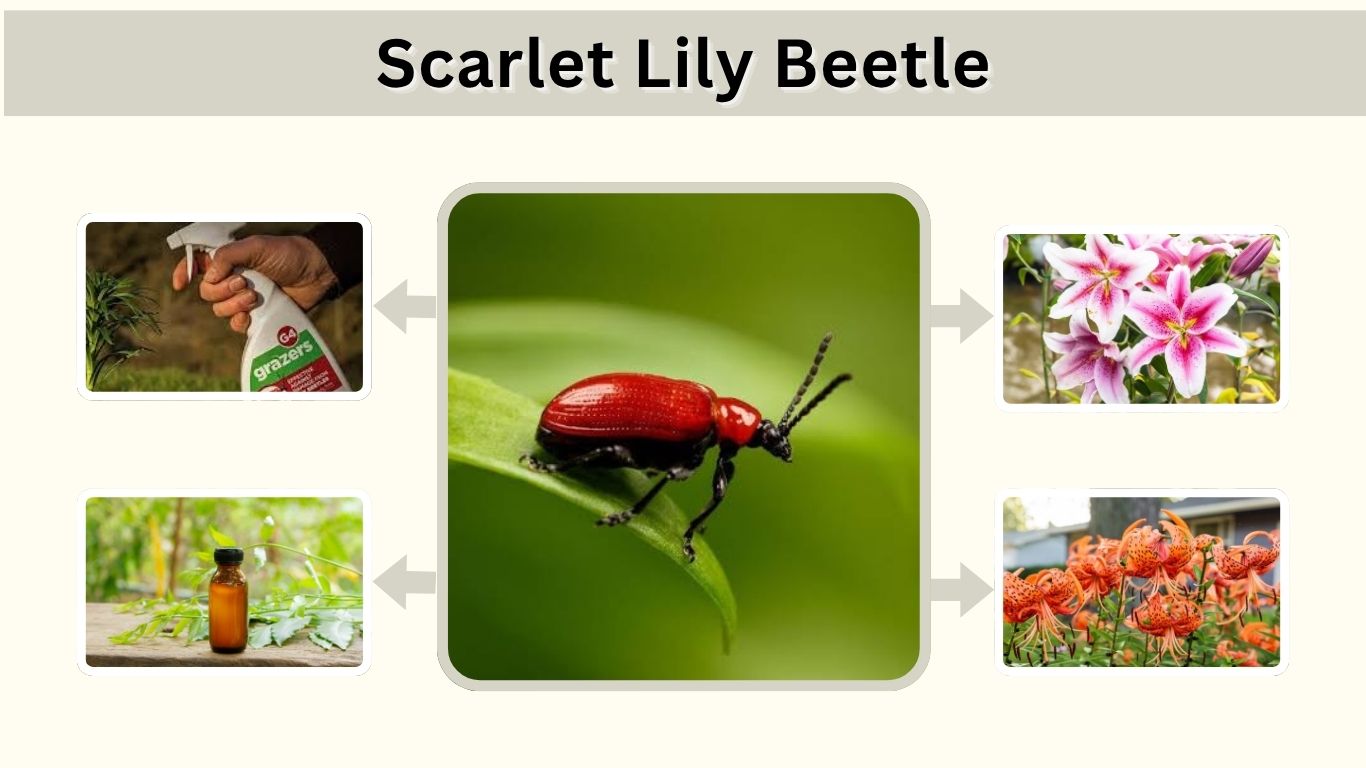
The scarlet lily beetle (Lilioceris lilii) is a bright red insect that can seriously damage lilies and other ornamental plants. Both adults and larvae feed on leaves, flower buds, and stems, sometimes leaving plants almost completely stripped of foliage. These beetles are especially troublesome in gardens with Asiatic, Oriental, and tiger lilies. Early identification and effective scarlet lily beetle control can prevent extensive damage and protect future flowering. This guide explains how to identify scarlet lily beetles, recognize their eggs and larvae, understand their life cycle, and eliminate damaging infestations.
What Is a Scarlet Lily Beetle?
The scarlet lily beetle, also called the red lily beetle or lily leaf beetle, belongs to the leaf beetle family Chrysomelidae. Its scientific name is Lilioceris lilii. Originally native to parts of Europe and Asia, this beetle has spread into several regions of North America.
It primarily attacks true lilies and fritillaries, feeding on foliage and developing flowers. Adults have striking red wing covers, while larvae produce dark, slimy coverings that help protect them from predators.
The beetles are particularly active during spring and summer when their preferred host plants are growing.
How to Identify Scarlet Lily Beetles
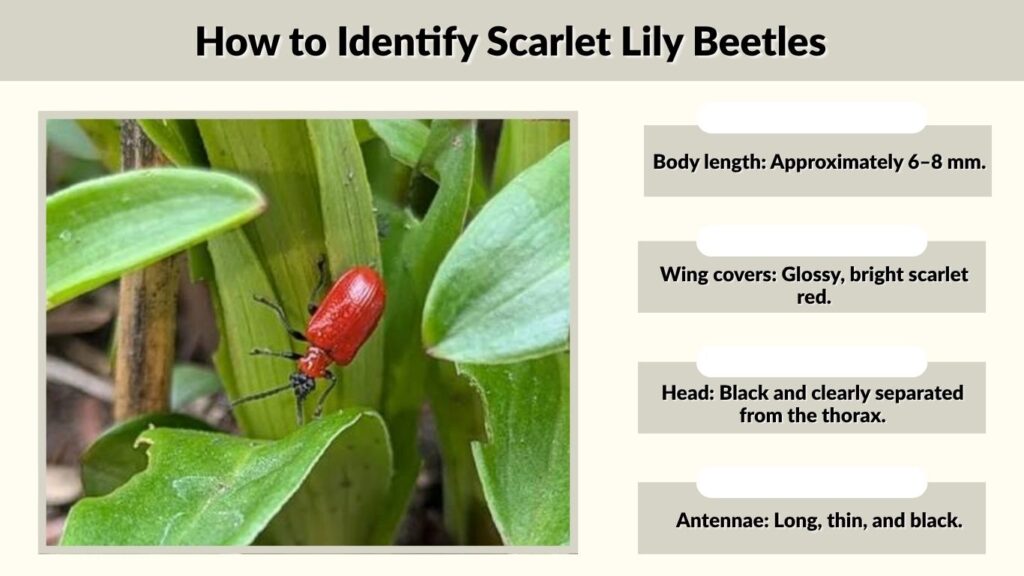
Scarlet lily beetles are relatively easy to recognize as adults because of their brilliant red coloring. However, their eggs and larvae look completely different. Identifying these developmental stages is important because larvae generally cause the greatest feeding damage, and removing eggs can prevent infestations from becoming severe.
Adult Scarlet Lily Beetle Identification
Adult scarlet lily beetles have several distinctive physical features.
- Body length: Approximately 6–8 mm.
- Wing covers: Glossy, bright scarlet red.
- Head: Black and clearly separated from the thorax.
- Antennae: Long, thin, and black.
- Legs: Black and relatively slender.
- Body shape: Elongated and slightly rounded.
Adult beetles are commonly found on lily leaves, stems, and flower buds.
When disturbed, they often drop to the ground and turn upside down, exposing their dark undersides and becoming difficult to spot.
Scarlet Lily Beetle Eggs
Scarlet lily beetle eggs are small, elongated, and orange-red.
Females deposit them in clusters or irregular rows on the undersides of lily leaves. As the eggs develop, their coloring gradually darkens.
They usually hatch within approximately one week, although temperature influences development.
Checking the undersides of leaves regularly helps gardeners discover infestations before the larvae begin feeding heavily.
Scarlet Lily Beetle Larvae
Scarlet lily beetle larvae have soft, plump bodies with dark heads.
They are generally reddish-brown or orange underneath, but their bodies are often hidden beneath a covering of dark excrement.
This coating gives them the appearance of slimy black or brown droppings.
The larvae feed aggressively on leaves, sometimes removing most of the foliage from affected plants.
Scarlet Lily Beetle Life Cycle
The scarlet lily beetle undergoes complete metamorphosis through four stages: egg, larva, pupa, and adult. Understanding this process helps gardeners target the most vulnerable stages. In temperate regions, these insects generally complete one generation per year, with overwintered adults becoming active again during spring.
Four Stages of Development
- Egg stage: Female beetles lay orange-red eggs beneath lily leaves during spring and early summer. Eggs normally hatch within several days.
- Larval stage: Newly hatched larvae begin feeding on leaves. As they grow, they develop their distinctive protective fecal covering.
- Pupal stage: Mature larvae drop into the soil and pupate inside protective cocoons.
- Adult stage: Newly emerged beetles continue feeding before seeking sheltered overwintering locations.
Adult beetles survive winter in protected places, including leaf litter and soil. They emerge as temperatures increase and host plants become available.
What Do Scarlet Lily Beetles Eat?
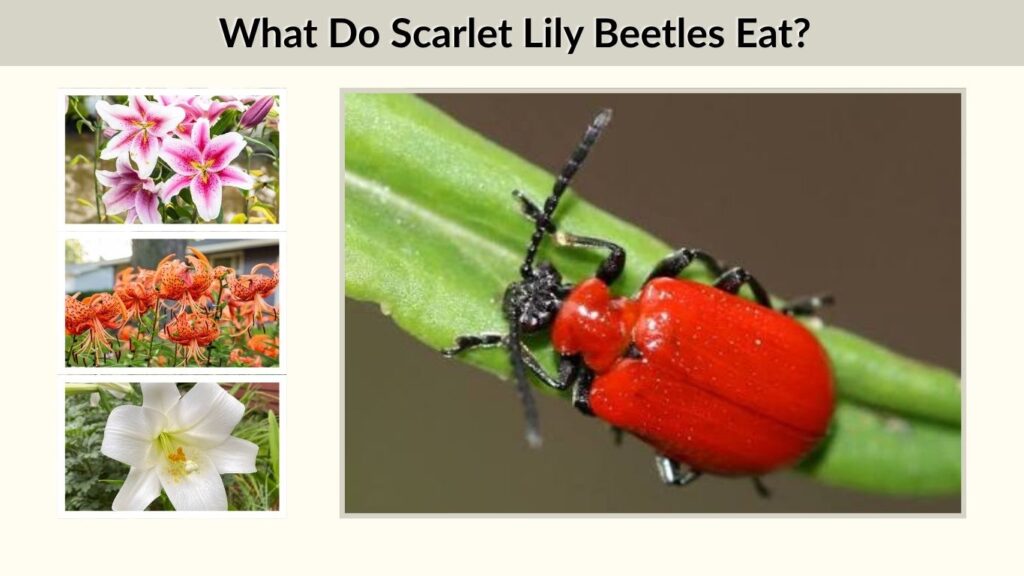
Scarlet lily beetles primarily feed on plants belonging to the lily family. Their favorite hosts include true lilies and fritillaries, which provide suitable food for adults and developing larvae.
Commonly affected plants include Asiatic lilies, Oriental lilies, tiger lilies, Easter lilies, and several native lily species.
They also attack fritillaries, including crown imperial plants.
Adults may occasionally feed on other vegetation, but reproduction mainly occurs on suitable lily and fritillary hosts.
Daylilies, which belong to the genus Hemerocallis, are not considered normal host plants for scarlet lily beetles.
Scarlet Lily Beetle Damage and Symptoms
Scarlet lily beetle damage occurs when adults and larvae consume leaves, stems, and flower buds. Larvae are particularly destructive because they can remove large quantities of leaf tissue. Severe infestations reduce photosynthesis, weaken developing bulbs, and may reduce flowering during the following growing season.
Common Signs of Infestation
Watch for the following symptoms:
- Irregular holes: Adult beetles chew small or large holes through foliage.
- Damaged leaf edges: Larvae consume tender tissue from leaf tips and margins.
- Dark slimy deposits: Larval excrement collects on damaged leaves.
- Missing foliage: Heavy infestations can leave stems almost completely bare.
- Damaged flower buds: Feeding can interfere with flower development.
Repeated defoliation may weaken lilies over time, although lightly damaged plants often recover.
How to Get Rid of Scarlet Lily Beetles
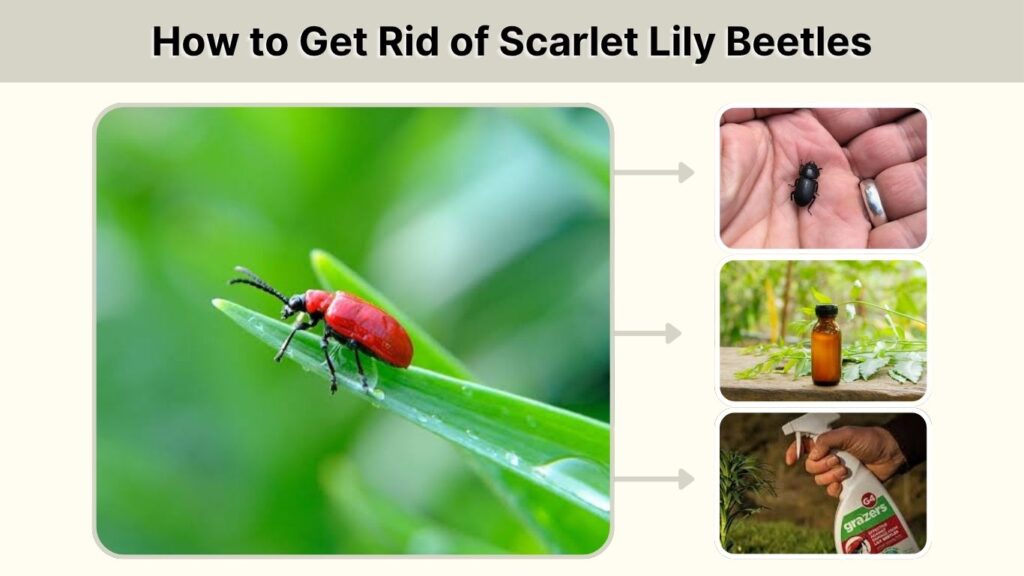
Effective scarlet lily beetle control involves early detection, manual removal, and targeted treatment when necessary. Small infestations are often manageable without pesticides. Larger populations may require insecticides labeled for ornamental plants, especially when numerous larvae are actively feeding.
1. Remove Adult Beetles by Hand
Handpicking is one of the easiest ways to manage scarlet lily beetles in small gardens.
Inspect lilies regularly during spring and remove visible adults.
Hold a container of soapy water beneath each beetle before disturbing it. This catches beetles that attempt to escape by dropping from the plant.
Continue checking throughout the growing season because additional beetles can fly into the garden.
2. Destroy Scarlet Lily Beetle Eggs and Larvae
Removing eggs and larvae interrupts the beetle’s development.
Examine the undersides of leaves for small orange-red egg clusters.
Crush the eggs or remove affected leaf sections when practical.
Wear gloves when collecting larvae because their protective coating can be unpleasant to handle.
Drop collected larvae into soapy water for disposal.
3. Use Neem Oil for Scarlet Lily Beetles
Neem-derived insecticides containing azadirachtin can provide some control of young scarlet lily beetle larvae.
Azadirachtin affects insect feeding and development, making early treatment particularly important.
Not all neem oil formulations contain the same active ingredients or provide identical results.
Choose a product registered for ornamental plants and follow its label instructions carefully.
Avoid spraying open flowers or treating plants during periods of strong sunlight that could increase leaf injury.
4. Apply Scarlet Lily Beetle Spray
When infestations become severe, registered insecticides may help control larvae and adults.
Depending on local regulations, products containing spinosad, pyrethrins, or certain synthetic pyrethroids may be labeled for ornamental pest control.
Spinosad can be effective against feeding larvae, while some contact insecticides affect both adults and larvae.
Always check whether a product is approved for the intended use.
Avoid treating blooming flowers or exposing pollinators to insecticide sprays.
5. Encourage Natural Predators
Natural enemies can help suppress scarlet lily beetle populations.
Birds, predatory ground beetles, and certain parasitoid wasps may attack beetles or larvae.
Specialized parasitoid wasps have also been investigated for biological control.
Maintaining diverse garden habitats and reducing unnecessary pesticide use can help protect beneficial insects.
However, natural enemies may not provide immediate control during heavy infestations.
How to Prevent Scarlet Lily Beetles
Preventing scarlet lily beetle infestations requires consistent monitoring and early intervention. Because adult beetles can fly into gardens, completely preventing their arrival is difficult. However, removing beetles before they reproduce and maintaining healthy plants can significantly reduce damage.
Practical Prevention Tips
Check emerging lilies regularly during early spring.
Inspect leaf undersides for eggs and remove them before hatching.
Examine new lily plants carefully before introducing them into existing flower beds.
Continue monitoring during summer, even after the first beetles disappear.
Avoid unnecessary broad-spectrum pesticides that may kill helpful insects.
Where infestations recur severely, consider growing less susceptible lily varieties or alternative ornamentals.
Are Scarlet Lily Beetles Dangerous to Humans?
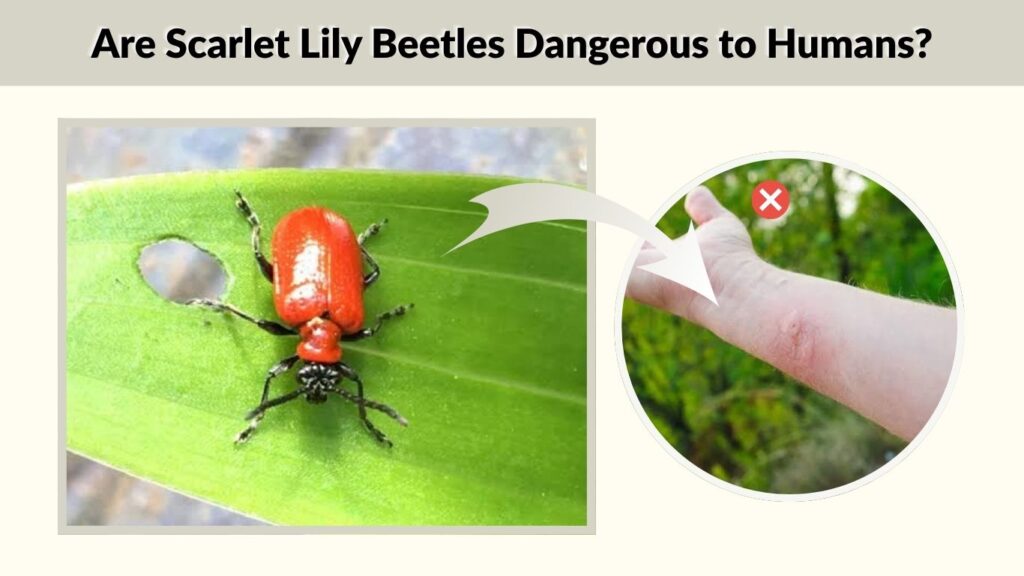
Scarlet lily beetles are not considered poisonous or dangerous to humans.
They do not normally bite or sting people, and their bright red coloring does not indicate a significant human health threat.
Their primary impact is horticultural rather than medical.
Although the beetles are generally harmless to handle, wearing gardening gloves is sensible when removing insects, larvae, and contaminated foliage.
FAQs
Does Neem Oil Kill Scarlet Lily Beetles?
Neem-derived products containing azadirachtin may suppress young scarlet lily beetle larvae. They are usually less reliable against mature adults. For better results, combine properly labeled treatments with regular egg removal and handpicking.
What Kills Scarlet Lily Beetles Instantly?
Crushing collected beetles or dropping them into soapy water is an effective physical removal method. Certain registered contact insecticides can also control adults, but effectiveness depends on the product, application coverage, and label directions.
Do Scarlet Lily Beetles Bite Humans?
Scarlet lily beetles do not normally bite humans. They are plant-feeding insects that primarily consume lily foliage and flowers. Their presence is a concern for gardeners because they damage ornamental plants, not because they pose a significant health risk.
Where Do Scarlet Lily Beetles Live?
Scarlet lily beetles occur in gardens, parks, and other habitats containing suitable host plants. Adults overwinter in leaf litter, soil, and sheltered locations before emerging during spring to feed and reproduce on lilies and fritillaries.
How Do You Stop Scarlet Lily Beetles Coming Back?
Start inspecting lilies as soon as new shoots appear. Remove adults, eggs, and larvae regularly. Because beetles can fly into gardens, continued monitoring and early control are more reliable than expecting a single treatment to eliminate them permanently.
