
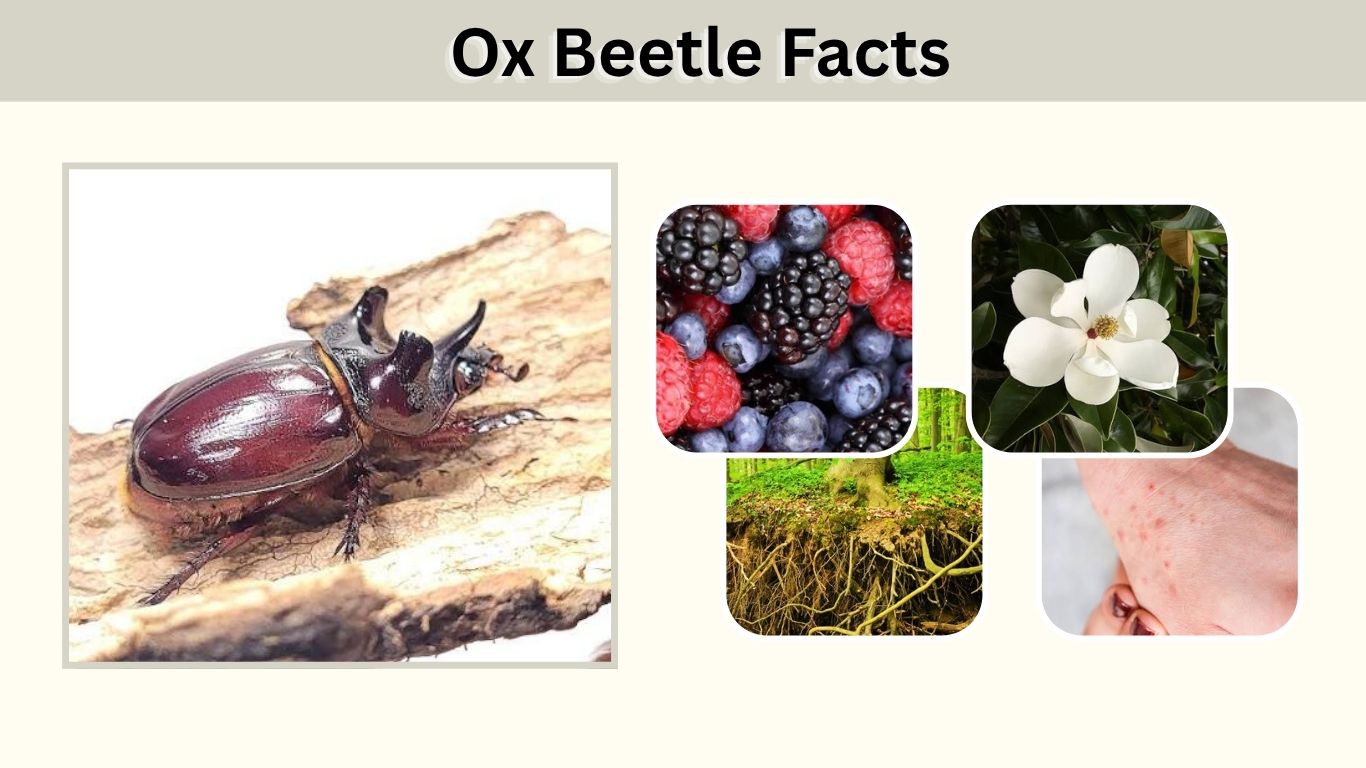
Ox beetles are large rhinoceros beetles found across the Americas, where they are recognized by their heavy bodies and the impressive horns of many males. The name usually refers to beetles in the genus Strategus, including the widely known Aloeus ox beetle (Strategus aloeus) and the Smooth Ox Beetle (Strategus antaeus). These insects spend much of their lives as soil- or wood-dwelling grubs. Their appearance, habitat, diet, flight, and life cycle make them fascinating insects for nature enthusiasts and gardeners alike.
What Is an Ox Beetle?
The ox beetle is a member of the rhinoceros beetle group within the scarab beetle family, Scarabaeidae. Most ox beetles belong to the genus Strategus and are recognized by their thick bodies and distinctive male horns. They are particularly noticeable during warmer months when adults become active around vegetation and outdoor lights.
Ox Beetle Appearance and Identification
Ox beetles have strong, cylindrical bodies covered by a hard exoskeleton. Their coloration ranges from dark brown to reddish-brown and nearly black, depending on the species and individual.
Common identification features include:
- Body shape: A thick, oval-to-cylindrical body with a broad thorax.
- Color: Usually dark brown, reddish-brown, or blackish.
- Horns: Many males have three prominent horn-like projections used during competition.
- Legs: Strong legs with spiny structures that help them dig and move through soil.
- Wing covers: Hardened front wings called elytra protect their delicate flight wings.
Adult ox beetles generally measure approximately 3–6 centimeters long, depending on the species and individual.
Common Ox Beetle Species
Several species belong to the genus Strategus. Some recognizable examples include:
- Strategus aloeus – Aloeus ox beetle
- Strategus antaeus – Smooth ox beetle
- Strategus mormon – Mormon ox beetle
- Strategus splendens – A southeastern North American ox beetle
The Smooth Ox Beetle is a recognized common name for Strategus antaeus. These species differ in their physical characteristics and geographic distributions.
Male vs. Female Ox Beetle
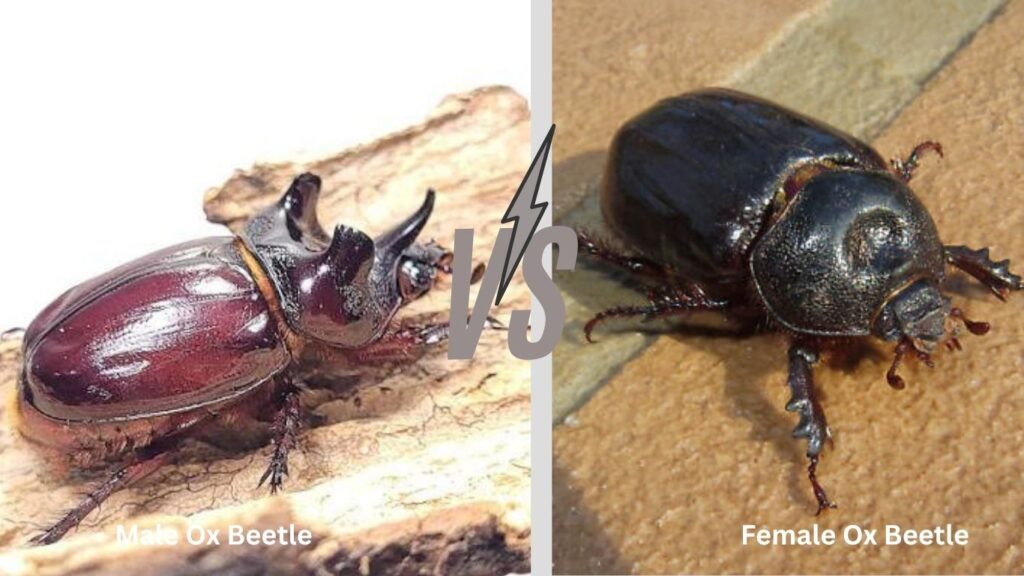
Male and female ox beetles have noticeable physical differences, particularly in their head and thorax structures. Males are famous for their horns, which they use when competing with other males. Females generally have simpler body structures and lack the large projections seen in males. These differences make identifying their sex relatively straightforward in many species.
Male Ox Beetle Characteristics
Male Strategus aloeus beetles have distinctive horns that make them look somewhat like miniature three-horned dinosaurs.
- Major males: Develop three large horns, including two toward the rear of the pronotum and a longer central projection.
- Minor males: Have noticeably smaller horns and less developed projections.
- Competition: Use their horns to push and displace rival males.
- Body structure: Usually have a larger and more heavily developed appearance.
Female Ox Beetle Characteristics
Female ox beetles generally lack the prominent horns found in major males. Instead, they have small raised structures on the front of the pronotum. These structures are useful for digging and moving through soil while searching for suitable places to lay eggs.
Females also have strong legs and digging adaptations that support their reproductive behavior.
Where Do Ox Beetles Live?
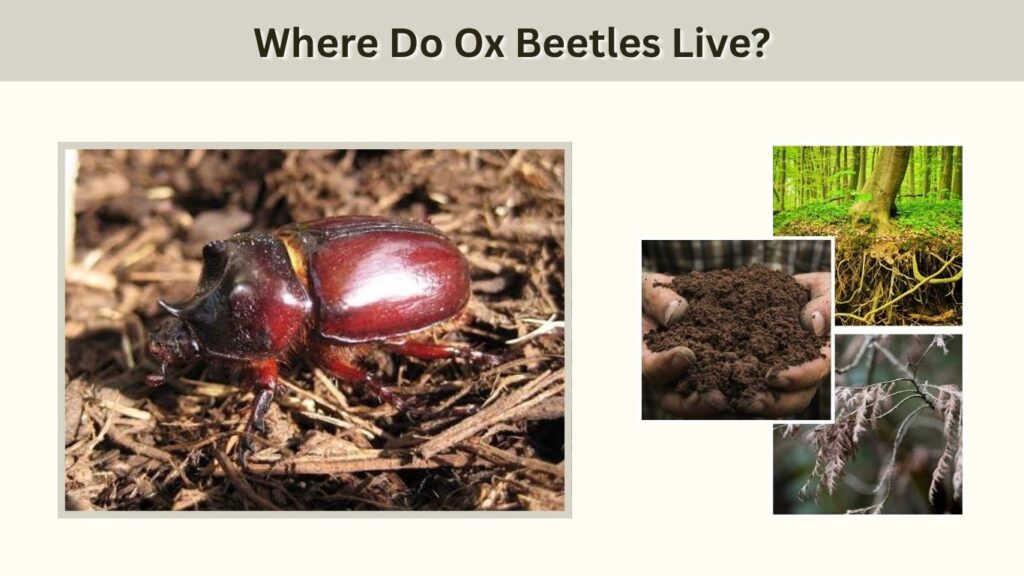
Ox beetles are native to the Americas, with different species distributed throughout the southern United States, Mexico, Central America, the Caribbean, and South America. Many prefer warm environments where suitable soil, decaying vegetation, and tree roots are available. Some species are especially common in tropical and subtropical regions.
Ox Beetle Habitat and Distribution
Ox beetles can occupy several natural environments, including forests, woodland areas, gardens, and landscapes with decaying organic materials. Their larvae commonly develop in rotting wood or areas containing rich organic debris.
The genus Strategus includes approximately 31 recognized species, with representatives distributed across the Americas.
Ox Beetles in Florida and Texas
The Aloeus ox beetle (Strategus aloeus) occurs in parts of the southern United States, including Texas and Florida.
- Texas: Ox beetles are recorded across several regions, particularly during warmer months.
- Florida: Suitable warm conditions and organic-rich habitats support ox beetle populations.
- Arizona: Strategus aloeus also occurs in parts of Arizona.
- Other regions: Related species occur throughout the southeastern United States and further south into the Americas.
Their exact distribution depends on the species, habitat, and environmental conditions.
What Do Ox Beetles Eat?

Ox beetles have different feeding habits during their adult and larval stages. Adults may consume plant materials, including flowers, fruits, and leaves, while larvae develop in organic-rich environments or feed on roots, depending on the species. Their feeding activities can contribute to natural decomposition and nutrient recycling.
Adult Ox Beetle Diet
Adult ox beetles may feed on several natural food sources, including flowers, soft fruits, leaves, and other plant materials. Some adults feed relatively little, while certain species can consume palm tissues.
Ox Beetle Larvae Diet
Ox beetle larvae are creamy-white grubs that develop in soil, decaying wood, and other organic-rich materials. Depending on the species, their food sources may include decomposing plant material and living roots.
Most species are not considered serious garden pests, although certain ox beetles can occasionally damage palms or other plants.
Ox Beetle Life Cycle
Ox beetles undergo complete metamorphosis, meaning they develop through four distinct stages: egg, larva, pupa, and adult. Their development takes place mainly underground or within decaying organic materials. The immature stages are particularly important because larvae spend considerable time feeding and growing before transforming into adult beetles.
Egg Stage
Female ox beetles deposit their eggs in suitable environments, such as decaying wood or organic-rich soil. These locations provide protection and suitable conditions for the developing offspring. After incubation, small larvae emerge and begin feeding.
Larval Stage
The larval stage is the main growth period. Ox beetle grubs have soft, creamy-white bodies, brown head capsules, and three pairs of legs near the front of their bodies. They feed and increase in size before preparing for pupation.
Pupal Stage
When the larva reaches maturity, it prepares a protected chamber in the surrounding soil or organic material. Inside this chamber, its body undergoes metamorphosis, gradually developing adult structures such as wings, legs, and hardened wing covers.
Adult Stage
The adult emerges from the pupal chamber and eventually becomes active above ground. Adult males search for females and may compete with other males using their horns. Depending on the species, the complete life cycle may take approximately one to two years.
Can Ox Beetles Fly?
Yes, adult ox beetles can fly. Although their bodies appear heavy, they have functional hindwings protected beneath their hardened elytra. They usually become more noticeable during warmer months and are often attracted to artificial lights at night. Their ability to fly helps them search for food, suitable habitats, and potential mates.
Are Ox Beetles Dangerous?
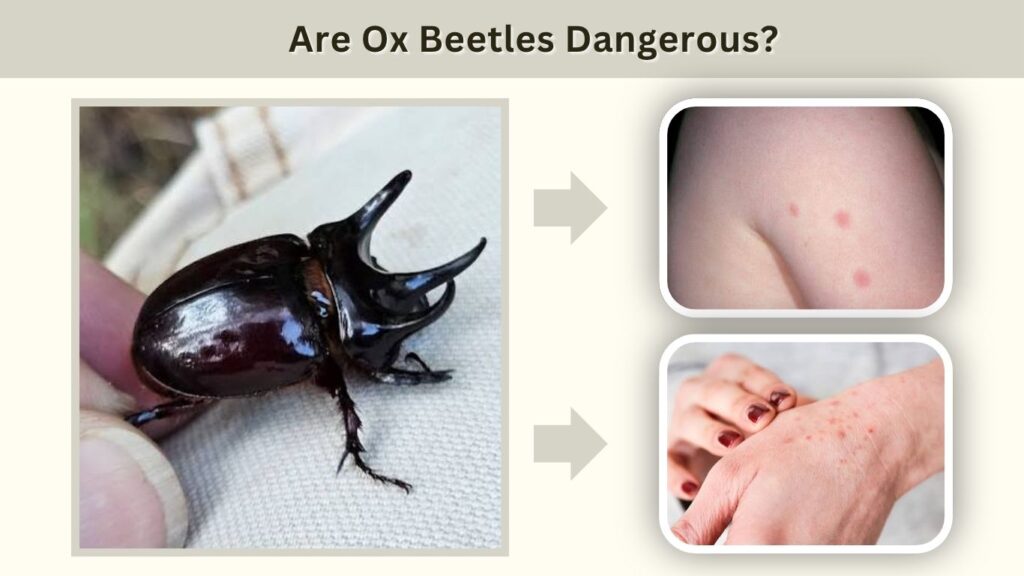
Ox beetles are generally harmless to humans and are not considered medically significant insects. They do not have venomous stingers, and they do not normally attack people. Their impressive horns are primarily used during competition between males rather than for defending themselves against humans.
Do Ox Beetles Bite?
Ox beetles have chewing mouthparts, but they are not aggressive toward people. If handled roughly, they may grip or pinch with their mouthparts or use their spiny legs to hold onto the skin. Their bites are not generally considered dangerous. It is best to observe them without unnecessary handling.
FAQs
1. How long do ox beetles live?
Ox beetle lifespan varies by species and environmental conditions. Their development can take approximately one to two years in some species, with much of that time spent as larvae. Adult lifespan is generally shorter, but exact estimates are not available for every species.
2. Are black ox beetles real?
Real ox beetles can have dark brown or nearly black bodies. However, Black Ox Beetle is also the name of an enemy in the video game Grounded. The fictional game creature should not be confused with real beetles belonging to the genus Strategus.
3. What is the difference between a male and female ox beetle?
Male ox beetles often have three prominent horns on their thorax, while females generally lack these large projections. Males use their horns during competition, whereas females have body structures adapted for digging and reproduction.
4. Can ox beetles damage plants?
Most ox beetles are not serious garden pests. However, some species have larvae that feed on plant roots, and certain adults can damage palm tissues. Their impact depends on the species, population density, and available food sources.
5. What is a Smooth Ox Beetle?
The Smooth Ox Beetle is Strategus antaeus, a rhinoceros beetle belonging to the scarab family. It occurs in parts of the southeastern United States and is closely related to other ox beetles. It has distinctive physical characteristics that help distinguish it from other members of the genus.
