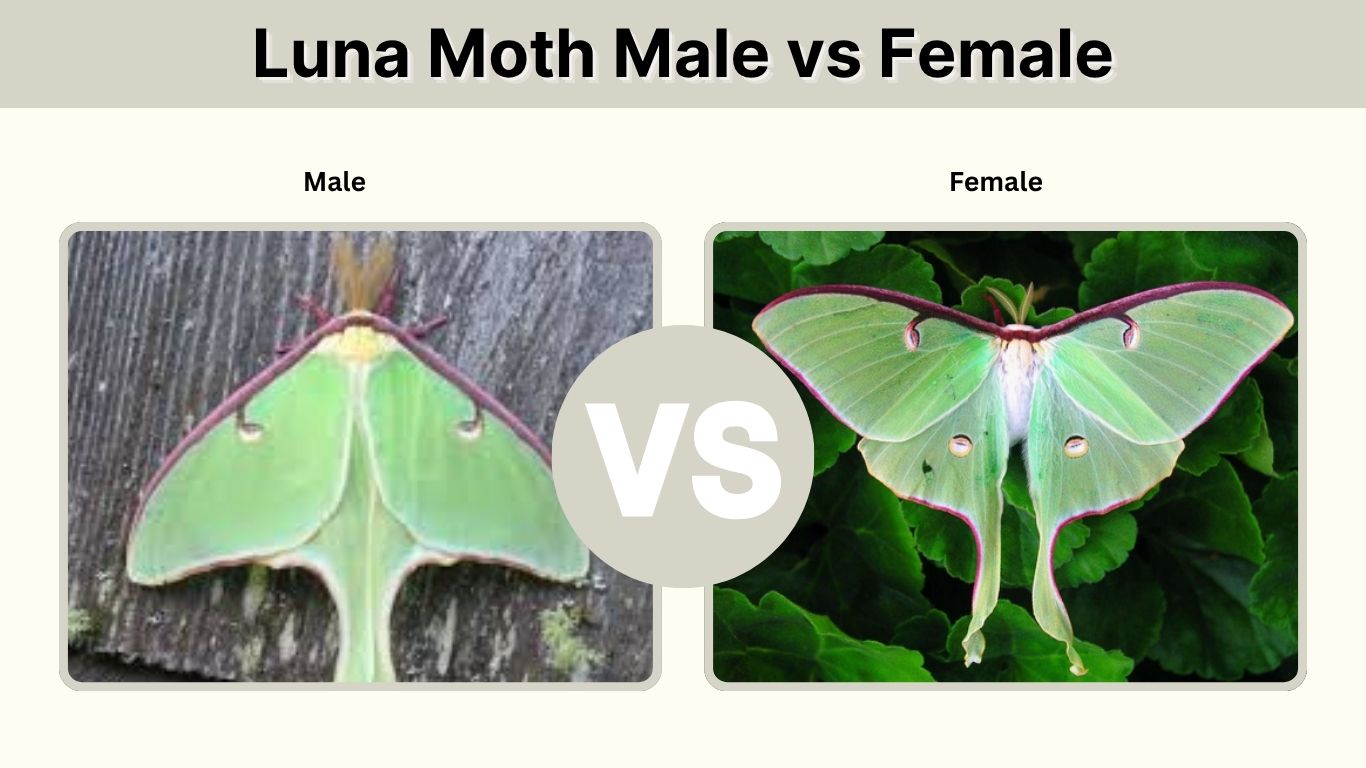
Male and female luna moths look remarkably similar at first glance. Both have pale green wings, long curved tails, and prominent eyespots. However, several physical and behavioral differences can help you determine whether a luna moth is male or female. The antennae provide the most reliable clue, while abdomen shape, body size, flight behavior, and reproductive role offer additional signs. This guide explains how to tell male and female luna moths apart at every life stage.
Male vs Female Luna Moth: Quick Comparison
Male and female luna moths belong to the same species, Actias luna, and share most of their coloration and markings. The clearest differences are visible in the antennae and abdomen.
| Feature | Male Luna Moth | Female Luna Moth |
| Antennae | Very wide and feathery | Narrower and less bushy |
| Abdomen | Slimmer and more tapered | Larger, rounder, and fuller |
| Body size | Usually lighter and narrower | Usually heavier and broader |
| Primary behavior | Flies while searching for females | Often remains near the emergence site |
| Pheromones | Detects female pheromones | Releases pheromones |
| Egg laying | Does not lay eggs | Lays hundreds of eggs |
| Flight activity | More active and persistent | Less active before mating |
Luna Moth Male vs Female Antennae
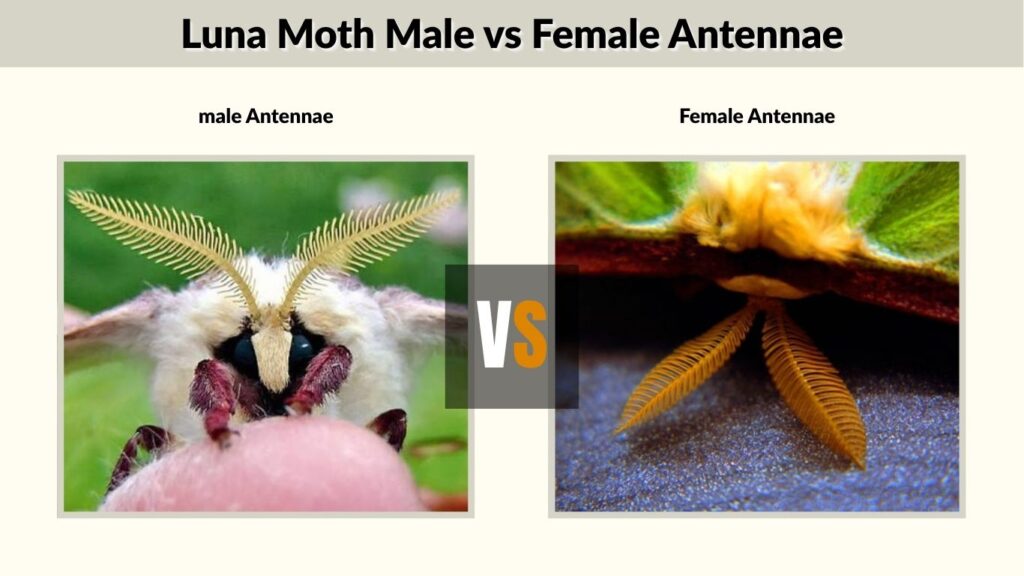
The antennae are the easiest and most dependable way to distinguish a male luna moth from a female. Both sexes have feather-like antennae, but the male’s antennae are noticeably wider and more elaborate.
Male Luna Moth Antennae
Male luna moths have large, deeply feathered antennae that resemble miniature brown or reddish-brown combs. Each antenna contains numerous sensitive branches that help the male detect chemical signals released by females.
A male may locate a female from a considerable distance by following her pheromone trail. His broad antennae allow him to detect even small amounts of these chemicals in the air.
Female Luna Moth Antennae
Female luna moth antennae are thinner, narrower, and less feathery. They may still appear somewhat comb-like, but the branches are much shorter than those of a male.
The female does not need extremely broad antennae because she does not actively search for a mate over long distances. Instead, she releases pheromones and waits for males to locate her.
Differences in Abdomen and Body Shape
The abdomen provides another useful clue when comparing a male and female luna moth. This feature is especially helpful when both moths are viewed from above or from the side.
Male Abdomen
A male luna moth generally has a narrow, slender abdomen. It gradually tapers toward the end and appears relatively small compared with the wings.
The male’s lighter body helps him fly efficiently while searching for females. Males may travel for several nights before successfully finding a mate.
Female Abdomen
A female luna moth has a wider and noticeably fuller abdomen, particularly before she lays her eggs. The abdomen may appear heavy, rounded, or swollen because it contains developing eggs.
After the female deposits many of her eggs, her abdomen becomes slimmer. Therefore, abdomen size may be less obvious in a female that has already completed most of her egg-laying.
Size and Wing Differences
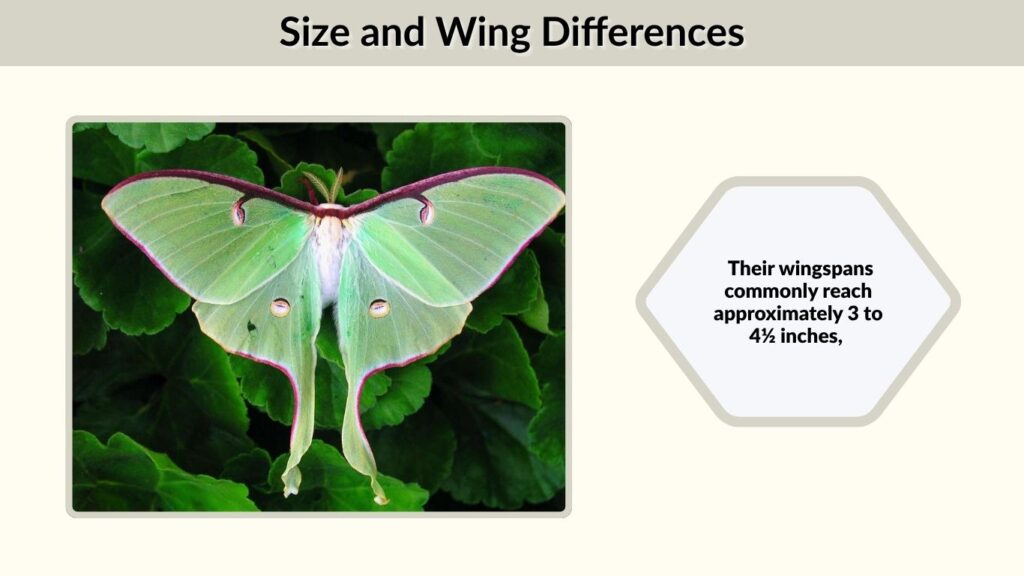
Both male and female luna moths are large insects. Their wingspans commonly reach approximately 3 to 4½ inches, although size can vary according to geographic location, food quality, and individual development.
Is the Female Luna Moth Larger?
Female luna moths often have heavier bodies and may appear larger overall. Their wings can also seem broader because they must support the weight of the egg-filled abdomen.
However, wing size alone is not a reliable way to identify the sex. A large male may have a wider wingspan than a small female. Antennae and abdomen shape should always be examined before relying on size.
Wing Color and Markings
Male and female luna moths generally share the same features:
- Pale green wings
- Long tails extending from the hindwings
- Eyespots on all four wings
- Dark borders along the front edges of the forewings
- Pink, purple, yellow, or brown markings near the wing margins
Some females may appear slightly more bluish-green, while males may occasionally look more yellow-green. However, color varies and should not be used as the primary method of identification.
Behavioral Differences
Male and female luna moths behave differently because they have separate roles during their brief adult lives. Observing their movement can provide helpful identification clues.
Male Behavior
Male luna moths are usually active fliers. After dark, they move through forests and gardens while searching for females. They may fly quickly, change direction frequently, and travel away from the location where they emerged.
Males are sometimes attracted to outdoor lights while searching for mates. A luna moth repeatedly flying around lights or moving actively through an area is more likely to be male, although behavior alone cannot confirm its sex.
Female Behavior
A newly emerged female often remains near her cocoon or resting place. During the night, she releases pheromones from the end of her abdomen to attract nearby males.
After mating, she flies to suitable host trees and lays eggs on leaves. Female luna moths may become more active during the egg-laying period but are generally less persistent fliers than males.
Male and Female Luna Moth Reproduction
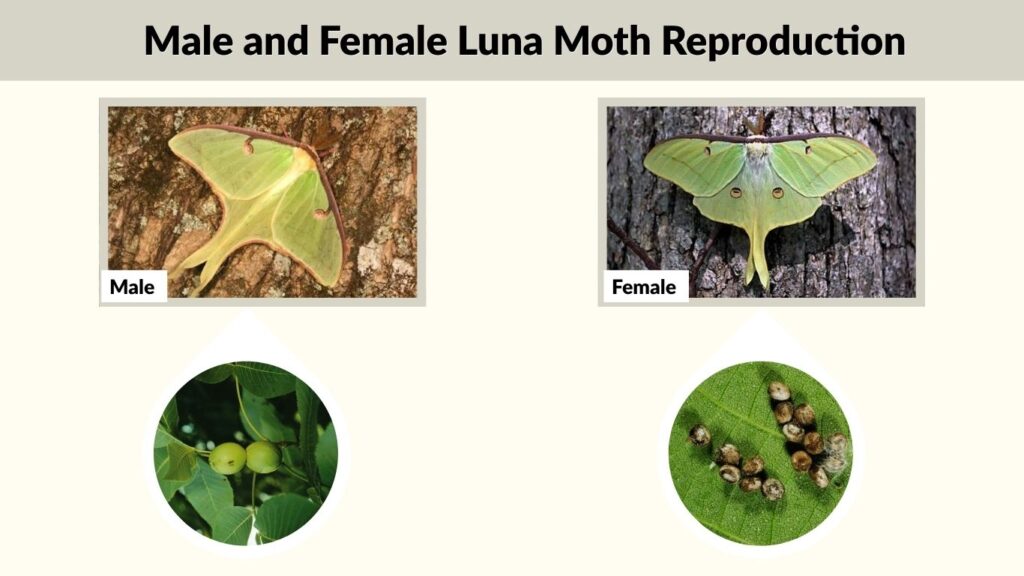
Adult luna moths do not have functional digestive mouthparts. They do not eat and survive entirely on energy stored during the caterpillar stage. Their adult lifespan usually lasts about one week.
How Mating Occurs
A female releases chemical pheromones, usually during the night. A male detects the scent with his large antennae and follows it until he finds her.
The pair may remain connected for several hours. Mating commonly occurs late at night and may continue into the following morning.
Egg-Laying Process
After mating, the female begins laying eggs on the leaves of host plants. One female can produce several hundred eggs, usually placing them individually or in small groups.
Common luna moth host trees include:
- Hickory
- Walnut
- Sweetgum
- Birch
- Persimmon
- Pecan
- Sumac
The eggs typically hatch within about one to two weeks, depending on temperature and environmental conditions.
Male vs Female Luna Moth Caterpillar
Male and female luna moth caterpillars look almost identical. Both are bright green with segmented bodies, small colored spots, and sparse hairs. Their sex cannot usually be determined through ordinary visual inspection.
Young caterpillars pass through several growth stages before becoming mature. During the final stage, they create a silk cocoon wrapped inside fallen leaves.
Although specialists may examine internal or reproductive structures, there is no simple external feature that allows most people to identify a luna moth caterpillar as male or female.
Can You Identify the Sex from the Cocoon?
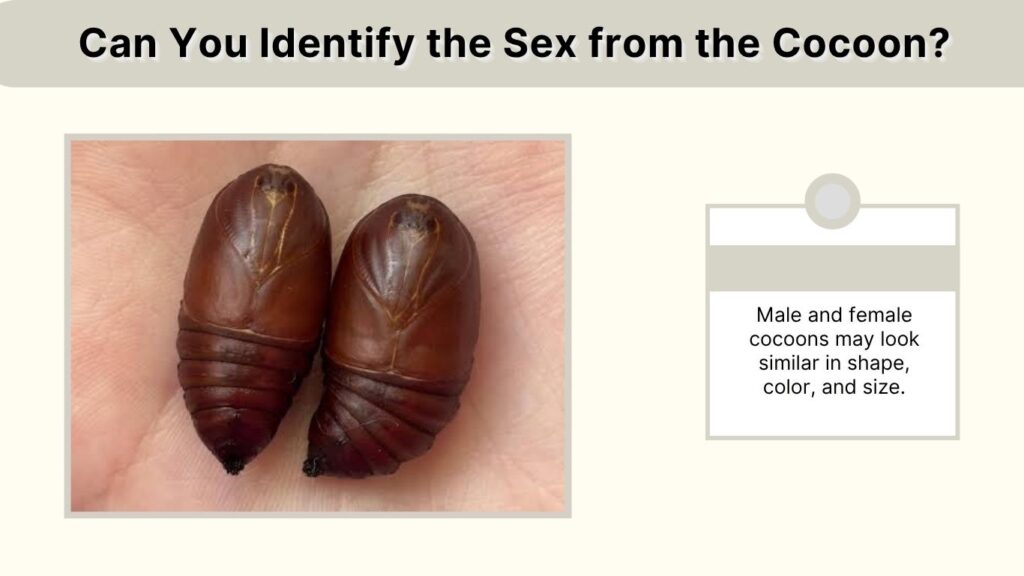
The outside of a luna moth cocoon does not reveal whether the developing moth is male or female. Male and female cocoons may look similar in shape, color, and size.
In some cases, a female pupa may be slightly larger or heavier because adult females develop broader bodies. However, this difference is inconsistent and should not be considered reliable.
Experienced breeders may examine small reproductive openings on the underside of the pupa. This method requires careful handling and knowledge of moth anatomy, so it is not recommended for casual observers.
How to Tell If a Luna Moth Is Male or Female
Begin by examining the antennae. A moth with very broad, bushy antennae is almost certainly male. A moth with thinner antennae and a large, rounded abdomen is usually female.
Use these steps:
- Look at the width of the antennae.
- Check whether the abdomen is slim or swollen.
- Observe whether the moth is actively flying or remaining still.
- Consider whether it is laying eggs.
- Avoid relying only on wing color or total size.
The antennae remain the best identifying feature because they are easy to observe and differ clearly between the sexes.
FAQs
Are male or female luna moths bigger?
Female luna moths usually have larger and heavier bodies because their abdomens contain eggs. Their wings may also appear broader. However, individual size varies, and some males can have large wingspans. Antennae and abdomen shape are more reliable than overall size.
Do male luna moths have bigger antennae?
Yes. Male luna moths have much wider and more heavily feathered antennae than females. These sensitive structures allow males to detect pheromones released by females, helping them locate potential mates during the night.
Can female luna moths fly?
Female luna moths can fly, but they are often less active than males. Newly emerged females may remain near their cocoons while releasing pheromones. After mating, they fly between suitable host trees to deposit their eggs.
Do male and female luna moths have different colors?
Both sexes are normally pale green and have similar eyespots, wing borders, and long hindwing tails. Minor color differences may occur, but they are inconsistent. Color is not considered a dependable way to determine whether a luna moth is male or female.
Can you tell the sex of a luna moth caterpillar?
It is extremely difficult to determine the sex of a luna moth during the caterpillar stage. Male and female caterpillars have nearly identical colors, markings, and body shapes. The differences become clearly visible only after the adult moth emerges.