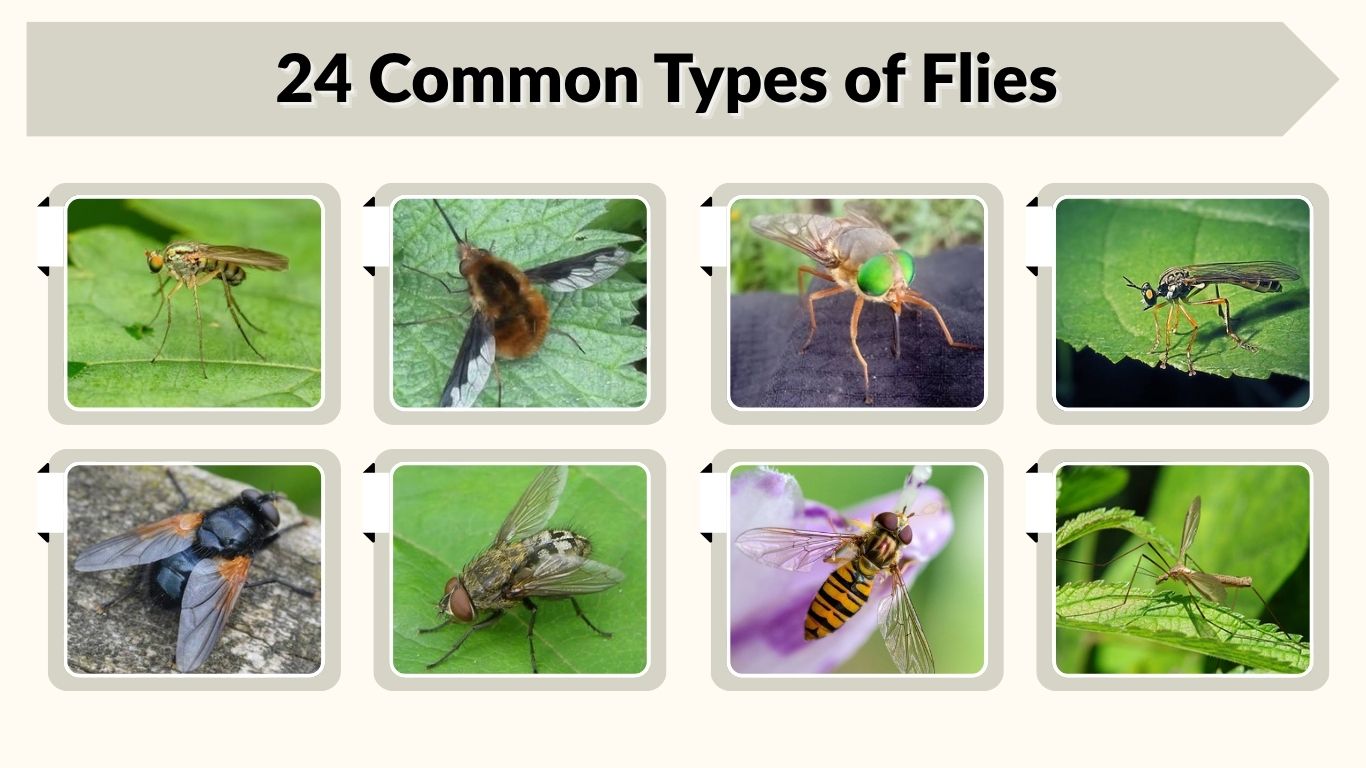
Flies are remarkably diverse insects found in homes, gardens, forests, wetlands, farms, and many other environments. While some species are annoying pests or painful blood feeders, others are valuable pollinators, decomposers, and natural predators of harmful insects. True flies belong to the order Diptera and have only one functional pair of wings. This guide explores 24 common types of flies, including house flies, fruit flies, horse flies, hover flies, robber flies, and fungus gnats. Discover their identifying features, preferred habitats, feeding habits, life cycles, and unique behaviors to make recognizing each type easier.
1. House Fly
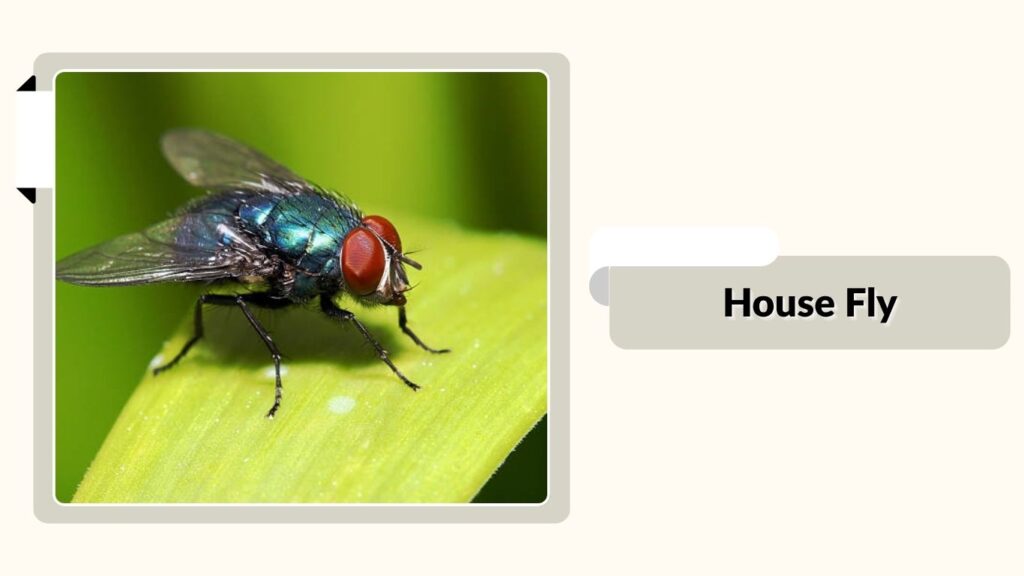
The house fly (Musca domestica) is one of the most common flies found around homes, farms, restaurants, and waste-disposal areas. Although it does not bite, it can spread harmful microorganisms by moving between garbage, animal waste, food, and household surfaces.
Identification
- Adult size: Approximately 6–7 millimeters long
- Body color: Dull gray
- Thorax: Four dark vertical stripes
- Eyes: Large and reddish
- Wings: One transparent pair
- Antennae: Short and bristled
- Mouthparts: Sponge-like and unable to bite
Habitat and Distribution
House flies live throughout most of the world, especially near human settlements. They are commonly found around kitchens, garbage containers, livestock facilities, markets, and food-processing areas. Warm temperatures and readily available waste create ideal conditions for them to reproduce.
Diet and Feeding
These flies consume liquid or softened organic material. They feed on garbage, rotting food, animal waste, sugary liquids, and exposed human food. A house fly releases saliva onto solid material to dissolve it before drawing the liquefied food into its mouth.
Life Cycle and Behavior
The house fly passes through four stages: egg, larva, pupa, and adult. Females lay eggs in manure, garbage, or decaying organic matter. The eggs hatch into pale maggots that feed before becoming pupae. Under warm conditions, the entire life cycle may be completed within one to three weeks.
2. Fruit Fly
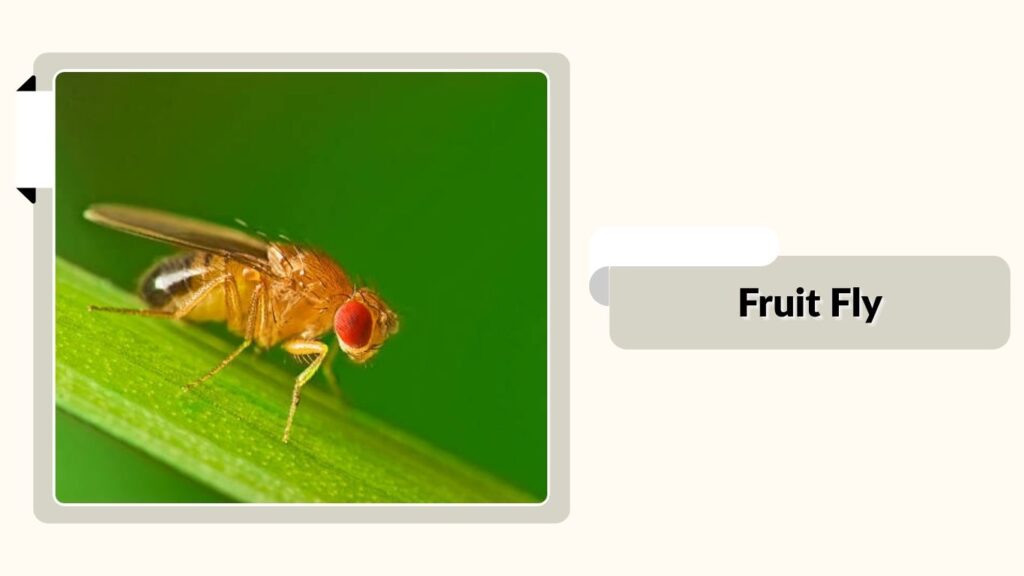
Fruit flies are tiny insects commonly found around ripe or fermenting fruits, vegetables, drains, and food waste. The common fruit fly (Drosophila melanogaster) is especially attracted to sugary liquids and decaying organic material. These flies do not bite, but they can quickly become a household nuisance.
Identification
- Adult size: Approximately 3–4 millimeters long
- Body color: Yellowish-brown or tan
- Eyes: Usually bright red
- Abdomen: Dark horizontal bands
- Wings: Clear and relatively short
- Movement: Slow, hovering flight near food
Habitat and Distribution
Fruit flies occur worldwide and thrive in warm environments where fermenting material is available. They are common in kitchens, restaurants, grocery stores, orchards, breweries, and compost areas. Indoors, they often gather near fruit bowls, recycling containers, drains, and open bottles.
Diet and Feeding
Adult fruit flies feed on yeasts and microorganisms growing on overripe fruit and other fermenting substances. They also consume spilled juice, wine, vinegar, soda, and sugary residue. Their larvae develop within moist, decaying plant material where suitable microbes are abundant.
Life Cycle and Behavior
Females lay hundreds of eggs on fermenting food. The eggs hatch into small larvae that feed before forming pupae. Under warm conditions, fruit flies can complete their life cycle in approximately eight to ten days, allowing infestations to grow rapidly.
3. Blow Fly
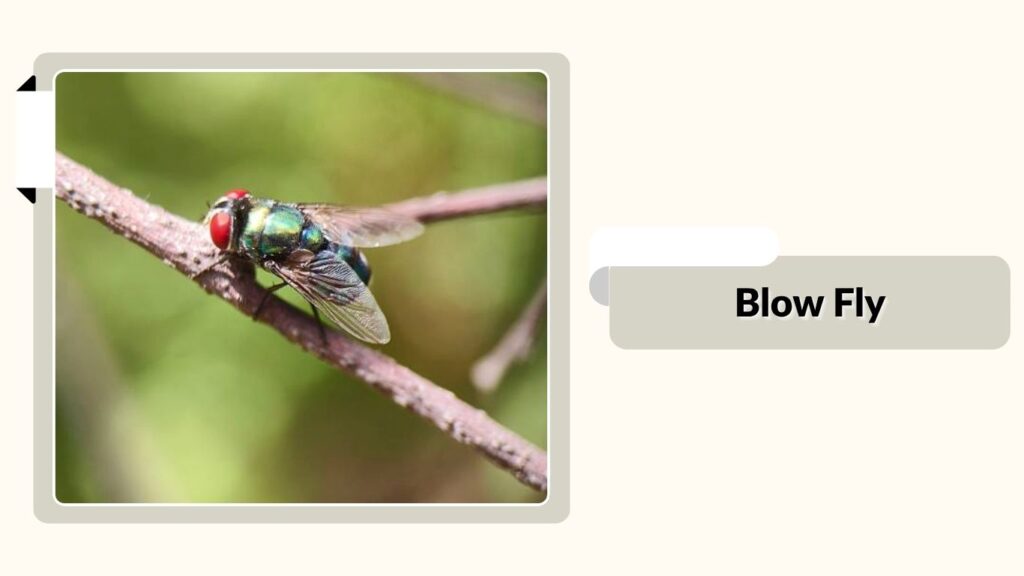
Blow flies belong to the family Calliphoridae and are known for their shiny bodies and loud buzzing flight. They commonly visit dead animals, garbage, feces, and other decomposing substances. Their presence indoors can sometimes indicate a hidden animal carcass or another source of decaying organic material.
Identification
- Adult size: Approximately 8–14 millimeters long
- Body color: Metallic blue, green, bronze, or black
- Eyes: Large and reddish
- Body: Stout with visible bristles
- Wings: Clear with dark veins
- Flight: Fast and noisy
Habitat and Distribution
Blow flies are widely distributed and occupy urban, rural, woodland, and agricultural environments. They are frequently seen around garbage containers, slaughterhouses, animal facilities, carrion, and pet waste. Adults may enter buildings through open doors, windows, or damaged screens.
Diet and Feeding
Adults feed on nectar, sugary liquids, animal waste, and fluids from decomposing tissue. Females seek protein-rich material where their offspring can develop. Despite their association with decay, some species help pollinate flowers while searching for nectar.
Life Cycle and Behavior
Females lay eggs on carrion, wounds, meat, or animal waste. The larvae, called maggots, consume the surrounding organic material. After feeding, they move to a dry location and pupate. Development can occur quickly in warm weather, sometimes taking only a few weeks.
4. Bottle Fly
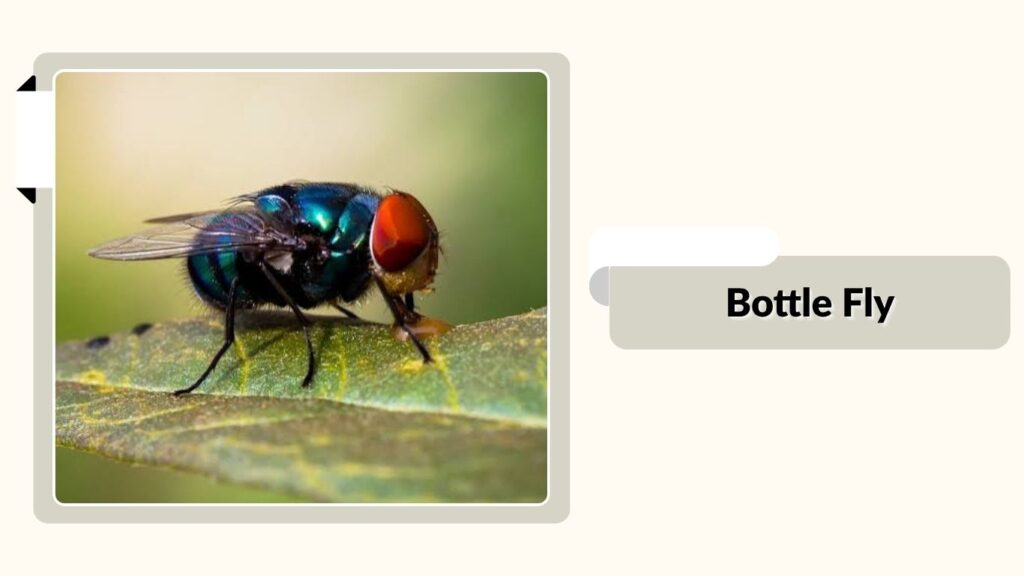
Bottle flies are metallic-colored members of the blow fly family. Green bottle flies and blue bottle flies are among the most recognizable varieties. They are important natural decomposers, but their habit of visiting waste and carrion means they may carry microorganisms onto food and household surfaces.
Identification
- Adult size: Approximately 8–12 millimeters long
- Body color: Metallic green, blue, or bluish-purple
- Eyes: Large and usually red
- Body shape: Rounded and robust
- Wings: Transparent with visible veins
- Sound: Noticeable buzzing during flight
Habitat and Distribution
Bottle flies occur in many regions worldwide. They are commonly found near garbage, manure, dead animals, outdoor markets, and food waste. They may enter homes when attracted by strong odors. Numerous bottle flies indoors can suggest a dead rodent or another concealed breeding source.
Diet and Feeding
Adult bottle flies consume nectar, sugary substances, animal fluids, and liquids released by decomposing organic matter. Their larvae mainly feed on dead tissue and waste. Adults may contaminate exposed food after landing on unsanitary materials.
Life Cycle and Behavior
Female bottle flies lay clusters of pale eggs on carrion, meat, garbage, or infected wounds. The eggs hatch into maggots that feed rapidly before moving away to pupate. Their development is strongly influenced by temperature and food availability. In warm conditions, a generation may be completed within several weeks.
5. Flesh Fly
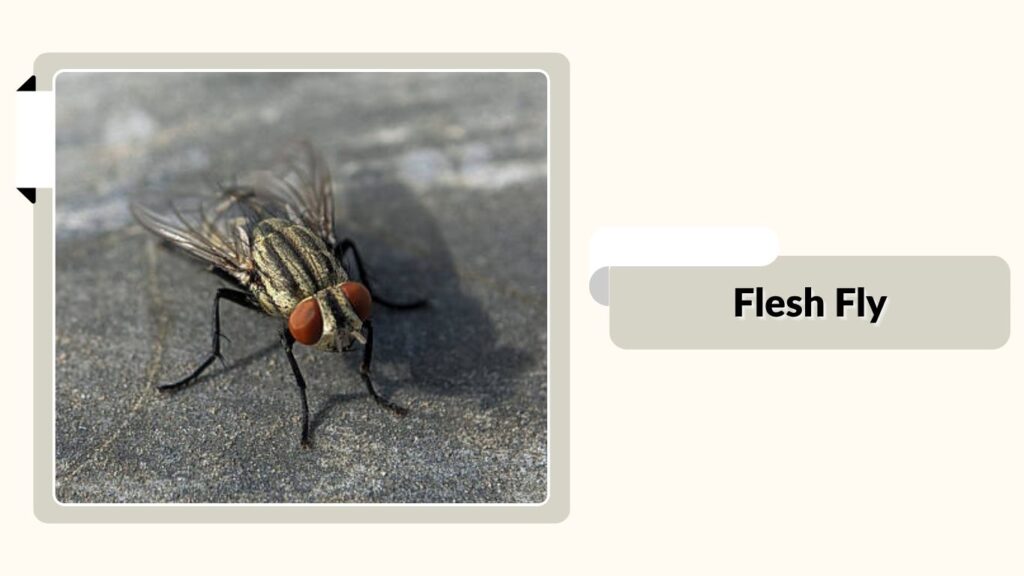
Flesh flies belong to the family Sarcophagidae and are commonly associated with carrion, animal waste, and decaying organic matter. Most have gray bodies with dark stripes and a checkered abdomen. They rarely cause indoor infestations, but their presence may indicate nearby decomposing material.
Identification
- Adult size: Approximately 8–14 millimeters long
- Body color: Gray or dark gray
- Thorax: Three dark lengthwise stripes
- Abdomen: Black-and-gray checkered pattern
- Eyes: Large and usually red
- Body: Stout and covered with bristles
Habitat and Distribution
Flesh flies are found worldwide in urban, rural, and natural environments. They commonly live around garbage, manure, compost, animal carcasses, and outdoor toilets. Adults may also visit flowers or enter buildings while searching for suitable breeding material.
Diet and Feeding
Adults consume nectar, sugary fluids, animal waste, and liquids from decaying tissue. Depending on the species, larvae may feed on carrion, dung, rotting vegetation, or living invertebrates. Some species are parasites of snails, insects, and other small animals.
Life Cycle and Behavior
Unlike many flies, most flesh flies deposit live larvae instead of laying exposed eggs. The larvae begin feeding immediately after being placed on suitable material. They later move into dry soil or sheltered areas to pupate. Warm conditions can accelerate their development considerably.
6. Horse Fly
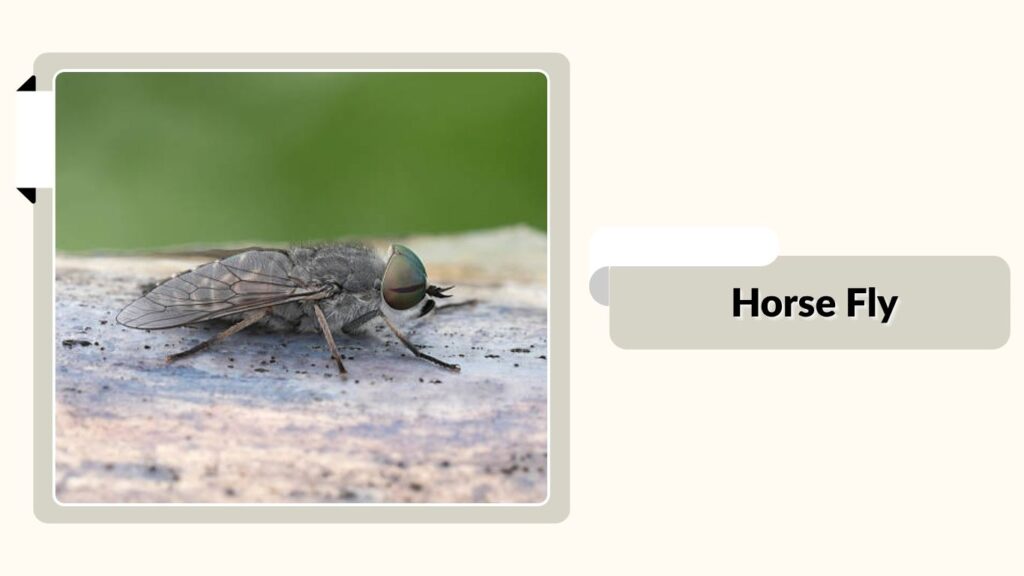
Horse flies are large, powerful insects belonging to the family Tabanidae. Females are known for delivering painful bites to livestock, wildlife, and people because they require blood to develop their eggs. Males do not bite and primarily consume nectar and other plant-based liquids.
Identification
- Adult size: Approximately 10–30 millimeters long
- Body: Broad, sturdy, and dark-colored
- Eyes: Very large and often brightly patterned
- Wings: Clear, smoky, or slightly patterned
- Antennae: Short and pointed
- Mouthparts: Blade-like in females
Habitat and Distribution
Horse flies occur worldwide except in extremely cold regions. They are especially common near ponds, marshes, streams, forests, farms, and pastures. Adults are most active during warm, sunny weather and often target animals near water or open fields.
Diet and Feeding
Female horse flies use sharp mouthparts to cut the skin and drink the resulting blood. Their bites can be painful and may continue bleeding briefly. Males feed on flower nectar and plant juices. Females also consume nectar when they are not seeking blood.
Life Cycle and Behavior
Females lay egg masses on vegetation near water or damp soil. After hatching, the larvae drop into wet environments, where they prey on small invertebrates. The larval stage can last several months or longer before pupation occurs in drier soil.
7. Deer Fly
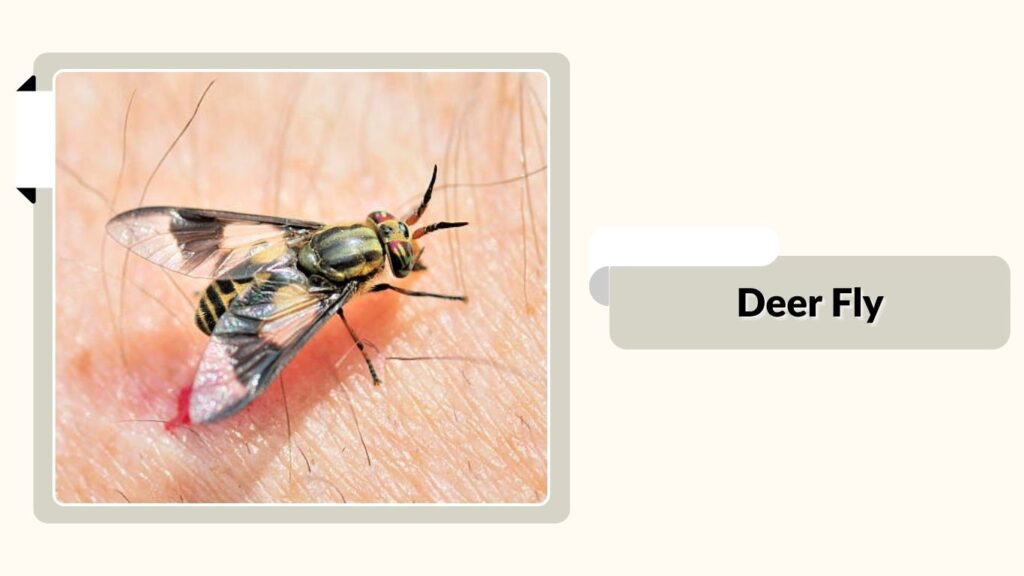
Deer flies are medium-sized biting flies closely related to horse flies. Female deer flies feed on the blood of mammals, including deer, livestock, pets, and humans. Their persistent behavior, rapid flight, and painful bites make them troublesome around wetlands, forests, and outdoor recreational areas.
Identification
- Adult size: Approximately 6–12 millimeters long
- Body color: Yellow, brown, or dark gray
- Wings: Distinctive dark bands or patches
- Eyes: Large, colorful, and patterned
- Antennae: Short and prominent
- Abdomen: Often marked with yellow or orange
Habitat and Distribution
Deer flies commonly inhabit moist woodlands, marshes, swamps, lake edges, and areas near streams. They are most abundant during warm months and are active in daylight. Hikers, campers, anglers, and people working near wetlands frequently encounter them.
Diet and Feeding
Females cut the skin with sharp mouthparts and consume pooled blood. The bite is immediately painful and may cause redness, swelling, or itching. Male deer flies feed on nectar, pollen, and plant fluids. Females also use plant sugars for energy.
Life Cycle and Behavior
Females attach egg masses to vegetation overhanging water or wet ground. The larvae develop in mud or shallow water and prey on small organisms. Adult deer flies often circle a person’s head before landing, and they may repeatedly pursue moving targets.
8. Stable Fly
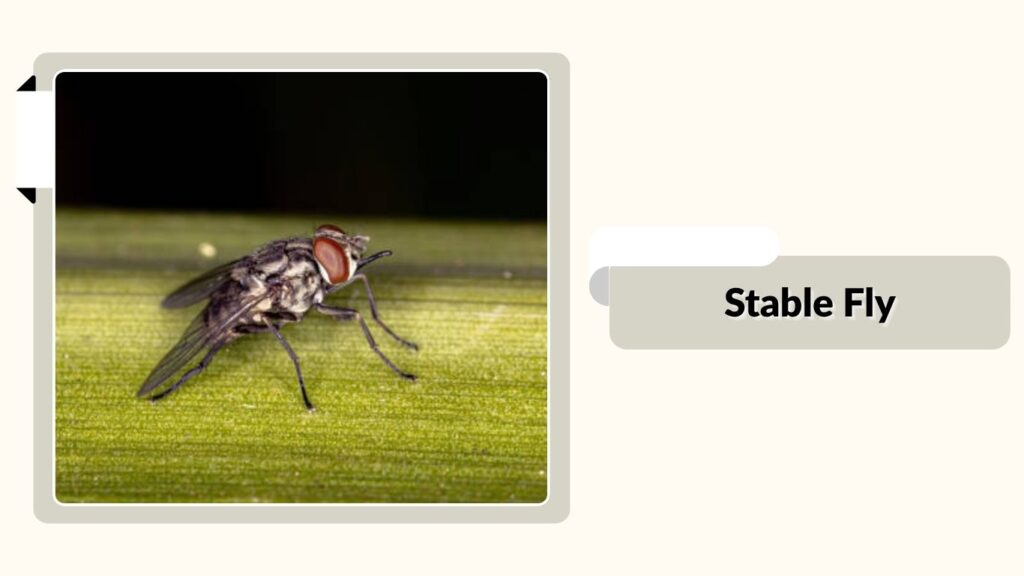
The stable fly (Stomoxys calcitrans) resembles a common house fly but has piercing mouthparts and feeds on blood. Both males and females bite humans and animals. They are serious pests around farms, stables, beaches, kennels, and other places where damp organic waste accumulates.
Identification
- Adult size: Approximately 5–8 millimeters long
- Body color: Gray
- Thorax: Four dark lengthwise stripes
- Abdomen: Several dark, rounded spots
- Mouthpart: Stiff, forward-pointing proboscis
- Appearance: Similar to a house fly
Habitat and Distribution
Stable flies are widely distributed and commonly occur near livestock facilities, barns, feedlots, kennels, and coastal areas. They breed in wet straw, manure mixed with bedding, rotting vegetation, grass clippings, and other moist organic debris.
Diet and Feeding
Both sexes feed on the blood of mammals. They frequently bite the lower legs and ankles of people and target the legs, belly, and ears of livestock. Stable fly bites feel sharp and may leave itchy, irritated marks.
Life Cycle and Behavior
Females lay eggs in damp, decomposing plant material mixed with animal waste. The larvae feed within this organic matter before pupating in drier areas. Adults are active during daylight and often rest on fences, walls, and vegetation between blood meals.
9. Crane Fly
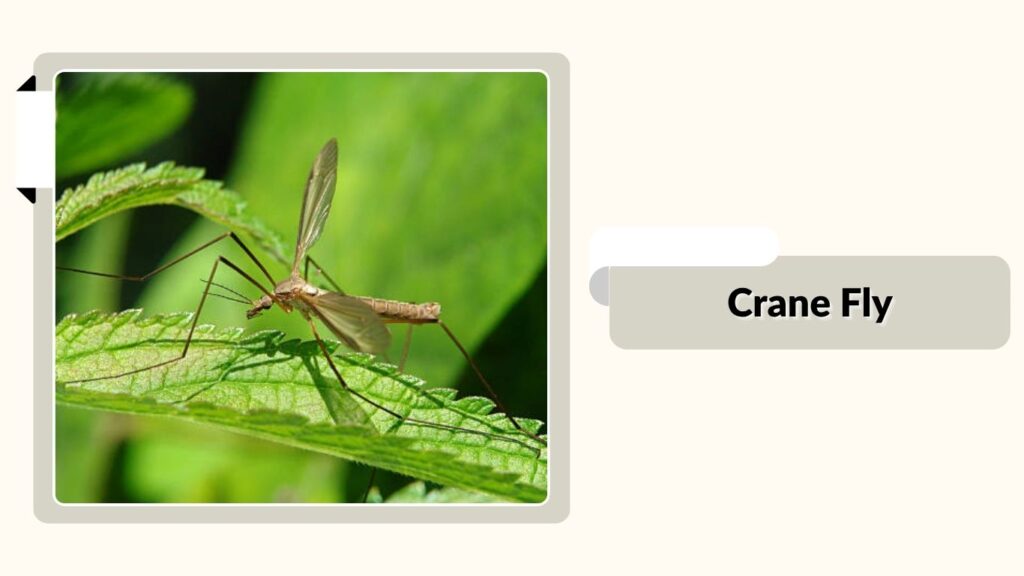
Crane flies are slender, long-legged insects belonging to the family Tipulidae and related families. They are sometimes called “mosquito hawks,” but they neither hunt mosquitoes nor bite people. Their fragile bodies and awkward flight often cause them to enter homes accidentally.
Identification
- Adult size: Approximately 10–35 millimeters long
- Body: Narrow and delicate
- Legs: Extremely long and easily detached
- Wings: One clear or patterned pair
- Antennae: Slender and segmented
- Appearance: Similar to an oversized mosquito
Habitat and Distribution
Crane flies inhabit moist environments such as wetlands, gardens, forests, stream banks, and grassy fields. Adults are often attracted to outdoor lights and may fly through open windows or doors. They are especially noticeable during humid spring or autumn evenings.
Diet and Feeding
Many adult crane flies eat little or nothing because they live for only a short period. Species that feed may consume nectar, pollen, or water. Their larvae generally eat decaying vegetation, algae, roots, or microorganisms in soil and aquatic habitats.
Life Cycle and Behavior
Females deposit eggs in moist soil, water, or decaying plant material. The thick-skinned larvae are commonly called leatherjackets. Most help break down organic matter, although some species may damage lawns by feeding on grass roots. Adults focus mainly on mating and reproduction.
10. Drain Fly
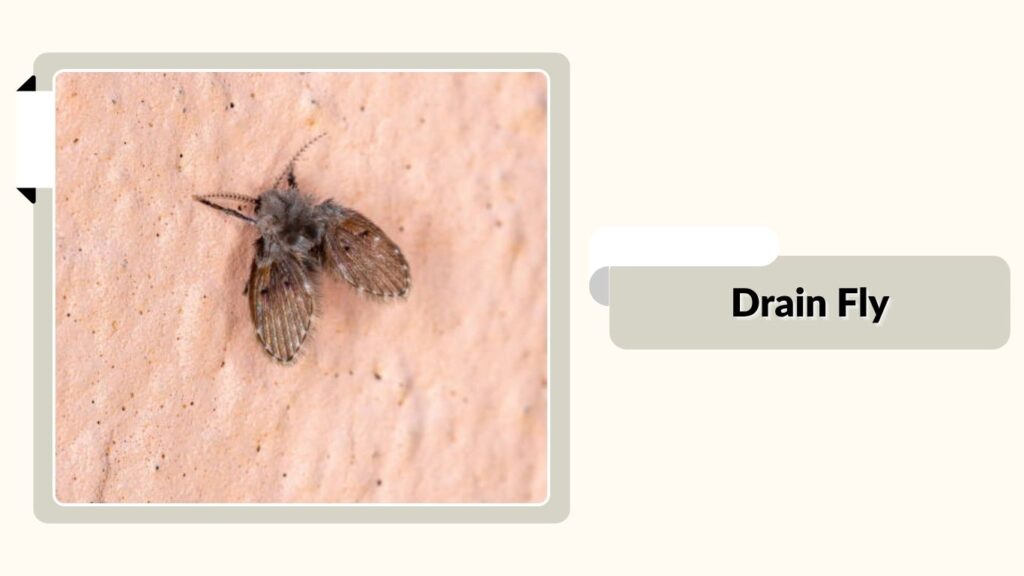
Drain flies are tiny, moth-like insects commonly found around sinks, showers, floor drains, and sewage systems. They belong to the family Psychodidae and are also called moth flies or sewer flies. Although they do not usually bite, large numbers can become an unpleasant indoor nuisance.
Identification
- Adult size: Approximately 2–5 millimeters long
- Body color: Gray, brown, or black
- Wings: Broad, hairy, and leaf-shaped
- Body: Covered with fine hairs
- Antennae: Long and segmented
- Flight: Weak and irregular
Habitat and Distribution
Drain flies thrive in moist locations containing slimy organic buildup. Indoors, they commonly breed inside drains, sewage pipes, sump pits, and rarely used toilets. Outdoors, they may develop in standing water, wet compost, and decaying vegetation.
Diet and Feeding
Adults consume nectar, contaminated water, and other sugary liquids. Their larvae feed on bacteria, fungi, algae, and decomposing organic material within the gelatinous film lining drains. Cleaning away this buildup removes their primary food and breeding source.
Life Cycle and Behavior
Females lay clusters of eggs in moist organic residue. The larvae hatch and remain in the slime until they pupate. Development may take one to three weeks under favorable conditions. Adults usually rest on nearby walls with their hairy wings held over their bodies.
11. Cluster Fly
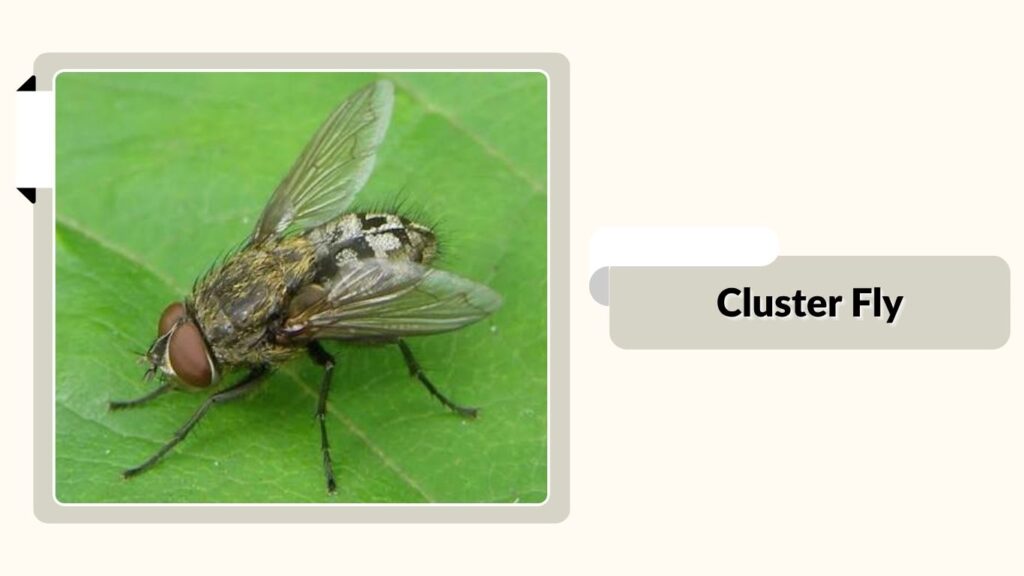
Cluster flies are slow-moving household pests that often gather inside buildings during autumn and winter. The common cluster fly (Pollenia rudis) resembles a large house fly but behaves differently. It does not reproduce in garbage or contaminate food as readily as many other flies.
Identification
- Adult size: Approximately 7–10 millimeters long
- Body color: Dark gray
- Thorax: Covered with short golden hairs
- Abdomen: Dark with a checkered pattern
- Wings: Overlap while resting
- Movement: Slow and sluggish
Habitat and Distribution
Cluster flies spend warm months outdoors in fields, gardens, and lawns. As temperatures fall, they enter buildings through cracks around windows, roofs, siding, and utility openings. They gather in wall spaces, attics, and other protected areas.
Diet and Feeding
Adult cluster flies feed primarily on nectar, plant sap, fruit juices, and other sugary substances. Their larvae do not consume household waste. Instead, they live as parasites inside earthworms, eventually killing their hosts before pupating in the soil.
Life Cycle and Behavior
Females lay eggs in soil near earthworm habitats. The larvae locate and enter earthworms to complete their development. Adults become especially noticeable on warm winter days when they leave hiding places and gather around sunny windows while attempting to escape outdoors.
12. Black Fly
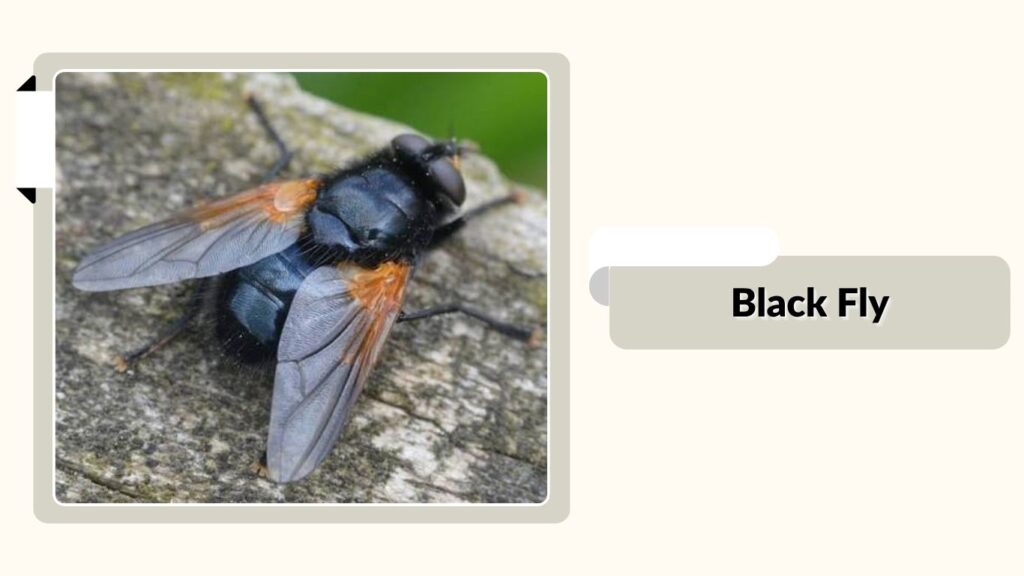
Black flies are small, humpbacked insects belonging to the family Simuliidae. Females of many species bite humans, livestock, birds, and wildlife to obtain blood for egg production. They are also called buffalo gnats because of their compact bodies and arched thoraxes.
Identification
- Adult size: Approximately 2–6 millimeters long
- Body color: Black, gray, brown, or yellowish
- Thorax: Distinctively rounded or humpbacked
- Wings: Broad, clear, and short
- Antennae: Short and segmented
- Legs: Stout compared with mosquitoes
Habitat and Distribution
Black flies develop near clean, flowing water, including rivers, creeks, and streams. Adults may travel several miles from breeding areas. They are most active during daylight and can become abundant in rural, forested, or mountainous regions during warmer months.
Diet and Feeding
Males and non-biting females feed on flower nectar. Blood-feeding females cut the skin and consume the pooled blood. Bites often occur around the head, neck, ears, and exposed limbs, producing painful swelling, redness, or itching in sensitive individuals.
Life Cycle and Behavior
Females lay eggs on submerged rocks, vegetation, or directly in flowing water. Aquatic larvae attach themselves to surfaces and filter small food particles from the current. After pupating underwater, adults emerge inside air bubbles and fly away from the stream.
13. Sand Fly
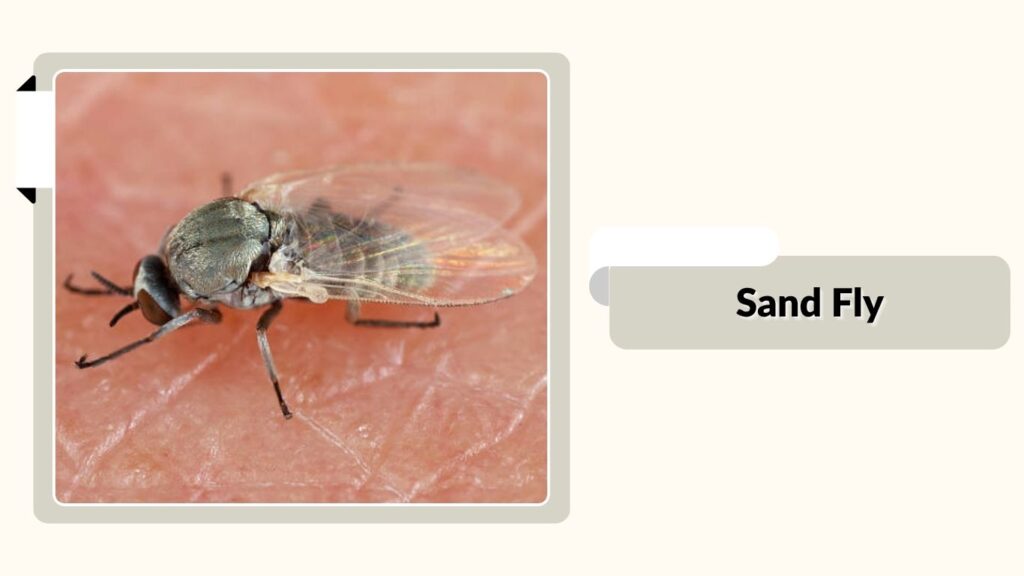
Sand flies are extremely small, delicate insects found mainly in warm tropical, subtropical, and Mediterranean regions. Females of many species take blood meals from humans and animals. Despite their name, they are not restricted to sandy environments and often occupy humid, sheltered habitats.
Identification
- Adult size: Approximately 1.5–4 millimeters long
- Body color: Pale yellow, tan, or light brown
- Body: Covered with fine hairs
- Wings: Hairy and held upright in a V-shape
- Legs: Long and slender
- Flight: Short, quiet, and hopping
Habitat and Distribution
Sand flies usually rest in dark, humid places such as animal shelters, caves, tree holes, cracks, burrows, and dense vegetation. They are most active between dusk and dawn and generally remain close to their breeding and resting sites.
Diet and Feeding
Both sexes feed on plant sugars and nectar. Females also require blood to produce eggs and may bite humans, dogs, rodents, birds, or reptiles. Their bites can cause small, itchy bumps and may transmit disease-causing organisms in certain regions.
Life Cycle and Behavior
Females deposit eggs in damp soil or sheltered places rich in decaying organic matter. The larvae feed on fungi, microorganisms, and decomposing plant material. Unlike mosquito larvae, they do not develop in open water. Adults are weak fliers and usually travel short distances.
14. Tsetse Fly
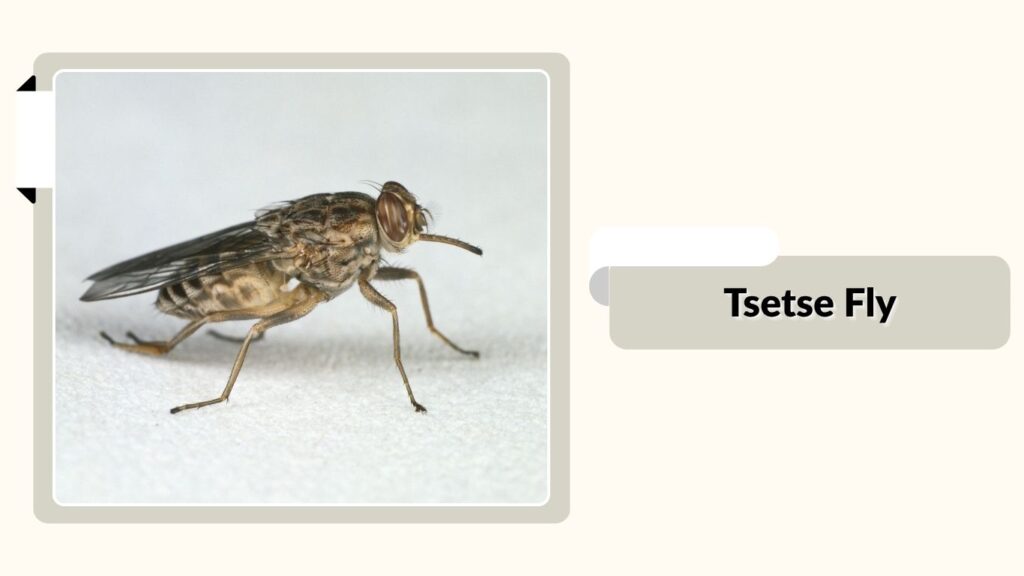
Tsetse flies belong to the genus Glossina and occur only in sub-Saharan Africa. Both males and females feed on blood and can transmit parasites responsible for African trypanosomiasis. They are strong, persistent flies that depend heavily on warm habitats and suitable animal hosts.
Identification
- Adult size: Approximately 6–15 millimeters long
- Body color: Yellowish-brown, gray, or dark brown
- Wings: Fold directly over each other when resting
- Proboscis: Long and forward-pointing
- Abdomen: Clearly segmented
- Wing marking: Distinctive hatchet-shaped cell
Habitat and Distribution
Different tsetse species inhabit forests, woodlands, riverbanks, savannas, and areas with dense vegetation. Their distribution is limited to parts of sub-Saharan Africa. Adults seek shaded resting locations when temperatures become too hot.
Diet and Feeding
Male and female tsetse flies survive entirely on blood obtained from humans, livestock, and wild animals. Their piercing proboscis allows them to draw blood directly from vessels. Bites can be painful and may cause temporary swelling or irritation.
Life Cycle and Behavior
Tsetse flies have an unusual reproductive system. Rather than laying many eggs, a female nourishes a single larva inside her body and deposits it when fully developed. The larva quickly burrows into soil, forms a pupa, and later emerges as an adult.
15. Bot Fly
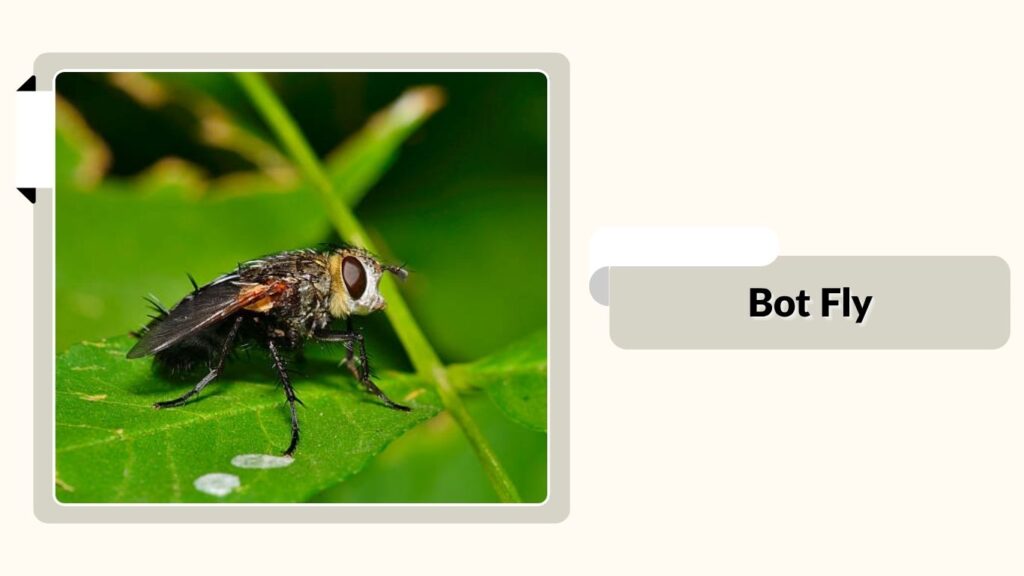
Bot flies are robust, hairy flies whose larvae develop as internal parasites of mammals. Different species target horses, cattle, rodents, rabbits, deer, or humans. Adult bot flies are rarely seen because they live briefly and spend most of their time searching for mates or suitable hosts.
Identification
- Adult size: Approximately 10–25 millimeters long
- Body: Thick, rounded, and hairy
- Color: Brown, black, yellow, or orange
- Appearance: Often resembles a bumblebee
- Wings: Clear or lightly colored
- Mouthparts: Reduced or nonfunctional
Habitat and Distribution
Bot flies occur in many parts of the world, particularly where their preferred mammal hosts live. Adults may be encountered around farms, forests, grasslands, and livestock facilities. Human-infesting species are most strongly associated with tropical areas of Central and South America.
Diet and Feeding
Adult bot flies generally do not feed because they rely on energy stored from their larval stage. Their larvae obtain nutrients from the tissues, digestive systems, or nasal passages of their hosts. The exact feeding location varies depending on the species.
Life Cycle and Behavior
Females place eggs directly on a host or attach them to another insect. After entering the host, the larvae develop beneath the skin or inside body cavities. Mature larvae eventually leave the host, fall to the ground, and pupate in soil.
16. Hover Fly
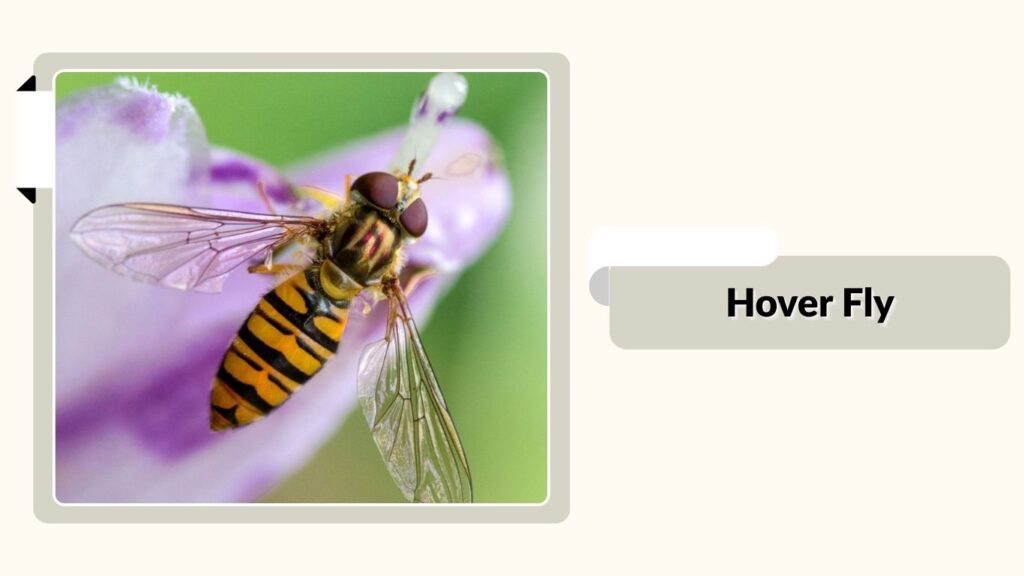
Hover flies belong to the family Syrphidae and are named for their ability to remain almost motionless in the air. Many have yellow-and-black markings that resemble bees or wasps, but they cannot sting. They are valuable pollinators, and the larvae of some species control garden pests.
Identification
- Adult size: Approximately 4–25 millimeters long
- Color: Commonly yellow and black
- Wings: One functional pair
- Eyes: Large and prominent
- Flight: Fast with excellent hovering ability
- Antennae: Usually short
Habitat and Distribution
Hover flies occur worldwide and occupy gardens, meadows, forests, wetlands, farms, and urban parks. Adults are commonly seen hovering near flowers during warm, sunny weather. Their appearance varies greatly because the family contains thousands of species.
Diet and Feeding
Adults primarily consume nectar and pollen, making them important pollinators of wildflowers and crops. The larvae have diverse diets. Many prey on aphids, scale insects, and other soft-bodied pests, while others consume decaying organic matter or live in stagnant water.
Life Cycle and Behavior
Females usually lay eggs near suitable larval food. Predatory larvae immediately search for aphids after hatching. Once fully grown, they pupate on leaves, stems, or nearby surfaces. Their bee-like appearance discourages predators even though hover flies are harmless.
17. Robber Fly
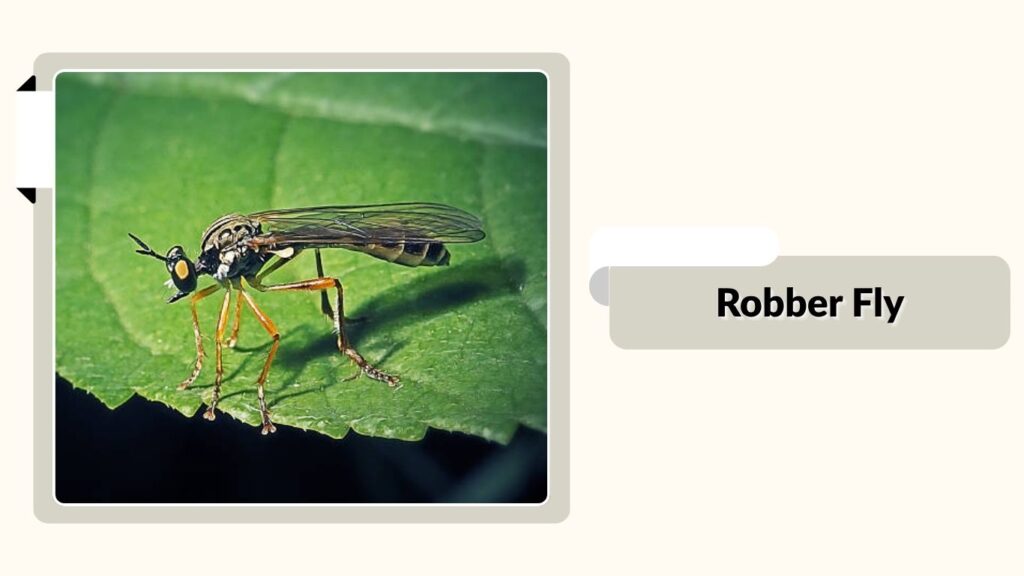
Robber flies are powerful aerial predators belonging to the family Asilidae. They capture other insects in flight and use a sharp proboscis to inject saliva that immobilizes and digests their prey. Although intimidating in appearance, they rarely bite humans unless caught or handled roughly.
Identification
- Adult size: Approximately 5–40 millimeters long
- Body: Slender or strongly built
- Face: Distinctive bristly “beard”
- Legs: Long, strong, and spiny
- Proboscis: Short, rigid, and pointed
- Eyes: Large with a hollow space between them
Habitat and Distribution
Robber flies inhabit nearly every region except Antarctica. They are especially common in sunny, open environments such as grasslands, deserts, woodland edges, gardens, and agricultural fields. Adults frequently rest on exposed branches, rocks, fences, or bare ground.
Diet and Feeding
Adult robber flies hunt flies, beetles, grasshoppers, wasps, bees, and other insects. They seize prey with their legs before piercing it with the proboscis. Their larvae live in soil or decaying wood and prey on other insect larvae.
Life Cycle and Behavior
Females lay eggs in soil, bark, wood, or plant crevices. Larvae develop slowly and may remain underground for one to three years. Adults watch from a perch, launch rapidly toward passing prey, and often return to the same location to feed.
18. Soldier Fly
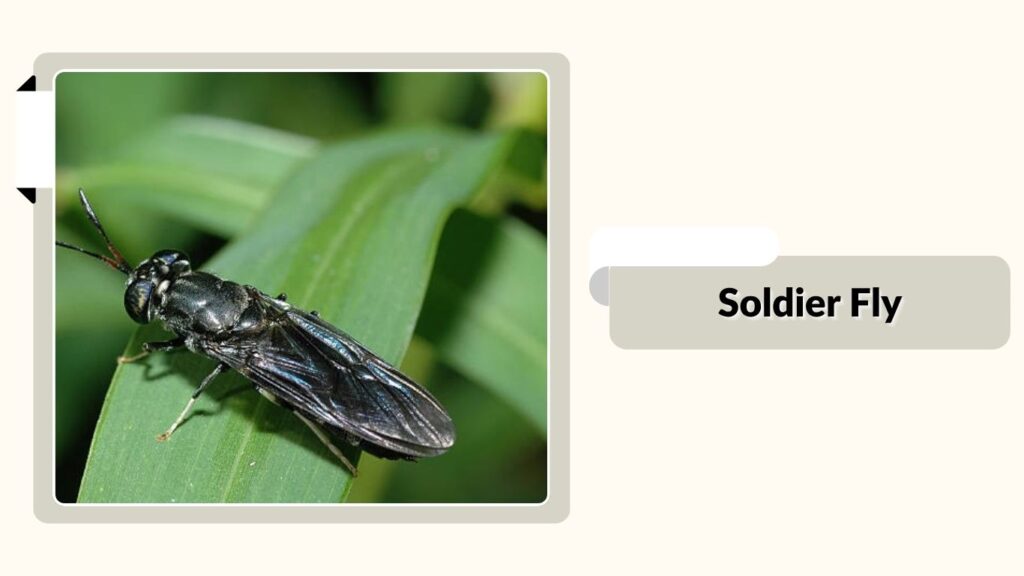
Soldier flies belong to the family Stratiomyidae and include many species with wasp-like shapes and markings. Despite their appearance, they neither sting nor normally bite. Their larvae are important decomposers, consuming decaying material and helping return nutrients to the environment.
Identification
- Adult size: Approximately 5–20 millimeters long
- Body: Flattened or elongated
- Color: Black, green, yellow, or metallic
- Markings: Frequently resemble those of wasps
- Wings: Folded over the abdomen when resting
- Antennae: Variable in length and shape
Habitat and Distribution
Soldier flies are found worldwide in forests, wetlands, gardens, farms, and areas containing decomposing organic matter. Adults are often seen resting on vegetation or visiting flowers. The black soldier fly is especially common around compost piles and livestock operations.
Diet and Feeding
Adults usually feed on nectar and pollen, although certain species eat very little. Their larvae consume manure, food scraps, compost, carrion, algae, or other decaying material. Black soldier fly larvae are sometimes raised commercially to process waste and produce animal feed.
Life Cycle and Behavior
Females lay eggs close to suitable larval food rather than directly on it. After feeding and growing, mature larvae move toward a dry, protected location to pupate. Adults live briefly, focusing primarily on mating and laying eggs rather than feeding.
19. Fungus Gnat
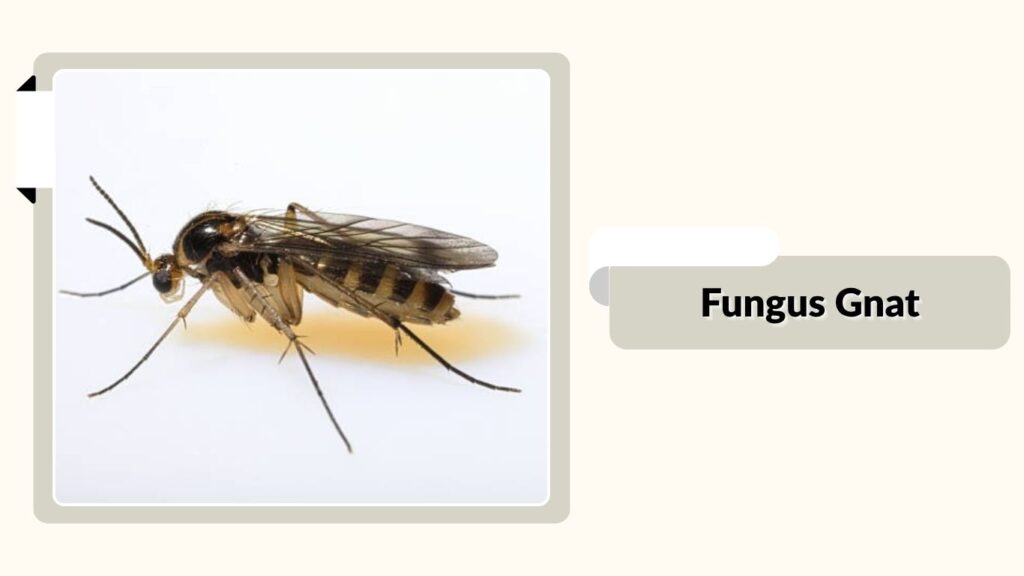
Fungus gnats are tiny, delicate flies frequently noticed around indoor plants, greenhouses, and damp soil. Most belong to the family Sciaridae. Adults are mostly harmless, but large populations of larvae may damage young roots, seedlings, and cuttings, particularly in consistently wet potting soil.
Identification
- Adult size: Approximately 2–5 millimeters long
- Body color: Gray, dark brown, or black
- Legs: Long and slender
- Antennae: Thin and relatively long
- Wings: Clear or smoky
- Appearance: Resembles a tiny mosquito
Habitat and Distribution
Fungus gnats live in moist, shaded places containing fungi and decaying vegetation. Indoors, they breed in overwatered plant containers and poorly drained potting mixes. Adults commonly gather near windows, lights, or the surface of damp soil.
Diet and Feeding
Adults consume little and may drink water or nectar. Their pale larvae feed primarily on fungi, algae, root hairs, and decomposing plant matter. When populations become large, they may chew healthy roots and weaken vulnerable seedlings or young plants.
Life Cycle and Behavior
Females deposit tiny eggs in moist soil. The transparent, black-headed larvae feed for about two weeks before pupating near the surface. Adults are weak fliers and usually remain close to plants. Allowing the upper soil layer to dry helps interrupt their development.
20. March Fly
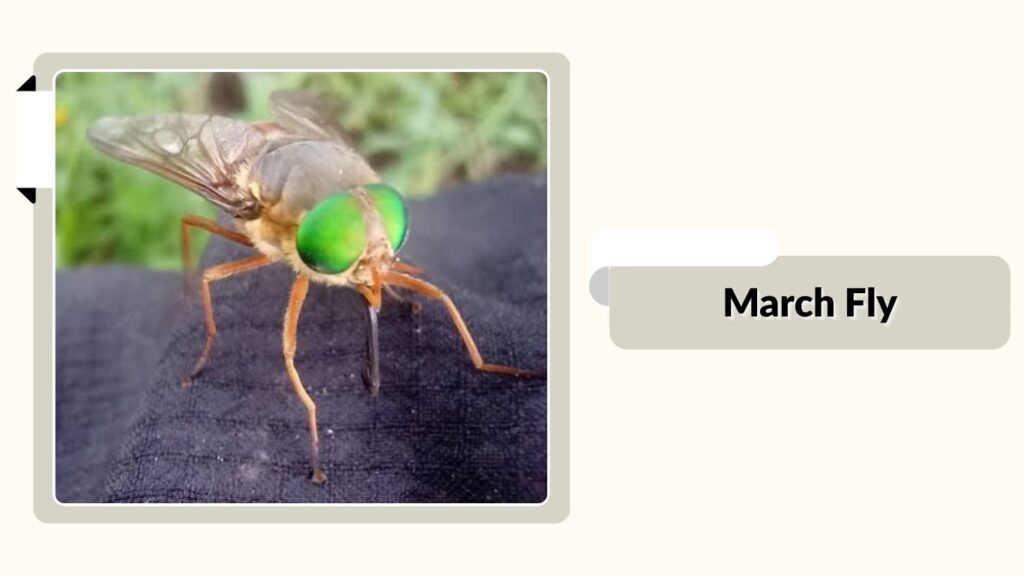
March flies belong mainly to the family Bibionidae and often appear in large numbers during spring. They are dark, slow-flying insects commonly seen around vegetation and flowers. Adults are generally harmless, while their larvae help decompose plant material and enrich the soil.
Identification
- Adult size: Approximately 5–15 millimeters long
- Body color: Black, brown, or reddish
- Body: Thick and somewhat hairy
- Legs: Strong and often spiny
- Wings: Clear or smoky
- Eyes: Usually larger in males
Habitat and Distribution
March flies live in gardens, grasslands, woodlands, farmland, and other places containing moist soil. Adults may gather in large mating swarms over vegetation, walking paths, or open fields. Some species are known as lovebugs because mating pairs remain attached during flight.
Diet and Feeding
Adults commonly consume nectar, pollen, or other plant liquids. Their larvae live in soil, leaf litter, compost, manure, and decaying vegetation. Most larvae feed on decomposing organic matter, fungi, and plant roots.
Life Cycle and Behavior
Females lay eggs in moist soil or rotting plant material. The larvae often live together in large groups before pupating underground. Adults emerge seasonally, sometimes creating noticeable swarms. They do not normally bite or sting people.
21. Bee Fly
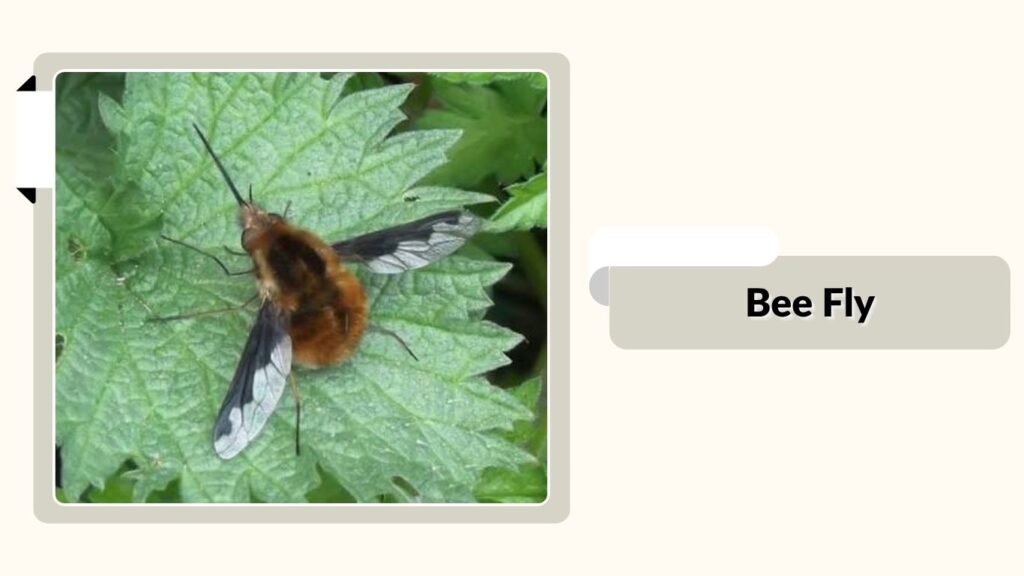
Bee flies belong to the family Bombyliidae and often resemble small bees because of their fuzzy bodies. However, they have only one pair of functional wings and cannot sting. Adults are important flower visitors, while their larvae usually develop as parasites or predators of other insects.
Identification
- Adult size: Approximately 4–20 millimeters long
- Body: Rounded and densely hairy
- Color: Brown, yellow, black, or gray
- Proboscis: Often long and straight
- Wings: Clear, dark, or patterned
- Flight: Fast with excellent hovering ability
Habitat and Distribution
Bee flies occur worldwide and are especially common in sunny, dry habitats. They can be found in gardens, meadows, deserts, woodland openings, and grasslands. Adults are frequently observed hovering around flowers or resting on warm, exposed ground.
Diet and Feeding
Adults use their long proboscis to drink nectar while hovering or resting near flowers. They also consume pollen and help pollinate many plants. Their larvae feed on the eggs or immature stages of beetles, bees, wasps, grasshoppers, and other insects.
Life Cycle and Behavior
Females often throw or place eggs near the nests of suitable hosts. After hatching, the larvae locate and enter the host’s nest. They consume stored food or developing insects before pupating. Adults are harmless despite their bee-like appearance.
22. Long-Legged Fly
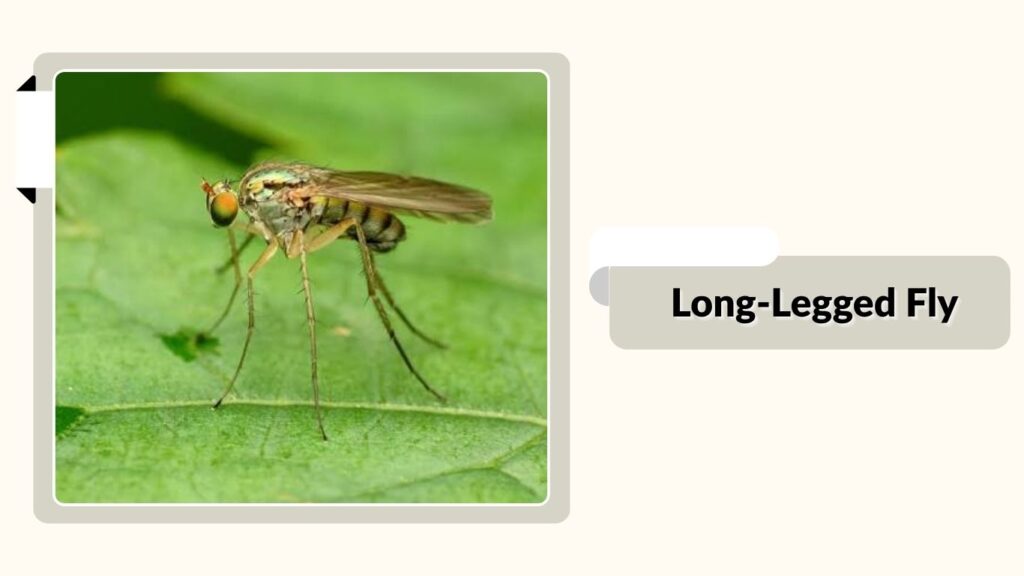
Long-legged flies belong to the family Dolichopodidae. These small, metallic insects are commonly seen running across leaves, walls, tree trunks, and moist surfaces. Most are beneficial predators that consume tiny insects and other arthropods rather than damaging plants or biting people.
Identification
- Adult size: Approximately 1–9 millimeters long
- Body color: Metallic green, blue, bronze, or copper
- Legs: Unusually long and slender
- Wings: Clear or slightly darkened
- Eyes: Large and prominent
- Movement: Quick running and short flights
Habitat and Distribution
Long-legged flies are found worldwide in gardens, forests, wetlands, grasslands, and agricultural areas. They prefer moist environments and are often seen near ponds, streams, muddy ground, and dense vegetation. Some species also live along beaches and salt marshes.
Diet and Feeding
Adults prey on aphids, mites, mosquito larvae, springtails, thrips, and other tiny organisms. Their predatory behavior can help reduce populations of garden and crop pests. Larvae generally hunt small invertebrates in soil, mud, water, or decaying wood.
Life Cycle and Behavior
Females lay eggs in moist soil or other damp habitats. The larvae develop as predators or scavengers before pupating. Adult males of some species perform courtship displays using decorated legs or patterned wings to attract females.
23. Phorid Fly
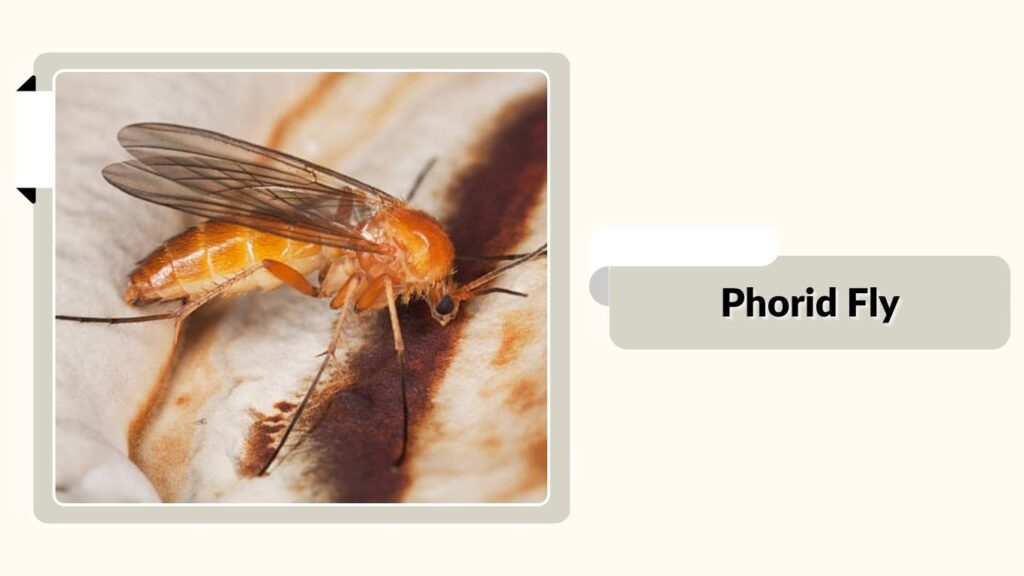
Phorid flies are tiny, humpbacked insects belonging to the family Phoridae. They are often called scuttle flies because they run rapidly across surfaces instead of immediately flying away. Indoors, their presence may indicate decaying organic material, plumbing problems, or unsanitary breeding conditions.
Identification
- Adult size: Approximately 1–6 millimeters long
- Body color: Tan, brown, yellow, or black
- Thorax: Distinctively arched or humpbacked
- Antennae: Short and rounded
- Wings: Clear with strong front veins
- Movement: Rapid, irregular running
Habitat and Distribution
Phorid flies occur worldwide in homes, restaurants, hospitals, drains, sewers, garbage areas, and natural habitats. They breed in moist, decomposing material, including food waste, carrion, sewage, manure, fungi, and dirty drainage systems.
Diet and Feeding
Adults consume sugary liquids, decaying organic matter, and fluids from waste. Their larvae have highly varied diets. Depending on the species, they may feed on fungi, dead animals, sewage, insect eggs, or the bodies of ants and other arthropods.
Life Cycle and Behavior
Females lay eggs directly on suitable larval food. The larvae feed before moving to a drier location to pupate. Their development can be rapid under warm conditions. Eliminating the hidden breeding source is essential for controlling an indoor infestation.
24. Tachinid Fly
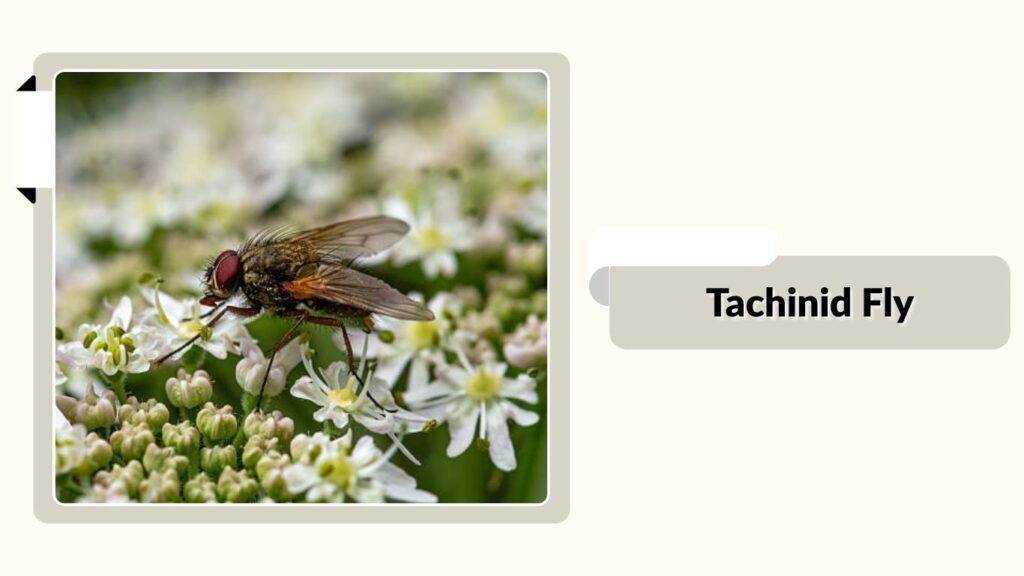
Tachinid flies belong to the family Tachinidae, one of the largest families of true flies. Adults often resemble house flies, blow flies, or bumblebees. Their larvae develop as internal parasites of other arthropods, making many species valuable natural enemies of agricultural and garden pests.
Identification
- Adult size: Approximately 2–20 millimeters long
- Body: Stout and usually bristly
- Color: Gray, black, brown, orange, or metallic
- Abdomen: Often covered with strong hairs
- Wings: Clear, smoky, or lightly colored
- Appearance: Varies greatly among species
Habitat and Distribution
Tachinid flies occur worldwide in gardens, forests, meadows, farms, and other habitats where their insect hosts are present. Adults are frequently seen visiting flowers, especially those with shallow, easily accessible nectar.
Diet and Feeding
Adults primarily consume nectar, pollen, honeydew, and plant fluids. Their larvae feed inside caterpillars, beetles, true bugs, grasshoppers, and other arthropods. The developing larva eventually kills its host, naturally reducing certain pest populations.
Life Cycle and Behavior
Females may attach eggs directly to a host, place them on nearby plants, or release live larvae. After entering a host, the larva feeds internally and later emerges to pupate. Adults are harmless to humans and do not sting.