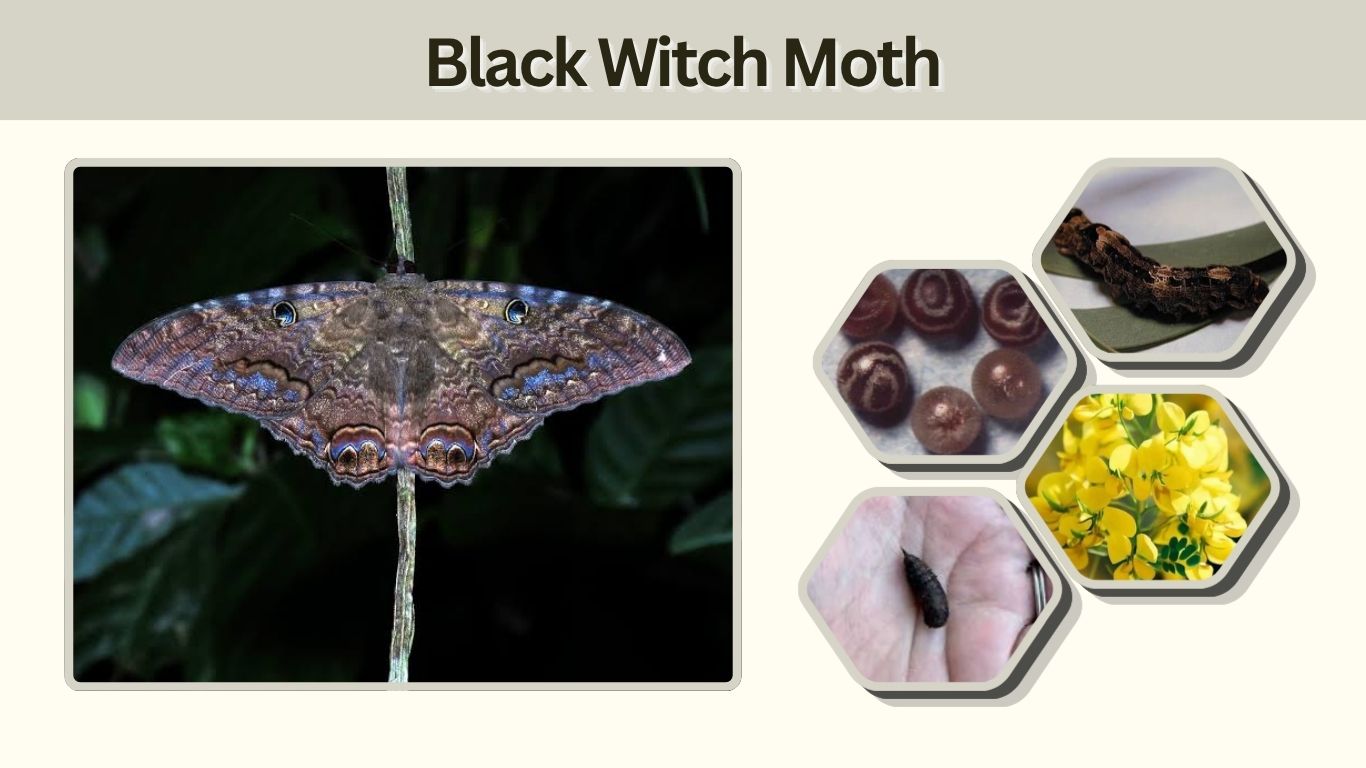
The black witch moth is one of the largest and most recognizable moths found in the Americas. Known scientifically as Ascalapha odorata, this dark-colored moth is famous for its impressive wingspan, bat-like flight, and the many legends surrounding its appearance. Although its size can seem intimidating, the black witch moth is harmless to people and pets. From caterpillar development and migration to male and female differences, habitat, diet, and spiritual symbolism, this guide covers the most interesting facts about this unusual nighttime visitor.
What Is a Black Witch Moth?
The black witch moth is a large nocturnal moth belonging to the family Erebidae. It is native primarily to tropical regions of the Americas but regularly travels far beyond its usual range. Its broad wings, dark markings, and unpredictable flight sometimes cause people to mistake it for a small bat, especially when it enters a porch, garage, or house at night.
Identification
- Scientific name: Ascalapha odorata
- Family: Erebidae
- Color: Dark brown to nearly black
- Wings: Broad with wavy, intricate markings
- Body: Thick and dark-colored
- Activity: Primarily nocturnal
- Nature: Harmless and nonvenomous
Black Witch Moth Size
Black witch moths are exceptionally large compared with many common household moths. Their wingspan can reach roughly 5 to 7 inches, with females generally growing larger than males.
Their large wings create a slow but powerful flight. When flying through dimly lit areas, their silhouette can look surprisingly similar to a bat, which explains why people occasionally describe them as “bat-like moths.”
Is the Black Witch Moth Poisonous?
The black witch moth is not poisonous and does not pose a danger to humans. Adult moths do not have stingers, venom, or biting mouthparts capable of injuring people.
Seeing one resting on a wall or flying inside a house can be startling because of its size, but there is normally no reason to kill it. It can simply be allowed to leave or carefully guided outdoors.
Black Witch Moth Male vs Female
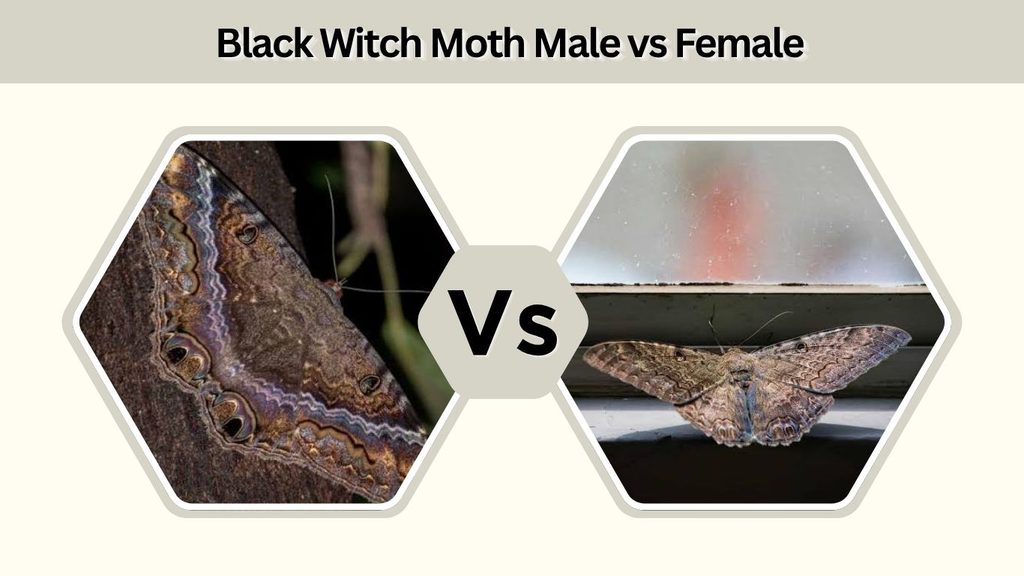
Male and female black witch moths share the same overall dark appearance, but careful observation reveals several differences. Size, wing coloration, and markings are among the easiest features to compare. Females are usually more noticeable because of their larger bodies and distinctive pale markings across their wings.
Female Black Witch Moth
Female black witch moths are typically larger than males. Their wings are broad and often display a pale or whitish band crossing the wings.
Females need suitable host plants where they can deposit their eggs. After mating, they search for plants that will provide food for the newly hatched caterpillars.
Male Black Witch Moth
Males are generally smaller and darker. Their wing patterns can appear more uniform, although subtle lines and markings remain visible when viewed closely.
Males fly at night searching for females and may also visit areas containing ripe or fermenting fruit.
Key Male and Female Differences
- Females are normally larger.
- Males tend to appear darker overall.
- Females often have more noticeable pale wing bands.
- Both sexes have complex brown and black wing patterns.
- Females select host plants for egg laying.
Black Witch Moth Life Cycle
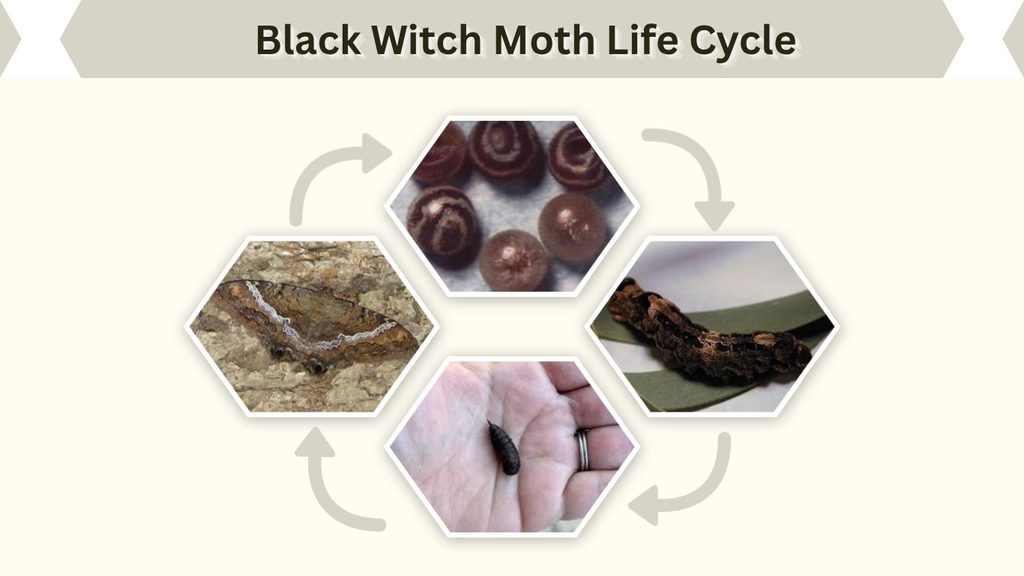
Like other moths and butterflies, the black witch moth undergoes complete metamorphosis. It passes through four main developmental stages before becoming an adult. Temperature, food availability, and environmental conditions influence how quickly development occurs.
Eggs
Female moths place their eggs on suitable host plants. These plants are important because newly hatched larvae must begin feeding soon after emerging.
The eggs eventually hatch into small caterpillars that spend much of their early lives feeding and growing.
Black Witch Moth Caterpillar
Black witch moth caterpillars are long, patterned larvae that may have brown, gray, or darker markings that help them blend into vegetation.
Important caterpillar characteristics include:
- Long, relatively slender body
- Brown, gray, and black patterns
- Feeding primarily on host plant leaves
- Several molts during growth
- Rapid increase in size before pupation
Despite their dramatic adult form, the caterpillars are not considered dangerous to people.
Black Witch Moth Cocoon and Pupa
After completing its larval development, the caterpillar enters the pupal stage. It usually creates a protected place among leaves or vegetation before transforming.
Inside the pupa, the caterpillar’s body undergoes major changes. Eventually, the adult moth emerges with fully developed wings and begins the reproductive portion of its life.
Black Witch Moth Habitat, Range, and Migration
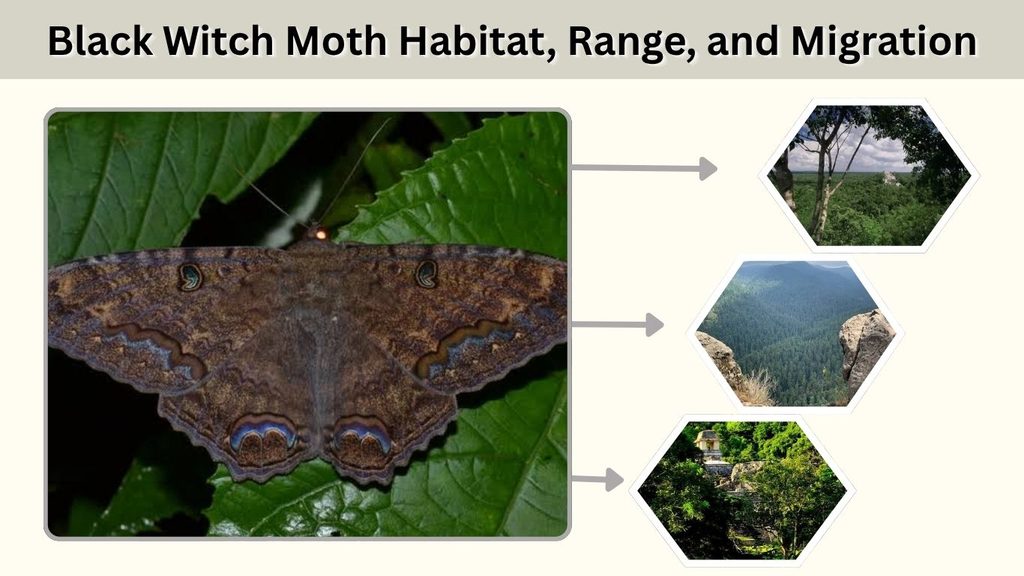
Black witch moths are strongly associated with warm climates. They occur throughout much of tropical America, including Mexico, Central America, South America, and parts of the Caribbean. However, their powerful flight allows them to appear far outside their normal breeding range, particularly during periods of favorable weather.
Where Black Witch Moths Are Found
Black witch moth sightings occur in many different locations, including:
- Mexico
- Texas
- Florida
- Arizona
- California
- Hawaii
- Other southern U.S. states
- Occasionally much farther north
Sightings in northern areas do not necessarily indicate permanent populations. Some individuals are long-distance wanderers.
Black Witch Moth in Texas and Arizona
Texas and Arizona frequently receive black witch moth visitors because both states are relatively close to the moth’s major tropical range. Warm weather can encourage individuals to travel northward from Mexico.
They may appear near houses, gardens, wooded areas, outdoor lights, or locations containing fruit.
Black Witch Moth in Hawaii
The black witch moth also occurs in Hawaii, where it has become connected with local stories and superstitions. Its large size and nighttime behavior make encounters memorable, especially when moths enter homes or rest near doors and windows.
Black Witch Moth Diet and Host Plants
Adult black witch moths and their caterpillars have very different diets. Caterpillars require leaves for growth, while adults generally consume liquids. Understanding this difference helps explain why adult moths may appear around gardens, orchards, or fallen fruit without damaging household belongings.
Caterpillar Host Plants
Black witch moth larvae may feed on several kinds of trees and shrubs, particularly plants belonging to the legume family.
Common host plants can include:
- Acacia
- Cassia and senna
- Mesquite
- Locust-related trees
- Other suitable leguminous plants
What Adult Black Witch Moths Eat
Adult moths commonly obtain energy from sugary liquids. They may feed on ripe or overripe fruit and other available plant-based sources.
Unlike clothes moths, black witch moths do not eat clothing, carpets, furniture, or other household fabrics.
Black Witch Moth Meaning and Symbolism
Few moths have collected as much folklore as the black witch moth. Different cultures have interpreted the insect in dramatically different ways. Some traditions associate the large dark moth with death or misfortune, while others regard its appearance as a sign of luck, money, visiting spirits, or important changes.
Black Witch Moth Spiritual Meaning
Spiritually, moths are often associated with transformation, mystery, intuition, and movement toward light. Because the black witch moth is unusually large and active at night, these themes can become even stronger in modern symbolic interpretations.
However, spiritual meanings are cultural beliefs rather than biological characteristics of the moth.
Is a Black Witch Moth Good Luck?
Depending on the tradition, a black witch moth may represent:
- Good fortune
- Financial luck
- Transformation
- A visiting spirit
- Change or transition
- Bad luck or death in other traditions
There is no scientific evidence that the arrival of a black witch moth predicts good or bad events.
What Does a Black Witch Moth in Your House Mean?
Biologically, a black witch moth inside a house usually means the insect accidentally entered while searching for shelter or following environmental cues.
Symbolically, people may interpret the event differently depending on their culture or personal beliefs. The moth itself does not indicate that something harmful is about to happen.
Interesting Black Witch Moth Facts
The combination of large size, migration, distinctive coloration, and folklore makes this species particularly fascinating. Despite its ominous common name, it is simply a harmless nocturnal insect adapted to warm environments.
Quick Facts
- It is among the largest moths regularly seen in North America.
- Its scientific name is Ascalapha odorata.
- Females are generally larger than males.
- Adults can resemble small bats while flying.
- The species can travel considerable distances.
- Adults may feed on ripe or fermenting fruit.
- Caterpillars feed mainly on leaves of suitable host plants.
- The moth does not sting or harm people.
- It has inspired numerous legends and superstitions.
- Individual moths sometimes appear far outside their normal tropical range.
FAQs
1. Are black witch moths dangerous?
No. Black witch moths are harmless to humans and pets. They do not sting and are not venomous or poisonous.
2. How big can a black witch moth get?
A large black witch moth can have a wingspan of approximately 5 to 7 inches. Females are generally larger than males.
3. Why is there a black witch moth in my house?
It may have accidentally entered through an open door or window while flying at night or searching for a sheltered resting location.
4. How long does a black witch moth live?
Its exact adult lifespan depends on environmental conditions, but the adult stage represents only part of its complete life cycle, which also includes egg, caterpillar, and pupal stages.
5. What does seeing a black witch moth mean?
Scientifically, it simply means a black witch moth is present in the area. In folklore, however, it has been associated with everything from death and visiting spirits to good luck, money, and personal transformation.