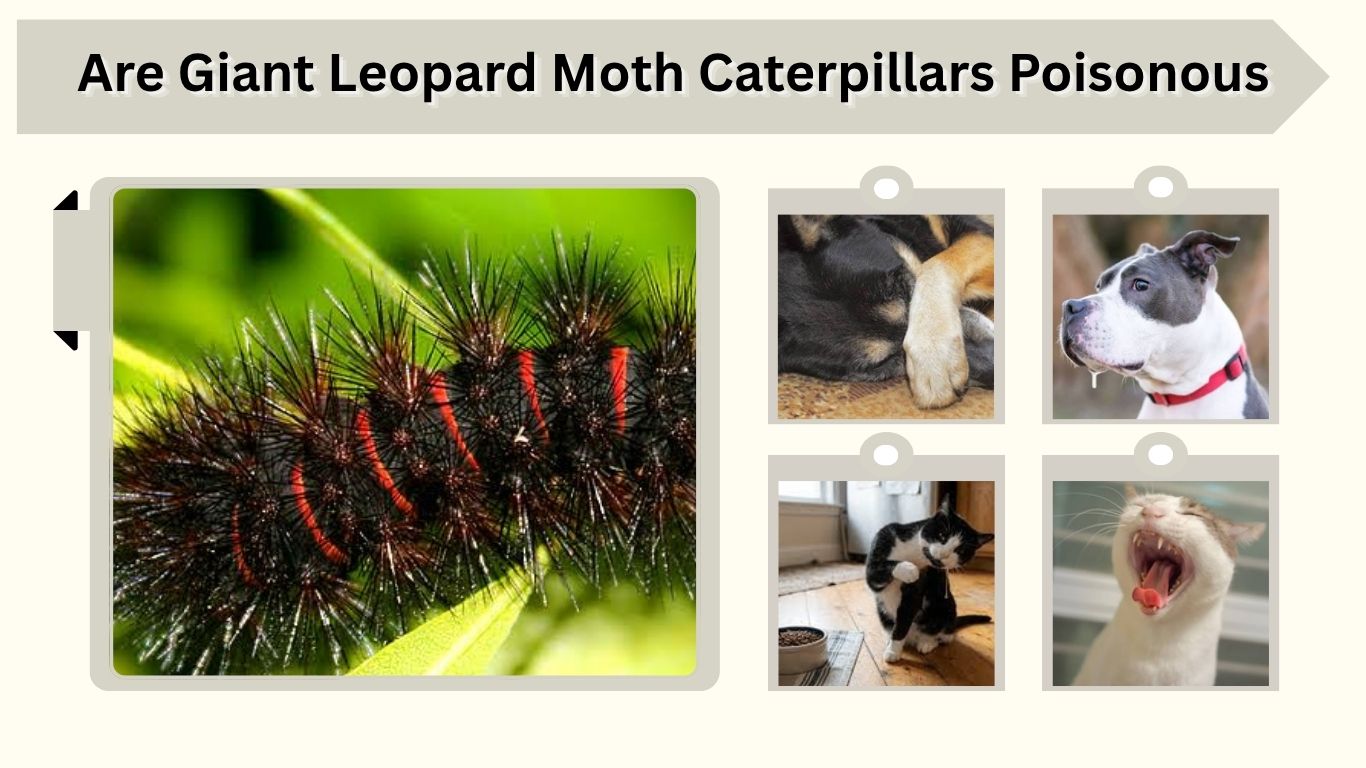
The giant leopard moth caterpillar (Hypercompe scribonia) looks intimidating because its body is covered with dense, stiff black bristles and flashes bright red or orange bands when it curls up. Despite this appearance, it is not a stinging caterpillar and is generally harmless to humans. Its bristles are defensive rather than venom-delivering spines. The adult giant leopard moth is also not considered dangerous. However, the species uses chemical defenses against predators, and unnecessary handling—especially by children, dogs, or cats—is still best avoided.
Is the Giant Leopard Moth Caterpillar Poisonous?
The giant leopard moth caterpillar is commonly called the giant woolly bear. Its black, spiky appearance often makes people assume that touching it will produce a painful sting.
Fortunately, this caterpillar lacks the specialized stinging spines found on genuinely venomous caterpillars such as saddleback or puss caterpillars. UF/IFAS reports that giant leopard moth larvae do not bite and lack stinging spines.
Can the Caterpillar Sting You?
No. The black hairs are stiff setae used primarily as a physical defense against predators.
When threatened, the caterpillar curls tightly into a ball. This exposes its bristles while protecting the softer underside of its body.
Its distinctive red or orange bands become much easier to see when it curls.
BugGuide also specifically notes that, unlike certain other hairy caterpillars, giant leopard moth caterpillars do not sting when handled.
Is It Venomous?
No venom-injecting structure is known in the caterpillar.
That distinction is important. Venomous caterpillars have specialized spines capable of delivering irritating or toxic substances into the skin. Giant leopard moth caterpillars have ordinary defensive setae rather than such stinging structures.
However, UF/IFAS notes that these caterpillars may obtain defensive chemicals from some of the plants they eat. That chemical protection is primarily relevant to predators and should not be confused with having a venomous sting.
What Does a Giant Leopard Moth Caterpillar Look Like?
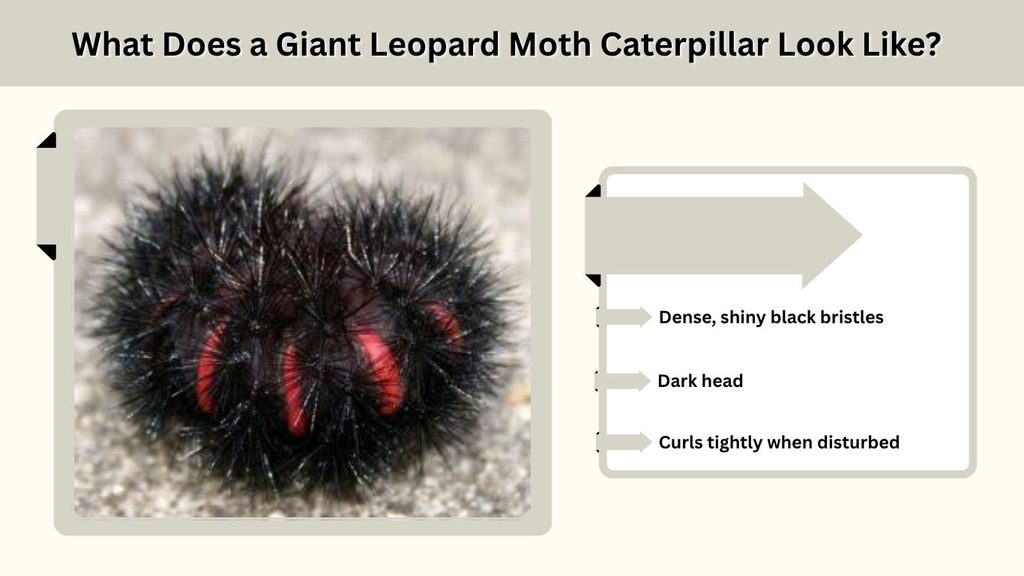
Correct identification matters because several black, hairy caterpillars look superficially similar, and not every fuzzy caterpillar is equally harmless. Mature giant leopard moth larvae are particularly recognizable when they curl up and reveal the reddish rings between their otherwise dark body segments.
Identification Features
- Dense, shiny black bristles
- Thick woolly-bear appearance
- Red or orange bands between body segments
- Red-orange spiracles along the sides
- Dark head
- Caterpillar can grow several inches long
- Curls tightly when disturbed
- No clusters of obvious venomous spines
The bright reddish areas may be difficult to see while the caterpillar is stretched out but become conspicuous when it rolls into its defensive posture.
Why Is It Black and Fuzzy?
The dense bristles make the caterpillar difficult and unpleasant for many predators to grab or swallow.
Instead of attacking when threatened, the caterpillar curls into a protected position and relies on those stiff hairs for defense.
Its appearance therefore functions more like protective armor than a venom-delivery system.
Can Giant Leopard Moth Caterpillars Hurt Humans?
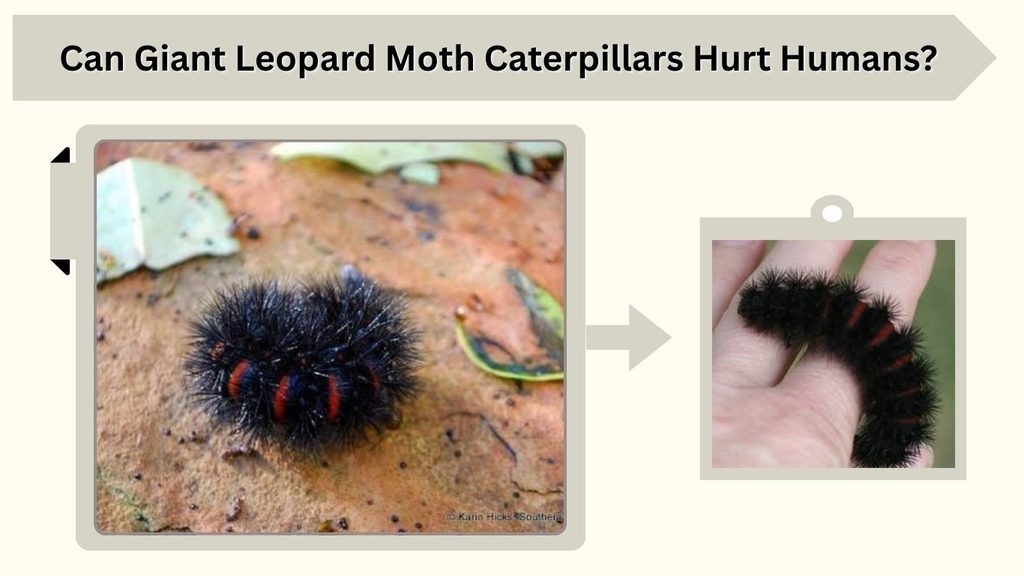
For most people, simply encountering a giant leopard moth caterpillar presents very little danger. It does not chase people, attack them, sting, or bite.
Still, leaving wild caterpillars alone is preferable to repeatedly handling them.
What Happens If You Touch One?
The stiff hairs can feel surprisingly sharp or prickly against sensitive skin even though they do not inject venom.
UF/IFAS describes the setae as stiff and smooth rather than stinging. When the caterpillar is picked up, those hairs bend backward and help it slip away from the grip of a predator—or a person’s fingers.
Someone with unusually sensitive skin could potentially experience minor mechanical irritation after contact with stiff insect hairs, so washing the area is reasonable if irritation occurs.
What Should You Do After Contact?
If you accidentally touch one, normally nothing special is required.
Wash your hands with soap and water, especially before touching your eyes or face.
If unexplained redness, swelling, severe pain, difficulty breathing, or widespread hives develop, seek medical care. Such symptoms would be unusual for a correctly identified giant leopard moth caterpillar and could indicate sensitivity or contact with a different species.
Are Giant Leopard Moth Caterpillars Poisonous to Dogs?
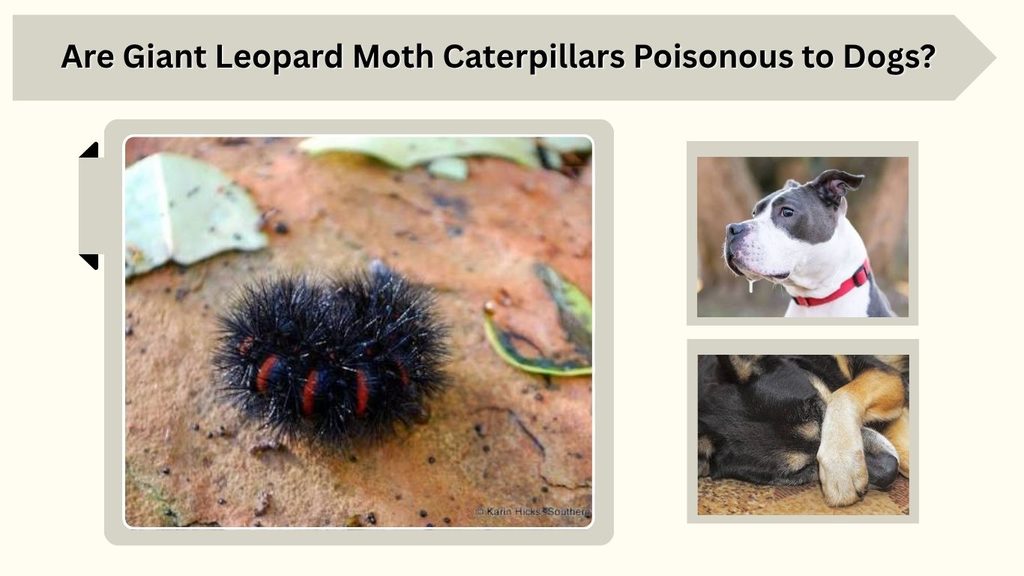
There is limited direct veterinary research specifically examining dogs that eat Hypercompe scribonia. The caterpillar is not a stinging species, but that does not mean allowing a dog to chew or swallow one is a good idea.
Its dense, stiff bristles could potentially irritate a dog’s mouth or gastrointestinal tract, and UF/IFAS indicates that the caterpillars may use plant-derived chemicals for defense.
What If a Dog Eats One?
Monitor the dog for:
- Excessive drooling
- Pawing at the mouth
- Vomiting
- Repeated gagging
- Diarrhea
- Swelling around the mouth
- Difficulty swallowing
- Difficulty breathing
A dog showing significant symptoms should be evaluated by a veterinarian.
Do not intentionally encourage pets to eat wild caterpillars simply because a particular species is considered non-stinging.
Are Giant Leopard Moth Caterpillars Poisonous to Cats?
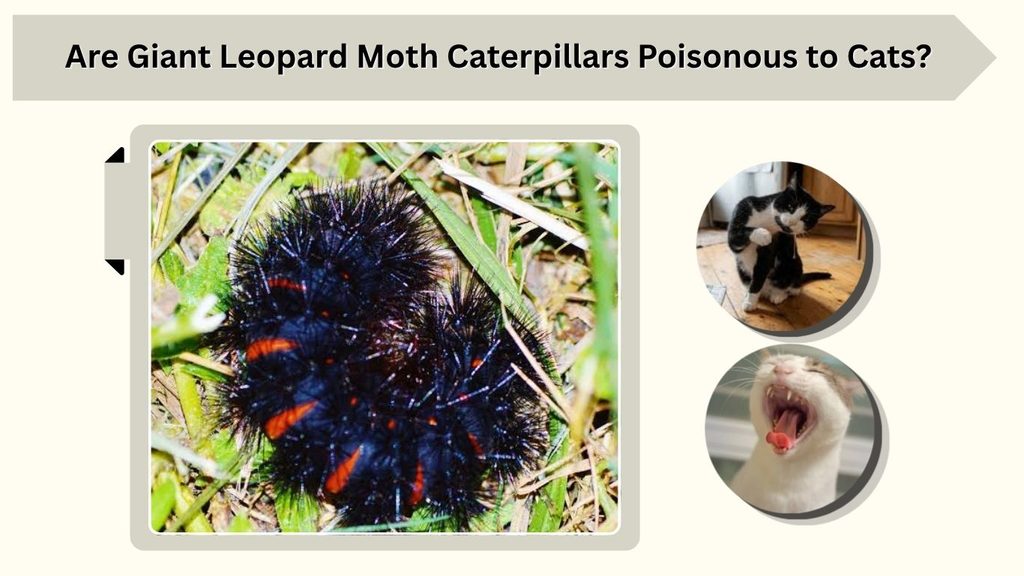
The same precaution applies to cats.
Giant leopard moth caterpillars are not known as venomous, stinging caterpillars, but direct evidence concerning ingestion by cats is limited.
Cats that play with hairy caterpillars could potentially experience mechanical irritation from the bristles.
Keep Cats From Eating Caterpillars
If possible, prevent cats from chewing or swallowing caterpillars.
After suspected ingestion, watch for drooling, vomiting, mouth irritation, unusual behavior, swelling, or breathing problems.
Contact a veterinarian promptly if concerning symptoms develop.
Is the Adult Giant Leopard Moth Poisonous?
Adult giant leopard moths are spectacular insects with white wings covered in black spots and rings. Under the wings, the abdomen shows striking blue-black coloration with orange markings.
The adult cannot sting.
However, it does possess an interesting defensive mechanism.
Yellow Defensive Fluid
When threatened or handled, an adult giant leopard moth may release yellowish droplets from glands near the thorax.
UF/IFAS describes this secretion as acrid and bitter tasting and suggests it functions as a defense against predators.
This behavior can occasionally cause people to assume the moth has stung them when liquid suddenly appears during handling.
The secretion is defensive; it is not injected through a stinger.
What Do Giant Leopard Moth Caterpillars Eat?
Giant leopard moth larvae feed on a remarkably wide variety of broad-leaved plants. Their broad diet is one reason they can be encountered in gardens, yards, woodland edges, and other vegetated habitats.
Common Host Plants
Recorded foods include:
- Dandelion
- Sunflower
- Violet
- Willow
- Maple
- Cherry
- Cabbage
- Orange
- Banana and various other broad-leaved plants
BugGuide lists numerous host plants and notes that the species has a broad larval diet.
Why Their Diet Matters
Some tiger moth caterpillars deliberately consume different plants containing defensive chemicals.
UF/IFAS suggests giant leopard moth caterpillars may similarly sequester chemicals obtained from their food plants, potentially making them less appealing to predators.
This chemical defense does not mean that their hairs function like poisonous needles.
Where Are Giant Leopard Moth Caterpillars Found?
Giant leopard moths occur across a broad portion of eastern and southern North America. Caterpillars may be noticed in gardens, wooded areas, roadsides, yards, and beneath leaves or wood.
They are primarily active at night.
Why Are They Seen in Fall?
Mature caterpillars are often noticed wandering across roads, sidewalks, and yards during fall as they search for protected places to overwinter.
The species overwinters as a caterpillar. In northern portions of its range there is typically one generation annually, while southern populations may produce two.
Giant Leopard Moth vs Poisonous Caterpillars
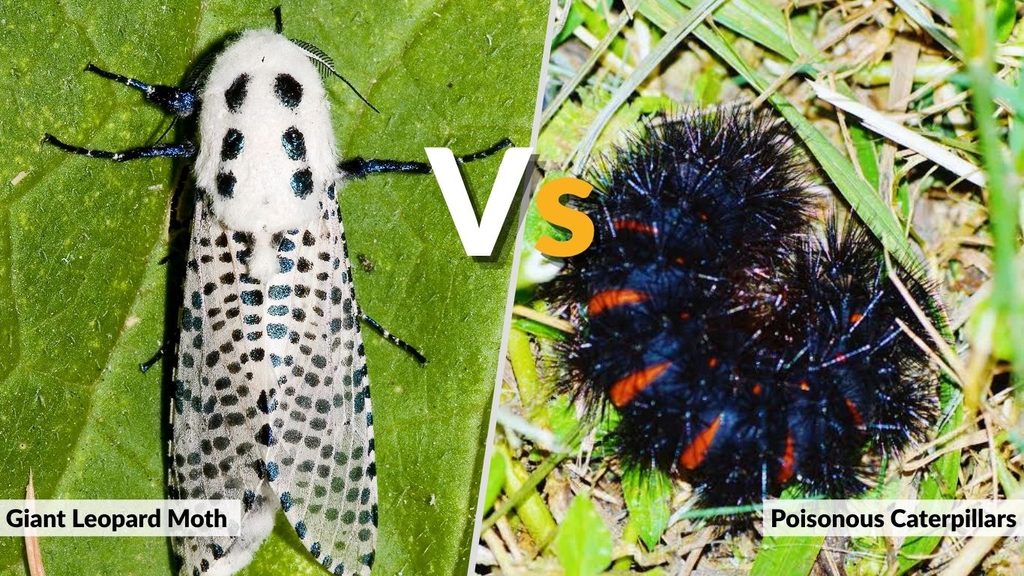
The safest approach is never to assume that every fuzzy black caterpillar is a giant leopard moth.
Some caterpillars genuinely possess urticating or venomous spines.
Signs of a Giant Leopard Moth Caterpillar
Look for the combination of thick black bristles and bright red-orange bands between body segments.
When disturbed, it characteristically curls tightly into a ball.
If identification is uncertain, avoid touching it. Observing or photographing a caterpillar is safer than testing whether its hairs can sting.
Should You Remove Giant Leopard Moth Caterpillars?
Usually, no control is necessary.
Giant leopard moth caterpillars are part of the natural ecosystem, and occasional individuals in a garden are rarely a reason for pesticide treatment.
Safe Relocation
If one is crawling somewhere dangerous, such as a driveway or busy walkway, encourage it onto a leaf, piece of cardboard, or similar object and move it to nearby vegetation.
There is no need to crush, spray, or otherwise kill it simply because of its intimidating appearance.
FAQs
1. Are giant leopard moth caterpillars poisonous?
They are not considered stinging or venomous caterpillars. Their stiff black hairs are primarily a physical defense, although the caterpillars may also retain defensive chemicals obtained from plants.
2. Can a giant leopard moth caterpillar sting you?
No. Giant leopard moth larvae lack stinging spines and do not deliver venom through their hairs.
3. Can you safely touch a giant leopard moth caterpillar?
They are generally considered harmless to touch, but unnecessary handling is best avoided. Their stiff hairs can feel prickly, and wild caterpillars are easier to observe without disturbing them.
4. Are giant leopard moth caterpillars poisonous to dogs?
They are not known as venomous caterpillars, but direct evidence about ingestion by dogs is limited. Prevent pets from eating them and contact a veterinarian if significant symptoms occur.
5. Is the adult giant leopard moth dangerous?
No. Adult giant leopard moths cannot sting. When threatened, however, they may release a yellow, bitter defensive liquid.