
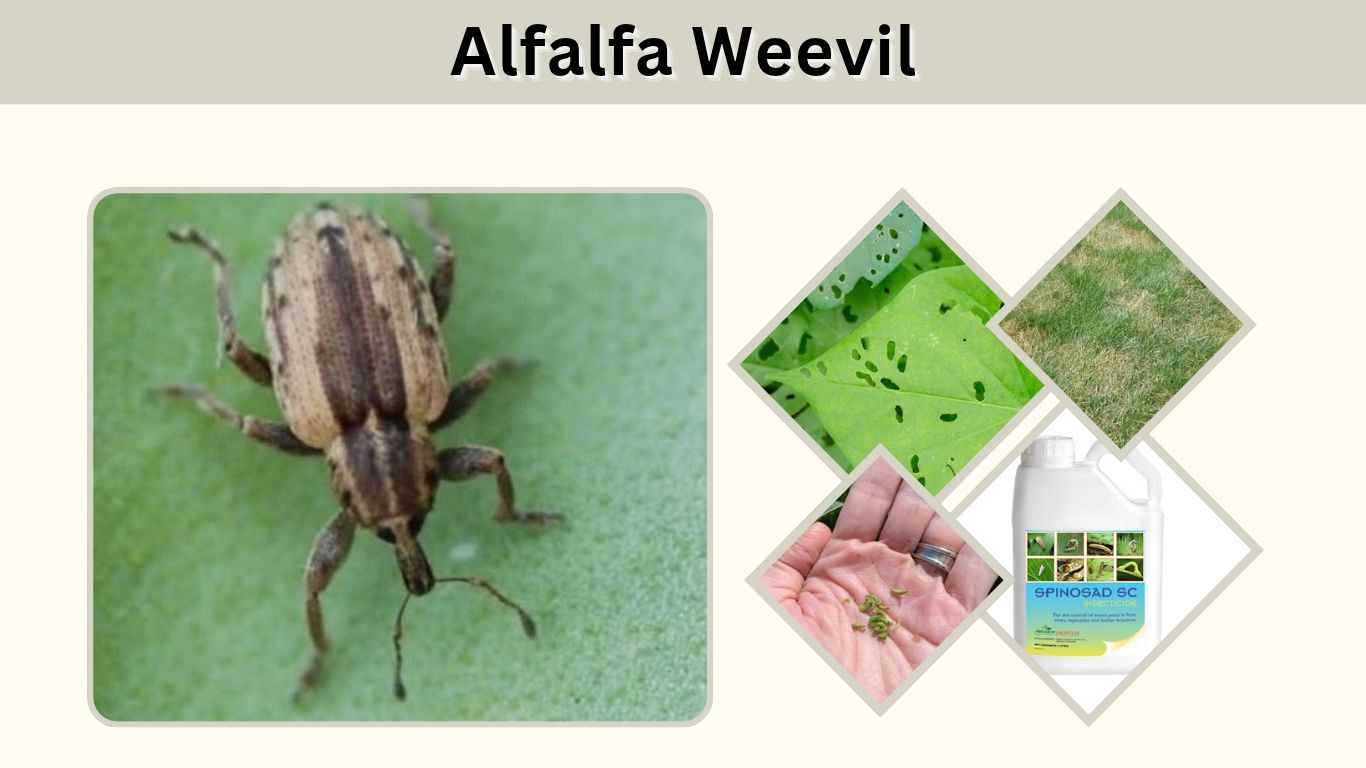
Alfalfa weevils are destructive agricultural pests that feed on alfalfa leaves, buds, and young shoots. Their larvae cause the most serious damage, often reducing forage quality, crop growth, and overall hay production. These small beetles are particularly troublesome during spring when alfalfa plants begin growing rapidly. Understanding alfalfa weevil identification, life cycle, feeding behavior, and control methods helps farmers protect their crops. This guide explains how to identify adult weevils and larvae, recognize infestation symptoms, determine treatment thresholds, and manage alfalfa weevils using practical prevention and control strategies.
What Is an Alfalfa Weevil?
The alfalfa weevil (Hypera postica) is a small beetle belonging to the family Curculionidae. It primarily feeds on alfalfa but can also attack certain clover species. Originally native to parts of Europe, Asia, and North Africa, this pest has become widely established throughout North America. Its larvae are responsible for most economically significant crop damage.
Alfalfa Weevil Identification
Adult alfalfa weevils have several recognizable characteristics that help distinguish them from other agricultural beetles.
- Scientific Name: Hypera postica
- Family: Curculionidae
- Body Length: Approximately 4–7 mm
- Body Color: Light brown, grayish-brown, or darker brown
- Body Shape: Oval-shaped with a compact, hardened body
- Snout: Short, downward-curving snout containing chewing mouthparts
- Back Markings: Dark brown stripe extending along the center of the back
Where Do Alfalfa Weevils Live?
Alfalfa weevils primarily inhabit agricultural fields where alfalfa and related forage plants grow. They are common in hay-producing regions throughout the United States and parts of Canada.
During warmer months, adult beetles often shelter beneath plant debris, tree bark, and vegetation surrounding fields. Depending on the region, adults return to alfalfa fields during fall or spring to reproduce.
Types of Alfalfa Weevils
Two closely related weevils are especially important in North American alfalfa production. Although they look similar, their seasonal activity and geographical distribution can differ. Understanding these differences helps farmers identify potential infestation periods and plan management activities.
Common Alfalfa Weevil (Hypera postica)
The common alfalfa weevil is widely distributed throughout North America. Adults usually measure approximately 5 mm and have brown bodies with darker markings.
Females deposit eggs inside alfalfa stems during fall or spring, depending on local conditions. Larvae emerge and feed on developing leaves, especially during early spring.
This species typically produces one generation annually, with the greatest crop damage occurring before the first cutting.
Egyptian Alfalfa Weevil (Hypera brunneipennis)
The Egyptian alfalfa weevil closely resembles the common alfalfa weevil and causes similar feeding damage.
It is particularly important in California, where its life cycle differs from that of the common species.
Adults generally return to alfalfa fields during fall or early winter. Larvae become active during the cooler growing season, and damaging populations may persist into later cuttings.
Alfalfa Weevil Life Cycle
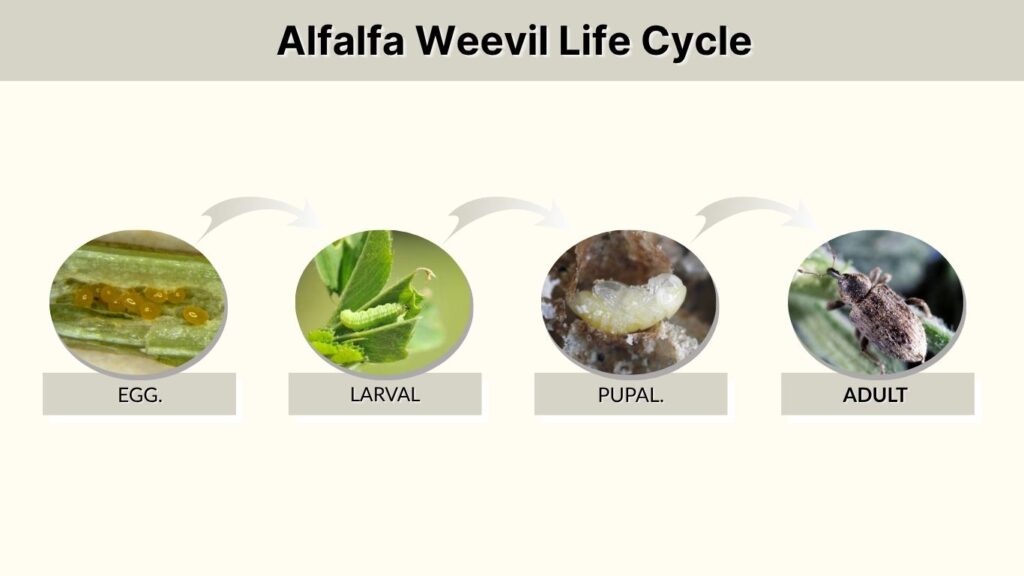
The alfalfa weevil undergoes complete metamorphosis involving egg, larva, pupa, and adult stages. Its development depends heavily on seasonal temperatures and environmental conditions. Most populations complete one generation each year, although the exact timing of egg laying and larval emergence varies by region.
Four Stages of Alfalfa Weevil Development
- Egg Stage: Female weevils chew small openings in alfalfa stems and deposit eggs inside. Eggs hatch after sufficient warmth accumulates, often during late winter or spring.
- Larval Stage: Newly hatched larvae move toward young leaves and buds. They pass through four growth stages, feeding for approximately three to four weeks.
- Pupal Stage: Mature larvae create delicate, netlike silken cocoons among foliage or plant debris. Adults generally emerge within one to two weeks.
- Adult Stage: Newly emerged beetles feed briefly before seeking sheltered locations. They later return to alfalfa fields for reproduction.
How Do Alfalfa Weevils Survive Winter?
Adult alfalfa weevils commonly survive winter beneath vegetation, field debris, and other protected locations. In some warmer regions, eggs may also overwinter within alfalfa stems.
When temperatures become favorable, adults resume activity and larvae begin developing. Mild winters and warm spring conditions can influence the timing and severity of infestations.
Alfalfa Weevil Larvae and Crop Damage
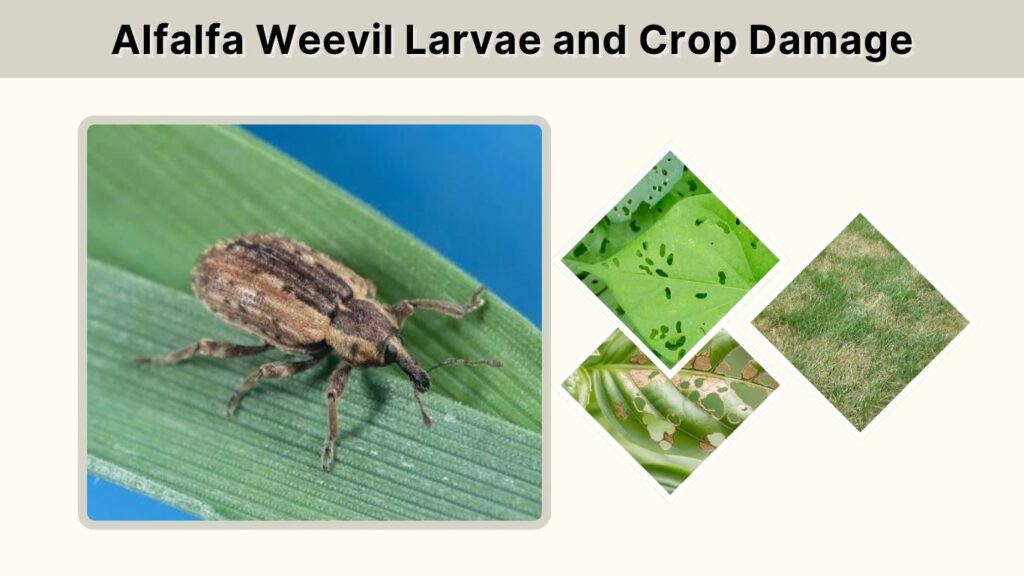
Alfalfa weevil larvae are the most damaging developmental stage. They feed directly on tender leaves and growing tips, removing valuable plant tissue before the first harvest. Heavy infestations can significantly reduce forage production, particularly when larval populations remain high during periods of rapid plant growth.
Signs of Alfalfa Weevil Damage
Several symptoms indicate that larvae are actively feeding on alfalfa plants.
- Small Leaf Holes: Young larvae produce tiny holes in newly developing leaves.
- Skeletonized Leaves: Older larvae consume leaf tissue, leaving partially damaged leaf structures.
- Brown or Gray Foliage: Severely damaged fields can develop a frosted or bronzed appearance.
- Damaged Growing Tips: Larvae feed on terminal buds and interfere with normal growth.
- Reduced Leaf Production: Heavy feeding decreases the amount of nutritious foliage available for harvesting.
- Visible Larvae: Pale green larvae with black heads and white dorsal stripes may appear on leaves.
How Much Damage Can Alfalfa Weevils Cause?
Severe infestations can substantially reduce alfalfa yield and forage quality. Because leaves contain much of the plant’s nutritional value, extensive feeding decreases the quality of harvested hay.
The greatest losses generally occur when larger larvae consume developing foliage before the first cutting. Surviving larvae may also damage regrowth after harvesting.
Alfalfa Weevil Scouting and Economic Thresholds
Regular scouting allows farmers to detect alfalfa weevil activity before serious crop losses occur. Monitoring should begin as plants resume growth, especially during periods when larvae become active. Treatment decisions should consider larval numbers, plant height, crop value, and the amount of visible feeding damage.
How to Scout for Alfalfa Weevils
Farmers can use stem sampling and sweep nets to estimate pest populations throughout their fields.
- Inspect Growing Tips: Examine young leaves for feeding holes and damaged terminal buds.
- Collect Plant Stems: Select representative stems from multiple locations across the field.
- Count Weevil Larvae: Shake collected stems into a bucket and count dislodged larvae.
- Use a Sweep Net: Sweep the foliage when plant height permits to monitor pest activity.
- Record Results: Calculate average larval numbers and compare them with locally recommended thresholds.
- Repeat Monitoring: Scout more frequently when populations approach damaging levels.
What Is the Alfalfa Weevil Economic Threshold?
An economic threshold is the pest population at which control may be justified to prevent financially significant crop losses.
Threshold recommendations vary by region and sampling method. For example, California guidelines use approximately 20 larvae per sweep as a treatment threshold. Other extension programs use stem counts, plant height, crop value, or the percentage of damaged terminals.
Farmers should follow locally validated thresholds instead of applying one universal number.
How to Get Rid of Alfalfa Weevils
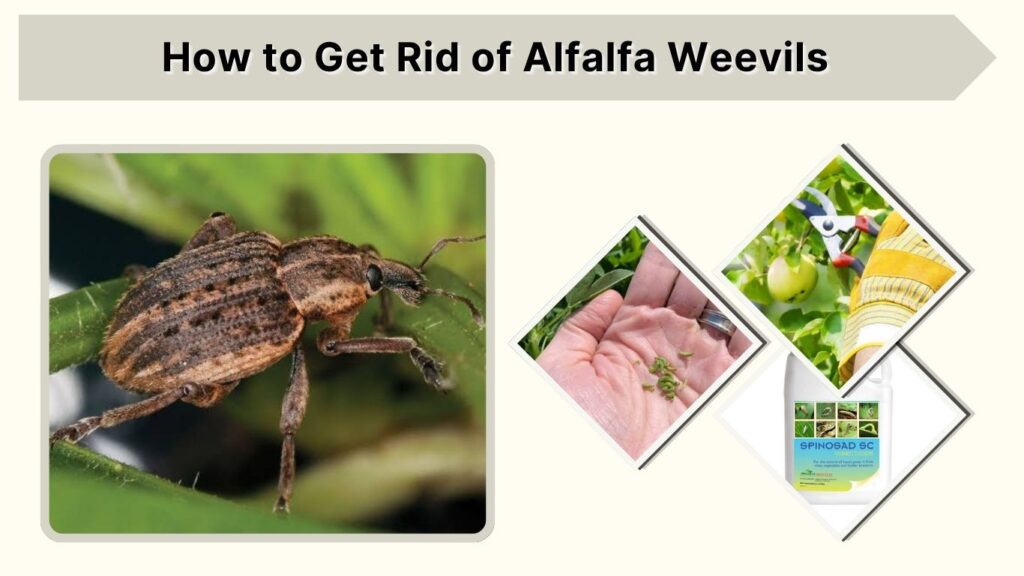
Successful alfalfa weevil control combines crop monitoring, timely harvesting, conservation of natural enemies, and selective insecticide use. Management is generally most effective when applied before larvae cause extensive feeding damage. The appropriate method depends on infestation severity, crop maturity, environmental conditions, and local agricultural recommendations.
Early Harvesting for Alfalfa Weevil Control
Early cutting is an effective cultural control method when alfalfa is sufficiently mature and damaging larval populations are present.
Harvesting removes foliage occupied by larvae and exposes surviving insects to unfavorable environmental conditions.
However, growers must monitor regrowth after cutting because larvae surviving beneath windrows may continue feeding on newly developing plants.
Biological Control of Alfalfa Weevils
Alfalfa weevils have several natural enemies, including parasitic wasps, predatory insects, and fungal pathogens.
Two important parasitoids are Bathyplectes curculionis and Bathyplectes anurus, which develop in weevil larvae and help reduce populations.
Natural enemies can contribute to pest suppression, although they may not prevent economic damage during severe infestations.
Alfalfa Weevil Insecticide Treatment
Chemical control may be necessary when larval populations exceed locally established economic thresholds and early harvest is unsuitable.
Insecticides containing certain pyrethroids or spinosad formulations may be registered for alfalfa weevil control, depending on location. However, resistance to pyrethroid insecticides has been documented or suspected in some populations.
Farmers should use only products registered for alfalfa and follow all application directions, preharvest intervals, grazing restrictions, and resistance-management recommendations.
How to Prevent Alfalfa Weevil Infestations
Preventing damaging populations requires ongoing field management rather than relying entirely on pesticide applications. Healthy alfalfa stands can better tolerate limited feeding, while regular monitoring helps farmers respond before infestations become severe.
Cultural Management and Prevention
Crop management practices can reduce the risk of serious alfalfa weevil damage. Timely cutting, appropriate fertilization, and maintaining vigorous stands are important components of prevention.
In some regions, dormant-season grazing or other approved field-management practices may reduce overwintering populations, although results can be inconsistent.
Preserving beneficial insects and avoiding unnecessary insecticide applications can also support long-term pest management.
Managing Weevils in Alfalfa Hay
Weevils may occasionally be found in freshly harvested alfalfa hay. Harvesting and drying generally kill or displace many larvae, reducing their ability to continue feeding.
However, populations surviving beneath windrows may attack regrowth. Farmers should inspect the field after harvesting and monitor new growth for signs of continued infestation.
FAQs
1. What Kills Alfalfa Weevils?
Alfalfa weevils can be controlled through timely harvesting, natural enemies, and appropriately registered insecticides. Early cutting often reduces larval populations, while chemical treatments may be necessary when economic thresholds are exceeded. Regular scouting helps determine which method is appropriate.
2. When Should You Spray for Alfalfa Weevils?
Spraying should be considered when scouting results exceed locally recommended economic thresholds and early harvesting is not practical. Treatments are generally directed at actively feeding larvae before extensive damage occurs. Application timing should follow regional extension guidance and pesticide labels.
3. What Do Alfalfa Weevil Larvae Look Like?
Alfalfa weevil larvae are small, legless, pale green insects with dark heads and a distinctive white stripe along their backs. Mature larvae generally reach approximately 6–9 mm. They usually feed on tender alfalfa leaves and developing buds during spring.
4. Are Alfalfa Weevils Harmful to Humans?
Alfalfa weevils are not considered dangerous to humans. They do not sting or normally bite people and are primarily agricultural pests. Their main economic impact comes from feeding damage to alfalfa, which can reduce hay yields and forage quality.
5. How Many Generations Do Alfalfa Weevils Have Per Year?
Common alfalfa weevils typically complete one generation annually. Adults may remain inactive during summer or winter before returning to fields for reproduction. Egyptian alfalfa weevils also generally produce one generation, although occasional additional generations have been documented in some warmer areas.
