
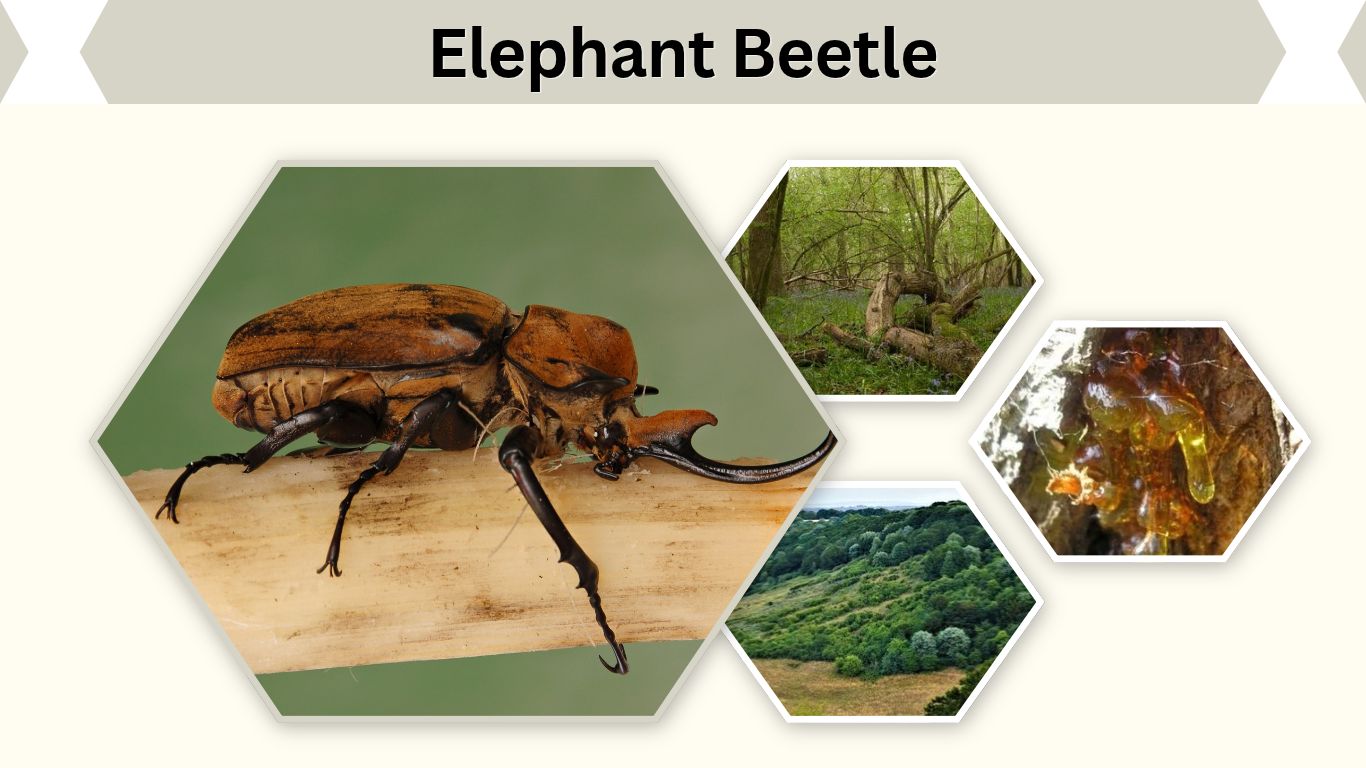
The elephant beetle is one of the largest and most fascinating rhinoceros beetles in the world. Known scientifically as Megasoma elephas, this impressive insect has a powerful body, velvety golden-brown covering, and distinctive horns in males. Elephant beetles naturally inhabit tropical forests, where they feed on tree sap and help recycle decaying wood during their larval stage. Despite their intimidating appearance, they are generally harmless to humans. This guide explores elephant beetle identification, physical characteristics, habitat, feeding habits, life cycle, and other interesting facts about these remarkable insects.
What Is an Elephant Beetle?
The elephant beetle (Megasoma elephas) is a large scarab beetle belonging to the family Scarabaeidae and subfamily Dynastinae. It is closely related to other rhinoceros beetles, including Hercules beetles. Its common name comes from its impressive size and the prominent horns found on males. These insects spend much of their lives developing inside decaying wood.
Elephant Beetle Identification
Elephant beetles have heavy, oval bodies with strong legs and a distinctive velvety appearance. Their dark exoskeleton is covered with fine yellowish or golden-brown hairs.
Their most recognizable physical features include:
- Body shape: Large, oval, and heavily built.
- Color: Golden brown to dark brown, with black legs.
- Body covering: Dense, fine hairs that create a velvet-like appearance.
- Horns: Prominent projections on adult males.
- Legs: Six strong legs with claws for gripping surfaces.
- Wings: Hardened forewings protecting functional flight wings.
Male vs. Female Elephant Beetle
Male elephant beetles are usually larger and possess prominent horns on their heads and thoraxes. These structures help them compete with other males.
Females lack the large horns and have relatively rounded bodies. Their smaller size and different thoracic texture make them distinguishable from males.
How Big Is an Elephant Beetle?
Elephant beetles are among the largest rhinoceros beetles, although their size varies considerably between individuals. Males generally grow larger than females, especially when favorable larval conditions provide sufficient nutrition. Their impressive dimensions, bulky bodies, and strong legs make them appear even larger than many other beetles found in tropical forests.
Average Elephant Beetle Size
Adult elephant beetles commonly measure approximately 4–10 centimeters (1.6–3.9 inches) long. Exceptionally large males may exceed this range when their horns are included.
Females are generally smaller and lack the extended horns that contribute to male body length.
How Much Does an Elephant Beetle Weigh?
Elephant beetles are relatively heavy insects because of their muscular bodies and substantial exoskeletons.
Their weight varies depending on sex, size, age, and feeding conditions. Developing larvae can become particularly heavy as they accumulate energy reserves before pupation.
Where Do Elephant Beetles Live?
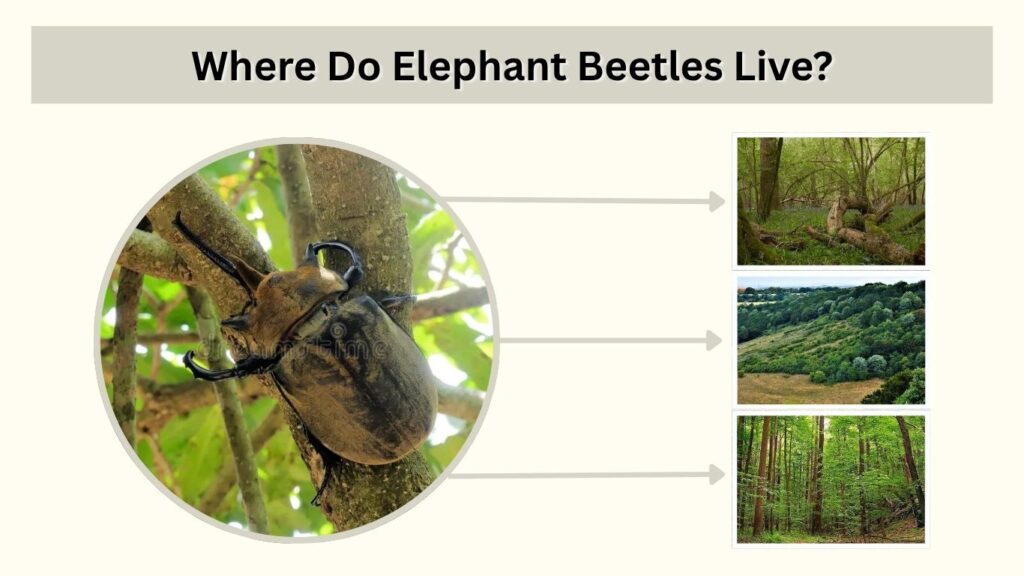
Elephant beetles naturally inhabit tropical regions of Central and northern South America. They are associated with forests containing mature trees, fallen trunks, and decomposing wood. These environments provide food for adults and suitable breeding materials for developing larvae. Moisture and temperature are important factors influencing their activity and survival.
Elephant Beetle Habitat and Distribution
Megasoma elephas occurs from southern Mexico through parts of Central America to Venezuela.
Common habitats include:
- Tropical evergreen forests
- Tropical deciduous forests
- Humid lowland woodlands
- Forest edges and suitable plantations
- Areas containing large decaying logs
- Wooded environments with sap-producing trees
Are Elephant Beetles Active at Night?
Elephant beetles are primarily nocturnal. Adults often fly at night and may be attracted to artificial lighting.
They can also be observed feeding during daylight under suitable conditions. Their activity varies with local temperature, humidity, and seasonal conditions.
What Do Elephant Beetles Eat?
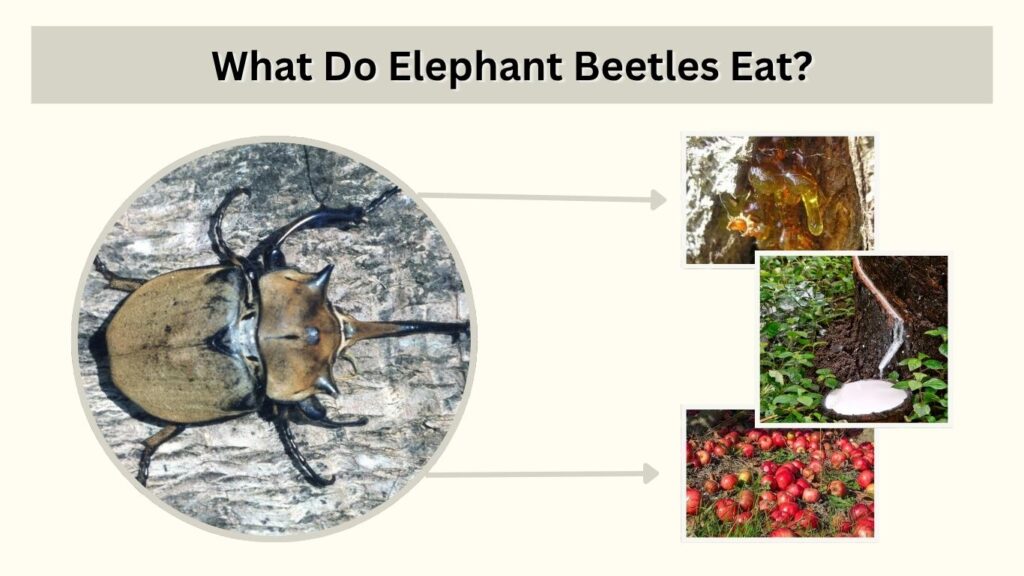
Elephant beetles consume different foods during their adult and larval stages. Adults primarily obtain nutrients from plant fluids, while larvae develop within decaying woody materials. This dietary difference reflects their changing needs throughout development. Adults require energy for movement and reproduction, whereas larvae need substantial nutrition to support growth.
Adult Elephant Beetle Diet
Adult elephant beetles feed on tree sap and may consume ripe or fermenting fruits.
Their known food sources include:
- Sap flowing from damaged tree bark
- Sap from suitable tropical tree species
- Ripe and fallen fruits
- Soft fruit materials containing accessible sugars
Adults have been observed damaging small twigs with their front legs to access flowing sap.
What Do Elephant Beetle Larvae Eat?
Elephant beetle larvae feed within decomposing wood, where they consume softened woody material and associated organic matter.
Their feeding activity contributes to the breakdown of dead plant material and the recycling of nutrients within forest ecosystems.
Elephant Beetle Life Cycle and Lifespan
Elephant beetles undergo complete metamorphosis, developing through four distinct stages: egg, larva, pupa, and adult. Most of their lives are spent as larvae inside decaying wood. This prolonged development allows them to reach their substantial adult size, while the mature beetles typically survive for a much shorter period.
Four Stages of the Elephant Beetle Life Cycle
- Egg: Females lay eggs in suitable decomposing wood or nearby organic material.
- Larva: White, C-shaped grubs hatch and feed on decaying wood for an extended period.
- Pupa: Mature larvae create protected pupal chambers where their bodies transform into adults.
- Adult: Fully developed beetles emerge, disperse, feed, and eventually reproduce.
How Long Do Elephant Beetles Live?
Elephant beetles have unusually long developmental periods. A scientific study recorded complete life cycles of approximately 2.4–2.6 years under controlled conditions.
Their larval stage occupies most of this time. Adult elephant beetles generally survive only a few months, although lifespan varies with conditions.
Are Elephant Beetles Dangerous to Humans?
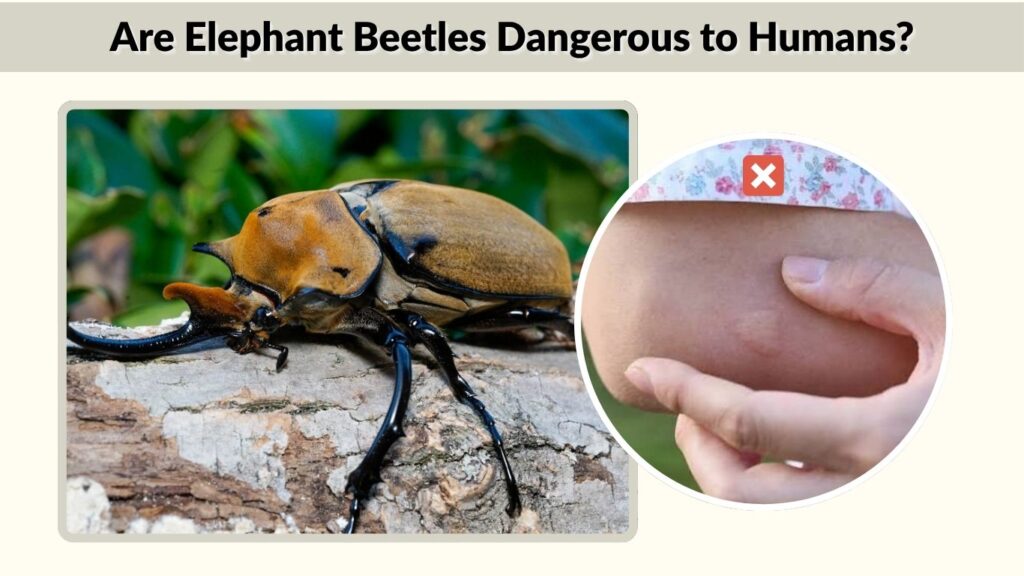
Despite their intimidating horns and considerable size, elephant beetles are generally harmless to humans. They are not venomous and do not hunt people or other large animals. Their horns primarily serve reproductive competition rather than attacking humans. However, their strong legs and claws can make handling uncomfortable.
Do Elephant Beetles Bite?
Elephant beetles are not aggressive biting insects. They do possess mouthparts, but these are adapted for feeding on plant materials.
Handling them roughly may cause minor scratches from their claws. Observing them without unnecessary disturbance is the safest approach.
Can Elephant Beetles Fly?
Yes, adult elephant beetles can fly despite their heavy bodies.
Their hardened wing covers open to reveal membranous flight wings underneath. Flight helps adults locate feeding locations, potential mates, and suitable habitats.
Elephant Beetle vs. Other Large Beetles
Elephant beetles are sometimes confused with other horned beetles because of their impressive size and appearance. However, not every beetle called an elephant beetle belongs to the same species. Recognizing these differences is important when identifying beetles from different geographic regions.
Elephant Beetle vs. Hercules Beetle
Both belong to the rhinoceros beetle subfamily Dynastinae.
Hercules beetles, particularly Dynastes hercules, have exceptionally long opposing horns, while elephant beetles have a bulkier appearance and a characteristic velvety covering.
Elephant Beetle vs. Elephant Stag Beetle
The elephant stag beetle (Lucanus elaphus) belongs to a different beetle family, Lucanidae.
Male elephant stag beetles possess large, antler-like mandibles rather than the rhinoceros-style horns of Megasoma elephas. They are native to North America.
FAQs
1. Are elephant beetles poisonous?
No, elephant beetles are not poisonous or venomous. They do not possess stingers or venom-injecting structures. Their large horns may look threatening, but they are primarily used during competition between males. These beetles generally pose little danger to humans when left undisturbed.
2. How long do elephant beetle larvae take to develop?
Elephant beetle larvae usually require more than two years to complete development, depending on environmental conditions and available nutrition. During this period, they feed within decaying wood and gradually increase in size before entering the pupal stage and becoming adults.
3. Can elephant beetles fly despite their size?
Yes, elephant beetles have functional flight wings beneath their hardened wing covers. Although their bodies are heavy, adults can fly between feeding locations and breeding habitats. They are commonly active at night and may be attracted to artificial lighting.
4. What is the difference between elephant beetles and rhinoceros beetles?
Elephant beetles are actually a type of rhinoceros beetle. The term rhinoceros beetle describes a broader group of beetles within the subfamily Dynastinae. Megasoma elephas is one particular species recognized for its large size, velvety appearance, and male horns.
5. Are elephant beetles found in the United States?
The tropical elephant beetle (Megasoma elephas) is not native to the United States. However, related Megasoma species occur in the American Southwest, including the Arizona elephant beetle (Megasoma punctulatum). The elephant stag beetle is another differently classified beetle found in parts of the United States.
