
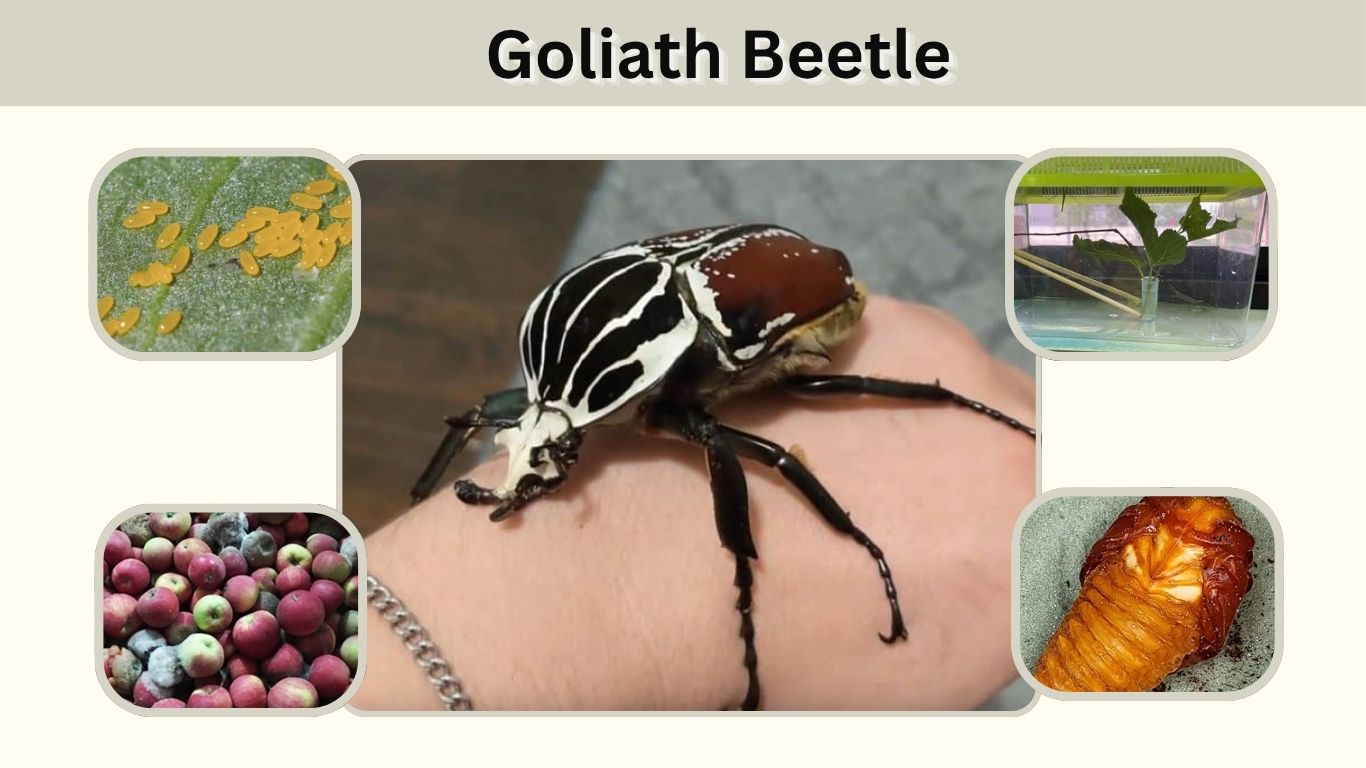
The Goliath beetle is one of the largest and heaviest insects in the world, known for its massive body, impressive strength, and striking appearance. Native to tropical Africa, these giant beetles belong to the scarab beetle family and are famous for their unusual feeding habits and fascinating life cycle. Despite their intimidating size, Goliath beetles are generally harmless to humans. Understanding their size, natural habitat, diet, larvae, and behavior reveals why these remarkable insects are among the most fascinating beetles on Earth.
What Is a Goliath Beetle?
The Goliath beetle belongs to the genus Goliathus within the scarab beetle family, Scarabaeidae. These insects are native to Africa and are recognized for their large bodies, powerful legs, and distinctive color patterns. Several species exist, each with slightly different markings, sizes, and geographic distributions.
Goliath Beetle Appearance and Identification
Goliath beetles have thick bodies protected by hard outer shells. Their colors usually include combinations of black, white, brown, and reddish shades.
Common identification features include:
- Large body: A broad, heavy body covered by a protective exoskeleton.
- Distinctive colors: Contrasting stripes, patches, and markings across the thorax and wing covers.
- Strong legs: Powerful legs with sharp claws for climbing trees.
- Male horns: Males have distinctive Y-shaped horns used during competition.
- Female appearance: Females lack the prominent male horn and have a wedge-shaped head.
Common Goliath Beetle Species
Several recognized species belong to the genus Goliathus, including Goliathus goliatus, Goliathus regius, Goliathus cacicus, Goliathus orientalis, and Goliathus albosignatus. Each species has distinctive physical characteristics and occupies particular regions of Africa.
How Big Is a Goliath Beetle?
Goliath beetles rank among the world’s largest insects in terms of body weight and overall size. Adult males are usually larger than females, although their exact dimensions depend on the species. Their enormous larvae can become considerably heavier than adults before undergoing metamorphosis.
Goliath Beetle Size and Weight
The size of a Goliath beetle varies with its developmental stage and species.
- Adult length: Large individuals can reach approximately 12 centimeters (4.7 inches).
- Adult weight: Some adults weigh around 50–60 grams.
- Larval weight: Large mature larvae can weigh approximately 100 grams.
- Male size: Males generally grow larger and develop prominent head horns.
- Body structure: Their thick exoskeleton contributes to their impressive appearance.
These measurements make Goliath beetles some of the heaviest insects known.
How Much Can a Goliath Beetle Lift?
Goliath beetles have powerful muscles and legs that help them climb and grip tree surfaces. Although they are frequently described as exceptionally strong, their exact lifting capacity has not been reliably established through widely accepted scientific measurements.
Their strength is particularly useful when males compete with rivals for access to mates.
Where Do Goliath Beetles Live?
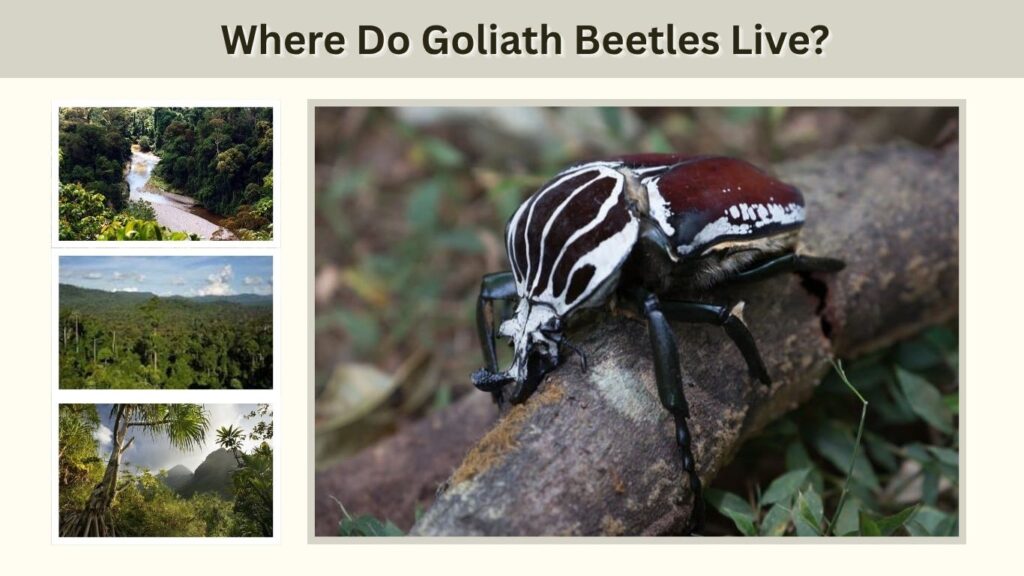
Goliath beetles are native to tropical Africa, where warm temperatures and suitable vegetation support their survival. Different species occupy different geographic regions, but many are associated with tropical forests. Their habitat provides food, shelter, and suitable conditions for reproduction and larval development.
Goliath Beetle Habitat
Goliath beetles occur in countries such as Cameroon, Gabon, Benin, and Zambia. Adults commonly spend time around trees, where they can access plant sap, fruit, and other food sources.
Their strong claws allow them to cling securely to bark and branches. Habitat destruction can threaten local populations by reducing suitable breeding areas and food availability.
Can Goliath Beetles Fly?
Yes, adult Goliath beetles can fly despite their heavy bodies. They have large functional wings folded beneath hardened wing covers called elytra.
During flight, their wings generate enough lift to carry their bodies between trees. Their movement can appear noisy and somewhat awkward, but flying helps them locate food and potential mates.
What Do Goliath Beetles Eat?
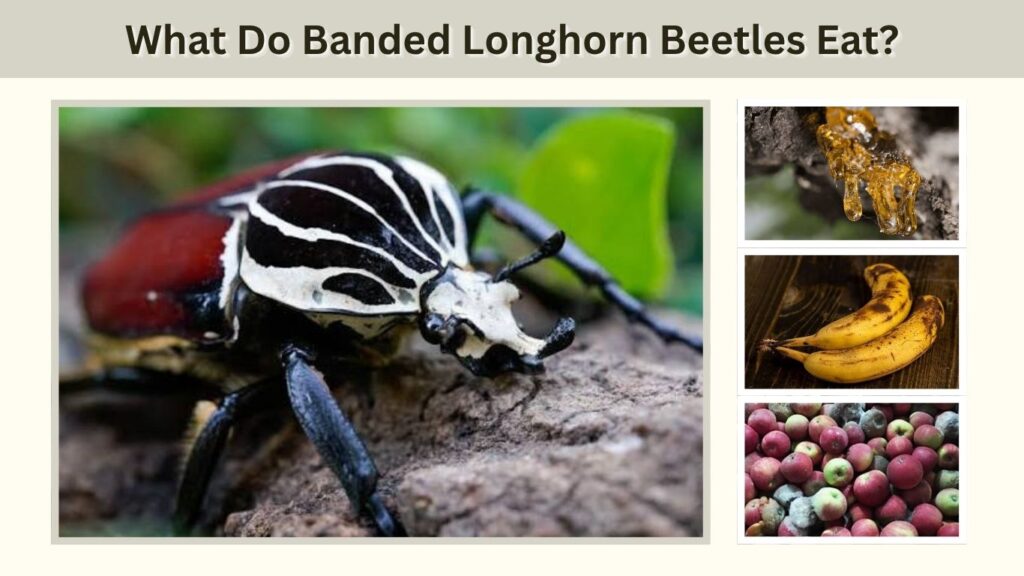
Goliath beetles have different feeding requirements during their adult and larval stages. Adults primarily consume plant-based foods, while developing larvae need protein-rich nutrition. These dietary differences help support their growth and survival throughout their life cycle.
Adult Goliath Beetle Diet
Adult Goliath beetles obtain energy from several natural food sources.
Their diet includes:
- Ripe and rotting fruits: Provide sugars and moisture.
- Tree sap: Supplies carbohydrates and energy.
- Flower nectar: Offers an additional source of sugars.
- Pollen: May provide supplementary nutrients.
Adults commonly search for food around trees and vegetation in their natural habitats.
What Do Goliath Beetle Larvae Eat?
Goliath beetle larvae have unusual nutritional requirements compared with many other scarab beetles.
They develop in organic substrates but require substantial protein for successful growth. Research published in ZooKeys found that larvae receiving protein-rich food developed more successfully than larvae deprived of protein.
Captive larvae have also been observed consuming other beetle larvae, suggesting that predatory feeding may play an important role in their natural development.
Goliath Beetle Larvae and Life Cycle
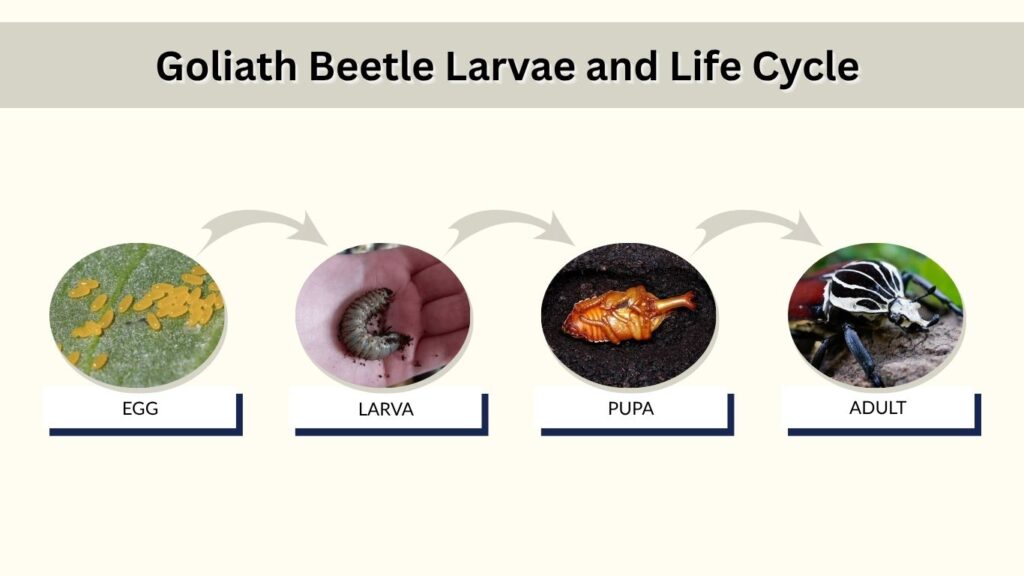
Goliath beetles undergo complete metamorphosis, passing through four developmental stages: egg, larva, pupa, and adult. Their larval stage is particularly important because most physical growth occurs before pupation. Environmental conditions, nutritional quality, and species differences influence development.
Egg Stage
Female Goliath beetles lay eggs in suitable substrate where developing larvae can access food.
After incubation, small larvae hatch and begin feeding. Successful development depends on adequate moisture, temperature, and nutrition.
Larval Stage
Goliath beetle larvae are large, pale grubs with curved bodies and strong mouthparts.
They pass through three larval instars, shedding their outer skin as they grow. During this period, they consume organic material and protein-rich food, gradually accumulating enough energy to complete development.
Pupal Stage
Once fully developed, the larva constructs a protective chamber in the substrate.
Inside this chamber, it transforms into a pupa. Its body undergoes extensive changes, developing the legs, wings, and hardened structures characteristic of an adult beetle.
Adult Stage
After pupation, the adult beetle emerges and begins feeding, mating, and reproducing.
The duration of development varies considerably. Laboratory research has documented larval development in under 200 days under protein-rich feeding conditions, although development in the wild remains less understood.
Are Goliath Beetles Dangerous?
Despite their intimidating appearance, Goliath beetles are generally harmless to humans. They are not venomous and do not possess stingers. Their large size primarily helps them survive, compete, and reproduce rather than attack people.
Do Goliath Beetles Bite?
Goliath beetles possess chewing mouthparts, but they rarely attempt to bite humans.
Rough handling may cause defensive pinching or discomfort. Their sharp claws can also grip skin firmly.
Observing these insects without unnecessary handling is the safest approach.
Can You Keep Goliath Beetles as Pets?
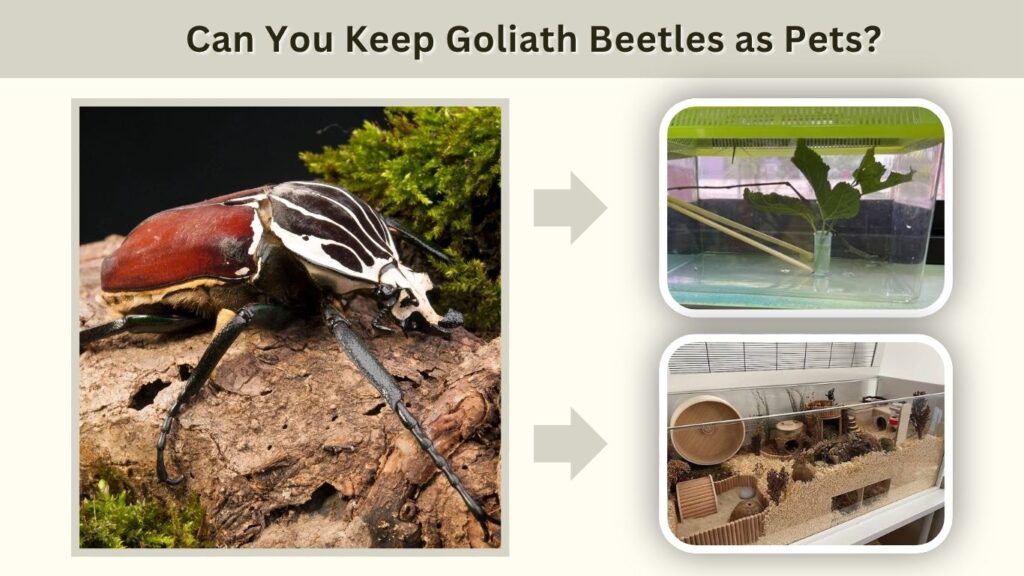
Goliath beetles are sometimes maintained by experienced insect keepers. However, their large size and unusual nutritional requirements make them more challenging to raise than many common beetles. Appropriate housing, feeding, and environmental conditions are essential.
Goliath Beetle Enclosure and Care
Important care considerations include:
- Enclosure: Provide adequate space for climbing and movement.
- Substrate: Use suitable organic material for the beetle’s developmental stage.
- Humidity: Maintain moisture without waterlogging the substrate.
- Ventilation: Ensure proper airflow inside the enclosure.
- Feeding: Supply suitable fruit for adults and appropriate protein-rich nutrition for larvae.
Larvae are generally kept separately because they may injure or consume one another.
FAQs
1. How Long Do Goliath Beetles Live?
Goliath beetle lifespan varies by species, nutrition, and environmental conditions. The immature stages account for much of their development, while adults live for a comparatively shorter period.
2. Are Goliath Beetles the Biggest Beetles?
Goliath beetles are among the largest and heaviest beetles worldwide. However, other species, including certain rhinoceros and longhorn beetles, can exceed them in body length.
3. Do Goliath Beetles Have Wings?
Yes, adult Goliath beetles possess functional flight wings beneath their hardened elytra. These wings allow them to travel between trees in search of food and mates.
4. What Is Special About Goliath Beetle Larvae?
Goliath beetle larvae are unusually large and require significant protein for successful growth. Their nutritional requirements distinguish them from many other scarab beetle larvae.
5. Are Goliath Beetles Rare?
Some Goliath beetle species have localized populations and may face threats from habitat loss and collection. Their abundance varies depending on species, geographic location, and environmental conditions.
