
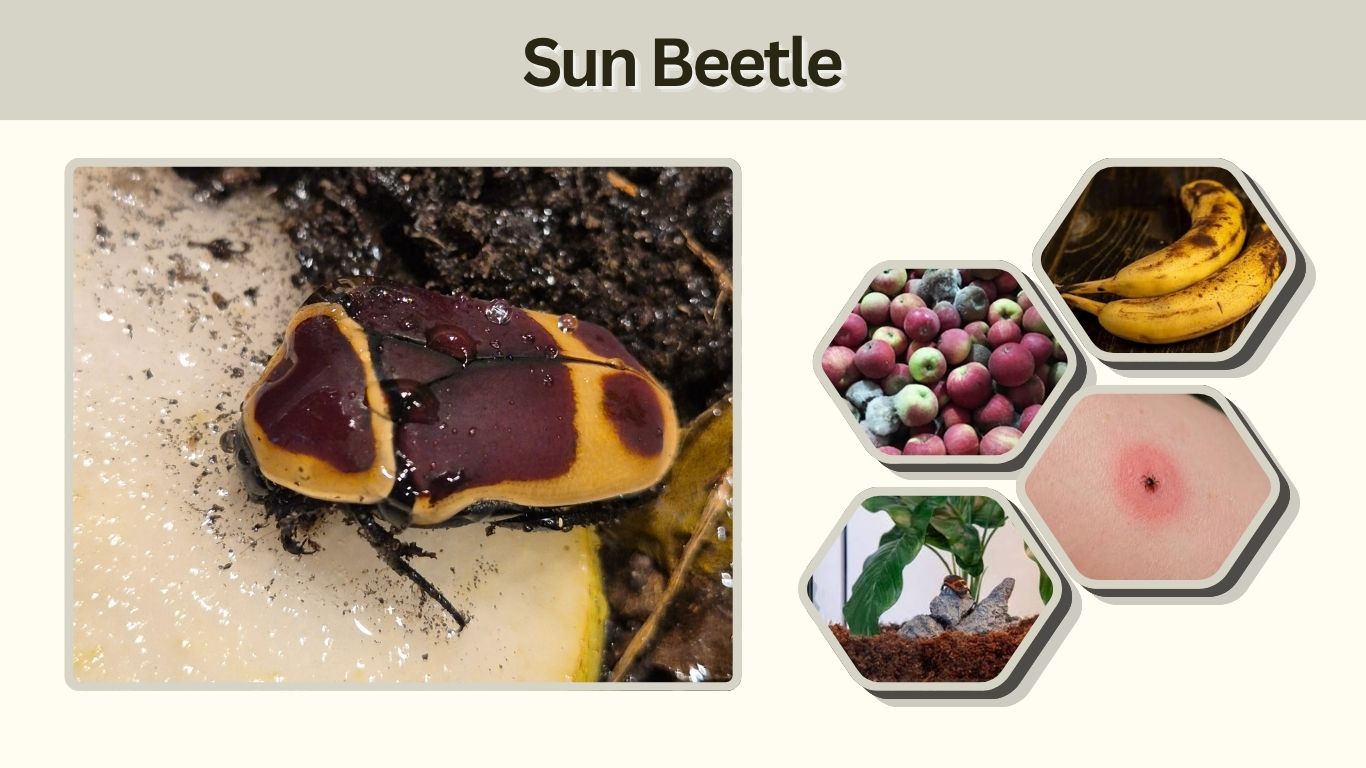
The sun beetle is a colorful African insect recognized for its bright yellow markings, dark brown patterns, and rounded body. Commonly found in tropical and subtropical regions of Africa, these beetles are popular among insect enthusiasts because of their attractive appearance and relatively simple care requirements. Adult sun beetles feed mainly on ripe fruits, while their larvae develop in decomposing organic materials. Their interesting behavior, flying abilities, and complete metamorphosis make them fascinating insects to observe. Understanding sun beetle identification, habitat, diet, life cycle, lifespan, and care helps explain their ecological importance.
What Is a Sun Beetle?
The sun beetle (Pachnoda marginata) is a colorful scarab beetle belonging to the family Scarabaeidae and subfamily Cetoniinae. It is also called the African sun beetle or Congo rose chafer.
These beetles are native to Africa, where they inhabit warm environments containing flowering plants and decomposing vegetation. They are active during daylight and often visit ripe fruits and flowers.
Why Are They Called Sun Beetles?
Sun beetles are associated with warm, sunny environments and are primarily active during daylight hours.
Unlike many nocturnal scarab beetles, they frequently climb, feed, and fly during the day. Their bright coloration also contributes to their distinctive appearance.
Sun Beetle Identification
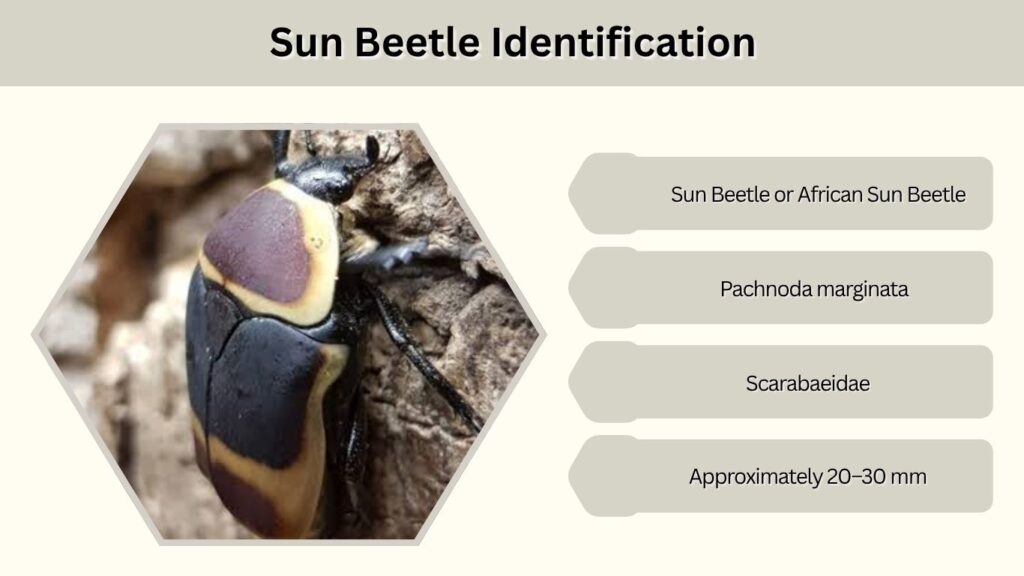
Sun beetles have rounded, compact bodies with bright yellow or orange markings surrounding darker patches. Their coloration varies between subspecies and geographical forms.
Physical Characteristics
- Common Name: Sun Beetle or African Sun Beetle
- Scientific Name: Pachnoda marginata
- Family: Scarabaeidae
- Subfamily: Cetoniinae
- Body Length: Approximately 20–30 mm
- Body Color: Yellow, orange, dark brown, or black
- Body Shape: Rounded, oval, and compact
- Wings: Hardened patterned wing covers
- Antennae: Short with club-shaped tips
- Habitat: African savannas, gardens, and woodland areas
What Does a Common Sun Beetle Look Like?
Common sun beetles display contrasting yellow and dark brown patterns across their backs.
Their legs are usually dark, while their smooth wing covers protect the delicate flight wings underneath.
Some subspecies have more extensive yellow markings, while others appear predominantly brown.
Where Do Sun Beetles Live?
Sun beetles naturally occur in parts of West and Central Africa. They prefer warm habitats where flowering plants, fruits, and decaying vegetation are available.
Adults frequently occupy shrubs, trees, and flowering plants. Larvae remain hidden underground or inside decomposing organic materials.
Are Sun Beetles Found in the UK?
Sun beetles are not native to the United Kingdom.
However, they are commonly maintained in captivity by insect enthusiasts, educational facilities, and zoological collections.
Their popularity comes from their attractive coloration, active behavior, and manageable breeding requirements.
What Do Sun Beetles Eat?
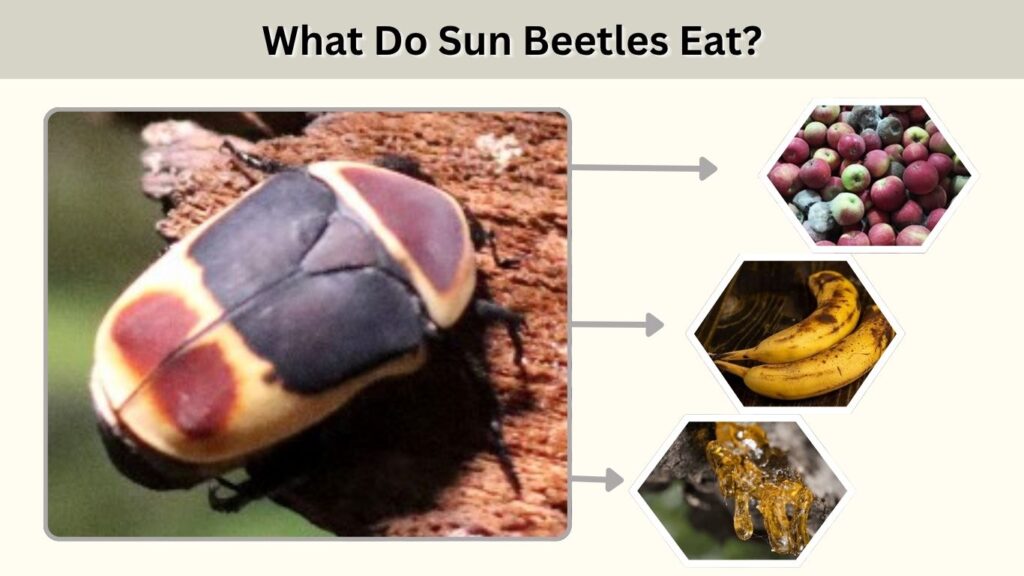
Sun beetles have different feeding habits during adulthood and their larval stage.
Adult beetles mainly consume sugary foods, while their larvae rely on decomposing plant material.
Adult Sun Beetle Diet
Adults feed on ripe fruits, flower nectar, and other sugary plant substances.
Bananas, apples, mangoes, and peaches are commonly offered to captive sun beetles.
Specially formulated beetle jelly can also provide a convenient food source. Fresh food should be replaced regularly to prevent mold and fermentation problems.
What Do Sun Beetle Larvae Eat?
Sun beetle larvae feed primarily on decomposing hardwood leaves, rotting wood, and other organic matter.
They obtain nutrients from the decaying material while developing underground.
Their feeding contributes to the breakdown of dead vegetation and nutrient recycling.
Sun Beetle Life Cycle
Sun beetles undergo complete metamorphosis, passing through four developmental stages. Their life cycle varies according to temperature, humidity, food availability, and subspecies.
Under favorable captive conditions, development from egg to adult may take approximately four to nine months.
Four Stages of Sun Beetle Development
- Egg Stage: Females deposit small, pale eggs inside moist, nutrient-rich substrate.
- Larval Stage: Eggs hatch into creamy-white grubs that feed on decomposing organic material.
- Pupal Stage: Mature larvae construct protective chambers using soil and organic particles before transforming into pupae.
- Adult Stage: Fully developed beetles emerge, feed, mate, and reproduce.
What Does a Sun Beetle Grub Look Like?
Sun beetle grubs have thick, creamy-white bodies, brown heads, and six small legs.
They usually curl into a C shape when disturbed.
Mature larvae can reach approximately 4 centimeters, making them noticeably larger than many common garden grubs.
Sun Beetle Cocoon and Pupation
Before becoming adults, mature sun beetle larvae construct protective chambers from surrounding substrate and waste materials.
These chambers are often called cocoons, although they differ from silk cocoons produced by many moths.
How Long Does Sun Beetle Pupation Take?
The pupal period commonly lasts around four to five weeks under suitable conditions.
Developing beetles remain protected inside their chambers during metamorphosis.
Disturbing or breaking these chambers can damage developing insects, so they should remain undisturbed whenever possible.
How Long Do Sun Beetles Live?
Sun beetle lifespan depends on environmental conditions, diet, and developmental stage.
Adult sun beetles commonly survive for several months in captivity, often around two to six months.
Do Sun Beetles Live Longer in Captivity?
Captive sun beetles may benefit from consistent temperatures, reliable food, and protection from predators.
However, improper humidity, poor nutrition, overcrowding, or unsuitable substrate can shorten their lifespan.
Providing appropriate conditions throughout every developmental stage is important for healthy beetle colonies.
Sun Beetle Care and Enclosure Setup
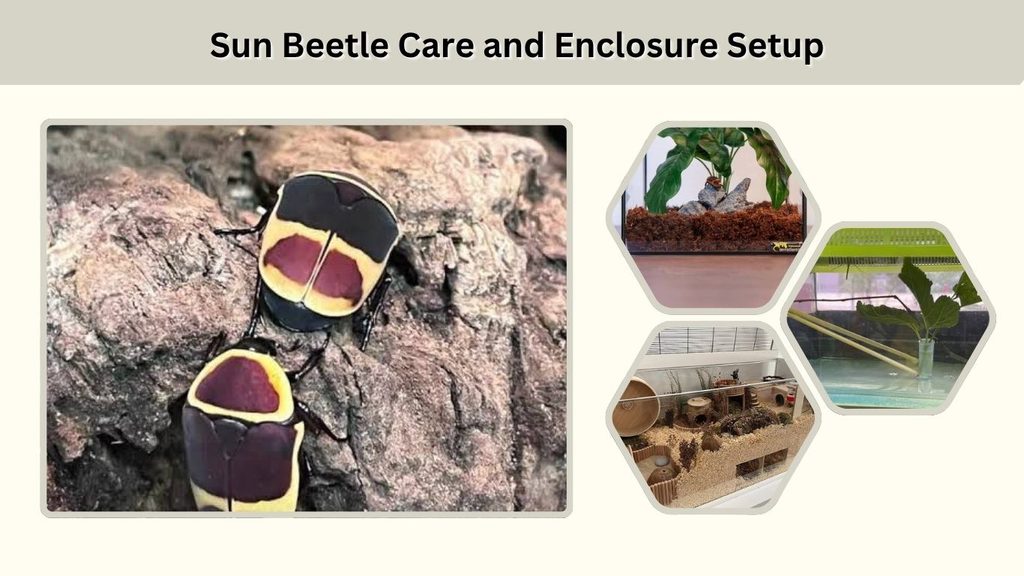
Sun beetles are popular introductory beetles for insect keepers because they are relatively easy to maintain under suitable conditions.
Their enclosure should provide climbing space for adults and sufficient substrate for larvae.
Essential Sun Beetle Care Requirements
- Enclosure: Secure, well-ventilated terrarium with space for climbing
- Temperature: Approximately 22–28°C, with suitable temperature variation
- Humidity: Moderate to high humidity without waterlogged substrate
- Substrate: Decomposed hardwood leaves and well-rotted hardwood
- Substrate Depth: Approximately 15–20 cm or deeper for breeding
- Adult Food: Ripe fruit and commercially prepared beetle jelly
- Climbing Structures: Cork bark, branches, and stable decorative materials
- Cleaning: Remove spoiled fruit and monitor substrate quality
How to Keep Sun Beetle Larvae Healthy
Larvae require moist, nutritious substrate containing decomposing hardwood material.
Avoid using plain coconut fiber as their only food source because it lacks sufficient nutrition.
Keep the substrate slightly damp, maintain ventilation, and avoid excessive disturbance during pupation.
Sun Beetle Breeding and Reproduction
Sun beetles can reproduce successfully in captivity when provided with suitable food, temperature, and nesting substrate.
Females burrow beneath the surface to lay eggs. After hatching, larvae begin feeding on decomposing organic matter.
Can Sun Beetles Live Together?
Sun beetles can generally be maintained in small groups when sufficient space and resources are available.
However, overcrowding may create competition for food and suitable breeding areas.
Captive beetles and larvae should never be released outdoors in regions where they are not native.
Are Sun Beetles Dangerous?
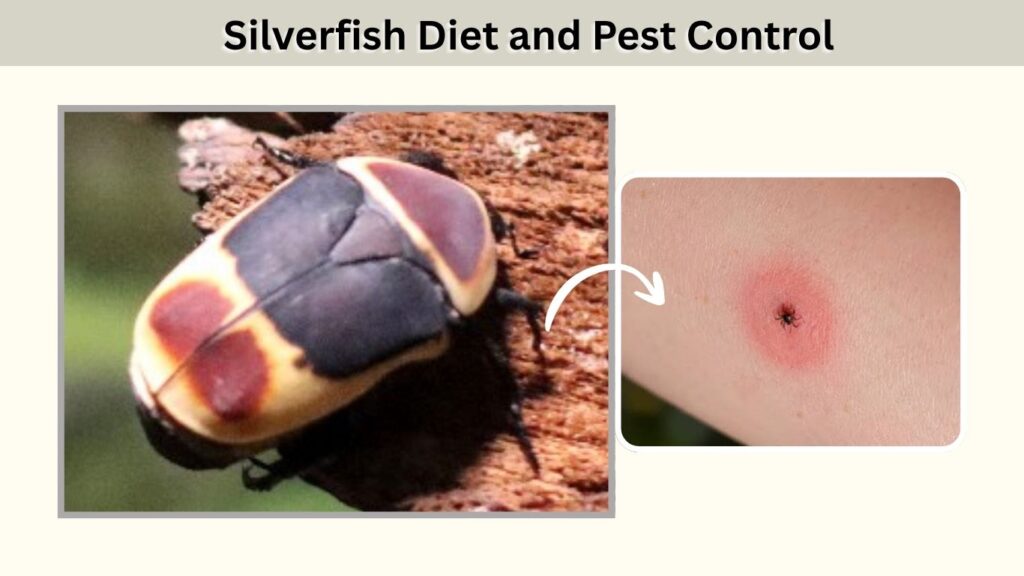
Sun beetles are generally harmless to humans. They do not possess venomous stingers and are not aggressive insects.
Although they have chewing mouthparts, they are not considered dangerous biting pests.
Can Sun Beetles Fly?
Yes, adult sun beetles have functional flight wings beneath their hardened wing covers.
They are active flyers and may move quickly between branches, flowers, and feeding locations.
Captive enclosures should have secure lids to prevent accidental escapes.
Interesting Sun Beetle Facts
Sun beetles have several unusual characteristics that make them popular among insect enthusiasts.
Fascinating Facts About Sun Beetles
- Daytime Activity: Adults are primarily active during daylight.
- Bright Coloration: Their yellow and brown patterns vary between forms.
- Complete Metamorphosis: They develop through egg, larva, pupa, and adult stages.
- Natural Decomposition: Larvae help break down decaying plant materials.
- Flying Ability: Adults can fly using wings beneath their hardened wing covers.
FAQs
1. What Is the Scientific Name of the Sun Beetle?
The scientific name of the commonly kept African sun beetle is Pachnoda marginata. It belongs to the family Scarabaeidae and subfamily Cetoniinae. Several subspecies and geographical forms display different yellow, orange, and dark brown patterns.
2. How Long Do Sun Beetles Live?
Adult sun beetles commonly live for several months, often around two to six months in captivity. Their complete life cycle takes longer because larvae spend months developing inside decomposing organic material before becoming adults.
3. What Do Sun Beetle Grubs Eat?
Sun beetle grubs mainly consume decomposing hardwood leaves, rotten wood, and other organic materials. They require nutrient-rich substrate throughout development. Plain coconut fiber alone is not an adequate diet for healthy larval growth.
4. Are Sun Beetles Easy to Keep as Pets?
Sun beetles are considered suitable for beginners when their environmental needs are met. They require a ventilated enclosure, appropriate warmth, moist organic substrate, and fresh fruit. Breeding requires deeper, nutrient-rich substrate and minimal disturbance during pupation.
5. Can Sun Beetles Bite or Sting Humans?
Sun beetles do not sting and are generally harmless to humans. Their mouthparts are adapted for feeding rather than attacking people. Although rough handling should be avoided, these insects are not considered medically dangerous biting pests.
