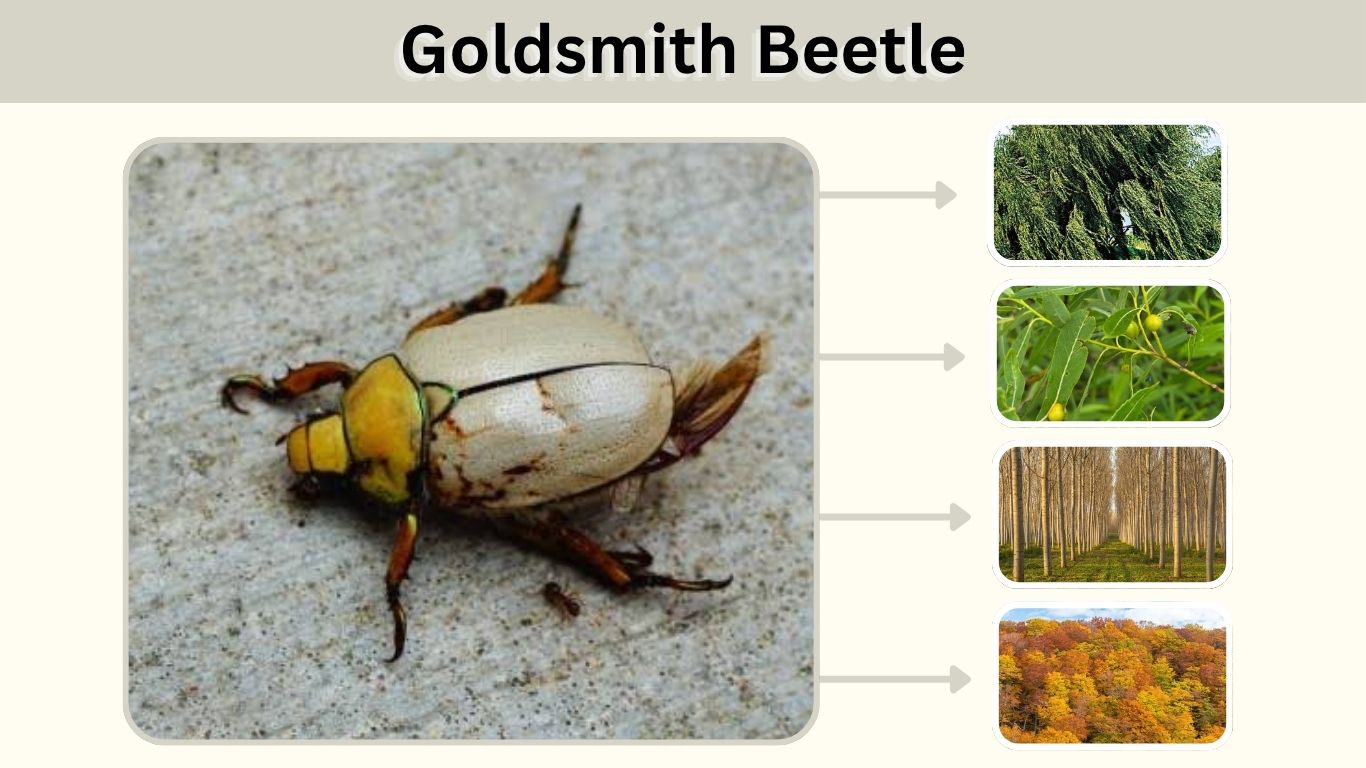
The goldsmith beetle is a beautiful North American insect recognized for its shiny golden-yellow body, metallic reflections, and rounded appearance. Commonly found in deciduous forests, woodlands, and nearby grasslands, this beetle belongs to the scarab beetle family. Although its striking coloration makes it look unusual, the goldsmith beetle is generally harmless to humans and rarely causes significant damage to trees. Its larvae contribute to decomposition, while adults feed on tree leaves. Understanding goldsmith beetle identification, habitat, diet, life cycle, behavior, and distribution reveals its fascinating ecological importance.
What Is a Goldsmith Beetle?
The goldsmith beetle (Cotalpa lanigera) is a North American scarab beetle belonging to the family Scarabaeidae and subfamily Rutelinae. It is also called the gold bug because of its golden coloration.
Unlike many brightly colored beetles, goldsmith beetles have smooth, rounded bodies with subtle metallic reflections. They are primarily active during warmer months and often feed on tree foliage at night.
Why Is It Called the Goldsmith Beetle?
The name comes from the insect’s golden appearance, which resembles polished gold.
Its wing covers may appear yellow, cream, or slightly greenish depending on lighting conditions.
This distinctive coloration makes it one of the more recognizable North American scarab beetles.
Goldsmith Beetle Identification
Goldsmith beetles have stout, oval bodies with smooth, golden-yellow wing covers. Their thorax sometimes displays a greenish metallic sheen, while the underside contains dense, pale hairs.
These features help distinguish them from other scarab beetles.
Physical Characteristics
- Common Name: Goldsmith Beetle or Gold Bug
- Scientific Name: Cotalpa lanigera
- Family: Scarabaeidae
- Subfamily: Rutelinae
- Body Length: Approximately 20–26 mm
- Body Color: Golden-yellow, cream, or pale greenish-yellow
- Body Shape: Rounded, oval, and sturdy
- Wings: Hardened golden wing covers with flight wings underneath
- Legs: Strong, adapted for gripping and digging
- Antennae: Short with specialized clubbed tips
- Habitat: Deciduous forests, woodlands, and adjacent fields
Why Do Goldsmith Beetles Look Metallic?
The beetle’s outer shell reflects light, creating an attractive golden or slightly greenish appearance.
The degree of shine changes depending on the viewing angle and lighting.
Its hardened wing covers also protect the delicate wings used for flight.
Goldsmith Beetle Range and Habitat
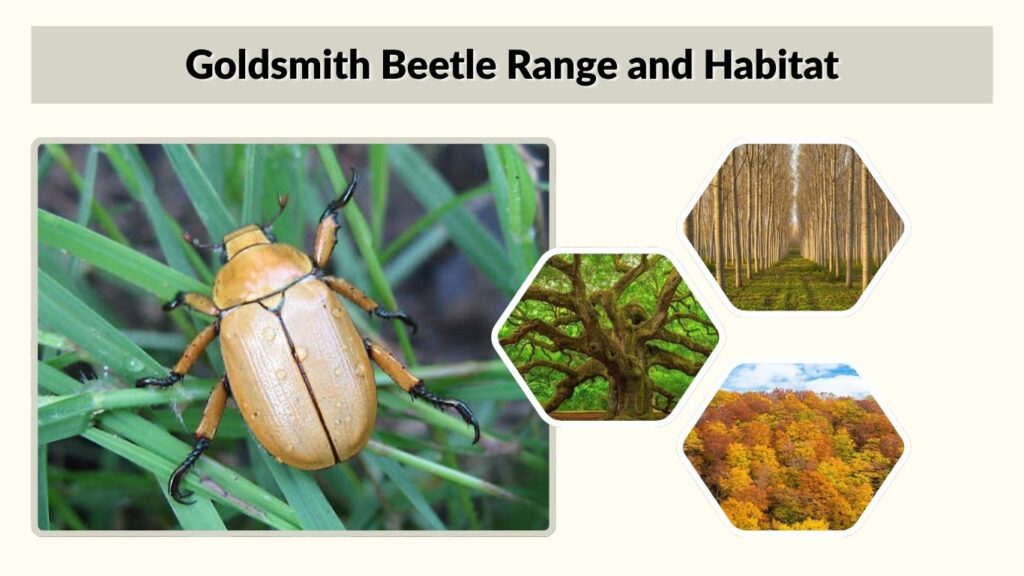
Goldsmith beetles are native to North America, occurring mainly throughout eastern and central regions of the continent.
They inhabit deciduous forests and nearby open areas containing suitable feeding trees.
Where Do Goldsmith Beetles Live?
Goldsmith beetles commonly live around willow, oak, poplar, and other deciduous trees.
Adults spend time on leaves and branches, while larvae develop in soil near decaying wood and tree roots.
Their preferred habitats provide both adult food sources and suitable conditions for larval growth.
Goldsmith Beetles in Michigan, Minnesota, and Wisconsin
Goldsmith beetles occur in Michigan, Minnesota, and Wisconsin, although sightings are relatively uncommon.
In these states, adults may appear during late spring and early summer.
They sometimes fly toward outdoor lights at night, making them noticeable around homes near wooded areas.
What Do Goldsmith Beetles Eat?
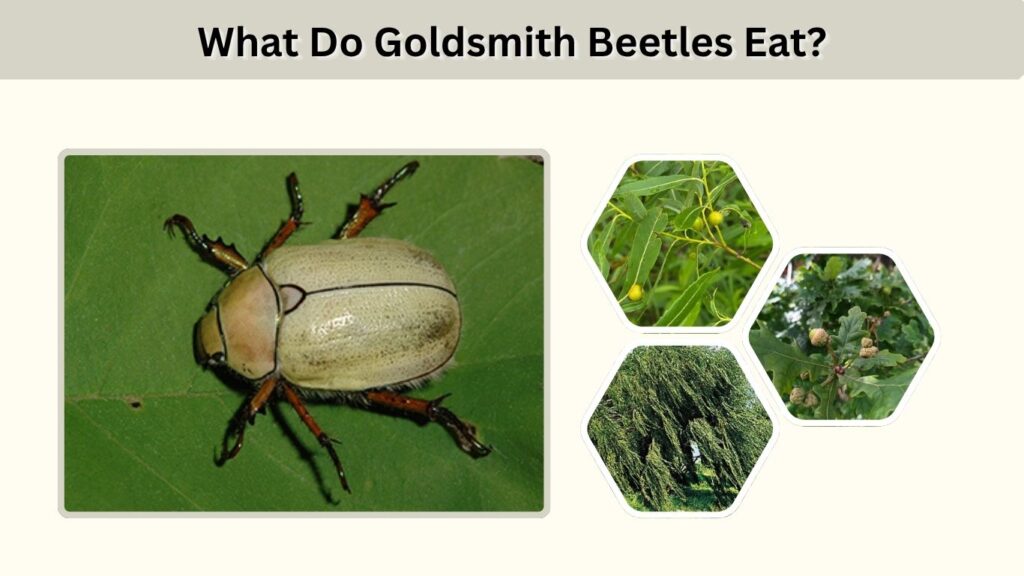
Goldsmith beetles are plant-feeding insects, but their diet changes as they develop.
Adults primarily consume leaves from deciduous trees, while larvae feed underground on roots and decaying woody material.
Common Goldsmith Beetle Food Sources
- Willow Leaves: A commonly recorded adult food source
- Poplar Leaves: Frequently consumed by adult beetles
- Oak Leaves: Provide food in woodland habitats
- Hickory Leaves: Another recorded adult food source
- Pear Leaves: Sometimes eaten by adults
- Decaying Wood: Important food material for developing larvae
- Tree Roots: Consumed by larvae living underground
Do Goldsmith Beetles Damage Trees?
Adult goldsmith beetles occasionally chew tree leaves, but they rarely cause significant damage.
The University of Minnesota Extension describes them primarily as insects of curiosity rather than serious tree pests.
Most healthy trees can tolerate limited feeding without requiring insecticide treatment.
Goldsmith Beetle Life Cycle
Goldsmith beetles undergo complete metamorphosis, passing through four developmental stages.
Their underground development takes considerably longer than the relatively short period adults spend aboveground.
How Do Goldsmith Beetles Reproduce?
Female beetles deposit eggs in soil near suitable food sources, including decaying wood and tree roots.
After hatching, the larvae burrow through the soil and begin feeding.
They continue growing before pupating in underground chambers and eventually emerging as adult beetles.
How Long Do Goldsmith Beetles Live?
The larval stage commonly lasts approximately one to two years.
Adult beetles typically emerge during late spring or early summer, depending on local conditions.
Their total lifespan is therefore dominated by their underground development rather than adult activity.
Do Goldsmith Beetles Bite or Sting?
Goldsmith beetles are generally harmless to humans. They do not have venomous stingers and are not aggressive insects.
Although they possess chewing mouthparts, they are not known as biting pests.
Can a Goldsmith Beetle Bite Humans?
A goldsmith beetle might deliver a minor defensive pinch if handled roughly, but biting people is not characteristic behavior.
They do not feed on blood or intentionally attack humans.
If you encounter one, avoid squeezing it. Gently allowing the beetle to move away is the safest approach.
Are Goldsmith Beetles Rare?
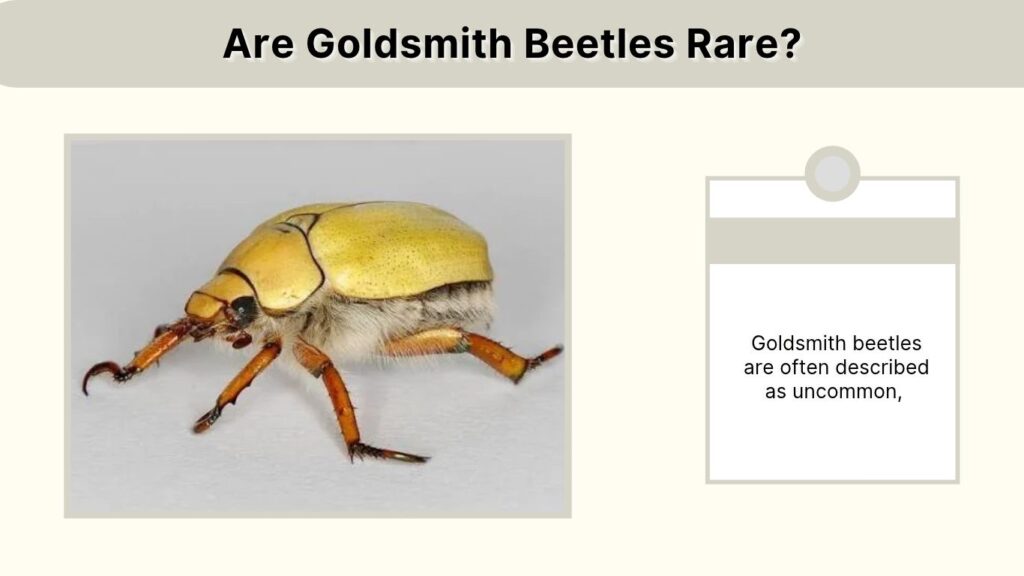
Goldsmith beetles are often described as uncommon, although their abundance varies by region.
They may be overlooked because adults are primarily nocturnal and spend much of their time in trees.
Are Goldsmith Beetles Endangered?
The goldsmith beetle is not generally classified as an endangered species.
However, local populations can be affected by habitat changes, including the loss of mature deciduous trees and decaying wood.
Maintaining natural woodland habitats helps support these beetles and other beneficial insects.
Are Goldsmith Beetles Decomposers?
Goldsmith beetles contribute to decomposition during their larval stage.
Their grubs feed on decaying wood and associated organic material, helping break down dead plant matter.
Why Are Goldsmith Beetles Important?
Goldsmith beetles contribute to woodland ecosystems in several ways.
Larvae help aerate soil while burrowing and participate in the breakdown of decaying wood.
Adults and larvae also serve as food for other animals, making them part of natural woodland food webs.
Goldsmith Beetle Predators and Behavior
Goldsmith beetles face threats from insect-eating birds and other woodland predators.
Their activity patterns and sheltering behavior help them survive in their natural environment.
Common Goldsmith Beetle Predators
- Blue Jays: Insect-eating birds that may capture adult beetles
- Yellow-Billed Cuckoos: Woodland birds that consume various insects
- Purple Martins: Aerial insectivores capable of capturing flying beetles
- Other Insectivorous Birds: Potential predators in suitable habitats
Can Goldsmith Beetles Fly?
Yes, goldsmith beetles have functional flight wings beneath their hardened wing covers.
They commonly fly during warmer evenings and may be attracted to artificial lights.
During daylight, they often remain concealed among tree foliage.
Goldsmith Beetle Spiritual Meaning and Symbolism
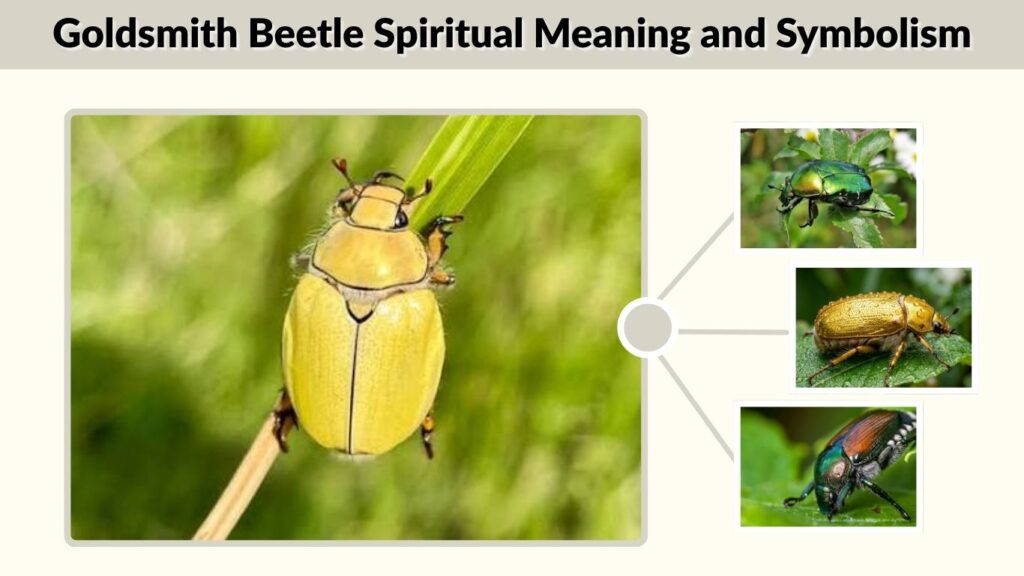
The goldsmith beetle’s metallic appearance sometimes inspires symbolic associations with prosperity, transformation, and renewal.
These interpretations belong to cultural or personal symbolism rather than scientific biology.
Does the Goldsmith Beetle Symbolize Good Luck?
Some people associate golden insects with wealth, fortune, or positive change because of their color.
However, there is no universal traditional meaning specifically associated with the goldsmith beetle.
Its symbolism depends on individual beliefs and cultural interpretation.
Goldsmith Beetle Facts
Goldsmith beetles possess several unusual characteristics that make them interesting to naturalists and insect enthusiasts.
Interesting Goldsmith Beetle Facts
- Golden Appearance: Their bodies can display attractive metallic-yellow reflections.
- Nocturnal Activity: Adults generally feed and move around at night.
- Long Larval Development: Grubs may spend one to two years developing underground.
- Woodland Habitat: They are associated with deciduous forests.
- Natural Decomposition: Larvae help break down decaying woody materials.
- Uncommon Sightings: Adults are not frequently encountered in many areas.
- Literary Connection: The species has been suggested as a possible inspiration for Edgar Allan Poe’s The Gold-Bug, although the identification is uncertain.
FAQs
1. Do Goldsmith Beetles Bite Humans?
Goldsmith beetles are not considered dangerous biting insects. They do not sting or feed on human blood. Although their mandibles might cause a minor pinch if handled roughly, they generally avoid confrontation and are harmless when left undisturbed.
2. Are Goldsmith Beetles Rare?
Goldsmith beetles are considered relatively uncommon in many parts of their North American range. Their nocturnal habits and preference for woodland habitats make sightings infrequent. However, they are not generally classified as endangered or threatened.
3. What Do Goldsmith Beetles Eat?
Adult goldsmith beetles eat leaves from deciduous trees, including willow, poplar, oak, and hickory. Their larvae feed on decaying wood and roots underground. These different feeding habits allow the beetles to use separate food sources throughout their development.
4. Where Can You Find Goldsmith Beetles?
Goldsmith beetles occur throughout parts of eastern and central North America, including Michigan, Minnesota, and Wisconsin. They prefer deciduous woodlands and adjacent fields. Adults are most commonly encountered during late spring and early summer.
5. Are Goldsmith Beetles Good for the Environment?
Yes, goldsmith beetles contribute to woodland ecosystems. Their larvae participate in decomposition and soil aeration, while adults provide food for insect-eating birds. Despite feeding on tree leaves, they are not usually considered significant agricultural or landscape pests.