
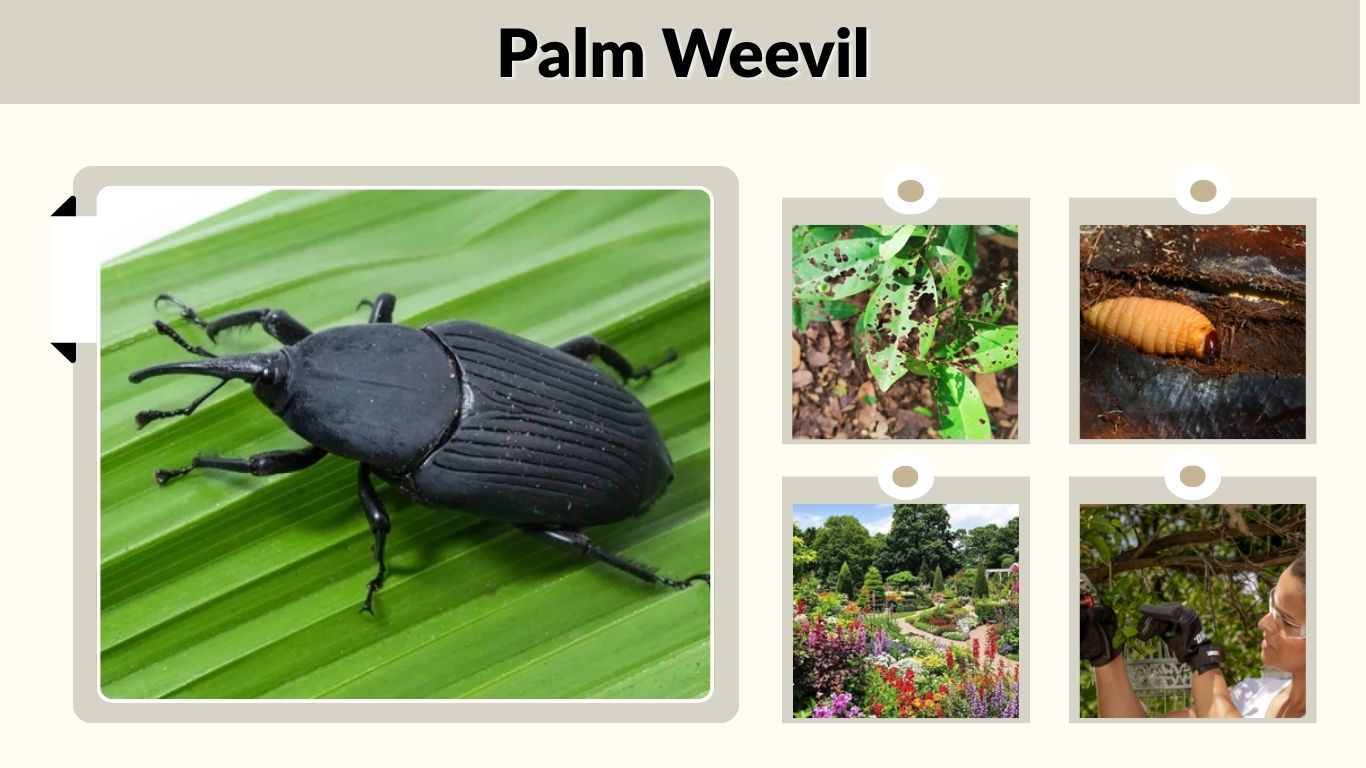
Palm weevils are large snout beetles that can seriously damage coconut, date, and ornamental palm trees. Their larvae tunnel inside growing tissue, often causing problems before the outside of the tree looks unhealthy. The red palm weevil and South American palm weevil are especially destructive, although not every weevil found on a palm is the same species. This guide explains how to identify palm weevils, understand their life cycle, recognize infestation signs, and choose effective control methods before damage becomes irreversible.
What Is a Palm Weevil?
Palm weevils are beetles belonging to the family Curculionidae. Several destructive species belong to the genus Rhynchophorus, which includes large insects with elongated snouts and strong chewing mouthparts. They are primarily associated with tropical and subtropical palm trees.
Common Types of Palm Weevils
Several important species include:
- Red Palm Weevil: Rhynchophorus ferrugineus, a destructive pest native to Asia.
- South American Palm Weevil: Rhynchophorus palmarum, commonly associated with tropical American palms.
- Palmetto Weevil: Rhynchophorus cruentatus, a large species native to the southeastern United States.
- African Palm Weevil: Rhynchophorus phoenicis, found in tropical African regions.
- Asian Palm Weevil: Rhynchophorus vulneratus, another species associated with palm damage.
Why Are Palm Weevils Important?
Palm weevils are significant agricultural pests because their larvae feed inside palm trunks and crowns.
Unlike insects that damage only leaves, palm weevil larvae attack internal tissues responsible for new growth.
Severe infestations can weaken or kill otherwise healthy palm trees.
How to Identify a Palm Weevil
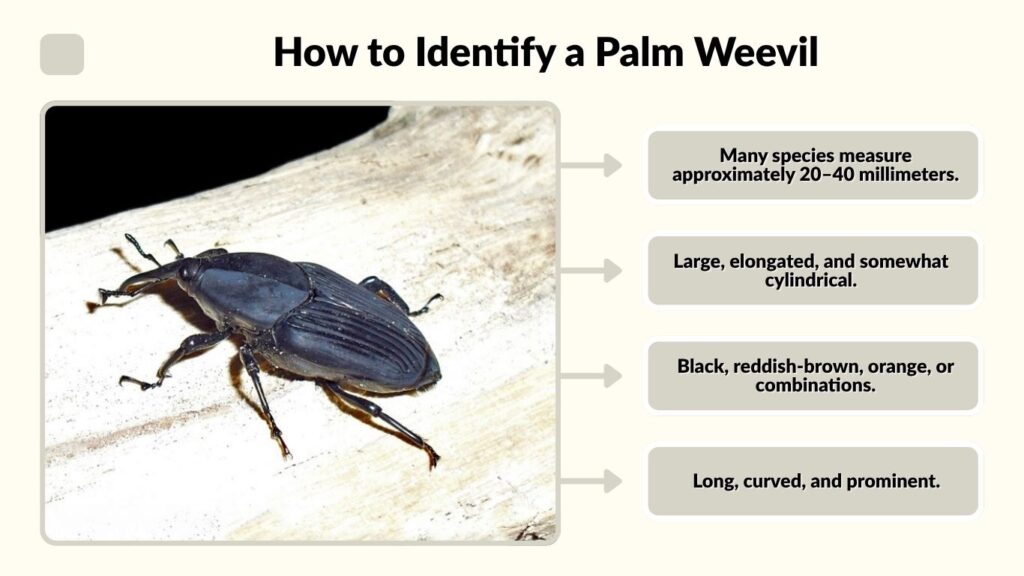
Palm weevils are relatively large beetles with distinctive snouts, elongated bodies, and strong legs. Their appearance differs between species, particularly in coloration and body size. Identifying adults and larvae helps determine whether a palm tree might be experiencing an infestation.
Adult Palm Weevil Identification
Common characteristics include:
- Body Length: Many species measure approximately 20–40 millimeters.
- Body Shape: Large, elongated, and somewhat cylindrical.
- Color: Black, reddish-brown, orange, or combinations.
- Snout: Long, curved, and prominent.
- Antennae: Elbowed antennae attached to the snout.
- Wing Covers: Hard protective structures covering the abdomen.
- Legs: Six sturdy legs used for climbing.
Palm Weevil Larvae and Grubs
Palm weevil larvae are creamy-white or yellowish grubs with dark brown head capsules.
They have thick, segmented bodies and lack functional legs. Mature larvae of some species can reach approximately five centimeters.
These grubs live inside palm tissues, where they create tunnels while feeding.
Palm Weevil Life Cycle
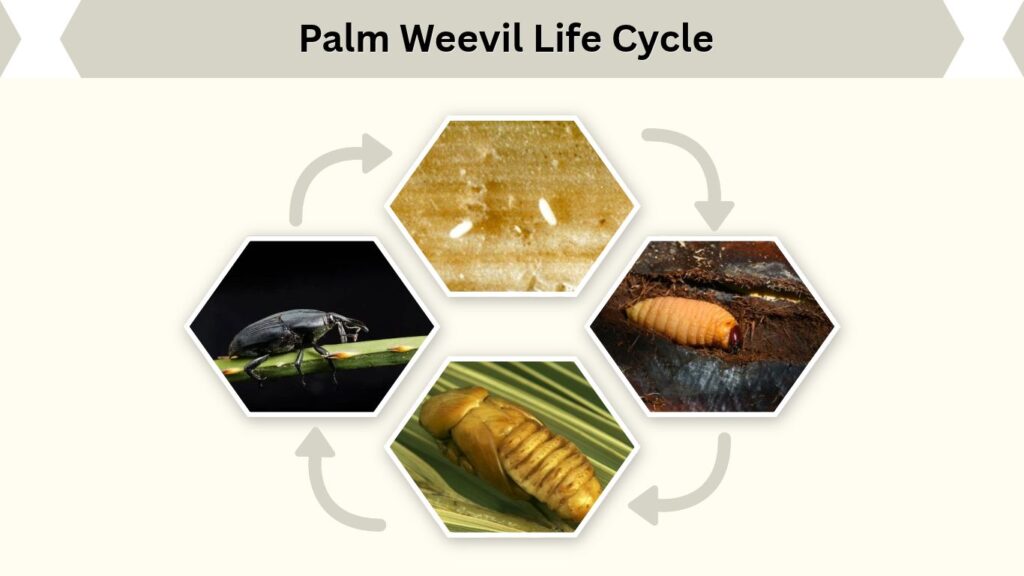
Palm weevils undergo complete metamorphosis through four developmental stages: egg, larva, pupa, and adult. The duration varies according to species, temperature, and food availability. Warm conditions generally encourage faster development and continuous reproduction.
Egg and Larval Stages
Female palm weevils lay eggs inside wounds, crevices, or soft tissues of suitable palm trees.
After hatching, larvae begin feeding within the palm.
They gradually enlarge their feeding tunnels, damaging surrounding tissues and weakening the growing crown.
The larval stage causes most of the serious damage associated with palm weevil infestations.
Pupal and Adult Stages
Mature larvae construct protective cocoons from palm fibers.
Inside these structures, they transform into pupae before developing into adult beetles.
New adults emerge, fly toward suitable palm trees, mate, and begin another reproductive cycle.
Where Do Palm Weevils Live?
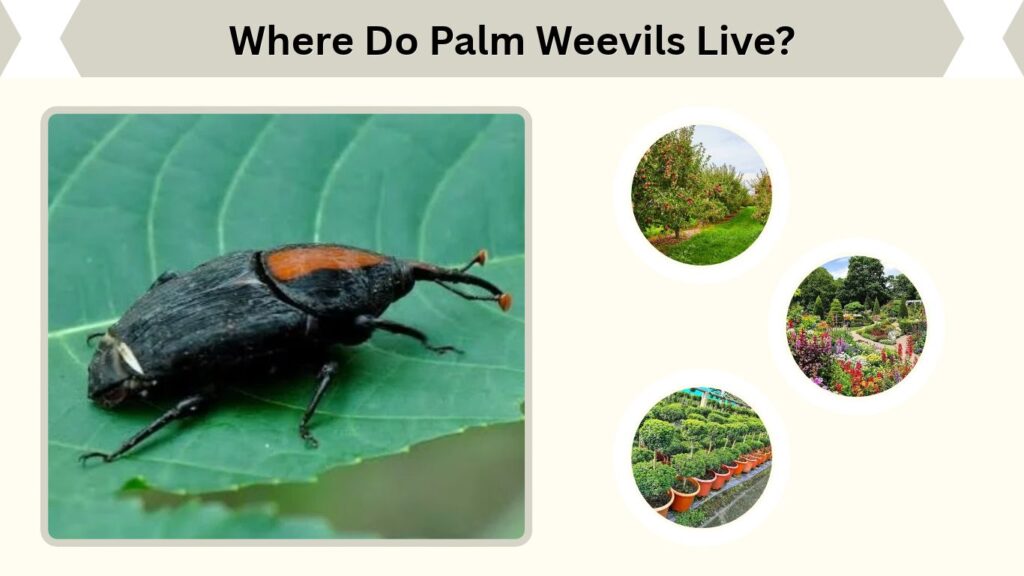
Palm weevils inhabit tropical and subtropical regions containing suitable palm species. Their distribution differs between species, and several have expanded beyond their native ranges through international movement of infested palm plants.
Red Palm Weevil Habitat
The red palm weevil (Rhynchophorus ferrugineus) originated in Asia but has spread into the Middle East, Mediterranean region, and parts of Africa.
It attacks date palms, coconut palms, and various ornamental species.
Warm climates with abundant host plants provide suitable conditions for reproduction.
Palm Weevils in Florida and California
Florida is home to the native palmetto weevil, which can damage stressed and transplanted palms as well as certain healthy ornamental species.
In Southern California, the South American palm weevil has caused considerable damage, particularly to Canary Island date palms around San Diego.
A different Asian species, Rhynchophorus vulneratus, was previously detected in Laguna Beach but was declared eradicated in 2015.
What Do Palm Weevils Eat?
Palm weevils feed primarily on palm tissues. Their preferred host plants differ by species, but many attack coconut, date, and ornamental palms. Adults may feed on soft plant tissues, while larvae burrow into internal structures.
Palm Weevil Diet and Host Plants
Common host palms include coconut palms, date palms, Canary Island date palms, oil palms, and certain ornamental palms.
Some species also attack stressed or recently transplanted trees.
Larvae feed inside soft tissues, especially near the crown, while adults may feed on accessible palm tissues.
Are Palm Weevil Larvae Edible?
Palm weevil larvae are consumed as traditional foods in several tropical regions.
African palm weevil larvae, particularly Rhynchophorus phoenicis, are eaten in parts of West and Central Africa.
Some Asian and South American species are also consumed.
The larvae contain protein and fat, although nutritional composition varies. Wild-collected grubs may contain contaminants, so unidentified or pesticide-exposed insects should not be eaten.
Signs of Palm Weevil Damage
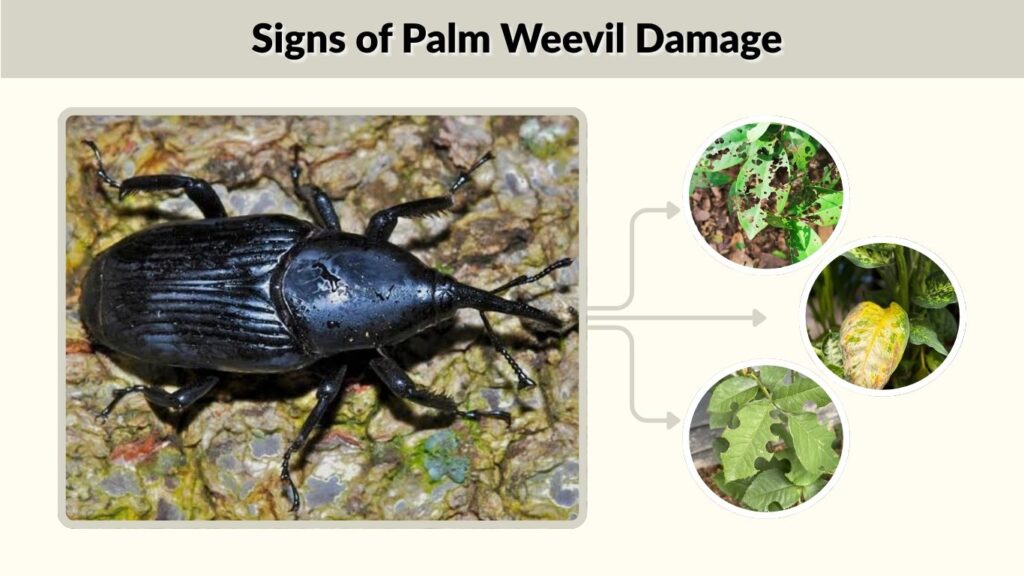
Palm weevil infestations often remain hidden because larvae develop inside trunks and crowns. Visible symptoms may appear only after extensive internal damage has occurred. Early detection is important because severe crown destruction can make recovery impossible.
Common Signs of Palm Weevil Infestation
Look for these warning signs:
- Yellowing or drooping palm leaves.
- Damaged or distorted emerging fronds.
- Holes near the crown or leaf bases.
- Fibrous debris or sawdust-like material.
- Brown liquid or unpleasant odors around damaged tissue.
- Empty pupal cocoons near the tree.
- Collapsing crowns and progressive decline.
Red Palm Weevil Damage in Coconut Trees
Red palm weevil larvae can tunnel through the tender internal tissues of coconut palms.
Heavy feeding may damage the growing point, causing developing leaves to wilt or collapse.
When the growing point is destroyed, the palm generally cannot recover.
How to Control Palm Weevils
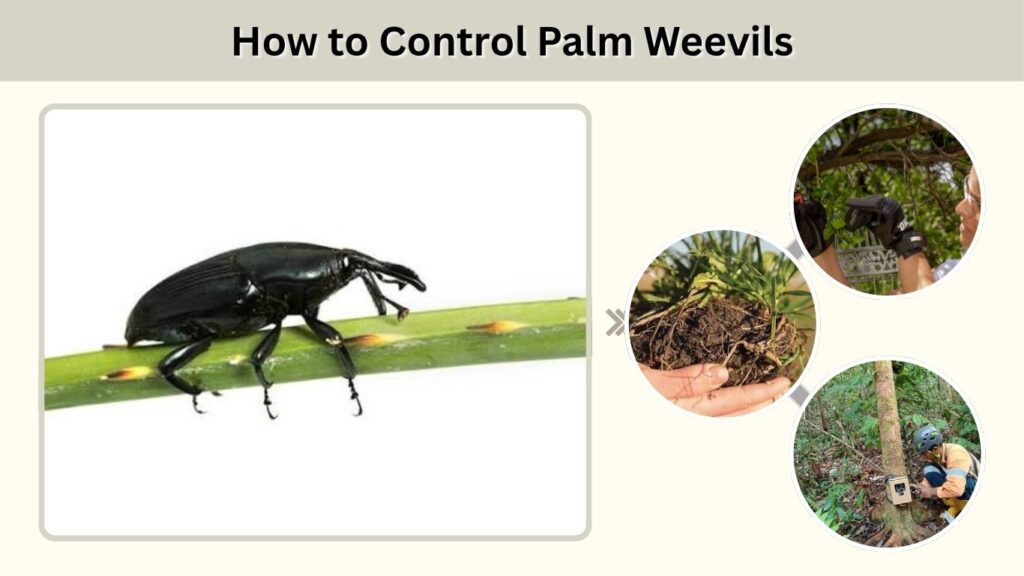
Palm weevil control requires early detection and integrated pest management. Because larvae develop inside palm trees, ordinary surface spraying may not reach them. Effective management combines inspection, trapping, sanitation, and professionally selected treatments.
Palm Weevil Control Methods
Important steps include:
- Inspect regularly: Examine crowns, leaf bases, and newly emerging fronds.
- Monitor adult beetles: Use species-specific pheromone traps where recommended.
- Protect palm wounds: Avoid unnecessary pruning and mechanical injuries.
- Treat early infestations: Consult specialists about registered insecticide treatments.
- Remove severely damaged palms: Dispose of infested material according to local regulations.
Red Palm Weevil Pheromone Traps
Pheromone traps attract adult palm weevils using chemical signals, sometimes combined with food-based attractants.
These traps help monitor populations and can contribute to management programs.
However, traps alone rarely eliminate established infestations because developing larvae remain protected inside trees.
Palm Weevil Insecticide Treatment
Professional palm treatments may involve appropriately registered insecticides applied to the crown, trunk, or root zone.
Treatment effectiveness depends on the palm species, weevil species, and infestation severity.
Always follow local regulations and pesticide labels. Advanced infestations may require tree removal instead of chemical treatment.
How to Prevent Palm Weevil Infestations
Healthy palms are generally better equipped to withstand pest pressure, although some weevil species can attack apparently healthy trees. Regular monitoring and careful landscaping practices help reduce infestation risks.
Palm Weevil Prevention Tips
Useful preventive measures include:
- Inspect palm crowns and leaves regularly.
- Avoid unnecessary pruning during periods of high weevil activity.
- Prevent injuries to trunks and growing points.
- Maintain suitable irrigation and soil conditions.
- Avoid transporting infested palm plants.
- Remove heavily infested trees safely.
- Report unusual palm weevils to local agricultural authorities.
Are Palm Weevils Dangerous to Humans?
Palm weevils are not venomous and do not normally attack humans.
Although their chewing mouthparts could cause a minor pinch if handled roughly, they are not considered medically significant biting insects.
Their primary danger involves agricultural and environmental damage rather than direct human health risks.
FAQs
1. What Is a Red Palm Weevil?
The red palm weevil (Rhynchophorus ferrugineus) is a large beetle that attacks palm trees. Its larvae tunnel through internal tissues, damaging growing points and weakening the tree. Severe infestations can eventually kill affected palms.
2. How Do You Get Rid of Palm Weevils?
Effective management combines early inspection, pheromone monitoring, appropriate treatments, and removal of severely infested trees. Professional arborists can recommend suitable control methods based on the weevil species and local pesticide regulations.
3. Can Palm Weevil Larvae Kill a Palm Tree?
Yes, palm weevil larvae can kill palm trees by destroying the crown and internal growing tissues. Severe feeding interferes with normal development and may cause the crown to collapse. Advanced damage is often irreversible.
4. Are Palm Weevil Grubs Edible?
Yes, certain palm weevil larvae are traditionally eaten in Africa, Asia, and South America. They contain protein and fat and are sometimes raised for food. However, wild larvae may carry contamination or pesticide residues.
5. What Is the Difference Between Red and South American Palm Weevils?
The red palm weevil (Rhynchophorus ferrugineus) is generally reddish-orange or brown, while the South American palm weevil (Rhynchophorus palmarum) is usually dark or black. They are distinct species with different native ranges, although both can seriously damage palms.
