
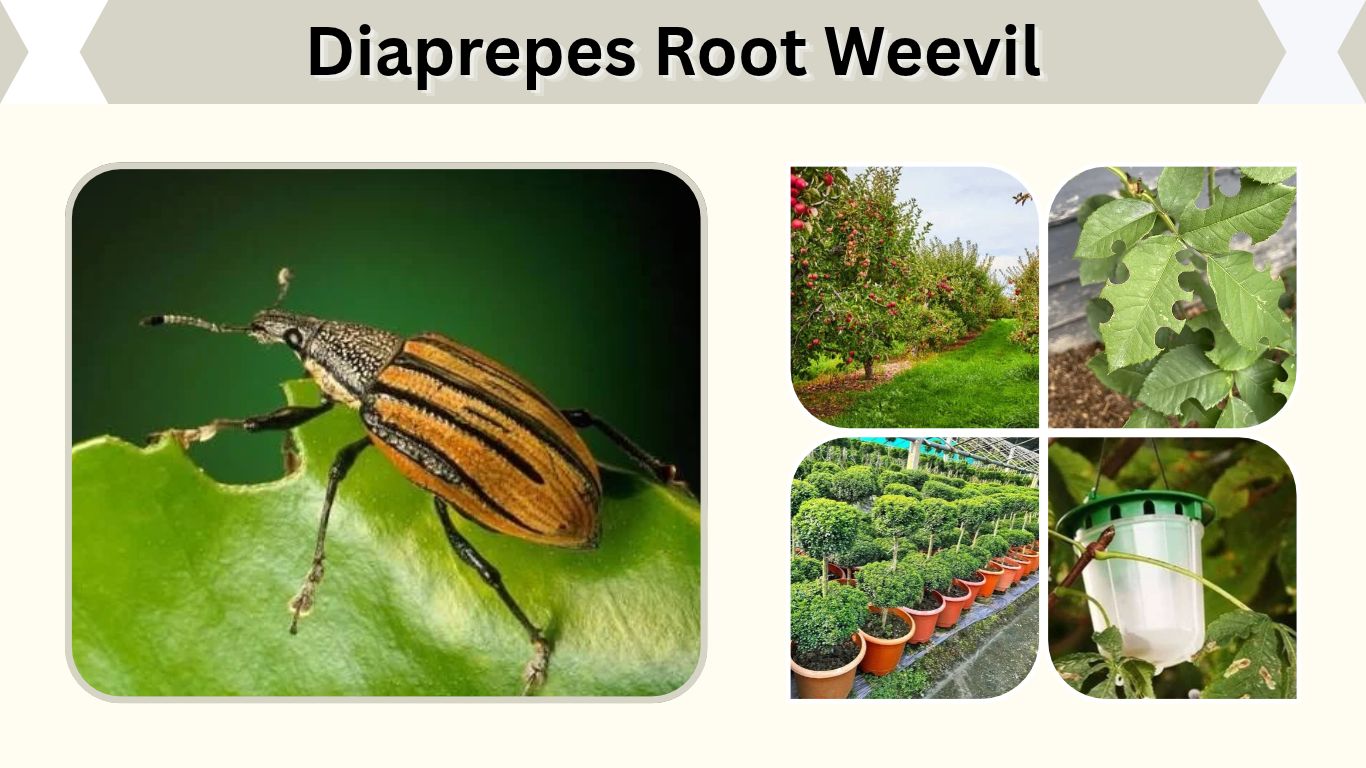
The Diaprepes root weevil (Diaprepes abbreviatus) is a destructive beetle known for damaging citrus trees, ornamental plants, and agricultural crops. Originally native to the Caribbean, this invasive insect has established populations in several parts of the United States, including Florida, Texas, and California. Adult weevils feed on plant leaves, while their larvae attack underground roots, often causing serious plant decline. Understanding Diaprepes root weevil identification, habitat, life cycle, feeding habits, and control methods is essential for protecting gardens, nurseries, and commercial agricultural plants.
What Is a Diaprepes Root Weevil?
The Diaprepes root weevil is a large, colorful snout beetle belonging to the family Curculionidae. It is also called the citrus root weevil or sugarcane rootstalk borer weevil. This insect is particularly concerning because it attacks hundreds of plant species and damages both aboveground foliage and underground root systems.
Diaprepes Root Weevil Classification
- Scientific Name: Diaprepes abbreviatus
- Kingdom: Animalia
- Phylum: Arthropoda
- Class: Insecta
- Order: Coleoptera
- Family: Curculionidae
- Common Names: Diaprepes root weevil, citrus root weevil
- Native Region: Caribbean
Why Is This Weevil Considered Invasive?
The Diaprepes root weevil was accidentally introduced into Florida during the 1960s, probably through infested ornamental plants.
Its ability to feed on many different host plants allows it to establish populations in agricultural and landscaped environments. Underground larvae make infestations particularly difficult to detect and manage.
How to Identify a Diaprepes Root Weevil
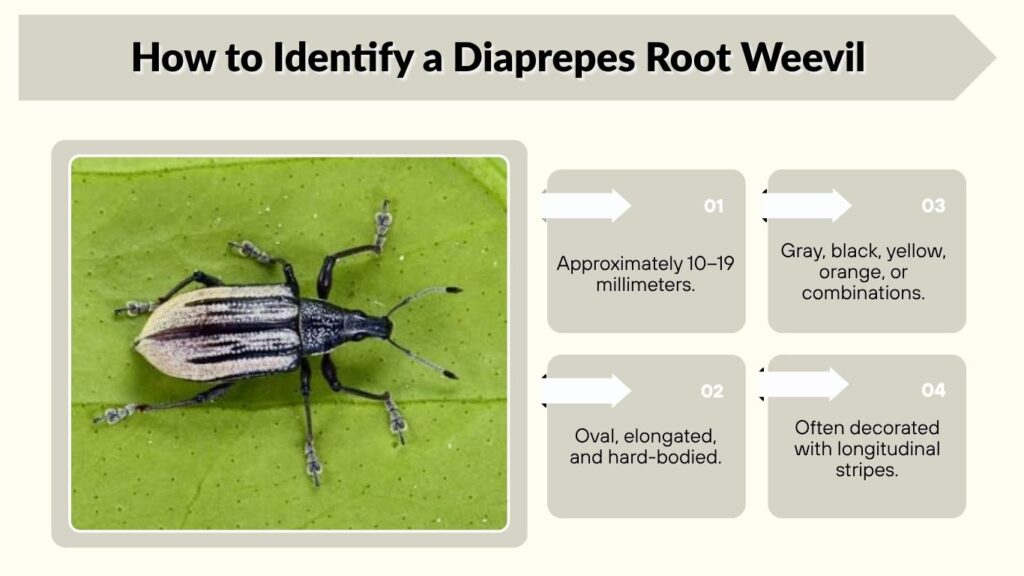
Diaprepes root weevils have distinctive body patterns, elongated snouts, and sturdy legs. However, their colors vary considerably between individuals. Identification requires examining body size, coloration, and feeding characteristics rather than relying on color alone.
Adult Diaprepes Root Weevil Identification
Adult characteristics include:
- Body Length: Approximately 10–19 millimeters.
- Body Shape: Oval, elongated, and hard-bodied.
- Color: Gray, black, yellow, orange, or combinations.
- Wing Covers: Often decorated with longitudinal stripes.
- Snout: A short, broad, downward-projecting snout.
- Antennae: Elbowed antennae extending from the snout.
- Legs: Six strong legs suited for crawling.
Diaprepes Root Weevil Larvae Appearance
Diaprepes root weevil larvae are creamy white, legless grubs with brownish head capsules.
Their bodies are curved and segmented, sometimes reaching approximately 25 millimeters in length.
Unlike adults, the larvae remain underground, where they feed directly on plant roots and root crowns.
Diaprepes Root Weevil Life Cycle
The Diaprepes root weevil undergoes complete metamorphosis, progressing through egg, larva, pupa, and adult stages. Its development varies considerably with environmental conditions. A complete generation may take several months to more than a year.
Egg and Larval Stages
Female weevils lay clusters of eggs between leaves that they glue together using a sticky secretion.
Eggs typically hatch within seven to ten days. Newly emerged larvae fall to the ground, enter the soil, and begin feeding on roots.
The larval stage may continue for many months, allowing extensive underground damage.
Pupae and Adult Development
Mature larvae construct chambers in the soil and develop into pupae.
After metamorphosis, adult beetles emerge and move toward suitable host plants. Adult emergence often increases following rainfall or irrigation.
Females subsequently mate and lay eggs, beginning another generation.
Where Do Diaprepes Root Weevils Live?
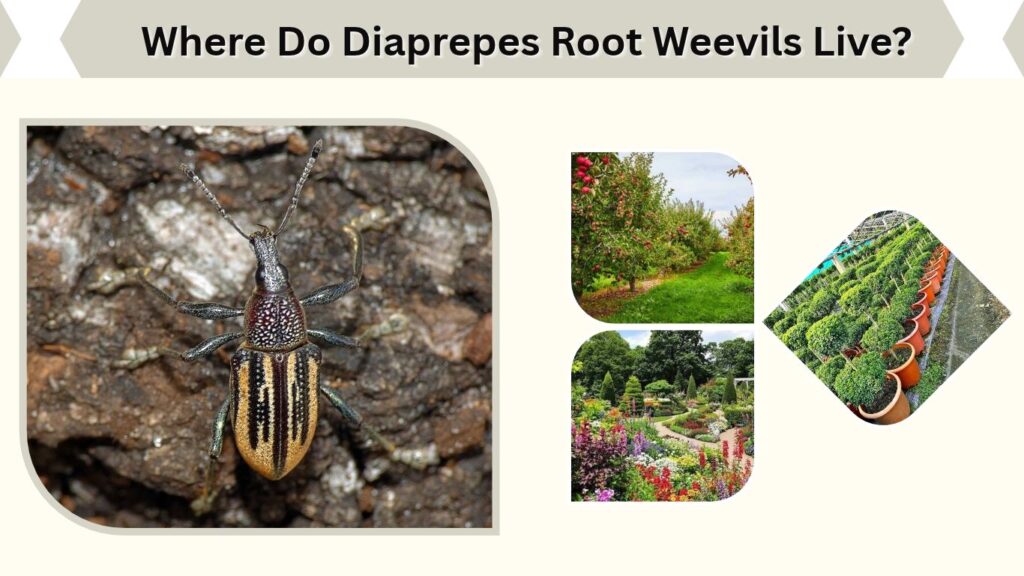
Diaprepes root weevils naturally inhabit Caribbean environments, but introduced populations have established themselves elsewhere. They occupy agricultural fields, orchards, plant nurseries, gardens, and landscapes containing suitable host plants.
Diaprepes Root Weevil in Florida
Florida has experienced serious Diaprepes root weevil infestations since the insect was first reported near Apopka in 1964.
The pest is particularly associated with citrus-growing regions, where underground larvae can weaken established trees.
Diaprepes Root Weevil in California and Texas
Established populations occur in parts of Southern California, particularly Los Angeles, Orange, and San Diego counties.
The insect has also been detected in Texas, including areas of the Rio Grande Valley and Houston region.
Movement of infested nursery plants and soil can contribute to its spread.
What Do Diaprepes Root Weevils Eat?
Diaprepes root weevils are generalist herbivores, feeding on approximately 270 plant species. Adults prefer tender foliage, while larvae consume underground plant tissues. Their broad diet makes them a significant concern for commercial agriculture and ornamental landscaping.
Common Host Plants
Plants attacked by Diaprepes root weevils include:
- Citrus trees, including oranges and lemons.
- Sugarcane and certain vegetable crops.
- Roses and hibiscus.
- Guava and papaya trees.
- Sweet potatoes and potatoes.
- Strawberries and blueberries.
- Various palms and ornamental shrubs.
Adult and Larval Feeding Habits
Adult beetles chew irregular or semicircular notches along leaf edges.
Larvae feed on small roots, larger roots, and root crowns beneath the soil.
Root feeding is substantially more destructive because it interferes with water and nutrient absorption and can eventually kill the host plant.
Signs of Diaprepes Root Weevil Damage
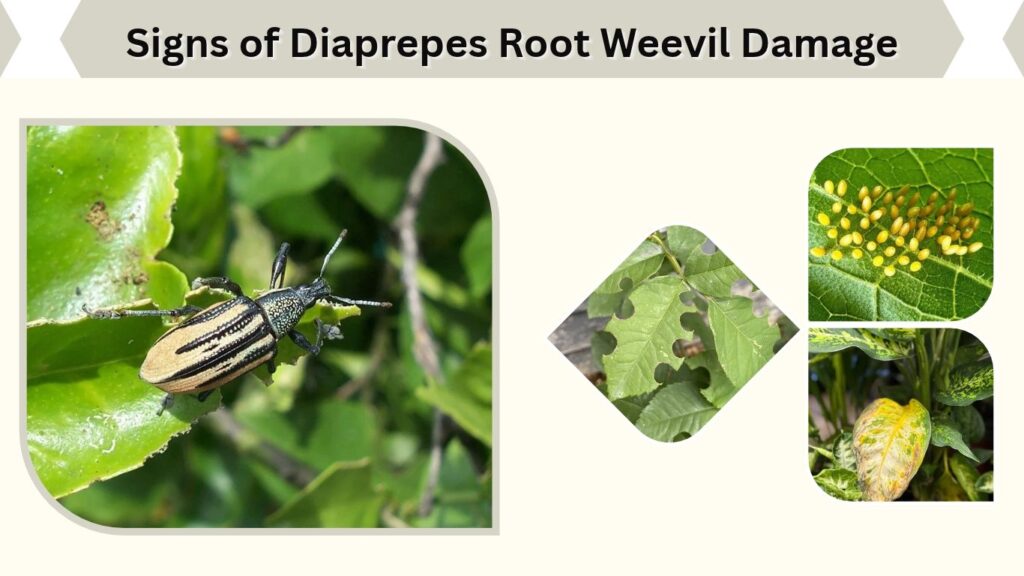
Diaprepes root weevil infestations can be difficult to recognize during their early stages. Adult feeding produces visible leaf damage, but the most serious injury occurs underground. Affected plants may gradually lose vigor as root systems deteriorate.
Common Signs of Infestation
Look for these symptoms:
- Semicircular notches along leaf margins.
- Adult beetles crawling on foliage.
- Egg clusters between glued leaves.
- Yellowing or wilting leaves.
- Stunted growth and reduced plant vigor.
- Damaged roots and root crowns.
- Progressive decline of apparently healthy plants.
Root Damage and Secondary Disease
Diaprepes larvae create wounds while feeding on roots, reducing a plant’s ability to absorb nutrients and water.
These injuries can also encourage infections caused by Phytophthora species, which produce damaging root rot.
Severe infestations may eventually cause tree death, particularly when root injury combines with poor drainage or existing disease.
How to Control Diaprepes Root Weevils
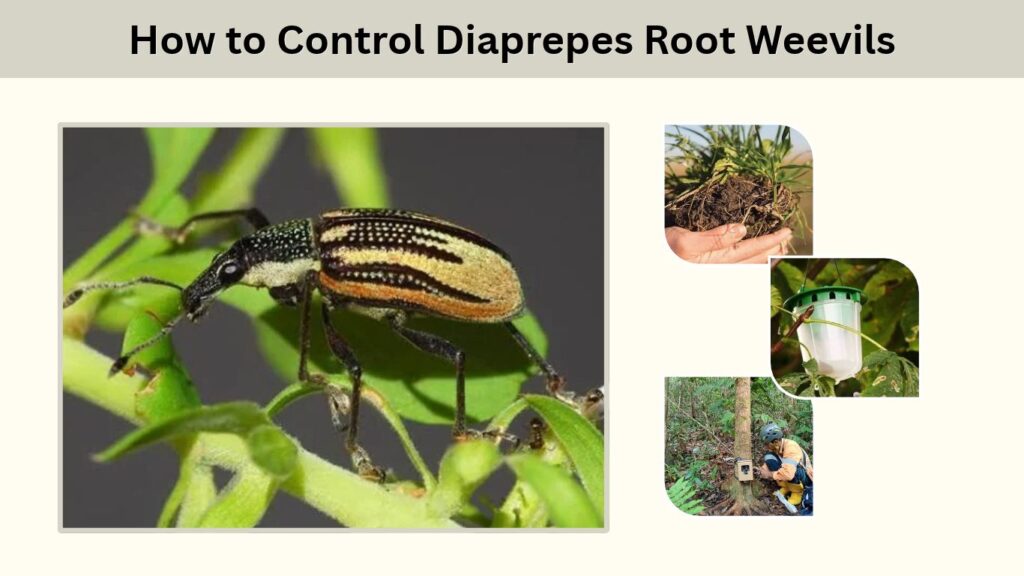
Effective Diaprepes root weevil management requires addressing multiple life stages. Because larvae remain underground for extended periods, eliminating visible adults alone rarely controls an established infestation. Integrated pest management combines monitoring, biological methods, and appropriately selected treatments.
Monitoring and Early Control
Recommended steps include:
- Inspect leaves: Look for characteristic feeding notches and egg clusters.
- Check soil: Examine suspicious root systems for larvae and feeding damage.
- Monitor adults: Use suitable monitoring traps or inspect foliage regularly.
- Remove accessible adults: Collect beetles where practical, following local pest-reporting guidance.
- Report new detections: Contact agricultural authorities when the pest appears outside its established range.
Organic and Biological Control
Beneficial entomopathogenic nematodes, including certain Heterorhabditis and Steinernema species, can attack underground Diaprepes larvae.
These biological agents perform best in appropriately warm, moist, well-drained soils.
Their effectiveness depends on soil type, application timing, and nematode species.
Maintaining healthy roots and proper drainage can also improve plant tolerance to damage.
Chemical Treatment Options
Certain registered insecticides can suppress adult or larval populations in commercial agricultural settings.
However, treatment selection depends on the crop, location, pest stage, and local pesticide regulations.
Consult agricultural extension specialists and follow pesticide labels. Repeatedly spraying foliage without monitoring may provide limited control of underground larvae.
Do Diaprepes Root Weevils Bite Humans?
Diaprepes root weevils are plant-feeding insects and are not considered dangerous to humans.
They do not sting or seek humans as food. Their chewing mouthparts are adapted primarily for feeding on vegetation.
Although these beetles pose little direct threat to people, their larvae can cause substantial agricultural damage.
FAQs
1. Are Diaprepes Root Weevils Dangerous?
Diaprepes root weevils are not considered dangerous to humans, but they can seriously damage plants. Their larvae feed on roots, weakening trees and ornamental plants. Severe infestations may contribute to plant decline or death.
2. How Do You Get Rid of Diaprepes Root Weevils?
Management includes monitoring adults, inspecting roots, and using appropriate biological or registered chemical treatments. Beneficial nematodes can help suppress underground larvae under suitable soil conditions. Effective control usually requires an integrated approach rather than a single treatment.
3. Where Are Diaprepes Root Weevils Found?
Diaprepes root weevils are native to the Caribbean and have established populations in Florida, Texas, and parts of Southern California. They commonly inhabit citrus orchards, agricultural areas, nurseries, and landscapes containing suitable host plants.
4. What Do Diaprepes Root Weevil Larvae Eat?
Diaprepes root weevil larvae feed on underground plant roots and root crowns. Their feeding damages water-absorbing tissues and weakens the plant. Citrus trees and numerous ornamental and agricultural plants can suffer severe injury from prolonged larval feeding.
5. Can Diaprepes Root Weevils Kill Citrus Trees?
Yes, severe Diaprepes root weevil infestations can kill citrus trees. Larvae damage major roots and root crowns, reducing water and nutrient absorption. Root injuries may also encourage secondary infections, particularly those caused by Phytophthora pathogens.
