
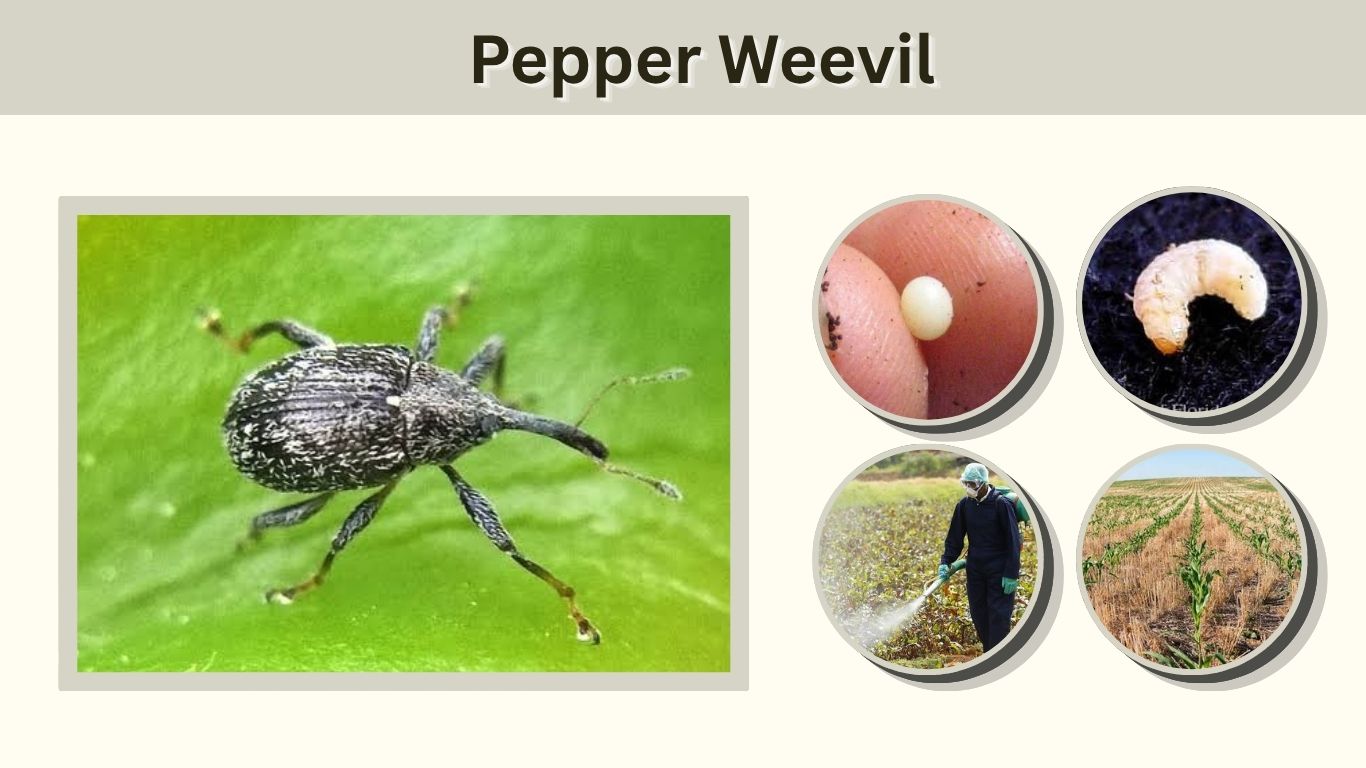
Pepper weevils are small beetles that damage pepper plants by feeding on flower buds, developing fruits, and seeds. Their larvae develop inside peppers, making infestations difficult to detect until fruits become damaged or fall prematurely. These insects can attack bell peppers, chili peppers, and other cultivated pepper varieties. Understanding their appearance, life cycle, and feeding habits is essential for protecting pepper crops. This guide explains pepper weevil identification, eggs, larvae, damage symptoms, treatment methods, and practical ways to prevent future infestations in gardens and commercial fields.
What Is a Pepper Weevil?
The pepper weevil (Anthonomus eugenii) is a small beetle belonging to the family Curculionidae and order Coleoptera. It is an important agricultural pest that attacks pepper plants, particularly those belonging to the genus Capsicum. Both adults and larvae cause damage, although internal feeding by larvae is responsible for much of the crop loss.
Pepper Weevil Identification
Adult pepper weevils have several recognizable characteristics that distinguish them from other small garden beetles.
- Scientific Name: Anthonomus eugenii
- Family: Curculionidae
- Order: Coleoptera
- Body Length: Approximately 2–3.5 mm
- Body Color: Dark brown, reddish-brown, or nearly black
- Body Shape: Small, oval, and strongly curved
- Snout: Long, prominent snout with chewing mouthparts
- Antennae: Elbowed antennae with enlarged tips
Where Do Pepper Weevils Live?
Pepper weevils commonly inhabit pepper fields, home gardens, greenhouses, and areas containing suitable wild host plants. They are especially troublesome in warm regions, including Florida, Mexico, the Caribbean, and parts of Central America.
Adult beetles feed on pepper foliage, flower buds, and developing fruits. They can also survive on certain wild nightshade plants when cultivated peppers are unavailable.
Pepper Weevil Eggs, Larvae, and Life Cycle
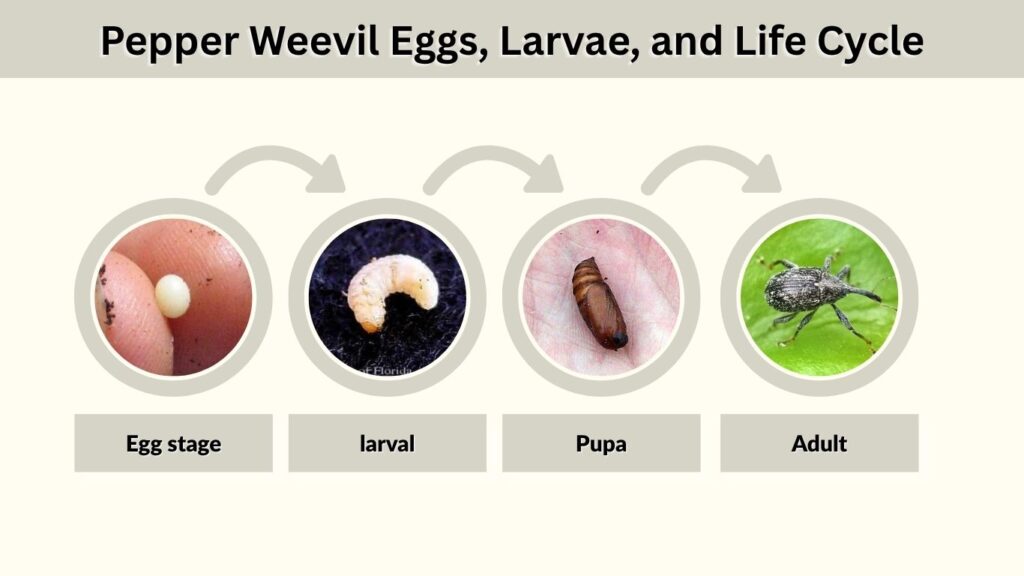
The pepper weevil undergoes complete metamorphosis involving egg, larva, pupa, and adult stages. Unlike many insects that develop in soil, pepper weevils complete most of their immature development inside flower buds or pepper fruits. Their short life cycle allows multiple generations to develop during favorable growing conditions.
Pepper Weevil Eggs
Female pepper weevils use their snouts to create small cavities in flower buds or developing peppers. They deposit individual eggs beneath the plant surface and seal the openings with a fluid that gradually hardens.
Fresh eggs are white but become yellowish as they develop. Under warm conditions, they generally hatch within three to five days.
Pepper Weevil Larvae
Pepper weevil larvae are small, legless grubs with cream-colored bodies and yellowish-brown heads. They remain hidden inside pepper fruits, feeding on seeds and surrounding internal tissues.
Larvae pass through three developmental stages before reaching maturity. Their feeding creates internal cavities, damaged seeds, and brown discoloration.
Fully developed larvae usually measure approximately 3–5 mm.
Four Stages of the Pepper Weevil Life Cycle
- Egg Stage: Female weevils deposit eggs inside flower buds or developing peppers. Eggs generally hatch within three to five days.
- Larval Stage: Newly hatched larvae feed inside plant tissues. This stage usually lasts approximately 10–14 days under warm conditions.
- Pupal Stage: Mature larvae form pupal chambers within the fruit. Adults typically develop from pupae within three to six days.
- Adult Stage: Adult weevils emerge through small circular holes. They begin feeding and eventually reproduce, starting another generation.
The complete life cycle commonly takes approximately 20–30 days, depending on temperature. Adults may survive for several months when suitable food remains available.
Signs of Pepper Weevil Damage
Pepper weevil damage often begins before growers notice adult beetles. Infested flower buds may fall, while developing fruits can become discolored or misshapen. Since larvae feed internally, peppers may appear relatively healthy from the outside even when significant damage has occurred inside.
Common Symptoms of Pepper Weevil Infestation
- Premature Fruit Drop: Small peppers fall from plants before reaching maturity.
- Damaged Flower Buds: Infested buds turn yellow or brown and eventually drop.
- Small Feeding Holes: Adult beetles create tiny punctures in pepper surfaces.
- Internal Tunnels: Larvae feed around seeds and create irregular cavities.
- Brown Seed Cores: Damaged seeds and surrounding tissues develop dark discoloration.
- Deformed Peppers: Some affected fruits become misshapen or ripen unevenly.
- Circular Exit Holes: Emerging adults leave small, round openings in pepper fruits.
How Do Pepper Weevils Affect Pepper Plants?
Pepper weevils can significantly reduce fruit production and marketable yields. When larvae attack flower buds, the buds may drop before producing peppers.
Infested young fruits frequently fall from the plant, while larger peppers may remain attached despite internal damage.
Severe infestations can make substantial portions of a harvest unsuitable for sale or consumption. Adult feeding punctures may also provide openings for secondary infections.
How to Get Rid of Pepper Weevils
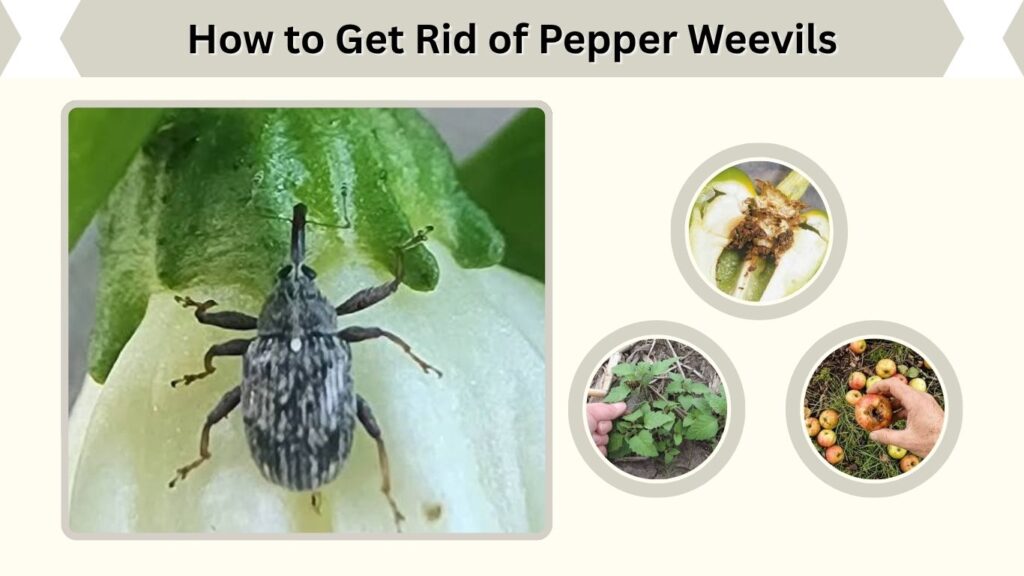
Effective pepper weevil control requires early detection and the removal of infested plant material. Since eggs, larvae, and pupae remain protected inside peppers, controlling adult beetles is particularly important. Combining sanitation, monitoring, and suitable treatment methods provides better results than relying on insecticides alone.
Natural Pepper Weevil Control Methods
Several practical methods can help reduce pepper weevil populations in gardens and agricultural fields.
- Remove Infested Peppers: Collect damaged fruits and flower buds before larvae finish developing.
- Clean Fallen Fruit: Remove fallen peppers regularly because they may contain developing weevils.
- Destroy Crop Residues: Clear old pepper plants immediately after the final harvest.
- Control Nightshade Weeds: Eliminate susceptible wild host plants growing near pepper crops.
- Inspect Pepper Plants: Examine developing buds and fruits for adult beetles and feeding punctures.
- Rotate Crops: Avoid planting peppers repeatedly in infested areas without an appropriate host-free period.
Pepper Weevil Insecticide Treatment
Insecticides may help control adult pepper weevils before they lay eggs inside developing fruits.
Products containing certain registered pyrethroids or other labeled active ingredients may be used in commercial pepper production. However, effectiveness varies by location, and resistance to some insecticides has been reported.
Because larvae remain protected inside peppers, ordinary surface sprays are generally ineffective against developing grubs.
Growers should select products specifically registered for peppers and pepper weevils in their location. Follow label instructions, preharvest intervals, and insecticide resistance-management recommendations.
Pepper Weevil Pheromone Traps
Pepper weevil pheromone traps are useful for detecting adult beetles before infestations become severe.
These traps use synthetic aggregation pheromones that attract pepper weevils. They are commonly combined with yellow sticky surfaces to capture adults.
Place traps near pepper field boundaries and monitor them regularly, especially before flowering and during fruit development.
Pheromone traps are primarily monitoring tools and should not be considered a complete treatment for established infestations.
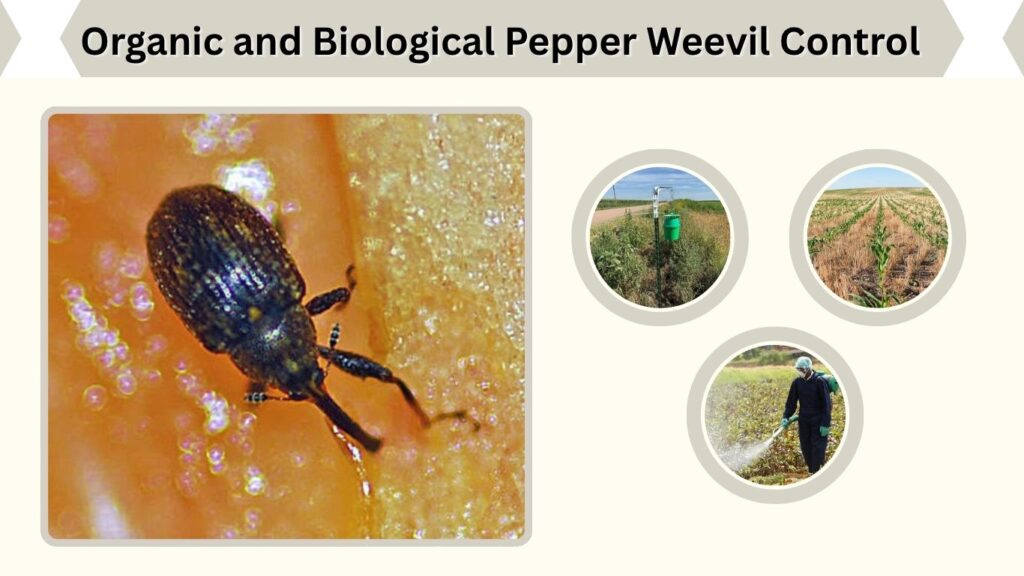
Organic and Biological Pepper Weevil Control
Organic pepper weevil management focuses on interrupting reproduction and reducing pest populations without routine reliance on conventional insecticides. However, controlling the pest naturally can be challenging because most immature stages develop inside protected plant tissues.
Natural Predators of Pepper Weevils
Certain parasitic wasps can attack pepper weevil larvae. For example, Catolaccus hunteri has been studied as a potential biological control agent.
However, natural enemies generally provide inconsistent suppression and may not prevent serious crop losses.
Conserving beneficial insects can support overall pest management, but field sanitation and monitoring remain essential.
Organic Pepper Weevil Treatment
Pyrethrin-based products may be permitted in some organic production systems when the specific formulation is approved and labeled for the crop.
These treatments primarily target exposed adults and generally cannot reach larvae inside peppers.
Organic growers should combine any permitted sprays with sanitation, crop rotation, and regular monitoring. Avoid assuming that homemade botanical sprays will eliminate an established infestation.
How to Prevent Pepper Weevil Infestations
Preventing pepper weevils requires careful attention throughout the growing season. Since adult beetles can move between host plants, controlling nearby sources of infestation is particularly important. Regular inspection and sanitation can reduce the likelihood of populations becoming established.
Protecting Pepper Plants in Gardens
Start with healthy, pest-free pepper transplants. Inspect new plants carefully before introducing them into gardens or greenhouses.
Remove damaged buds and fallen fruits promptly. Keep growing areas free from volunteer peppers and susceptible nightshade weeds.
After harvesting, remove pepper plants and remaining fruit to eliminate breeding sites.
Preventing Pepper Weevils in Greenhouses
Greenhouse growers should inspect incoming transplants and maintain strict sanitation around production areas.
Use appropriate insect screening where practical, monitor with pheromone traps, and remove infested fruits before adults emerge.
Avoid keeping abandoned pepper plants in or near production facilities because they can allow weevil populations to survive between crop cycles.
Are Peppers With Weevils Safe to Eat?
Pepper weevils are not known to be poisonous to humans. However, peppers containing larvae, insect waste, or decaying tissues are unsuitable for consumption and should be discarded.
If a pepper shows small external damage, cutting it open can help determine whether internal infestation is present. Do not eat peppers showing extensive tunneling, mold, or deterioration.
Are Weevils in Red Pepper Flakes the Same Insect?
Small beetles found inside red pepper flakes or other dried spices are usually pantry pests rather than the pepper weevil Anthonomus eugenii.
Stored-product insects can infest dried peppers, seasonings, and other packaged foods.
Discard visibly infested spices, clean storage shelves, and keep replacement products in tightly sealed containers to prevent recurring infestations.
FAQs
1. Do Pepper Weevils Bite Humans?
Pepper weevils are not considered dangerous to humans and do not normally bite people. Their mouthparts are adapted for feeding on plant material and creating egg-laying cavities. Their main impact is damage to pepper crops rather than direct harm to humans.
2. What Kills Pepper Weevils?
Registered insecticides can kill exposed adult pepper weevils, while sanitation helps eliminate developing larvae and pupae inside infested peppers. Removing fallen fruits, controlling nearby nightshade weeds, and monitoring adult populations are important parts of effective long-term management.
3. Can Pepper Weevils Live Inside Bell Peppers?
Yes. Pepper weevil larvae develop inside bell peppers and other pepper varieties. They feed on seeds and internal tissues before pupating. Adults eventually emerge through circular holes. Cutting open suspicious peppers can reveal larvae, pupae, feeding tunnels, or damaged seeds.
4. How Long Do Pepper Weevils Live?
Pepper weevils generally complete development from egg to adult in approximately 20–30 days under favorable conditions. Adult beetles may survive for several months when suitable host plants are available. Warm temperatures allow multiple overlapping generations throughout the growing season.
5. What Is the Best Time to Spray for Pepper Weevils?
The best treatment timing depends on early monitoring and local action thresholds. Insecticides are most useful against exposed adults before they lay eggs inside buds or fruits. Follow regional agricultural extension recommendations and the product label rather than spraying at fixed intervals without evidence of infestation.
