
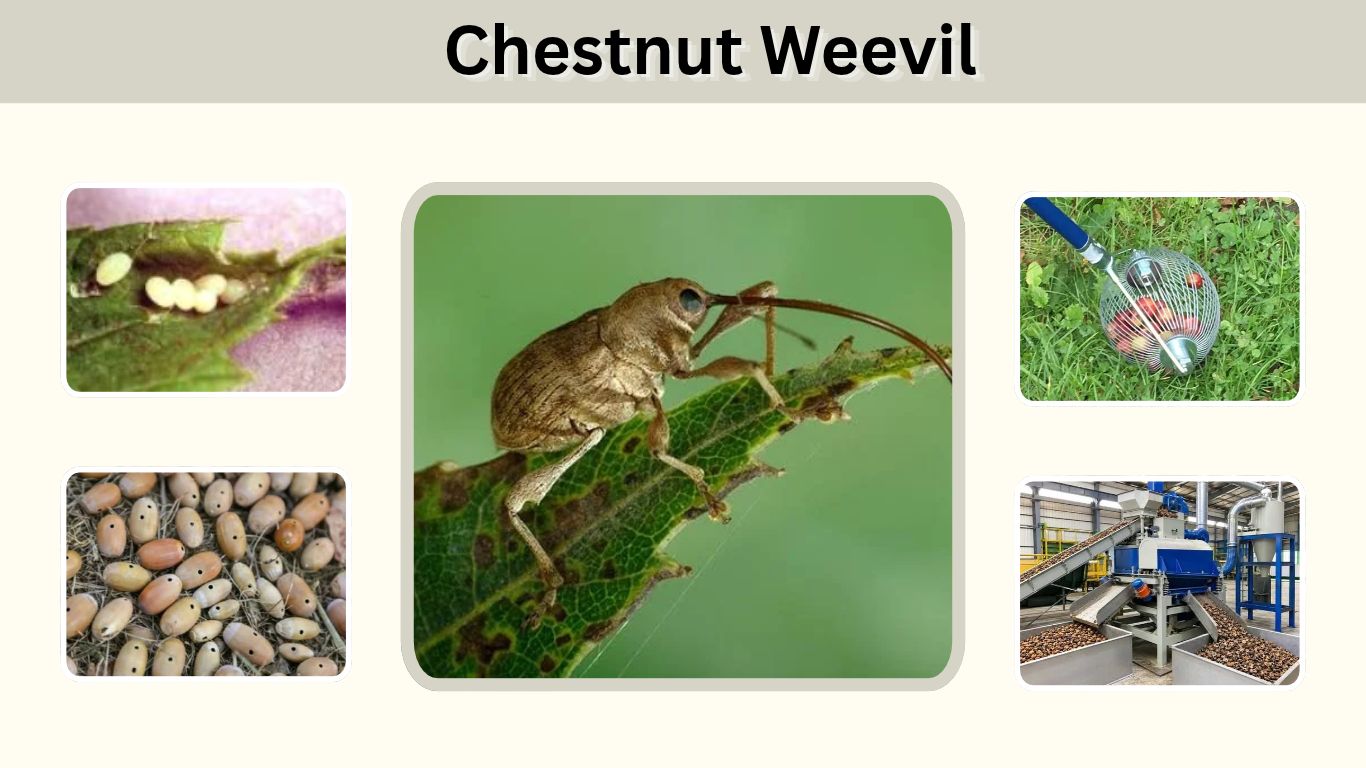
Chestnut weevils are small beetles that damage chestnuts by laying eggs inside developing nuts. Their larvae feed on the kernels, creating holes and making affected chestnuts unsuitable for consumption. Both greater and lesser chestnut weevils can infest chestnut trees, although their size, behavior, and life cycles differ. Understanding how these insects develop and spread is important for protecting chestnut harvests. This guide explains chestnut weevil identification, larvae, life cycle, damage symptoms, effective control methods, and practical ways to prevent future infestations.
What Is a Chestnut Weevil?
A chestnut weevil is a small, long-snouted beetle belonging to the genus Curculio. These insects primarily develop in true chestnuts and related chinquapins. Adult weevils use their elongated snouts to reach developing nuts, while their larvae feed inside chestnut kernels. Their concealed feeding habits make infestations difficult to recognize until harvest.
Chestnut Weevil Identification
Adult chestnut weevils have several distinctive physical characteristics that help distinguish them from other beetles.
- Body Color: Brown, reddish-brown, or tan, often with mottled markings.
- Body Shape: Small, oval-shaped body covered with fine scales.
- Snout: Long, narrow, curved mouthpart used for feeding and creating egg-laying holes.
- Antennae: Elbowed antennae positioned along the elongated snout.
- Legs: Six relatively slender legs used for crawling on branches and chestnut burs.
- Size: Generally around 6–10 mm in body length, excluding the snout, depending on species.
Where Do Chestnut Weevils Live?
Chestnut weevils occur in areas containing suitable chestnut trees, particularly eastern North America. Adults are frequently found on chestnut foliage, flowers, and developing burs.
The larvae develop inside nuts before moving underground, where they remain for extended periods. Chestnut orchards and woodland areas containing host trees provide suitable habitats for their development.
Types of Chestnut Weevils
Two important North American species are the greater chestnut weevil and lesser chestnut weevil. Both damage chestnuts through larval feeding, but they differ in size, emergence periods, and development time. Understanding these differences helps growers identify possible infestations and determine appropriate monitoring strategies.
Greater Chestnut Weevil (Curculio caryatrypes)
The greater chestnut weevil, also called the larger chestnut weevil, has a body approximately 9–10 mm long, excluding its snout. Females possess particularly long snouts that help them penetrate chestnut burs and shells.
Adults generally appear during summer and begin laying eggs in developing nuts. Their larvae feed within chestnuts before entering the soil. The life cycle typically requires one to two years.
Interestingly, this species was long presumed extinct following the decline of American chestnut trees. Research published in 2025 confirmed its rediscovery in the eastern United States, making its conservation important.
Lesser Chestnut Weevil (Curculio sayi)
The lesser chestnut weevil is smaller, measuring approximately 6 mm in body length. It is a significant pest in commercial chestnut orchards.
Adults may emerge during early summer or fall, depending on their developmental cycle. Females generally lay eggs as chestnuts mature, and the larvae consume the kernels.
This species commonly requires two to three years to complete its life cycle, with much of that period spent underground.
Chestnut Weevil Life Cycle
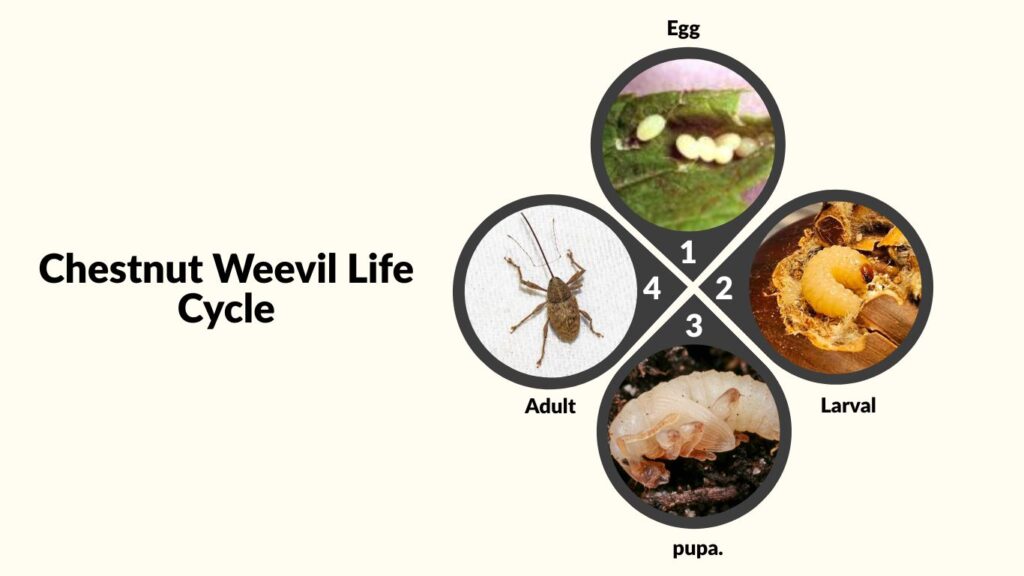
The chestnut weevil life cycle involves four developmental stages: egg, larva, pupa, and adult. Unlike many common garden insects, chestnut weevils can remain underground for several seasons. This extended development allows populations to survive even when chestnut production varies between years.
Four Stages of Development
- Egg Stage: Female weevils create small openings in developing chestnuts and deposit eggs. Depending on the species and environmental conditions, eggs generally hatch within approximately one to two weeks.
- Larval Stage: Cream-colored, legless grubs feed inside the chestnut kernel for several weeks, gradually consuming the edible material.
- Pupal Stage: Mature larvae leave the chestnut through circular holes and burrow into the soil. After a lengthy dormant period, they transform into pupae.
- Adult Stage: Adult weevils emerge from the soil, locate chestnut trees, mate, and eventually reproduce.
Chestnut Weevil Diapause
Diapause is a period of suspended development that helps chestnut weevils survive unfavorable conditions. Larvae may remain inactive underground for months or longer.
Because different individuals emerge in different years, controlling an infestation often requires repeated monitoring and management over several seasons.
Signs of Chestnut Weevil Infestation
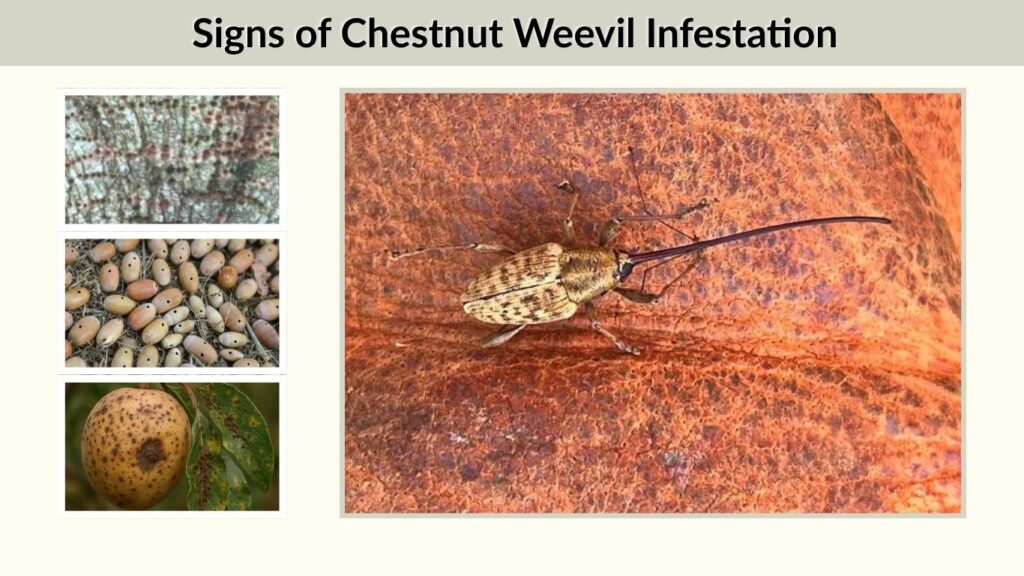
Chestnut weevil damage often begins before the nuts fall from trees. Unfortunately, the outer shell may remain relatively normal while larvae feed inside. Recognizing early symptoms can help growers separate affected nuts and reduce the likelihood of further infestation.
Common Signs of Chestnut Weevil Damage
- Small Round Holes: Mature larvae create circular exit holes in chestnut shells.
- White Grubs: Cream-colored, legless larvae may appear inside cracked chestnuts.
- Damaged Kernels: Internal feeding creates tunnels and missing sections of nut tissue.
- Brown Discoloration: Infested kernels may show darkened or damaged areas.
- Frass: Larval waste accumulates within affected chestnuts.
- Adult Weevils: Long-snouted beetles may be visible on chestnut burs during the growing season.
Can You Tell if a Chestnut Has a Weevil?
It can be difficult to identify an infested chestnut without opening it. Small punctures or exit holes sometimes indicate infestation, but nuts containing young larvae may show no obvious external damage.
Cutting open a sample of freshly harvested chestnuts is one of the most reliable ways to detect internal feeding and larvae.
How to Get Rid of Chestnut Weevils
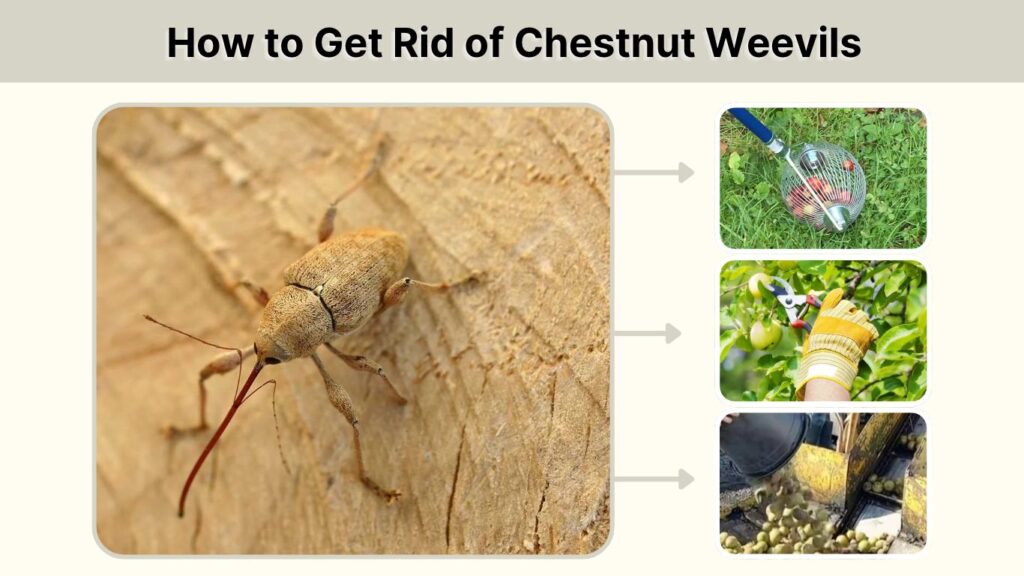
Effective chestnut weevil control requires targeting both adult beetles and developing larvae. Since larvae remain protected inside nuts and underground, no single treatment reliably eliminates every stage. Combining orchard sanitation, timely harvesting, monitoring, and appropriate post-harvest treatments generally produces better results.
Natural Chestnut Weevil Control Methods
Several nonchemical practices can help reduce damaging weevil populations.
- Collect Fallen Chestnuts Daily: Remove fallen nuts quickly before larvae escape into the soil.
- Destroy Infested Nuts: Dispose of damaged chestnuts securely rather than leaving them beneath trees.
- Maintain Orchard Cleanliness: Keep grass short to make fallen nuts easier to collect.
- Monitor Adult Beetles: Shake branches gently over a collecting sheet to detect adult weevils during active periods.
- Remove Harvest Waste: Clear discarded nuts and burs containing potentially infested material.
Hot Water Treatment for Chestnut Weevils
Hot water treatment is an established method for killing larvae inside harvested chestnuts.
Michigan State University recommends immersing chestnuts in water around 120°F (49°C), commonly for 15–20 minutes, while ensuring the nut centers reach the required temperature. Larger nuts take longer to heat thoroughly.
A 2026 study found that treatment effectiveness varies with temperature, duration, and chestnut size. Longer treatment at 49°C improved larval control, while excessive heat could reduce nut quality.
After treatment, cool and dry chestnuts promptly before refrigeration. Hot water cannot repair kernels already damaged by larvae.
Chestnut Weevil Insecticide Treatment
Insecticides may help reduce adult chestnut weevil populations when applied at the correct time. Treatment is generally directed at adults before or during egg-laying activity rather than larvae already protected inside chestnuts.
Only use pesticides specifically registered for chestnut trees and the target pest in your location. Follow label instructions, harvest intervals, and precautions for beneficial insects.
Biological Control Using Beneficial Nematodes
Beneficial nematodes offer another potential management approach. Certain insect-parasitic nematodes can infect chestnut weevil larvae in soil.
Research has demonstrated increased larval mortality under experimental conditions. However, field effectiveness depends on nematode species, soil moisture, temperature, and application timing.
Biological control should therefore complement sanitation and monitoring rather than replace them.
How to Prevent Chestnut Weevils
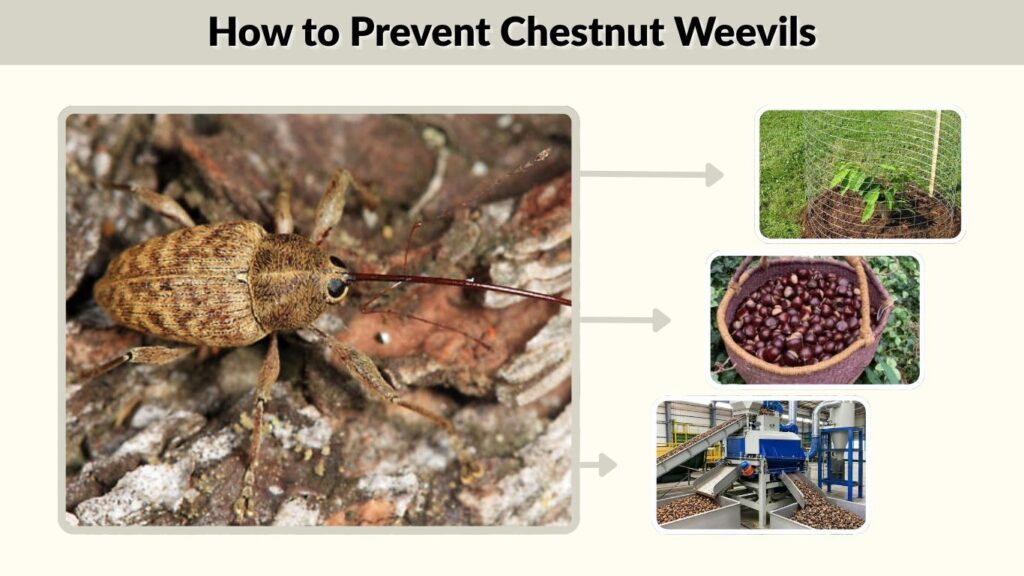
Preventing chestnut weevil infestations requires consistent management throughout the growing season and harvest period. Adult monitoring can reveal activity before substantial egg laying occurs, while prompt post-harvest handling limits additional larval feeding. These practices are especially useful in orchards experiencing repeated weevil problems.
Protecting Harvested Chestnuts
Harvest mature chestnuts promptly and inspect them before storage. Keep newly collected batches separate from previously stored nuts until they have been checked.
Apply an appropriate post-harvest treatment when necessary, then refrigerate the chestnuts under suitable conditions. Avoid leaving untreated nuts at room temperature for extended periods because larvae may continue developing and eventually emerge.
Protecting Chestnuts for Planting
Chestnuts intended for planting require additional care because treatments must preserve seed viability.
Select healthy, undamaged nuts and inspect samples for internal feeding. Avoid using seeds showing larval holes or extensive kernel damage.
Although some carefully controlled hot-water treatments are used for chestnut seeds, excessive heat can harm germination. Follow a propagation-specific treatment protocol rather than assuming a food-processing treatment is suitable for planting.
FAQs
1. Are Chestnut Weevils Harmful to Humans?
Chestnut weevils are not considered dangerous to humans. They do not attack people or bore into human skin. Their main impact is damage to chestnut kernels. However, chestnuts containing larvae, extensive feeding damage, mold, or decay should be discarded.
2. How Do You Kill Weevils Inside Chestnuts?
Controlled hot-water treatment can kill chestnut weevil larvae inside harvested nuts. Temperature and exposure time must be carefully managed to reach the center of the nuts without unnecessarily damaging their quality. Thoroughly inspect and discard chestnuts already showing significant internal damage.
3. Can Chestnut Weevils Survive in Stored Chestnuts?
Yes. Chestnut weevil larvae can continue feeding inside harvested chestnuts and may emerge during storage. Untreated nuts can therefore develop visible holes or release larvae after purchase. Prompt treatment, inspection, and proper refrigeration help reduce these problems.
4. Are Horse Chestnuts Prone to Chestnut Weevils?
Horse chestnuts belong to the genus Aesculus, whereas true chestnuts belong to Castanea. The main chestnut weevil species discussed here specialize in true chestnuts and related chinquapins. Horse chestnuts have different insect pests and should not be treated as identical hosts.
5. How Long Do Chestnut Weevils Live?
The complete chestnut weevil life cycle generally takes one to three years, depending on the species. Greater chestnut weevils usually develop within one to two years, while lesser chestnut weevils commonly require two to three years, spending much of that time underground.
