
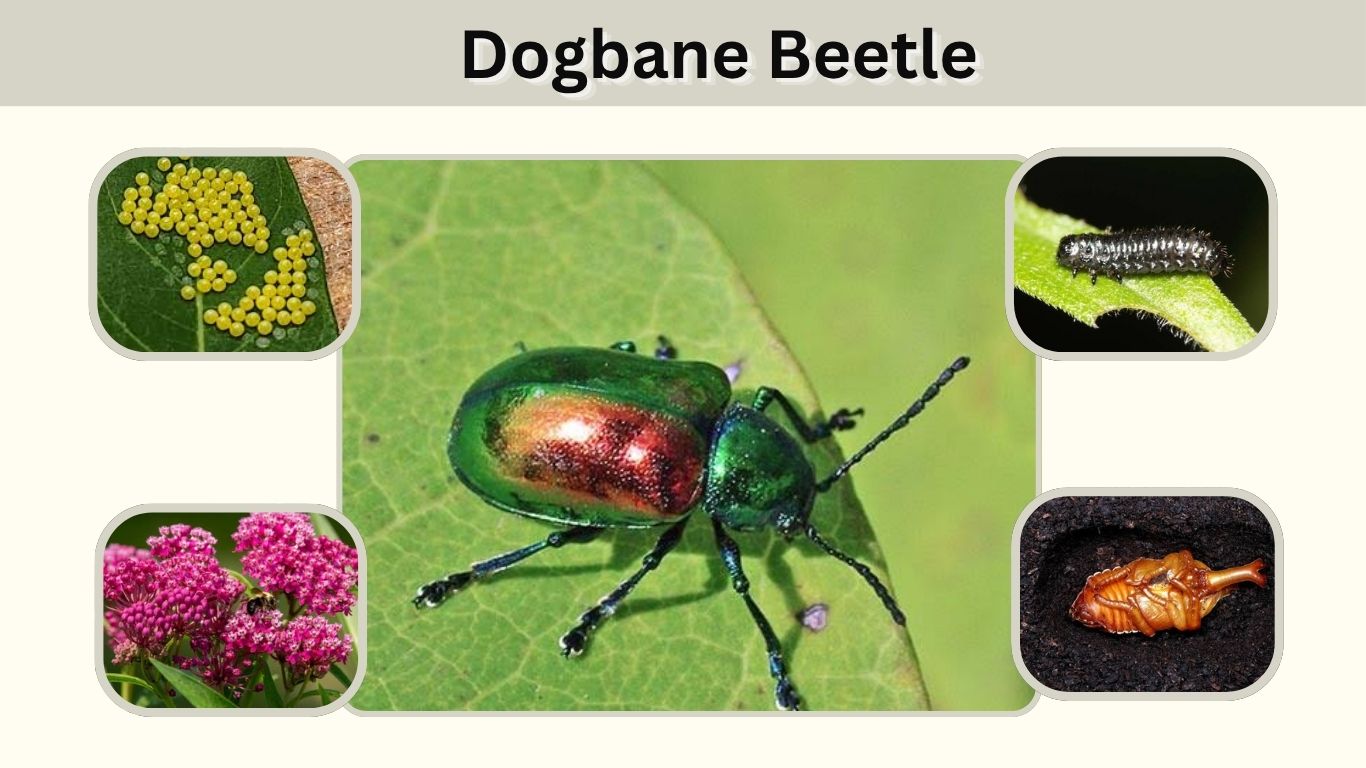
The dogbane beetle (Chrysochus auratus) is a beautiful metallic-colored insect commonly found in North America. Its shiny green, blue, gold, and copper body makes it one of the most eye-catching leaf beetles in nature. These small insects usually live on dogbane and milkweed plants, where they feed, reproduce, and complete their life cycle. Although their bright appearance may suggest danger, dogbane beetles are generally harmless to humans. Understanding their identification, habitat, feeding habits, life cycle, and defensive behavior can help you recognize these fascinating beetles in the wild.
What Is a Dogbane Beetle?
The dogbane beetle, also called the dogbane leaf beetle, is a small insect belonging to the leaf beetle family Chrysomelidae. Its scientific name is Chrysochus auratus. Unlike many agricultural beetles, this species primarily feeds on specific wild plants and is not considered a significant crop pest.
Dogbane Beetle Scientific Classification
- Common name: Dogbane beetle or dogbane leaf beetle
- Scientific name: Chrysochus auratus
- Order: Coleoptera
- Family: Chrysomelidae
- Genus: Chrysochus
- Size: Approximately 8–11 millimeters
- Color: Metallic green, blue, gold, and copper
Why Is It Called a Dogbane Beetle?
The insect gets its common name from its close association with dogbane plants. Adults feed primarily on dogbane leaves, while developing larvae consume the plants’ roots. This relationship makes dogbane essential for their survival and reproduction.
Dogbane Beetle Identification: What Does It Look Like?
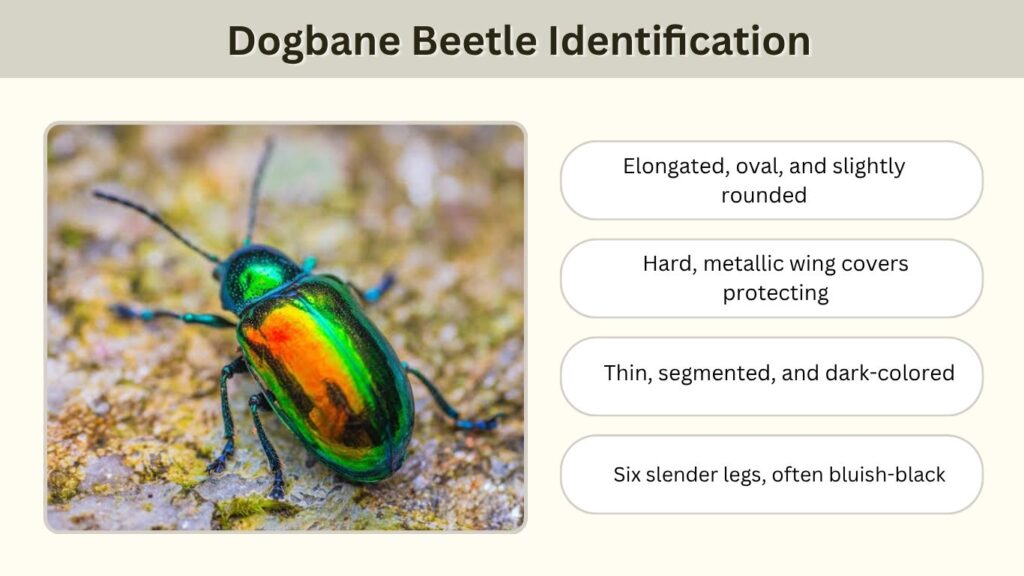
Dogbane beetles are easily recognized by their shiny appearance and compact body shape. Their metallic coloring changes depending on the viewing angle and lighting conditions. Although they resemble several other colorful beetles, their body structure, host plants, and distinctive coloration help separate them from similar species.
Physical Appearance
- Body shape: Elongated, oval, and slightly rounded
- Wings: Hard, metallic wing covers protecting the flight wings
- Head: Small and usually metallic green or blue
- Antennae: Thin, segmented, and dark-colored
- Legs: Six slender legs, often bluish-black
- Surface: Smooth-looking and highly reflective
Why Do Dogbane Beetles Change Color?
Their changing appearance results from structural coloration, particularly light interacting with microscopic layers in their outer body covering. This creates iridescence, producing different colors depending on the angle.
A beetle may appear emerald green from one direction and coppery gold from another without actually changing its pigmentation.
Where Do Dogbane Beetles Live?
Dogbane beetles are native to North America and typically inhabit places where their preferred host plants grow naturally. They are especially noticeable during warmer months when adults gather on leaves and stems. Their distribution depends strongly on the availability of dogbane and related plants.
Geographic Range
Dogbane beetles occur throughout much of the eastern United States and southern Canada. Their distribution extends westward toward the Rocky Mountains, with records reaching parts of Utah and Arizona.
They are commonly observed in states such as Illinois, Michigan, Ohio, Missouri, and Kentucky.
Preferred Habitat
These beetles frequently inhabit open fields, meadows, prairies, roadsides, woodland edges, and disturbed grasslands.
They usually remain near established dogbane populations because these plants supply both food and suitable breeding locations.
What Do Dogbane Beetles Eat?

Dogbane beetles are specialized plant-feeding insects. Unlike beetles that consume many different plant species, they depend mainly on dogbane and sometimes related milkweed plants. Their food preferences also change as they develop from underground larvae into colorful adults.
Adult Dogbane Beetle Diet
Adult dogbane beetles commonly feed on:
- Indian hemp dogbane: Apocynum cannabinum
- Spreading dogbane: Apocynum androsaemifolium
- Milkweed: Certain Asclepias species
- Tender leaf tissue: Particularly the outer edges of suitable host leaves
Adults often chew along leaf margins, producing irregular feeding marks.
What Do Dogbane Beetle Larvae Eat?
Dogbane beetle larvae feed underground on the roots of host plants. Their feeding behavior differs significantly from adults, which consume aboveground foliage.
Root feeding allows larvae to develop while remaining relatively protected beneath the soil.
Dogbane Beetle Life Cycle
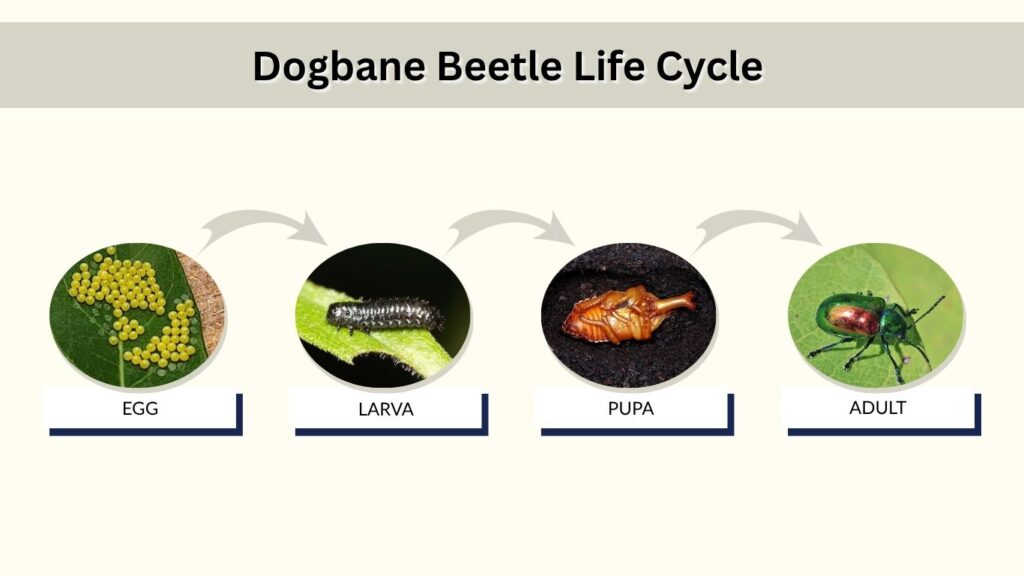
The dogbane beetle undergoes complete metamorphosis, progressing through four developmental stages. Its life cycle is closely connected to seasonal temperatures and the growth of host plants. This species generally produces one generation annually, with adults becoming most visible during summer.
Four Stages of the Life Cycle
- Egg: Females deposit eggs in protective clusters on host plants or nearby vegetation.
- Larva: Newly hatched larvae enter the soil and begin feeding on plant roots.
- Pupa: Mature larvae pupate in underground chambers, where their bodies transform.
- Adult: Fully developed beetles emerge, feed on foliage, mate, and reproduce.
Dogbane Beetle Lifespan
Adult dogbane beetles typically live approximately six to eight weeks.
During this relatively short period, they feed, find mates, and produce eggs for the next generation. Seasonal conditions influence when adults appear.
Are Dogbane Beetles Dangerous or Poisonous?
Dogbane beetles are not considered dangerous to people during normal encounters. However, they possess an interesting chemical defense system derived from the toxic plants they consume. Understanding this distinction explains why they can deter predators without posing a significant everyday threat to humans.
Do Dogbane Beetles Bite Humans?
Dogbane beetles are not known to bite humans as a normal defensive behavior. They possess chewing mouthparts designed for consuming plant tissue rather than attacking people.
They also lack stingers and generally attempt to escape when disturbed.
Are Dogbane Beetles Poisonous?
Dogbane beetles can accumulate cardenolides, naturally occurring toxic compounds found in their host plants.
When threatened, they may release defensive secretions containing these substances. This helps discourage predators from eating them.
Although casual observation is generally safe, avoid swallowing beetles, crushing them against your skin, or handling them unnecessarily.
Dogbane Beetle vs. Japanese Beetle
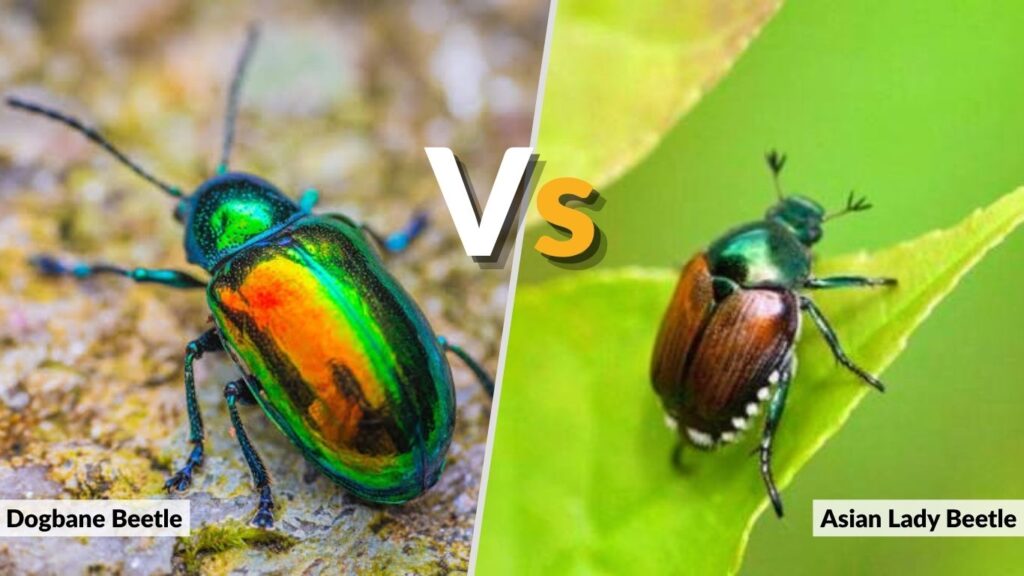
Dogbane beetles are sometimes mistaken for Japanese beetles because both display metallic green and copper coloring. However, they belong to different beetle families and have distinct feeding habits. Correct identification is important because Japanese beetles can cause substantial damage to ornamental and agricultural plants.
Key Differences
- Body color: Dogbane beetles show extensive green-blue iridescence, while Japanese beetles generally have coppery-brown wing covers and a green head.
- White markings: Japanese beetles possess distinctive white hair tufts along the abdomen. Dogbane beetles lack these markings.
- Antennae: Japanese beetles have clubbed antennae, while dogbane beetles have slender antennae.
- Diet: Dogbane beetles specialize in dogbane and related plants. Japanese beetles feed on numerous plant species.
- Pest status: Dogbane beetles are not significant crop pests, unlike Japanese beetles.
Are Dogbane Leaf Beetles Good or Bad for Plants?
Dogbane leaf beetles are generally considered harmless to gardens and agricultural landscapes. Although they consume plant material, their specialized feeding habits limit the range of plants they affect. They are natural members of ecosystems where dogbane grows.
Do Dogbane Beetles Damage Plants?
Adult beetles chew dogbane leaves, while larvae feed on their roots. Large populations may cause noticeable defoliation of dogbane stands.
However, dogbane beetles are not known to cause economically significant damage to cultivated crops. Their feeding may help suppress certain unwanted dogbane populations.
How to Get Rid of Dogbane Beetles
Control is usually unnecessary because these beetles rarely harm desirable garden plants.
If beetles become unwanted, gently remove them from affected plants and relocate them to another suitable dogbane patch where appropriate. Avoid unnecessary pesticide applications, especially around milkweed and pollinator habitats.
Can Dogbane Beetles Fly, and What Eats Them?
Adult dogbane beetles can fly using the membranous wings protected beneath their hard outer wing covers. However, they commonly remain near their preferred host plants. Their colorful bodies and chemical defenses help them survive in environments containing potential predators.
Natural Predators and Defense
Some insect-eating animals may attempt to prey on dogbane beetles. However, their cardenolide-based chemical defenses discourage many potential attackers.
Their metallic coloration may serve as a warning signal, while dropping from plants can provide another means of escape.
FAQs
1. Are Dogbane Beetles Harmful to Humans?
No. Dogbane beetles are not considered harmful during ordinary encounters. They do not sting and are not known for biting people. However, they contain defensive compounds, so unnecessary handling or ingestion should be avoided.
2. Can Dogbane Beetles Fly?
Yes. Adult dogbane beetles possess functional flight wings beneath their metallic wing covers. They can fly between suitable plants, although they often remain close to dogbane patches where they feed and reproduce.
3. Are Dogbane Beetles Good or Bad?
Dogbane beetles are generally beneficial or neutral members of their natural habitats. They feed on dogbane plants and are not recognized as significant agricultural pests. In some circumstances, their feeding may help limit unwanted dogbane growth.
4. What Is the Dogbane Beetle’s Spiritual Meaning?
There is no universally established spiritual meaning associated with dogbane beetles. Some people personally interpret their shimmering colors as symbols of transformation, beauty, or resilience, but these are individual interpretations rather than scientific facts.
5. What Is the Difference Between a Dogbane Beetle and a Japanese Beetle?
Dogbane beetles have strongly iridescent bodies and slender antennae. Japanese beetles have coppery wing covers, clubbed antennae, and distinctive white abdominal hair tufts. Dogbane beetles also have a much narrower plant diet.
