
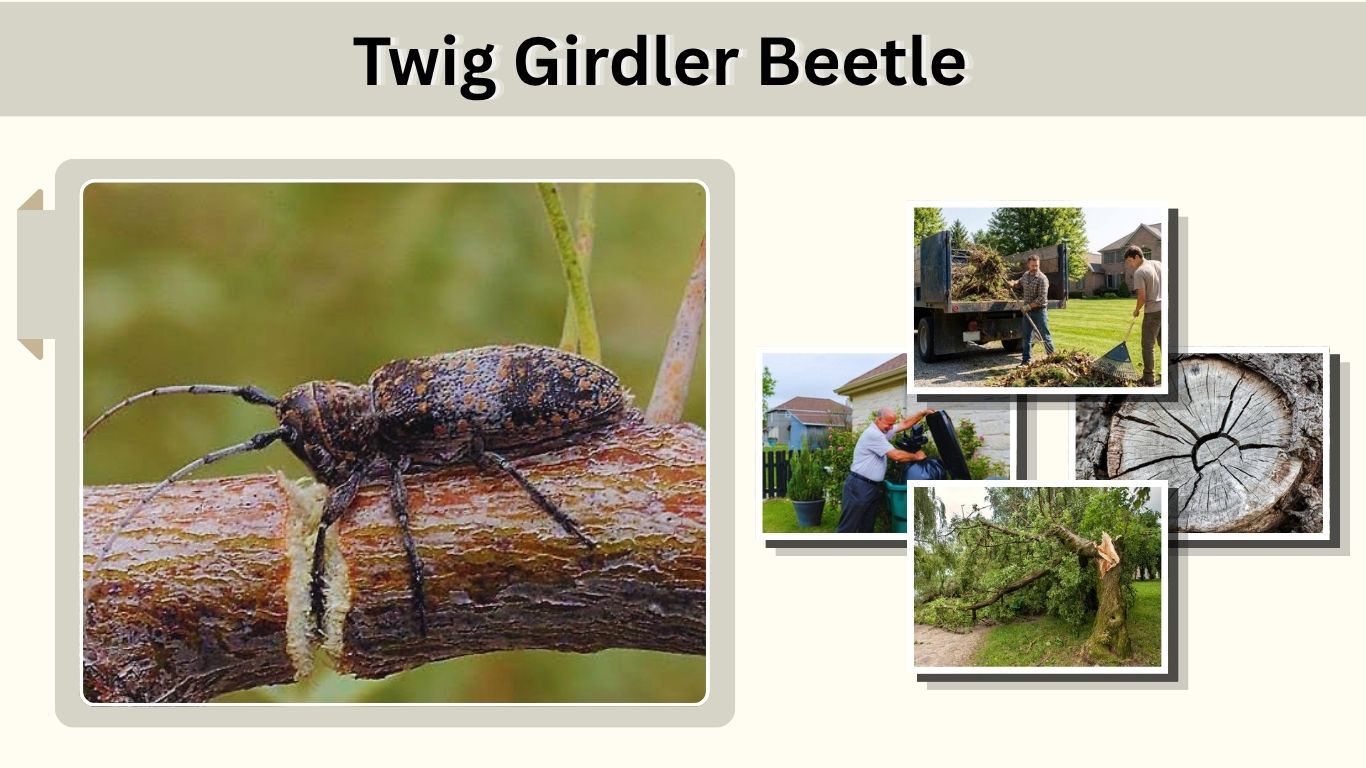
Twig girdler beetles are wood-boring insects that damage trees by cutting through small branches and causing them to fall. These pests commonly attack oak, hickory, pecan, persimmon, and other hardwood trees, leaving behind weakened twigs and noticeable branch loss. Although twig girdler damage rarely kills healthy trees, repeated infestations can affect their appearance and growth. Understanding how to identify twig girdler beetles, recognize their damage, and apply effective control methods can help homeowners protect their trees and prevent future infestations.
What Is a Twig Girdler Beetle?
The twig girdler (Oncideres cingulata) is a species of longhorned beetle belonging to the family Cerambycidae. It is commonly found in parts of the eastern and central United States, where it attacks various hardwood trees.
Unlike many insects that feed directly on leaves, female twig girdlers chew circular grooves around small branches. This process weakens the branches and causes them to die and eventually fall.
The female lays eggs in the section of the twig beyond the cut, allowing developing larvae to feed inside dead wood. Although their activity can look destructive, mature, healthy trees usually recover from minor infestations.
Twig Girdler Beetle Identification
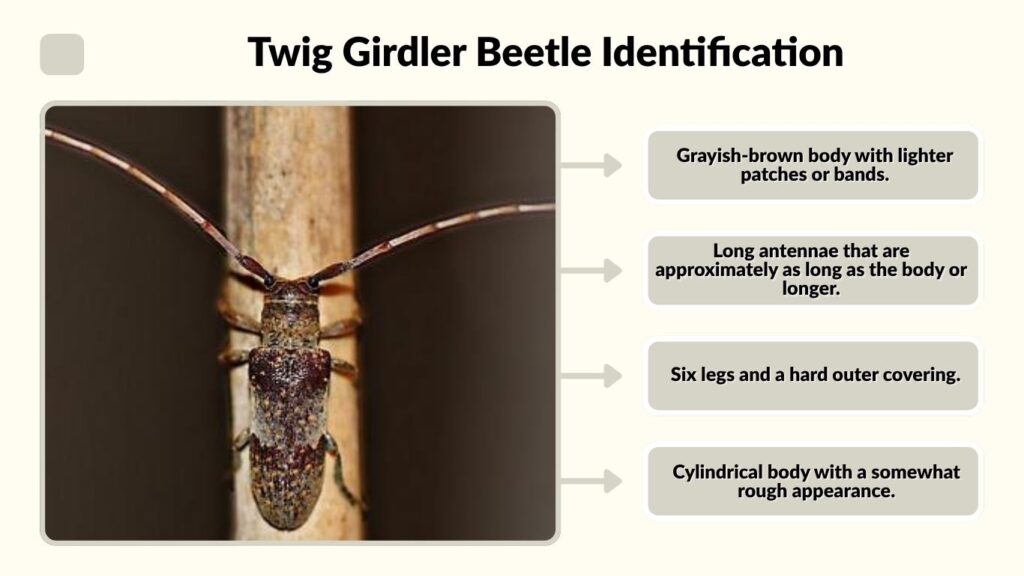
Twig girdler beetles have distinctive physical characteristics that help distinguish them from other wood-boring insects. Their appearance changes considerably between the egg, larval, and adult stages.
Adult Twig Girdler Appearance
Adult twig girdlers are approximately 1/2 to 3/4 inch long, with stout, cylindrical bodies. Their grayish-brown coloring provides camouflage against tree bark.
Common identifying characteristics include:
- Grayish-brown body with lighter patches or bands.
- Long antennae that are approximately as long as the body or longer.
- Six legs and a hard outer covering.
- Cylindrical body with a somewhat rough appearance.
- Strong mouthparts used to chew woody twigs.
Adults are most commonly observed from late summer through early fall when they begin mating and laying eggs.
Twig Girdler Eggs and Larvae
Twig girdler eggs are small, whitish, and oval-shaped. Females place them beneath the bark of girdled branches, making them difficult to see without carefully examining the wood.
After hatching, the larvae appear as creamy-white, legless grubs with segmented bodies. They bore into the dying twig and feed on the wood while developing.
Larvae remain protected inside branches for much of their development, which makes them difficult to control using ordinary surface sprays.
What Trees Do Twig Girdlers Attack?
Twig girdlers feed on several hardwood tree species. Their preferred hosts vary by location, but hickory and pecan trees are particularly common targets.
Other susceptible trees include oak, persimmon, elm, dogwood, hackberry, honey locust, and certain fruit trees.
Hickory and Pecan Twig Girdler Damage
Hickory and pecan trees are frequent hosts of twig girdler beetles. Female beetles often attack smaller branches near the outer canopy, where they can easily cut into the wood.
Heavy infestations may reduce the number of productive branches on pecan trees and affect future nut production. Young trees can also develop irregular branching patterns after repeated attacks.
Oak and Other Hardwood Trees
Oak trees can experience similar twig girdler damage, although twig pruners are another common cause of fallen oak branches.
Dogwood, elm, persimmon, and other hardwoods may also develop prematurely brown branch tips.
Homeowners should examine the cut ends of fallen branches before identifying the pest because several insects can produce similar symptoms.
Common Signs of Twig Girdler Damage
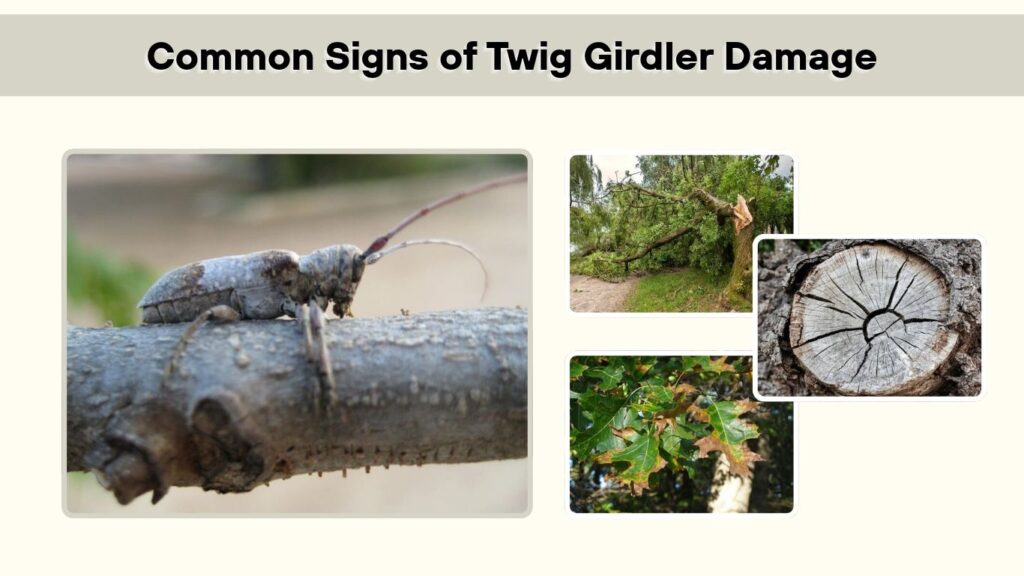
Twig girdler damage becomes especially noticeable during late summer and fall. Affected trees may suddenly lose small branches even when there has been no severe storm or strong wind.
The most recognizable symptom is a circular cut around a twig that resembles a miniature beaver-chewed branch.
Signs of an Infestation
Look for these symptoms when inspecting affected trees:
- Fallen branches: Numerous small twigs accumulate beneath the tree.
- Circular grooves: Branches have a ring-shaped cut near the broken end.
- Brown leaves: Girdled branches develop wilted or prematurely brown foliage.
- Hanging twigs: Partially detached branches remain suspended in the canopy.
- Uneven growth: Repeated infestations may cause irregular branching.
Twig girdler damage is usually cosmetic on large, established trees. However, younger trees may experience reduced growth or structural problems when important shoots are repeatedly removed.
Twig Girdler Life Cycle
Twig girdlers generally complete one generation per year. Understanding their life cycle helps determine when control measures will be most effective.
Egg Stage
Adult females become active during late summer and early fall. They select small branches and chew a circular groove through the bark and into the wood.
Eggs are deposited beneath the bark beyond the girdled section. These eggs typically hatch within several weeks.
Larval Stage
After hatching, twig girdler larvae tunnel inside the damaged branches and feed on the dead wood.
The larvae overwinter within the twigs, whether the branches remain attached to the tree or have fallen to the ground.
When temperatures rise in spring, feeding and development continue.
Pupal and Adult Stages
Mature larvae create chambers inside the wood where they transform into pupae.
New adult beetles generally emerge in late summer or early fall. They mate, begin chewing branches, and repeat the reproductive cycle.
Because developing insects remain inside fallen twigs, removing infested branches before adult emergence can significantly reduce the local population.
Twig Girdler vs. Twig Pruner: Key Differences
Twig girdlers and twig pruners are commonly confused because both cause branches to break and fall from trees.
However, their cutting behavior differs.
| Feature | Twig Girdler | Twig Pruner |
| Main damage stage | Adult female | Larva |
| Cutting direction | Outside inward | Inside outward |
| Branch appearance | Smooth outer groove with rough central break | Smooth inner cut with ragged bark |
| Common hosts | Pecan, hickory, oak | Oak, hickory, maple |
| Larval feeding | Inside girdled dead twigs | Inside tunneled branches |
Examining the broken end of a branch is one of the most reliable ways to distinguish these insects.
How to Get Rid of Twig Girdler Beetles
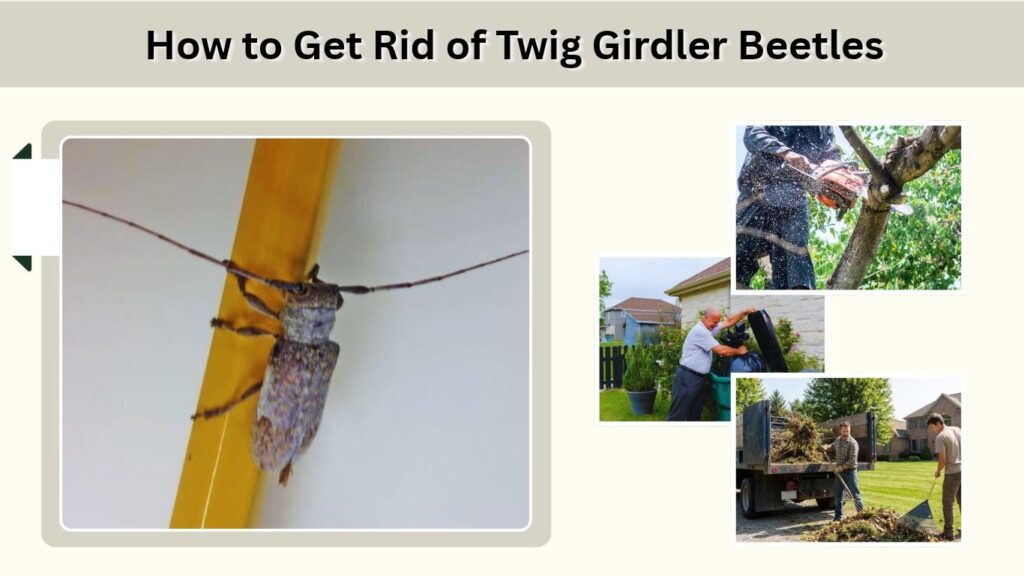
Twig girdler control focuses primarily on removing infested branches before new adults emerge. Proper sanitation is generally more effective for homeowners than routine pesticide applications.
1. Collect Fallen Twigs
Gather girdled twigs and branches beneath affected trees during fall and winter.
Because larvae develop inside these branches, removing the wood interrupts their life cycle and reduces the number of beetles emerging the following year.
2. Remove Hanging Branches
Inspect the tree canopy for partially detached or dead twigs. Remove accessible damaged branches using clean pruning tools.
Avoid climbing trees or cutting branches near electrical lines. Large or high branches should be handled by a qualified arborist.
3. Dispose of Infested Wood
Do not leave collected branches piled near susceptible trees, where developing beetles may survive and emerge.
Use an appropriate disposal method, such as municipal yard-waste removal or another method recommended by your local extension service.
4. Monitor Trees During Fall
Inspect vulnerable trees regularly during late summer and fall.
Look for fresh circular cuts, dying tips, and fallen branches. Early identification allows you to remove infested material before beetles complete development.
Does Twig Girdler Insecticide Work?
Insecticide treatment is usually unnecessary for healthy landscape trees because twig girdler damage rarely threatens their survival.
Chemical control is also difficult because eggs and larvae are protected inside woody branches.
In commercial pecan orchards, insecticides may sometimes be considered when adult activity causes economically significant damage.
However, pesticide selection and application timing should follow current local extension recommendations and product-label instructions.
Avoid spraying trees without first confirming the pest. Routine insecticide applications can expose beneficial insects and other wildlife without providing meaningful control.
How to Prevent Twig Girdler Damage
Preventing twig girdler infestations requires regular tree inspection, proper maintenance, and timely removal of infested branches.
Healthy trees are generally better able to tolerate occasional branch loss. Provide appropriate watering during prolonged drought, maintain mulch around the root zone, and avoid unnecessary damage to trunks and roots.
Remove fallen girdled twigs each year, particularly before adult beetles emerge in late summer.
Young ornamental and nut trees deserve extra attention because repeated attacks can interfere with their natural shape.
Although complete prevention may not be possible, consistent monitoring and sanitation can reduce recurring damage.
FAQs
1. Are Twig Girdler Beetles Harmful to Trees?
Twig girdler beetles can damage branches and reduce tree growth, but they rarely kill healthy mature trees. Young trees and heavily infested pecan trees may suffer more noticeable effects.
2. What Kills Twig Girdler Larvae?
Collecting and properly destroying infested twigs is an effective way to eliminate larvae developing inside the wood. Surface insecticide sprays generally cannot reach protected larvae.
3. When Are Twig Girdlers Most Active?
Adult twig girdlers are usually most active from late summer through early fall, particularly between August and October in much of their U.S. range.
4. Do Twig Girdlers Attack Oak Trees?
Yes. Twig girdlers can attack oak trees and cause small branches to die and fall. However, twig pruners can produce similar damage, so branch-end examination is important.
5. How Can You Stop Twig Girdlers Naturally?
The most effective nonchemical approach is collecting fallen twigs, removing accessible damaged branches, and disposing of infested wood before new adults emerge.
