
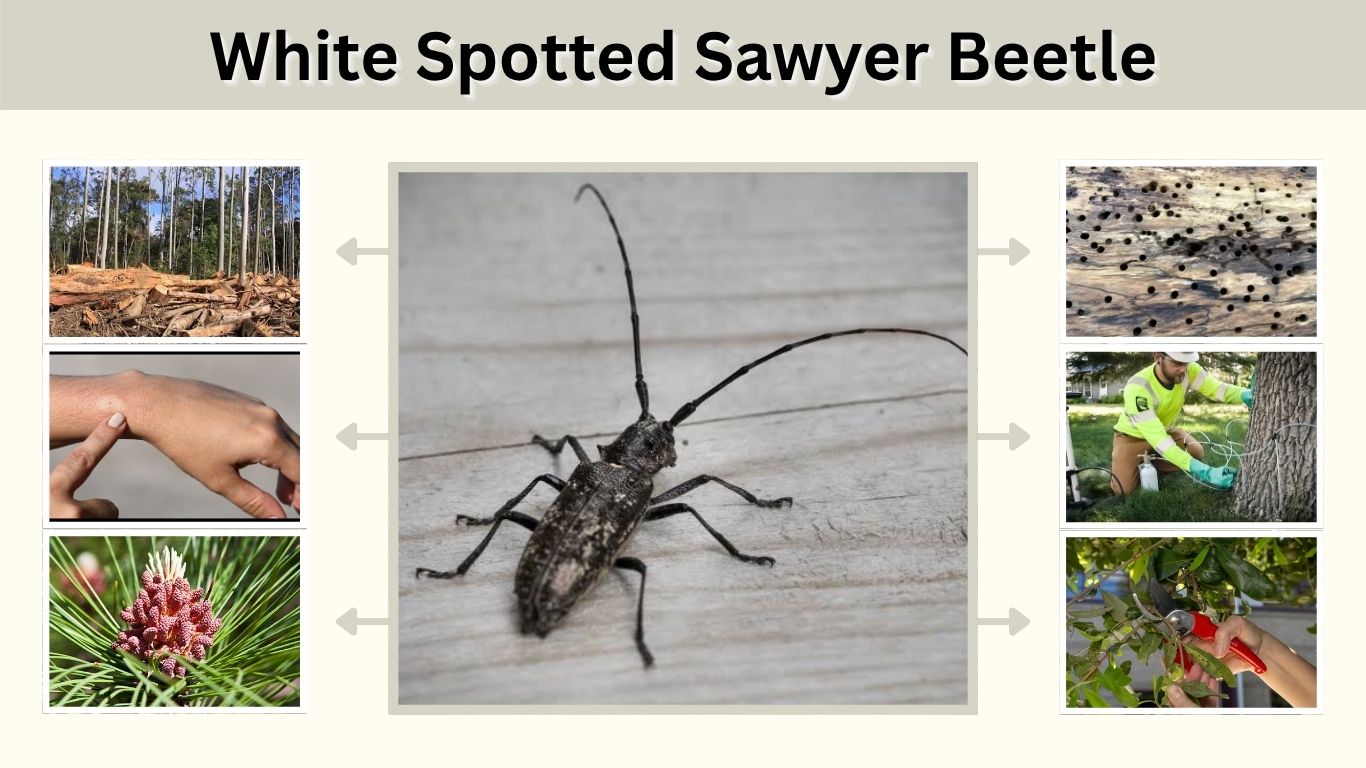
The white spotted sawyer beetle is a large, dark wood-boring insect recognized by its unusually long antennae and distinctive white marking. Commonly found around pine trees, forests, and freshly cut logs, this beetle often attracts attention because of its intimidating appearance. Although white spotted sawyer beetles can bite when handled, they are not poisonous and rarely threaten healthy trees. Understanding their appearance, feeding habits, life cycle, and behavior can help homeowners identify these insects, recognize wood damage, and manage unwanted beetles safely.
What Is a White Spotted Sawyer Beetle?
The white spotted sawyer beetle (Monochamus scutellatus) is a longhorn beetle belonging to the family Cerambycidae. It is native to North America and commonly occurs in coniferous forests.
Also called the white spotted pine sawyer, this beetle primarily develops in dead, dying, or weakened conifer trees. Eastern white pine is a preferred host, although spruce, fir, and other pine species may also support its development.
Adult beetles feed on tender bark and needles, while larvae tunnel through wood. Although their feeding can damage harvested logs, these insects also contribute to natural decomposition and nutrient recycling.
White Spotted Sawyer Beetle Identification
White spotted sawyer beetles have several distinctive physical features that help distinguish them from other longhorn beetles. Their dark bodies, extremely long antennae, and pale markings are useful identification characteristics.
Adult White Spotted Sawyer Beetle
Adult white spotted sawyers generally measure approximately ¾ to 1¼ inches long, excluding their antennae.
Common identification features include:
- Body color: Dark brown, bronzy-black, or nearly black.
- White marking: A prominent white spot between the wing covers near the thorax.
- Antennae: Long, thin, and often longer than the body.
- Wing covers: Rough-textured, sometimes with scattered pale patches.
- Legs: Six long, dark legs.
- Body shape: Elongated and somewhat cylindrical.
Male white spotted sawyer beetles typically have antennae considerably longer than their bodies. Females usually have shorter antennae and may display more visible white patches.
White Spotted Sawyer Beetle Larvae
White spotted sawyer larvae are creamy-white, legless grubs that develop inside conifer wood.
Their bodies are soft and segmented, with amber-brown heads and strong mandibles used for chewing wood.
Mature larvae can reach approximately 1½ to 2 inches long.
They usually remain hidden beneath bark or within wooden tunnels, making them difficult to observe without splitting infested logs.
Are White Spotted Sawyer Beetles Harmful to Humans?
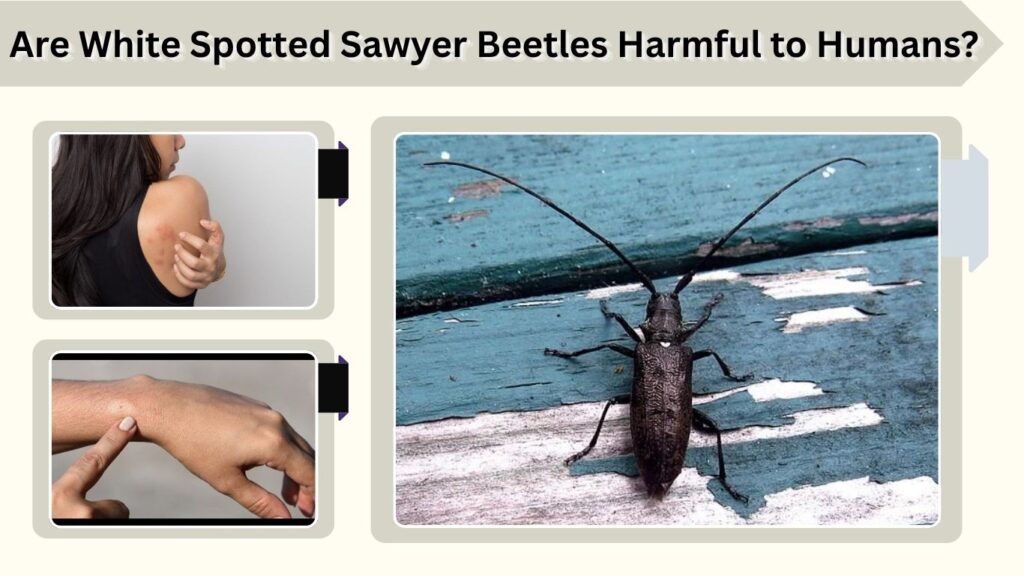
White spotted sawyer beetles are not poisonous or venomous. They do not possess stingers and are not known to transmit diseases to humans.
However, their strong jaws can produce a painful pinch if they are grabbed or handled roughly.
These beetles are not naturally aggressive toward people. Their large size and long antennae may appear threatening, but they normally attempt to escape when disturbed.
The main risks associated with white spotted sawyers involve damage to cut timber rather than human health.
Do White Spotted Sawyer Beetles Bite?
Yes, white spotted sawyer beetles can bite when threatened or restrained. Their mandibles are strong enough to pinch human skin and occasionally cause minor discomfort or a superficial injury.
A bite may cause temporary pain, redness, or a small mark.
If bitten, wash the affected area with soap and water. Seek medical advice if significant swelling, spreading redness, or other concerning symptoms develop.
Avoid picking up these beetles with bare hands to prevent defensive bites.
Why Is a White Spotted Sawyer Beetle in My House?
White spotted sawyer beetles occasionally enter houses, especially near wooded areas or properties where firewood is stored.
They may fly indoors through open windows and doors or emerge from firewood brought inside.
Because their larvae develop in recently dead or weakened conifer wood, infested logs can contain developing beetles long before adults appear.
Warm indoor conditions may encourage beetles to emerge from stored wood.
Fortunately, white spotted sawyers do not normally establish infestations in dry structural lumber or household furniture.
Finding one indoors usually indicates an accidental visitor rather than an active household infestation.
What Do White Spotted Sawyer Beetles Eat?
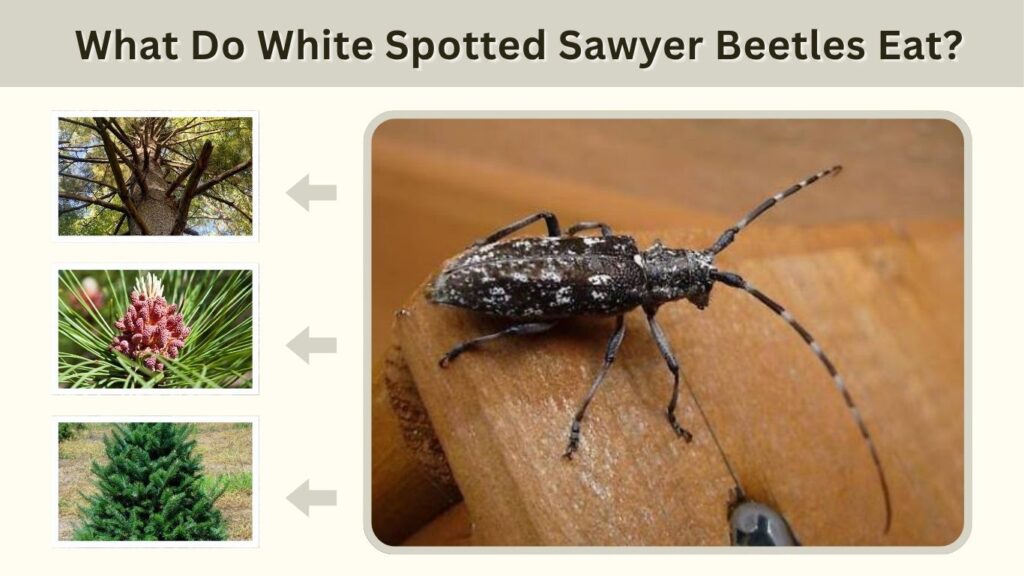
White spotted sawyer beetles have different feeding habits depending on their developmental stage.
Adult beetles primarily eat tender bark and needles from conifer trees. Their feeding is often concentrated on young twigs and small branches.
Larvae feed on tissues beneath the bark before tunneling deeper into the wood.
Common host trees include:
- Eastern white pine
- Red pine
- Jack pine
- Balsam fir
- White spruce
- Black spruce
- Larch
Adult feeding may occasionally damage small twigs, while larval tunneling can reduce the commercial value of logs and lumber.
White Spotted Sawyer Beetle Life Cycle
The white spotted sawyer beetle undergoes complete metamorphosis through four stages: egg, larva, pupa, and adult.
1. Egg Stage
Female beetles chew small depressions into the bark of weakened, recently dead, or freshly cut conifers.
They deposit eggs in these protected locations. After hatching, the larvae begin feeding beneath the bark.
2. Larval Stage
Young larvae initially feed beneath the bark and gradually tunnel into deeper wood tissues.
As they grow, they create galleries that may extend several inches into the wood.
3. Pupal Stage
Mature larvae construct protected pupal chambers near the wood surface. Inside these chambers, they transform into adult beetles.
4. Adult Stage
Adults emerge through rounded exit holes and fly to suitable feeding and breeding locations.
The complete life cycle often takes one to two years, depending on geographic location and climate.
Do White Spotted Sawyer Beetles Fly and Make Sounds?
Yes, adult white spotted sawyer beetles can fly. They commonly fly around conifer trees, recently cut logs, and woodland edges during warmer months.
Their flight may appear slow or somewhat awkward because of their elongated bodies and antennae.
White spotted sawyers are also associated with audible noises.
Their larvae can produce scraping or chewing sounds while feeding and moving inside wooden tunnels. These sounds may be noticeable in heavily infested logs.
Although the noises can be surprising, they are part of the insects’ normal wood-boring activity.
White Spotted Sawyer Beetle Damage and Infestation Signs
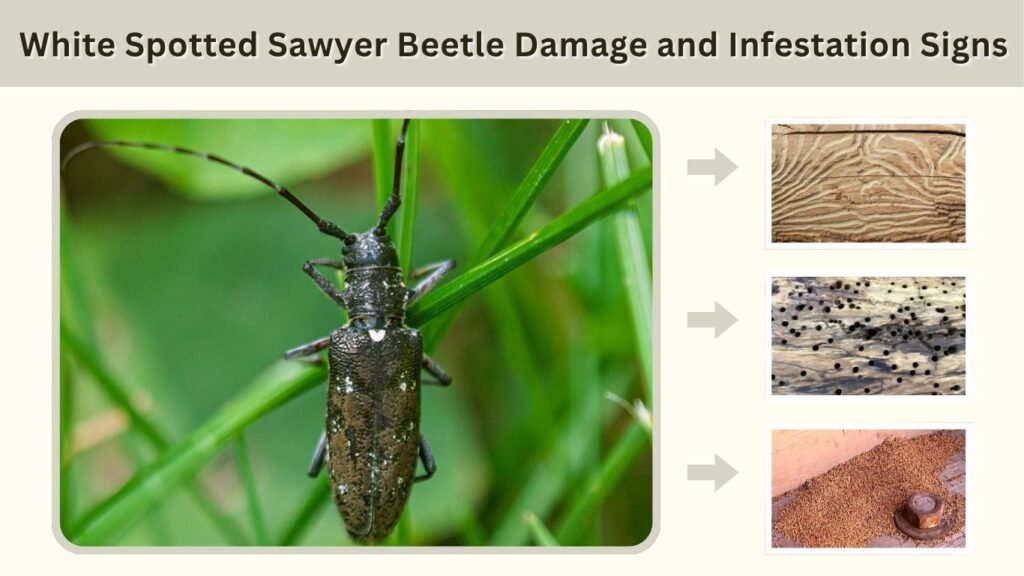
White spotted sawyer beetles mainly damage recently dead, dying, or weakened conifer trees. Their larvae create extensive tunnels that can affect the quality of harvested wood.
They are generally considered secondary pests rather than a primary cause of tree death.
Common Signs of White Spotted Sawyer Damage
- Round exit holes: Adult beetles leave circular openings when emerging from wood.
- Wood dust: Sawdust-like material accumulates beneath infested logs or trees.
- Larval tunnels: Long galleries develop beneath the bark and inside wood.
- Damaged twigs: Adult feeding can injure tender bark and occasionally cause twig discoloration.
- Declining wood quality: Extensive tunneling can reduce timber strength and commercial value.
Freshly cut logs and trees damaged by storms, fires, or prolonged drought are particularly attractive to egg-laying females.
How to Get Rid of White Spotted Sawyer Beetles
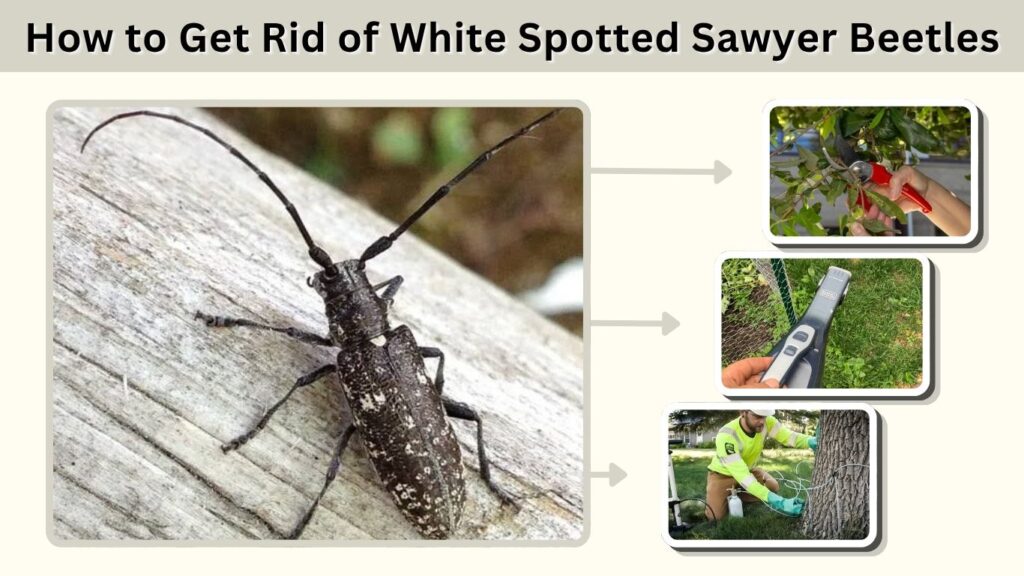
White spotted sawyer beetle control usually focuses on managing infested wood and preventing beetles from entering homes.
Because these insects are native and contribute to forest decomposition, widespread extermination is generally unnecessary.
1. Remove Infested Firewood
Inspect stored conifer logs for exit holes, loose bark, and sawdust.
Keep potentially infested firewood outdoors and bring inside only what you plan to burn promptly.
Avoid transporting untreated firewood over long distances.
2. Remove Beetles Indoors
Individual beetles can be captured using a container or vacuum cleaner.
Check window screens, door gaps, and other possible entry points.
Indoor insecticide spraying is usually unnecessary because these beetles do not typically reproduce inside homes.
3. Manage Dead Trees and Logs
Remove hazardous dead branches and process recently cut timber promptly.
Debarking or properly drying logs can reduce their attractiveness to egg-laying beetles.
Large timber infestations may require specialized forest or lumber management practices.
4. Maintain Tree Health
Healthy conifers are generally less susceptible to sawyer beetle colonization.
Maintain appropriate soil moisture, prevent unnecessary trunk injuries, and avoid damaging roots during landscaping.
5. Seek Professional Assistance
If extensive tunneling appears in a valuable landscape tree, consult a certified arborist.
Chemical control is not generally recommended for established white spotted sawyer infestations because affected trees are usually already declining.
White Spotted Sawyer vs. Asian Longhorned Beetle
White spotted sawyer beetles are frequently mistaken for Asian longhorned beetles (Anoplophora glabripennis).
Although both have dark bodies and long antennae, they differ in appearance and environmental impact.
| Feature | White Spotted Sawyer | Asian Longhorned Beetle |
| Body color | Dull, bronzy-black | Glossy black |
| White markings | Single prominent spot near wing-cover base; variable speckles | Numerous sharply defined white spots |
| Antennae | Dark or faintly banded | Distinct black-and-white bands |
| Preferred trees | Mainly weakened or dead conifers | Living hardwoods, especially maples |
| Invasive in North America | No | Yes |
| Forest impact | Usually minor | Potentially severe |
The distinctive white spot located where the sawyer’s wing covers meet is one of the most useful identification features.
If you suspect an Asian longhorned beetle, photograph it and contact your local agricultural or forestry authority.
White Spotted Sawyer Beetle Habitat and Range
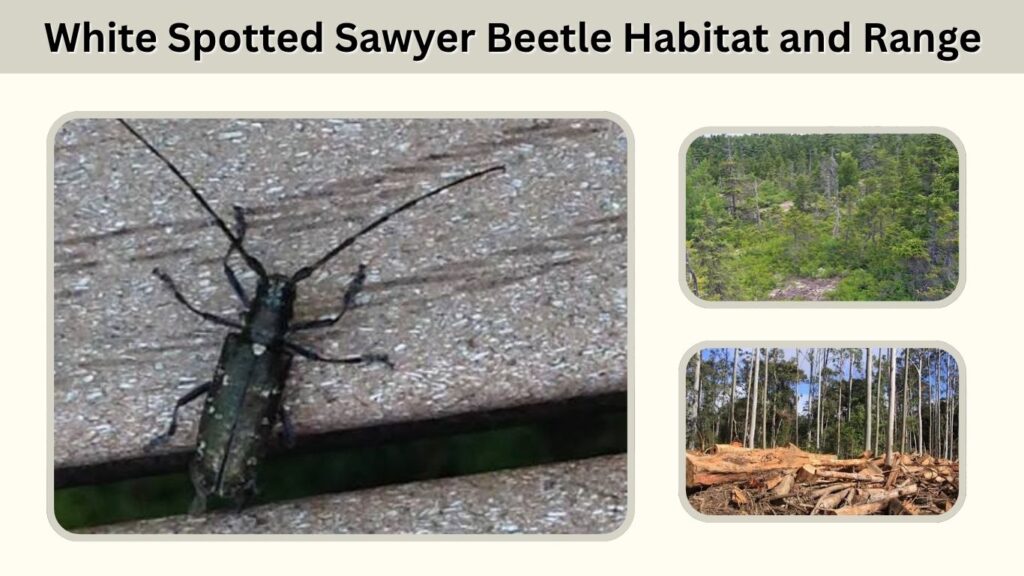
White spotted sawyer beetles occur across much of northern North America, including Canada, Alaska, and parts of the northern United States.
They are also found in mountainous conifer forests farther south.
Common habitats include pine forests, spruce woodlands, recently logged areas, sawmills, and locations containing storm-damaged trees.
The species is native to North America, but it is considered a potential biosecurity concern in countries such as Australia, where exotic sawyer beetles could threaten forestry industries.
FAQs
1. Are White Spotted Sawyer Beetles Poisonous?
No. White spotted sawyer beetles are not poisonous or venomous. They do not sting, although their strong jaws can produce a painful defensive bite when handled.
2. Can White Spotted Sawyer Beetles Damage Your House?
They do not normally infest dry structural lumber. However, adult beetles may emerge indoors from previously infested firewood or unseasoned logs.
3. Are White Spotted Sawyer Beetles Invasive?
They are native to North America and are not considered invasive there. However, their introduction into regions outside their native range could create forestry and biosecurity concerns.
4. What Attracts White Spotted Sawyer Beetles?
Recently cut conifer logs, dying pine trees, storm-damaged wood, and other weakened conifers attract female beetles searching for suitable egg-laying sites.
5. What Is the Difference Between Male and Female White Spotted Sawyer Beetles?
Male beetles usually have exceptionally long antennae and darker, less spotted bodies. Females generally have shorter antennae and may display more visible white patches on their wing covers.
