
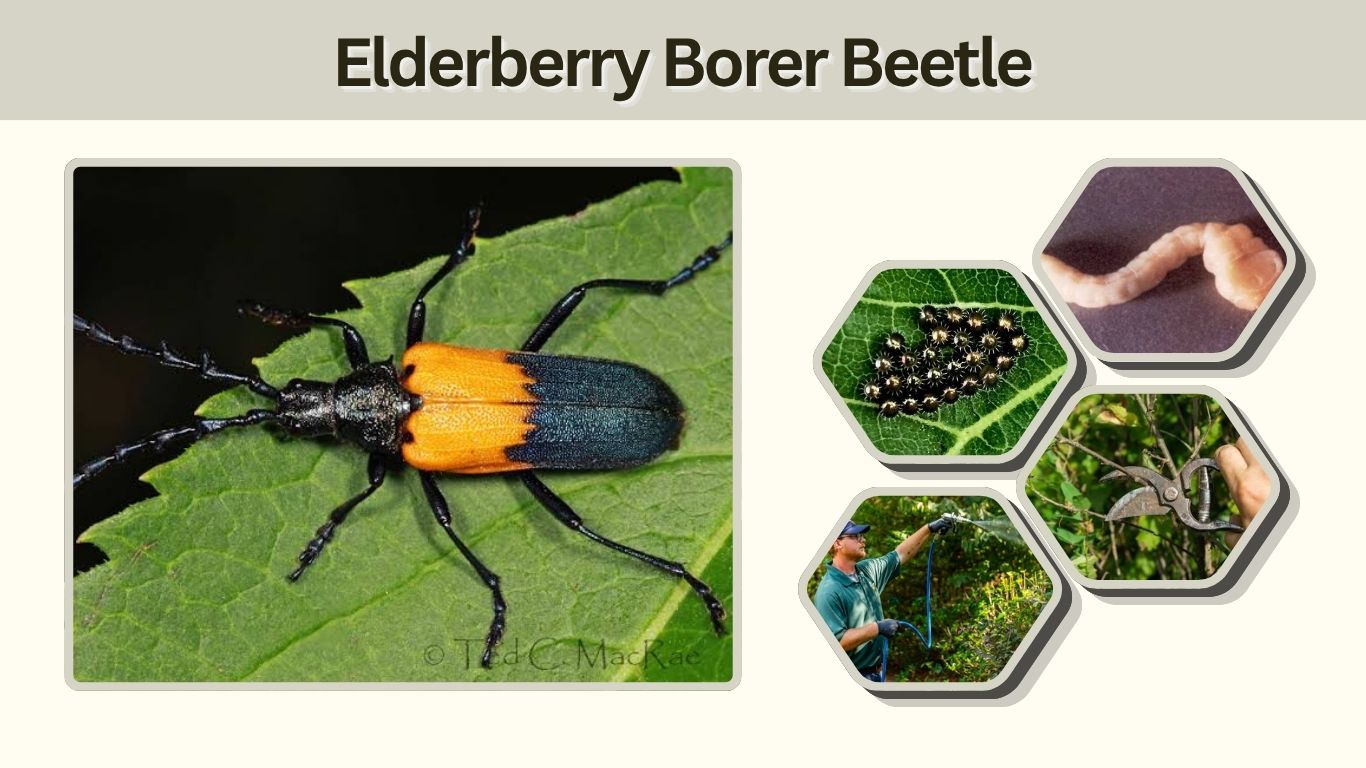
The elderberry borer (Desmocerus palliatus) is a colorful longhorn beetle found on elderberry shrubs throughout eastern North America. Known for its metallic blue body and bright yellow-orange wing markings, this insect is easily recognized by its unusual appearance. While adult beetles feed on elderberry flowers and foliage, their larvae tunnel into stems and roots, sometimes causing significant plant damage. Understanding elderberry borer identification, life cycle, feeding habits, and control methods can help gardeners recognize infestations and protect their elderberry plants.
What Is an Elderberry Borer?
The elderberry borer, also called the eastern elderberry borer, is a native North American beetle belonging to the family Cerambycidae. Its scientific name is Desmocerus palliatus, and it is closely associated with elderberry shrubs belonging to the genus Sambucus.
Unlike many wood-boring beetles that develop in dead or decaying wood, elderberry borer larvae feed within living plant tissues.
Adults typically appear during late spring and summer, often around the time elderberry shrubs begin flowering. Although these insects can damage cultivated elderberries, they are also natural members of native wetland and woodland ecosystems.
Elderberry Borer Beetle Identification
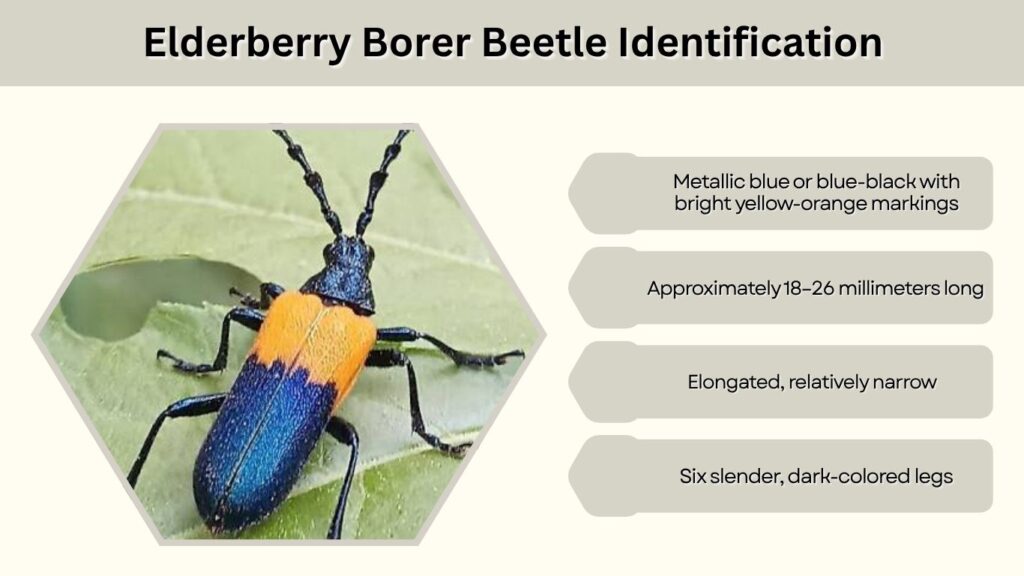
Elderberry borer beetles have a distinctive combination of metallic blue and yellow-orange coloration. Their relatively large bodies, long antennae, and contrasting wing markings make them recognizable among North American longhorn beetles.
Physical Appearance
- Color: Metallic blue or blue-black with bright yellow-orange markings.
- Size: Approximately 18–26 millimeters long.
- Body shape: Elongated, relatively narrow, and cylindrical.
- Antennae: Long, dark, segmented antennae with slightly enlarged segment tips.
- Legs: Six slender, dark-colored legs.
- Wing covers: Yellow-orange near the front, transitioning to metallic blue toward the rear.
The contrasting colors make adult beetles especially noticeable when resting on green elderberry leaves.
Their appearance may resemble certain brightly colored net-winged beetles, but their body structure and antennae identify them as longhorn beetles.
What Do Elderberry Borer Beetles Eat?
Elderberry borers feed on different plant tissues depending on their developmental stage.
Adult elderberry borer beetles consume pollen and occasionally feed on elderberry leaves and flowers. They are commonly observed on flowering shrubs during late spring and early summer.
Their feeding usually causes relatively minor damage compared with the activities of their larvae.
Elderberry borer larvae feed inside living stems, root crowns, and roots. They create tunnels while consuming plant tissues, potentially interfering with the movement of water and nutrients.
The larvae’s prolonged development makes them the primary cause of serious damage to infested elderberry plants.
Elderberry Borer Life Cycle
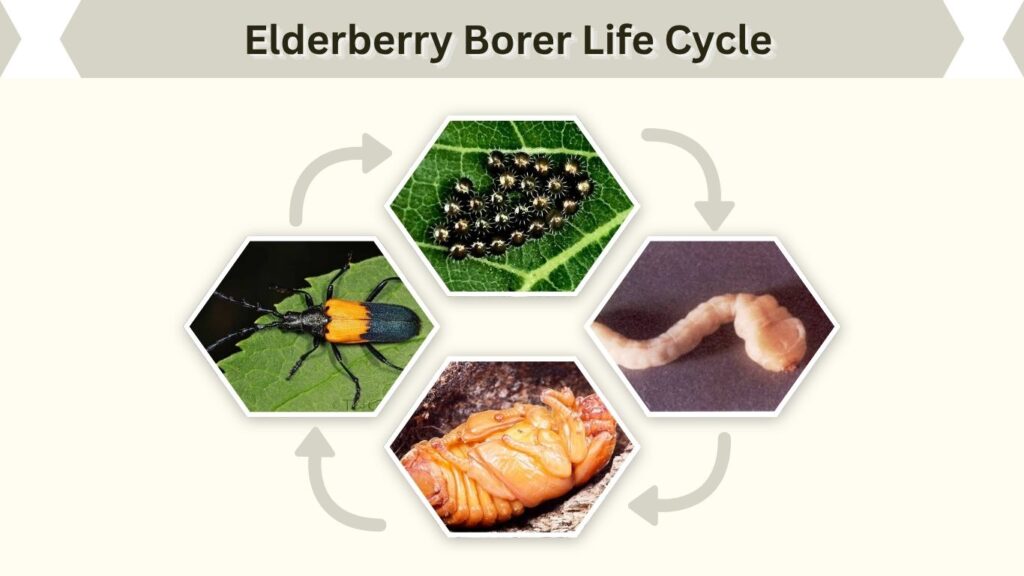
Elderberry borer beetles undergo complete metamorphosis through four developmental stages: egg, larva, pupa, and adult.
Their life cycle can extend over approximately two to three years, with most of that period spent developing inside elderberry stems and roots.
1. Egg Stage
Female elderberry borers lay eggs near the bases of living elderberry stems, often close to the soil surface.
These locations provide newly hatched larvae with direct access to suitable plant tissues.
2. Larval Stage
After hatching, larvae enter the stems and gradually tunnel downward toward the roots.
The larvae are pale, soft-bodied, legless grubs that remain hidden inside the plant.
They feed on living tissues for an extended period, creating internal galleries that may weaken the affected canes.
3. Pupal Stage
When larvae reach maturity, they move upward into the lower stems and create chambers where pupation occurs.
During this stage, they transform into adult beetles.
4. Adult Stage
Adult beetles generally emerge during late spring or early summer, although local emergence times vary.
They feed, mate, and lay eggs, beginning another generation.
Elderberry Borer Damage to Plants
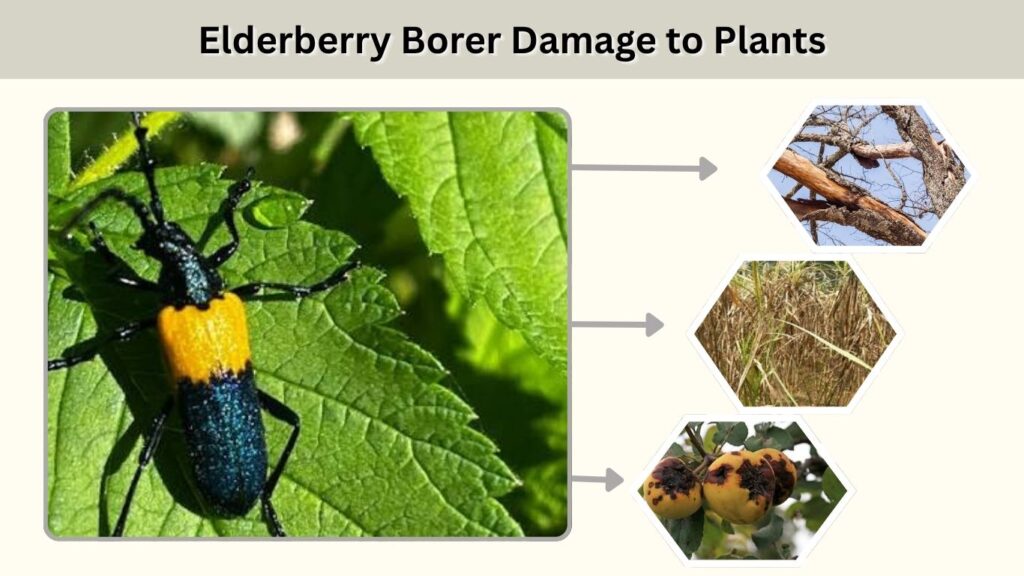
Elderberry borer damage results primarily from larvae feeding inside living stems and roots. Severe infestations can weaken individual canes, reduce plant productivity, and cause sections of the shrub to die.
Common Signs of Elderberry Borer Damage
- Wilting canes: Affected stems may suddenly droop during the growing season.
- Dead branches: Infested canes may become brown, dry, and brittle.
- Internal tunnels: Larvae create galleries within stems and root tissues.
- Reduced growth: Damaged plants may produce fewer healthy shoots.
- Poor fruit production: Cane dieback can reduce flowering and berry development.
- Plant decline: Extensive infestations may weaken the entire shrub.
Not every wilting elderberry cane is caused by this beetle. Other insects, diseases, and environmental problems can create similar symptoms.
Correct identification is important before beginning treatment.
Are Elderberry Borers Harmful to Humans?
Elderberry borer beetles are not known to pose a significant danger to humans.
They do not have stingers and are not known for aggressive behavior. Although their colorful appearance may seem unusual, these insects are primarily concerned with feeding and reproduction.
Like other beetles with chewing mouthparts, they could potentially deliver a defensive pinch if handled roughly.
However, elderberry borers are not considered medically significant biting insects.
Gardeners should avoid unnecessary handling and wash their hands after working with insects or damaged plant tissues.
How to Get Rid of Elderberry Borers
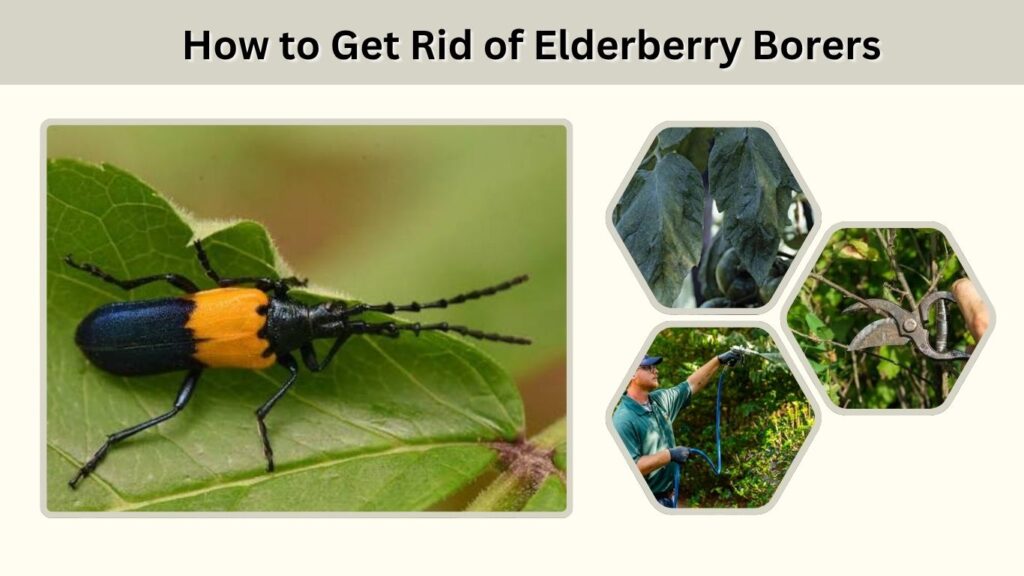
Elderberry borer control involves identifying infested plants, removing damaged canes, and maintaining healthy growing conditions.
Because larvae develop inside stems and roots, established infestations can be difficult to eliminate completely.
1. Inspect Elderberry Shrubs
Examine plants regularly for wilting shoots, dead canes, and evidence of internal tunneling.
Pay particular attention during spring and summer when adult beetles are active.
2. Prune Infested Canes
Remove severely damaged or infested stems using clean pruning equipment.
Properly dispose of infested material away from healthy elderberry plantings to reduce the chance of additional beetles emerging.
3. Maintain Healthy Plants
Provide adequate moisture, appropriate sunlight, and suitable soil conditions.
Healthy elderberry shrubs generally recover from limited cane damage more successfully than weakened plants.
4. Monitor Adult Beetles
Inspect elderberry flowers and foliage during the adult emergence period.
Monitoring helps determine whether beetles are present and whether additional management is necessary.
5. Consider Professional Treatment
Significant infestations in commercial plantings may require targeted pest management.
Consult a local agricultural extension specialist before using insecticides. Applications must follow product labeling and account for pollinator safety, especially because adults are active around elderberry flowers.
Elderberry Borer vs. Elderberry Shoot Borer
Elderberry borers are frequently confused with elderberry shoot borers, but they are different insects with different developmental habits.
| Feature | Elderberry borer | Elderberry shoot borer |
| Scientific name | Desmocerus palliatus | Achatodes zeae |
| Adult insect | Beetle | Moth |
| Family | Cerambycidae | Noctuidae |
| Larval appearance | Pale, legless grub | Caterpillar with dark markings |
| Main feeding area | Stems and roots | Young shoots and canes |
| Typical damage | Cane dieback and root injury | Wilting young shoots |
Identifying the correct insect is essential because their life cycles and management timing differ.
Elderberry Borer Habitat and Range
Eastern elderberry borers occur across portions of eastern North America, including the eastern United States and southeastern Canada.
Their habitats are closely associated with naturally growing elderberry shrubs.
Common locations include:
- Wetlands and swampy woodland edges.
- Streambanks and river corridors.
- Moist forests and shrublands.
- Native plant gardens.
- Agricultural elderberry plantings.
Adult beetles are most commonly observed during spring and summer, particularly between April and August.
Their distribution depends heavily on the presence of suitable elderberry host plants.
FAQs
1. Can Elderberry Borer Beetles Fly?
Yes. Adult elderberry borer beetles can fly using membranous wings protected beneath their hard wing covers. They move between elderberry shrubs to find food, mates, and suitable egg-laying sites. Adults are most commonly observed during late spring and summer.
2. Are Elderberry Borer Beetles Rare?
Eastern elderberry borers are considered uncommon in some parts of their range. Their populations depend on suitable elderberry habitats. Although they may be difficult to encounter, the species is not federally listed as endangered in the United States.
3. Can Elderberry Borers Kill Elderberry Plants?
Yes. Severe elderberry borer infestations can damage stems, root crowns, and roots, causing individual canes to wilt and die. Repeated or extensive infestations may weaken entire shrubs, particularly plants already experiencing drought, disease, or other environmental stress.
4. What Are the Natural Predators of Elderberry Borers?
Specific predators of eastern elderberry borers are not well documented. Like other beetles, they may encounter insect-eating birds and predatory arthropods. Their conspicuous coloration could discourage certain predators, although the effectiveness of this defense has not been established conclusively.
5. How Do You Prevent Elderberry Borer Infestations?
Prevent infestations by inspecting elderberry shrubs regularly, removing infested canes, and maintaining healthy growing conditions. Proper watering, pruning, and sanitation help reduce plant stress. Monitor adult beetle activity during flowering and seek professional guidance when substantial damage develops.
