
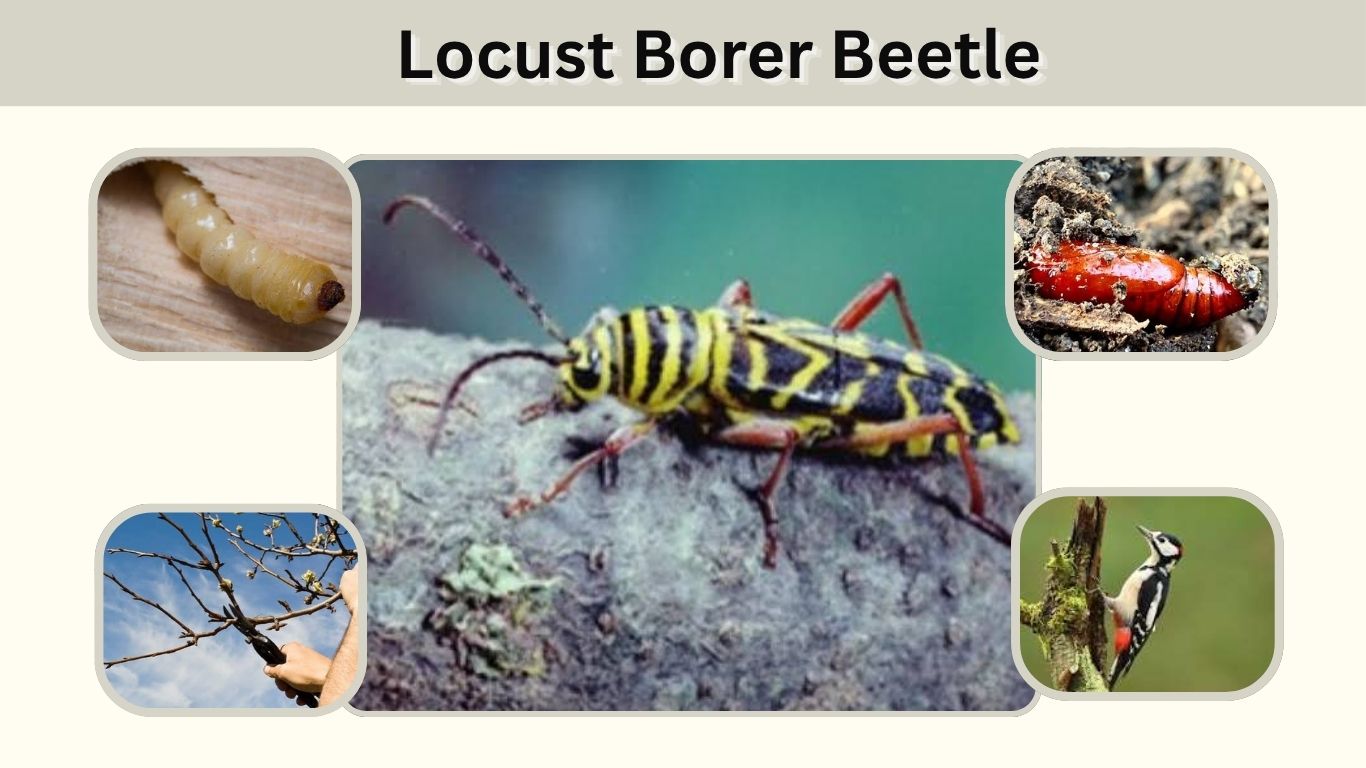
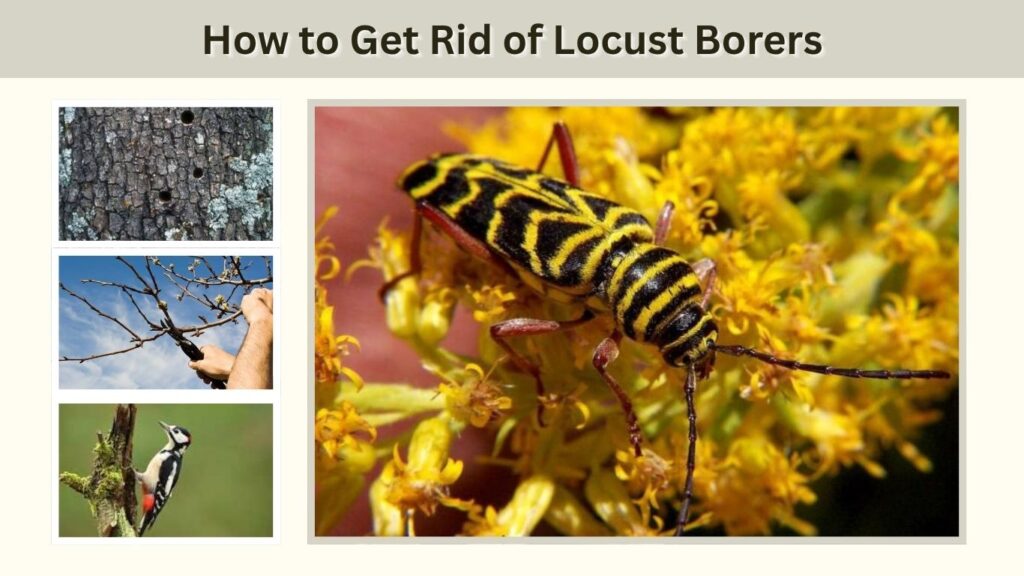
The locust borer (Megacyllene robiniae) is a striking black and yellow longhorn beetle commonly found around black locust trees in North America. Recognized by its bright yellow markings and elongated antennae, this beetle often appears on goldenrod flowers during late summer and early fall. Although adult beetles are generally harmless to humans, their larvae can cause serious damage to black locust trees by tunneling through wood. Understanding locust borer identification, feeding habits, life cycle, and control methods can help homeowners identify infestations and protect vulnerable trees.
What Is a Locust Borer?
The locust borer is a native North American beetle belonging to the family Cerambycidae, commonly known as longhorn beetles. Its scientific name is Megacyllene robiniae, and it is closely associated with black locust trees (Robinia pseudoacacia).
Adult beetles are frequently seen feeding on goldenrod flowers, where their yellow and black bodies blend with the blossoms. However, their larvae develop inside black locust wood, causing structural damage.
Locust borers are widely distributed wherever black locust trees grow. They are particularly problematic in young, weakened, or drought-stressed trees.
Locust Borer Beetle Identification
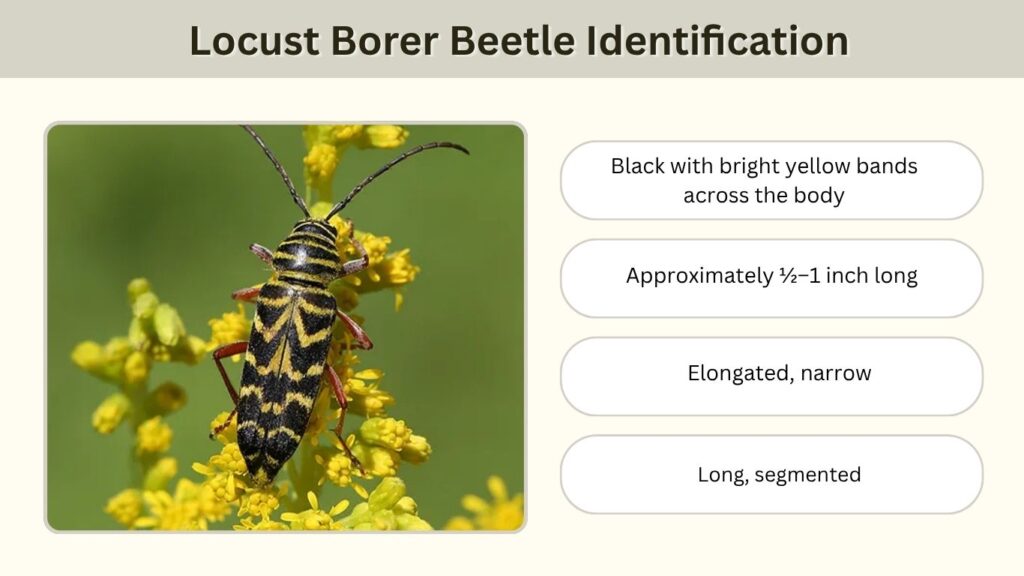
Locust borer beetles have distinctive physical characteristics that make them relatively easy to identify. Their black and yellow markings resemble those of wasps, although their bodies and antennae clearly identify them as beetles.
Physical Appearance
- Color: Black with bright yellow bands across the body.
- Size: Approximately ½–1 inch long.
- Body shape: Elongated, narrow, and somewhat cylindrical.
- Antennae: Long, segmented, and dark or reddish.
- Legs: Six slender, reddish-brown legs.
- Wing covers: Hard black wing covers displaying yellow zigzag markings.
One of the most recognizable features is the W-shaped yellow marking across the wing covers.
Adult locust borers are especially noticeable during late summer when they visit goldenrod flowers to feed.
What Do Locust Borers Eat?
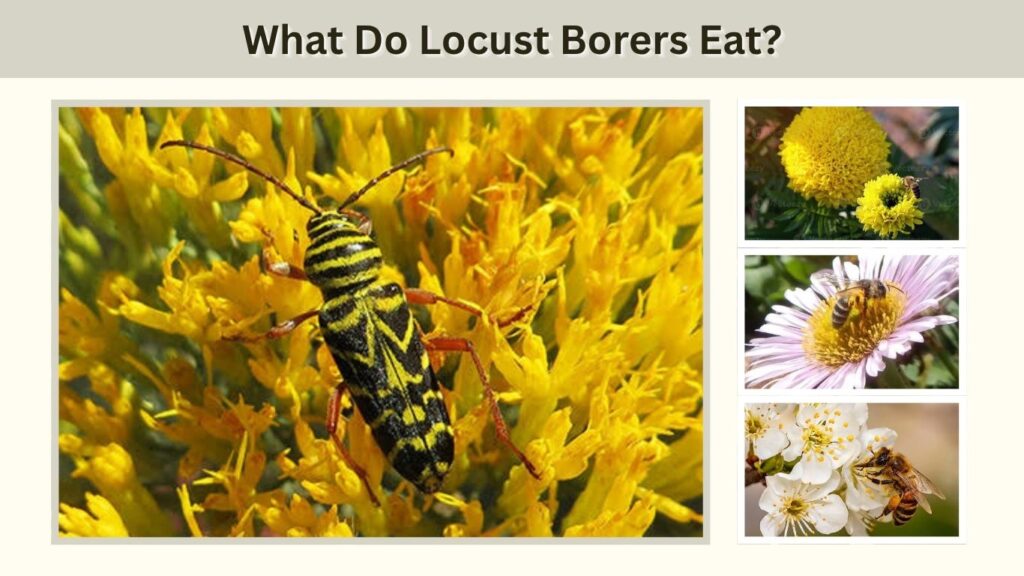
Locust borers have different feeding habits during their adult and larval stages.
Adult locust borer beetles primarily consume pollen and nectar from flowers, especially goldenrod. They may also visit other late-season flowering plants to obtain nutrients.
Unlike their larvae, adult beetles do not cause significant feeding damage to trees.
Locust borer larvae feed inside black locust trees. They tunnel through the inner bark, sapwood, and eventually heartwood, consuming living tissues during their development.
This feeding creates galleries that interfere with tree growth and weaken branches and trunks.
Black locust is the primary and essentially exclusive host of this beetle, including ornamental black locust cultivars such as Purple Robe.
Locust Borer Life Cycle
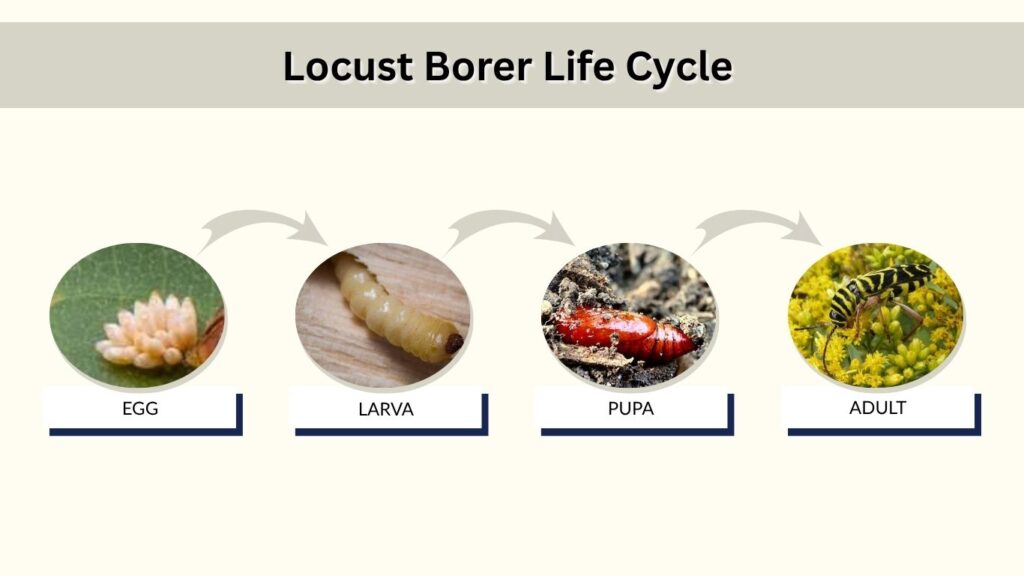
Locust borers undergo complete metamorphosis, passing through four developmental stages: egg, larva, pupa, and adult.
Their life cycle typically takes one year, with one generation produced annually.
1. Egg Stage
Female locust borers lay eggs during late summer and early fall. They deposit them in bark crevices, wounds, or existing openings on black locust trees.
After several days, the eggs hatch into small larvae that immediately begin boring beneath the bark.
2. Larval Stage
Newly hatched larvae spend winter inside the inner bark. During spring, they become active and tunnel deeper into the wood.
The larvae are creamy white, legless, and segmented, reaching approximately one inch long when fully developed.
This is the most destructive developmental stage because feeding tunnels weaken the tree’s internal structure.
3. Pupal Stage
During midsummer, mature larvae transform into pupae inside chambers within their wood galleries.
Their bodies gradually develop recognizable adult features, including legs, antennae, and wings.
4. Adult Stage
Adult locust borers emerge in late summer, generally between August and September, depending on the region.
They feed on goldenrod flowers, mate, and return to suitable black locust trees to lay eggs.
Locust Borer Damage to Trees
Locust borer damage primarily results from larvae tunneling through black locust wood. Severe infestations can weaken branches, disrupt nutrient transport, and reduce overall tree health.
Young trees and trees experiencing environmental stress are especially vulnerable.
Common Signs of Locust Borer Damage
- Sawdust-like material: Frass accumulates around bark openings or at the base of infested trees.
- Oozing sap: Wet spots may appear where larvae tunnel into living tissues.
- Exit holes: Adult beetles leave visible openings when emerging from wood.
- Swollen bark: Damaged tissues may develop irregular, knotty growth.
- Dead branches: Severe infestations can cause branch dieback and thinning crowns.
- Weak wood: Extensive internal tunneling increases the risk of branches breaking.
Repeated infestations may eventually kill severely weakened trees.
Healthy, mature black locust trees often tolerate limited infestations better than young or stressed trees.
Are Locust Borer Beetles Poisonous or Dangerous?
Locust borer beetles are not known to be poisonous or venomous to humans. Despite their wasp-like coloration, they do not possess stingers.
Their yellow and black markings are believed to provide protection by resembling the warning colors of stinging insects.
Although adult beetles may appear intimidating, they generally avoid people and do not actively attack.
Their primary threat involves damage to black locust trees rather than human health.
Do Locust Borer Beetles Bite?
Locust borer beetles have chewing mouthparts and may occasionally deliver a defensive pinch if grabbed or handled roughly.
However, locust borers are not aggressive biters, and they do not inject venom.
A defensive bite may cause minor temporary discomfort, but serious injuries are not expected.
Avoid handling unfamiliar beetles unnecessarily, and wash any minor skin injury with soap and water.
How to Get Rid of Locust Borers
Locust borer control is most effective when infestations are detected early. Because larvae develop inside wood, eliminating established populations can be challenging.
1. Inspect Black Locust Trees
Examine trunks and branches for exit holes, oozing sap, sawdust-like material, and unusual swelling.
Pay particular attention to young trees and trees already showing signs of stress.
2. Maintain Healthy Tree Growth
Provide sufficient water during dry conditions, protect roots from injury, and maintain suitable growing conditions.
Healthy trees are better able to resist serious infestations and tolerate limited damage.
3. Remove Severely Infested Branches
Prune heavily damaged branches when appropriate, using proper arboricultural techniques.
Remove or properly process infested wood to reduce the likelihood of additional beetles emerging.
4. Encourage Natural Predators
Woodpeckers feed on locust borer larvae, helping reduce beetle populations naturally.
Other predators, including wheel bugs, may capture adult beetles.
Maintaining a diverse landscape can support these natural enemies.
5. Consider Professional Insecticide Treatment
For valuable trees facing significant infestation pressure, preventive insecticide treatments may be appropriate.
Properly timed bark treatments target egg-laying adults and newly hatched larvae, usually around late summer.
Treatments cannot reliably eliminate larvae already protected deep inside the wood.
Always use products specifically labeled for the intended treatment and consult a qualified arborist or local extension specialist. Avoid spraying goldenrod because it provides food for bees and other pollinators.
Locust Borer vs. Honey Locust Borer
Although their names sound similar, the locust borer and honey locust borer are different beetles that attack different trees.
| Feature | Locust borer | Honey locust borer |
| Scientific name | Megacyllene robiniae | Agrilus difficilis |
| Family | Cerambycidae | Buprestidae |
| Appearance | Black with yellow bands | Dark, slender, metallic |
| Host tree | Black locust | Honey locust |
| Larval feeding | Inner bark and wood | Tissues beneath bark |
| Main damage | Wood weakening and branch breakage | Girdling and branch dieback |
Correct identification is important because treatment timing and management practices can differ between these pests.
Locust Borer Habitat and Range
Locust borers are native to North America and occur across much of the United States and parts of eastern Canada, wherever suitable black locust trees are present.
They commonly inhabit forests, woodland edges, disturbed landscapes, roadsides, and residential areas with black locust trees.
Adult beetles are especially visible from late August through October when goldenrod flowers are blooming.
Their seasonal appearance helps distinguish them from similar longhorn beetles, including the painted hickory borer, which is generally active during spring.
FAQs
1. Can Locust Borer Beetles Fly?
Yes. Adult locust borer beetles can fly using the membranous wings folded beneath their hard wing covers. They commonly travel between goldenrod flowers, where they feed on pollen and nectar, and black locust trees, where females lay their eggs.
2. Are Locust Borers Invasive?
No. Locust borers are native to North America, so they are not considered invasive within their natural range. However, they can become significant pests of black locust trees, especially when the trees are young, drought-stressed, or otherwise weakened.
3. Can Locust Borers Kill a Tree?
Yes. Severe locust borer infestations can kill black locust trees, particularly young or stressed specimens. Their larvae tunnel through the inner bark and wood, weakening branches and trunks. Repeated infestations may eventually cause extensive dieback, structural failure, or tree death.
4. Why Is a Locust Borer Beetle in My House?
A locust borer found indoors usually enters accidentally through an open window or door. These beetles do not normally infest household lumber. If several similar beetles appear near stored firewood, confirm their identity because painted hickory borers can emerge indoors.
5. What Is the Difference Between a Locust Borer and a Painted Hickory Borer?
Both species have striking black and yellow markings, but locust borers are typically active during late summer and fall and develop in black locust trees. Painted hickory borers generally emerge in spring and develop in hickory and other hardwoods.
