
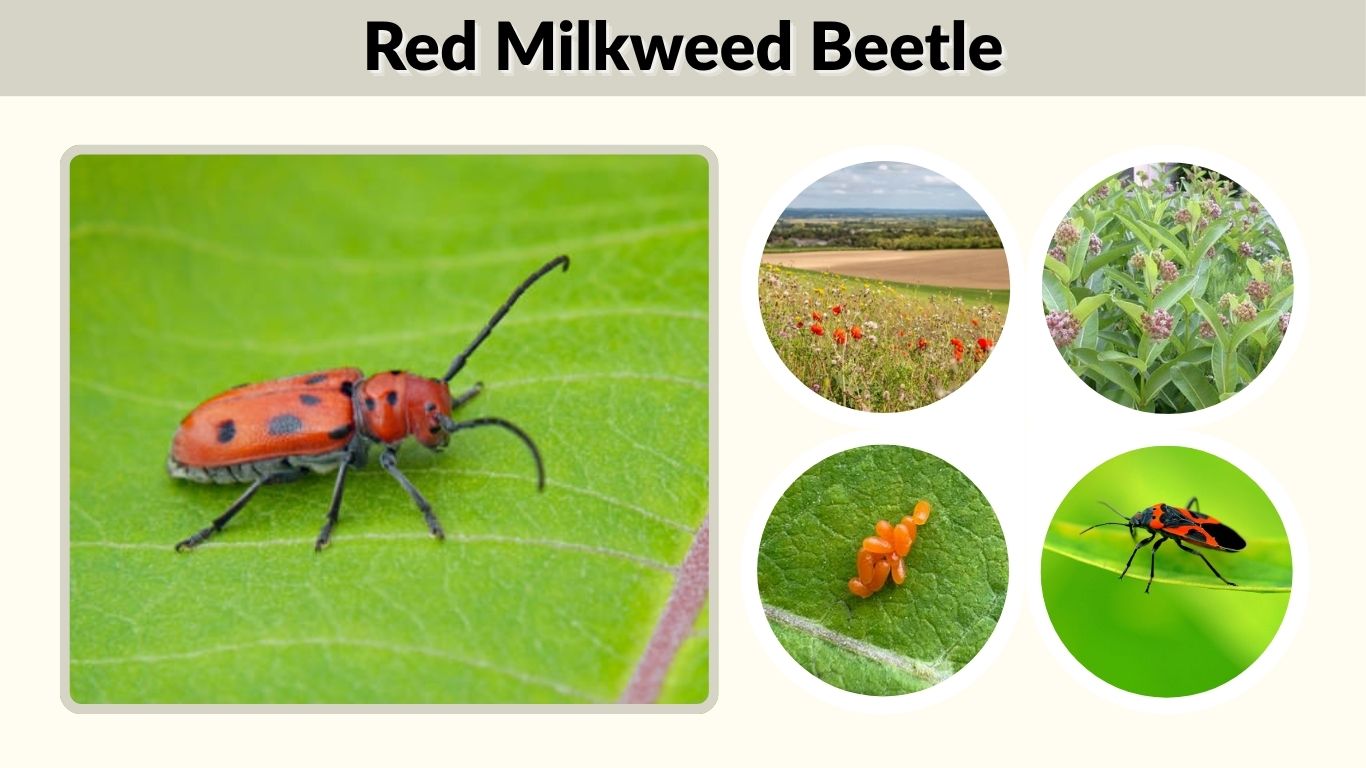
The red milkweed beetle (Tetraopes tetrophthalmus) is a bright red and black insect commonly found on milkweed plants throughout eastern and central North America. These beetles are easily recognized by their long antennae, spotted bodies, and unusual divided eyes. Although they feed on milkweed leaves, flowers, and roots, they rarely cause serious damage to established plants. Understanding red milkweed beetle identification, diet, life cycle, and behavior can help gardeners determine whether these insects are beneficial, harmful, or simply part of a healthy milkweed ecosystem.
What Is a Red Milkweed Beetle?
The red milkweed beetle is a species of longhorn beetle belonging to the family Cerambycidae. It is closely associated with milkweed plants, particularly common milkweed (Asclepias syriaca), which provides food and breeding habitat throughout its life.
Unlike many garden beetles that feed on different plant species, red milkweed beetles are specialized herbivores. Their bright red and black coloration helps warn predators that they contain defensive chemicals obtained from milkweed.
These beetles are native to North America and commonly appear during summer when milkweed plants are actively growing and flowering.
Red Milkweed Beetle Identification
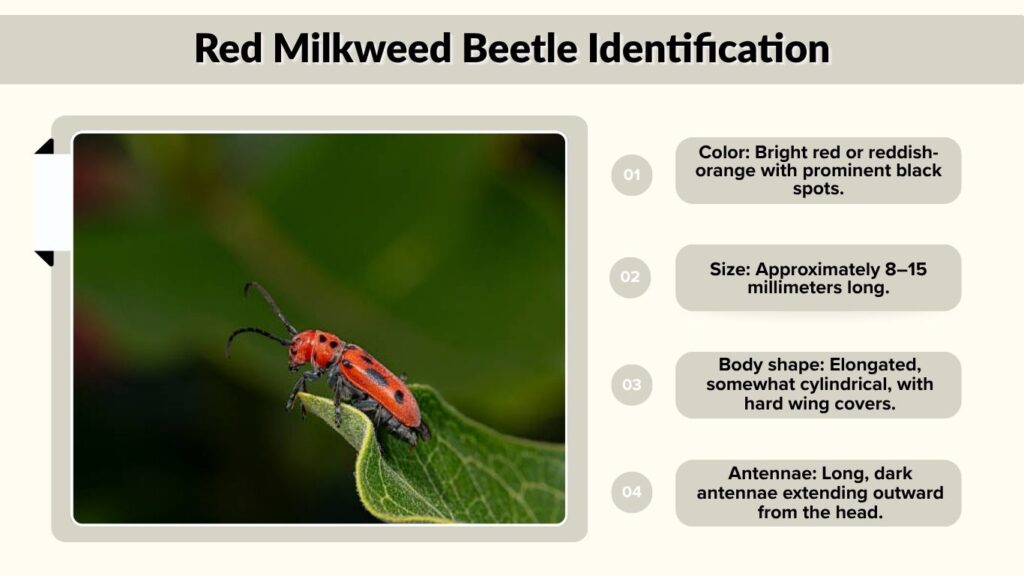
Red milkweed beetles have distinctive physical characteristics that make them relatively easy to identify. Their colorful bodies and unusual antenna placement distinguish them from other red and black insects found on milkweed.
Physical Appearance
- Color: Bright red or reddish-orange with prominent black spots.
- Size: Approximately 8–15 millimeters long.
- Body shape: Elongated, somewhat cylindrical, with hard wing covers.
- Antennae: Long, dark antennae extending outward from the head.
- Eyes: Each compound eye is divided by the base of an antenna.
- Legs: Six slender, dark-colored legs.
The divided eyes are particularly unusual. Their scientific name, Tetraopes tetrophthalmus, refers to their four-eyed appearance.
Adult beetles are often observed resting, feeding, or mating on milkweed leaves and flower clusters.
What Do Red Milkweed Beetles Eat?
Red milkweed beetles primarily feed on milkweed plants. However, their feeding habits change depending on their developmental stage.
Adult red milkweed beetles consume milkweed leaves, flower buds, and flowers. They sometimes create irregular holes in leaves or damage tender plant tissues while feeding.
Milkweed produces sticky white latex that can interfere with insect feeding. To avoid this problem, adult beetles cut leaf veins before eating, allowing some of the latex to drain away.
Red milkweed beetle larvae live underground and feed mainly on milkweed roots. They obtain nutrients from the roots while developing into mature beetles.
Although this feeding can damage plant tissues, healthy, established milkweed plants usually tolerate small beetle populations.
Red Milkweed Beetle Life Cycle
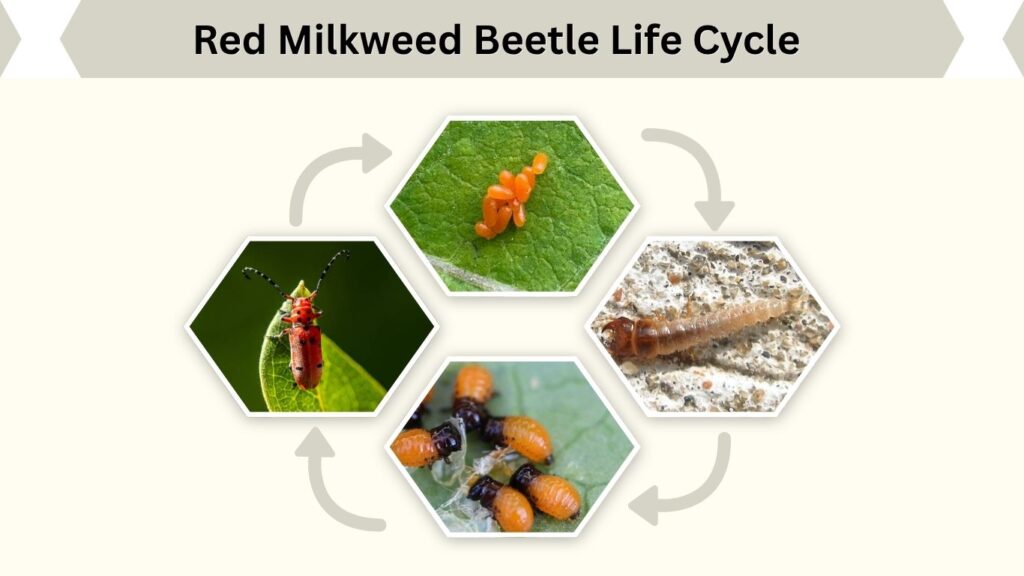
Red milkweed beetles undergo complete metamorphosis, passing through four developmental stages: egg, larva, pupa, and adult.
1. Egg Stage
Female red milkweed beetles lay eggs near the base of milkweed stems, sometimes placing them in plant tissue or close to the soil surface. These protected locations give newly hatched larvae convenient access to their food source.
2. Larval Stage
After hatching, the pale, grub-like larvae move into the soil or through the lower stem to reach milkweed roots.
They feed on root tissues during the growing season and typically remain underground through winter. Unlike adult beetles, larvae lack the distinctive red and black coloration.
3. Pupal Stage
During spring, mature larvae form pupal chambers in the soil. Inside these chambers, their bodies transform into adult beetles.
4. Adult Stage
Adult beetles usually emerge in early summer, around the time milkweed plants begin flowering. They feed, mate, and reproduce, beginning the next generation.
The life cycle generally follows an annual pattern in much of their range.
Are Red Milkweed Beetles Good or Bad?
Red milkweed beetles are generally considered natural members of the milkweed ecosystem rather than serious garden pests.
They have both ecological importance and the potential to cause some plant damage.
Benefits of Red Milkweed Beetles
- Native biodiversity: They contribute to the diversity of insects associated with North American milkweed habitats.
- Food-web relationships: They participate in ecological interactions involving milkweed, herbivores, and predators.
- Ecological specialization: They demonstrate how insects adapt to feeding on chemically defended plants.
- Natural garden balance: Their presence is normal in gardens supporting native milkweed.
Potential Disadvantages
Adult beetles occasionally damage leaves, flower buds, and blossoms. Meanwhile, larvae feed on roots, potentially stressing small or weakened plants.
However, this damage is usually limited, and established milkweed populations generally recover without treatment.
Therefore, red milkweed beetles are usually best left alone unless significant plant damage develops.
Are Red Milkweed Beetles Poisonous or Dangerous?
Red milkweed beetles obtain defensive chemicals called cardenolides from their host plants. These substances make the beetles distasteful or potentially toxic to certain predators.
Their bright red and black coloration acts as a warning signal, discouraging animals from eating them.
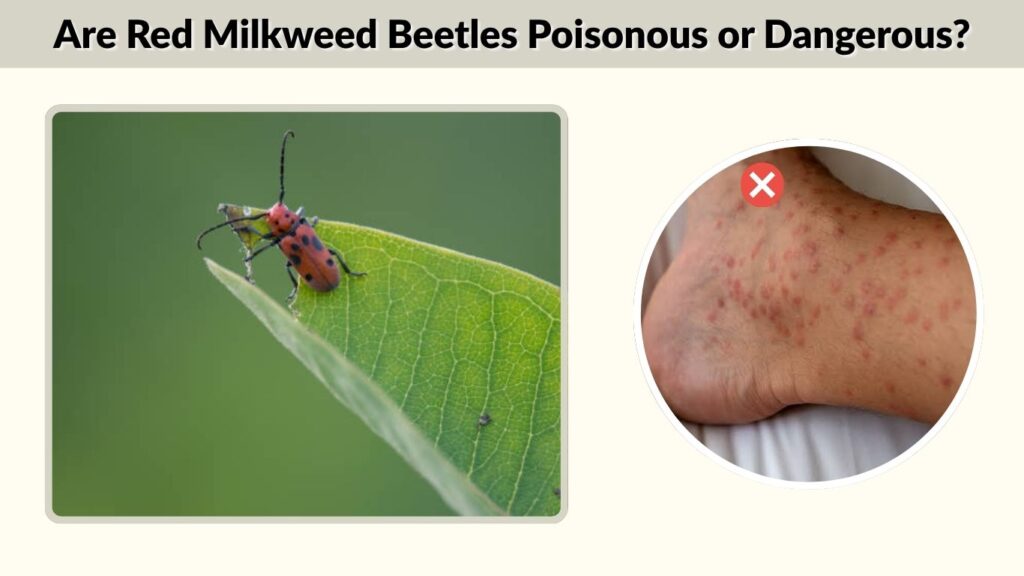
However, poisonous to predators does not mean these beetles are dangerous to people during ordinary garden activities.
Do Red Milkweed Beetles Bite Humans?
Red milkweed beetles are not aggressive toward humans. They do not sting and are not known for biting people.
Like many beetles with chewing mouthparts, one may give a small defensive nip if roughly handled, but this is not considered a significant medical threat.
It is still sensible to avoid squeezing or unnecessarily handling them and to wash your hands after gardening around milkweed.
Do Red Milkweed Beetles Harm Monarch Butterflies?
Red milkweed beetles do not normally harm monarch butterflies, caterpillars, or eggs.
Both species use milkweed plants, but they have different feeding behaviors. Monarch caterpillars consume milkweed foliage, while adult beetles eat leaves, buds, and flowers, and their larvae feed underground.
Although the two species may share the same plants, red milkweed beetles are herbivores rather than predators of monarch caterpillars.
When milkweed is abundant, both insects can coexist successfully.
For gardeners creating monarch habitats, leaving red milkweed beetles undisturbed is generally appropriate.
Red Milkweed Beetle Habitat and Range
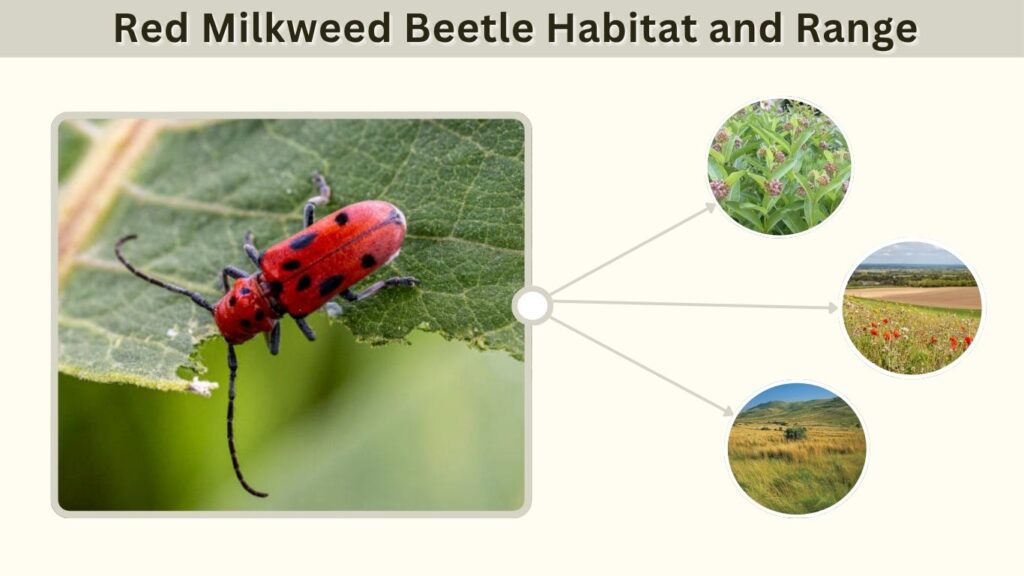
Red milkweed beetles occur primarily throughout eastern and central North America, including parts of the United States and southern Canada.
Their distribution closely follows the availability of suitable milkweed host plants.
Common habitats include:
- Wildflower meadows and open fields.
- Roadsides with naturally growing milkweed.
- Prairies and grasslands.
- Butterfly gardens and native plant landscapes.
- Sunny locations containing established milkweed patches.
Adults are most commonly visible during the warmer summer months, especially from June through August, depending on local conditions.
How to Get Rid of Red Milkweed Beetles
Most red milkweed beetle populations do not require control. However, gardeners concerned about excessive feeding damage can use gentle management techniques.
1. Inspect Milkweed Plants
Examine leaves, stems, and flowers to determine whether beetles are causing substantial damage. A few feeding holes rarely justify treatment.
2. Remove Beetles by Hand
When necessary, gently collect adult beetles and relocate them to another suitable milkweed patch where relocation is appropriate.
Avoid crushing the insects or unnecessarily disturbing monarch eggs and caterpillars.
3. Maintain Healthy Milkweed
Provide suitable sunlight, adequate moisture during establishment, and appropriate growing conditions. Healthy milkweed stands are generally better able to tolerate insect feeding.
4. Grow Additional Milkweed
Adding locally native milkweed species can increase available habitat and reduce pressure on individual plants. Choose species appropriate to your region.
5. Avoid Broad-Spectrum Insecticides
Chemical treatments can harm monarch caterpillars, pollinators, and other insects using milkweed.
Because red milkweed beetles rarely cause serious damage, pesticide applications are generally unnecessary.
Red Milkweed Beetle vs. Milkweed Bug
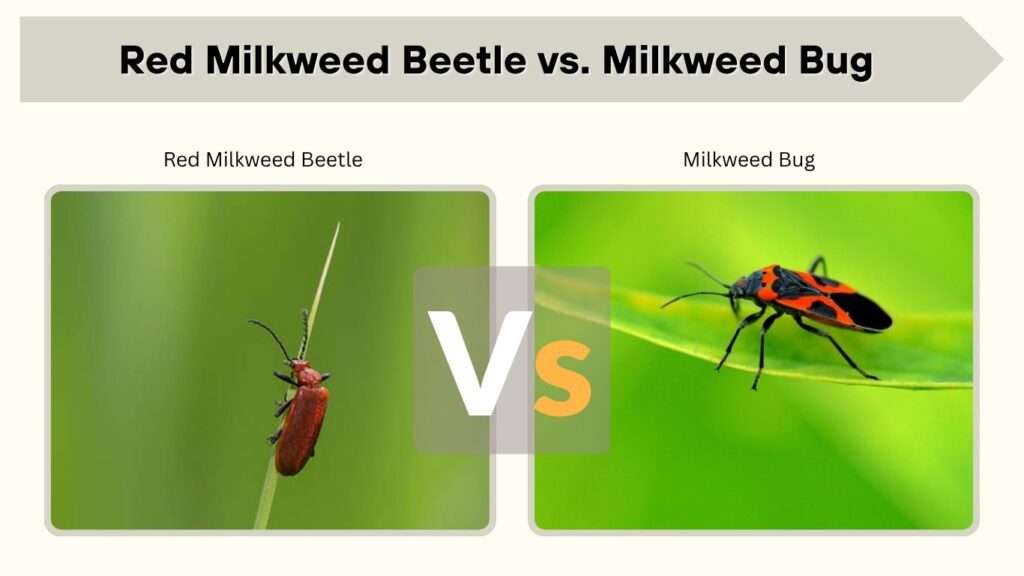
Red milkweed beetles are frequently confused with red and black milkweed bugs, but they belong to different insect groups.
| Feature | Red milkweed beetle | Large milkweed bug |
| Scientific name | Tetraopes tetrophthalmus | Oncopeltus fasciatus |
| Body shape | Elongated, cylindrical | Flatter, oval |
| Color pattern | Red with black spots | Orange-red with black bands and triangles |
| Antennae | Relatively long | Shorter |
| Main food | Milkweed foliage, flowers, and roots | Primarily milkweed seeds |
| Development | Egg, larva, pupa, adult | Egg, nymph, adult |
The easiest way to recognize a red milkweed beetle is by its long antennae, black spots, and divided compound eyes.
FAQs
1. Are red milkweed beetles invasive?
No. Red milkweed beetles are native to North America and naturally occur in regions where suitable milkweed plants grow.
2. Can red milkweed beetles kill milkweed plants?
They can damage leaves, flowers, and roots, but healthy, established milkweed plants rarely die from ordinary beetle feeding.
3. What eats red milkweed beetles?
Their defensive chemicals discourage many potential predators. Nevertheless, some predators may still attack or consume them, particularly when their chemical defenses are ineffective.
4. Why do red milkweed beetles make sounds?
Adult red milkweed beetles can produce squeaking or purring sounds by rubbing specialized body structures together. This behavior is called stridulation and is particularly noticeable when they are disturbed.
5. Should I remove red milkweed beetles from my garden?
Usually not. They are native insects that coexist with monarch butterflies and typically cause limited damage. Removal is worth considering only when feeding is substantially affecting vulnerable milkweed plants.
