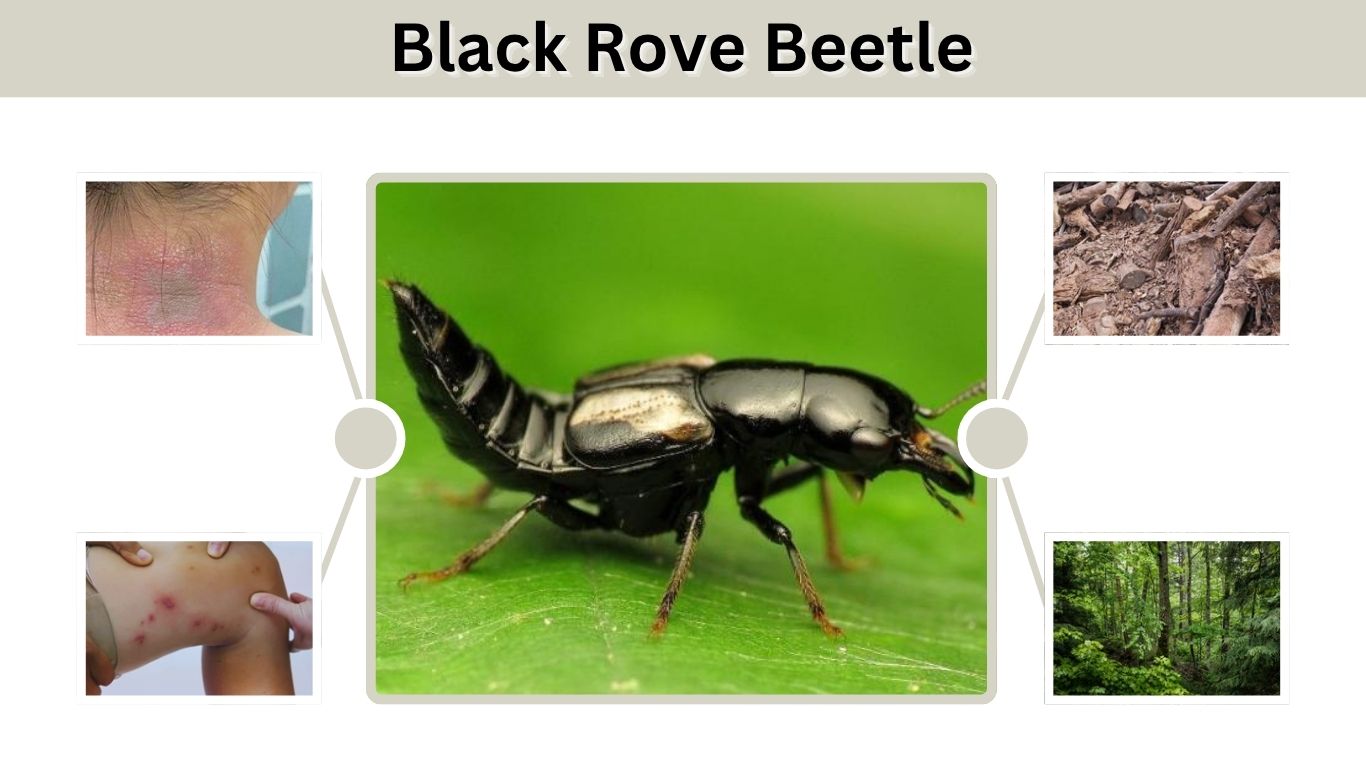
The black rove beetle is a slender, fast-moving insect commonly found in gardens, forests, and occasionally inside homes. Known for its elongated black body, short wing covers, and scorpion-like defensive posture, this beetle belongs to the Staphylinidae family. Although black rove beetles can look intimidating, most are beneficial predators that feed on smaller insects and other invertebrates. Understanding black rove beetle identification, bites, habitat, and behavior can help you distinguish harmless species from potentially irritating ones and manage them safely around your property.
What Is a Black Rove Beetle?
A black rove beetle is any predominantly black beetle belonging to the Staphylinidae family. These insects are widely distributed and occupy various habitats, including gardens, grasslands, woodland, and moist soil.
Unlike typical beetles with hard wing covers extending over their entire abdomen, rove beetles possess unusually short wing covers, leaving several abdominal segments exposed.
Black Rove Beetle Facts
| Feature | Description |
| Common Name | Black Rove Beetle |
| Scientific Family | Staphylinidae |
| Color | Black, dark brown, or black with markings |
| Size | Approximately 2–30 mm, depending on species |
| Body Shape | Long, narrow, and segmented |
| Diet | Small insects, larvae, and other invertebrates |
| Habitat | Gardens, forests, soil, and leaf litter |
| Distribution | Worldwide |
| Life Cycle | Egg, larva, pupa, adult |
Most black rove beetles are active hunters, although feeding habits vary considerably between species.
Black Rove Beetle Identification and Appearance
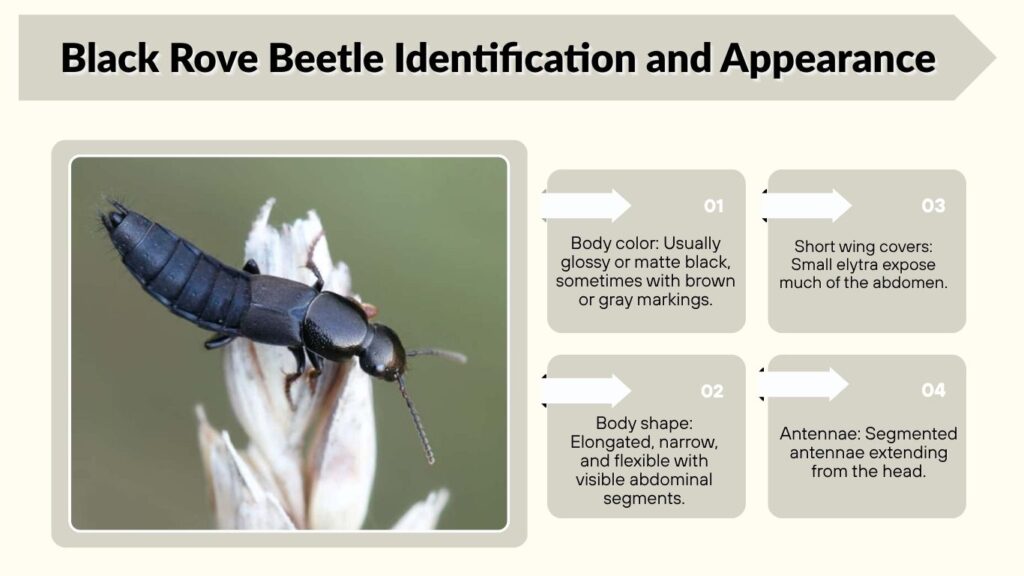
Black rove beetles have distinctive physical features that make them recognizable among other beetle families. However, individual species vary significantly in size, body shape, and markings.
How to Identify a Black Rove Beetle
Look for these characteristics:
- Body color: Usually glossy or matte black, sometimes with brown or gray markings.
- Body shape: Elongated, narrow, and flexible with visible abdominal segments.
- Short wing covers: Small elytra expose much of the abdomen.
- Antennae: Segmented antennae extending from the head.
- Legs: Six well-developed legs adapted for quick movement.
- Defensive posture: Some species raise their abdomens when disturbed.
Black rove beetles are sometimes mistaken for earwigs because of their slender appearance. However, rove beetles lack the prominent rear pincers that distinguish earwigs.
Common Types of Black Rove Beetles
Several rove beetle species have predominantly black bodies. Others display contrasting red, orange, white, or gray markings.
Recognizing these differences is helpful because different species have different habitats, behaviors, and defensive adaptations.
1. All-Black Rove Beetle
The devil’s coach horse beetle (Ocypus olens) is among the most recognizable all-black rove beetles.
Adults typically measure 20–30 millimeters long and have powerful jaws, short wing covers, and a thick abdomen.
When threatened, they raise their abdomens like scorpions. However, they have no stinger and primarily use biting and defensive secretions for protection.
2. Black Lordithon Rove Beetle
The black lordithon rove beetle (Lordithon niger) is another member of the Staphylinidae family.
It has an elongated, predominantly black body with a pointed abdomen and noticeable hairs along parts of its body.
This species is associated with mature northern hardwood and mixed coniferous forests. Its specialized habitat makes it different from many common garden rove beetles.
3. Black and White Rove Beetle
Some rove beetles appear black and white because of pale hairs covering portions of their bodies.
The hairy rove beetle (Creophilus maxillosus) is one example. It has a black body with distinctive patches of yellowish-gray hairs that may appear whitish.
This species frequently occurs around decomposing organic matter, where it preys on fly larvae.
4. Red, Orange, and Black Rove Beetles
Not all rove beetles are entirely black. Some species have contrasting reddish or orange body segments.
Certain Paederus species have black and orange-red coloration. These beetles are especially important to recognize because crushing them against the skin can release irritating chemicals.
Color alone cannot confirm species identification, but it provides a useful starting point.
Where Do Black Rove Beetles Live?
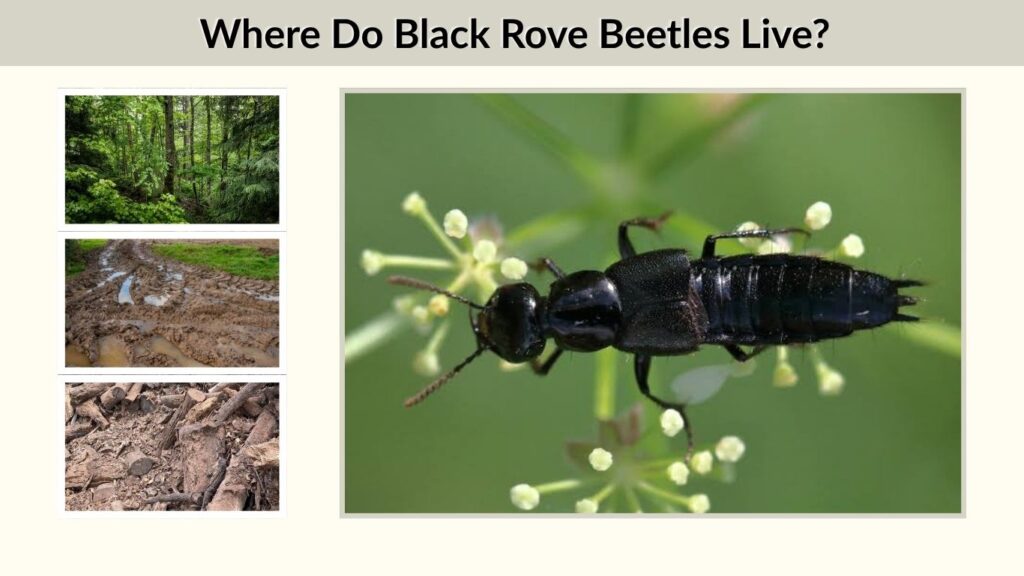
Black rove beetles occupy various environments where they can find moisture, shelter, and suitable food.
Common habitats include woodland floors, beneath stones and fallen logs, compost piles, damp soil, and leaf litter.
Some species occur around animal remains or decaying vegetation, while others inhabit fungi or agricultural environments.
Black Rove Beetles in the UK
The United Kingdom supports numerous rove beetle species, including the devil’s coach horse beetle.
This large black species is frequently encountered in gardens, hedgerows, parks, and woodlands.
It is particularly active during warmer months, generally from April through October.
Gardeners may notice these beetles moving quickly across the ground or hiding beneath flowerpots and stones.
Do Black Rove Beetles Bite Humans?
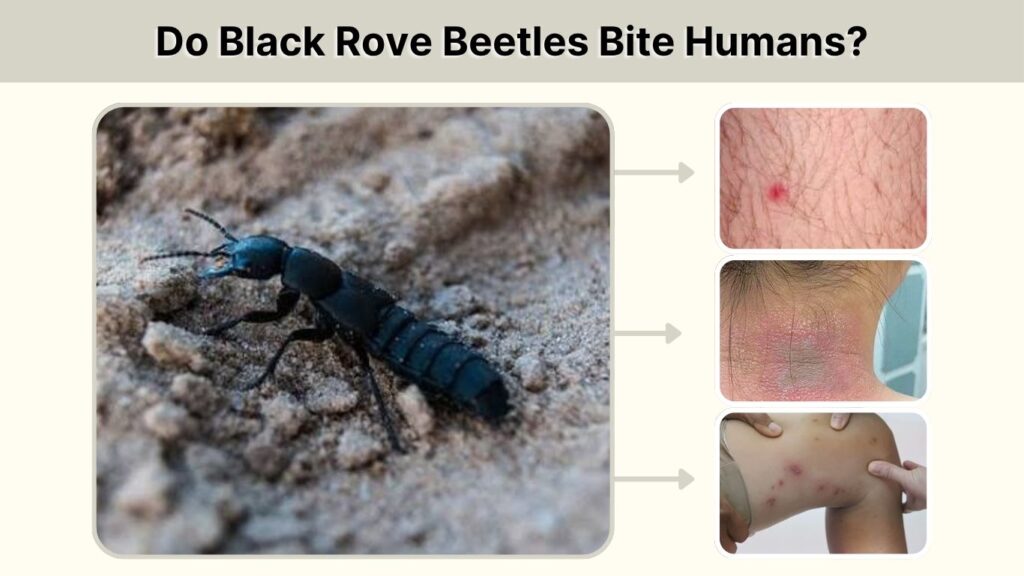
Yes, some black rove beetles can bite humans when threatened or handled carelessly.
Large species such as the devil’s coach horse have strong jaws capable of delivering a painful pinch.
However, they are not aggressive toward people and generally attempt to escape rather than attack.
Most rove beetle bites do not cause serious medical complications.
What Happens If a Black Rove Beetle Bites You?
A bite may cause temporary pain, minor redness, or localized irritation.
If bitten, wash the affected area with soap and water. Applying a cold compress may help reduce discomfort.
Avoid scratching the skin, and seek medical attention if severe swelling, spreading redness, or other concerning symptoms develop.
Importantly, some Paederus rove beetles cause skin injuries without biting. Crushing them releases pederin-containing fluid that can cause burning, redness, and blisters. Avoid crushing an unidentified rove beetle against your skin.
Why Is a Black Rove Beetle in My House?
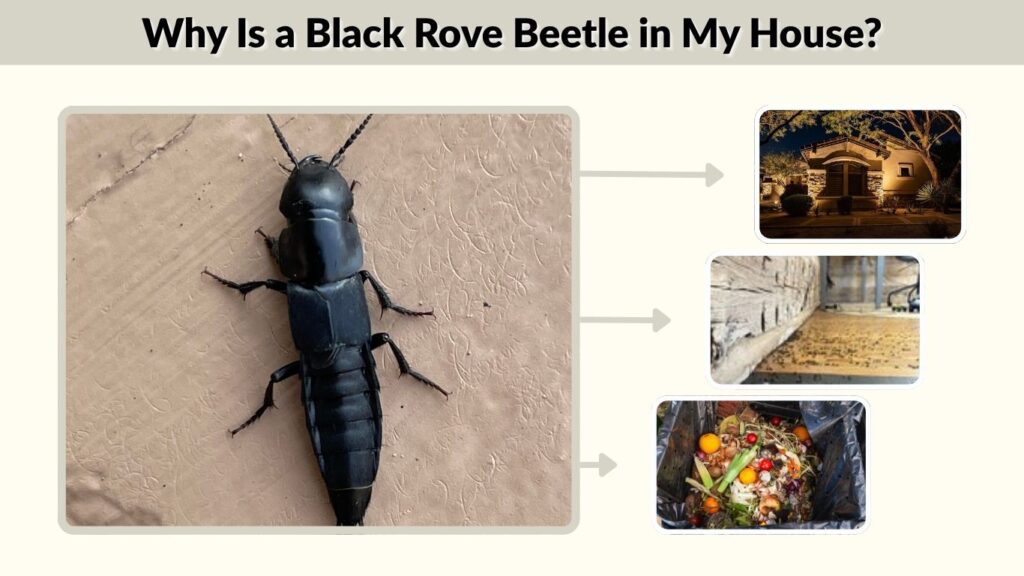
Finding a black rove beetle inside your house does not necessarily indicate an infestation.
These insects sometimes enter buildings accidentally while searching for shelter, moisture, or prey.
Outdoor lighting may also attract flying species toward windows and entrances.
However, repeated sightings could indicate favorable conditions nearby, such as damp areas or decaying organic matter.
How to Get Rid of Black Rove Beetles in Your House
Follow these practical prevention and removal methods:
- Remove individual beetles: Use a container and paper to relocate them outdoors without touching or crushing them.
- Seal entry points: Repair damaged window screens and gaps around doors.
- Reduce moisture: Address leaks and improve ventilation in damp areas.
- Inspect organic waste: Remove decaying material that may attract insects.
- Manage outdoor lighting: Reduce unnecessary lights near entrances.
- Maintain cleanliness: Regularly clean storage areas and remove accumulated debris.
Most rove beetles do not damage furniture, clothing, or building materials. Chemical treatment is rarely necessary for occasional indoor sightings.
Are Black Rove Beetles Beneficial?
Many black rove beetles are beneficial predators that help control populations of small insects.
Some consume fly larvae, fungus gnats, aphids, mites, and other invertebrates.
Their hunting behavior supports natural pest management, particularly in gardens and agricultural environments.
Do Black Rove Beetles Eat Spider Mites?
Some rove beetle species can prey on mites, including certain plant-feeding mites. However, not every black rove beetle is an effective predator of spider mites.
The small dark rove beetle Dalotia coriaria, commonly used in greenhouse biological control, primarily targets fungus gnat and shore fly larvae in growing media.
Although rove beetles can contribute to pest control, they should not automatically be considered a complete spider mite treatment.
Predatory mites specifically used against spider mites may provide more targeted biological control.
Black Rove Beetle Life Cycle
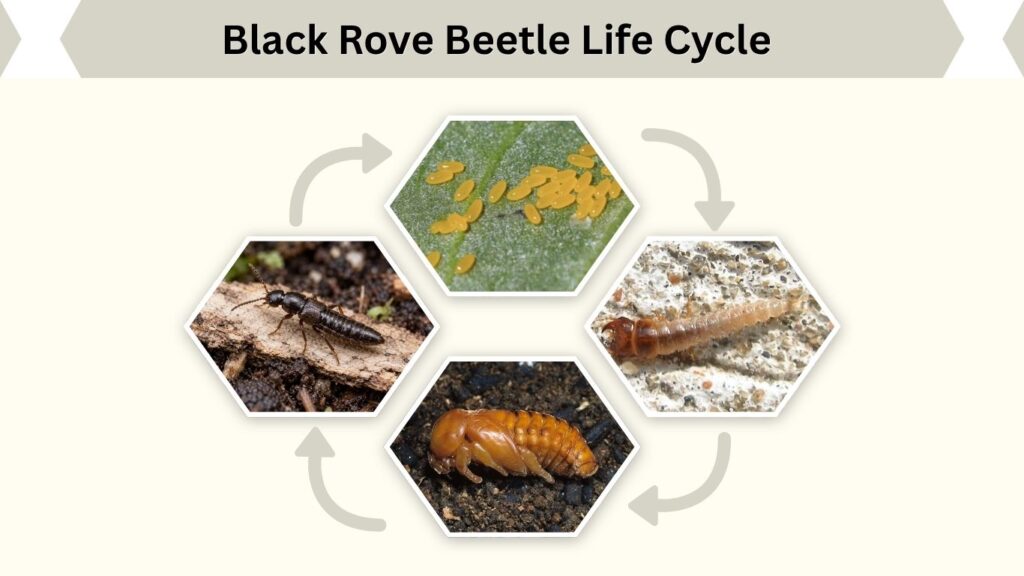
Black rove beetles undergo complete metamorphosis involving four developmental stages.
During the egg stage, females deposit eggs in suitable habitats, often near available food sources.
After hatching, the larval stage begins. Larvae typically have elongated bodies and well-developed jaws, although their appearance and feeding habits vary by species.
During the pupal stage, the insect transforms into its adult form.
Finally, the adult stage begins, allowing the beetle to reproduce and disperse to other habitats.
Development time depends on species, temperature, moisture, and available food. Therefore, there is no single life-cycle duration applicable to all black rove beetles.
FAQs
1. Are Black Rove Beetles Poisonous?
Most black rove beetles are not poisonous to people, but some release defensive chemicals that may irritate skin. Certain red and black Paederus species can cause blistering when crushed. Avoid handling unidentified beetles, and wash exposed skin if irritation develops.
2. Do Black Rove Beetles Bite Humans?
Yes, black rove beetles can bite when trapped against skin or handled roughly. Large species, including the devil’s coach horse, have strong jaws that may cause a painful pinch. Bites are minor, but swelling or irritation deserves medical attention.
3. Why Are Black Rove Beetles in My House?
Black rove beetles usually enter houses accidentally while searching for moisture, shelter, or prey. They may wander through gaps beneath doors or around windows. A single sighting rarely means an infestation. Reduce moisture, seal entry points, and relocate beetles outdoors.
4. Can Black Rove Beetles Fly?
Many black rove beetles can fly using wings folded beneath their unusually short wing covers. However, they spend much of their time running through soil, leaf litter, and other sheltered places. Their ability and willingness to fly vary across species.
5. Are Black Rove Beetles Beneficial?
Yes, many black rove beetles help gardens by hunting fly larvae, small insects, and other invertebrates. Their presence can support natural pest control. Rather than killing them, gently move occasional indoor visitors outside and safely address whatever attracted them indoors.