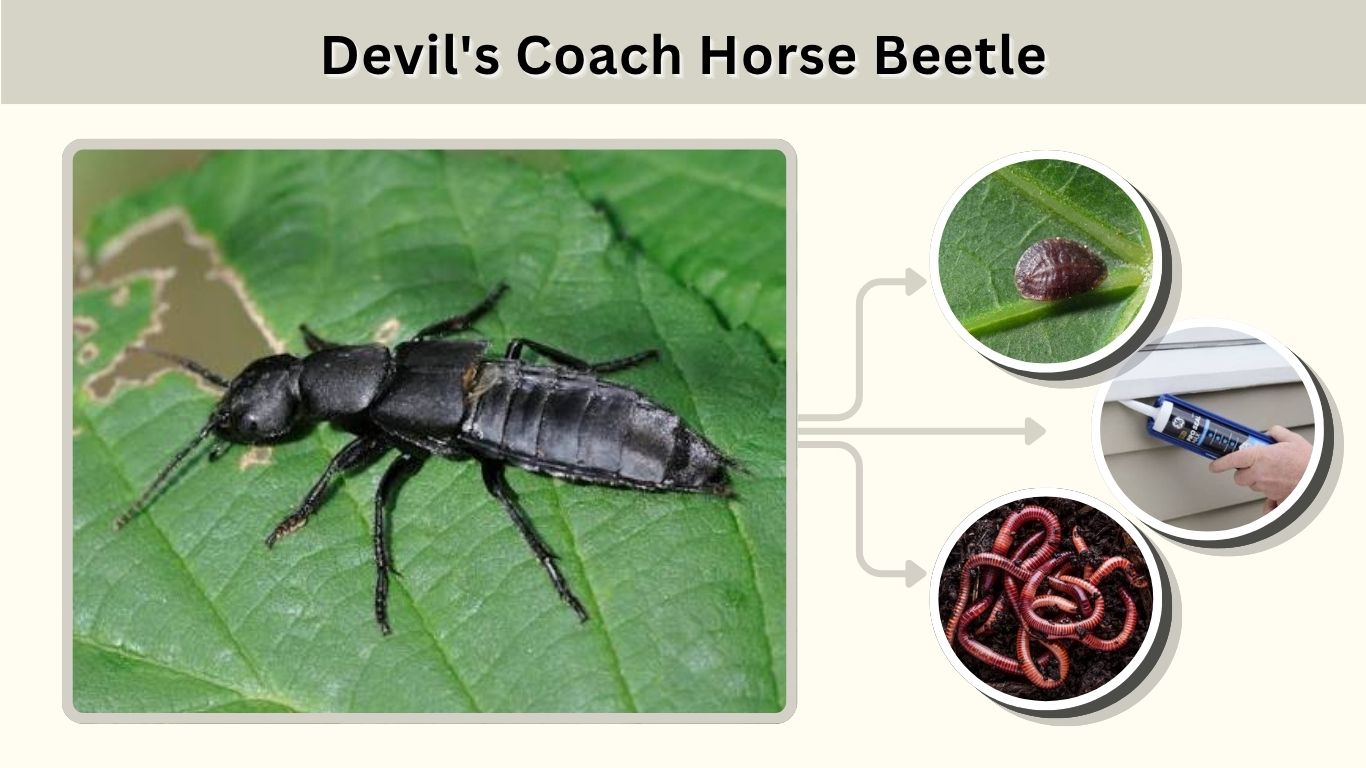
The devil’s coach horse beetle is a large, black predatory insect recognized for raising its abdomen like a scorpion when threatened. Common in the United Kingdom and introduced to parts of North America, this beetle lives in gardens, woodlands, and damp environments. Although its frightening appearance and powerful jaws can cause concern, it is generally harmless when left alone. It also helps control slugs and other small invertebrates. Understanding its identification, size, bite symptoms, larvae, habitat, and defensive behavior can help you recognize this unusual beetle safely.
What Is a Devil’s Coach Horse Beetle?
The devil’s coach horse beetle (Ocypus olens) belongs to the rove beetle family Staphylinidae. Unlike typical beetles, it has unusually short wing covers that leave much of its segmented abdomen exposed.
This species is a powerful predator that hunts other invertebrates. Its unusual name comes from old European folklore associating its threatening appearance with supernatural forces.
Despite its intimidating posture, the beetle is a useful member of garden ecosystems.
How to Identify a Devil’s Coach Horse Beetle
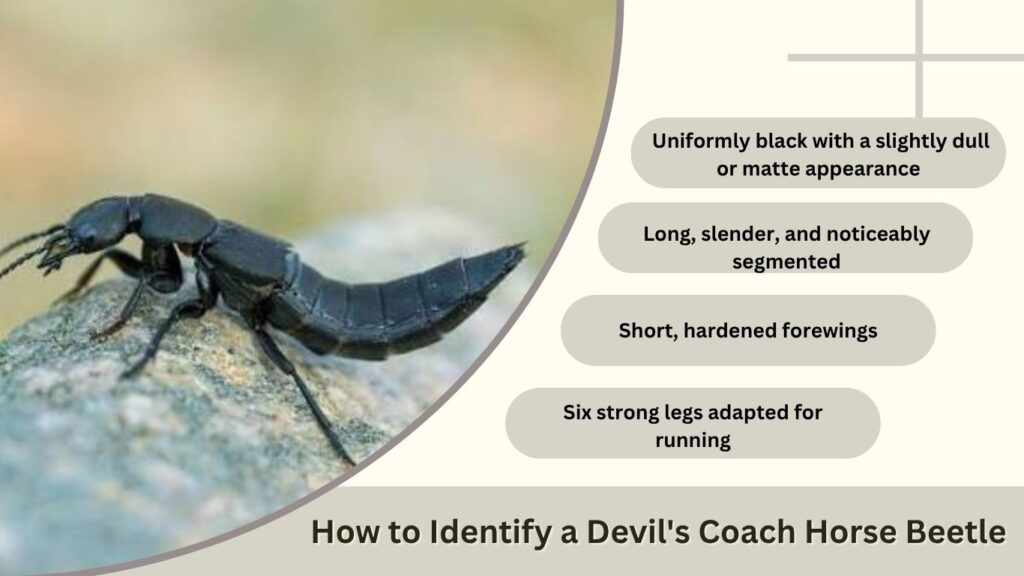
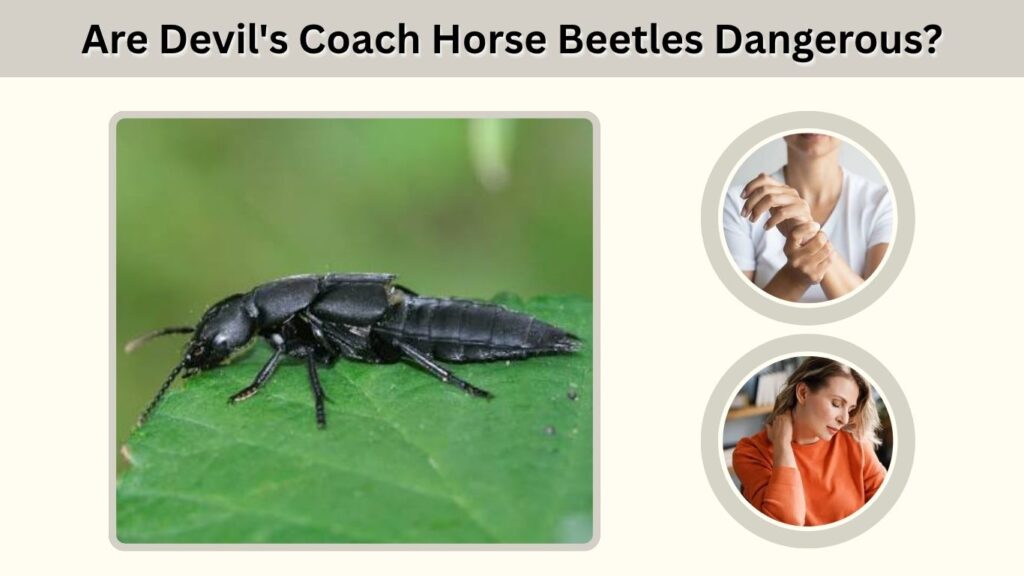
The devil’s coach horse has an elongated, completely black body and prominent jaws. Its flexible abdomen gives it a distinctive appearance compared with ordinary beetles.
Devil’s Coach Horse Beetle Identification
- Body color: Uniformly black with a slightly dull or matte appearance.
- Body shape: Long, slender, and noticeably segmented.
- Wing covers: Short, hardened forewings exposing most of the abdomen.
- Head: Large head with powerful, curved mandibles.
- Legs: Six strong legs adapted for running.
- Antennae: Two segmented antennae used to explore its surroundings.
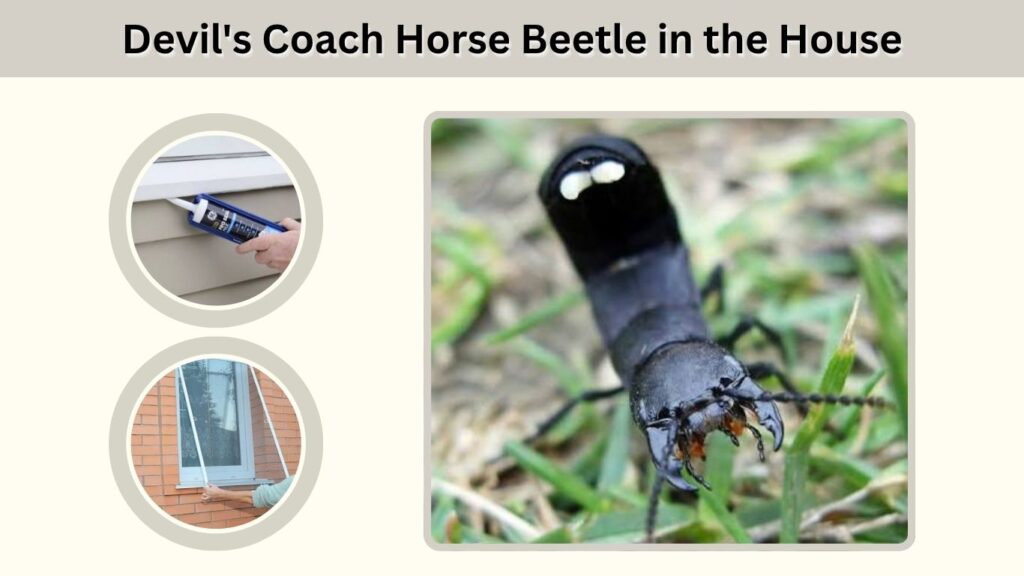
- Defensive posture: Raises and curls its abdomen when disturbed.
Devil’s Coach Horse Beetle Size
Adult devil’s coach horse beetles generally measure 25–30 mm long, approximately one inch.
Their elongated bodies can make them appear larger, particularly when the abdomen is raised.
They are among the largest rove beetles commonly encountered in Britain. Males and females have similar appearances, making them difficult to distinguish without close examination.
Where Do Devil’s Coach Horse Beetles Live?
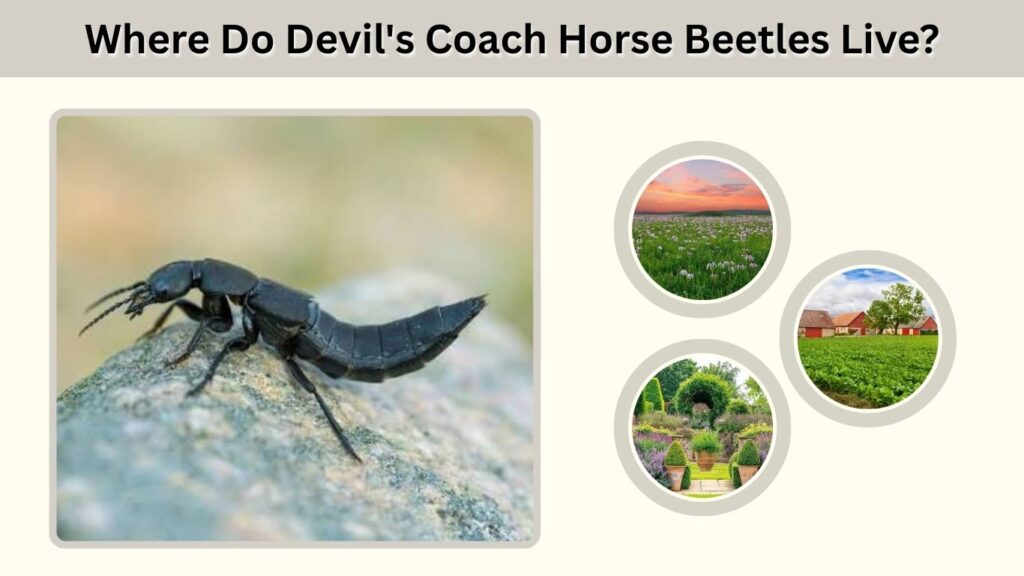
These beetles prefer environments containing moist soil, protective vegetation, and abundant invertebrate prey.
Devil’s Coach Horse Beetle Habitat
They commonly inhabit woodlands, gardens, grasslands, hedgerows, compost heaps, and farmland.
During daylight, they hide beneath stones, fallen leaves, logs, and other sheltered places.
They usually become more active after dark, moving quickly across the ground while searching for food.
Devil’s Coach Horse Beetle in the UK and USA
The devil’s coach horse is widespread throughout Britain and also occurs in Ireland and much of Europe.
It has been introduced to western North America, including Washington, Oregon, California, and Arizona.
In Britain, adults are frequently observed between April and October, although activity depends on weather conditions.
Where Do Devil’s Coach Horse Beetles Live?
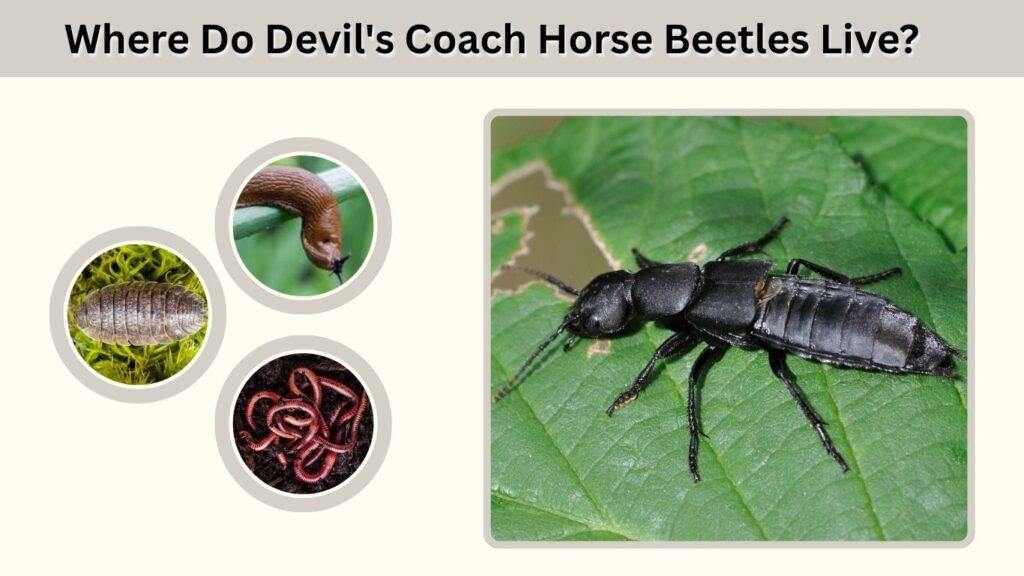
Devil’s coach horse beetles are carnivorous predators. Their strong jaws allow them to capture and consume various small invertebrates.
Common Foods of Devil’s Coach Horse Beetles
- Slugs: Soft-bodied slugs are frequent prey.
- Earthworms: They attack suitable worms encountered near the soil.
- Caterpillars: Small caterpillars provide another food source.
- Woodlice: These ground-dwelling crustaceans may be consumed.
- Spiders: Small spiders can become prey.
- Insect larvae: They hunt various larvae living near the ground.
How Do They Hunt?
These beetles primarily hunt at night, using their antennae and powerful jaws to locate and overpower prey.
Once a suitable invertebrate is captured, the beetle grips it with its mandibles and begins feeding.
Their predatory behavior makes them beneficial in gardens where slugs and caterpillars damage plants.
Devil’s Coach Horse Beetle Larvae and Life Cycle
Devil’s coach horse beetles undergo complete metamorphosis, developing through four distinct life stages.
Both adults and larvae are predators, feeding on other small invertebrates.
What Do Devil’s Coach Horse Beetle Larvae Look Like?
The larvae have elongated, segmented bodies and well-developed jaws. They are generally dark-colored as they mature, although newly hatched larvae are much paler.
Their bodies resemble miniature versions of adult rove beetles but lack developed wings and adult reproductive structures.
They usually remain within soil, moss, or leaf litter, where they hunt small insects and other invertebrates.
Four Stages of the Life Cycle
- Egg: Females deposit eggs in damp, sheltered locations, often during autumn.
- Larva: Young beetles hatch and grow while hunting small invertebrates.
- Pupa: Mature larvae transform into pupae in protected underground chambers.
- Adult: Developed beetles emerge and begin searching for food and mates.
The life cycle varies with temperature and environmental conditions. Adults typically live around one year, although some survive longer.
Are Devil’s Coach Horse Beetles Dangerous?
Devil’s coach horse beetles are not considered seriously dangerous to humans. However, their strong mandibles and defensive chemicals can make direct handling unpleasant.
Devil’s Coach Horse Beetle Bite Symptoms
These beetles can deliver a painful bite when trapped, squeezed, or disturbed.
A bite may cause immediate pinching pain, mild redness, or localized irritation. The severity depends on the circumstances and individual sensitivity.
They are not venomous and do not sting.
Devil’s Coach Horse Beetle Bite Treatment
If bitten, wash the affected area thoroughly with soap and water. Apply a cold compress to relieve discomfort and reduce minor swelling.
Avoid scratching or squeezing the affected skin.
Seek medical attention if swelling becomes severe, redness spreads, or symptoms suggest an allergic reaction or infection.
Why Do Devil’s Coach Horse Beetles Raise Their Tails?
One of this beetle’s most recognizable behaviors is lifting its abdomen when threatened.
Scorpion-Like Defensive Behavior
When disturbed, the beetle raises its flexible abdomen and opens its powerful jaws.
Although this posture resembles a scorpion preparing to sting, the beetle has no stinger.
It may also release an unpleasant-smelling defensive secretion from glands near the end of its abdomen.
This behavior helps discourage predators and provides an opportunity to escape.
Can Devil’s Coach Horse Beetles Fly?
Yes. Despite their short wing covers, these beetles possess functional hindwings and can fly.
However, flight is uncommon. They usually travel by running rapidly across the ground.
Devil’s Coach Horse Beetle in the House
Finding a devil’s coach horse beetle indoors is usually accidental rather than a sign of infestation.
These beetles naturally live outdoors and do not normally reproduce inside buildings.
They may enter through open doors, windows, or gaps while searching for shelter.
How to Get Rid of Devil’s Coach Horse Beetles
- Capture safely: Cover the beetle with a container without touching it.
- Release outdoors: Move it to a sheltered area away from entrances.
- Seal openings: Repair gaps around doors, windows, and foundations.
- Reduce entry opportunities: Keep exterior doors closed and maintain window screens.
Indoor insecticide applications are generally unnecessary for occasional sightings.
Devil’s Coach Horse Beetle Spiritual Meaning and Folklore
The devil’s coach horse has appeared in European folklore for centuries.
Its threatening posture was once associated with evil spirits, curses, and supernatural danger.
Some traditional beliefs suggested that encountering or harming the beetle could bring misfortune.
These stories have no scientific basis. Its defensive behavior is simply a natural response to potential predators.
FAQs
1. Are Devil’s Coach Horse Beetles Poisonous?
They are not known to be poisonous through ordinary contact, although their defensive secretions may cause irritation.
2. Do Devil’s Coach Horse Beetles Sting?
No. They lack a stinger. Their raised abdomen resembles a scorpion’s tail, but they defend themselves using their jaws and chemical secretions.
3. Are Devil’s Coach Horse Beetles Rare?
No. They are common and widespread in the UK. They also have established populations in parts of western North America.
4. Can Devil’s Coach Horse Beetles Infest Houses?
They may occasionally enter homes, but they do not normally establish indoor breeding populations.
5. Should You Kill a Devil’s Coach Horse Beetle?
Usually not. These beetles help control slugs and other invertebrates. If found indoors, safely relocate them outside.