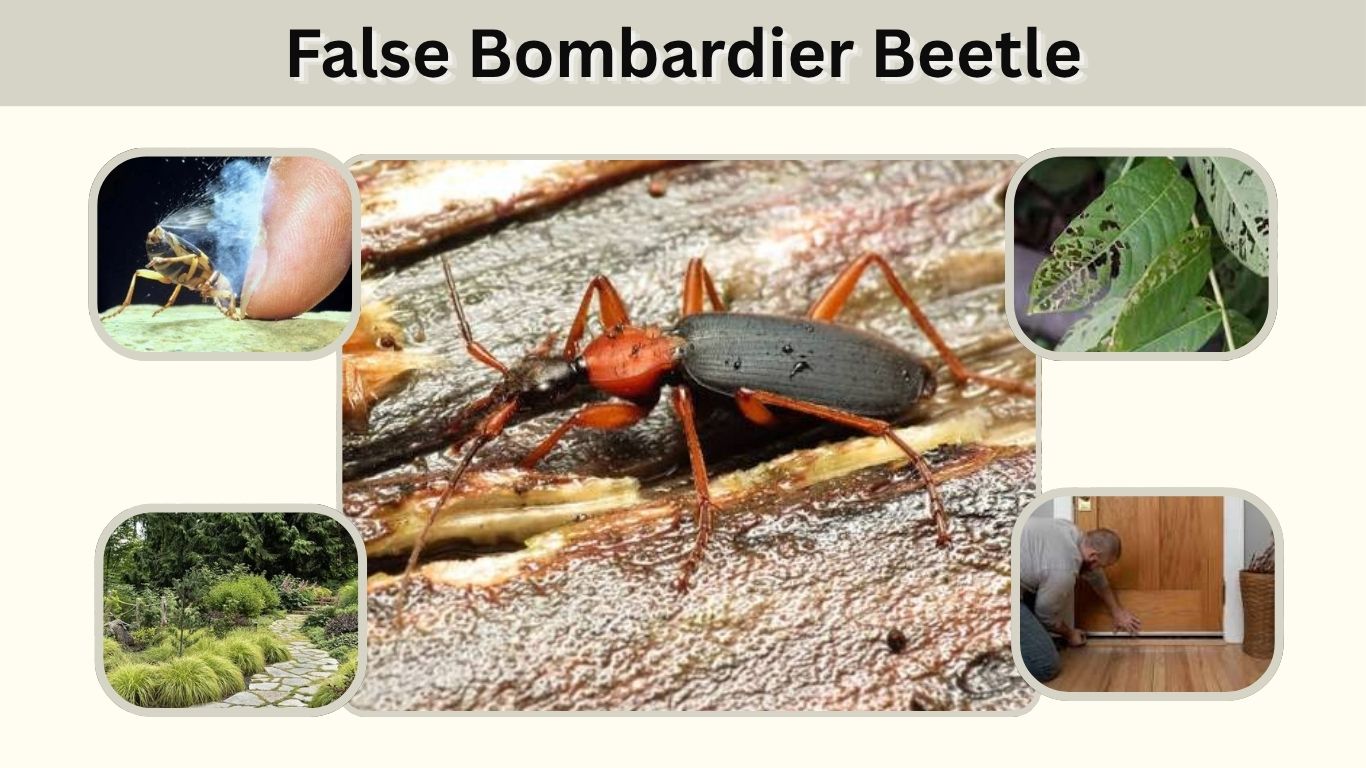
Have you discovered a black and orange beetle crawling across your floor or hiding beneath garden debris? It might be a false bombardier beetle, a fascinating insect known for its distinctive appearance and chemical defense. Although its name sounds alarming, this ground beetle is generally harmless to humans and beneficial to gardens. Understanding its identification features, biting behavior, defensive spray, habitat, and feeding habits can help you recognize the beetle and handle unexpected encounters safely.
What Is a False Bombardier Beetle?
The false bombardier beetle is a predatory ground beetle belonging to the genus Galerita and family Carabidae. It receives its common name because its appearance resembles that of true bombardier beetles. Despite this similarity, the two groups use different chemical defense mechanisms. False bombardier beetles are generally active outdoors, where they hunt smaller insects and help maintain ecological balance.
Scientific Name and Classification
False bombardier beetles belong to the genus Galerita. Common North American species include Galerita bicolor, Galerita janus, and Galerita lecontei.
These beetles belong to the order Coleoptera, which includes all beetles. Their elongated bodies and relatively long legs make them effective ground-dwelling hunters. Several species are distributed across North America, particularly in warmer regions.
False Bombardier Beetle Identification
False bombardier beetles have several recognizable physical characteristics:
- Body length: Usually 17–25 mm, depending on species.
- Body shape: Long, narrow, and slightly flattened.
- Head: Typically dark brown or black.
- Thorax: Distinctive reddish-orange section behind the head.
- Wing covers: Dark black or brown with visible lengthwise grooves.
- Legs: Six relatively long, reddish-orange legs.
- Antennae: Long, segmented, and usually brownish or reddish.
The contrasting colors make these beetles relatively easy to recognize, although identification to the exact species may require closer examination.
Where Do False Bombardier Beetles Live?
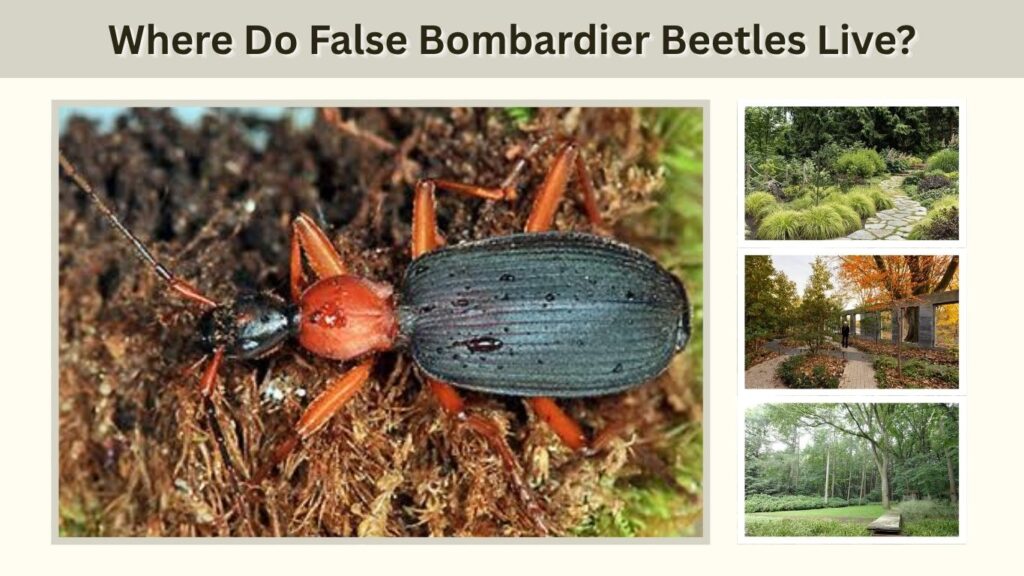
False bombardier beetles prefer outdoor environments with natural ground cover, moderate moisture, and plenty of insect prey. They are often encountered in gardens, wooded landscapes, and areas containing decomposing vegetation. Their preference for sheltered ground-level habitats explains why homeowners sometimes discover them near foundations, under outdoor objects, or occasionally inside buildings.
Natural Habitat and Distribution
These beetles commonly inhabit woodlands, gardens, grasslands, and shaded landscapes. During daylight hours, they often remain hidden beneath rocks, fallen leaves, logs, or loose bark.
They become more active after dark, searching for insects and other small invertebrates. Species such as Galerita bicolor are widely distributed across the eastern United States, while other members of the genus occupy different geographic regions.
False Bombardier Beetle in My House
Finding a false bombardier beetle indoors usually means it entered accidentally while searching for shelter or moving through its environment.
Common entry points include gaps beneath exterior doors, foundation cracks, damaged window screens, and openings around utility pipes.
Basements, garages, and ground-floor rooms are common places to encounter wandering ground beetles. An occasional beetle in the home does not necessarily indicate an infestation.
Are False Bombardier Beetles Dangerous to Humans?
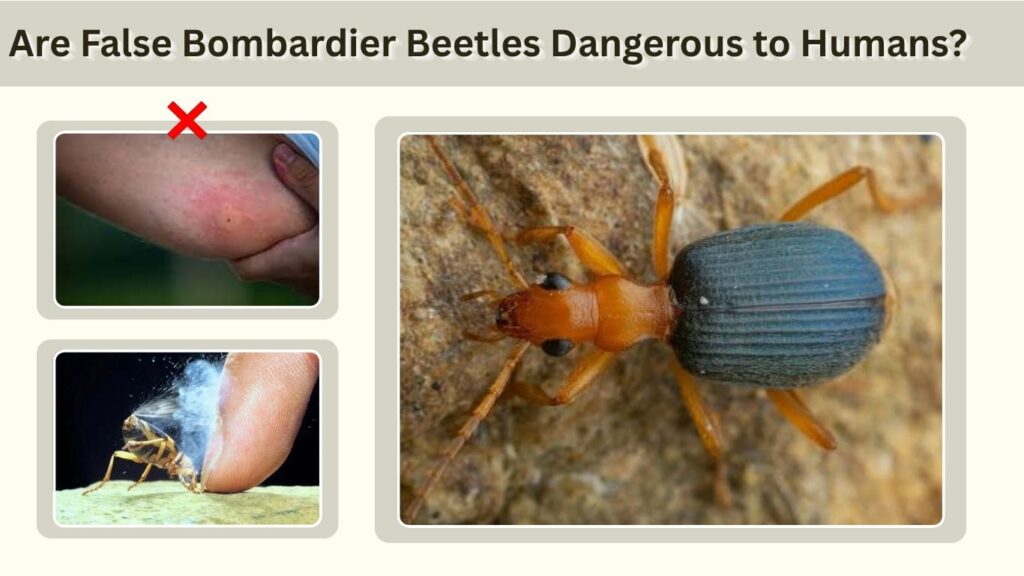
False bombardier beetles are not considered dangerous household pests. They do not feed on human blood, attack people, or damage household belongings. However, they possess a defensive chemical secretion that can irritate sensitive tissue. Understanding the difference between their defensive spray and an actual bite helps explain the risks associated with handling these insects.
Do False Bombardier Beetles Bite?
False bombardier beetles do not normally bite humans. Their mouthparts are designed primarily for capturing and consuming small insects rather than attacking larger animals.
A frightened or roughly handled beetle might pinch the skin with its mandibles, but such incidents are uncommon. Their main defense involves releasing an irritating chemical secretion rather than biting.
False Bombardier Beetle Spray and Odor
One unusual characteristic of false bombardier beetles is their chemical defense.
Research on Galerita lecontei found that its defensive fluid contains approximately 80% formic acid, along with acetic acid and other compounds.
The beetle can direct this secretion toward an attacker through glands near the abdomen. The discharge produces a strong odor and can irritate exposed skin or eyes.
Unlike true bombardier beetles, false bombardier beetles do not use a heat-producing explosive chemical reaction.
Can False Bombardier Beetles Burn Your Skin?
Their acidic secretion may cause localized irritation, especially on sensitive skin. Eye exposure is a more significant concern.
Avoid squeezing or handling these beetles with bare hands. If the fluid contacts your skin, wash the area thoroughly with water. If it reaches your eyes, rinse immediately with plenty of clean running water and seek medical advice, especially if irritation persists.
These insects are not blister beetles, and their defense should not be confused with the cantharidin produced by certain blister beetles.
False Bombardier Beetle vs. True Bombardier Beetle
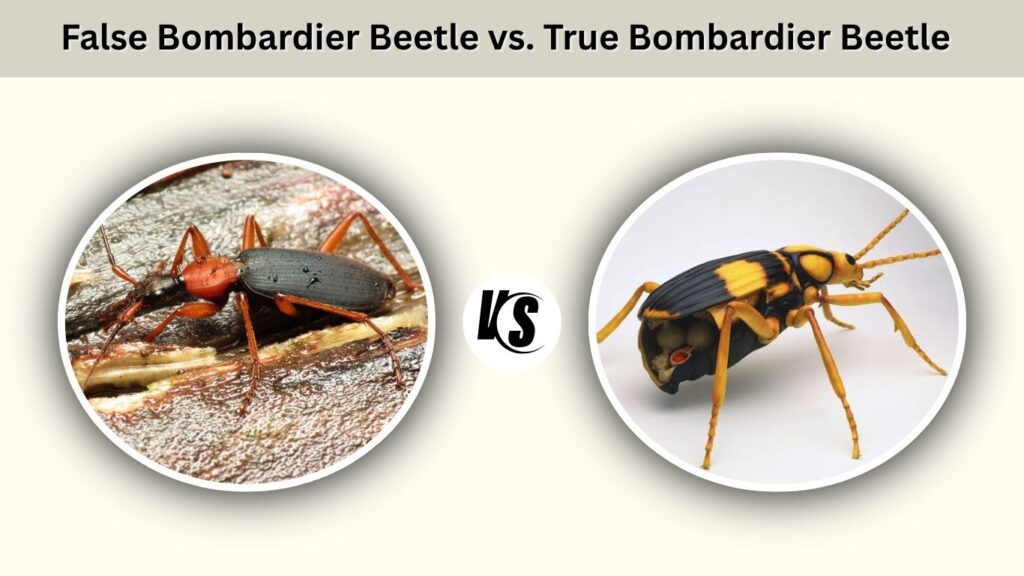
False and true bombardier beetles share several external characteristics, including elongated bodies, dark wing covers, and contrasting body colors. Both also belong to the ground beetle family. However, their defensive chemistry differs significantly. Understanding these differences is useful when identifying unfamiliar beetles and determining whether an encounter presents any meaningful risk.
Key Differences Between the Two Beetles
| Feature | False Bombardier Beetle | True Bombardier Beetle |
| Common genus | Galerita | Brachinus and related genera |
| Body shape | Long and slender | Varies by species |
| Coloration | Often orange thorax with dark head and wing covers | Often contrasting orange, red, and dark coloration |
| Chemical defense | Acidic secretion | Hot, chemically generated defensive discharge in well-studied species |
| Heat production | No explosive heating reaction | Yes, in explosive-spraying species |
| Indoor occurrence | Occasionally enters homes | Also possible, depending on species |
Which Beetle Has a Stronger Chemical Defense?
True bombardier beetles possess a specialized chemical reaction system that produces a hot, pulsed discharge when threatened.
False bombardier beetles rely on an irritating acidic secretion instead. Although their spray should not be dismissed, it lacks the explosive heating mechanism found in true bombardier beetles.
Both defenses primarily protect the insects against predators.
What Do False Bombardier Beetles Eat?
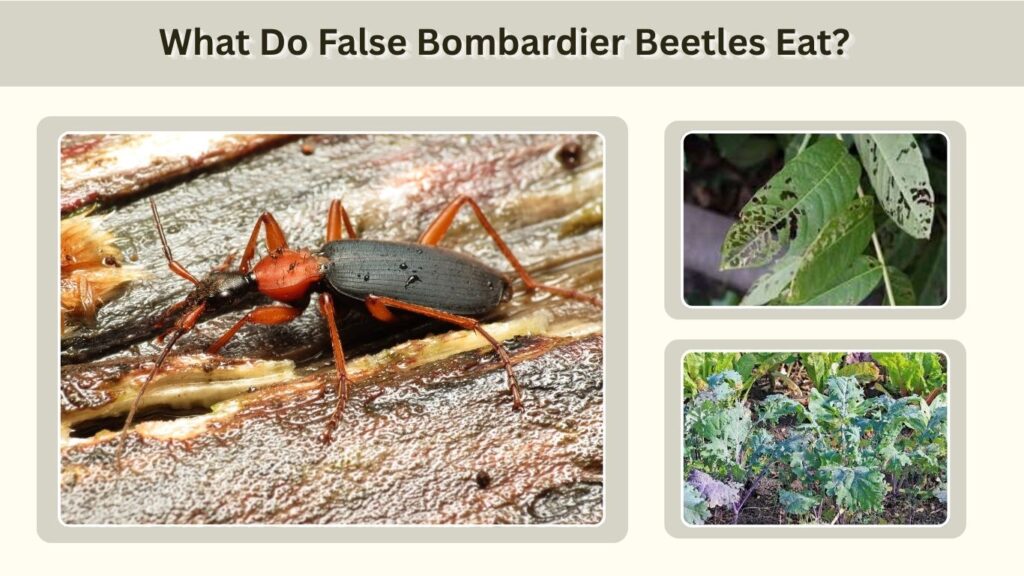
False bombardier beetles are carnivorous insects that play an important ecological role in outdoor environments. Rather than damaging garden plants, they hunt small animals living in soil and leaf litter. Their feeding activities help regulate certain insect populations, making them beneficial predators in gardens, woodlands, and other natural habitats.
Diet and Feeding Behavior
False bombardier beetles feed on various small insects and invertebrates. Their prey may include caterpillars, soft-bodied insect larvae, and other small ground-dwelling arthropods.
They generally search for food at night, using their long legs to move quickly across the ground.
Unlike common household pests, they do not seek stored food, clothing, wooden furniture, or other household materials. Their predatory lifestyle makes them useful members of the outdoor ecosystem.
False Bombardier Beetle Larvae
False bombardier beetles undergo complete metamorphosis, passing through egg, larval, pupal, and adult stages.
The larvae have elongated, segmented bodies with developed legs and predatory mouthparts. They differ considerably from adult beetles and do not yet possess fully developed wing covers.
Female Galerita beetles are known to deposit eggs in unusual purse-shaped mud cells beneath leaves.
Their immature stages develop outdoors, and the larvae are associated with predatory feeding habits.
How to Get Rid of False Bombardier Beetles in Your House
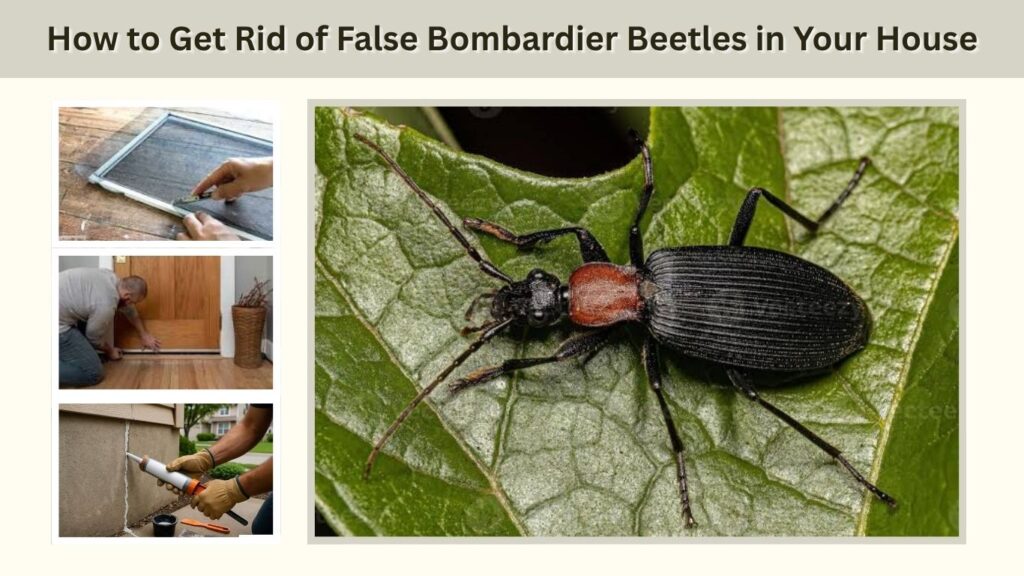
Although false bombardier beetles are beneficial outdoors, discovering one indoors can be unpleasant. Fortunately, they rarely establish reproducing populations inside homes. Most indoor encounters involve individual beetles entering through accessible openings. Physical removal and exclusion methods are usually sufficient, making routine insecticide treatments unnecessary for occasional sightings.
Remove Beetles Safely
The easiest method is to capture the beetle without touching it directly.
Place a transparent container over the insect, carefully slide a stiff piece of paper underneath, and release it outdoors away from the entrance.
Avoid crushing the beetle because doing so may release its defensive fluid. A vacuum can also remove ground beetles, although capture and outdoor release are preferable when practical.
Prevent False Bombardier Beetles From Entering
Several simple household maintenance practices can reduce future encounters:
- Seal foundation cracks and openings around doors.
- Install properly fitted door sweeps.
- Repair damaged window screens.
- Remove excessive leaf litter and debris near foundations.
- Keep firewood and other stored materials away from exterior walls.
- Reduce unnecessary outdoor lighting during the night.
- Address persistent moisture problems near entry points.
These steps help prevent false bombardier beetles and other occasional ground-dwelling insects from wandering indoors.
FAQs
1. Are false bombardier beetles poisonous?
False bombardier beetles are not considered poisonous household pests. However, they produce defensive chemicals that may irritate skin or eyes. They should not be handled carelessly.
2. Do false bombardier beetles bite humans?
False bombardier beetles rarely bite people. They may pinch when mishandled, but their primary defensive mechanism is an irritating chemical secretion.
3. Can false bombardier beetles infest a house?
They typically enter houses accidentally and do not normally reproduce indoors. Repeated sightings usually suggest accessible entry points rather than an established indoor infestation.
4. Do false bombardier beetles live in attics?
They primarily inhabit outdoor ground-level environments. They may occasionally wander into an attic through openings, but attics are not their typical breeding habitat.
5. What attracts false bombardier beetles to houses?
Outdoor lighting, nearby shelter, and accessible cracks or gaps can contribute to indoor encounters. These beetles primarily live outdoors, where they search for prey and suitable hiding places.