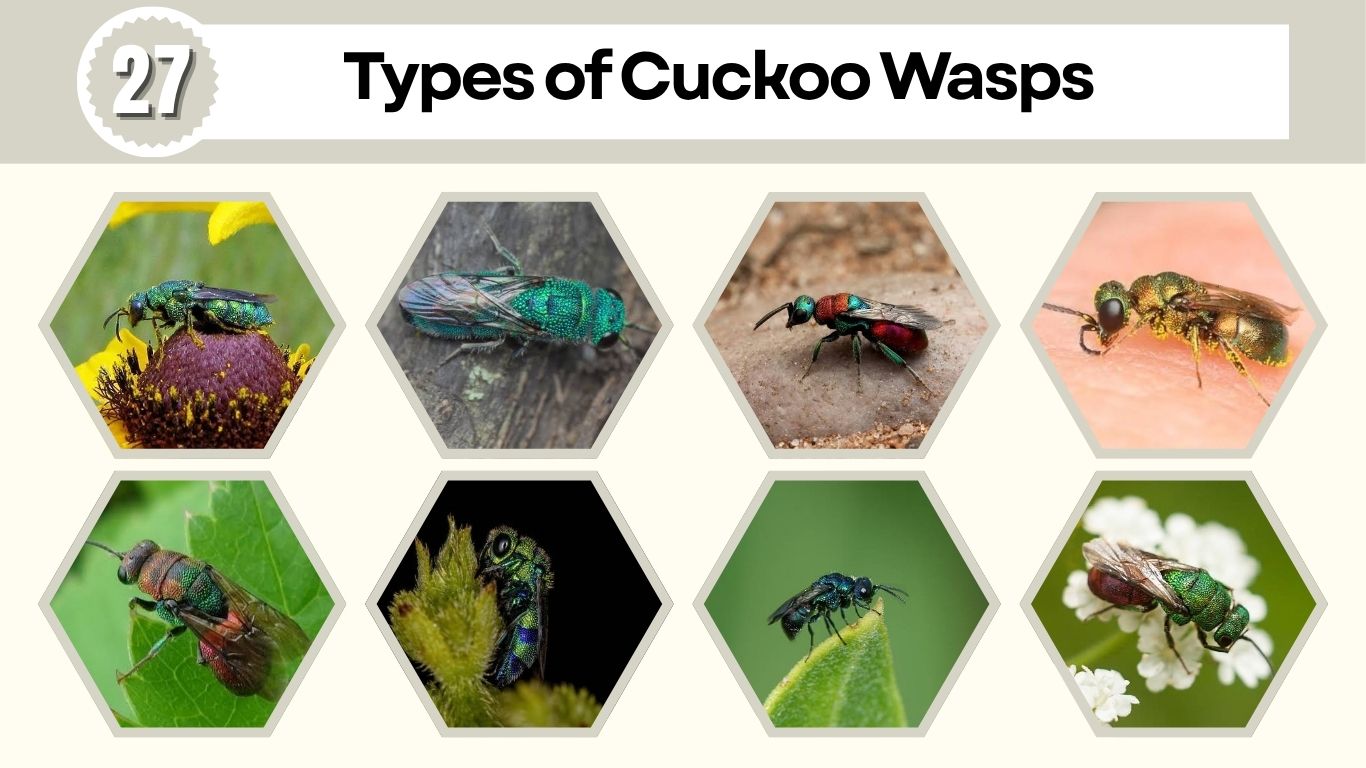
Cuckoo wasps are fascinating insects known for their brilliant metallic colors and unusual reproductive behavior. Belonging to the family Chrysididae, these small wasps display stunning shades of blue, green, red, gold, and violet. Unlike ordinary wasps, cuckoo wasps typically lay their eggs in the nests of other solitary bees and wasps. Their larvae develop by exploiting the host’s offspring or stored food. With thousands of species worldwide, cuckoo wasps inhabit gardens, grasslands, forests, and sandy environments. Discover 27 types of cuckoo wasps, including their identification, habitats, behavior, and life cycles.
1. Ruby-Tailed Cuckoo Wasp (Chrysis ignita)
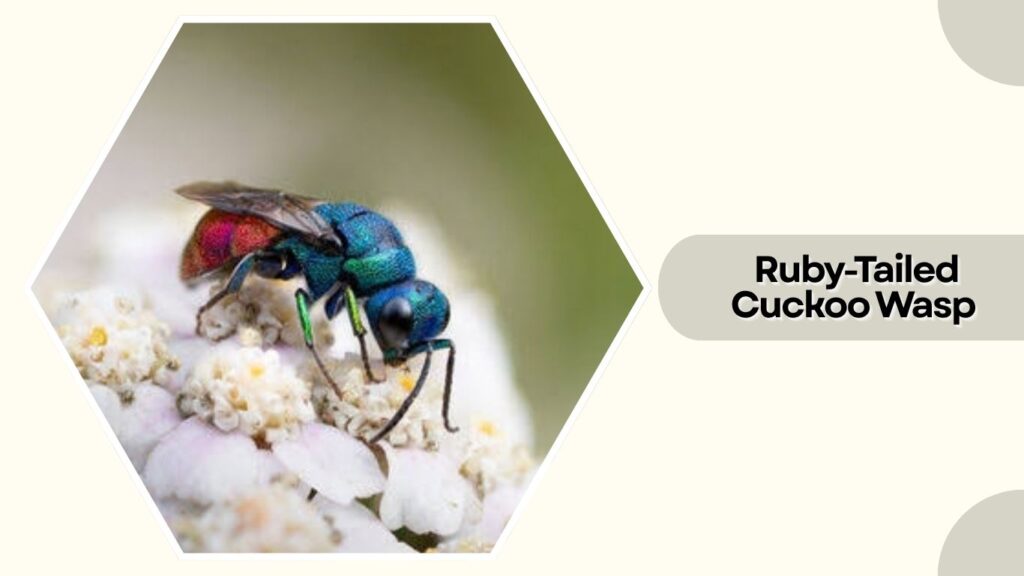
The Ruby-Tailed Cuckoo Wasp (Chrysis ignita) is a beautiful species belonging to the family Chrysididae. Known for its brilliant metallic colors, this small wasp has a striking blue-green body and a ruby-red abdomen. Unlike social wasps, it lives independently and relies on the nests of other solitary bees and wasps to reproduce.
Identification
- Scientific Name: Chrysis ignita
- Common Name: Ruby-Tailed Cuckoo Wasp
- Family: Chrysididae
- Size: Approximately 5–12 mm long
- Color: Metallic blue-green head and thorax with a bright ruby-red abdomen
- Body Shape: Compact body with a hard, shiny exoskeleton
- Wings: Transparent wings with visible veins
- Distinctive Features: Brilliant metallic coloration and a curved abdomen that helps protect it from attackers
Several closely related species look almost identical, making exact identification difficult without expert examination.
Habitat and Distribution
Ruby-Tailed Cuckoo Wasps occur throughout much of Europe, including Britain and Ireland, and extend into parts of Asia. They prefer warm, sunny habitats such as gardens, woodland edges, grasslands, and heathlands. They frequently explore old wooden fences, stone walls, and exposed nesting cavities where solitary bees and wasps reproduce.
Behavior and Diet
This species is a parasitoid that deposits its eggs inside the nests of other solitary insects. Adult wasps visit flowers to consume nectar. Females actively search for suitable host nests, often moving rapidly across wooden surfaces and walls.
Lifespan and Life Cycle
The life cycle begins when a female deposits an egg inside a host’s nest. After hatching, the cuckoo wasp larva feeds on the developing host. It eventually pupates inside the nest before emerging as an adult, commonly the following spring. Adults are generally active from spring through late summer.
2. Chrysis impressa Cuckoo Wasp (Chrysis impressa)
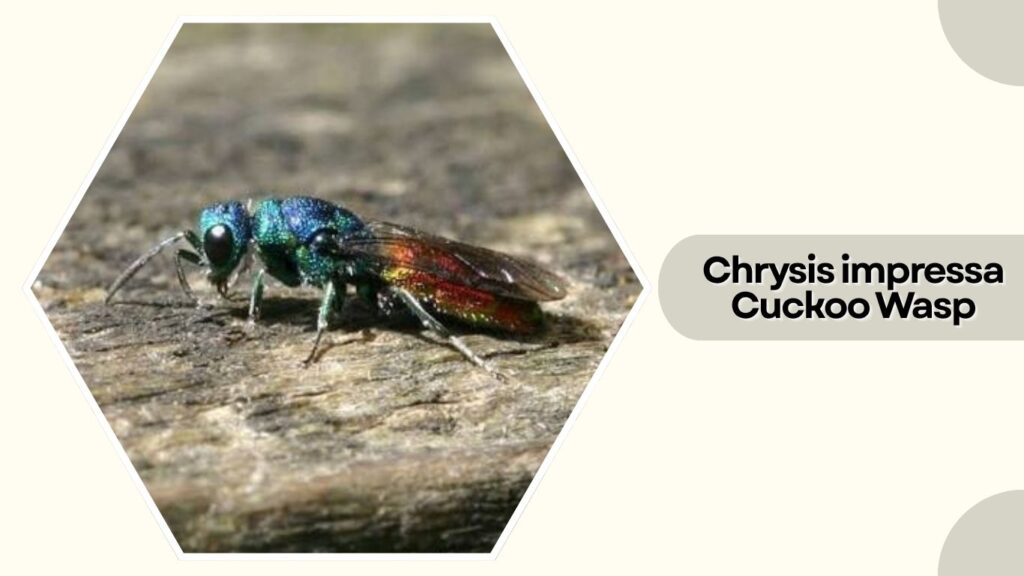
The Chrysis impressa is a colorful cuckoo wasp belonging to the family Chrysididae. It is closely related to the Ruby-Tailed Cuckoo Wasp and displays brilliant metallic green, golden, and reddish colors. This solitary species is known for its parasitic reproductive behavior, using the nests of other wasps rather than constructing its own.
Identification
- Scientific Name: Chrysis impressa
- Family: Chrysididae
- Size: Approximately 6–12 mm long
- Color: Metallic green or golden thorax with a reddish abdomen
- Body Shape: Slender, compact, and heavily armored
- Wings: Transparent with delicate veins
- Distinctive Features: Four small teeth at the abdominal tip and a raised central ridge on the final visible abdominal segment
Habitat and Distribution
Chrysis impressa occurs across several European countries, including Germany, France, and parts of northern Europe. It typically inhabits sunny woodland edges, gardens, old wooden structures, and areas where solitary wasps construct their nests. Warm, sheltered environments provide suitable conditions for finding hosts and searching for nectar.
Behavior and Diet
This cuckoo wasp is a parasitoid of solitary potter wasps, including Ancistrocerus parietinus and Ancistrocerus trifasciatus. Females search for suitable host nests and deposit their eggs inside. Adult wasps obtain energy from nectar and other accessible sugary substances.
Lifespan and Life Cycle
The female deposits eggs in host nesting chambers. After hatching, the developing cuckoo wasp eventually consumes the host’s immature stage. The larva then pupates within the protected nest cavity. Adult emergence depends on seasonal conditions, with overwintering occurring during the immature stages in many related species.
3. Chrysis viridula Cuckoo Wasp (Chrysis viridula)
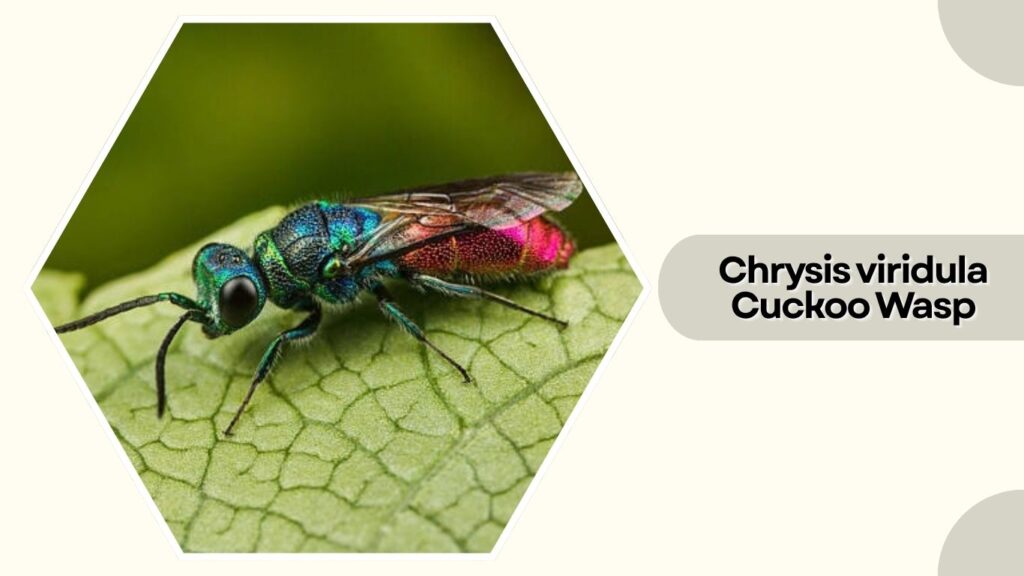
The Chrysis viridula is a striking metallic cuckoo wasp recognized for its brilliant green and golden-red coloration. It belongs to the family Chrysididae and is particularly associated with solitary mason wasps. Unlike ordinary hunting wasps, this species does not build nests or collect prey for its offspring. Instead, it depends on other wasps for reproduction.
Identification
- Scientific Name: Chrysis viridula
- Family: Chrysididae
- Size: Approximately 6–10 mm long
- Color: Metallic green head, golden-red thorax, and multicolored abdomen
- Body Shape: Compact and cylindrical
- Wings: Transparent with light brownish veins
- Distinctive Features: Highly reflective metallic body and four teeth at the abdominal tip
Habitat and Distribution
This cuckoo wasp occurs throughout parts of Europe and Asia. It commonly inhabits sunny grasslands, exposed clay banks, sandy slopes, and open woodland edges. The species is frequently observed near the nesting tunnels of solitary mason wasps, especially where suitable vertical earthen banks provide nesting opportunities.
Behavior and Diet
Chrysis viridula parasitizes mason wasps such as Odynerus spinipes and Odynerus melanocephalus. Females enter host nesting cavities to deposit eggs. Adults visit flowers for nectar, particularly plants with accessible flower clusters.
Lifespan and Life Cycle
The female typically deposits an egg when the host larva has started forming its cocoon or shortly afterward. The cuckoo wasp larva subsequently consumes the developing host. After completing larval development, it pupates inside the protected nesting chamber. Adults generally appear during the warmer months, especially from June through August in Britain.
4. Blue Cuckoo Wasp (Trichrysis cyanea)
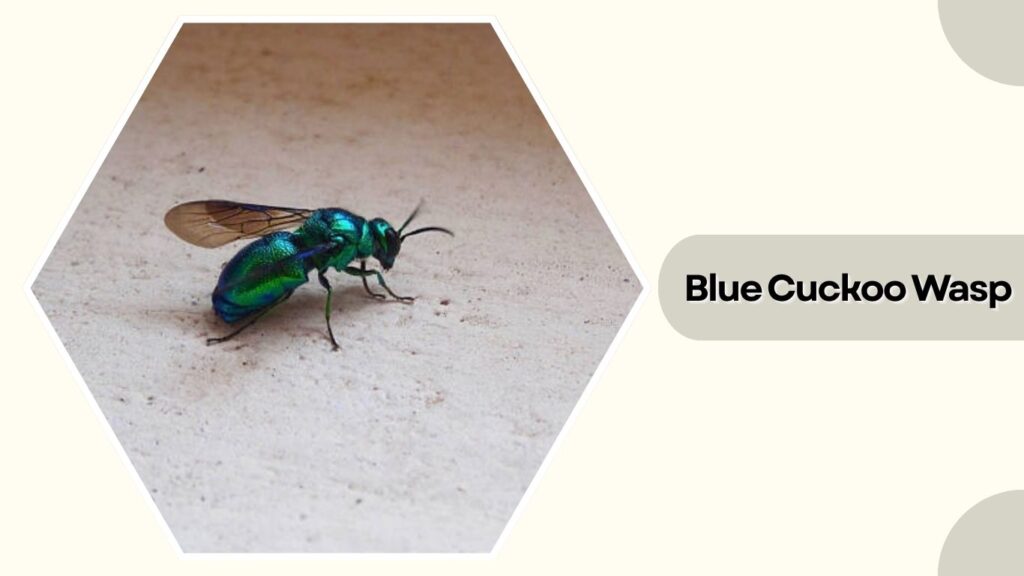
The Blue Cuckoo Wasp (Trichrysis cyanea) is a small, brilliantly colored species belonging to the family Chrysididae. Its metallic blue, green, or violet appearance makes it particularly attractive. This species is widespread across Europe and parts of Asia. Like other cuckoo wasps, it depends on the nests of solitary wasps for reproduction.
Identification
- Scientific Name: Trichrysis cyanea
- Family: Chrysididae
- Size: Approximately 4–8 mm long
- Color: Metallic blue, green, or violet
- Body Shape: Small, compact, and oval-shaped
- Wings: Transparent with visible veins
- Distinctive Features: Three small teeth along the rear edge of the abdomen
Habitat and Distribution
Blue Cuckoo Wasps inhabit gardens, woodland edges, forest clearings, and open countryside. They prefer places containing exposed dead wood, old tree trunks, wooden fences, and hollow stems. Their distribution extends across Europe, northern Africa, and parts of Asia, including Japan.
Behavior and Diet
This species is frequently associated with solitary hunting wasps, particularly those belonging to the genus Trypoxylon. Females investigate small holes and nesting cavities where host wasps raise their offspring. Adults consume nectar and other accessible sugary substances.
Lifespan and Life Cycle
Female Blue Cuckoo Wasps reproduce by depositing eggs in the nesting chambers of suitable hosts. Their developing larvae exploit the host’s nest resources, ultimately preventing successful development of the host offspring. After larval growth, they pupate inside the protected cavity. The duration of development varies according to environmental conditions and seasonal temperatures.
5. Golden Pseudomalus Cuckoo Wasp (Pseudomalus auratus)
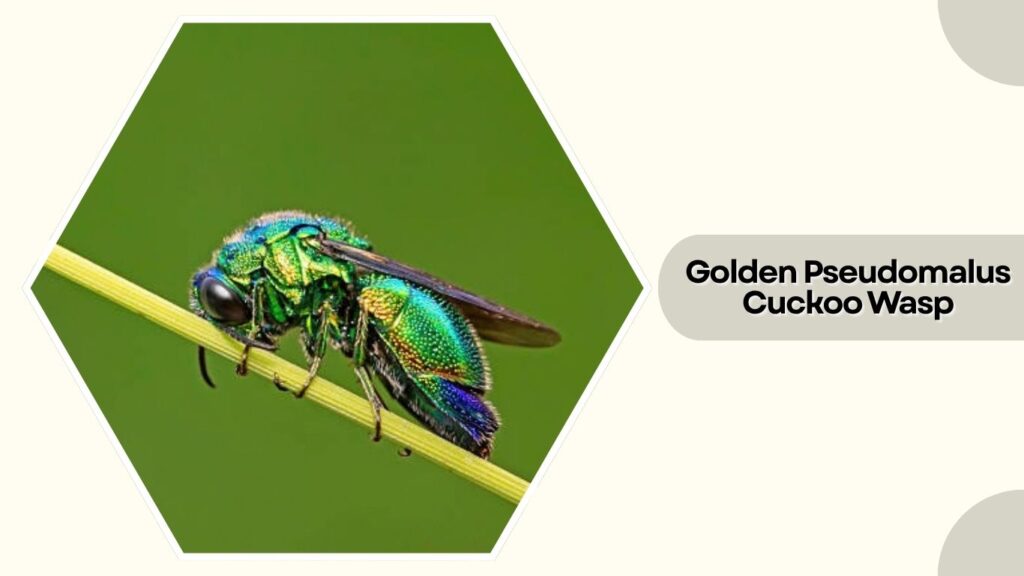
The Pseudomalus auratus is a tiny metallic cuckoo wasp belonging to the family Chrysididae. Its bright golden-red abdomen contrasts beautifully with its blue-green head and thorax. Despite its small size, this species plays an interesting ecological role by exploiting the nesting activities of solitary hunting wasps and occasionally other cavity-nesting insects.
Identification
- Scientific Name: Pseudomalus auratus
- Family: Chrysididae
- Size: Usually only a few millimeters long
- Color: Metallic blue-green head and thorax with a coppery or golden-red abdomen
- Body Shape: Compact and slightly elongated
- Wings: Transparent with delicate venation
- Distinctive Features: Shiny reddish abdomen and small projections near the abdominal tip
Habitat and Distribution
This cuckoo wasp occurs across much of Europe, northern Africa, and parts of Asia. It has also been introduced into North America. It commonly occupies woodland margins, gardens, hedgerows, and areas containing dead wood or hollow plant stems.
Behavior and Diet
Pseudomalus auratus is associated with numerous solitary wasps, including species of Pemphredon, Passaloecus, and Trypoxylon. Females seek opportunities to exploit host nests, especially those constructed inside plant stems and wooden cavities. Adults feed on sugary substances, including floral nectar.
Lifespan and Life Cycle
Reproduction takes place through parasitism of other nesting insects. The developing larvae use resources within host brood chambers, sometimes feeding on provisions originally collected for the host’s offspring. After completing development, the larvae form cocoons and pupate inside the nesting cavity. Adults are commonly active during warmer months, when host nesting activity is greatest.
6. Triangular Cuckoo Wasp (Pseudomalus triangulifer)
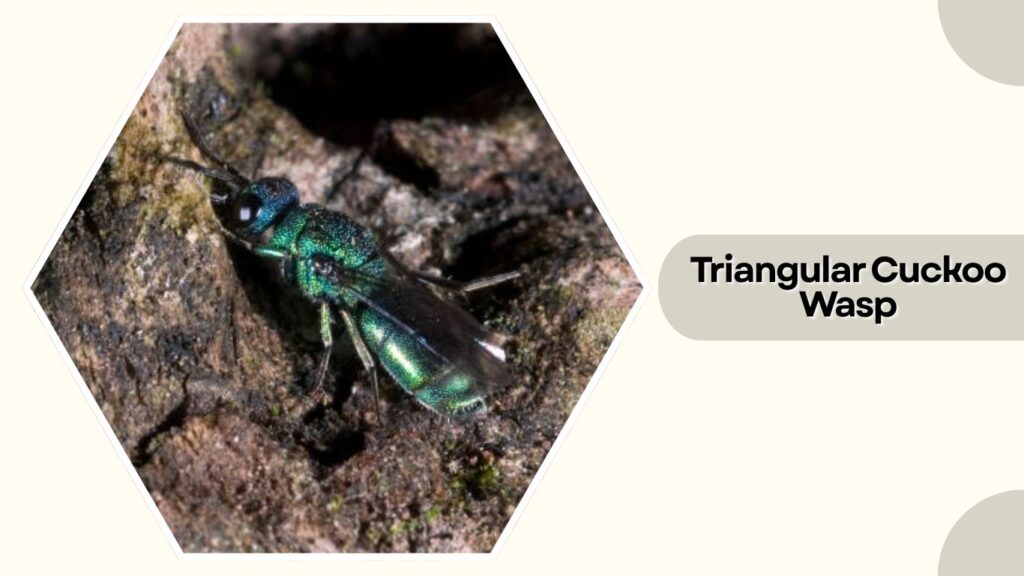
The Pseudomalus triangulifer is a small metallic cuckoo wasp known for its unusual abdominal structure. It belongs to the family Chrysididae and is distinguished by its greenish-blue body, coppery abdomen, and triangular indentation near the abdominal tip. This species is associated primarily with solitary wasps that construct nests inside plant stems and wooden cavities.
Identification
- Scientific Name: Pseudomalus triangulifer
- Family: Chrysididae
- Size: Approximately 4.5–7 mm long
- Color: Metallic green-blue body with a golden-copper abdomen
- Body Shape: Small, slender, and compact
- Wings: Transparent with fine veins
- Distinctive Features: Characteristic triangular notch on the terminal abdominal segment
Habitat and Distribution
This species has been recorded in several European countries, including France, Germany, Italy, Sweden, and Switzerland. It inhabits warm woodland margins, grasslands, gardens, and areas with abundant dead branches or hollow stems. Suitable nesting locations for its hosts strongly influence its local distribution.
Behavior and Diet
Pseudomalus triangulifer is associated with solitary wasps such as Pemphredon and Passaloecus. These host wasps collect aphids to provision their offspring. Researchers have suggested that some Pseudomalus females may lay eggs on aphids before the host carries them into its nest.
Lifespan and Life Cycle
The reproductive cycle depends on successful access to host brood cells. Once inside a suitable nest, the cuckoo wasp develops using resources intended for the host’s offspring. Its larval development eventually leads to pupation within the protected nesting environment. Adults emerge when seasonal conditions become favorable, continuing the cycle of host searching and reproduction.
7. Violet Cuckoo Wasp (Pseudomalus violaceus)
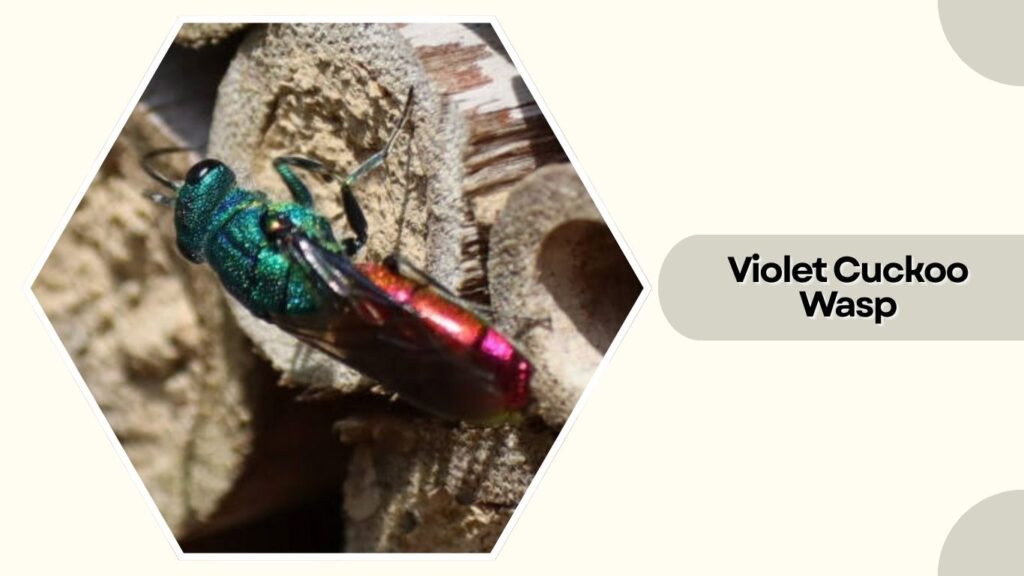
The Violet Cuckoo Wasp (Pseudomalus violaceus) is a small parasitic wasp distinguished by its deep metallic violet and blue coloration. This species belongs to the family Chrysididae and occurs across a broad region of Europe and western Asia. Its reflective body and secretive nesting behavior make it an interesting member of the cuckoo wasp family.
Identification
- Scientific Name: Pseudomalus violaceus
- Family: Chrysididae
- Size: Small, generally several millimeters long
- Color: Metallic violet, dark blue, or bluish-green
- Body Shape: Compact with a rounded abdomen
- Wings: Clear to slightly smoky near the tips
- Distinctive Features: Deep violet coloration and a rounded abdominal tip without prominent teeth
Habitat and Distribution
Violet Cuckoo Wasps occur in numerous European countries, including Britain, Germany, France, Sweden, and Italy. Their range also extends into western Asia. They inhabit woodland edges, hedgerows, gardens, and places containing decaying wood or hollow plant stems.
Behavior and Diet
This species is associated with several solitary hunting wasps, including Pemphredon lugubris, Passaloecus corniger, and Trypoxylon attenuatum. Females search for suitable nesting opportunities while adults obtain energy from floral nectar and other available sugary substances.
Lifespan and Life Cycle
The Violet Cuckoo Wasp follows a parasitic reproductive strategy. Its eggs develop in association with the nests of other solitary wasps. The emerging larvae exploit host nesting resources, ultimately developing into pupae within protected cavities. Seasonal conditions influence the timing of adult emergence. Although the complete life cycle is not equally well documented throughout its range, its development closely depends on the activity of suitable host species.
8. Truncated Cuckoo Wasp (Philoctetes truncatus)
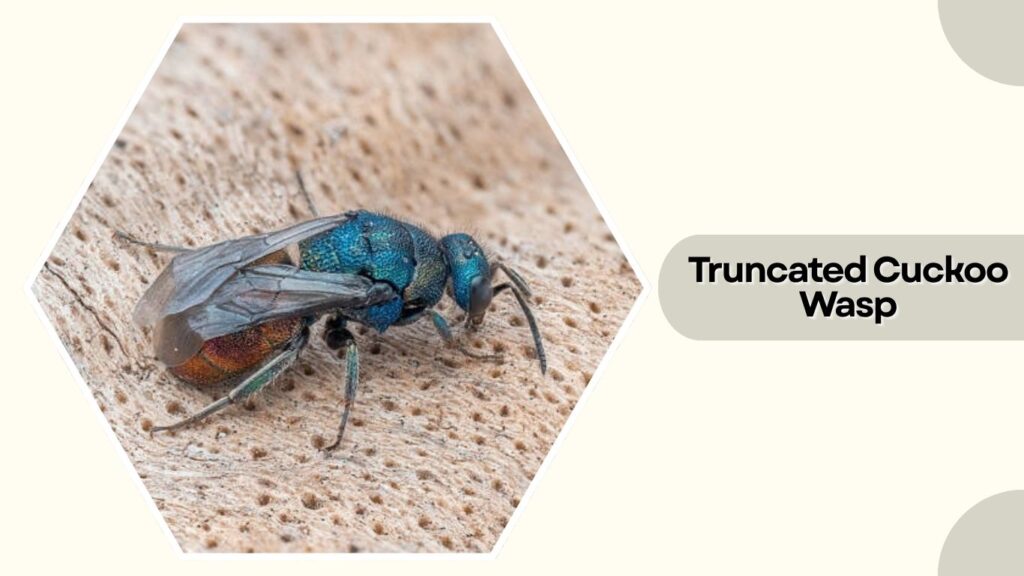
The Philoctetes truncatus is a small metallic cuckoo wasp belonging to the family Chrysididae. Its name refers to the distinctive shortened appearance of its abdominal tip. This species displays attractive greenish-blue coloration and has been recorded across several European countries. Like many relatives, it develops in the nests of other solitary wasps rather than building its own.
Identification
- Scientific Name: Philoctetes truncatus
- Family: Chrysididae
- Size: Small, measuring only a few millimeters
- Color: Metallic greenish-blue with violet reflections
- Body Shape: Compact and slightly elongated
- Wings: Transparent with somewhat darkened tips
- Distinctive Features: Truncated abdominal tip and a raised projection on the rear of the thorax
Habitat and Distribution
This species occurs in parts of Europe, including Sweden, Norway, France, Belgium, and Britain. It is also known from parts of western Asia and northern Africa. It is associated with habitats containing suitable solitary wasp nesting sites, such as woodland edges, open vegetation, and areas with hollow stems.
Behavior and Diet
Philoctetes truncatus has been recorded in association with Psenulus atratus, a solitary hunting wasp. Females exploit the nesting activities of suitable hosts to reproduce. Adults are not social and generally live independently. They obtain energy from accessible sugary food sources.
Lifespan and Life Cycle
The female reproduces through a host-dependent life cycle. Developing larvae use the resources available inside the host’s nesting chamber. After completing their growth, the larvae pupate in a protected location before emerging as adults. The exact timing of development varies with climate and host availability. Detailed information about the lifespan of this particular species remains limited compared with better-studied cuckoo wasps.
9. Elampus constrictus Cuckoo Wasp (Elampus constrictus)
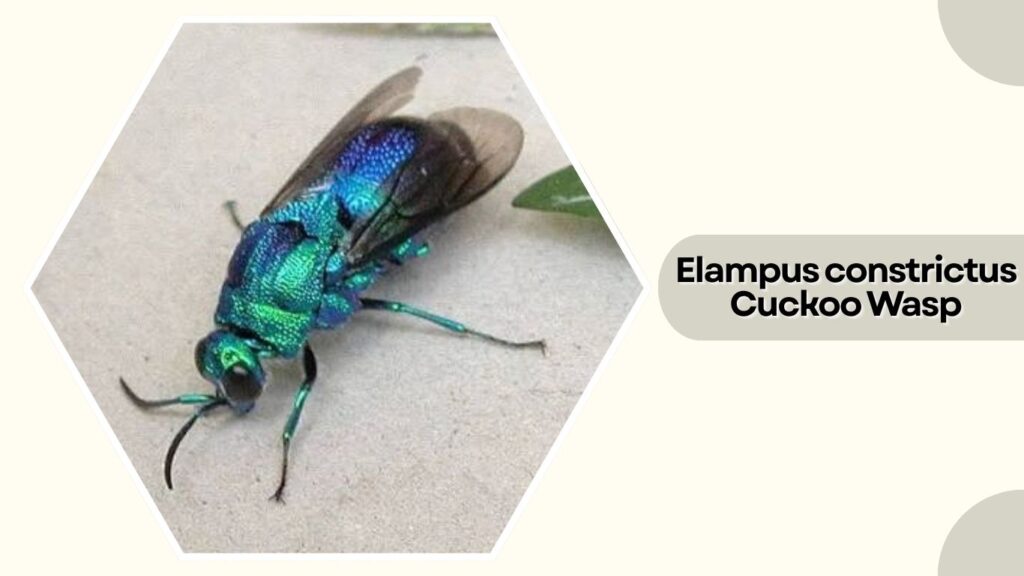
The Elampus constrictus is a small, metallic-colored cuckoo wasp belonging to the family Chrysididae. This species is recognized by its greenish-blue head and thorax, contrasting abdomen, and distinctive abdominal structure. It is a solitary parasitoid associated with ground-nesting hunting wasps. Its colorful appearance and specialized reproductive behavior make it an interesting member of the cuckoo wasp family.
Identification
- Scientific Name: Elampus constrictus
- Family: Chrysididae
- Size: Approximately 5–8 mm long
- Color: Metallic green or blue body with reddish or golden abdominal reflections
- Body Shape: Compact and slightly elongated
- Wings: Transparent with fine venation
- Distinctive Features: Flattened abdominal tip with a curved, horseshoe-like margin
Habitat and Distribution
Elampus constrictus occurs across parts of Europe and Asia, with records extending into North Africa. It prefers sunny, sparsely vegetated habitats, particularly sandy grasslands, heathlands, and exposed soil banks. These environments provide suitable nesting conditions for its host wasps.
Behavior and Diet
This species is a brood parasite associated with solitary hunting wasps, including members of Mimesa and Mimumesa. Females search for suitable host nesting locations to ensure successful reproduction. Adult cuckoo wasps obtain energy from nectar and other naturally occurring sugary substances.
Lifespan and Life Cycle
The reproductive cycle depends on host nesting activity. Females lay eggs associated with the host’s brood cells, allowing their offspring to develop using host resources. The larvae complete development within protected nesting chambers before pupating. Adult activity generally occurs during warmer months, especially late spring and summer.
10. Elampus foveatus Cuckoo Wasp (Elampus foveatus)
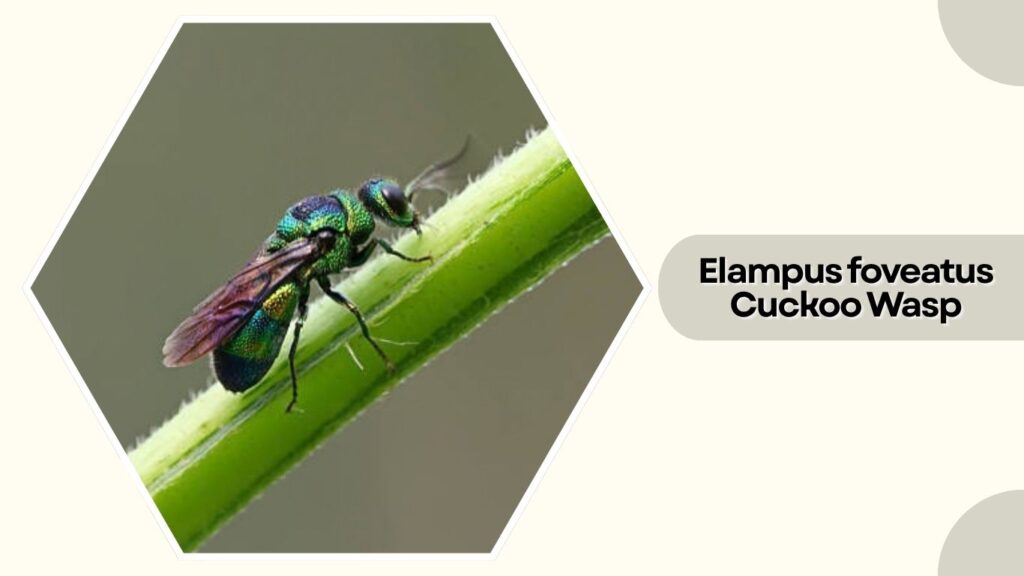
The Elampus foveatus is a relatively uncommon cuckoo wasp recognized for its brilliant metallic coloration and distinctive abdominal structure. It belongs to the family Chrysididae and closely resembles other members of the genus Elampus. This species has attracted attention among entomologists because its distribution remains incompletely understood, partly due to identification difficulties involving closely related species.
Identification
- Scientific Name: Elampus foveatus
- Family: Chrysididae
- Size: Approximately 5–8 mm long
- Color: Metallic blue-green head and thorax with a reddish abdomen
- Body Shape: Compact with a rounded abdomen
- Wings: Transparent with delicate veins
- Distinctive Features: Thick, inverted U-shaped margin at the tip of the abdomen
Habitat and Distribution
Elampus foveatus occurs in parts of Europe and northern Asia, with records extending from the Netherlands to Siberia. It inhabits sparsely vegetated sandy areas, including dry grasslands and open habitats with exposed soil. Individuals have also been observed on elderberry bushes in Germany.
Behavior and Diet
Like other members of its genus, this cuckoo wasp is believed to exploit the nesting activities of solitary hunting wasps. However, its exact host species has not been conclusively established. Adults are solitary insects that spend their active periods searching for food and suitable reproductive opportunities.
Lifespan and Life Cycle
The complete developmental cycle of Elampus foveatus remains poorly documented. Based on its relationship with other cuckoo wasps, reproduction likely involves parasitism of host nesting chambers. The offspring develop within these protected environments before eventually emerging as adults. Recorded adult flight activity generally extends from May through July.
11. Elampus panzeri Cuckoo Wasp (Elampus panzeri)
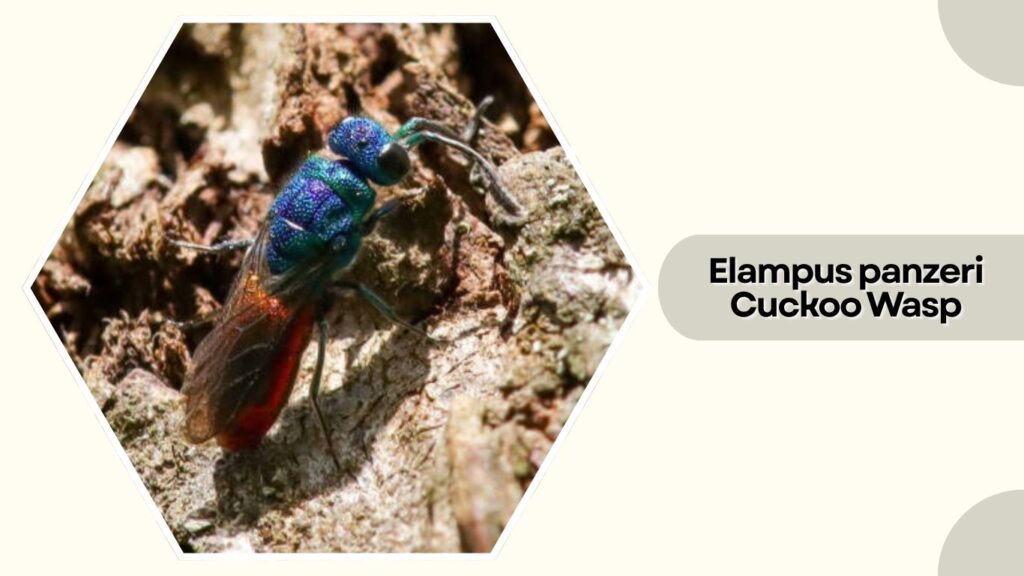
The Elampus panzeri is a brilliantly colored cuckoo wasp featuring a metallic green or blue head and thorax with a reddish abdomen. This species belongs to the family Chrysididae and is widely distributed throughout the Palearctic region. Its unusual abdominal structure helps distinguish it from closely related cuckoo wasps.
Identification
- Scientific Name: Elampus panzeri
- Family: Chrysididae
- Size: Approximately 4–8 mm long
- Color: Metallic blue-green thorax with a reddish abdomen
- Body Shape: Small, compact, and slightly elongated
- Wings: Transparent with visible veins
- Distinctive Features: Horseshoe-shaped abdominal tip with narrow lateral notches
Habitat and Distribution
Elampus panzeri occurs throughout much of Europe and extends into western and eastern Asia. It commonly inhabits sandy grasslands, heathlands, and sparsely vegetated open areas. These habitats contain suitable nesting locations for solitary hunting wasps, which are essential for its reproduction.
Behavior and Diet
This species parasitizes solitary hunting wasps, particularly Mimesa equestris and Mimesa lutaria. Females search for host nesting sites and exploit their brood chambers. Adult wasps occasionally visit flowers belonging to the carrot family and may also feed on aphid honeydew.
Lifespan and Life Cycle
The female reproduces by depositing eggs associated with suitable host nesting chambers. The developing cuckoo wasp larvae exploit resources within the host nest and eventually complete their development. Pupation occurs in a protected location before adult emergence. Adults are generally active from late May through August, depending on regional temperatures and environmental conditions.
12. Holopyga fervida Cuckoo Wasp (Holopyga fervida)
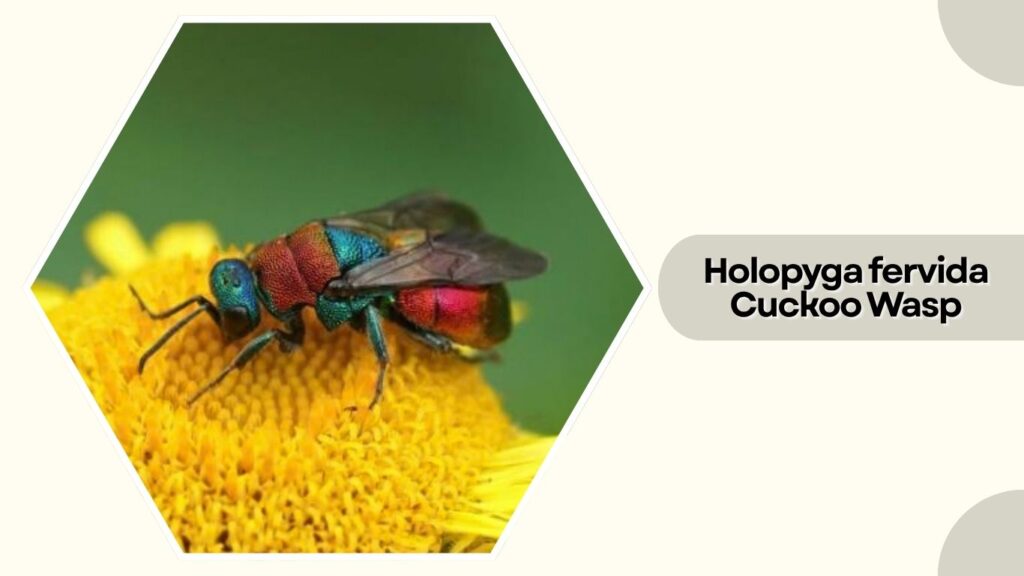
The Holopyga fervida is a beautiful metallic cuckoo wasp belonging to the family Chrysididae. This species is particularly interesting because males and females display noticeably different colors. Females usually have reddish-purple bodies, while males are predominantly metallic green or blue-green. It is a solitary species associated with warm, open habitats.
Identification
- Scientific Name: Holopyga fervida
- Family: Chrysididae
- Size: Approximately 4–7 mm long
- Color: Females are mainly reddish-purple; males are metallic green or blue-green
- Body Shape: Broad, compact, and rounded
- Wings: Transparent with visible veins
- Distinctive Features: Strong sexual color differences and relatively dense abdominal punctures
Habitat and Distribution
Holopyga fervida occurs across parts of Europe, northern Africa, Turkey, and Iran. It prefers warm, dry environments, particularly sparsely vegetated sandy areas, exposed clay banks, and open grasslands. Adults are frequently associated with habitats containing suitable ground-nesting wasps.
Behavior and Diet
This species exhibits the parasitic reproductive characteristics associated with cuckoo wasps. However, its specific host species remains unknown. Adults have been observed visiting flowers belonging to the carrot, daisy, and spurge families. They obtain energy from accessible nectar and other sugary food sources.
Lifespan and Life Cycle
The precise life cycle of Holopyga fervida has not been fully documented. Researchers believe its immature stages develop in association with the nests of other solitary wasps, as occurs in related species. Adult activity generally extends from June through August. Seasonal temperatures and host availability likely influence reproductive timing.
13. Holopyga metallica Cuckoo Wasp (Holopyga metallica)
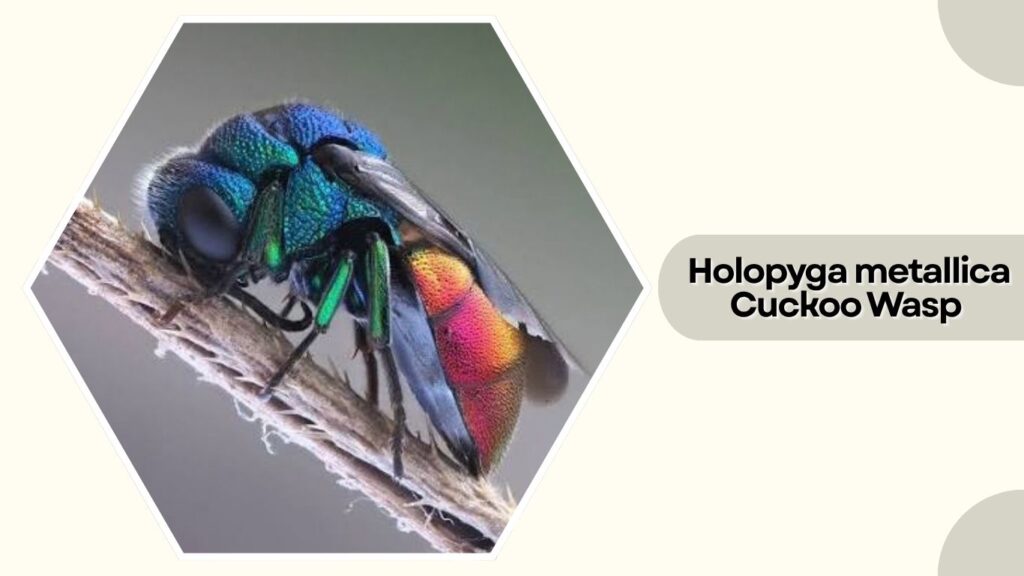
The Holopyga metallica is a small, metallic cuckoo wasp known for its attractive greenish-blue and golden coloration. This species belongs to the family Chrysididae and closely resembles the male of Holopyga fervida. However, differences in abdominal surface texture and antenna structure help specialists distinguish the two species.
Identification
- Scientific Name: Holopyga metallica
- Family: Chrysididae
- Size: Approximately 5–6 mm long
- Color: Metallic blue-green or golden-green
- Body Shape: Compact and broadly rounded
- Wings: Transparent with fine venation
- Distinctive Features: Fine abdominal punctures and relatively elongated antennal segments in males
Habitat and Distribution
Holopyga metallica has a restricted documented distribution, with confirmed records from Finland and Russian Fennoscandia. It inhabits sparsely vegetated coastal dune environments, where sandy ground and grasses provide suitable conditions for solitary hunting wasps. Individuals have been collected from grasses and captured using yellow pan traps.
Behavior and Diet
This cuckoo wasp is associated with the ground-nesting hunting wasp Dryudella stigma, although published information about the relationship remains limited. Like other cuckoo wasps, it relies on host-associated resources for reproduction. Adults are believed to obtain energy from nectar and other accessible sugary substances.
Lifespan and Life Cycle
The life cycle is closely associated with the nesting activities of suitable host wasps. Females reproduce by exploiting host brood chambers, where their offspring develop. The immature stages eventually pupate before emerging as adults. Recorded flight activity occurs mainly during June and July in northern European habitats.
14. Holopyga generosa Cuckoo Wasp (Holopyga generosa)
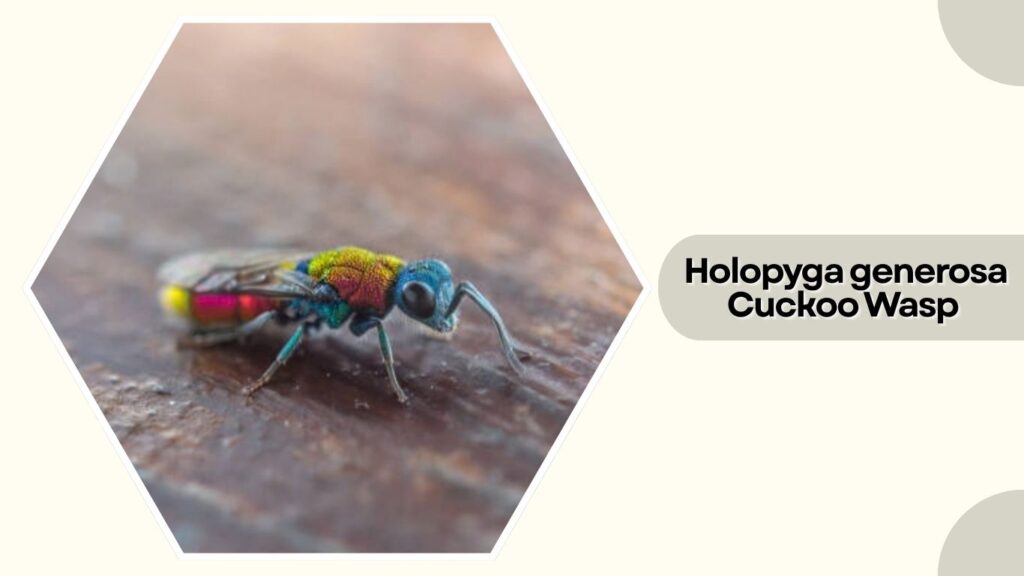
The Holopyga generosa is a colorful solitary cuckoo wasp belonging to the family Chrysididae. It is recognized by its metallic green or blue head and thorax, contrasting with a brilliant reddish abdomen. This species is relatively widespread throughout the Palearctic region and plays a specialized ecological role as a brood parasite of other hunting wasps.
Identification
- Scientific Name: Holopyga generosa
- Family: Chrysididae
- Size: Approximately 7–9 mm long
- Color: Metallic green-blue head and thorax with a bright red abdomen
- Body Shape: Broad, compact, and rounded
- Wings: Transparent with delicate venation
- Distinctive Features: Rounded abdominal tip and claws featuring several small teeth
Habitat and Distribution
Holopyga generosa occurs throughout much of Europe and extends into Asia and northern Africa. It commonly inhabits sandy grasslands, dry meadows, open woodland margins, and sparsely vegetated sunny areas. These habitats support the ground-nesting hunting wasps upon which it depends.
Behavior and Diet
This species is associated with Astata boops, a solitary hunting wasp that collects true bugs for its larvae. Female Holopyga generosa may deposit eggs into bug nymphs before the hunting wasp captures them and transports them into its nest. Adults also visit flowers from several plant families to obtain nectar.
Lifespan and Life Cycle
The life cycle begins when the female deposits an egg into a suitable prey insect. The prey may subsequently be captured by the host wasp and carried into its nesting chamber. The cuckoo wasp offspring then develop within the host’s provisioned nest. Adults are generally active from late May through August, with development influenced by seasonal environmental conditions.
15. Holopyga inflammata Cuckoo Wasp (Holopyga inflammata)
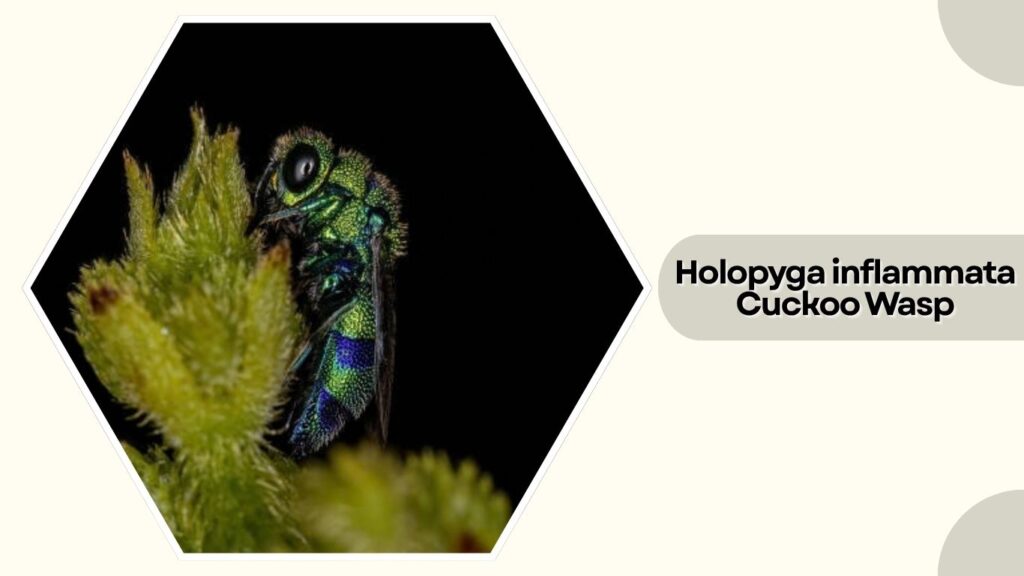
The Holopyga inflammata is a striking metallic cuckoo wasp recognized for its unusual combination of blue-violet and coppery-red colors. It belongs to the family Chrysididae and is associated with warm, dry environments. This species resembles certain relatives but can be distinguished by the arrangement of metallic colors across its body.
Identification
- Scientific Name: Holopyga inflammata
- Family: Chrysididae
- Size: Approximately 5–7 mm long
- Color: Metallic blue-violet head with a coppery-red upper thorax and abdomen
- Body Shape: Broad, compact, and slightly rounded
- Wings: Transparent to slightly smoky
- Distinctive Features: Entirely blue head and contrasting reddish thoracic plates
Habitat and Distribution
Holopyga inflammata occurs in parts of Europe, northern Africa, and western Asia. It prefers sunny, sparsely vegetated sandy habitats, including dry grasslands and open slopes. The species is particularly uncommon in northern Europe, where historical records indicate that some local populations have disappeared.
Behavior and Diet
The exact hosts of Holopyga inflammata remain unknown. Like other members of its genus, it is believed to depend on solitary ground-nesting wasps for reproduction. Adults have been observed visiting flowers in the carrot family, where they obtain nectar. They generally live independently rather than forming colonies.
Lifespan and Life Cycle
The complete developmental cycle of this species remains insufficiently studied. Its reproductive biology is thought to resemble that of other Holopyga species, with larvae developing through the exploitation of host nesting resources. Following larval development and pupation, adults emerge during favorable seasonal conditions. The recorded adult flight period generally extends from early June through early August.
16. Hedychrum gerstaeckeri Cuckoo Wasp (Hedychrum gerstaeckeri)
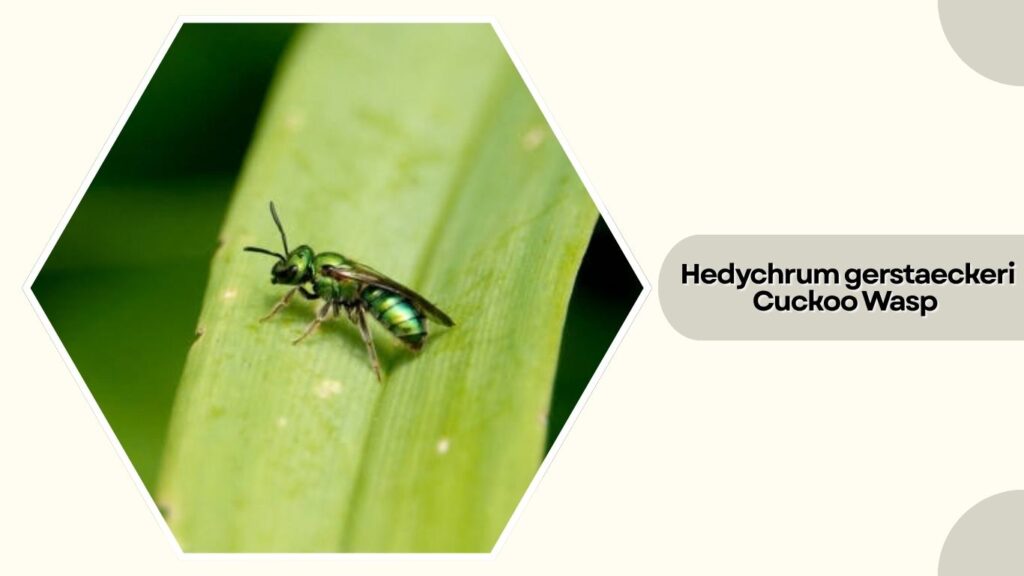
The Hedychrum gerstaeckeri is a colorful cuckoo wasp belonging to the family Chrysididae. Known for its metallic blue-green body and reddish abdomen, this small species is widely distributed across the Palearctic region. Like other cuckoo wasps, it reproduces by exploiting the nests of solitary hunting wasps rather than constructing its own nesting chambers.
Identification
- Scientific Name: Hedychrum gerstaeckeri
- Family: Chrysididae
- Size: Approximately 4–8 mm long
- Color: Metallic blue-green or violet-blue thorax with a reddish abdomen
- Body Shape: Compact and moderately robust
- Wings: Transparent with fine veins
- Distinctive Features: Pale central portions of the mandibles and a deeply grooved middle tibia in males
Habitat and Distribution
Hedychrum gerstaeckeri occurs throughout much of Europe and extends into Asia, including China, Japan, and Taiwan. It typically inhabits sparsely vegetated sandy areas, dry meadows, grasslands, and other warm, open environments. These habitats provide suitable nesting conditions for its host wasps.
Behavior and Diet
This cuckoo wasp is associated primarily with solitary hunting wasps such as Cerceris rybyensis and Cerceris ruficornis. Females search for suitable nesting locations where they can deposit their eggs. Adults frequently visit flowers belonging to the carrot, daisy, and spurge families to obtain nectar.
Lifespan and Life Cycle
The reproductive cycle begins when a female exploits a suitable host nest. Its developing offspring depend on resources intended for the host’s young. After completing larval development, the cuckoo wasp pupates inside the protected nesting chamber. Adults are commonly active from mid-June through late August, although seasonal conditions influence their appearance.
17. Hedychrum rutilans Cuckoo Wasp (Hedychrum rutilans)
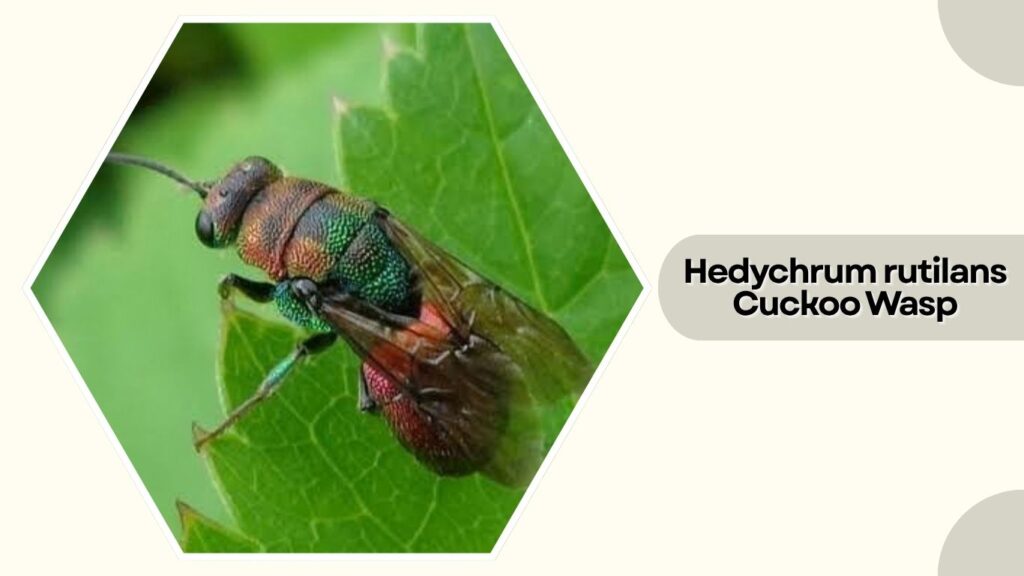
The Hedychrum rutilans is a beautiful metallic cuckoo wasp recognized for its coppery-red upper body and contrasting blue-green underside. It belongs to the family Chrysididae and is particularly well known for its relationship with the European Beewolf. This fascinating species uses the prey collected by other wasps to help its own offspring survive.
Identification
- Scientific Name: Hedychrum rutilans
- Family: Chrysididae
- Size: Approximately 4–10 mm long
- Color: Coppery-red upper body with metallic blue or green lower surfaces
- Body Shape: Robust, compact, and slightly elongated
- Wings: Transparent with delicate brownish veins
- Distinctive Features: Reddish upper head and thorax with contrasting blue-green legs and underside
Habitat and Distribution
Hedychrum rutilans occurs throughout Europe, northern Africa, Turkey, and parts of Asia. It prefers sandy grasslands, dry meadows, coastal dunes, and other open environments. These habitats are especially suitable for European Beewolves, which construct underground nests in sandy soil.
Behavior and Diet
This species is a brood parasite of the European Beewolf (Philanthus triangulum). Female cuckoo wasps sometimes deposit their eggs directly on honeybees captured by the host wasp. The beewolf carries these prey insects into its underground nesting chamber. Adult cuckoo wasps feed on nectar from various flowering plants.
Lifespan and Life Cycle
The female strategically deposits an egg on prey that may enter a beewolf nest. After hatching, the cuckoo wasp larva exploits the host’s brood cell, ultimately consuming resources and preventing normal development of the host offspring. Following larval development, it pupates within the nest. Adults generally fly from early July through late August.
18. Hedychrum nobile Cuckoo Wasp (Hedychrum nobile)
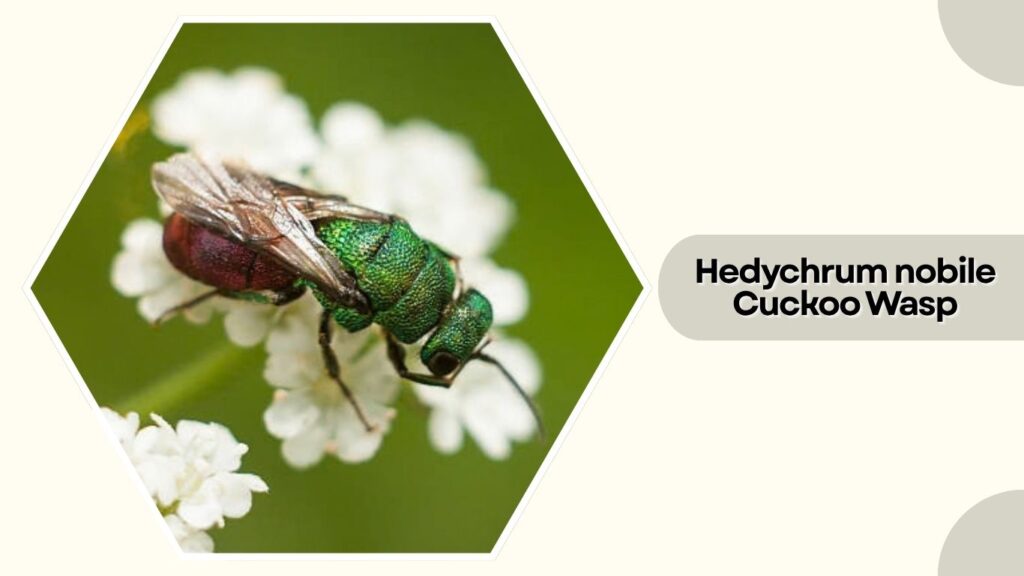
The Hedychrum nobile is a brilliantly colored cuckoo wasp belonging to the family Chrysididae. This attractive species displays a combination of metallic green, blue, gold, and reddish-purple colors. It is particularly common in suitable sandy habitats and reproduces by parasitizing the nests of solitary hunting wasps belonging to the genus Cerceris.
Identification
- Scientific Name: Hedychrum nobile
- Family: Chrysididae
- Size: Approximately 6–10 mm long
- Color: Metallic green-blue head and thorax with a golden-red abdomen
- Body Shape: Broad, compact, and robust
- Wings: Transparent with visible venation
- Distinctive Features: Females often have reddish or golden upper thoracic plates, while males generally possess a uniformly blue-green thorax
Habitat and Distribution
Hedychrum nobile is widely distributed across Europe and extends eastward into Siberia and parts of Asia. It prefers sunny sandy habitats, including coastal dunes, dry grasslands, heathlands, and sparsely vegetated slopes. Its presence is closely associated with suitable nesting sites for ground-nesting hunting wasps.
Behavior and Diet
This species is primarily associated with Cerceris arenaria, a solitary hunting wasp that provisions its nests with weevils. Female cuckoo wasps investigate host nesting entrances and exploit their brood chambers. Adults frequently visit flowers belonging to the carrot, daisy, spurge, and rose families.
Lifespan and Life Cycle
Reproduction begins when a female deposits an egg within a suitable host nesting chamber. After hatching, the cuckoo wasp larva develops using resources associated with the host’s brood cell. It eventually pupates in the protected underground environment. Adults are commonly observed from June through August, depending on regional climatic conditions.
19. Hedychrum niemelai Cuckoo Wasp (Hedychrum niemelai)
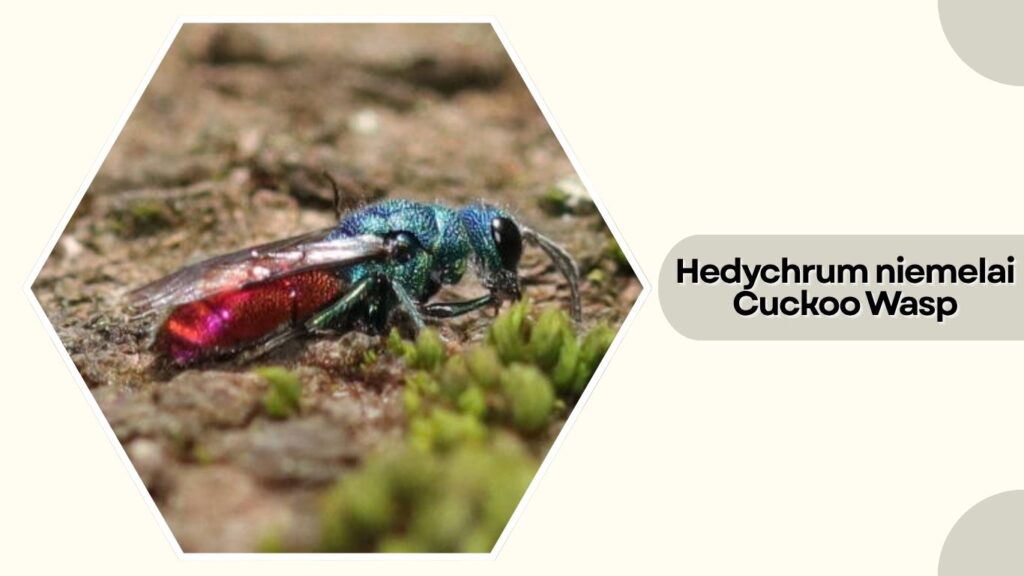
The Hedychrum niemelai is a small, brightly colored cuckoo wasp featuring metallic blue-green and ruby-red coloration. It belongs to the family Chrysididae and closely resembles Hedychrum nobile. Although these species look similar, differences in body structure and coloration allow specialists to distinguish them. Its reproductive success depends on suitable solitary hunting wasps.
Identification
- Scientific Name: Hedychrum niemelai
- Family: Chrysididae
- Size: Approximately 5–8 mm long
- Color: Metallic blue-green head and thorax with a golden-red abdomen
- Body Shape: Compact and moderately robust
- Wings: Transparent with fine veins
- Distinctive Features: Females usually possess bright red upper thoracic plates and a small divided projection on the underside of the abdomen
Habitat and Distribution
Hedychrum niemelai occurs throughout parts of Europe and extends into Asia, including China. It commonly inhabits sparsely vegetated sandy areas, heathlands, coastal dunes, and open grasslands. Such environments provide suitable nesting conditions for the solitary hunting wasps that serve as its hosts.
Behavior and Diet
This cuckoo wasp parasitizes several Cerceris species, including Cerceris quadrifasciata and Cerceris quinquefasciata. Females actively search for host nests and exploit their nesting chambers. Adult wasps visit flowers belonging to the carrot, daisy, and evening primrose families to obtain nectar.
Lifespan and Life Cycle
The female reproduces by depositing eggs in suitable host brood cells. The developing larvae exploit the host’s nest provisions and brood resources. After completing development, they pupate within the protected nesting chamber. Adult wasps are generally active from early June through late August, particularly during warm and sunny weather.
20. Hedychrum chalybaeum Cuckoo Wasp (Hedychrum chalybaeum)
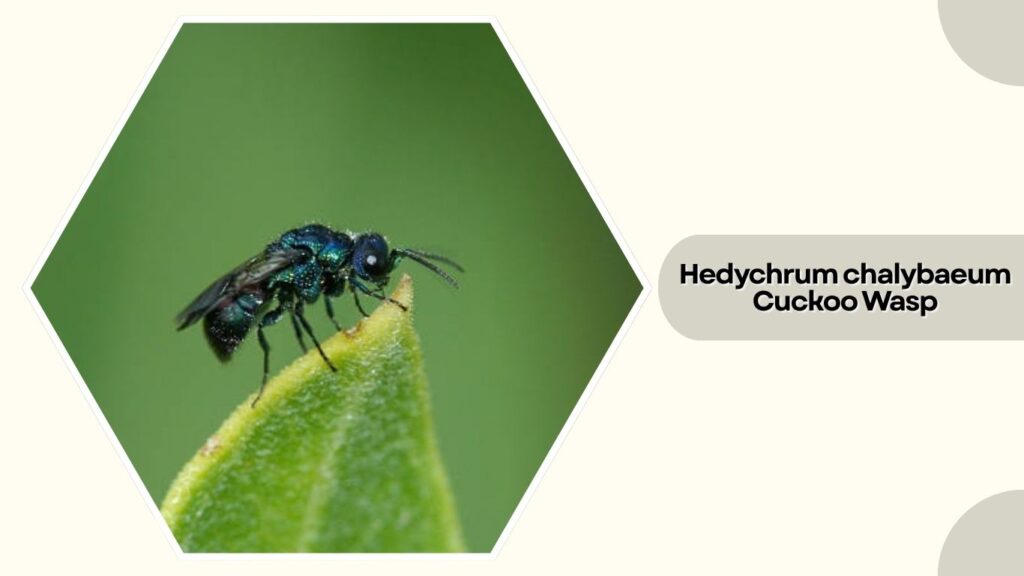
The Hedychrum chalybaeum is an unusual metallic cuckoo wasp known for its striking differences in male and female coloration. Males typically display an entirely blue-green body, while females possess brilliant reddish upper surfaces. This relatively uncommon species belongs to the family Chrysididae and is associated with solitary hunting wasps living in warm, open habitats.
Identification
- Scientific Name: Hedychrum chalybaeum
- Family: Chrysididae
- Size: Approximately 4–6 mm long
- Color: Males are metallic blue-green; females have reddish upper body surfaces with contrasting blue-green areas
- Body Shape: Small, compact, and robust
- Wings: Transparent with delicate veins
- Distinctive Features: Strong sexual color differences and dark brown body hairs
Habitat and Distribution
Hedychrum chalybaeum occurs across parts of Europe and Asia, with records extending into Mongolia, China, and the Russian Far East. It typically inhabits sparsely vegetated sandy environments, exposed loess soils, dry grasslands, and sunny slopes. Its distribution depends partly on the availability of suitable host nesting sites.
Behavior and Diet
This species is associated with the solitary hunting wasp Cerceris interrupta. Female cuckoo wasps exploit host nesting chambers for reproduction. Adults visit flowers belonging to the carrot and daisy families, obtaining nectar as an energy source. They are solitary insects and do not construct communal nests.
Lifespan and Life Cycle
The life cycle depends on successful parasitism of suitable host nesting chambers. The developing cuckoo wasp larvae use resources provided for the host’s offspring. After completing their development, they pupate within the protected nest. Adult activity has been recorded primarily during July and August, although flight periods may differ across its geographical range.
21. Hedychridium zelleri Cuckoo Wasp (Hedychridium zelleri)
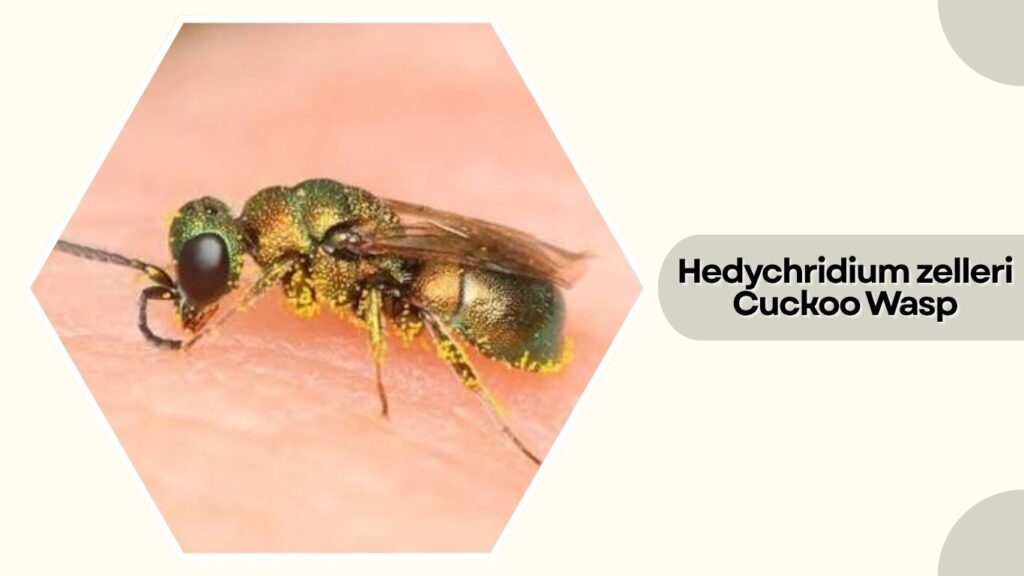
The Hedychridium zelleri is a tiny metallic cuckoo wasp belonging to the family Chrysididae. Unlike many colorful relatives, this species displays a predominantly green or bluish body without a strongly contrasting red abdomen. Its extremely small size makes it difficult to observe in natural habitats, particularly among vegetation and sandy ground.
Identification
- Scientific Name: Hedychridium zelleri
- Family: Chrysididae
- Size: Approximately 2–4 mm long
- Color: Predominantly metallic green or blue-green
- Body Shape: Very small, compact, and slightly elongated
- Wings: Transparent with delicate veins
- Distinctive Features: Almost uniformly green body, pale brown feet, and occasionally faint golden reflections on the thorax
Habitat and Distribution
Hedychridium zelleri occurs in parts of northern and central Europe. It inhabits sparsely vegetated sandy environments, particularly coastal dunes and sandy areas near seashores. These habitats provide suitable nesting conditions for the small solitary hunting wasps upon which it depends.
Behavior and Diet
This species is associated with solitary hunting wasps belonging to the genus Miscophus. Possible additional hosts include Diodontus tristis and Diodontus minutus. Females search for suitable nesting chambers where their offspring can develop. Adult cuckoo wasps occasionally visit flowers to obtain nectar.
Lifespan and Life Cycle
The female reproduces through a host-dependent nesting strategy. Its offspring develop using resources associated with suitable solitary wasp brood chambers. The immature stages eventually complete their development and pupate in protected nesting locations. Adult flight activity generally occurs between late June and early August. Because the species is small and relatively uncommon, detailed information about its exact lifespan remains limited.
22. Hedychridium ardens Cuckoo Wasp (Hedychridium ardens)
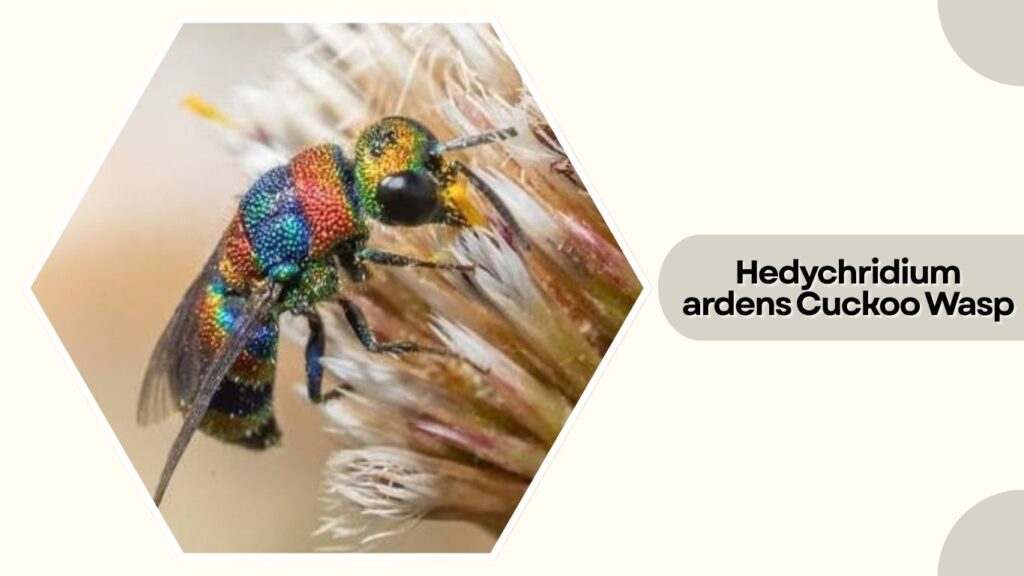
The Hedychridium ardens is a small, colorful cuckoo wasp recognized for its coppery-red upper body and contrasting green-blue markings. It belongs to the family Chrysididae and is widely distributed throughout the Palearctic region. This species is associated with several solitary hunting wasps and commonly inhabits warm, sandy environments where its hosts establish underground nests.
Identification
- Scientific Name: Hedychridium ardens
- Family: Chrysididae
- Size: Approximately 3–5 mm long
- Color: Coppery-red upper body with green-blue markings
- Body Shape: Small, compact, and oval-shaped
- Wings: Transparent with fine veins
- Distinctive Features: Coppery-red head, thoracic plates, and abdomen with contrasting greenish facial and abdominal areas
Habitat and Distribution
Hedychridium ardens occur throughout much of Europe and extends eastward into Mongolia and the Russian Far East. It commonly inhabits sparsely vegetated sandy areas, coastal dunes, dry meadows, and sunny grasslands. These environments provide nesting opportunities for solitary hunting wasps that construct underground brood chambers.
Behavior and Diet
This species is associated with several solitary hunting wasps, including Diodontus tristis, Oxybelus bipunctatus, and Tachysphex pompiliformis. Females search for suitable host nests where their offspring can develop. Adults visit flowers belonging to the carrot, daisy, stonecrop, spurge, and rose families.
Lifespan and Life Cycle
The female deposits eggs in association with suitable host nesting chambers. After hatching, the developing larvae exploit the brood-cell resources, ultimately preventing normal development of the host offspring. Pupation takes place within a protected nesting environment. Adults generally fly from late May through late August, with the precise emergence period depending on temperature and geographical location.
23. Hedychridium coriaceum Cuckoo Wasp (Hedychridium coriaceum)
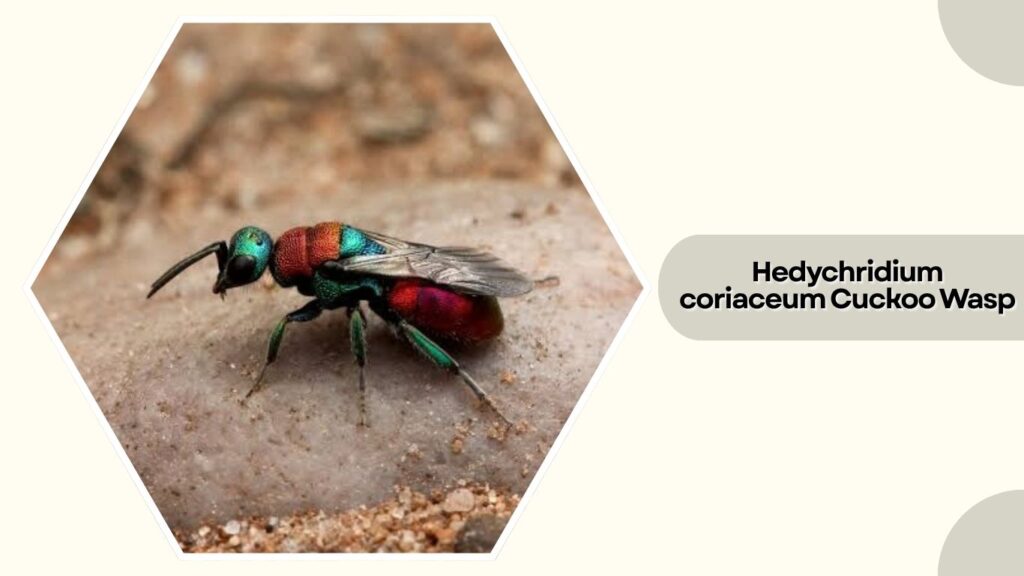
The Hedychridium coriaceum is a small, metallic-colored cuckoo wasp belonging to the family Chrysididae. This species is recognized by its coppery-red upper body, contrasting blue-green markings, and densely textured thorax. It is relatively uncommon in parts of northern Europe and is associated with solitary hunting wasps that construct nests in sandy environments.
Identification
- Scientific Name: Hedychridium coriaceum
- Family: Chrysididae
- Size: Approximately 3–5 mm long
- Color: Coppery-red upper body with metallic blue-green markings
- Body Shape: Small, compact, and oval-shaped
- Wings: Transparent with delicate veins
- Distinctive Features: Densely punctured, dull-looking thorax with fine ridges between the punctures
Habitat and Distribution
Hedychridium coriaceum occurs throughout parts of Europe, northern Africa, and Asia. It inhabits warm, sunny, sparsely vegetated sandy environments, including coastal dunes, dry grasslands, and exposed sandy banks. In Britain, this species is considered rare and has been recorded mainly in southern England.
Behavior and Diet
This cuckoo wasp is a brood parasite of solitary hunting wasps, particularly Lindenius albilabris. Another possible host is Oxybelus uniglumis. Females search for suitable host nesting locations to reproduce. Adults visit flowers belonging to the daisy, spurge, and rose families, obtaining nectar for energy.
Lifespan and Life Cycle
The female deposits eggs in association with suitable host nesting chambers. After hatching, the developing cuckoo wasp larvae exploit resources within the host nest. They eventually complete their development and pupate before emerging as adults. The adult flight period generally extends from early June through late August, although it may continue into September in some regions.
24. Hedychridium cupreum Cuckoo Wasp (Hedychridium cupreum)
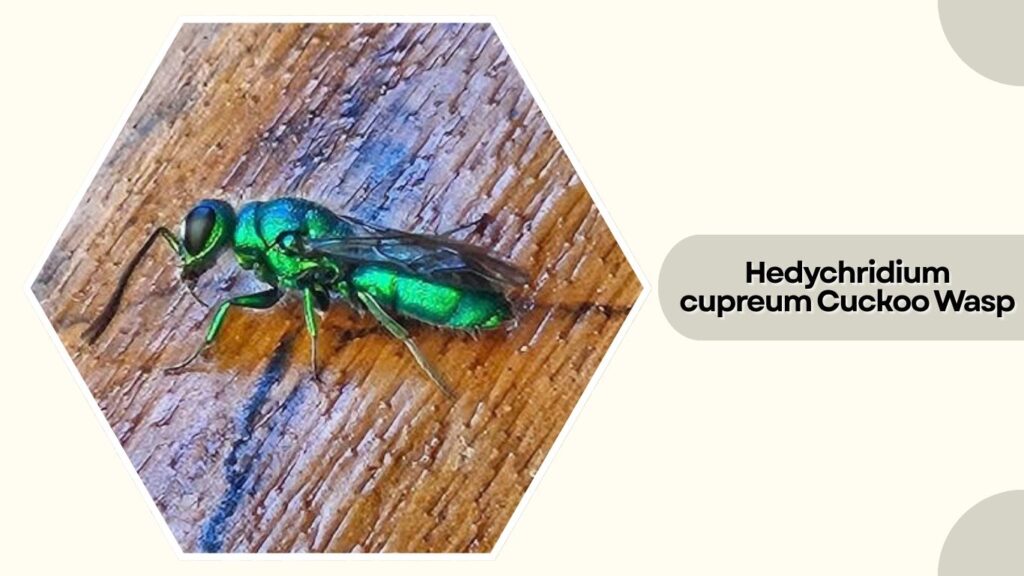
The Hedychridium cupreum is a brilliantly colored cuckoo wasp belonging to the family Chrysididae. It displays beautiful coppery-red, purple, and metallic green colors. Despite its attractive appearance, this species is difficult to distinguish from closely related cuckoo wasps without examining its body structure. It is widely distributed throughout the Palearctic region and reproduces through brood parasitism.
Identification
- Scientific Name: Hedychridium cupreum
- Family: Chrysididae
- Size: Approximately 4–5 mm long
- Color: Coppery-red or greenish upper body with a reddish-purple abdomen
- Body Shape: Small, compact, and slightly elongated
- Wings: Transparent with fine venation
- Distinctive Features: Smooth spaces between the punctures on the thorax and relatively long, pale body hairs
Habitat and Distribution
Hedychridium cupreum occurs throughout much of Europe and extends eastward into Mongolia, China, and Japan. It prefers sparsely vegetated sandy habitats, particularly coastal dunes, dry grasslands, and open sandy slopes. These environments provide favorable nesting conditions for its solitary hunting wasp hosts.
Behavior and Diet
This species primarily parasitizes Dryudella pinguis, a solitary hunting wasp. Other possible hosts include Dryudella stigma and several Harpactus species. Females search for nesting chambers where their offspring can develop. Adult wasps occasionally visit flowers belonging to the daisy and pink families to obtain nectar.
Lifespan and Life Cycle
Reproduction begins when a female exploits the nesting chamber of a suitable host wasp. The developing larvae depend on the host’s brood-cell resources for survival. After completing larval growth, they pupate inside the protected nesting environment. Adults generally appear from early June through late August, depending on temperature and geographical location.
25. Hedychridium purpurascens Cuckoo Wasp (Hedychridium purpurascens)
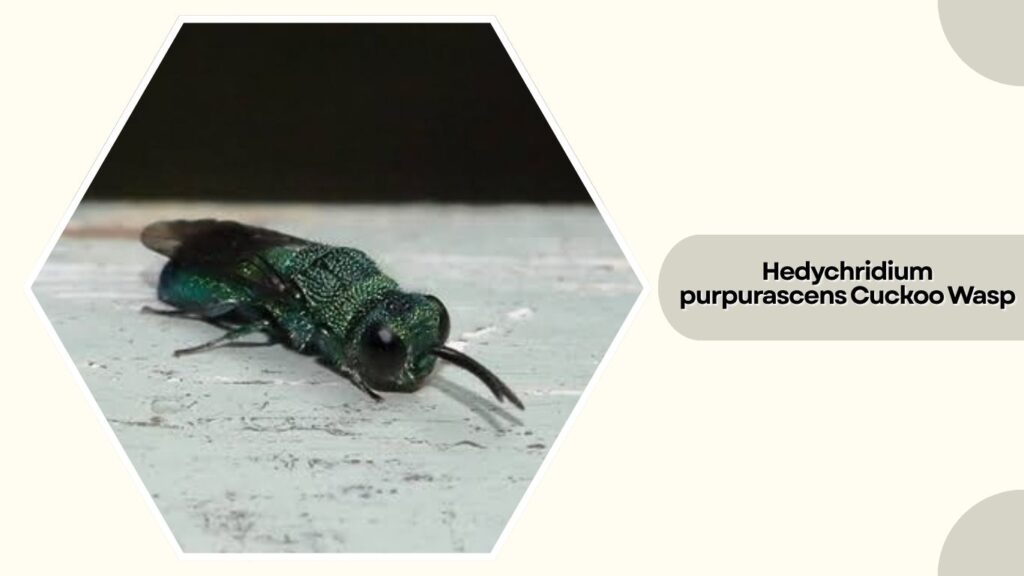
The Hedychridium purpurascens is a rare metallic cuckoo wasp belonging to the family Chrysididae. This species is especially notable for its dark violet coloration, which distinguishes it from many brighter coppery-red relatives. It closely resembles Hedychridium cupreum, although differences in body texture, hair length, and abdominal markings help specialists identify it accurately.
Identification
- Scientific Name: Hedychridium purpurascens
- Family: Chrysididae
- Size: Approximately 5–6 mm long
- Color: Dark metallic violet, sometimes approaching black, with a reddish-purple abdomen
- Body Shape: Compact and moderately elongated
- Wings: Transparent with delicate veins
- Distinctive Features: Short abdominal hairs, relatively dense thoracic punctures, and a rounded metallic spot underneath the abdomen
Habitat and Distribution
Hedychridium purpurascens occurs in parts of central Europe and has also been recorded in Estonia. It is considered very rare in the Nordic and Baltic region. The species prefers sparsely vegetated sandy environments with abundant sunlight. Individuals may be encountered near exposed sandy ground, tree roots, and dry open woodland habitats.
Behavior and Diet
This cuckoo wasp is generally considered a brood parasite, although its exact host species has not been established. Adults have been observed resting on exposed tree roots and basking in sunlight. Their behavior is influenced by warm conditions, making sunny sandy habitats particularly important.
Lifespan and Life Cycle
The complete life cycle of Hedychridium purpurascens remains poorly documented. Like related cuckoo wasps, it is expected to depend on the nesting resources of other solitary insects for larval development. Its adult flight period is primarily recorded during July and August. More research is necessary to establish its host relationships, larval development, and precise lifespan.
26. Dull Cuckoo Wasp (Hedychridium roseum)
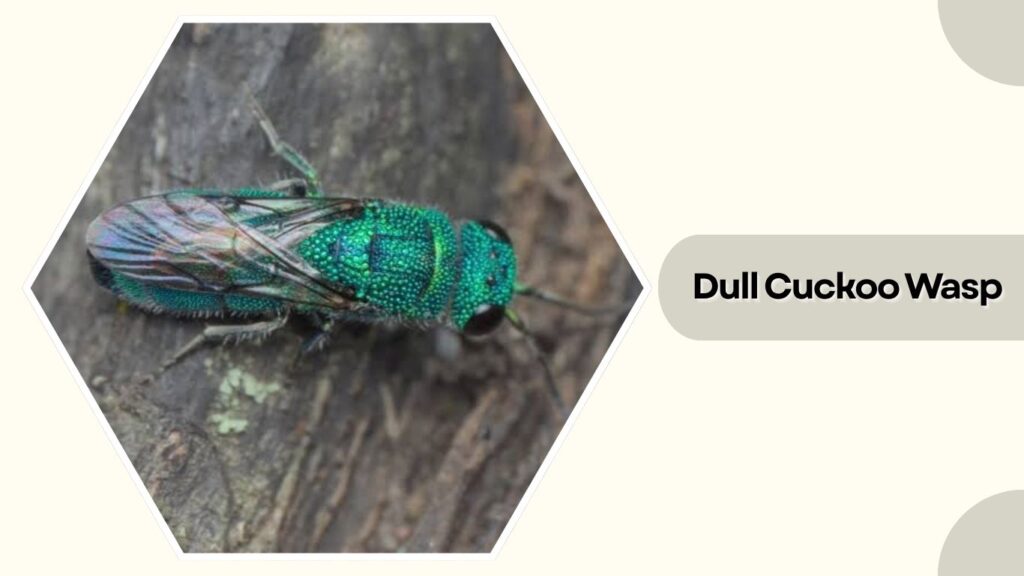
The Dull Cuckoo Wasp (Hedychridium roseum) is a distinctive species belonging to the family Chrysididae. Unlike many brightly metallic cuckoo wasps, it possesses a comparatively dull, non-metallic reddish abdomen. Its contrasting blue-green head and thorax make it easy to recognize as a colorful solitary wasp, although closely related species can appear similar.
Identification
- Scientific Name: Hedychridium roseum
- Common Name: Dull Cuckoo Wasp
- Family: Chrysididae
- Size: Approximately 5–8 mm long
- Color: Metallic blue-green head and thorax with a dull red or orange abdomen
- Body Shape: Compact, rounded, and moderately robust
- Wings: Transparent with fine veins
- Distinctive Features: Non-metallic reddish abdomen and finely punctured body surface
Habitat and Distribution
Hedychridium roseum occurs throughout much of Europe and extends into parts of Asia. It inhabits dry, sandy environments, including coastal dunes, heathlands, grasslands, and open woodland clearings. In Britain, it is primarily associated with suitable sandy habitats in southern and eastern England.
Behavior and Diet
This species is a brood parasite of solitary hunting wasps, particularly Astata boops. Other possible hosts include Tachysphex pompiliformis. Females investigate underground nesting entrances, searching for opportunities to reproduce. Adults visit flowers such as wild carrot, yarrow, and sheep’s-bit to obtain nectar.
Lifespan and Life Cycle
The female deposits eggs in association with host nesting chambers. The developing cuckoo wasp larvae exploit resources originally intended for the host’s offspring. Larval development and pupation occur within the protected underground nest. Adults generally fly from late June through August, with seasonal conditions influencing their emergence and reproductive activity.
27. Hedychridium caputaureum Cuckoo Wasp (Hedychridium caputaureum)
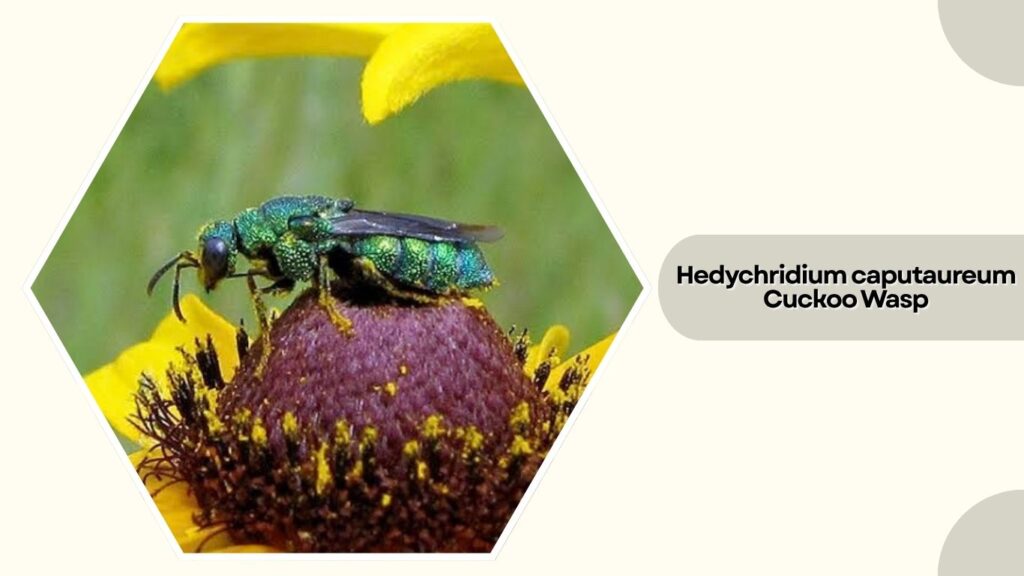
The Hedychridium caputaureum is a beautiful metallic cuckoo wasp closely related to Hedychridium roseum. This species is known for its greenish-blue body, coppery-red reflections, and contrasting reddish-orange abdomen. It belongs to the family Chrysididae and occurs primarily in European and western Asian habitats where suitable solitary hunting wasps construct underground nests.
Identification
- Scientific Name: Hedychridium caputaureum
- Family: Chrysididae
- Size: Approximately 5–7 mm long
- Color: Metallic green-blue head and thorax with coppery-red reflections and a reddish-orange abdomen
- Body Shape: Small, compact, and rounded
- Wings: Transparent with fine venation
- Distinctive Features: Coppery-red reflections on the upper head and thorax, distinguishing it from Hedychridium roseum
Habitat and Distribution
Hedychridium caputaureum occurs in parts of Europe and western Asia. It inhabits warm, sparsely vegetated sandy environments, including dry meadows, sandy grasslands, and exposed soil banks. The species is relatively rare in northern Europe, where it has been recorded in countries including Finland, Sweden, Estonia, Latvia, and Lithuania.
Behavior and Diet
This species is a brood parasite of Astata minor, a solitary ground-nesting hunting wasp. Female cuckoo wasps search for suitable host nesting sites and exploit their brood chambers for reproduction. Adults visit flowers belonging to the carrot family, obtaining nectar for energy during their active periods.
Lifespan and Life Cycle
The reproductive cycle begins when a female deposits eggs in association with a suitable host nest. After hatching, the developing cuckoo wasp larvae exploit the host’s nesting resources. They complete their immature development and eventually pupate within the protected chamber. Adult flight activity generally extends from mid-June through late August, depending on climate and host availability.
FAQs
Cuckoo wasps are fascinating insects recognized for their brilliant metallic coloration and unusual reproductive strategies. Most species live independently and depend on the nests of other insects to reproduce. Understanding their behavior, habitats, and ecological roles helps explain why these colorful wasps are different from familiar social wasps.
1. Are cuckoo wasps dangerous to humans?
Cuckoo wasps are generally harmless to humans. They are not aggressive and do not defend large colonies like yellowjackets. Females of many species possess a modified egg-laying structure rather than a functional defensive sting. Their main concern is locating suitable host nests for reproduction.
2. Why are cuckoo wasps called cuckoo wasps?
They receive their name from their reproductive behavior, which resembles that of cuckoo birds. Many species deposit eggs inside the nests of other insects instead of building their own. Their larvae develop by consuming the host’s offspring, stored provisions, or both, depending on the species.
3. What do cuckoo wasps eat?
Adult cuckoo wasps primarily consume nectar and other sugary substances. They frequently visit flowers in gardens, grasslands, and woodland edges. Their larvae have very different diets because they develop inside host nests and consume host offspring or stored prey.
4. Where do cuckoo wasps usually live?
Cuckoo wasps inhabit various environments, including gardens, forests, sandy grasslands, coastal dunes, and dry meadows. Their distribution depends largely on suitable host insects. Some species prefer underground nesting areas, while others search wooden cavities, hollow stems, and old masonry for host nests.
5. How long do cuckoo wasps live?
The lifespan of cuckoo wasps varies considerably among species and environmental conditions. Adults are typically active for a relatively short seasonal period, while immature stages may spend several months developing or overwintering inside host nests. Some species complete one generation annually, although developmental timing differs depending on climate and host biology.