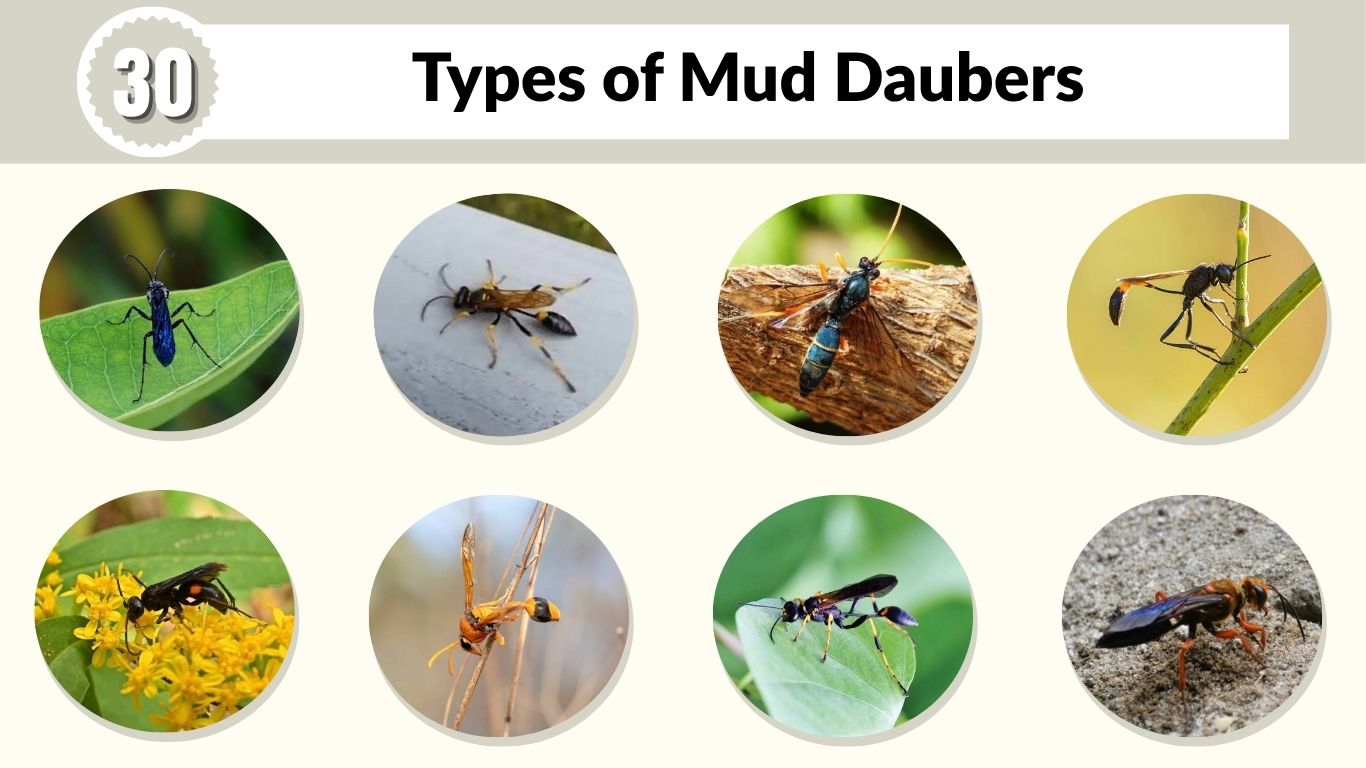
Mud daubers are fascinating solitary wasps known for building nests from mud and hunting spiders to feed their developing young. Unlike social wasps such as yellowjackets and hornets, mud daubers usually live and work alone and are generally nonaggressive toward people. They occur in many parts of the world and vary in color, size, nesting style, and habitat. In this guide, you’ll discover 30 types of mud daubers, along with their identification features, habitat and distribution, behavior, diet, lifespan, nesting habits, and lifecycle.
1. Black-and-Yellow Mud Dauber
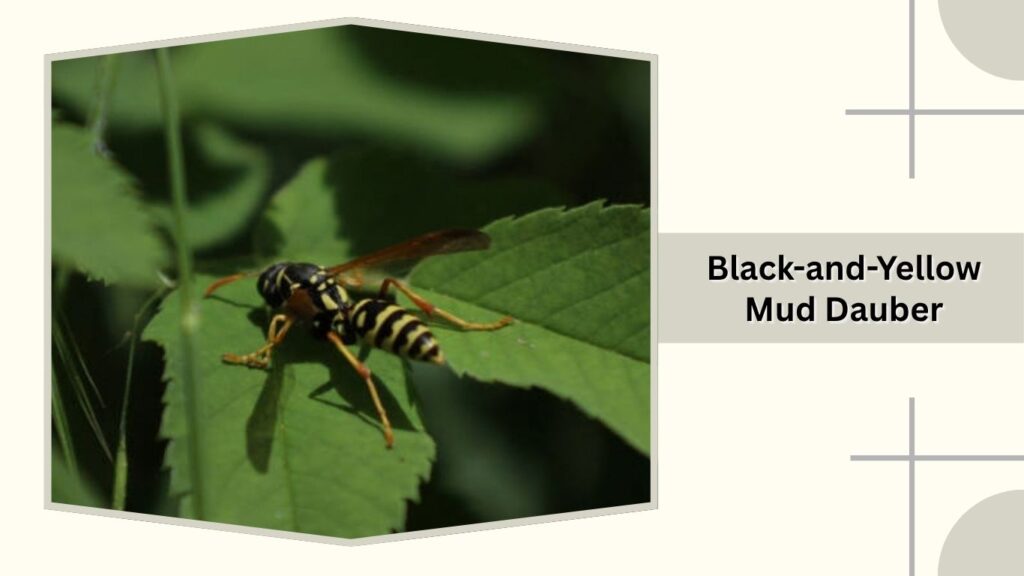
The Black-and-Yellow Mud Dauber (Sceliphron caementarium) is a solitary wasp well known for constructing mud nests on walls, bridges, sheds, barns, and other sheltered structures. Its extremely narrow waist, dark body, and bright yellow markings make it easy to recognize. Unlike aggressive social wasps, this species usually avoids people and spends much of its time collecting mud and hunting spiders for its developing young.
Identification
- Common Name: Black-and-Yellow Mud Dauber
- Scientific Name: Sceliphron caementarium
- Family: Sphecidae
- Body Length: Usually about 20–28 mm
- Body Color: Mostly black with prominent yellow markings
- Legs: Black and yellow
- Waist: Very long and thread-like
- Wings: Dark, smoky, or slightly brownish
- Nest: Cylindrical mud cells built side by side
Habitat and Distribution
The Black-and-Yellow Mud Dauber is widespread across North America and has also been introduced to several other parts of the world. It commonly lives around gardens, fields, woodland edges, farms, urban areas, and buildings. Females prefer protected surfaces where mud nests will remain relatively dry and undisturbed.
Behavior and Diet
Adults mainly feed on flower nectar and other sugary liquids. Females repeatedly visit wet soil or puddles to collect small balls of mud for nest construction. They are also skilled spider hunters. A female stings and paralyzes spiders, carries them back to the nest, and stores several inside each brood cell as food for her larvae.
Lifespan and Lifecycle
A female lays one egg inside each mud chamber after stocking it with paralyzed spiders. Once the egg hatches, the larva feeds on the stored prey and grows inside the sealed cell. It later pupates within the nest before emerging as an adult. Depending on climate and location, the species may produce one or more generations during a year.
2. Common Blue Mud Dauber
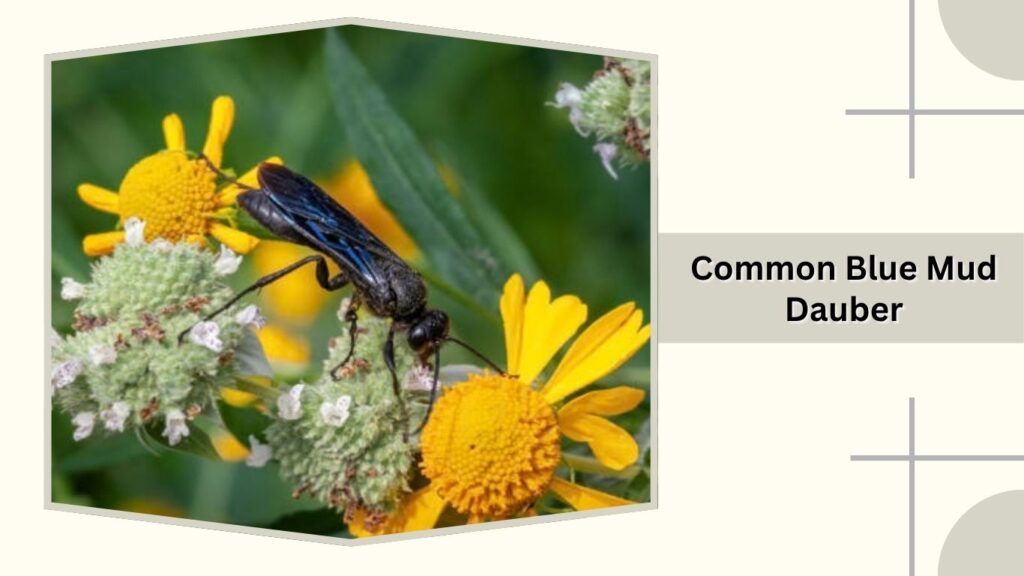
The Common Blue Mud Dauber (Chalybion californicum) is a striking solitary wasp recognized by its metallic blue or blue-black body. Unlike many mud daubers that construct new nests from scratch, females frequently renovate abandoned mud nests made by other species. It is widespread across North America and is commonly encountered around gardens, flowering fields, and buildings.
Identification
- Common Name: Common Blue Mud Dauber
- Scientific Name: Chalybion californicum
- Family: Sphecidae
- Size: About 10–23 mm
- Color: Metallic blue to blue-black
- Wings: Iridescent or dark bluish
- Waist: Long and narrow
- Lifestyle: Solitary
Habitat and Distribution
Common Blue Mud Daubers occur widely throughout the United States and extend into parts of Canada. They are frequently found in flower-rich fields, gardens, residential neighborhoods, and around buildings that provide sheltered nesting sites.
Behavior and Diet
Adults visit flowers for nectar. Females hunt spiders, paralyze them, and store them as food for their offspring. Instead of always making new mud nests, females frequently reuse and remodel nests originally constructed by Sceliphron mud daubers.
Lifespan and Lifecycle
A female provisions each brood chamber with several spiders and lays an egg with the stored prey. The larva hatches and consumes the spiders before pupating inside the nest. After metamorphosis, the adult emerges and begins an independent life.
3. Organ Pipe Mud Dauber
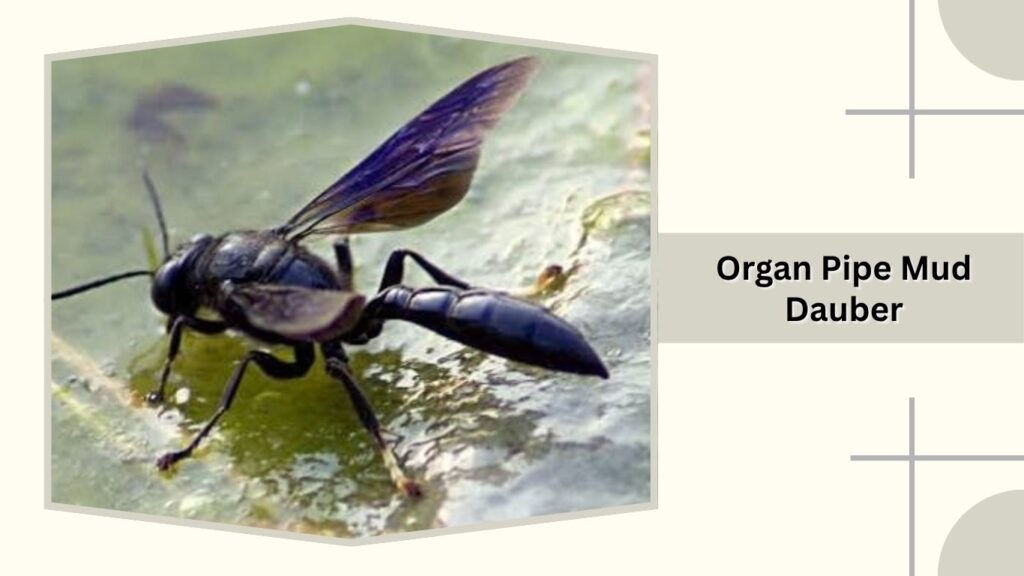
The Organ Pipe Mud Dauber (Trypoxylon politum) gets its name from the distinctive parallel mud tubes it builds, which resemble the pipes of a small organ. This large, slender black wasp is native to eastern North America and is usually nonaggressive. Its unusual nesting behavior makes it one of the easiest mud daubers to recognize.
Identification
- Common Name: Organ Pipe Mud Dauber
- Scientific Name: Trypoxylon politum
- Family: Crabronidae
- Color: Shiny black
- Body: Long and slender
- Waist: Narrow
- Nest: Parallel cylindrical mud tubes
- Lifestyle: Solitary
Habitat and Distribution
The Organ Pipe Mud Dauber occurs mainly in eastern North America, from Massachusetts south to Florida and west toward Kansas and Texas. Nests are commonly attached to sheltered walls, bridges, barns, porches, and similar protected surfaces.
Behavior and Diet
Females construct long mud tubes divided internally into individual brood cells. Each cell may contain several paralyzed spiders. Interestingly, males may remain near an active nest and help guard it while the female leaves to gather mud or capture prey.
Lifespan and Lifecycle
An egg is placed in each provisioned chamber. After hatching, the larva consumes the stored spiders and develops within the sealed tube. It eventually pupates and later emerges as an adult through the hardened mud nest.
4. Asian Mud Dauber
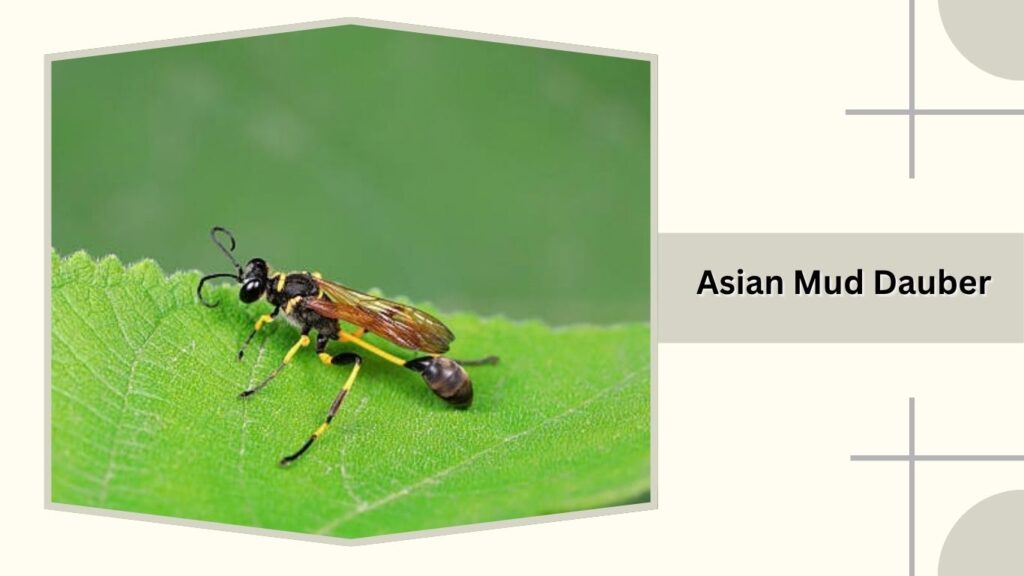
The Asian Mud Dauber (Sceliphron curvatum) is a solitary mud-building wasp originally native to parts of Asia. It has successfully expanded into Europe and has also been recorded in North America. Females often build distinctive individual mud cells on or inside buildings, sometimes choosing surprisingly sheltered household locations.
Identification
- Common Name: Asian Mud Dauber
- Scientific Name: Sceliphron curvatum
- Family: Sphecidae
- Size: Roughly 15–25 mm
- Color: Mostly black with yellow and reddish markings
- Waist: Very narrow and elongated
- Nest: Individual mud cells
- Lifestyle: Solitary
Habitat and Distribution
Its original range includes areas of India, Nepal, Pakistan, Kazakhstan, and Tajikistan. Since the late twentieth century, it has spread through many European countries and has subsequently appeared in North America. It readily occupies towns and other human-modified habitats.
Behavior and Diet
Females gather wet soil and construct mud brood cells on protected surfaces. They hunt spiders, immobilize them with a sting, and carry them to the nest. Adults themselves generally obtain energy from sugary foods such as flower nectar.
Lifespan and Lifecycle
One egg is placed inside a chamber containing paralyzed spiders. The larva feeds on this supply until fully grown, then pupates within the protected mud cell. The new adult eventually breaks through the nest wall and emerges.
5. Common Mud-Dauber
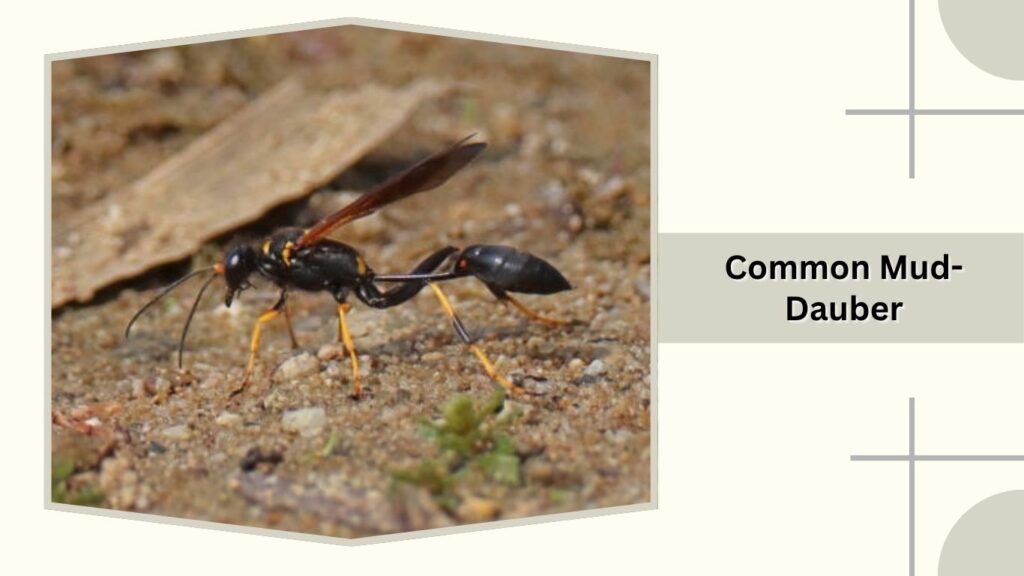
The Common Mud-Dauber (Sceliphron laetum) is a large black-and-yellow wasp native to Australia. It is one of the mud daubers most frequently encountered around Australian urban areas. Females construct clusters of cylindrical mud cells and hunt spiders to provide food for their developing larvae.
Identification
- Common Name: Common Mud-Dauber
- Scientific Name: Sceliphron laetum
- Family: Sphecidae
- Length: Up to about 3 cm
- Color: Black and yellow
- Waist: Long and thread-like
- Nest: Clustered mud cells
- Lifestyle: Solitary
Habitat and Distribution
This species occurs across western and eastern mainland Australia and is particularly familiar in urban environments. It may build nests on buildings, beneath sheltered structures, and in other places where the mud cells are protected from heavy rain.
Behavior and Diet
Adults feed primarily on nectar. Females collect mud and build rows of brood chambers that are eventually covered with additional mud. They capture and paralyze spiders before pushing them inside individual cells as food for the larvae.
Lifespan and Lifecycle
A female places a single egg in a provisioned chamber and seals it with mud. After hatching, the larva feeds on the stored spiders. It later pupates inside the chamber and eventually emerges as an adult, completing the transformation from egg to larva, pupa, and adult.
6. Oriental Mud Dauber
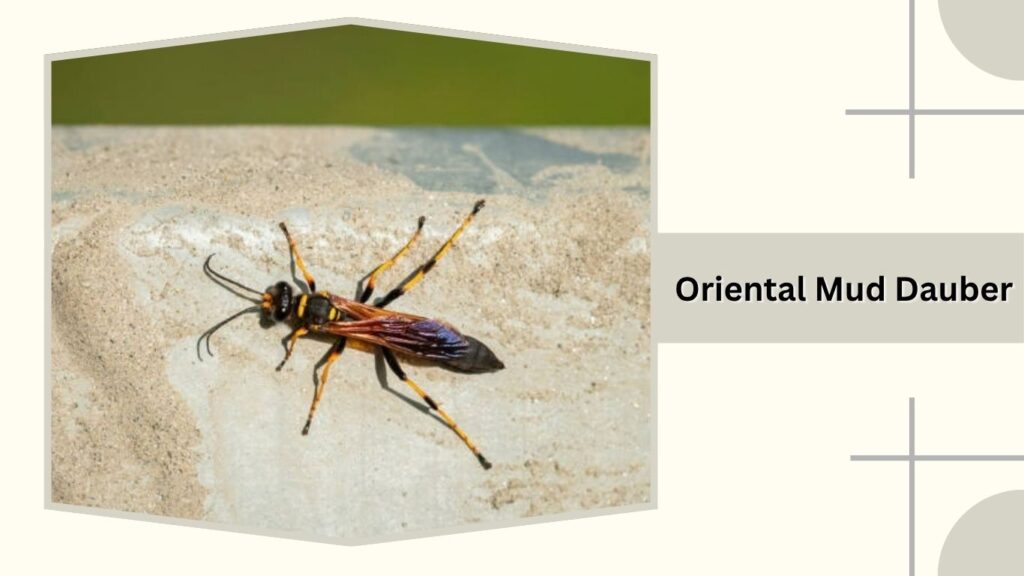
The Oriental Mud Dauber (Sceliphron deforme) is a solitary mud-building wasp distributed through Oriental and Palearctic regions. Females are highly adaptable nest builders and may construct their mud nests inside both occupied and abandoned buildings. Like related mud daubers, they hunt spiders rather than using their sting primarily for defense.
Identification
- Common Name: Oriental Mud Dauber
- Scientific Name: Sceliphron deforme
- Family: Sphecidae
- Body: Slender and narrow-waisted
- Color: Dark with contrasting yellow markings
- Nest Material: Mud
- Prey: Spiders
- Lifestyle: Solitary
Habitat and Distribution
The species is distributed through portions of Asia and the Palearctic. Research has documented females constructing nests in houses on wall corners, curtains, windows, household objects, crevices, and other sheltered locations.
Behavior and Diet
Females repeatedly travel between a source of wet soil and their nesting site, carrying small quantities of mud during each trip. Once a chamber is ready, the female hunts spiders, paralyzes them, and transports them back to the nest for her offspring.
Lifespan and Lifecycle
The female places an egg with the stored spider prey and closes the chamber with mud. The young larva consumes the immobilized spiders before pupating. Development continues inside the protected nest until the fully formed adult is ready to emerge.
7. Australian Mud Dauber
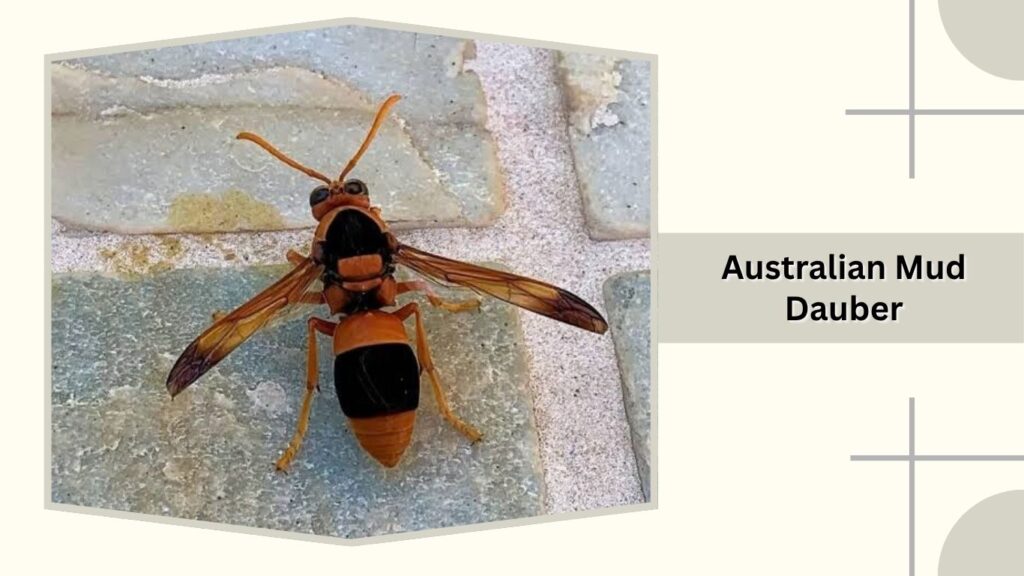
The Australian Mud Dauber (Sceliphron formosum) is one of several Sceliphron species occurring in Australia. It is especially interesting because females generally construct individual mud cells rather than the larger multi-cell masses produced by many related species. It occurs mainly in northern and eastern Australia.
Identification
- Common Name: Australian Mud Dauber
- Scientific Name: Sceliphron formosum
- Family: Sphecidae
- Body: Long and slender
- Waist: Thread-like
- Color: Dark with contrasting lighter markings
- Nest: Usually a single mud cell
- Prey: Spiders
Habitat and Distribution
Sceliphron formosum is principally associated with northern and eastern Australia, although it can occur elsewhere. Its nests have also been recorded in urban environments, including areas around the Australian Capital Territory.
Behavior and Diet
Females hunt spiders for larval provisions. Research shows that prey selection can be influenced by spider size and taxonomic group rather than being completely random. Once captured, spiders are paralyzed and transported back to the mud chamber.
Lifespan and Lifecycle
The female constructs a cell, stocks it with spider prey, and lays an egg. The resulting larva consumes the spiders and remains protected by the hardened mud while developing. It later pupates before emerging as a winged adult.
8. Indian Mud Dauber
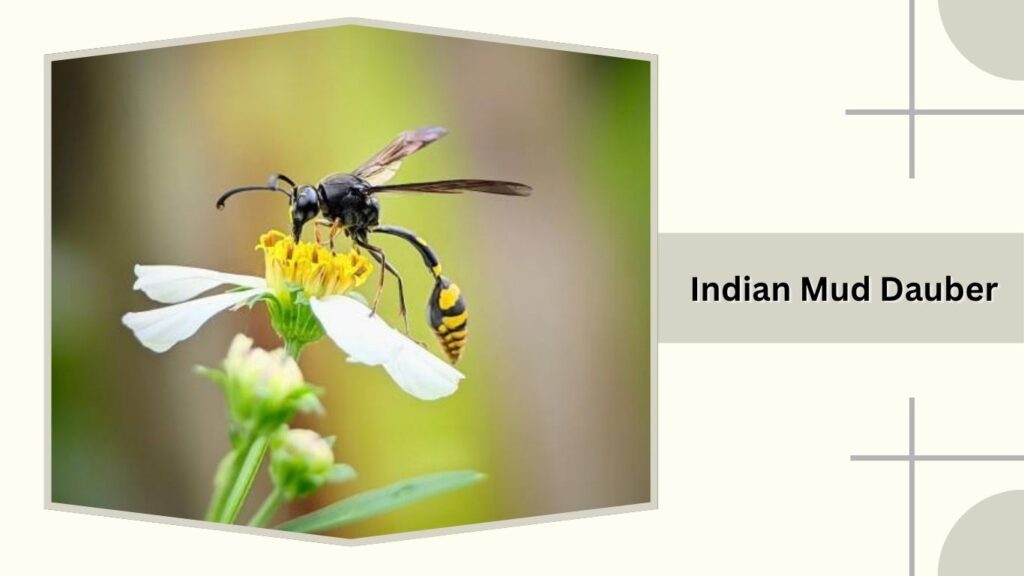
The Indian Mud Dauber (Sceliphron madraspatanum) is a solitary member of the genus Sceliphron occurring across parts of South and Southeast Asia. It belongs to a diverse group of spider-hunting wasps that construct their brood nests from mud. Several forms of this species have been recorded from the Indian subcontinent.
Identification
- Common Name: Indian Mud Dauber
- Scientific Name: Sceliphron madraspatanum
- Family: Sphecidae
- Body Shape: Slender with a long petiole
- Color: Mainly dark with yellow markings
- Nest Material: Mud
- Prey: Primarily spiders
- Lifestyle: Solitary
Habitat and Distribution
This species is associated with India and other parts of the Asian region. Taxonomic studies of Indian Sceliphron confirm S. madraspatanum and its subspecies among the mud-dauber fauna occurring across different Indian states.
Behavior and Diet
As with other Sceliphron mud daubers, females independently collect mud for their brood cells and hunt spiders to provision them. Adults use nectar and other sugar-rich food for energy, while the captured animal prey is reserved for developing larvae.
Lifespan and Lifecycle
Each brood chamber provides a protected environment for one developing offspring. The egg hatches into a larva that consumes the stored spiders, grows, and pupates inside the sealed nest. Once metamorphosis is complete, the adult exits the mud chamber and begins the cycle again.
9. Zimmermann’s Mud-Dauber Wasp
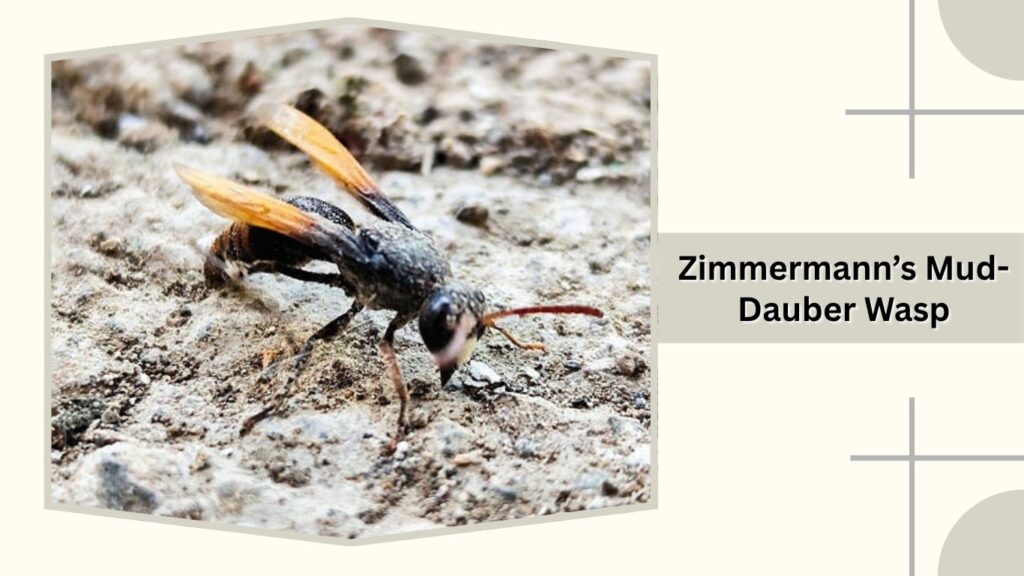
The Zimmermann’s Mud-Dauber Wasp (Chalybion zimmermanni) is a solitary blue mud dauber found mainly in the southern United States and neighboring regions. It resembles the Common Blue Mud Dauber but differs in several structural features and usually has pale hairs on the head and thorax. Females commonly reuse existing mud nests instead of constructing completely new ones.
Identification
- Common Name: Zimmermann’s Mud-Dauber Wasp
- Scientific Name: Chalybion zimmermanni
- Family: Sphecidae
- Color: Metallic blue to blue-black
- Female Size: Around 20 mm
- Body: Slender with a narrow waist
- Prey: Spiders
- Lifestyle: Solitary
Habitat and Distribution
Zimmermann’s Mud-Dauber Wasps occur primarily across the southern United States, ranging from the Southeast west toward Arizona and nearby regions. They are often associated with buildings, gardens, woodland edges, and other places where abandoned mud nests or suitable cavities are available.
Behavior and Diet
Females commonly renovate old Sceliphron nests by softening and reshaping the mud with water. They remove old material and stock the chambers with freshly paralyzed spiders. Adults obtain their own energy from nectar and other sugary plant secretions.
Lifespan and Lifecycle
The female places an egg in a chamber filled with spiders and seals the nest. The larva consumes the stored prey, grows, and eventually pupates. After metamorphosis, the new adult breaks out of the nest and begins feeding and reproducing independently.
10. Aztec Mud Wasp
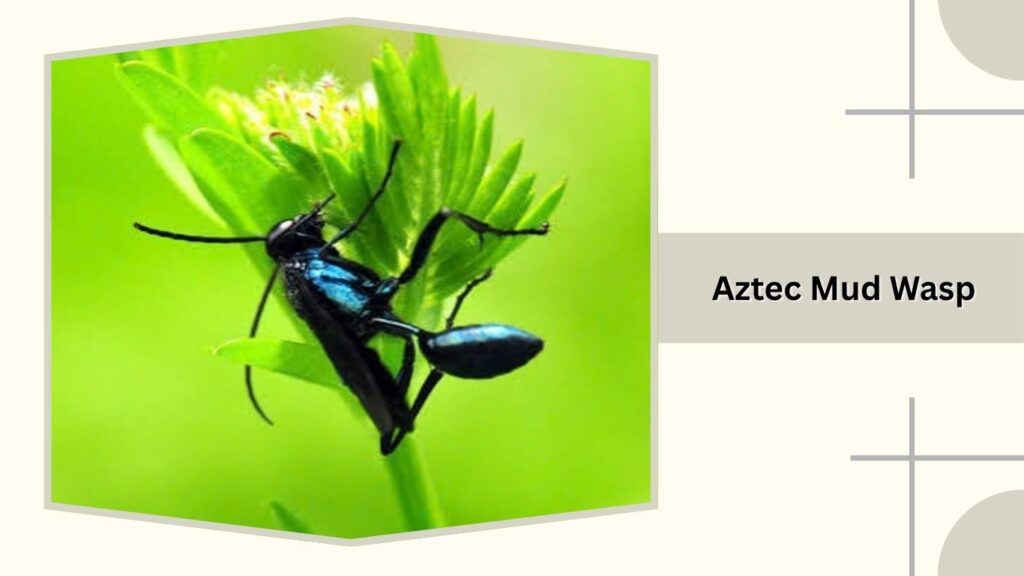
The Aztec Mud Wasp (Chalybion zimmermanni aztecum) is a geographic form of Zimmermann’s Mud-Dauber Wasp. It belongs to the blue mud-dauber genus Chalybion and can be recognized by its metallic coloration, pale body hairs, and relatively clear wings. It occurs primarily in Mexico and the southwestern United States.
Identification
- Common Name: Aztec Mud Wasp
- Scientific Name: Chalybion zimmermanni aztecum
- Family: Sphecidae
- Color: Metallic blue
- Body Hair: Whitish, especially on the head and thorax
- Wings: Relatively clear
- Waist: Long and narrow
- Lifestyle: Solitary
Habitat and Distribution
The Aztec Mud Wasp occurs mainly in Mexico and extends north into parts of Arizona, New Mexico, Texas, Utah, and nearby areas. It favors warm habitats where spider prey, flowers, nesting cavities, and mud-dauber nests are available.
Behavior and Diet
Like related blue mud daubers, females may reuse abandoned nests constructed by other mud-building wasps. They hunt spiders, immobilize them with a sting, and carry them back to individual brood cells. Adults typically feed on nectar and other sugary substances.
Lifespan and Lifecycle
An egg is laid inside a prepared chamber containing spider prey. The larva feeds on the spiders until fully developed and then enters the pupal stage. It remains protected inside the nest until metamorphosis is complete and the adult is ready to emerge.
11. Oriental Blue Mud Dauber
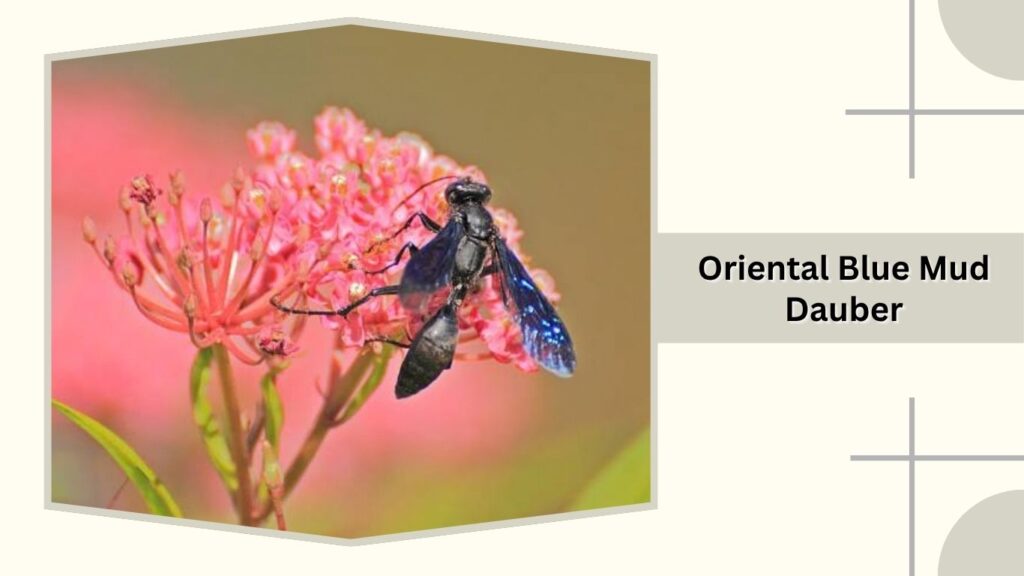
The Oriental Blue Mud Dauber (Chalybion bengalense), also widely called the Oriental Mud-Dauber Wasp, is a metallic blue solitary wasp native to the Indo-Malayan region and nearby areas. It has also been introduced to several locations outside its original range. Females commonly occupy pre-existing cavities and abandoned nests rather than building entire mud structures from scratch.
Identification
- Common Name: Oriental Blue Mud Dauber
- Scientific Name: Chalybion bengalense
- Family: Sphecidae
- Color: Metallic blue
- Wings: Semi-transparent and brownish
- Body Hair: Fine whitish hairs
- Waist: Narrow and elongated
- Prey: Spiders
Habitat and Distribution
The species occurs widely across South and Southeast Asia, Australia, New Guinea, and numerous tropical islands. Records also exist from Bangladesh, India, Sri Lanka, Thailand, Malaysia, Indonesia, Japan, and other countries, while introduced populations have appeared in parts of Africa and southern Europe.
Behavior and Diet
Females use holes in walls, wood, plant stems, or abandoned nests of other wasps. A brood cell may contain numerous paralyzed spiders. The female lays an egg on one of the stored spiders and seals the chamber with mud or other available material.
Lifespan and Lifecycle
After hatching, the larva consumes the stored spiders and remains safely enclosed while developing. It eventually pupates inside the chamber. Once metamorphosis is complete, the adult emerges and begins visiting flowers, mating, and searching for new nesting sites.
12. Mediterranean Mud Dauber
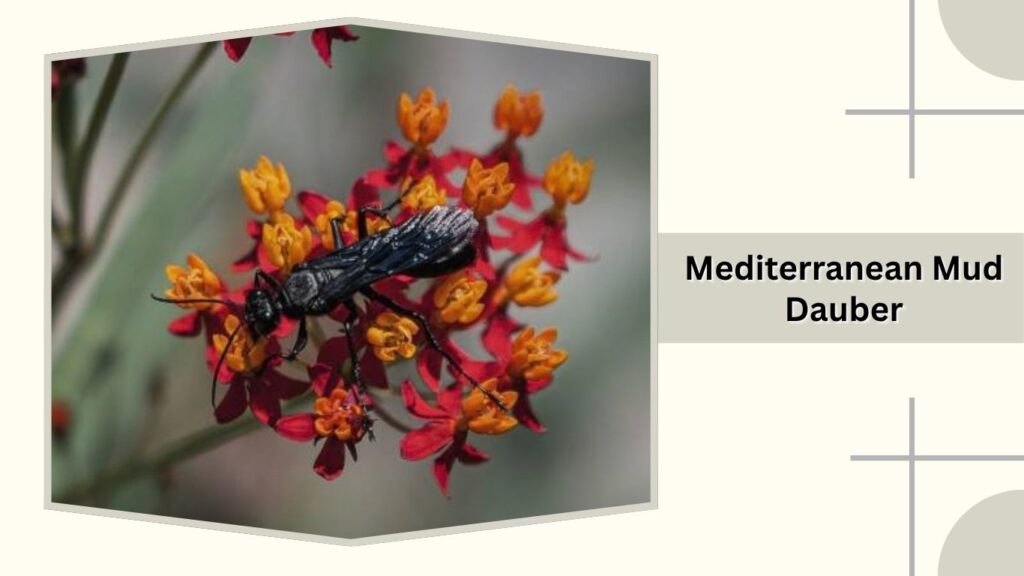
The Mediterranean Mud Dauber (Sceliphron spirifex) is a large solitary wasp associated with southern Europe, Africa, and the Mediterranean region. It has a dull black body combined with a striking yellow waist and yellow markings on the legs. Females construct multi-celled nests from mud and often attach them to buildings or other sheltered structures.
Identification
- Common Name: Mediterranean Mud Dauber
- Scientific Name: Sceliphron spirifex
- Family: Sphecidae
- Female Size: Roughly 22–29 mm
- Body Color: Dull black
- Waist: Long and yellow
- Legs: Black with yellow markings
- Wings: Mostly clear
Habitat and Distribution
This species occurs across large areas of Africa and southern Europe, including Mediterranean countries. It can inhabit natural rocky environments as well as villages, farms, and cities. It is strongly associated with human structures and may build nests on walls, windows, bridges, and sheltered parts of houses.
Behavior and Diet
Females collect wet mud and construct several adjacent tubular brood cells. Once a cell is complete, they hunt spiders, paralyze them, and carry them back to the nest. Adults generally visit flowers and other sources of sugar for their own food.
Lifespan and Lifecycle
A female fills each brood chamber with several spiders and deposits an egg before sealing it. The larva feeds on the spider supply and then pupates. The hardened mud provides protection until the new adult emerges and begins its independent life.
13. Neotropical Mud Dauber
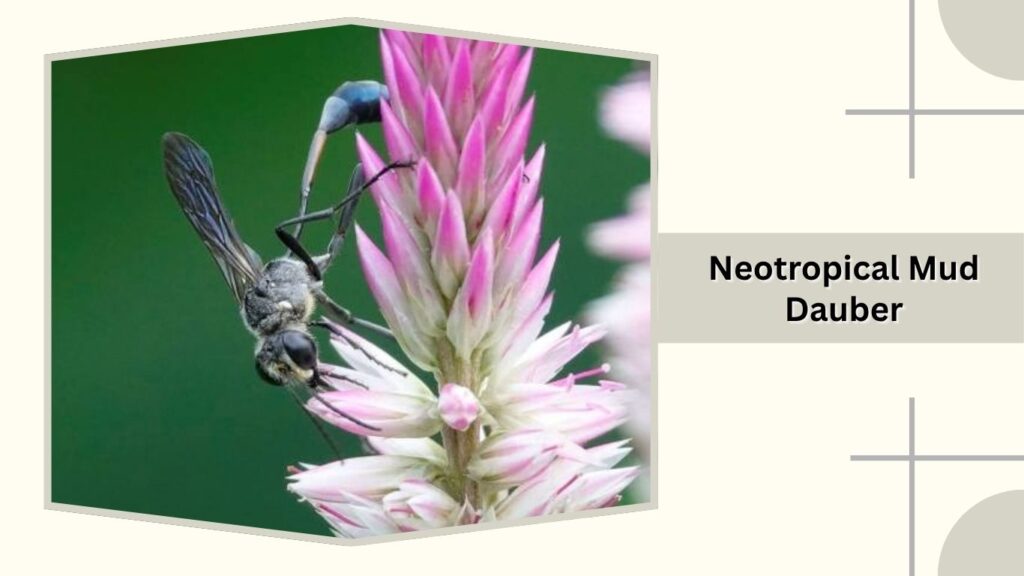
The Neotropical Mud Dauber (Sceliphron fistularium) is a widespread spider-hunting mud wasp of Central and South America. Its nests can contain numerous sausage-shaped cells positioned side by side. The species is well adapted to warm environments and frequently attaches nests to walls, wires, buildings, and other protected surfaces.
Identification
- Common Name: Neotropical Mud Dauber
- Scientific Name: Sceliphron fistularium
- Family: Sphecidae
- Body: Slender and thread-waisted
- Nest: Multiple elongated mud cells
- Lifestyle: Solitary
- Prey: Mainly spiders
- Habitat: Tropical and subtropical environments
Habitat and Distribution
The species occurs widely across the Neotropical region. Records include Mexico, Guatemala, Costa Rica, Panama, Trinidad, and most countries of South America. It is found in both natural environments and human-modified habitats.
Behavior and Diet
Females construct nests containing anywhere from a small number to dozens of mud cells. Research on nests from Brazil and Colombia found brood cells provisioned largely with orb-weaving spiders in the family Araneidae. Adults feed primarily on nectar and other sugar sources.
Lifespan and Lifecycle
Each completed chamber contains an egg and a supply of paralyzed spiders. The larva feeds until mature and then pupates within the cell. Studies of collected nests have documented adults emerging after completing their development inside these protected mud chambers.
14. Tropical American Mud Dauber
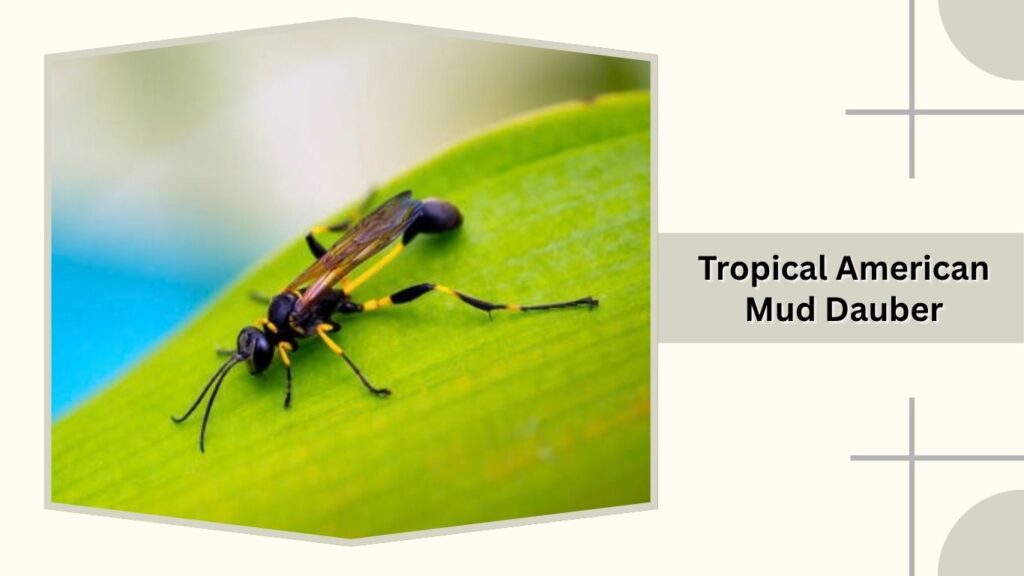
The Tropical American Mud Dauber (Sceliphron asiaticum) is a solitary spider-hunting wasp native to the Neotropics despite its scientific name suggesting Asia. It occurs throughout much of South America and the Caribbean. The species typically has a dark body with yellow markings and constructs mud nests containing prey for its larvae.
Identification
- Common Name: Tropical American Mud Dauber
- Scientific Name: Sceliphron asiaticum
- Family: Sphecidae
- Head: Black
- Thorax: Black with yellow markings
- Waist: Long and slender
- Legs: Yellow and black
- Prey: Spiders
Habitat and Distribution
This species is native to South America and the Caribbean, with records from countries including Brazil, Colombia, Ecuador, Peru, Venezuela, Bolivia, Paraguay, Uruguay, Guyana, Suriname, and Trinidad and Tobago. In Trinidad, it tends to favor relatively dry and less heavily forested areas.
Behavior and Diet
Females collect mud to construct individual brood chambers and search surrounding vegetation for spiders. Captured spiders are paralyzed and placed inside the nest as larval provisions. Adult wasps depend largely on nectar and other readily available carbohydrates.
Lifespan and Lifecycle
Once a chamber has been stocked with spiders, the female adds an egg and closes it. The larva feeds within the protected nest and eventually pupates. Developmental mortality can result from parasitoid wasps and flies, but individuals that successfully complete metamorphosis emerge as adults.
15. Jamaican Mud Dauber
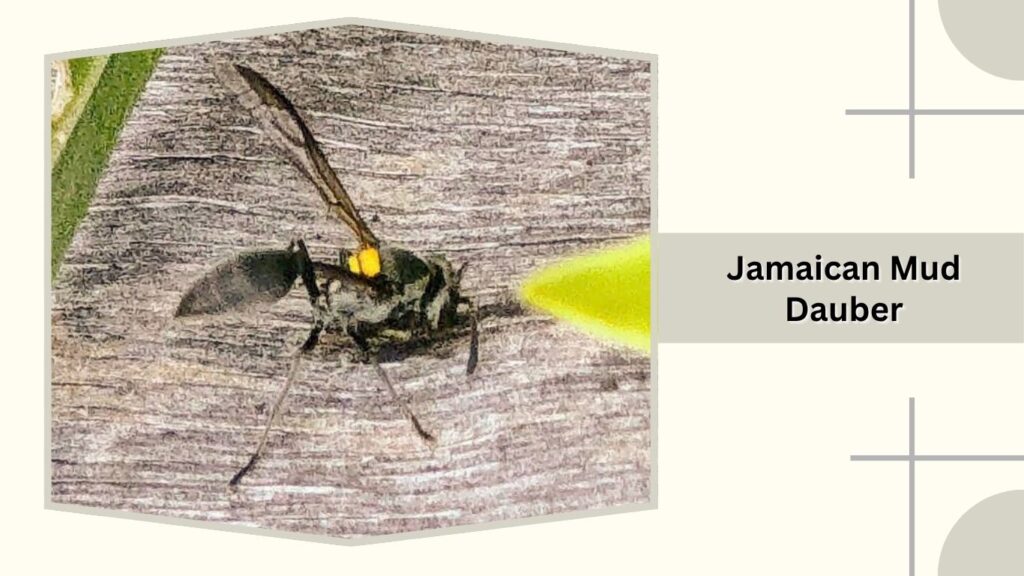
The Jamaican Mud Dauber (Sceliphron jamaicense) is a solitary mud-building wasp occurring in Mexico and parts of the Caribbean. It is capable of living in dry environments as well as more tropical habitats. Like other members of Sceliphron, females create clustered mud brood cells and supply them with spiders for their offspring.
Identification
- Common Name: Jamaican Mud Dauber
- Scientific Name: Sceliphron jamaicense
- Family: Sphecidae
- Body: Long and slender
- Waist: Thread-like
- Nest Material: Mud
- Prey: Spiders
- Lifestyle: Solitary
Habitat and Distribution
The species has been recorded from Mexico, Cuba, Jamaica, Hispaniola, the Bahamas, Little Cayman, and other Caribbean locations. Populations also occur in relatively dry environments such as Baja California Sur, demonstrating that the species can tolerate a wide range of climatic conditions.
Behavior and Diet
Females gather mud and form clusters of individual brood cells. Spider prey is paralyzed and stored inside before the female seals the chamber. Old nests may later be reused by other solitary wasps, including Trypoxylon species and Common Blue Mud Daubers.
Lifespan and Lifecycle
The larva develops inside its mud chamber by consuming the spiders provided by its mother. It later pupates within the nest. Research in Baja California found that some brood mortality occurred during the pupal stage, while successful individuals completed development and emerged as adults.
16. Clayman’s Mud Dauber
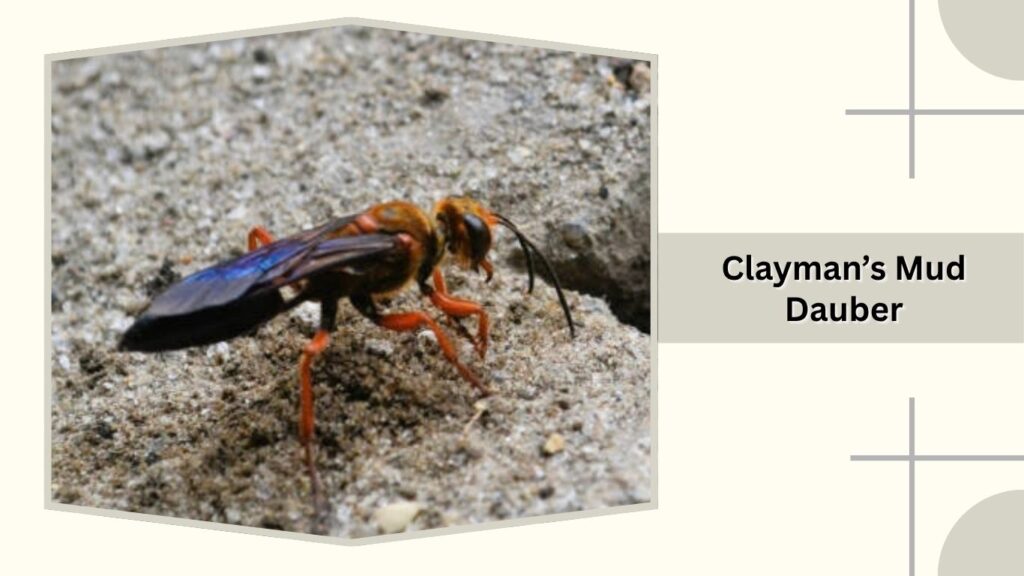
The Clayman’s Mud Dauber (Sceliphron assimile), also called the Black-Legged Mud-Dauber, is a solitary spider-hunting wasp found from southern Texas through Mexico and Central America into the West Indies. It resembles the familiar Black-and-Yellow Mud Dauber but can be distinguished partly by its much darker hind legs.
Identification
- Common Name: Clayman’s Mud Dauber
- Scientific Name: Sceliphron assimile
- Family: Sphecidae
- Body: Slender and strongly narrow-waisted
- Color: Mostly black with yellow markings
- Hind Legs: Predominantly black
- Nest: Multi-celled mud structure
- Prey: Spiders
Habitat and Distribution
Clayman’s Mud Daubers occur from southern Texas to Panama and throughout parts of the West Indies. They favor warm environments and commonly attach nests beneath bridges, building eaves, rock overhangs, and other shaded, protected surfaces.
Behavior and Diet
Females construct nests containing several individual cells and hunt spiders to provision each chamber. Adults feed mainly on nectar. Each female works independently rather than cooperating in a social colony.
Lifespan and Lifecycle
A female places an egg in a cell containing paralyzed spiders before sealing it with mud. The larva consumes the stored prey, grows, and enters the pupal stage. After metamorphosis, the mature wasp breaks through the nest and emerges as an adult.
17. Coromandel Mud Dauber
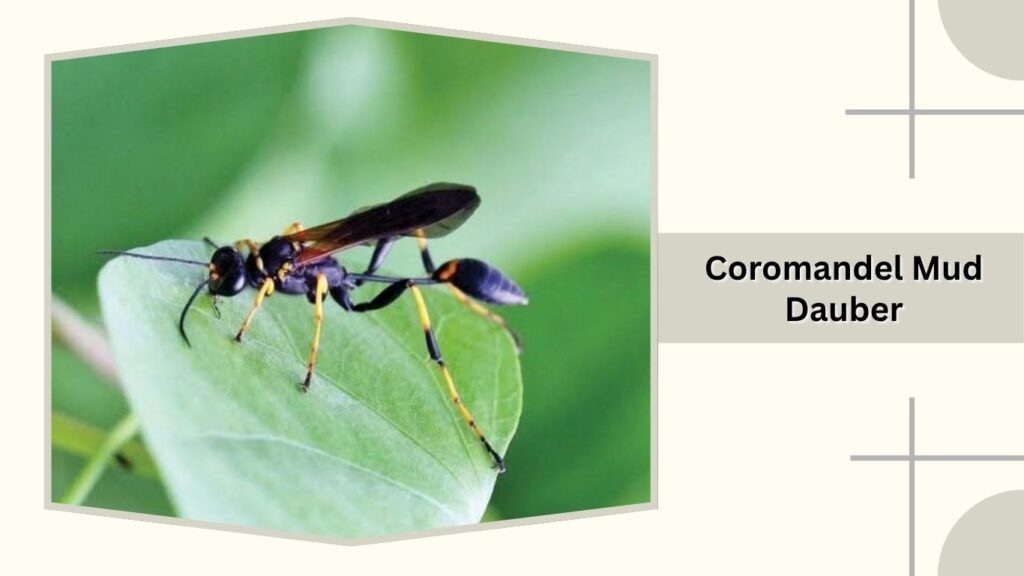
The Coromandel Mud Dauber (Sceliphron coromandelicum) is a solitary Asian mud dauber named after India’s Coromandel Coast, where the original specimen was collected. Females build protected mud nests and supply their offspring with paralyzed spiders, particularly orb-weavers and jumping spiders.
Identification
- Common Name: Coromandel Mud Dauber
- Scientific Name: Sceliphron coromandelicum
- Family: Sphecidae
- Body: Slender and long-waisted
- Abdomen: Mainly black
- Petiole: Yellow to yellowish-brown
- Pronotum: May have a yellowish-brown band
- Nest: Subcylindrical mud cells
Habitat and Distribution
The species occurs across parts of South and Southeast Asia, including Bangladesh, India, Cambodia, Laos, Malaysia, Myanmar, Sri Lanka, and Thailand. In India it has been documented across numerous states and can nest readily around human habitations.
Behavior and Diet
Females select dry, sheltered locations and construct groups of mud cells. Each cell is stocked with several spiders. Recorded prey includes jumping spiders, clubionid spiders, and orb-weavers. Adults generally rely on flower nectar for their own energy.
Lifespan and Lifecycle
After provisioning a chamber, the female lays an egg and seals the opening. The larva consumes the spiders and then pupates within the nest. One documented eight-cell nest was completed within several days, with adults emerging about a month after construction began.
18. Eurasian Mud Dauber
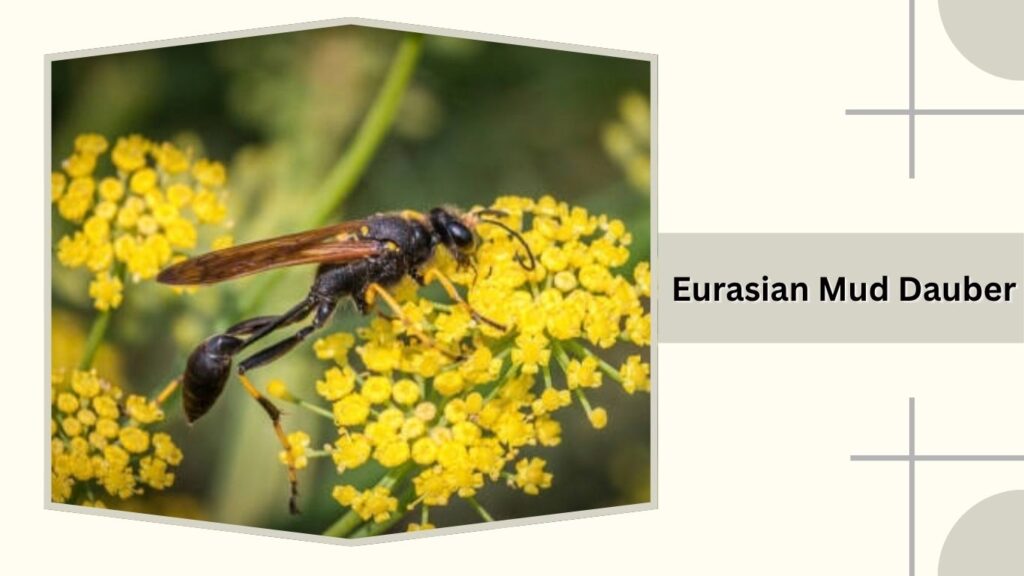
The Eurasian Mud Dauber (Sceliphron destillatorium) is a widespread mud-building wasp occurring through parts of Europe and Asia. It is a classic member of Sceliphron, constructing mud cells in sheltered locations and hunting spiders to feed its larvae. Its range has also expanded into additional parts of Europe in recent decades.
Identification
- Common Name: Eurasian Mud Dauber
- Scientific Name: Sceliphron destillatorium
- Family: Sphecidae
- Body: Slender and thread-waisted
- Color: Dark with yellow markings
- Nest: Multi-celled mud structure
- Adult Food: Flower nectar
- Larval Food: Spiders
Habitat and Distribution
This species occurs across the southern Palearctic and extends through parts of Central and Eastern Europe and Asia. Records include countries such as Albania, Belarus, Poland, Lithuania, Ukraine, Turkey, and parts of Central Asia. It has also been documented from the Indian subcontinent.
Behavior and Diet
Females construct mud cells and provision them with paralyzed spiders. Studies in Ukraine found orb-weavers, crab spiders, and cobweb spiders among the prey, with orb-weavers being especially common. Adults primarily obtain their nutrition from flower nectar.
Lifespan and Lifecycle
Each brood cell contains an egg and a collection of spiders. The larva consumes the stored prey before pupating. The new adult eventually emerges from the hardened mud chamber after completing metamorphosis.
19. Javan Mud Dauber
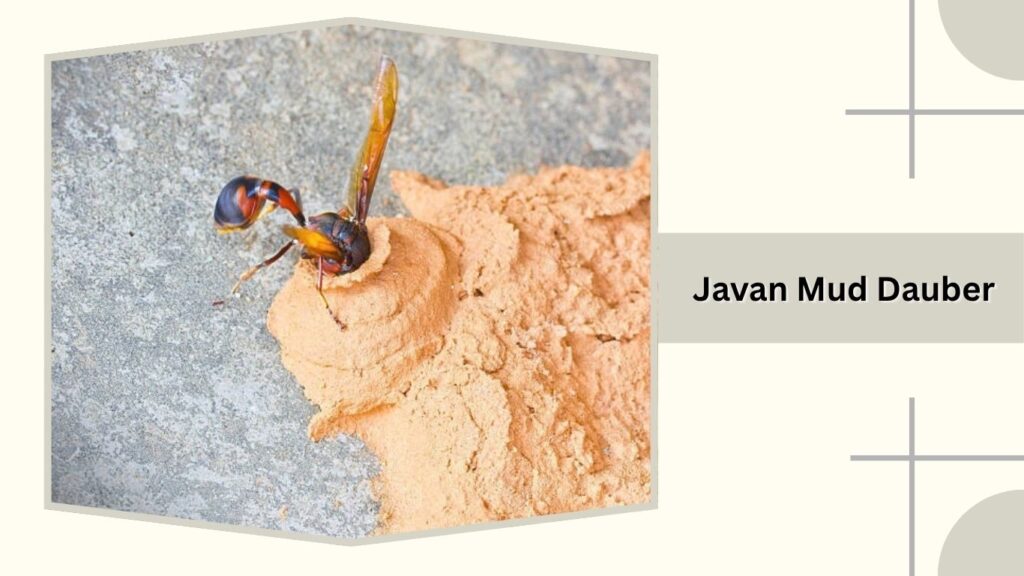
The Javan Mud Dauber (Sceliphron javanum) is a solitary mud-building wasp associated mainly with the Oriental and Australasian regions. Like other Sceliphron species, it has a strongly elongated waist and relies on mud construction to provide safe brood chambers for its developing offspring.
Identification
- Common Name: Javan Mud Dauber
- Scientific Name: Sceliphron javanum
- Family: Sphecidae
- Body: Long and slender
- Waist: Extremely narrow and elongated
- Color: Dark with yellow or reddish markings depending on form
- Nest Material: Mud
- Lifestyle: Solitary
Habitat and Distribution
The species and its geographic forms occur through portions of South and Southeast Asia and the Australasian region. Records include India, Vietnam, Indonesia, and nearby areas. Some forms have been documented nesting in tropical forest regions as well as environments affected by human activity.
Behavior and Diet
Females independently gather wet soil and transport small portions of mud to protected nesting sites. As is characteristic of Sceliphron, brood cells are provisioned with spiders rather than insects such as caterpillars. Adults use nectar as an important energy source.
Lifespan and Lifecycle
The female completes a mud cell, stocks it with immobilized spiders, and deposits an egg. The larva hatches inside the chamber and feeds without additional maternal care. It eventually pupates and emerges as an adult after metamorphosis is complete.
20. Australasian Mud Dauber
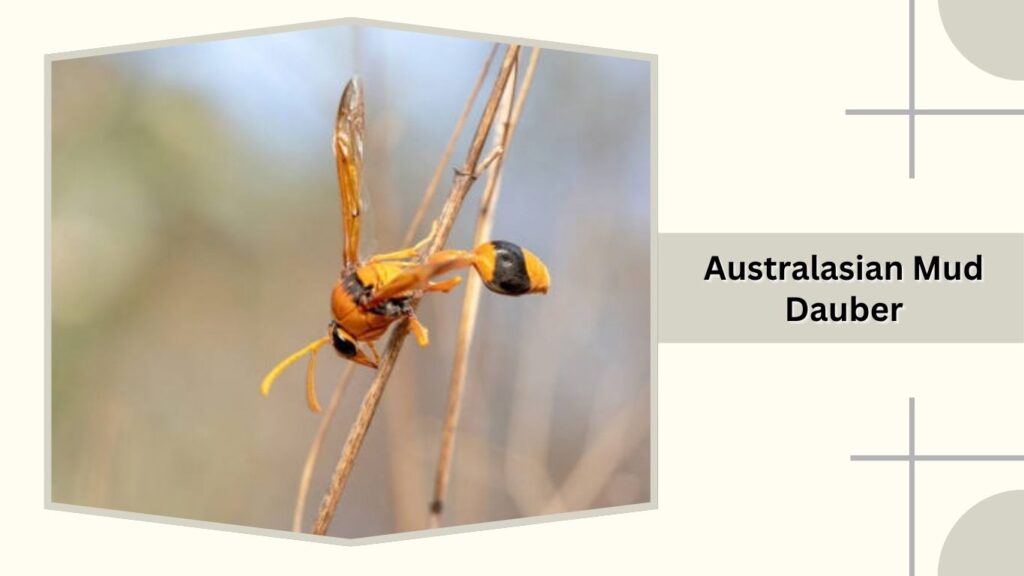
The Australasian Mud Dauber (Sceliphron intrudens) is another solitary member of the spider-hunting mud-dauber genus Sceliphron. It is associated principally with the Oriental and Australasian biogeographic regions. Like its relatives, it combines distinctive thread-waisted anatomy with mud nest construction and specialized spider hunting.
Identification
- Common Name: Australasian Mud Dauber
- Scientific Name: Sceliphron intrudens
- Family: Sphecidae
- Body: Slender
- Waist: Long and thread-like
- Wings: Narrow and transparent to smoky
- Nest Material: Wet mud
- Lifestyle: Solitary
Habitat and Distribution
Sceliphron intrudens occurs mainly in the Oriental and Australasian regions. It is associated with warm climates where water, workable soil, spiders, and protected nesting surfaces are available.
Behavior and Diet
As with other members of Sceliphron, females construct mud brood cells in sheltered situations and provision them with spiders. Each female is responsible for collecting mud, hunting prey, laying eggs, and sealing the finished chambers. Adults primarily obtain carbohydrates from flowers.
Lifespan and Lifecycle
The lifecycle includes egg, larva, pupa, and adult. After hatching, the larva consumes the spiders stored by its mother. It then pupates within the hardened nest until development is complete. The adult eventually opens a passage through the mud and leaves the brood chamber.
21. African Plant-Stem Mud Dauber
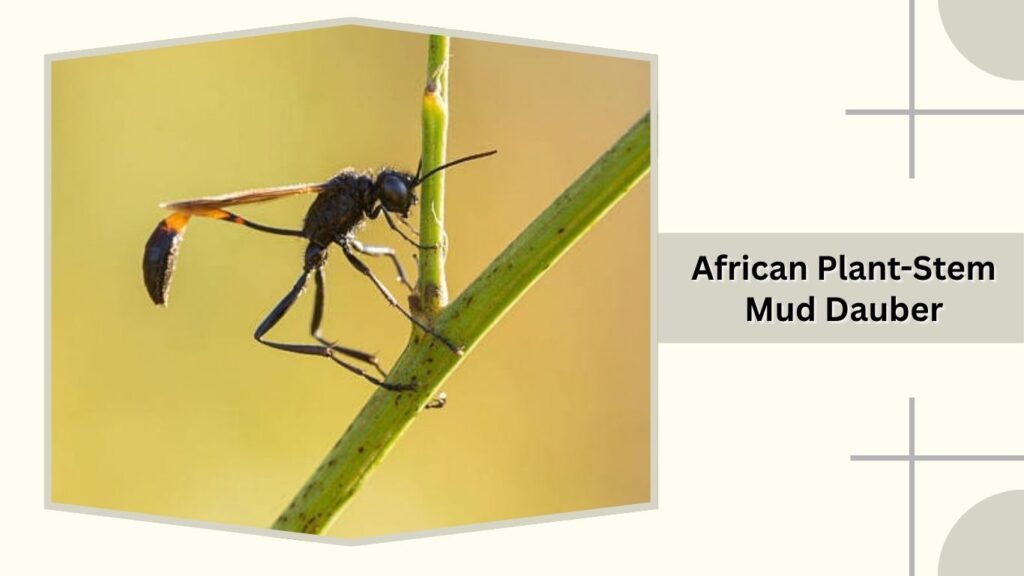
The African Plant-Stem Mud Dauber (Sceliphron quartinae) is an African member of the mud-dauber genus Sceliphron. It resembles other black-and-yellow mud daubers but is notable for records of females attaching their nests to plant stems, showing that mud daubers are not restricted to buildings, cliffs, and other solid structures.
Identification
- Common Name: African Plant-Stem Mud Dauber
- Scientific Name: Sceliphron quartinae
- Family: Sphecidae
- Body: Slender and long-waisted
- Color: Primarily black with yellow markings
- Wings: Clear to lightly tinted
- Nest: Constructed from mud
- Lifestyle: Solitary
Habitat and Distribution
This species is associated with Africa and occurs in warm environments where spiders and suitable mud sources are available. Females may use vegetation as nesting support, attaching their mud structures directly to plant stems.
Behavior and Diet
Females collect mud, construct individual brood chambers, and hunt spiders for larval provisions. Like other Sceliphron, they are solitary rather than colony-forming. Adults visit flowers and other sugar sources, while spider prey is reserved for their young.
Lifespan and Lifecycle
The female places an egg inside a spider-filled cell and closes the entrance with mud. The larva feeds on the immobilized prey and then pupates. The hardened nest protects the developing wasp until the adult emerges.
22. False Mud Dauber
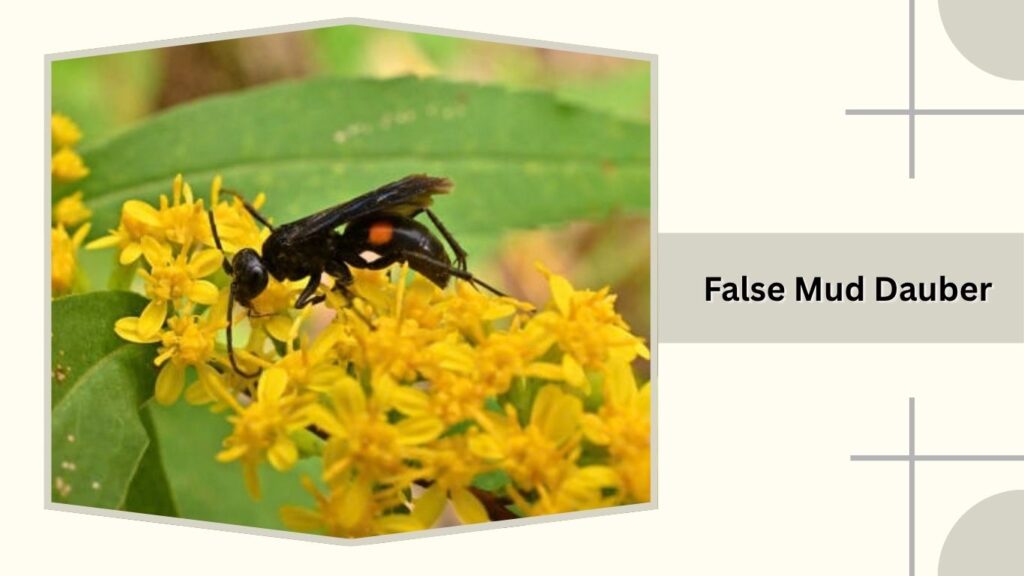
The False Mud Dauber (Chalybion spinolae) is a metallic blue spider-hunting wasp from Africa. Although related to conventional mud daubers, its nesting behavior differs considerably. Females can excavate nest chambers in firm vertical soil banks using water and line their cells with mud rather than constructing the typical exposed Sceliphron mud nest.
Identification
- Common Name: False Mud Dauber
- Scientific Name: Chalybion spinolae
- Family: Sphecidae
- Body Color: Metallic blue
- Female Antennae: Reddish-orange
- Waist: Slender and elongated
- Wings: Darker toward the tips
- Prey: Primarily cobweb spiders
Habitat and Distribution
False Mud Daubers have been recorded from several African countries, including the Democratic Republic of Congo, Ethiopia, Namibia, South Africa, Tanzania, and Zambia. Additional records of the broader taxon occur elsewhere in Africa and parts of South Asia.
Behavior and Diet
Females are specialized spider hunters. Studies in South Africa found them capturing button spiders in the genus Latrodectus as well as false button spiders such as Steatoda. Nest chambers are excavated in vertical soil banks and lined with mud collected using water.
Lifespan and Lifecycle
The female fills a chamber with several paralyzed spiders and deposits a single egg, often on a relatively large spider. The larva consumes the provisions, develops, and pupates inside the protected chamber. It later emerges as an adult and begins the reproductive cycle again.
23. South African Blue Mud Dauber
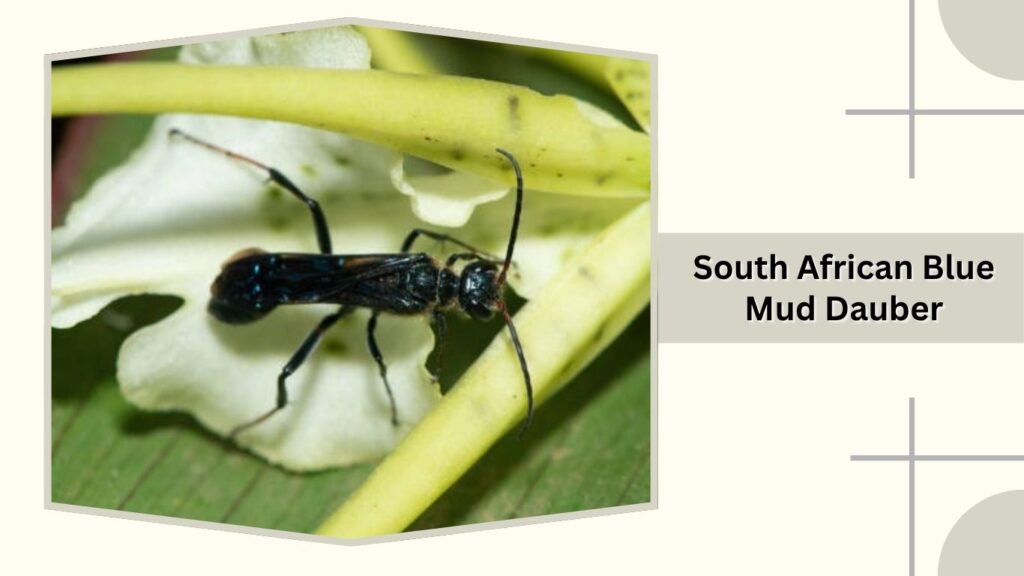
The South African Blue Mud Dauber (Chalybion tibiale) is a solitary spider-hunting wasp native to South Africa. It belongs to the same genus as other metallic blue mud daubers and provisions individual brood cells with captured spiders. Females work independently and do not establish colonies with workers or queens.
Identification
- Common Name: South African Blue Mud Dauber
- Scientific Name: Chalybion tibiale
- Family: Sphecidae
- Body: Slender and narrow-waisted
- Color: Metallic blue to blue-green
- Prey: Spiders
- Lifestyle: Solitary
- Nest: Individual provisioned cells
Habitat and Distribution
This species is recorded from South Africa. Like related Chalybion wasps, it occurs where suitable spider prey and protected nesting locations are available. Members of this genus can use cavities in soil banks, wood, or other sheltered sites and seal their brood chambers with mud.
Behavior and Diet
Females actively hunt spiders, paralyze them with their sting, and transport them to the nest. Several prey items may be stored within a single cell. Adults obtain their own energy primarily from nectar and other sugary food sources.
Lifespan and Lifecycle
The female lays an egg inside a provisioned cell. After hatching, the larva consumes the stored spiders before entering the pupal stage. It remains protected in the chamber until metamorphosis is complete and the adult emerges.
24. Smooth Blue Mud Dauber
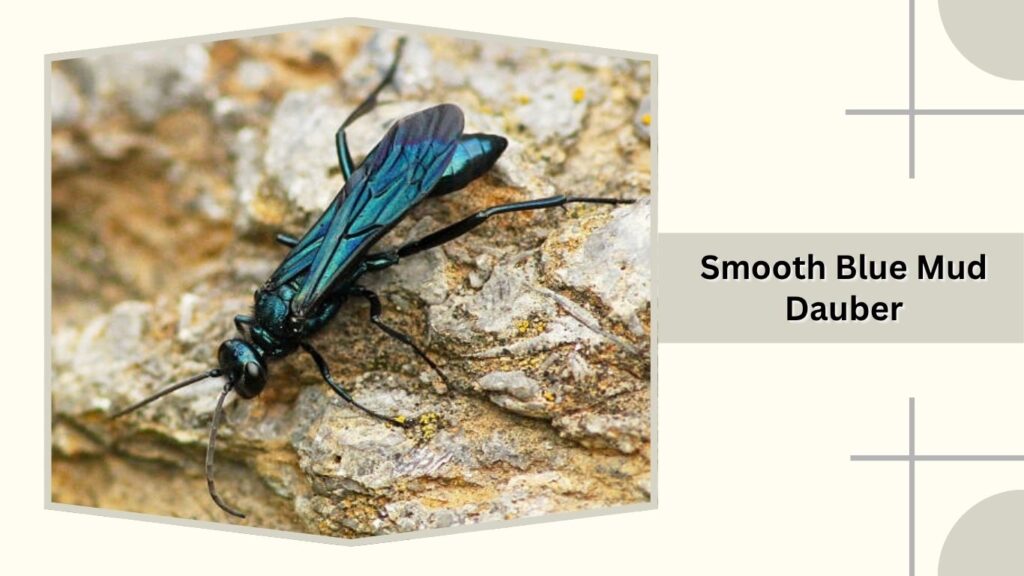
The Smooth Blue Mud Dauber (Chalybion laevigatum) is an Afrotropical member of the blue mud-dauber group. It is a solitary wasp that uses protected cavities for reproduction and provisions its young with spiders. Its distribution extends across several countries in southern and eastern Africa.
Identification
- Common Name: Smooth Blue Mud Dauber
- Scientific Name: Chalybion laevigatum
- Family: Sphecidae
- Body: Long and slender
- Color: Metallic blue or blue-green
- Waist: Narrow
- Prey: Spiders
- Lifestyle: Solitary
Habitat and Distribution
The species has been recorded from Botswana, Ethiopia, Mozambique, Namibia, South Africa, Tanzania, and Zanzibar. It can use existing cavities for nesting rather than constructing a large exposed mud structure.
Behavior and Diet
Females hunt spiders and store several within individual brood cells. Research on the genus shows that Chalybion females may use holes in wood or other existing cavities and close completed cells with mud. Adults commonly depend on nectar for energy.
Lifespan and Lifecycle
After preparing and provisioning a chamber, the female deposits an egg. The larva hatches and feeds on the immobilized spiders. Once mature, it pupates inside the nest and later emerges as a fully developed adult.
25. Madagascan Blue Mud Dauber
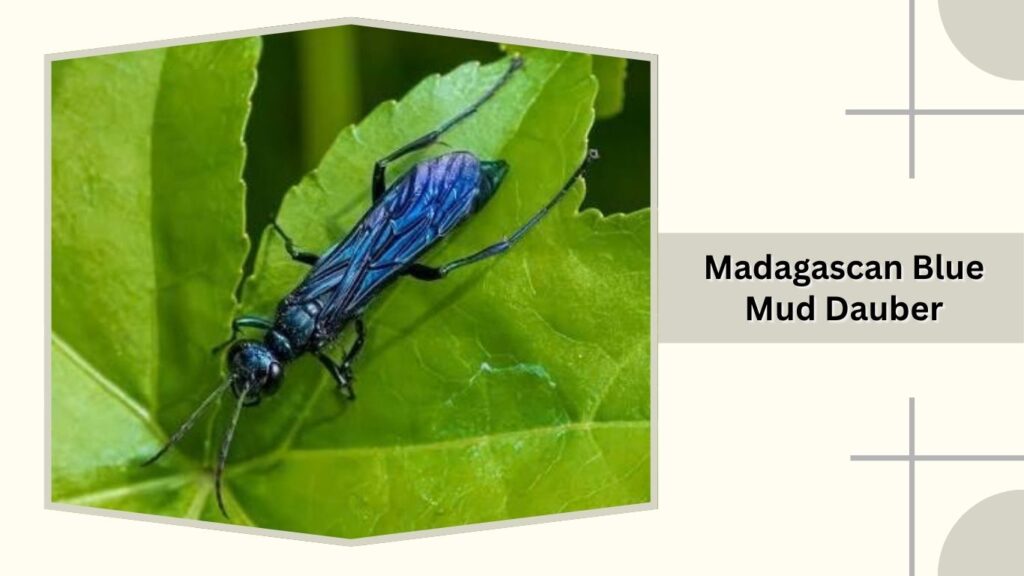
The Madagascan Blue Mud Dauber (Chalybion madecassum) is a solitary spider-hunting wasp associated with Madagascar and the Seychelles. It belongs to the metallic blue Chalybion group, whose females typically use cavities for their brood and seal the completed chambers with mud.
Identification
- Common Name: Madagascan Blue Mud Dauber
- Scientific Name: Chalybion madecassum
- Family: Sphecidae
- Body Color: Metallic blue
- Waist: Slender
- Wings: Transparent to smoky
- Prey: Spiders
- Lifestyle: Solitary
Habitat and Distribution
This species has been documented from Madagascar and the Seychelles Islands. Warm environments with abundant spiders and suitable cavities provide the basic resources required by these solitary wasps.
Behavior and Diet
Females are predators of spiders. As in other Chalybion species, captured prey is paralyzed rather than immediately killed and carried into a brood chamber. Several spiders may be stored to provide sufficient food for one developing larva.
Lifespan and Lifecycle
One egg develops within each provisioned chamber. The larva consumes the stored spiders and grows without additional feeding from its mother. It eventually pupates within the protected cell and later emerges as an adult.
26. East Asian Blue Mud Dauber
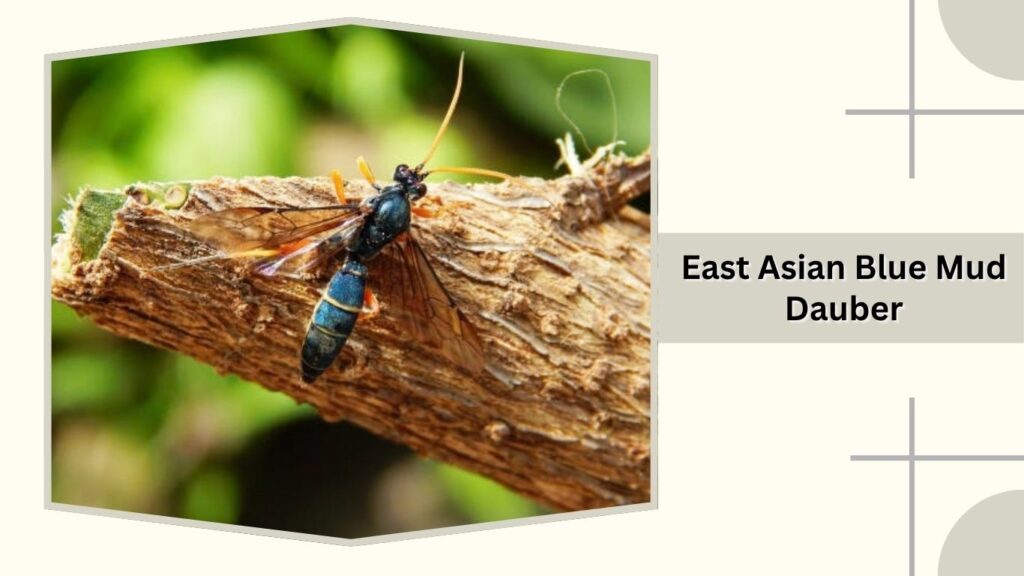
The East Asian Blue Mud Dauber (Chalybion japonicum) is a metallic spider-hunting wasp occurring widely in East and Southeast Asia. It belongs to a genus whose members typically use pre-existing cavities and mud to prepare protected brood cells. Its distribution also includes an introduced or otherwise recorded population in Tanzania.
Identification
- Common Name: East Asian Blue Mud Dauber
- Scientific Name: Chalybion japonicum
- Family: Sphecidae
- Body: Slender
- Color: Metallic blue to blue-green
- Waist: Narrow
- Prey: Spiders
- Lifestyle: Solitary
Habitat and Distribution
The species has been recorded from China, Japan, the Ryukyu Islands, South Korea, Thailand, and Tanzania. Its Asian populations occupy environments where spiders, flowers, and suitable nesting cavities are readily available.
Behavior and Diet
Females hunt spiders and transport them individually to their brood cells. Members of Chalybion may use cavities in wood and other protected spaces, closing completed cells with mud. Adults generally visit flowers for carbohydrates, while spiders are reserved for their offspring.
Lifespan and Lifecycle
The female lays an egg within a spider-filled chamber. The larva feeds on the immobilized prey, grows, and then pupates. When development is complete, the new adult exits its chamber and begins feeding and reproducing independently.
27. African Tubular Mud Dauber
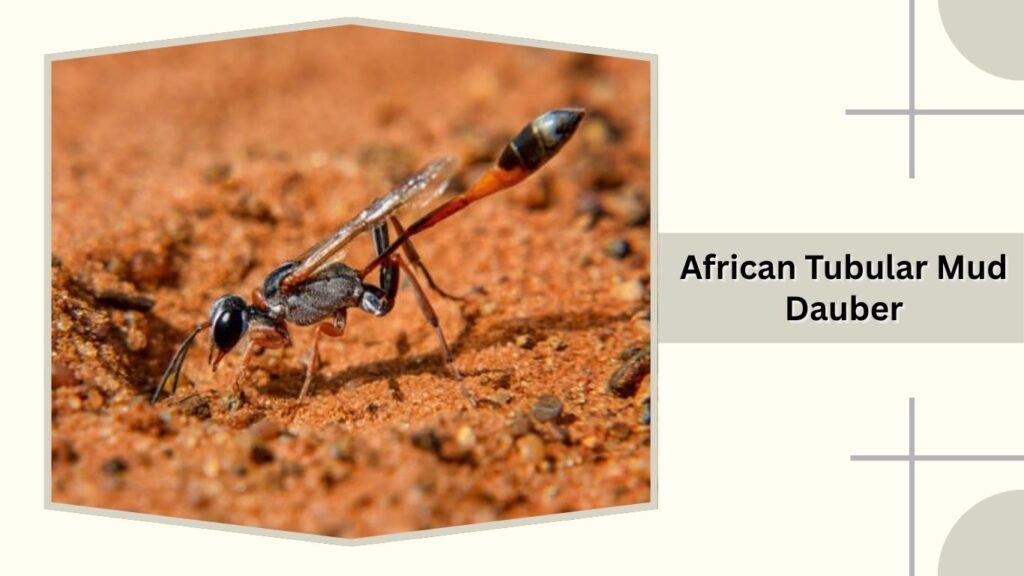
The African Tubular Mud Dauber (Sceliphron fossuliferum) is an African member of the classic mud-dauber genus Sceliphron. Females construct mud brood chambers and provision them with spiders. Like other members of the genus, it is solitary and does not maintain a defensive social colony.
Identification
- Common Name: African Tubular Mud Dauber
- Scientific Name: Sceliphron fossuliferum
- Family: Sphecidae
- Body: Slender
- Waist: Long and thread-like
- Nest: Mud brood cells
- Prey: Spiders
- Lifestyle: Solitary
Habitat and Distribution
The nominate form has been recorded from Angola, the Democratic Republic of Congo, Mozambique, Tanzania, and Uganda. Other geographic forms occur in Gabon, Kenya, Tanzania, and Angola.
Behavior and Diet
Females collect wet soil to construct nesting cells in sheltered locations. Members of Sceliphron commonly build several adjacent mud tubes, each containing spiders and a single developing offspring. Adults feed mainly on nectar.
Lifespan and Lifecycle
After completing a chamber, the female places several paralyzed spiders inside and lays an egg. The cell is then sealed. The larva consumes the spiders, pupates within the nest, and eventually emerges as an adult.
28. Island Mud Dauber
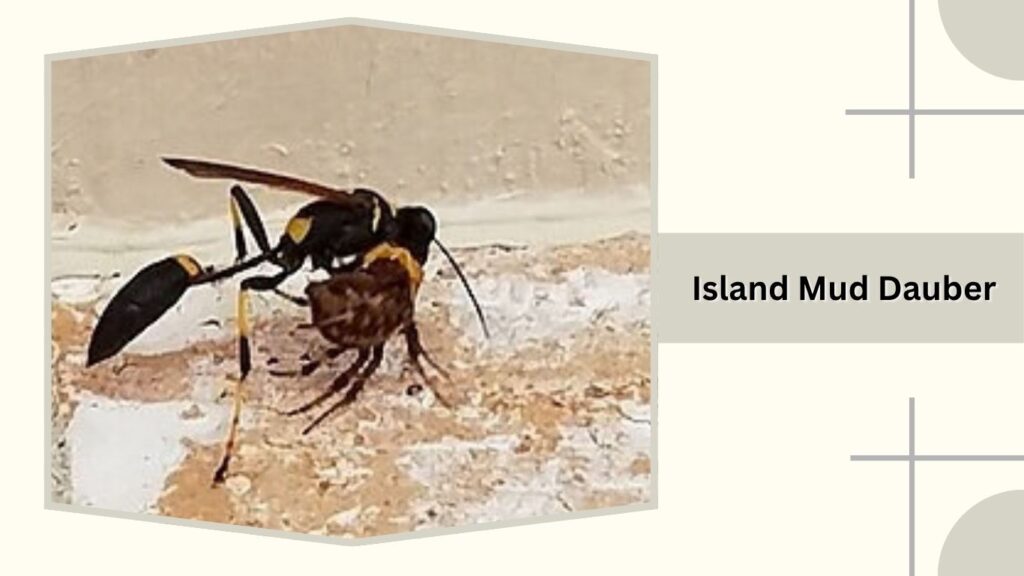
The Island Mud Dauber (Sceliphron fuscum) is a solitary mud-building wasp found on several islands in the Indian Ocean and Pacific region. It belongs to the spider-hunting genus Sceliphron, whose members are famous for constructing groups of tubular mud cells in protected locations.
Identification
- Common Name: Island Mud Dauber
- Scientific Name: Sceliphron fuscum
- Family: Sphecidae
- Body: Long and narrow
- Waist: Thread-like
- Nest Material: Mud
- Prey: Spiders
- Lifestyle: Solitary
Habitat and Distribution
The species has been recorded from Madagascar, Mauritius, Réunion, the Seychelles, and New Caledonia. The type locality is Mauritius, historically called Isle de France.
Behavior and Diet
Like other Sceliphron species, females independently build mud chambers and collect spiders for their offspring. The spiders are paralyzed with the sting and transported to the nest. Adults themselves obtain much of their energy from floral nectar.
Lifespan and Lifecycle
A brood cell receives an egg and several stored spiders before being sealed. The larva feeds on this prey and eventually pupates. The hardened mud protects it throughout development until the adult is ready to emerge.
29. Slender African Mud Dauber
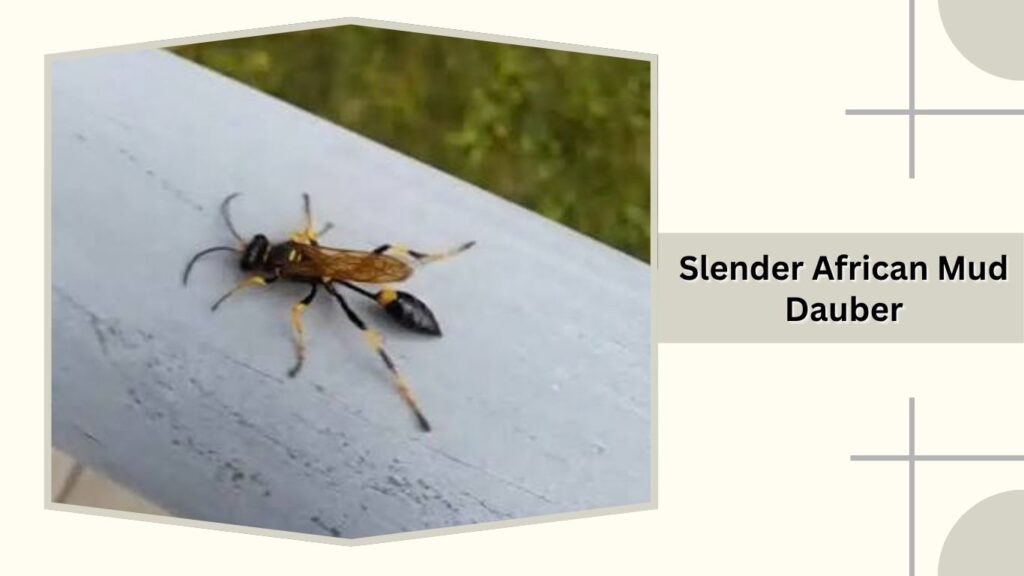
The Slender African Mud Dauber (Sceliphron leptogaster) is a South African member of the mud-dauber genus Sceliphron. It shares the characteristic long waist and solitary nesting lifestyle of its relatives. Females construct mud nests and use spiders as the principal food source for their developing larvae.
Identification
- Common Name: Slender African Mud Dauber
- Scientific Name: Sceliphron leptogaster
- Family: Sphecidae
- Body: Very slender
- Waist: Long and narrow
- Nest Material: Mud
- Prey: Spiders
- Lifestyle: Solitary
Habitat and Distribution
Current distribution records cited by WaspWeb place Sceliphron leptogaster in South Africa. Like other members of its genus, it requires access to wet soil or mud, abundant spider prey, and sheltered sites where brood cells can remain protected.
Behavior and Diet
Females independently construct mud nesting cells. After completing a chamber, they hunt spiders and paralyze them before carrying them back to the nest. Sceliphron species commonly mass-provision each cell with several spiders and lay one egg with the stored food.
Lifespan and Lifecycle
The egg hatches inside the sealed mud chamber. The larva feeds on the spider supply, grows through its immature stages, and then pupates. After metamorphosis, the adult breaks through the nest wall and begins its independent life.
30. Clavate Mud Dauber
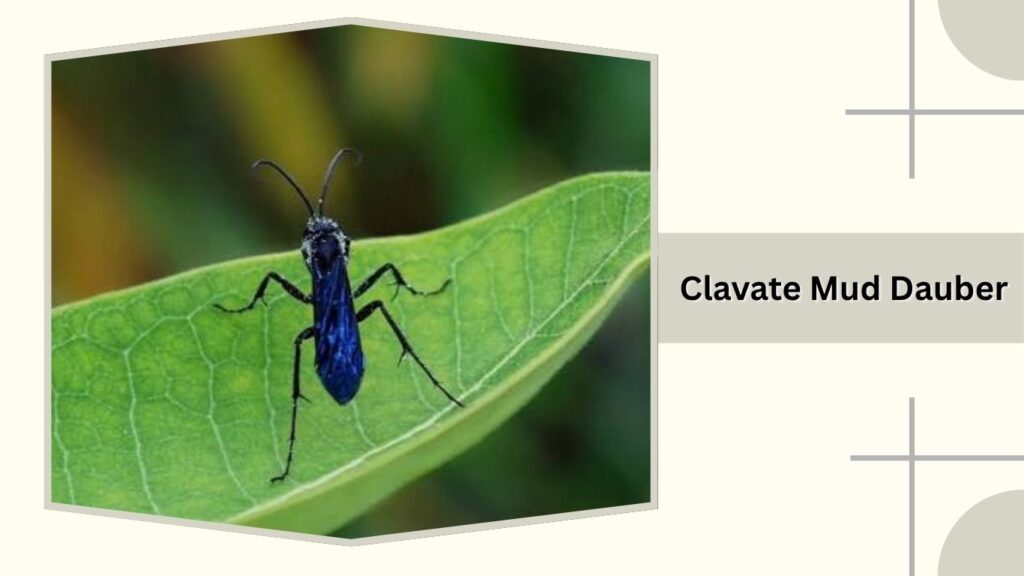
The Clavate Mud Dauber (Trypoxylon clavatum) is a solitary spider-hunting wasp in the family Crabronidae. The species does not have a widely standardized English common name, so “Clavate Mud Dauber” is a useful descriptive name based on its scientific name. Trypoxylon clavatum is a recognized mud-dauber species and is closely related to other cavity- and mud-nesting Trypoxylon wasps.
Identification
- Common Name: Clavate Mud Dauber
- Scientific Name: Trypoxylon clavatum
- Family: Crabronidae
- Body: Long and slender
- Color: Predominantly dark or black
- Waist: Narrow
- Wings: Clear to lightly smoky
- Prey: Spiders
- Lifestyle: Solitary
Habitat and Distribution
This species occurs in North America and uses habitats where suitable nesting cavities, spiders, and mud are available. It may occur around woodland edges, gardens, fields, and human-made structures. Unlike social wasps, individual females prepare and provision their own brood chambers without assistance from a worker colony. Trypoxylon belongs to a group of crabronid wasps commonly associated with mud-dauber nesting behavior.
Behavior and Diet
Female Clavate Mud Daubers hunt spiders and immobilize them with their sting. The captured spiders are transported to brood chambers and stored as food for developing larvae. Adults themselves rely primarily on nectar and other sugary food sources. Their generally solitary behavior means they are much less defensive than colony-forming yellowjackets or hornets.
Lifespan and Lifecycle
A female provides a nesting chamber with spiders and lays an egg inside. After hatching, the larva feeds on the stored prey until fully developed. It then enters the pupal stage within the protected chamber. After completing metamorphosis, the adult emerges and begins feeding, mating, and eventually producing another generation.
FAQs
1. Are Mud Daubers Dangerous to Humans?
Mud daubers are generally not dangerous to people. They are solitary wasps and do not defend large colonies. Although females are capable of stinging, they usually sting only when handled, trapped, or seriously threatened. Extension guidance describes mud daubers as generally nonaggressive.
2. What Do Mud Daubers Eat?
Adult mud daubers mainly consume flower nectar and other sugary substances. Their larvae eat spiders. Females hunt spiders, paralyze them with a sting, and place several inside mud or cavity nests as food for their developing offspring.
3. Where Do Mud Daubers Build Their Nests?
Mud daubers commonly place nests on protected surfaces such as walls, eaves, bridges, barns, sheds, and equipment. Some species make rounded clusters of mud cells, while Organ Pipe Mud Daubers construct long tubular nests. Blue mud daubers may also renovate nests originally built by other species.
4. Do Mud Daubers Kill Spiders?
Mud daubers usually paralyze rather than immediately kill spiders. The female uses her sting to immobilize the prey and then transports it to her nest. The spiders remain available as fresh food for the larva after the egg hatches.
5. Are Mud Daubers Beneficial?
Yes. Mud daubers are beneficial predators because they naturally reduce spider populations and form part of the local food web. They generally cause little trouble for people and are usually best left alone when their nests are in locations where they do not create a practical problem.