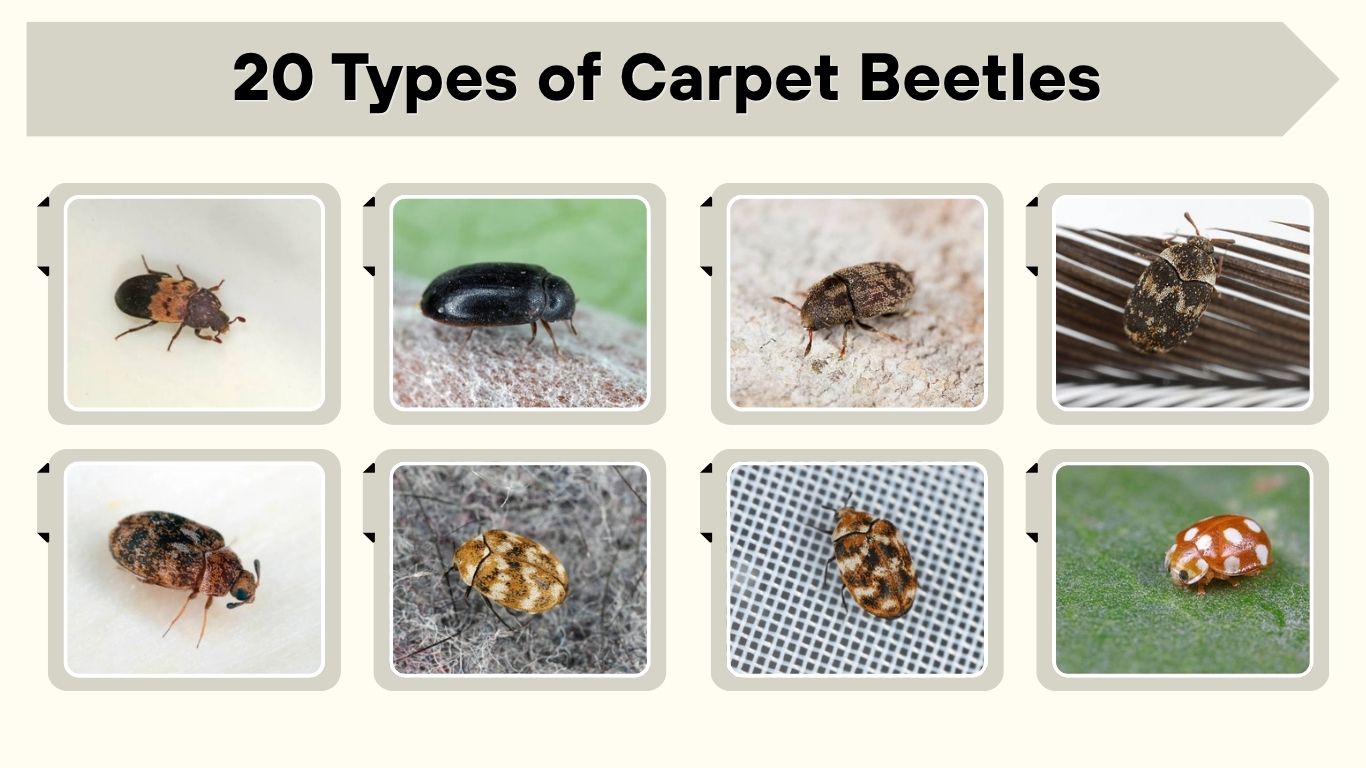
Carpet beetles and other closely related dermestid beetles are small insects commonly found in homes, warehouses, museums, bird nests, and storage areas. While adult beetles are usually harmless, their larvae can damage carpets, wool, feathers, fur, stored foods, dried insects, and other natural materials. Different species vary in color, size, feeding habits, and preferred habitat. This guide covers 20 types of carpet beetles and related dermestid beetles, helping you recognize their appearance, habitat, behavior, diet, and life cycle more easily.
1. Varied Carpet Beetle
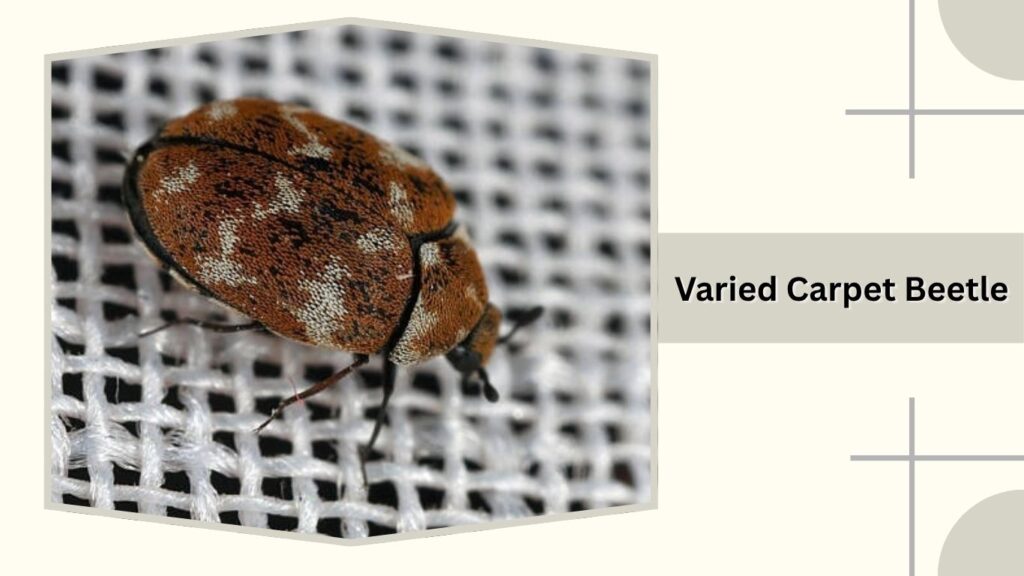
The varied carpet beetle (Anthrenus verbasci) is one of the most common carpet beetles found around homes, museums, warehouses, and other buildings. Adults are small and often noticed near windows or flowers, while the hairy larvae are responsible for most household damage. They can feed on many animal-based materials, making stored fabrics, carpets, feathers, and natural-fiber products vulnerable to infestation.
Identification
- Scientific name: Anthrenus verbasci
- Adult size: About 2–4 mm long
- Shape: Small, rounded to oval body
- Color: Mottled pattern of white, brown, yellow, and black scales
- Larvae: Brown, elongated, and covered with dense hairs
- Antennae: Short with small clubbed tips
- Key sign: Shed larval skins around carpets, closets, furniture, or stored fabrics
Habitat and Distribution
Varied carpet beetles are widely distributed and can live both indoors and outdoors. Adults are commonly found on flowering plants, where they feed on pollen and nectar. Indoors, females look for protected places containing suitable food for their larvae. Infestations may develop beneath furniture, along carpet edges, inside closets, air ducts, attics, or around stored clothing. Bird nests and accumulations of dead insects can also provide suitable breeding sites.
Behavior and Diet
Adult varied carpet beetles generally do not damage household fabrics. The larvae are the destructive stage and feed on materials containing animal proteins. Their diet can include wool, fur, feathers, silk, leather, pet hair, dead insects, and other natural debris. Larvae often avoid bright light and hide in dark, undisturbed areas, which can allow an infestation to remain unnoticed for a long period.
Lifespan and Life Cycle
The life cycle begins when females lay eggs near suitable larval food. After hatching, the larvae pass through several growth stages and may remain in the larval stage for several months, depending on temperature and food availability. Mature larvae eventually pupate, often inside their final larval skin. Adults then emerge and commonly move toward windows or outdoor light. Under favorable conditions, the complete life cycle may take several months to more than a year.
2. Black Carpet Beetle
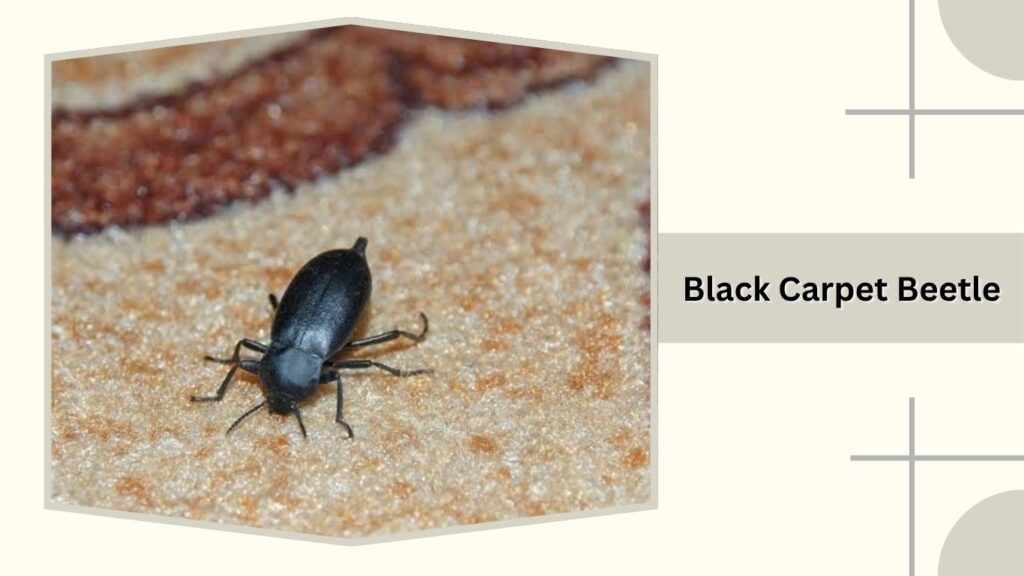
The black carpet beetle (Attagenus unicolor) is a common household pest known for damaging natural fabrics, stored animal products, and other organic materials. Adults are dark-colored and relatively easy to distinguish from patterned carpet beetles. The larvae are the damaging stage and often remain hidden in dark, undisturbed areas where suitable food is available.
Identification
- Scientific name: Attagenus unicolor
- Adult size: About 3–5 mm long
- Color: Dark brown to nearly black
- Shape: Elongated oval body
- Larvae: Brown to golden with a distinctive tuft of hairs at the rear
- Antennae: Short and clubbed
- Common sign: Shed larval skins near damaged fabrics or stored materials
Habitat and Distribution
Black carpet beetles are widely found in homes, warehouses, museums, and buildings containing natural-fiber materials. Indoors, larvae often hide beneath carpets, inside closets, behind baseboards, or in stored clothing. They may also occur in attics where bird nests, dead insects, feathers, or animal remains provide food. Adults can enter buildings through windows and doors, especially during warmer months.
Behavior and Diet
Larvae feed on a wide variety of animal-based materials, including wool, fur, feathers, leather, silk, dried insects, and pet hair. They can also attack some stored foods. Because the larvae prefer dark areas, infestations may remain unnoticed until damage becomes obvious. Adults generally feed on pollen outdoors and do not cause fabric damage.
Lifespan and Life Cycle
Females lay eggs close to suitable larval food. The eggs hatch into hairy larvae that pass through several growth stages. Larval development may last several months and can take longer when food or temperatures are unfavorable. Mature larvae pupate before emerging as adults. Depending on environmental conditions, a complete generation may take roughly several months to more than a year.
3. Common Carpet Beetle
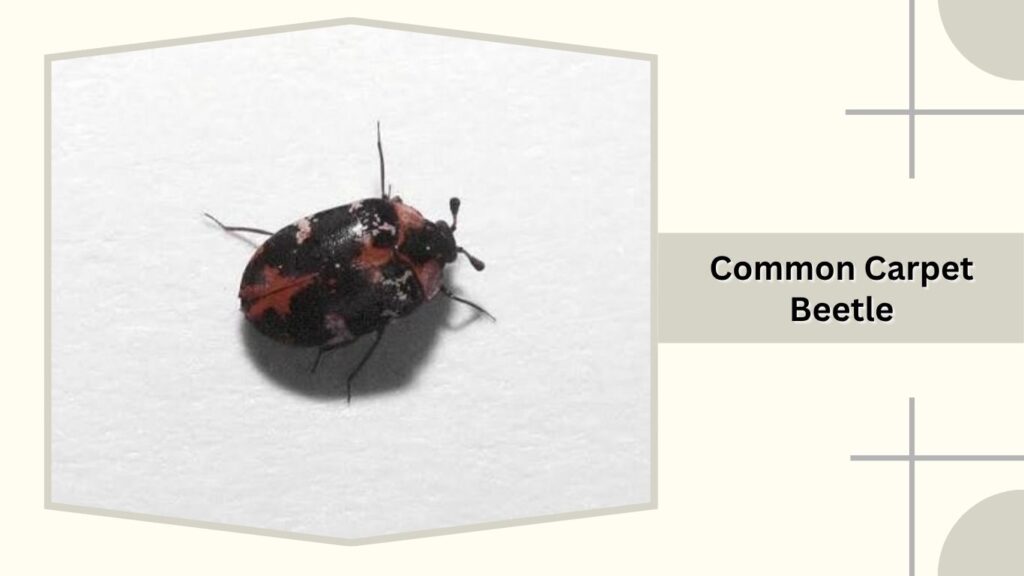
The common carpet beetle (Anthrenus scrophulariae) is a small, patterned beetle frequently found in homes and buildings. Adults are often noticed near windows during spring and summer, while their larvae may damage carpets, upholstery, clothing, feathers, and other animal-derived materials.
Identification
- Scientific name: Anthrenus scrophulariae
- Adult size: About 2.5–4 mm
- Body shape: Rounded or oval
- Color: Patterned with black, white, reddish, or orange scales
- Larvae: Brown, hairy, and elongated
- Adult appearance: Often has a noticeable band of lighter scales
- Signs: Holes in fabrics and discarded larval skins
Habitat and Distribution
Common carpet beetles occur across many temperate regions and are especially associated with human structures. Outdoors, adults visit flowers and feed on pollen. Inside buildings, larvae can occur under carpets, inside furniture, behind wall voids, in closets, or near collections of dead insects. Bird and rodent nests around buildings may also provide suitable breeding material.
Behavior and Diet
The larvae are scavengers that consume materials rich in keratin and other animal proteins. Wool, fur, feathers, hair, silk, and dead insects are common foods. They may also feed on preserved specimens in museums. Adults usually move toward light and are frequently found on windowsills when attempting to leave buildings.
Lifespan and Life Cycle
After mating, females lay eggs in locations where newly hatched larvae will have immediate access to food. The larval stage is usually much longer than the adult stage and may continue for several months. Larvae molt repeatedly as they grow. Pupation occurs in protected locations, after which the adult emerges and eventually seeks flowers or new breeding sites.
4. Furniture Carpet Beetle
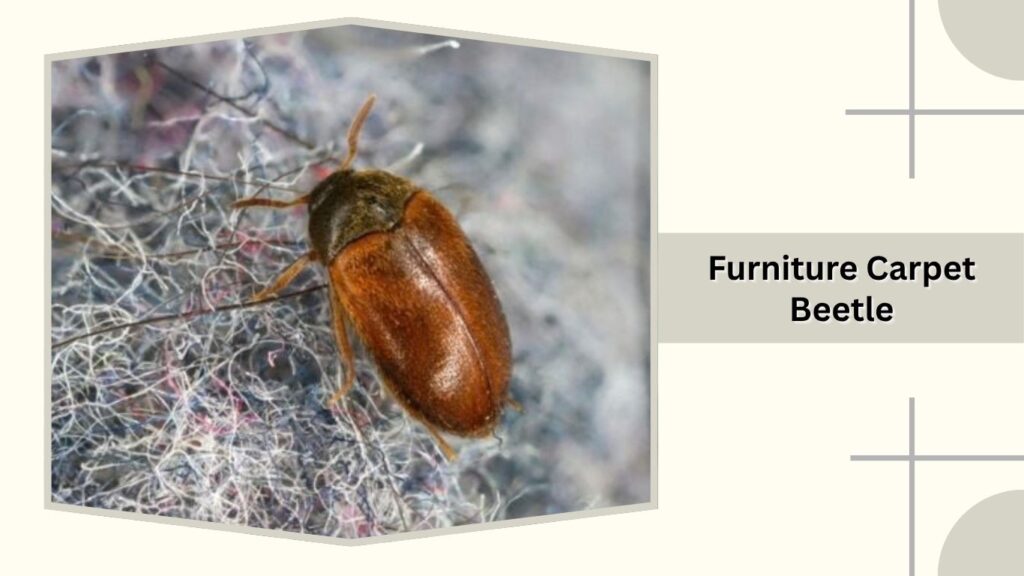
The furniture carpet beetle (Anthrenus flavipes) is an important fabric pest commonly associated with upholstered furniture, carpets, and stored natural materials. Its larvae can cause noticeable damage when populations build up in quiet areas of a home or storage facility.
Identification
- Scientific name: Anthrenus flavipes
- Adult size: Approximately 2–4 mm
- Body shape: Rounded and compact
- Color: Mottled yellow, white, brown, and black scales
- Larvae: Brown, oval to elongated, and densely hairy
- Legs: Often appear yellowish
- Damage signs: Irregular holes and surface feeding on natural fabrics
Habitat and Distribution
Furniture carpet beetles are found in many warm and temperate regions. Indoors, they may infest upholstered chairs, sofas, carpets, mattresses, stored woolens, or closets. Larvae prefer quiet areas where cleaning is infrequent. Outdoors, adults are associated with flowers and may enter houses while searching for protected places to lay eggs.
Behavior and Diet
Larvae feed primarily on animal-based substances such as wool, silk, fur, feathers, hair, leather, and dead insects. Upholstered furniture can provide both shelter and food, particularly when natural stuffing or fabric is present. Adults feed mainly on pollen and nectar and are not responsible for household fabric damage.
Lifespan and Life Cycle
Eggs are laid near suitable food sources and hatch into small, hairy larvae. The larvae grow through several molts while continuously feeding. Development speed depends strongly on temperature, humidity, and food quality. Once fully developed, larvae pupate in a protected area. Adults then emerge, mate, and begin another generation.
5. Brown Carpet Beetle
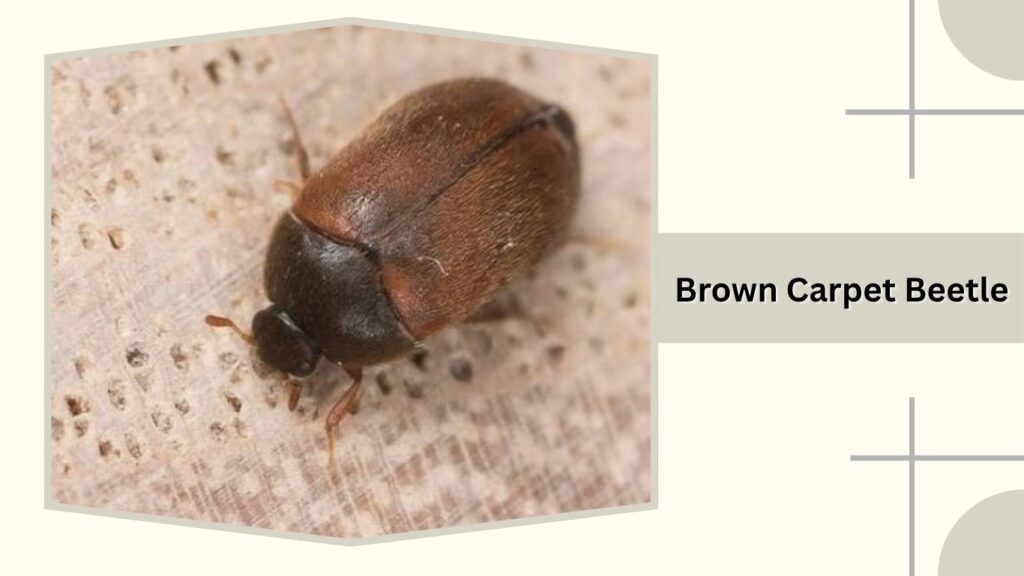
The brown carpet beetle (Attagenus smirnovi) is a small dermestid beetle that can become a household pest, particularly in heated buildings. It is known for feeding on natural fibers and animal-derived materials during its larval stage.
Identification
- Scientific name: Attagenus smirnovi
- Adult size: Usually around 2–5 mm
- Color: Brown body with darker portions
- Shape: Elongated oval
- Larvae: Brownish and covered with fine hairs
- Antennae: Clubbed toward the tip
- Typical evidence: Larval skins and damage around stored natural materials
Habitat and Distribution
Brown carpet beetles are especially associated with indoor environments and can survive well in centrally heated buildings. They may be found beneath carpets, behind furniture, in closets, wall cavities, and storage rooms. They are established in various parts of Europe and have spread through movement of goods and household materials.
Behavior and Diet
The larvae feed on wool, fur, feathers, hair, dead insects, and other dry animal matter. They often remain concealed and may move considerable distances while searching for food. Adults are more active and may be found near windows or light sources. As with other carpet beetles, adults cause little or no damage to household fabrics.
Lifespan and Life Cycle
Females deposit eggs in protected locations containing food for the larvae. Once hatched, larvae pass through numerous molts. Their development can take several months, especially under cooler conditions. Pupation takes place in sheltered areas. Adults emerge afterward, reproduce, and disperse to locate new breeding sites.
6. Two-Spotted Carpet Beetle
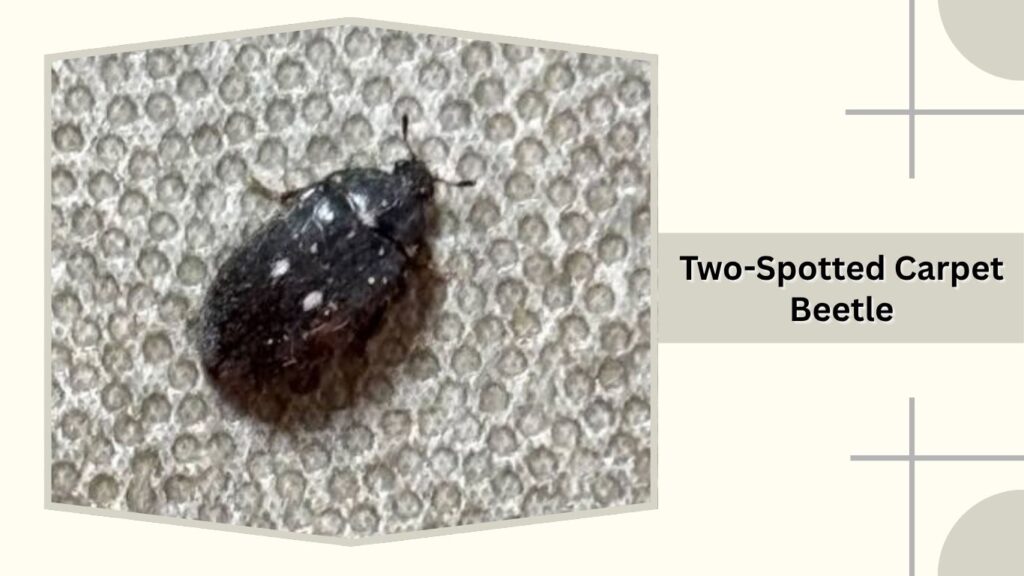
The two-spotted carpet beetle (Attagenus pellio) is a recognizable member of the carpet beetle family. Adults are dark and typically show two pale spots on their wing covers. The larvae are capable of damaging fabrics and other animal-based materials stored inside buildings.
Identification
- Scientific name: Attagenus pellio
- Adult size: About 4–6 mm
- Color: Dark brown to black
- Distinctive marking: One pale or white spot on each wing cover
- Larvae: Brown, elongated, and hairy
- Rear hairs: Long hair tuft near the end of the abdomen
- Body shape: Longer and narrower than many Anthrenus carpet beetles
Habitat and Distribution
Two-spotted carpet beetles occur in homes, warehouses, museums, and other structures where dry animal material is available. Larvae may be found in carpets, closets, stored clothing, bird nests, and accumulations of dead insects. Adults are also found outdoors on flowers and vegetation.
Behavior and Diet
The larvae feed on wool, fur, skins, feathers, dried animal remains, and insects. They prefer dark locations and can survive in undisturbed areas for extended periods. Adults primarily consume pollen and may fly into buildings through open windows. Finding adults indoors can indicate that larvae are developing somewhere nearby.
Lifespan and Life Cycle
Females lay eggs near food materials. After hatching, larvae feed and molt repeatedly before reaching maturity. The larval period may last several months and is generally the longest stage of the life cycle. Pupation occurs in concealed areas, sometimes inside the final larval skin. Adults later emerge and reproduce.
7. Australian Carpet Beetle
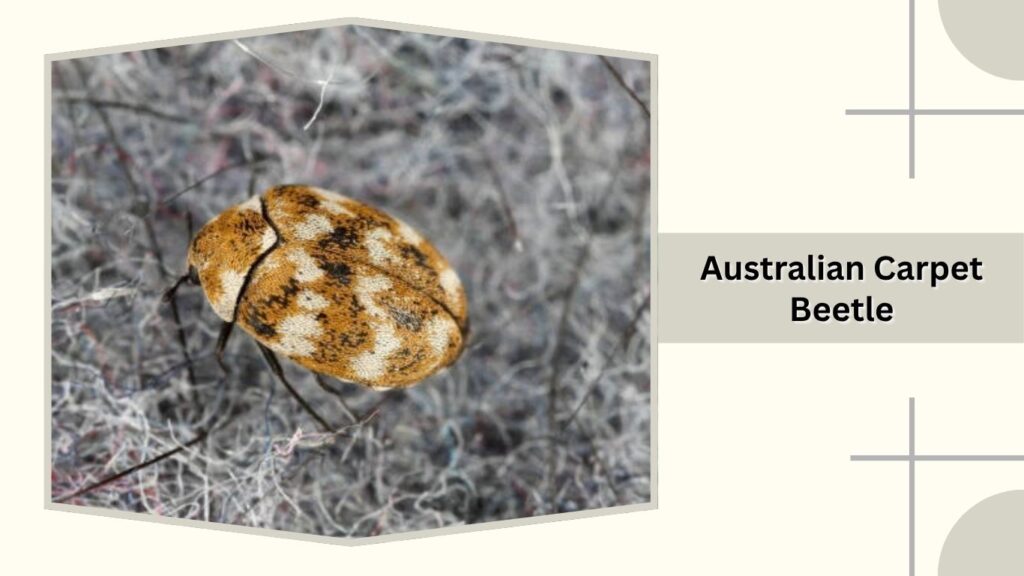
The Australian carpet beetle (Anthrenocerus australis) is a small patterned beetle native to Australia that has also been introduced to other regions. Its larvae are household pests capable of feeding on carpets, clothing, upholstery, and collections containing animal-based materials.
Identification
- Scientific name: Anthrenocerus australis
- Adult size: Usually about 2–4 mm
- Color: Dark brown or black with cream or yellowish markings
- Body shape: Rounded to oval
- Larvae: Brown and densely covered with hairs
- Pattern: Several pale bands or patches across the wing covers
- Common evidence: Hairy shed skins near infested materials
Habitat and Distribution
Australian carpet beetles are particularly common in Australia and New Zealand but have been transported to other parts of the world. Indoors, larvae occur beneath carpets, in wardrobes, upholstered furniture, stored textiles, and museum collections. Outdoors, adults may be found on flowering plants where they consume pollen.
Behavior and Diet
Larvae are responsible for material damage. They feed on wool, fur, feathers, silk, hair, dead insects, and other products containing animal proteins. They usually stay in sheltered, low-light locations. Dust, pet hair, and insect remains beneath furniture can provide enough food to support a small infestation.
Lifespan and Life Cycle
Adult females place eggs close to suitable food sources. After hatching, larvae feed actively and undergo a series of molts as they grow. Development can vary considerably with temperature, humidity, and nutrition. Mature larvae eventually pupate in protected areas. Adults emerge afterward and may move outdoors to feed on flowers before mating and beginning another generation.
8. Asian Carpet Beetle
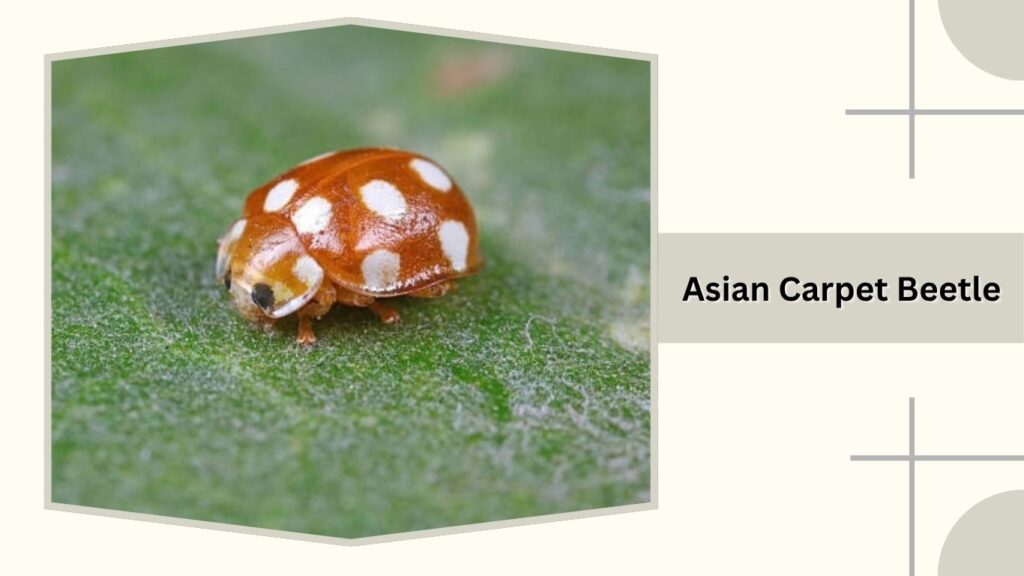
The Asian carpet beetle (Anthrenus coloratus) is a small dermestid beetle associated with stored animal products, natural fibers, and museum specimens. Although adults are tiny and usually harmless to household materials, their larvae can become destructive when they establish themselves among wool, feathers, fur, dried insects, or similar organic materials. The species occurs across parts of Asia and has also been recorded in several other regions.
Identification
- Scientific name: Anthrenus coloratus
- Adult size: Usually only a few millimeters long
- Body shape: Small, rounded, and compact
- Color: Patterned with light and dark scales
- Larvae: Brownish and densely covered with hairs
- Antennae: Short with clubbed tips
- Main sign: Shed larval skins around stored natural materials
Habitat and Distribution
Asian carpet beetles are associated with warm regions but have been recorded beyond their original Asian range. They can occur in homes, warehouses, museum collections, and storage areas where suitable animal-derived material is available. Indoors, larvae commonly seek quiet and protected spaces such as cupboards, drawers, carpet edges, collections, and containers holding natural fibers.
Behavior and Diet
The larvae are scavengers capable of consuming dried animal material. Wool, feathers, fur, hair, dried insects, and preserved specimens can all provide food. Larvae generally avoid exposed, brightly lit locations and spend much of their development concealed within or beneath infested materials. Adults are more mobile and may be attracted to flowers, windows, or light.
Lifespan and Life Cycle
Females place eggs close to food that newly hatched larvae can use immediately. The larvae pass through several molts while feeding and may spend months developing. Temperature, humidity, and food quality influence development time. When fully grown, the larva pupates in a sheltered location. An adult later emerges, mates, and begins the next generation.
9. Guernsey Carpet Beetle
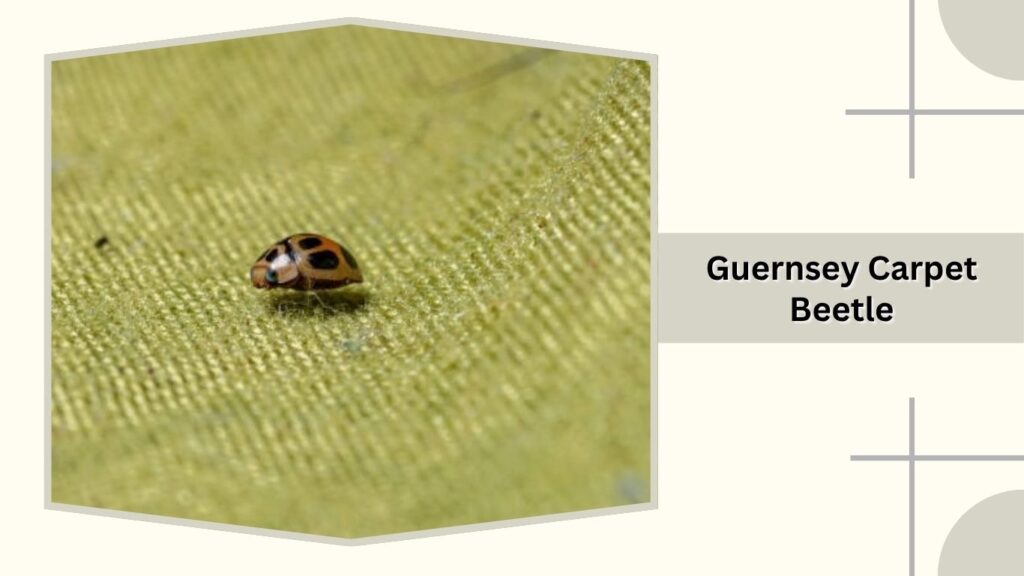
The Guernsey carpet beetle (Anthrenus sarnicus) is a small carpet beetle first described from Guernsey and now known from parts of Europe. It is particularly important in museums and collections because its larvae can feed on dried animal material, including skins, feathers, fur, and preserved specimens. Like other Anthrenus species, the adult is small and patterned, while the hairy larva causes the actual material damage.
Identification
- Scientific name: Anthrenus sarnicus
- Adult shape: Small and oval
- Body covering: Patterned scales over the wing covers
- Larvae: Brownish and covered with noticeable hairs
- Antennae: Short and clubbed
- Size: Very small, roughly pinhead-sized
- Infestation clue: Shed larval skins near animal-based materials
Habitat and Distribution
The Guernsey carpet beetle is primarily associated with Europe and is especially well known from Britain. It may occur inside museums, historic buildings, homes, and storage facilities. Collections containing taxidermy, feathers, skins, wool, or other dried animal products can provide particularly favorable habitats for its larvae.
Behavior and Diet
Larvae feed on protein-rich dry organic material. Feathers, fur, insects, skins, wool, and similar items can be attacked. Museum collections are vulnerable because specimens may remain undisturbed for long periods, giving larvae time to feed without being noticed. Adults are less destructive and mainly serve as the reproductive and dispersal stage.
Lifespan and Life Cycle
The life cycle starts when females deposit eggs close to a suitable food source. Tiny larvae emerge and begin feeding, passing through a number of larval stages before reaching maturity. Development can be relatively slow and may extend for many months. Once fully developed, larvae pupate in protected locations. Adults eventually emerge, mate, and females search for new sites suitable for egg laying.
10. Bird-Nest Carpet Beetle
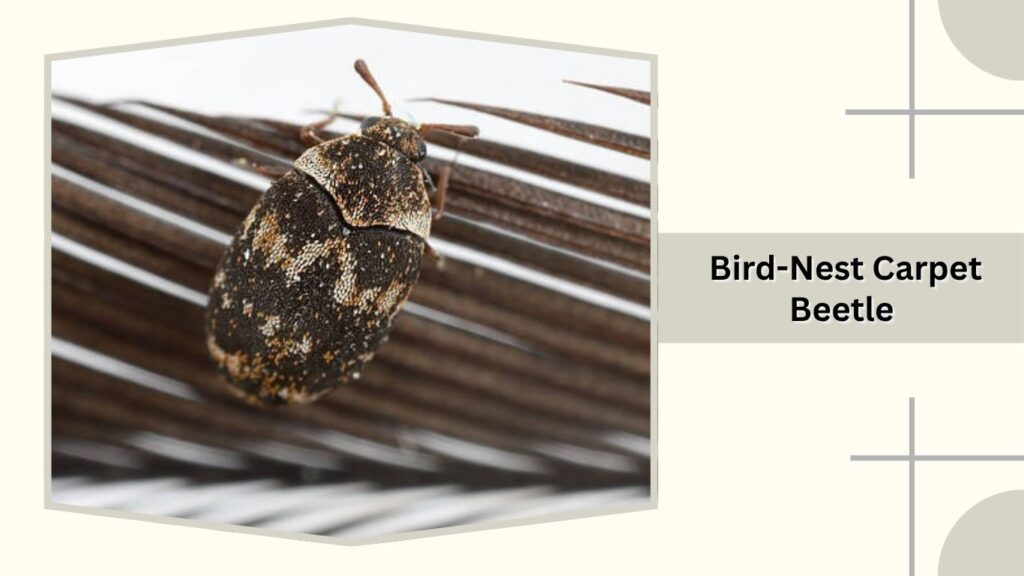
The bird-nest carpet beetle is a common name used for carpet beetles associated with bird nests, where larvae can feed on feathers, hair, dead insects, and other organic debris. Anthrenus pimpinellae is widely associated with this common name, although taxonomic usage can vary geographically. These beetles may move from abandoned nests into nearby houses and become occasional indoor pests.
Identification
- Scientific name: Commonly associated with Anthrenus pimpinellae
- Adult size: Only a few millimeters long
- Shape: Rounded to broadly oval
- Color: Dark with contrasting pale or reddish patterned scales
- Larvae: Brown and hairy
- Antennae: Short with clubbed ends
- Typical clue: Adults or larvae near bird nesting areas
Habitat and Distribution
Bird-nest carpet beetles are associated with nests in roof spaces, eaves, attics, chimneys, and other protected locations. They occur across parts of Europe, Africa, and Asia, with related or historically confused forms occurring elsewhere. Abandoned bird nests can provide an excellent larval habitat because they contain feathers, dead insects, dried skin, and other organic material.
Behavior and Diet
The larvae act primarily as scavengers. Rather than attacking living birds, they consume dry materials left in nests, including feathers, insect remains, hair, and other animal debris. When nest resources become depleted, larvae may wander into nearby buildings. Once indoors, they can encounter wool carpets, stored clothing, or collections that provide additional food.
Lifespan and Life Cycle
Females lay eggs in locations rich in suitable organic debris. The emerging larvae feed and molt repeatedly as they increase in size. Development may continue for several months, with environmental conditions affecting its speed. Mature larvae eventually pupate in a concealed location. Adults emerge afterward and can fly outdoors, where they may feed on flowers before locating breeding habitats.
11. Museum Beetle
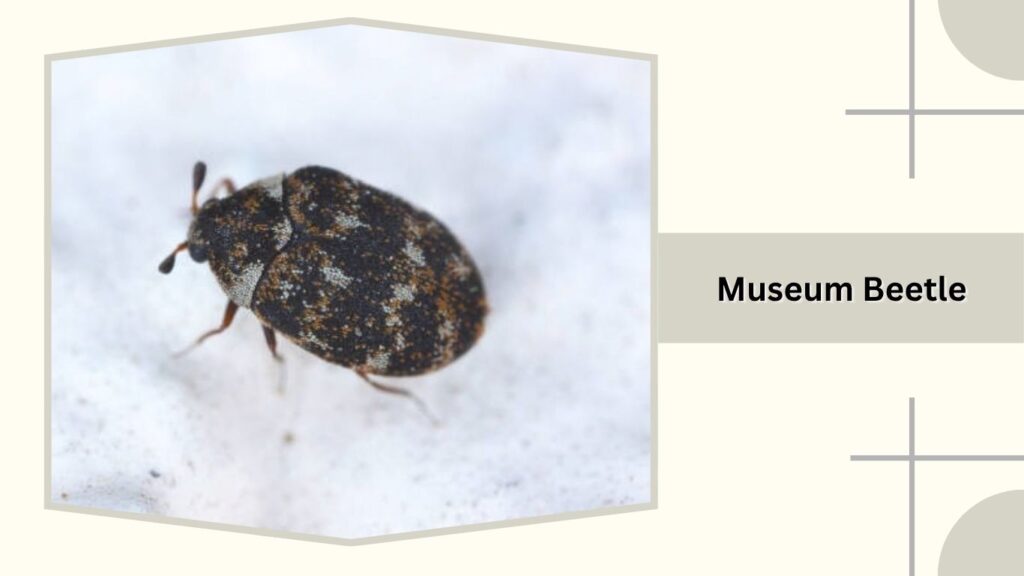
The museum beetle (Anthrenus museorum) gets its common name from its ability to damage preserved specimens and other animal-derived materials in museum collections. It is a tiny, rounded beetle whose adults are patterned with colored scales. The larvae are much more destructive than adults and can damage taxidermy, skins, feathers, hair, dried insects, and natural-fiber materials.
Identification
- Scientific name: Anthrenus museorum
- Adult size: Approximately 2–4 mm
- Shape: Small and rounded
- Color: Predominantly dark with lighter or orange-colored markings
- Larvae: Yellowish to brown and densely hairy
- Legs: Often rusty or brownish in color
- Damage sign: Hair loss or surface damage on dried animal specimens
Habitat and Distribution
Museum beetles occur across parts of Europe and other temperate regions and have also been introduced elsewhere. As their name suggests, they can be important pests in museums, natural-history collections, historic houses, and storage facilities. They may also enter ordinary homes, especially where natural fibers, dried insects, feathers, or animal remains accumulate.
Behavior and Diet
The larvae feed on a variety of dry animal products. Hair, skin, fur, feathers, dried insects, and taxidermy specimens are particularly vulnerable. Natural-history collections can provide both abundant food and undisturbed hiding places. Adults generally do not feed on these materials and are commonly associated with plants and flowers outdoors.
Lifespan and Life Cycle
Females lay small eggs in protected areas where larvae will have immediate access to food. After hatching, the hairy larvae feed and grow through multiple molts. Larval development is usually much longer than the adult stage. When mature, larvae pupate in sheltered locations, sometimes within damaged material. Adults subsequently emerge and may move toward windows or outdoors before reproduction occurs.
12. Banded Black Carpet Beetle
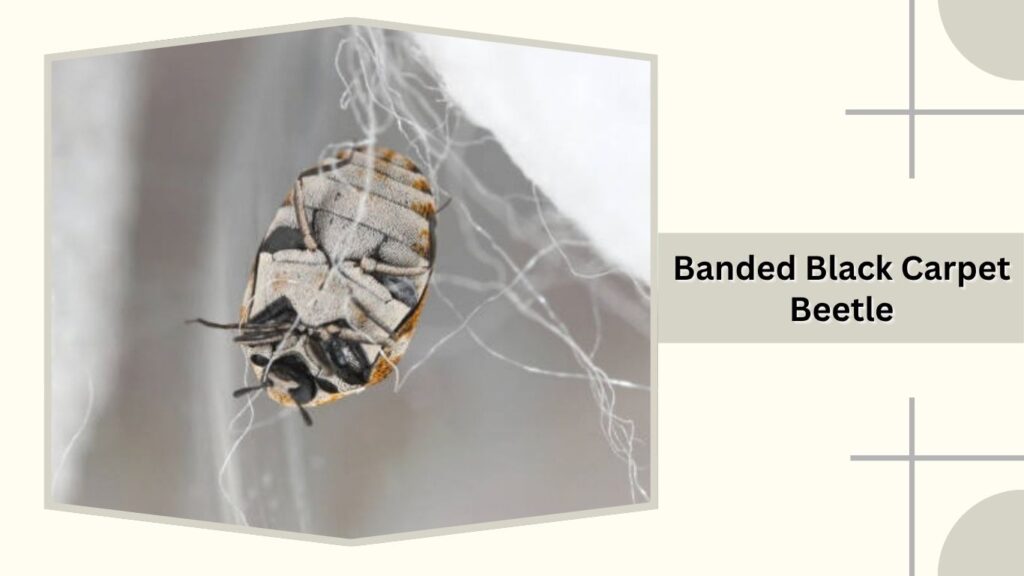
The banded black carpet beetle (Attagenus fasciatus) is a widespread member of the carpet beetle family. It is also known by names such as the wardrobe beetle and tobacco seed beetle. The species occurs across tropical and subtropical regions and has been introduced to many areas through international trade. Its larvae can infest stored materials containing animal proteins and other suitable organic matter.
Identification
- Scientific name: Attagenus fasciatus
- Body shape: Elongated oval
- Adult color: Primarily dark brown to black
- Markings: Lighter band or patterned scales across the wing covers
- Larvae: Brown, elongated, and hairy
- Antennae: Clubbed, particularly noticeable in adults
- Common sign: Shed skins around stored materials or fabrics
Habitat and Distribution
This species has a broad distribution and occurs in North America, Europe, Oceania, and many tropical and subtropical areas. It can live in homes, warehouses, storage facilities, and buildings containing dried organic products. Indoors, larvae often hide inside cracks, cupboards, stored textiles, and other dark areas where they are protected from disturbance.
Behavior and Diet
Larvae are capable of feeding on wool, hair, fur, feathers, dried insects, skins, and various stored materials. They are most active in concealed locations and may wander when searching for new food or places to pupate. Adults are much less damaging and mainly function as the reproductive stage of the life cycle.
Lifespan and Life Cycle
Eggs are normally deposited close to appropriate larval food. Once hatched, the larvae begin feeding and undergo repeated molts. The length of the larval period depends on temperature, humidity, and the nutritional quality of available food. Mature larvae eventually pupate in sheltered spaces. Adults emerge afterward, reproduce, and females locate new materials in which to establish another generation.
13. Fur Beetle
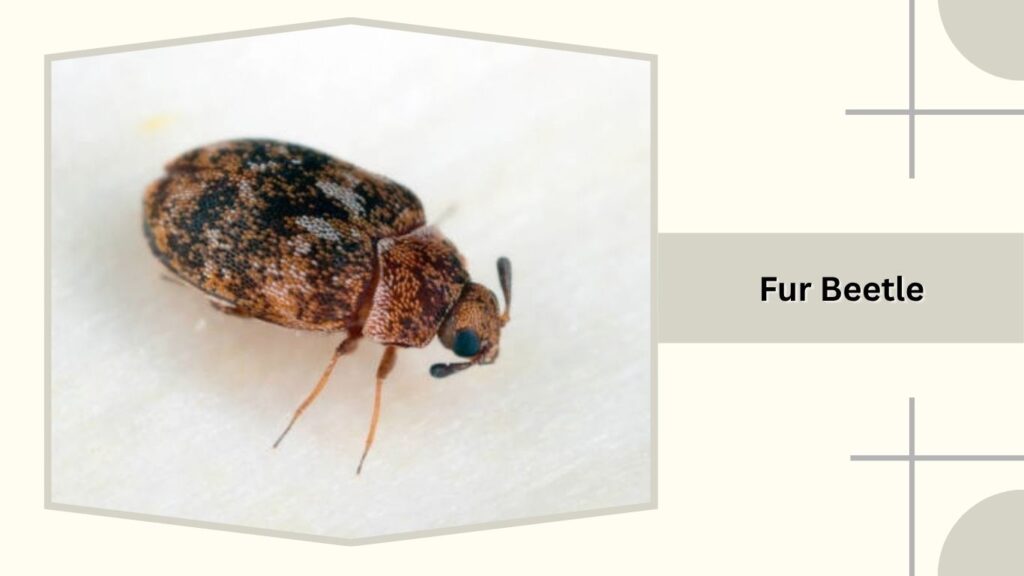
The fur beetle (Attagenus pellio) is a dark-colored carpet beetle known for attacking fur, wool, skins, feathers, and other animal-derived products. Importantly, fur beetle and two-spotted carpet beetles are common names for the same species, so this entry represents another common name rather than a separate biological species. Adults can be recognized by the two pale spots on their otherwise dark wing covers.
Identification
- Scientific name: Attagenus pellio
- Adult size: Approximately 4–6 mm
- Body shape: Elongated oval
- Color: Dark brown to nearly black
- Key marking: One pale patch on each wing cover
- Larvae: Honey-brown, hairy, and elongated
- Rear end: Characteristic tuft of longer hairs
Habitat and Distribution
Fur beetles can occur in houses, warehouses, museums, bird nests, and other locations containing animal material. Indoors, larvae may hide beneath floorboards, around carpet edges, in closets, or inside stored textiles. Bird nests beneath roof eaves are especially important natural habitats because feathers and other nest debris provide abundant food.
Behavior and Diet
Larvae are responsible for nearly all material damage. They consume fur, wool, skins, feathers, hair, dead insects, and some stored products. Their preference for dark and quiet environments means an infestation can develop without obvious adult activity. Larvae may also wander away from their original feeding site when preparing to pupate.
Lifespan and Life Cycle
Females lay eggs in bird nests, stored materials, cracks, or other sites where larval food is available. After hatching, larvae feed for an extended period and molt several times before reaching full size. Environmental conditions can cause considerable variation in development time. Mature larvae pupate in protected locations. Adults later emerge, mate, and may fly outdoors before females return to suitable egg-laying sites.
14. Warehouse Beetle
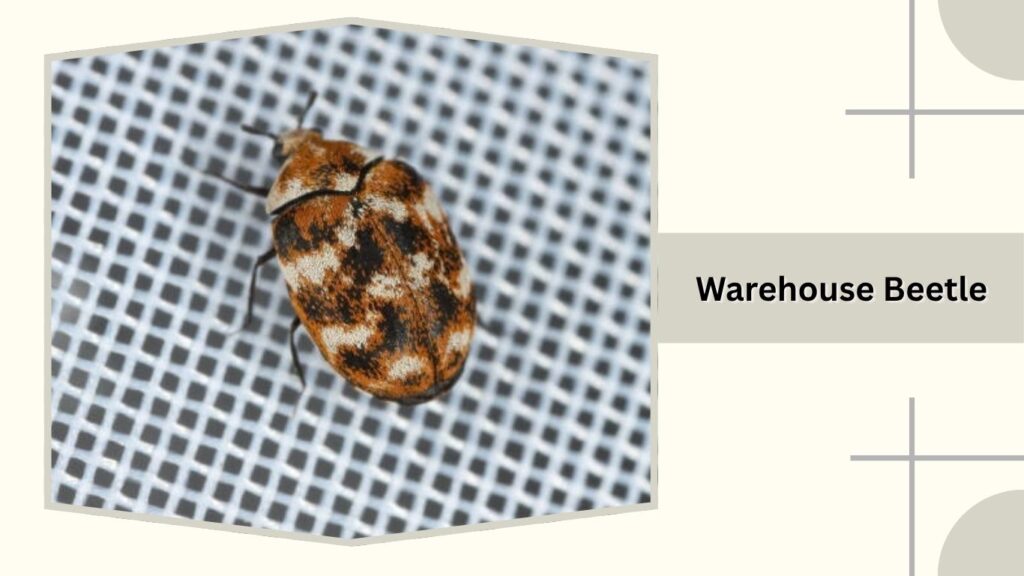
The warehouse beetle (Trogoderma variabile) is a small dermestid beetle commonly associated with warehouses, food-storage areas, homes, and facilities containing dried foods or animal-derived materials. Unlike carpet beetles that mainly attack wool and fabrics, warehouse beetle larvae have a very broad diet. They can infest cereals, pet food, dried fruit, seeds, spices, and other stored products, making them an important pantry and warehouse pest.
Identification
- Scientific name: Trogoderma variabile
- Adult size: About 1/8 inch or roughly 3 mm
- Body shape: Small and oval
- Color: Dark with orange, white, and black scales or hairs
- Larvae: Brownish and densely hairy
- Larval feature: Distinctive arrow-shaped hairs called hastisetae
- Common signs: Larvae, shed skins, and damaged stored foods
Habitat and Distribution
Warehouse beetles occur in homes as well as commercial food-storage and processing facilities. They thrive where dry foods remain undisturbed for extended periods. Pantry shelves, grain-storage areas, food warehouses, pet-food containers, and cracks containing food debris can all provide suitable habitats. Eggs may be deposited directly in stored foods or other plant- and animal-based materials.
Behavior and Diet
Their larvae have an unusually diverse diet. Foods attacked can include cereal, rice, pasta, oats, corn, dried fruit, chocolate, cookies, pet food, spices, and seeds. They may also consume dead insects, animal material, hair, and other organic debris. The hairy larvae often move away from food when looking for sheltered places to develop further.
Lifespan and Life Cycle
Females lay eggs in or near appropriate food sources. Tiny larvae hatch and begin feeding before passing through several molts. Development speed varies with temperature, humidity, and food quality. Larvae may survive unfavorable periods by slowing their development. Once mature, they pupate in protected locations, and adults emerge to mate and begin another generation.
15. Larger Cabinet Beetle
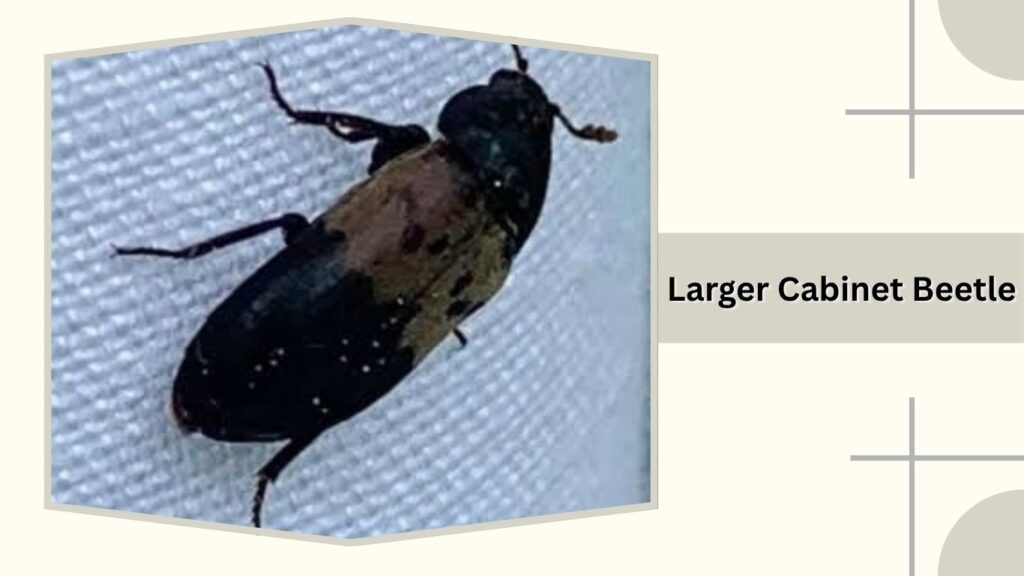
The larger cabinet beetle (Trogoderma inclusum) is a small member of the Dermestidae family that occurs in stored products and collections of dry organic material. It may infest household foods, animal products, dried insects, and debris in concealed spaces. Despite the word “larger” in its common name, adults are still tiny, generally measuring only a few millimeters long.
Identification
- Scientific name: Trogoderma inclusum
- Adult size: Around 3–4 mm
- Body shape: Oval and slightly elongated
- Color: Brown to nearly black with lighter hairs or markings
- Larvae: Brownish and densely hairy
- Antennae: Short and clubbed
- Typical sign: Cast larval skins around infested products
Habitat and Distribution
The larger cabinet beetle has a nearly cosmopolitan distribution and can occur in homes, warehouses, laboratories, museums, and food-storage facilities. Individuals have even been recorded developing around stored food and animal remains inside building voids. These insects favor dry, relatively undisturbed locations where organic food sources accumulate.
Behavior and Diet
Larvae are scavengers and stored-product pests. Depending on what is available, they can feed on cereal products, seeds, dried foods, dead insects, dried animal matter, and other protein-rich debris. Their ability to use different food sources allows infestations to persist in places where obvious food is not immediately visible.
Lifespan and Life Cycle
Adult females place eggs close to suitable larval food. After hatching, the larvae feed and molt repeatedly. The larval period is usually the longest part of the life cycle and can vary considerably under different environmental conditions. Fully grown larvae eventually seek protected sites for pupation. Adults then emerge, mate, and disperse in search of new food sources and breeding locations.
16. Khapra Beetle
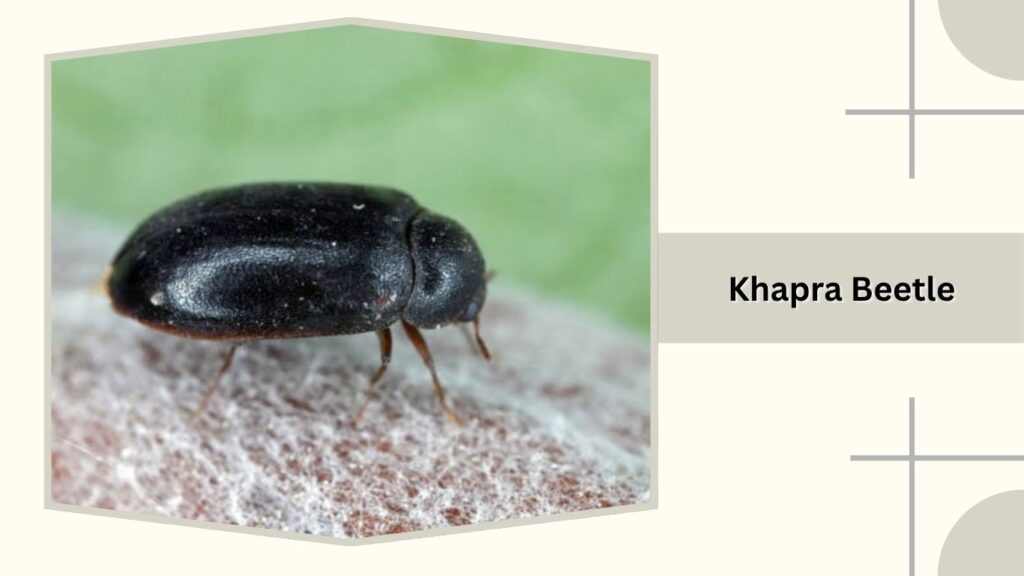
The khapra beetle (Trogoderma granarium) is a serious stored-product pest belonging to the dermestid family. It is particularly associated with grains, seeds, and other dry agricultural commodities. Because infestations can survive for extended periods under unfavorable conditions and are difficult to detect when populations are small, the species is subject to strict quarantine measures in countries where it is not established.
Identification
- Scientific name: Trogoderma granarium
- Adult size: Usually only a few millimeters long
- Body shape: Oval and somewhat elongated
- Adult color: Yellowish brown to dark brown
- Larvae: Yellowish to reddish brown
- Larval covering: Dense brown hairs with longer hair tufts toward the rear
- Common evidence: Shed larval skins mixed with damaged grain
Habitat and Distribution
Khapra beetles are most strongly associated with warm, dry areas and stored agricultural commodities. Infestations can develop in grain warehouses, storage bins, shipping facilities, mills, sacks, cracks, and machinery. Larvae readily hide in narrow crevices after leaving food, making complete removal difficult.
Behavior and Diet
The larval stage is responsible for most feeding damage. Larvae commonly attack wheat, rice, barley, corn, oats, seeds, pulses, and other dry stored commodities. They may feed primarily around the surface of grain piles and contaminate products with hairs, shed skins, and waste. Larvae are unusually tolerant of food shortages and can remain inactive for long periods when conditions become poor.
Lifespan and Life Cycle
Females deposit eggs among stored products. Larvae hatch and begin feeding before progressing through a variable number of molts. When food, temperature, or other conditions become unfavorable, larvae can greatly extend their development. Mature larvae eventually pupate, after which small adult beetles emerge. This flexible larval development is one reason established infestations can be exceptionally persistent.
17. Larder Beetle
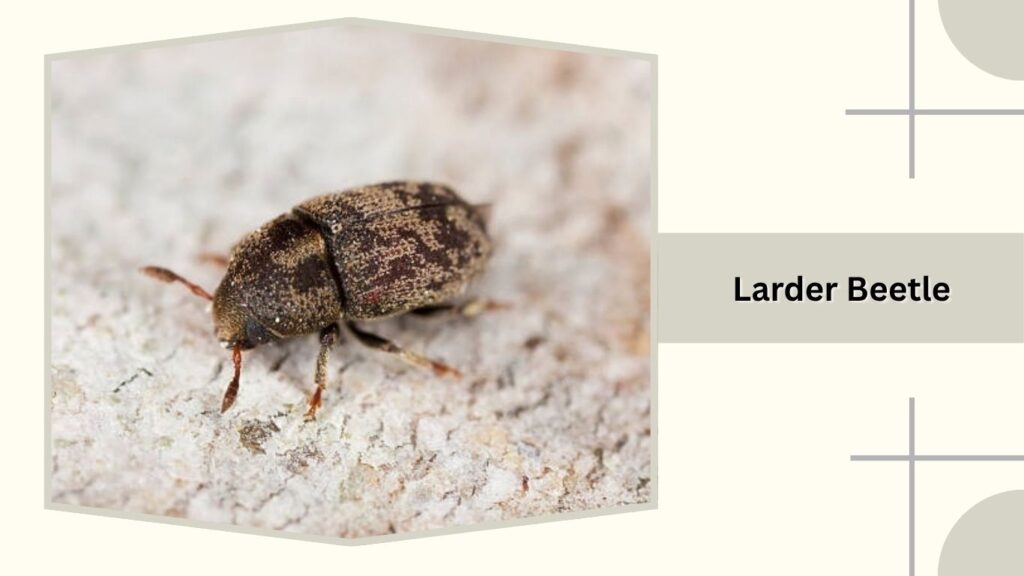
The larder beetle (Dermestes lardarius) is a relatively large dermestid compared with many small carpet beetles. Historically, it was commonly associated with cured meat and animal products stored in household larders, which explains its name. Today, it is frequently discovered feeding on dead insects, animal remains, feathers, dried pet food, and other protein-rich material in homes and commercial buildings.
Identification
- Scientific name: Dermestes lardarius
- Adult size: About 1/4–1/3 inch
- Body shape: Elongated oval
- Color: Dark brown to nearly black
- Key marking: Pale yellowish band across the front portion of the wing covers
- Spots: Several dark spots occur within the pale band
- Larvae: Hairy, reddish to dark brown with two curved spines at the rear
Habitat and Distribution
Larder beetles are widely distributed and commonly occur around human structures. Adults may enter buildings through exterior gaps, while larvae develop wherever sufficient animal-derived material is available. Attics, wall voids, bird nests, animal carcasses, food-storage rooms, and areas containing accumulations of dead insects can all support infestations.
Behavior and Diet
Larvae are primarily scavengers. They consume dried meat, animal skins, feathers, dead insects, dead birds or rodents, pet food, and similar materials. A hidden animal carcass inside a wall or attic can sometimes support a surprisingly large population. Mature larvae may wander considerable distances from their food source while searching for suitable pupation sites.
Lifespan and Life Cycle
Females lay eggs near food, and the emerging larvae begin feeding soon afterward. Larvae pass through several developmental stages and become increasingly hairy as they mature. When ready to pupate, they may bore shallow holes into wood or other firm materials. Adults eventually emerge and may live for several months while reproducing and searching for new food sources.
18. Black Larder Beetle
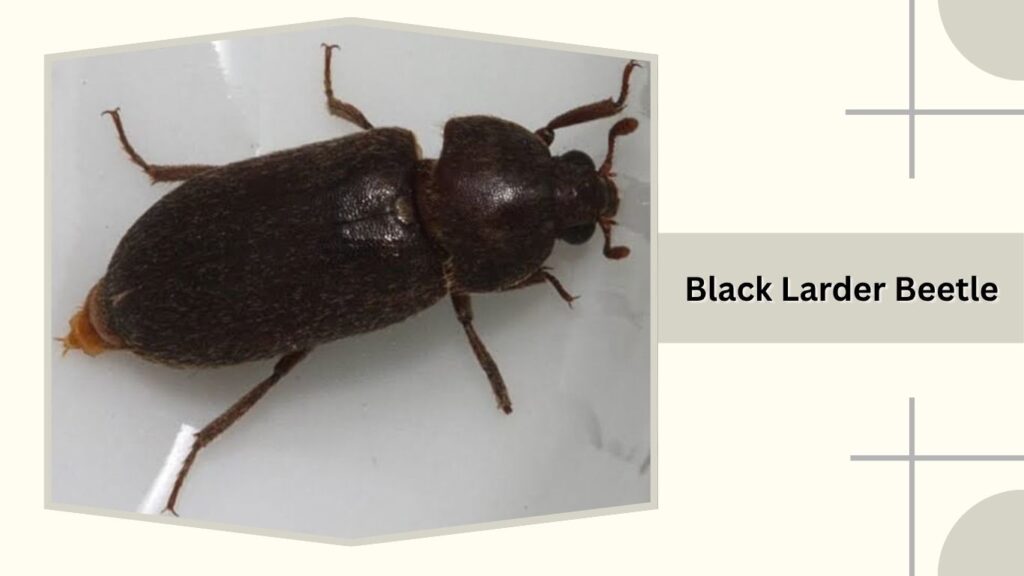
The black larder beetle (Dermestes ater) is a widespread dermestid species and a close relative of the common larder beetle. It is associated with stored animal products, dead animals, dried fish, hides, feathers, and other protein-rich materials. Adults are largely dark instead of having the conspicuous pale wing band seen on Dermestes lardarius.
Identification
- Scientific name: Dermestes ater
- Adult size: Approximately 7–9 mm
- Body shape: Elongated oval
- Color: Dark brown to black
- Body covering: Fine yellowish or grayish hairs
- Larvae: Brown, segmented, and densely hairy
- Antennae: Short with club-shaped ends
Habitat and Distribution
Black larder beetles are now found across much of the world and occur in both domestic and commercial situations. They can develop in warehouses, poultry facilities, fish-processing areas, homes, animal-product storage facilities, and locations where carcasses or dried animal material accumulate. Their broad distribution is partly associated with movement of stored goods.
Behavior and Diet
Both their habitat and feeding habits are strongly associated with animal material. Larvae can consume dried meat, fish, skins, hides, feathers, dead insects, and decomposing animal remains. They are effective scavengers and can exploit materials unsuitable for many other household pests. Larvae usually prefer dark, protected areas while feeding.
Lifespan and Life Cycle
Females place eggs directly on or close to suitable food. Newly hatched larvae pass through multiple growth stages while feeding actively. When mature, larvae often leave the feeding area and search for a secure pupation site. They may bore into soft wood, insulation, or similar materials before pupating. Adults subsequently emerge and reproduce, allowing populations to continue as long as appropriate food remains available.
19. Hide Beetle
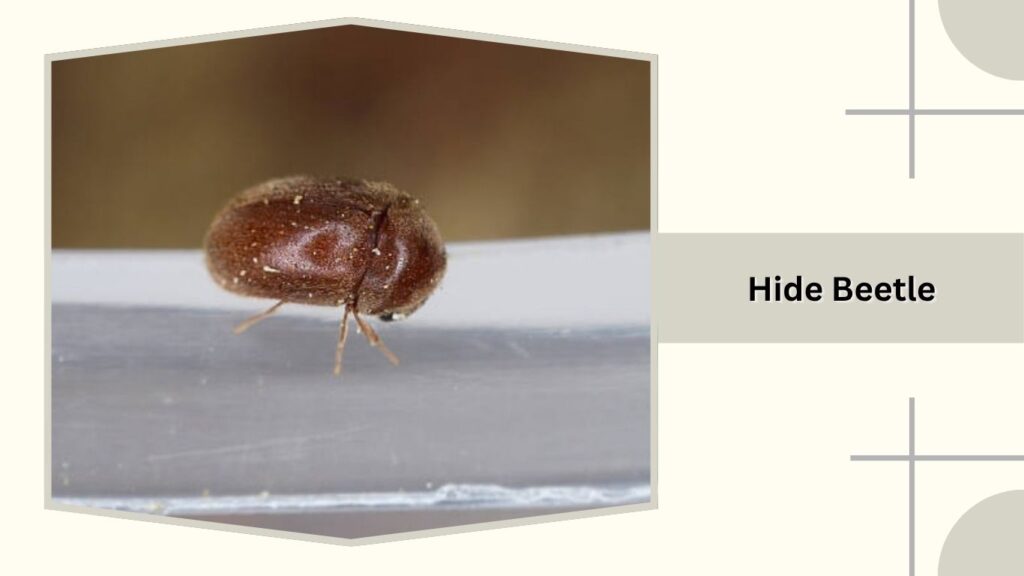
The hide beetle (Dermestes maculatus) is a well-known dermestid associated with hides, skins, animal carcasses, dried meat, fish products, and other animal-based materials. Unlike many tiny household carpet beetles, adults can approach one-third of an inch in length. Both larvae and adults may occur around animal-processing sites, poultry houses, stored hides, and carcasses.
Identification
- Scientific name: Dermestes maculatus
- Adult size: Approximately 5–10 mm
- Color: Mostly dark brown to black
- Underside: Often covered with noticeable whitish hairs
- Wing covers: Each elytron ends in a small pointed tip
- Larvae: Brown and densely covered with long hairs
- Larval size: Can reach around 1/2 inch when mature
Habitat and Distribution
Hide beetles can occur wherever dried or decomposing animal material is available. They are found in poultry houses, warehouses, animal-processing facilities, museums, taxidermy collections, and sometimes homes. Poultry litter can support particularly large populations when feathers, carcasses, and other organic material are abundant.
Behavior and Diet
Larvae consume hides, skins, fur, dried meat, dead insects, animal carcasses, fish products, and other high-protein material. In poultry facilities, both adults and larvae can become extremely numerous. Mature larvae have another damaging behavior: they may bore into wooden posts, insulation, drywall, or similar materials when searching for protected places to pupate.
Lifespan and Life Cycle
Eggs are laid near food and may hatch within several days under favorable conditions. Larvae normally pass through multiple instars before seeking dry locations for pupation. Temperature has a strong effect on development, with warmer conditions generally accelerating the life cycle. Adults can survive for several months and, under suitable circumstances, populations can produce continuing generations wherever adequate food remains available.
20. Fringed Larder Beetle
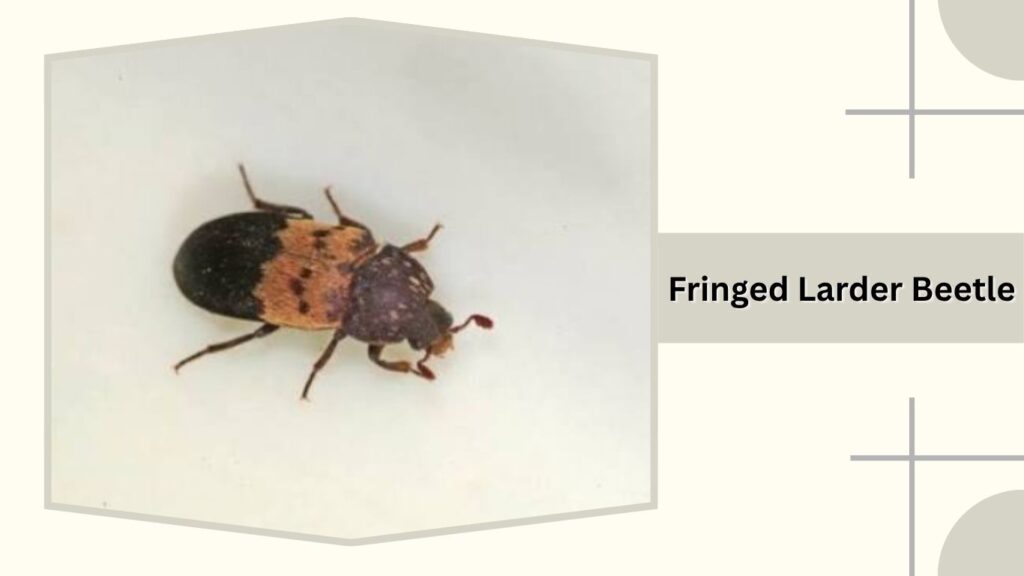
The fringed larder beetle (Dermestes frischii) is a dermestid beetle related to the larder and hide beetles. It is also sometimes called Frisch’s carpet beetle. The species has a broad distribution and is associated with dry animal materials, including hides, leather, dried fish, animal remains, and similar products. Its scavenging habits make it important in stored-product environments as well as natural decomposition.
Identification
- Scientific name: Dermestes frischii
- Adult size: Approximately 6–10 mm
- Body shape: Elongated oval
- Color: Predominantly dark brown or black
- Pronotum: Sides often covered with pale or whitish hairs
- Wing-cover tips: Rounded rather than sharply pointed
- Larvae: Brown, elongated, segmented, and densely hairy
Habitat and Distribution
Fringed larder beetles have been recorded across Europe, Africa, Asia, the Near East, and parts of North America. They can occur around stored animal products, warehouses, animal remains, dried fish, leather, and other protein-rich materials. Because they are scavengers, they may also occur outdoors around carcasses and other decomposing animal matter.
Behavior and Diet
The larvae and adults are associated mainly with dried or decomposing animal material. Dried fish, hides, leather, meat residues, carcasses, and similar substances can provide suitable food. Their feeding behavior can make them troublesome in facilities that process or store animal products. Larvae generally remain close to food until they approach the pupal stage.
Lifespan and Life Cycle
Females deposit eggs on suitable animal material. The larvae hatch, begin feeding, and pass through a series of molts as they grow. Mature larvae eventually leave heavily disturbed feeding areas to seek secure pupation sites. They may shelter in cracks or bore into relatively soft material before pupating. Adults later emerge, mate, and locate new food sources where another generation can develop.
FAQs
1. What are the most common types of carpet beetles?
Some of the most common carpet beetles include the varied carpet beetle, black carpet beetle, common carpet beetle, furniture carpet beetle, and two-spotted carpet beetle. These species frequently occur in homes and other buildings where natural fibers, pet hair, feathers, dead insects, or similar organic materials are available.
2. What do carpet beetles look like?
Adult carpet beetles are usually small, oval, or rounded insects measuring only a few millimeters long. Depending on the species, they may be solid black, brown, or covered with mottled patterns of white, yellow, orange, and brown scales. Their larvae are generally elongated, brownish, and covered with noticeable hairs or bristles.
3. What do carpet beetle larvae eat?
Carpet beetle larvae commonly eat animal-derived materials such as wool, fur, feathers, silk, hair, leather, and dead insects. Some dermestid species can also infest stored foods, including grains, cereals, seeds, dried fruit, and pet food. Adults generally do not damage fabrics and often feed on pollen and nectar outdoors.
4. Where do carpet beetles usually live in a house?
Carpet beetles often develop in dark, quiet, and undisturbed areas. Common hiding places include carpet edges, closets, beneath furniture, storage boxes, air ducts, attics, wall voids, and upholstered furniture. They may also originate from bird nests or accumulations of dead insects near or inside a building.
5. Are carpet beetles harmful to humans?
Carpet beetles do not normally bite or sting people. However, the tiny hairs on some larvae can irritate sensitive skin and may cause an itchy rash in certain individuals. Their main concern is damage to household fabrics, stored products, taxidermy, museum specimens, and other materials containing natural animal fibers.