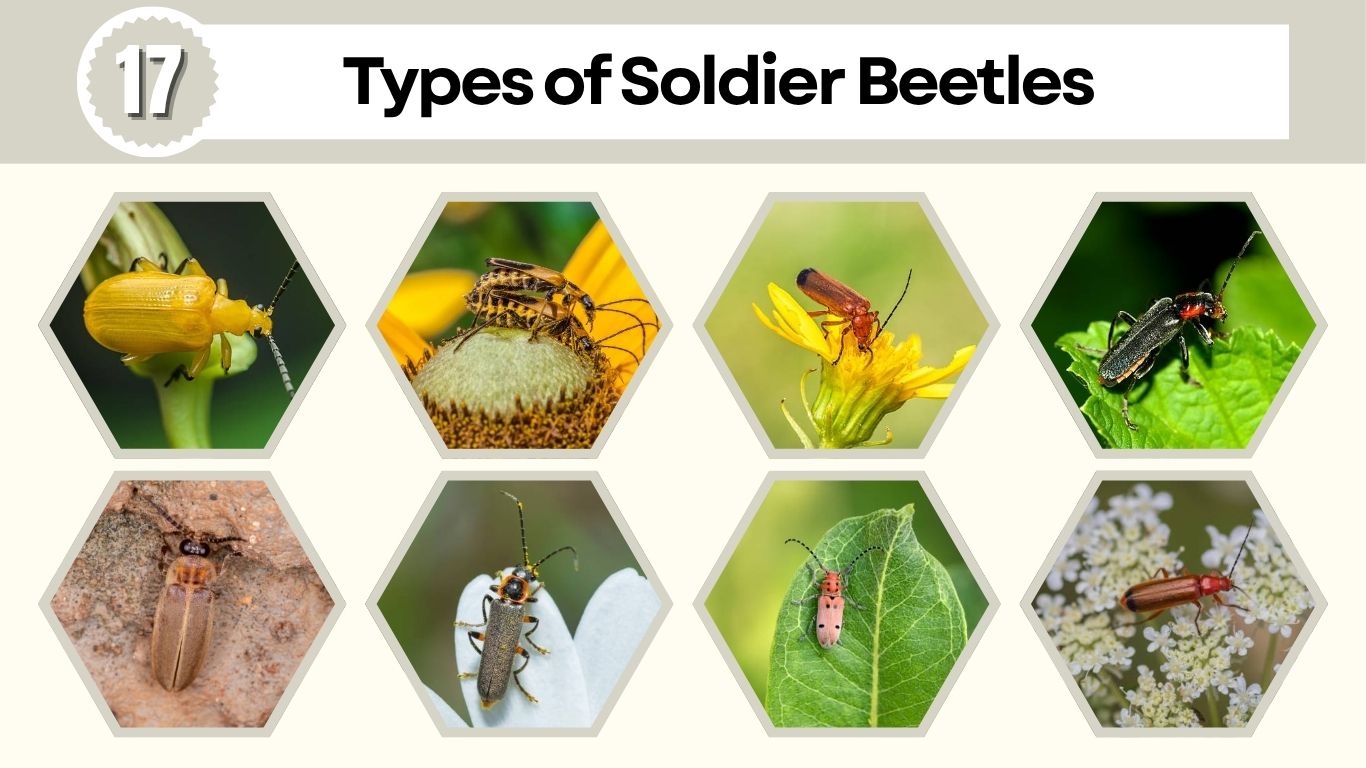
Soldier beetles are soft-bodied insects in the family Cantharidae, known for their elongated shape, flexible wing covers, and frequent presence on flowers. Many species are beneficial because adults feed on nectar, pollen, and small insects, while their larvae prey on other invertebrates in soil and leaf litter. In this guide, you’ll discover 17 types of soldier beetles, including the Goldenrod Soldier Beetle, Common Red Soldier Beetle, Rustic Sailor Beetle, Two-Lined Leatherwing, and several other colorful and interesting species.
1. Goldenrod Soldier Beetle
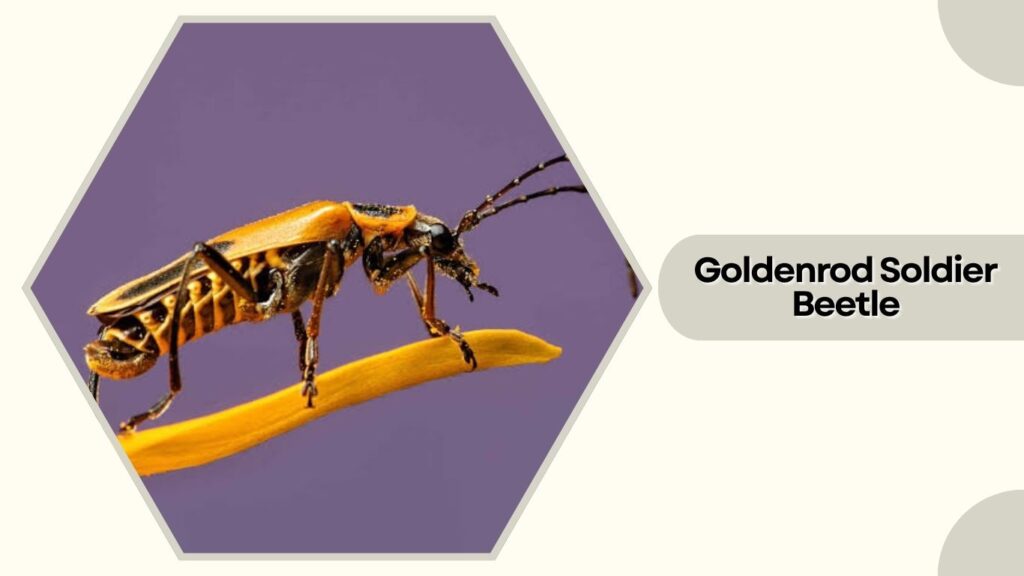
The Goldenrod Soldier Beetle (Chauliognathus pensylvanicus) is a colorful member of the soldier beetle family Cantharidae. It is especially noticeable in late summer when adults gather on goldenrod and other flowering plants. These beetles are common across much of eastern North America and can be beneficial in gardens because adults visit flowers while their larvae prey on various small insects.
Identification
- Common Name: Goldenrod Soldier Beetle
- Scientific Name: Chauliognathus pensylvanicus
- Family: Cantharidae
- Adult Size: About 9–12 mm long
- Body Shape: Elongated, soft-bodied, and somewhat flattened
- Color: Yellow to orange with contrasting dark markings
- Antennae: Long, slender, and threadlike
- Legs: Long and relatively thin
- Active Season: Most commonly seen from July through October
The combination of its elongated body, orange-yellow coloration, and dark markings makes the Goldenrod Soldier Beetle relatively easy to recognize when it is resting or feeding on flowers.
Habitat and Distribution
Goldenrod Soldier Beetles are widely distributed across eastern North America, with their range extending from parts of Canada south into Florida and west toward portions of the central United States. They favor sunny, flower-rich environments such as open fields, prairies, grasslands, roadsides, parks, abandoned fields, and gardens. Adults are particularly associated with goldenrod during late summer and early fall.
Behavior and Diet
Adults spend much of their time on flowers, where they primarily consume pollen and nectar. Goldenrod is one of their most frequently visited plants, although they may also occur on other late-season flowers. Their flower-visiting behavior can contribute to pollination. The larvae are predatory and feed on insect larvae, locust eggs, cucumber beetles, and related small prey.
Lifespan and Life Cycle
Females deposit their eggs in soil or leaf litter. After hatching, the larvae live mainly near or beneath the soil surface, where they hunt small insects and other suitable prey. Soldier beetles generally overwinter in the larval stage underground. As temperatures rise, development continues, with pupation occurring in the soil during spring. Adults emerge later and become particularly abundant during summer and early fall before the next generation begins.
2. Pennsylvania Leatherwing
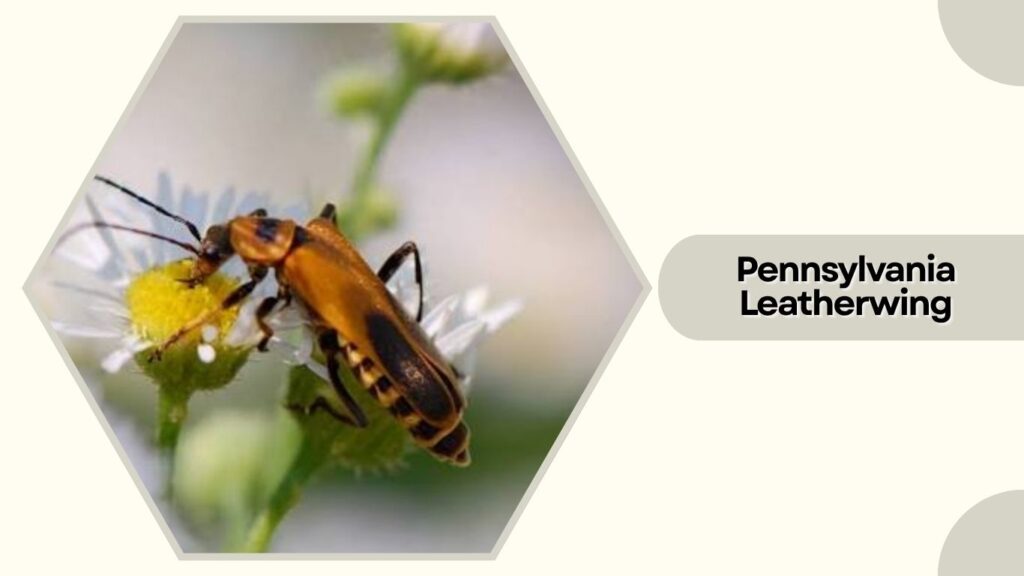
The Pennsylvania Leatherwing is a familiar soldier beetle commonly seen on flowers during late summer. Its soft wing covers, elongated body, and orange-yellow coloration help distinguish it from many other beetles. Adults are frequently observed in gardens, meadows, roadsides, and fields, where they feed on flower resources and sometimes small insects. Like many soldier beetles, the larvae are mainly predatory and live close to the soil surface.
Identification
- Common Name: Pennsylvania Leatherwing
- Family: Cantharidae
- Body Shape: Long, narrow, and soft-bodied
- Color: Yellow-orange with darker markings
- Wing Covers: Flexible rather than heavily hardened
- Antennae: Long and threadlike
- Legs: Slender and relatively long
- Activity: Most noticeable during warm summer months
Habitat and Distribution
Pennsylvania Leatherwings are associated mainly with open, sunny habitats containing plenty of flowering plants. Meadows, woodland edges, gardens, roadsides, pastures, and old fields can all provide suitable conditions. Adults often concentrate around flowers during periods of peak bloom. They are especially noticeable in areas where goldenrod, asters, and similar late-season plants grow abundantly.
Behavior and Diet
Adults spend much of the day moving between flowers. They feed primarily on pollen and nectar but may also consume aphids and other small, soft-bodied insects. This combination of flower feeding and occasional predation can make them useful visitors in gardens. They are generally harmless to people and do not damage healthy plants.
Lifespan and Life Cycle
Females typically place eggs in moist soil, plant debris, or protected ground-level locations. The larvae hatch and begin hunting small insects, eggs, and other tiny invertebrates. Larvae usually remain hidden beneath leaf litter or in soil during much of their development. They pupate later, eventually producing adults that emerge during the warmer part of the year. The adult stage is comparatively short and centers largely on feeding, mating, and egg laying.
3. Margined Leatherwing
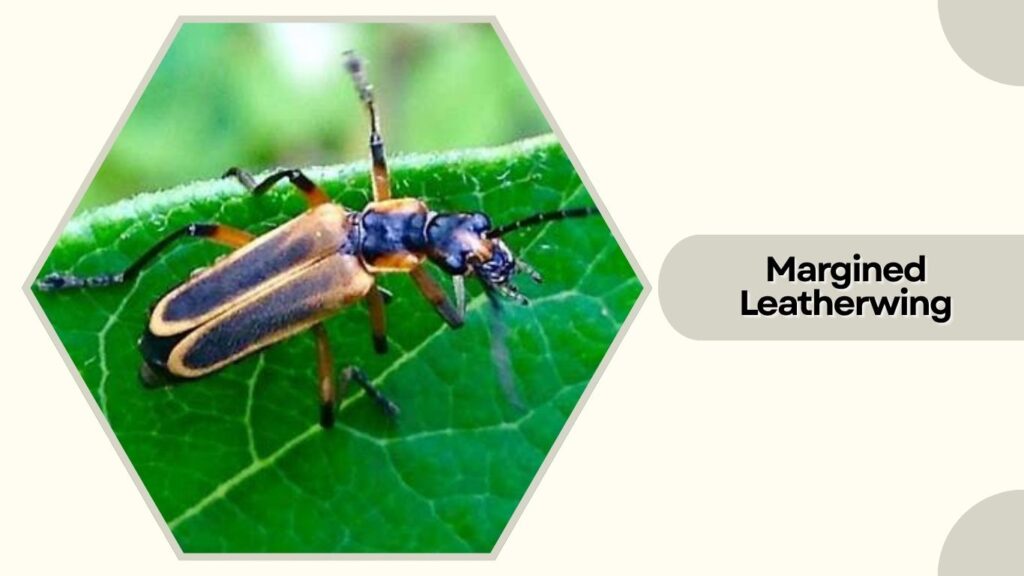
The Margined Leatherwing is a slender soldier beetle recognized by its soft body and contrasting coloration along the edges of the wing covers. These beetles are usually found on flowering vegetation, where adults feed and search for mates. Their delicate appearance is somewhat misleading because the larvae are active predators that help control populations of small ground-dwelling insects.
Identification
- Common Name: Margined Leatherwing
- Family: Cantharidae
- Body Shape: Narrow and elongated
- Wing Covers: Soft with noticeable darker margins
- Color: Usually yellow, tan, or orange with dark accents
- Antennae: Long and segmented
- Legs: Thin and adapted for crawling on vegetation
- Size: Small to medium-sized soldier beetle
Habitat and Distribution
Margined Leatherwings prefer habitats where flowering plants are abundant. They may occur in grasslands, meadows, gardens, woodland clearings, roadside vegetation, and agricultural edges. Adults are often most visible during sunny weather because flowers provide food and convenient locations for courtship.
Behavior and Diet
Adults mainly consume pollen and nectar from a variety of flowering plants. They may also take small insects encountered on blossoms or foliage. Their regular movement from flower to flower means they can contribute modestly to pollination. Larvae are much more predatory and hunt small insects and other invertebrates in soil and leaf litter.
Lifespan and Life Cycle
The life cycle begins when females lay eggs in protected ground-level locations. After hatching, the larvae remain close to the soil, where humidity helps prevent them from drying out. They grow through several larval stages while feeding on prey. Development may slow during colder weather. Pupation occurs in protected soil or debris, followed by the emergence of adults. The adults live long enough to feed, mate, and produce the next generation.
4. Common Red Soldier Beetle
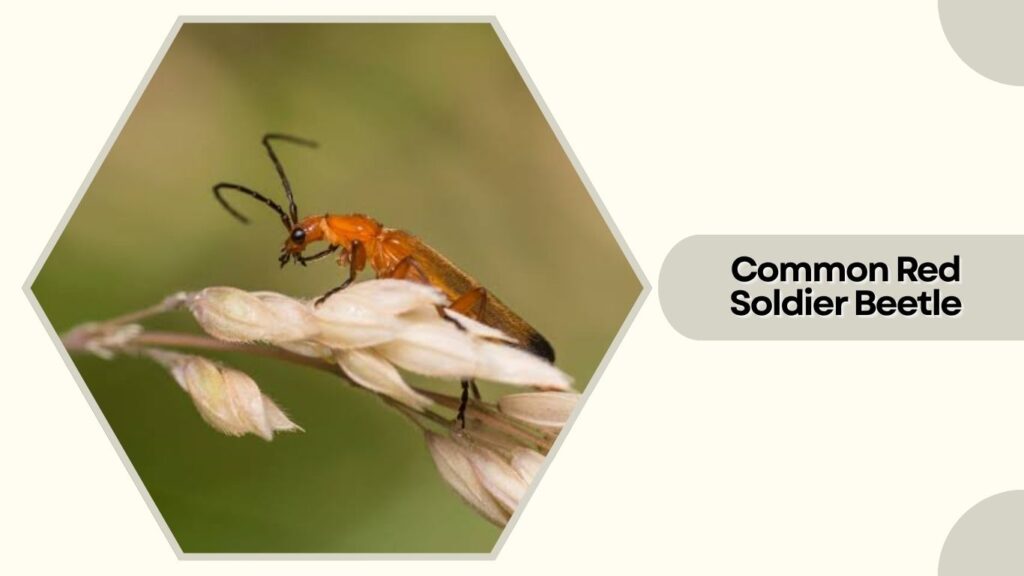
The Common Red Soldier Beetle is one of the most recognizable soldier beetles because of its bright orange-red coloration. Adults often appear in large numbers on flowering plants during summer, particularly around hedgerows, meadows, and gardens. Despite their vivid color and sometimes dramatic mating behavior, these beetles are harmless and play useful ecological roles as flower visitors and predators.
Identification
- Common Name: Common Red Soldier Beetle
- Family: Cantharidae
- Body Color: Bright orange to red
- Wing Tips: Often darker or blackish
- Body Shape: Long, narrow, and soft
- Antennae: Dark, slender, and segmented
- Legs: Usually darker than the body
- Activity Period: Most abundant in summer
Habitat and Distribution
Common Red Soldier Beetles favor open habitats with abundant flowers. They can be found in gardens, grassy fields, roadsides, woodland margins, hedgerows, parks, and uncultivated land. Adults commonly gather on white or yellow flowers where pollen, nectar, and potential mates are easy to find.
Behavior and Diet
Adults feed mainly on pollen and nectar but may also prey on small insects such as aphids. They are frequently seen mating openly on flower heads and foliage. Their feeding habits allow them to act as both predators and incidental pollinators. They do not normally bite people and are not considered household pests.
Lifespan and Life Cycle
Females place eggs in soil or other moist, protected areas. The larvae develop near the ground and prey upon small insects, larvae, and other invertebrates. Larvae can remain active for an extended period before pupating. After pupation, adults emerge during warm weather. The adult stage is largely devoted to feeding and reproduction, while the larval stage represents the longer predatory portion of the life cycle.
5. Brown Leatherwing Beetle
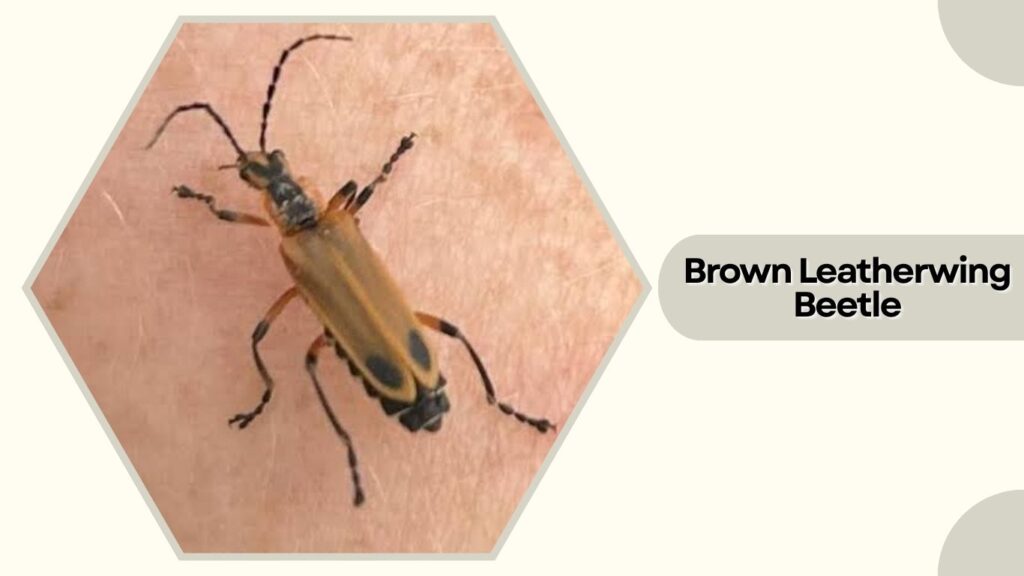
The Brown Leatherwing Beetle is a modestly colored soldier beetle with soft wing covers and an elongated form. Unlike brighter orange or red species, its brown coloration helps it blend into dry vegetation, tree bark, and leaf litter. Adults are usually found on flowers and low foliage, while larvae remain closer to the ground and act as predators.
Identification
- Common Name: Brown Leatherwing Beetle
- Family: Cantharidae
- Color: Brown, tan, or reddish-brown
- Body Shape: Slender and elongated
- Wing Covers: Soft and flexible
- Antennae: Long and narrow
- Legs: Thin and suited for walking on plants
- Surface Texture: Generally smooth to lightly textured
Habitat and Distribution
Brown Leatherwing Beetles can occur in meadows, forest margins, gardens, grasslands, and other habitats with mixed vegetation. Adults often rest on flowers or leaves during warm weather. Moist soil and leaf litter are especially important for immature stages because larvae spend much of their development at ground level.
Behavior and Diet
Adults usually feed on flower pollen and nectar, although they may also consume small soft-bodied insects when available. They are active during daylight and may move steadily among flowering plants. Larvae are more strongly predatory, hunting insect eggs, larvae, and other small prey hidden beneath plant material.
Lifespan and Life Cycle
Eggs are deposited in moist areas near the soil surface. The larvae hatch and develop through several stages while actively hunting prey. They may spend colder periods beneath soil, leaves, or decaying vegetation. Once fully developed, the larvae pupate in protected sites. Adults then emerge when conditions become warm enough for flowers and insect prey to be abundant.
6. Colorado Soldier Beetle
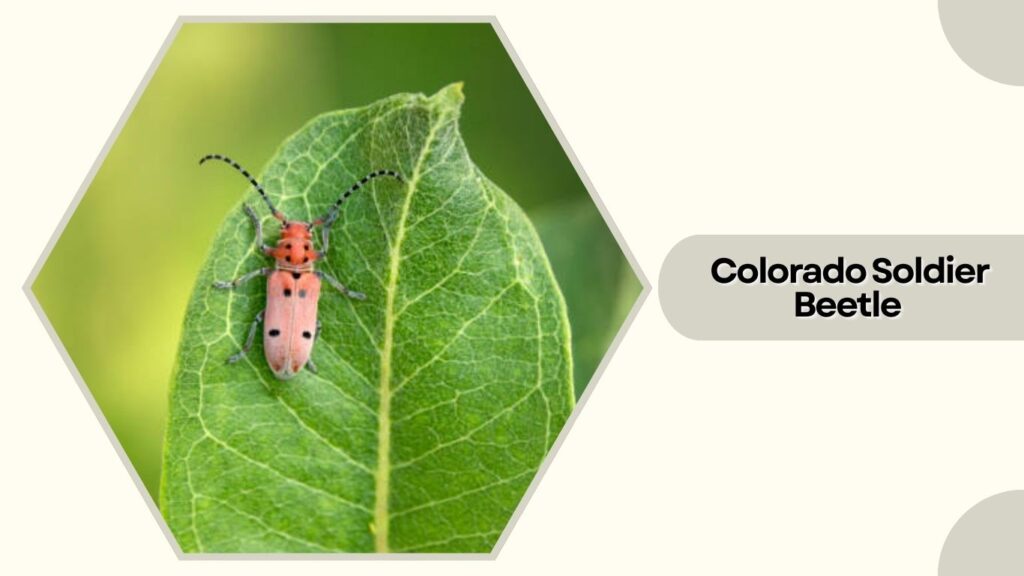
The Colorado Soldier Beetle is a soft-bodied beetle associated with open habitats and flowering vegetation. Its elongated shape and flexible wing covers place it among the characteristic members of the soldier beetle family. Adults are often seen moving across flower heads during warm weather, where they search for food and mates.
Identification
- Common Name: Colorado Soldier Beetle
- Family: Cantharidae
- Body Shape: Long and narrow
- Wing Covers: Soft and leathery
- Color: Commonly orange, yellow, brown, or dark-marked
- Antennae: Long and segmented
- Legs: Thin with good climbing ability
- Activity: Primarily active in warm conditions
Habitat and Distribution
Colorado Soldier Beetles are associated with grasslands, mountain meadows, gardens, roadside vegetation, and open woodland edges. Adults tend to favor places with abundant flowers because these provide reliable food and gathering sites. Larvae remain closer to the soil and may be especially common where organic debris maintains moisture.
Behavior and Diet
Adult beetles consume pollen and nectar and may occasionally feed on aphids or other small insects found on plants. They are typically slow-moving and spend considerable time crawling over flowers. Their larvae are stronger predators and hunt small insect larvae and other ground-level invertebrates.
Lifespan and Life Cycle
Females lay eggs in soil, under plant debris, or in similarly protected environments. Larvae hatch and begin feeding on small prey. They continue growing through several stages and may overwinter as larvae when seasonal conditions require it. Pupation occurs in soil or another protected site. Adults emerge when temperatures rise, and flowering plants become plentiful, beginning another breeding cycle.
7. Common Soldier Beetle
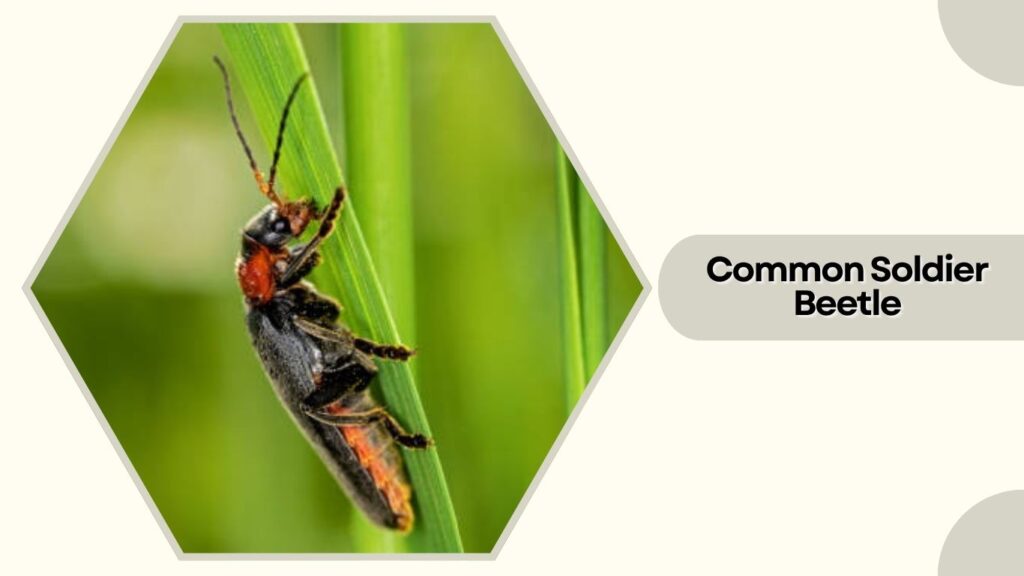
The Common Soldier Beetle is a representative member of the soldier beetle family and is known for its soft body, elongated shape, and frequent association with flowers. Adults may be seen crawling over vegetation in search of pollen, nectar, prey, and mates. Soldier beetles are often beneficial because neither adults nor larvae normally cause significant damage to plants.
Identification
- Common Name: Common Soldier Beetle
- Family: Cantharidae
- Body Shape: Elongated and slightly flattened
- Wing Covers: Soft rather than heavily hardened
- Color: Often brown, orange, yellow, or black-marked
- Antennae: Long and threadlike
- Legs: Slender and mobile
- Typical Location: Flowers and low vegetation
Habitat and Distribution
Common Soldier Beetles occupy a broad range of habitats, including gardens, meadows, grasslands, forest edges, hedgerows, and roadside vegetation. Areas with diverse flowers tend to attract the largest numbers of adults. Moist soil, decomposing plant matter, and leaf litter provide suitable conditions for the developing larvae.
Behavior and Diet
Adults typically consume pollen and nectar while occasionally taking small insects. Their repeated visits to flowers may help transfer pollen between blossoms. Larvae stay closer to the ground and are active predators of insect eggs, larvae, and other small invertebrates. This predatory behavior can make soldier beetles useful in natural pest control.
Lifespan and Life Cycle
Females usually deposit eggs in soil or beneath plant litter. Larvae emerge and begin feeding soon after hatching. They may remain in the larval stage for several months and sometimes through winter. When development is complete, the larva forms a pupa in a protected location. The adult eventually emerges, mates, and lays eggs, completing the cycle.
8. Dark Sailor Beetle
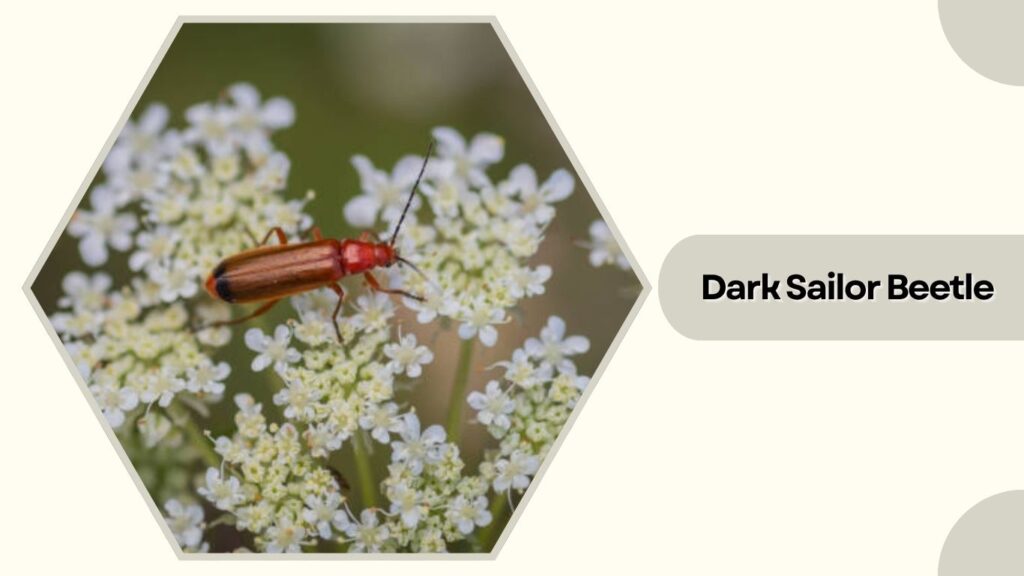
The Dark Sailor Beetle is a soldier beetle distinguished by its darker coloration and slender body. It is less brightly colored than many well-known soldier beetles but shares the same soft wing covers and active flower-visiting habits. Adults commonly occur among low plants and flowers, while larvae live largely out of sight in soil or leaf litter.
Identification
- Common Name: Dark Sailor Beetle
- Family: Cantharidae
- Color: Dark brown to nearly black
- Body Shape: Narrow and elongated
- Wing Covers: Soft and flexible
- Antennae: Long and dark
- Legs: Slender and usually dark-colored
- Appearance: Often understated compared with orange soldier beetles
Habitat and Distribution
Dark Sailor Beetles may occur in meadows, grasslands, woodland edges, gardens, and other areas where low vegetation and flowers are common. Adults prefer warm, sheltered places with good access to pollen and nectar. Larvae depend more heavily on damp soil and decomposing vegetation.
Behavior and Diet
Adults move slowly over leaves and flower heads, where they feed mainly on pollen and nectar. They may occasionally prey on aphids and other small insects. Larvae are more predatory and hunt soft-bodied invertebrates beneath leaves, among roots, and near the soil surface.
Lifespan and Life Cycle
Eggs are usually laid in concealed areas close to the ground. The larvae hatch and remain hidden while hunting prey. They grow gradually through several molts and may survive unfavorable weather in the larval stage. Once mature, they pupate in soil or leaf litter. Adults emerge later during favorable seasonal conditions and spend the remaining portion of the cycle feeding and reproducing.
9. Grey Sailor Beetle
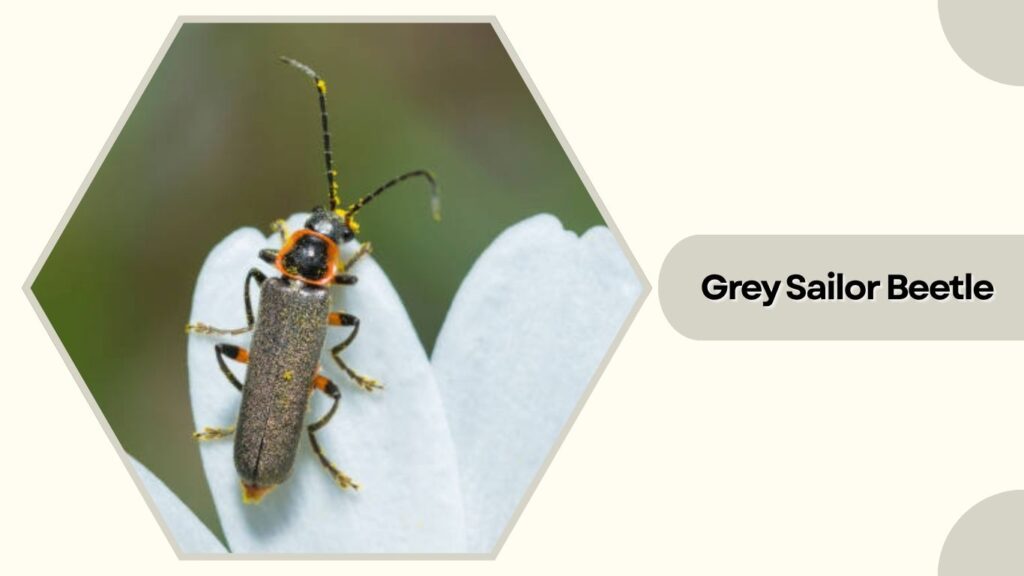
The Grey Sailor Beetle is another soft-bodied member of the soldier beetle family. Its subdued grayish or brownish tones allow it to blend easily with stems, dried leaves, and other vegetation. Adults can nevertheless be found on flowers, where they feed on pollen and nectar and sometimes capture tiny insects.
Identification
- Common Name: Grey Sailor Beetle
- Family: Cantharidae
- Color: Gray, brownish-gray, or muted dark tones
- Body Shape: Long and narrow
- Wing Covers: Soft and leathery
- Antennae: Thin and relatively long
- Legs: Slender and well suited for plant surfaces
- Activity: Usually seen during warmer months
Habitat and Distribution
Grey Sailor Beetles can be associated with grasslands, meadows, woodland margins, gardens, low scrub, and roadside plants. Flower-rich habitats are particularly important to adults, while larvae need sheltered areas near the soil. Leaf litter and decaying plant matter help maintain suitable moisture levels for developing larvae.
Behavior and Diet
Adults spend much of their active period feeding on pollen and nectar. They may also take small insects encountered on vegetation. Their quiet feeding behavior makes them easy to overlook despite their ecological value. Larvae are active predators and consume small insects and other invertebrates that live around the soil surface.
Lifespan and Life Cycle
Females lay eggs in protected, humid locations. After hatching, larvae begin a primarily predatory phase and remain hidden under plant debris or within loose soil. They grow through repeated molts before eventually pupating. Adults appear when temperatures and food availability are favorable. After mating, females produce another group of eggs, continuing the seasonal life cycle.
10. Pale Soldier Beetle
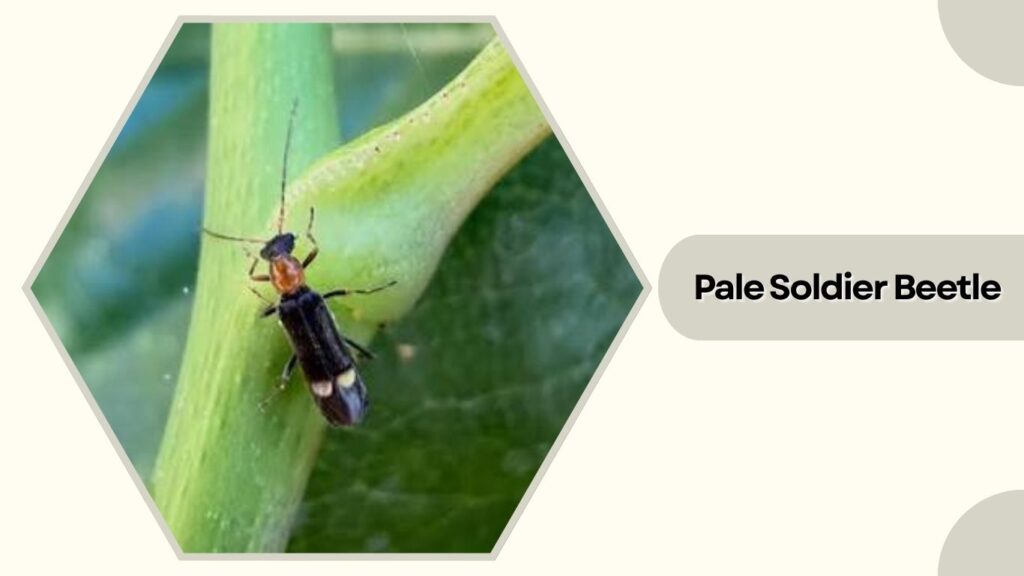
The Pale Soldier Beetle is a soft-bodied soldier beetle known for its comparatively light coloration. One species associated with this common name is Cantharis pallida. Like other members of the Cantharidae family, it has flexible wing covers, an elongated body, and long antennae. Adults are often associated with vegetation and flowers, while the immature stages remain much closer to the ground.
Identification
- Common Name: Pale Soldier Beetle
- Scientific Name: Cantharis pallida
- Family: Cantharidae
- Body Shape: Long, narrow, and soft-bodied
- Color: Usually pale yellow, tan, or yellowish-brown
- Antennae: Long and threadlike
- Wing Covers: Relatively soft and flexible
- Legs: Slender and adapted for moving through vegetation
Its pale coloring can make it less conspicuous than the darker sailor beetles. Exact identification may require checking coloration of the head, pronotum, legs, and wing cases because several Cantharis species can look similar.
Habitat and Distribution
Pale Soldier Beetles are associated with vegetated habitats where they can find both prey and flowering plants. Woodland edges, older woodland habitats, grassy areas, hedgerows, and clearings may provide suitable conditions. Adults frequently rest on leaves, stems, or flowers.
Moist ground with leaf litter is particularly valuable for larvae. These sheltered microhabitats provide humidity while also supporting many of the small invertebrates that larvae use as food.
Behavior and Diet
Adults can feed on nectar and pollen while also taking small, soft-bodied insects. They are active on vegetation and may move between plants in search of food. Soldier beetles in general are considered beneficial because flower-visiting adults can contribute to pollination while predatory individuals consume small insects.
Larvae are primarily ground-level hunters, feeding on small invertebrates hidden beneath leaves and within loose soil.
Lifespan and Life Cycle
The life cycle includes egg, larva, pupa, and adult stages. Eggs are normally placed in sheltered areas close to the ground. Larvae develop in soil, grass, or plant litter, where they hunt prey and grow through several molts.
After completing larval development, they pupate in a protected location. Adults later emerge and spend their comparatively short adult period feeding, mating, and producing another generation.
11. Wood Sailor Beetle
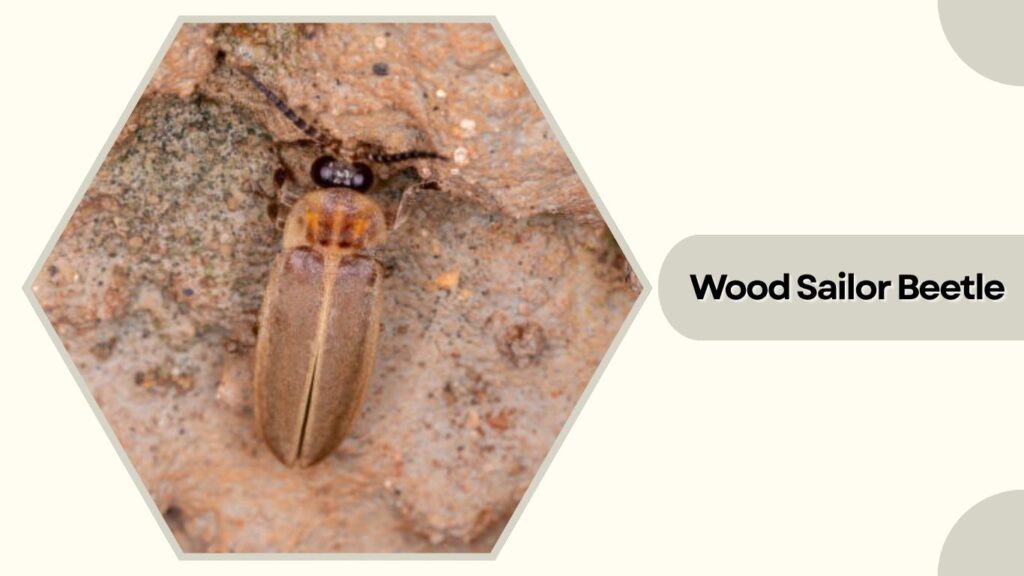
The Wood Sailor Beetle (Cantharis pellucida) is a European soldier beetle particularly associated with woodland environments. Its elongated shape and relatively soft wing cases are typical of the family Cantharidae. Adults are commonly encountered on woodland vegetation, along paths, and near flowering plants, while larvae remain mostly hidden near ground level. British beetle checklists associate this species especially with older woodland habitats.
Identification
- Common Name: Wood Sailor Beetle
- Scientific Name: Cantharis pellucida
- Family: Cantharidae
- Body Shape: Elongated and moderately flattened
- Wing Covers: Soft compared with many other beetles
- Color: Typically dark-winged with contrasting lighter body areas
- Antennae: Long and segmented
- Legs: Slender
- Typical Location: Woodland foliage and low vegetation
The overall appearance can resemble several other Cantharis species, so individual color markings are important when attempting species-level identification.
Habitat and Distribution
Wood Sailor Beetles have a particularly strong association with woodland. Mature deciduous woods, shaded tracks, woodland margins, hedgerows, and areas containing abundant leaf litter can provide suitable habitat.
Adults may move into sunny woodland clearings where flowering plants are available. Larvae generally remain in damp leaf litter, loose soil, or dense vegetation where conditions stay humid.
Behavior and Diet
Adults spend much of their active period crawling over vegetation. Soldier beetles commonly consume pollen and nectar, although many also capture soft-bodied insects. Small flies, aphids, and similar prey may be taken when encountered.
The larvae are more strongly predatory. Their ground-level lifestyle allows them to hunt insect larvae and other small invertebrates among fallen leaves.
Lifespan and Life Cycle
Females lay eggs near the soil surface in sheltered, humid locations. Larvae hatch and begin a much longer period of growth and predation.
The larval stage may continue through unfavorable seasonal conditions. Once development is complete, pupation takes place within soil or plant debris. Adults emerge when temperatures become suitable and vegetation provides enough food, after which mating and egg laying begin another generation.
12. Rustic Sailor Beetle
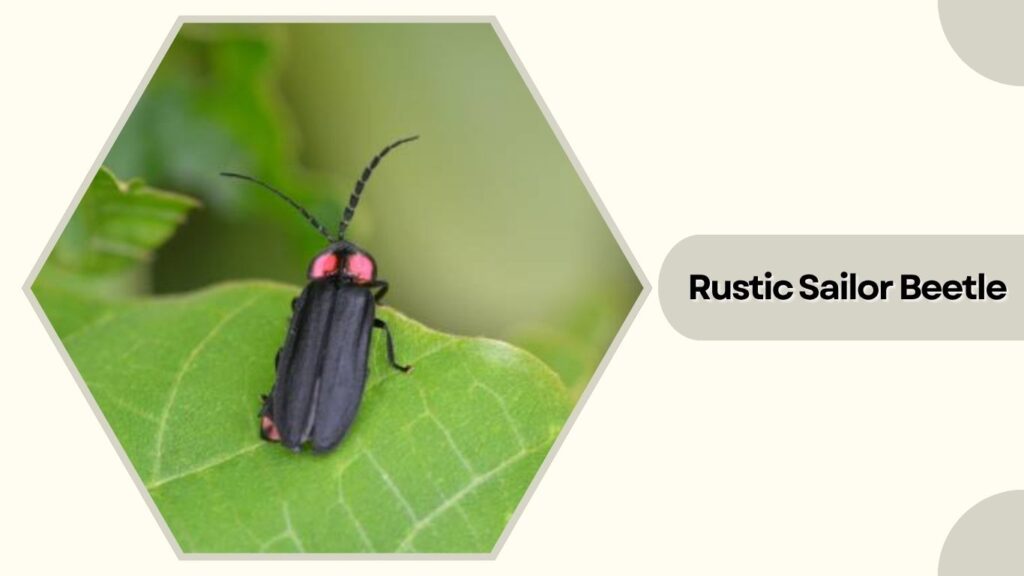
The Rustic Sailor Beetle (Cantharis rustica) is a distinctive European soldier beetle occurring from Europe eastward toward central Russia. Its dark wing cases and contrasting pronotum help separate it from many paler soldier beetles. Adults can be found in grassland, agricultural landscapes, woodland margins, and other areas with tall vegetation.
Identification
- Common Name: Rustic Sailor Beetle
- Scientific Name: Cantharis rustica
- Family: Cantharidae
- Body Shape: Long and relatively narrow
- Wing Covers: Usually black or very dark
- Pronotum: Often marked with a distinctive dark central area
- Legs: Dark or partly dark
- Antennae: Long and threadlike
- Adult Activity: Mainly spring through early summer in much of its European range
The dark elytra combined with the contrasting thorax provide some of the most noticeable identification features.
Habitat and Distribution
The Rustic Sailor Beetle occurs across a broad portion of Europe and extends east toward central Russia. It favors lowland grasslands and agricultural areas but may also occur around woodland and places containing tall grasses.
Adults usually climb stems and flowering vegetation, making them much easier to observe than their secretive larvae.
Behavior and Diet
Unlike soldier beetles that rely heavily on floral resources, Cantharis rustica is also an active predator. Adults can capture other insects on foliage and flowers while still using nectar or pollen when available.
Larvae remain near the soil and hunt other small invertebrates. This predatory behavior makes the species part of the natural community of insects that can help suppress some potential crop pests.
Lifespan and Life Cycle
Adults are most noticeable during their seasonal flight period. After mating, females deposit eggs close to the soil. Larvae become active later and spend most of their development at ground level.
They can remain active from late summer into the cooler part of the year. Mature larvae eventually pupate, generally during spring, and the new adults emerge to repeat the cycle.
13. Two-Lined Leatherwing
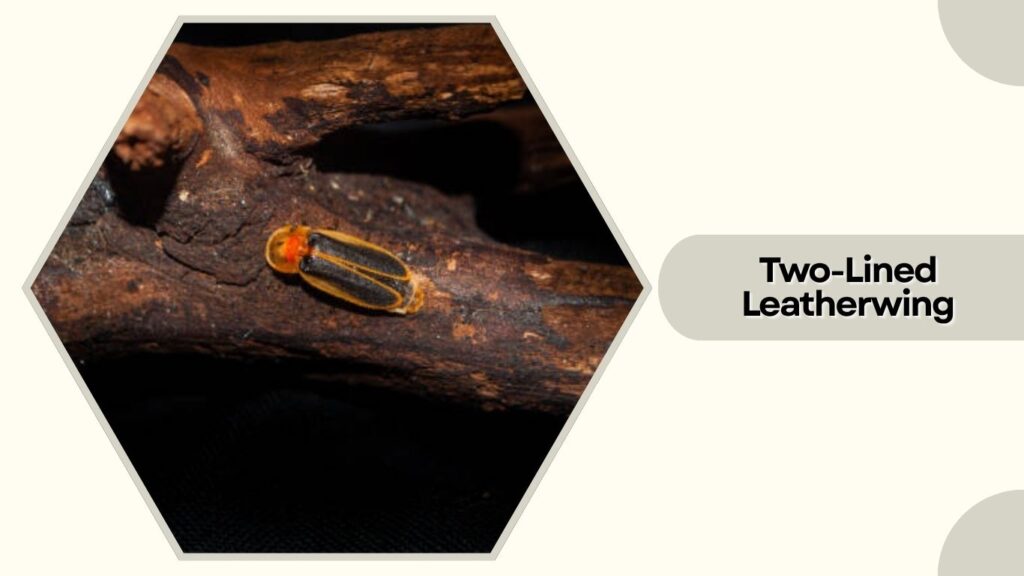
The Two-Lined Leatherwing (Atalantycha bilineata) is a North American soldier beetle known for the contrasting longitudinal markings on its body. It is a relatively small, soft-bodied species that can resemble a firefly at first glance. It occurs across parts of the eastern United States and extends toward the Great Plains and neighboring areas of Canada.
Identification
- Common Name: Two-Lined Leatherwing
- Scientific Name: Atalantycha bilineata
- Family: Cantharidae
- Body Shape: Narrow, elongated, and slightly flattened
- Color: Combination of dark and reddish-orange markings
- Antennae: Long, slender, and threadlike
- Wing Covers: Soft and leathery
- Adult Size: Roughly 6–10 mm
- Season: One of the earlier soldier beetles to appear in spring
The contrasting lines and dark-and-red coloration make mature adults distinctive when examined closely.
Habitat and Distribution
Two-Lined Leatherwings occur in eastern portions of North America. Adults can be found on flowers and foliage of low-growing plants, especially during spring.
Woodland borders, open woods, grassy areas, gardens, roadsides, and places containing early-season vegetation can provide suitable habitat.
Behavior and Diet
Adults are active during daylight and crawl over low vegetation searching for food and mates. Like many soldier beetles, they can consume floral resources as well as small invertebrates.
Their soft wing cases do not prevent flight; adults can fly readily between plants. Their coloration may also provide some protection by warning predators that the beetle is an undesirable meal.
Lifespan and Life Cycle
Females place eggs in protected environments around soil or plant debris. Larvae hatch and live near the ground, where they hunt small invertebrates.
Most of the beetle’s growth occurs during the larval stage. When mature, the larva pupates and transforms into an adult. Adults appear relatively early in the growing season compared with many late-summer soldier beetles. After feeding and mating, females lay eggs that begin the next generation.
14. Black Soldier Beetle
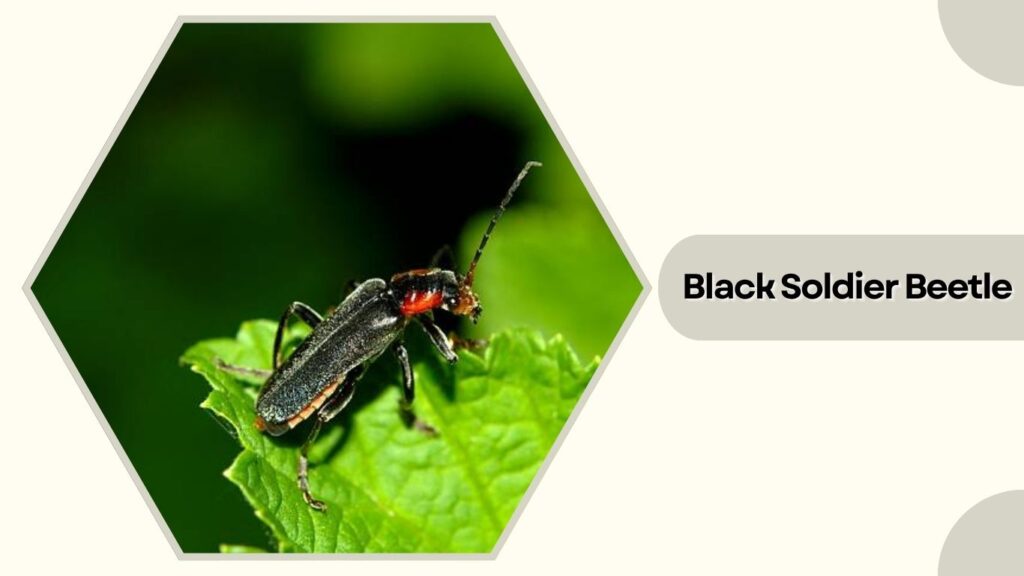
The name Black Soldier Beetle can be used descriptively for dark-colored members of the soldier beetle family. One suitable example is Cantharis nigra, a small European soldier beetle characterized by predominantly dark wing covers combined with variable reddish markings. It should not be confused with the black soldier fly, which belongs to an entirely different insect order. Cantharis nigra occurs particularly in open habitats.
Identification
- Common Name: Black Soldier Beetle
- Example Species: Cantharis nigra
- Family: Cantharidae
- Body Shape: Slender and elongated
- Wing Covers: Predominantly black
- Body Markings: Black with variable reddish areas
- Antennae: Long and narrow
- Legs: Slender
- Appearance: Darker than many yellow and orange soldier beetles
Color alone should not be used for definite identification because several Cantharis species possess dark elytra.
Habitat and Distribution
Cantharis nigra is associated primarily with open habitats such as meadows and marshes. Individuals may disperse into additional habitats later in their seasonal activity period.
Vegetation around damp grasslands can provide suitable feeding and hunting areas. Leaf litter and ground vegetation are especially important for larvae.
Behavior and Diet
Adults move over leaves, stems, and flowers while hunting small insects or taking floral foods. Soldier beetles are usually active during daylight and are capable fliers.
Larvae are predatory and remain closer to the ground. Their prey can include insect eggs, larvae, and various small soft-bodied invertebrates.
Lifespan and Life Cycle
Adults reproduce during their seasonal activity period. Females deposit eggs in humid soil or debris, protecting them from excessive drying.
Larvae hatch and begin hunting almost immediately. They grow through successive stages before becoming mature enough to pupate. Pupation occurs in a concealed location, and adults later emerge.
As with many temperate soldier beetles, considerably more of the insect’s life may be spent as a larva than as the conspicuous adult seen on vegetation.
15. Red Soldier Beetle
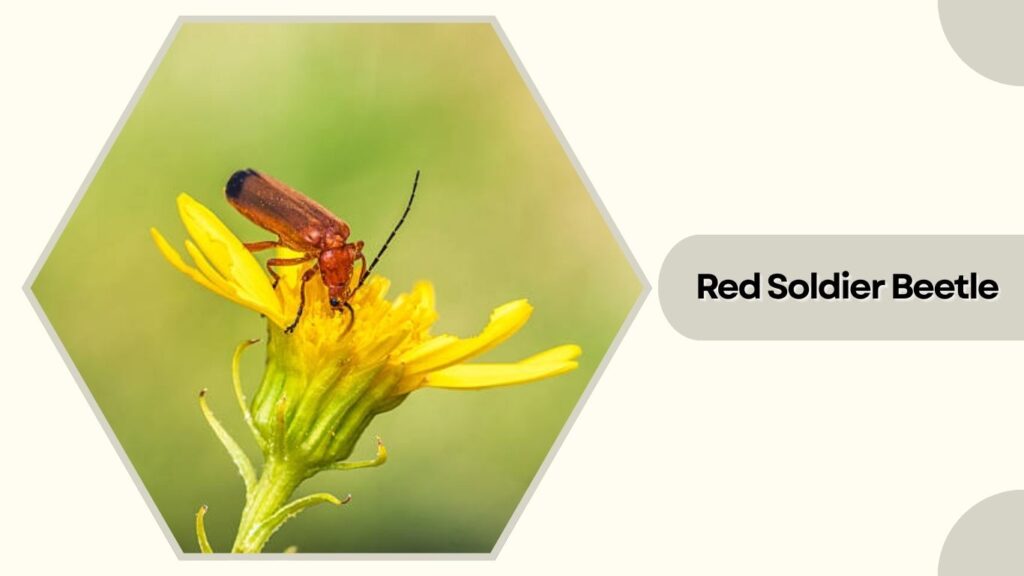
The term Red Soldier Beetle is used for several reddish members of Cantharidae and often refers to species such as the Common Red Soldier Beetle (Rhagonycha fulva). Adults actually tend to appear orange-red rather than deep red, with darker tips on the wing cases. This species is especially widespread and abundant in Britain and other parts of Europe.
Identification
- Common Name: Red Soldier Beetle
- Representative Species: Rhagonycha fulva
- Family: Cantharidae
- Length: Approximately 8–10 mm
- Body Color: Orange to reddish-orange
- Wing Tips: Distinctive dark or black areas
- Legs: Darker toward the feet
- Antennae: Long and dark
- Body Shape: Narrow and rectangular
Its orange-red body and black-tipped elytra make it one of the easier European soldier beetles to notice.
Habitat and Distribution
Red soldier beetles occupy many open habitats containing abundant flowers. Gardens, hedgerows, grasslands, woodland edges, road verges, and meadows can all support adults.
They are frequently seen on open flower heads, particularly umbellifers, thistles, and similar summer-blooming plants.
Behavior and Diet
Adults are active during daylight and can fly readily between flowers. They prey on small insects but also consume considerable amounts of pollen and nectar.
Large numbers sometimes gather on a single patch of flowering plants. Pairs are frequently seen mating openly on flower heads. Their regular contact with flowers also allows them to contribute to pollination.
Lifespan and Life Cycle
Eggs are laid in moist, protected places near the ground. The larvae develop among soil, grass, and leaf litter, where they prey on small invertebrates.
Larval development occupies much of the life cycle. Pupation follows once the larva has reached full size. Adults then emerge during summer, feed intensively, find mates, and produce eggs.
The adult stage is therefore the most visible portion of the life cycle even though much of the beetle’s development takes place unseen near the ground.
16. Yellow Soldier Beetle
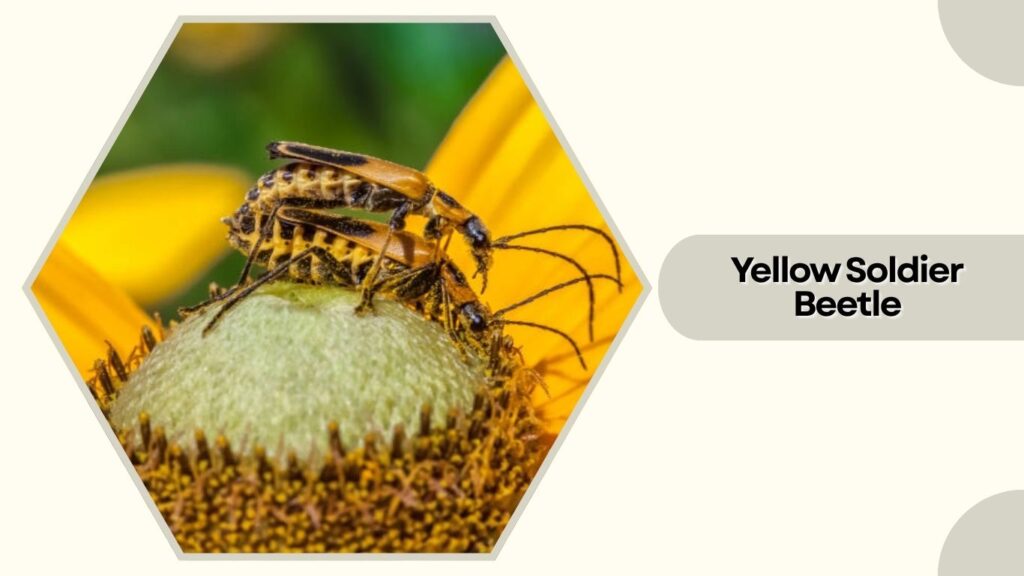
The name Yellow Soldier Beetle can describe several pale yellow members of Cantharidae rather than one universally recognized species. Cantharis cryptica is a good example of a predominantly yellow to yellow-orange soldier beetle. This European species occurs in habitats containing tall vegetation and can easily be confused with other pale Cantharis species.
Identification
- Common Name: Yellow Soldier Beetle
- Representative Species: Cantharis cryptica
- Family: Cantharidae
- Body Length: About 7–9 mm
- Color: Yellow-orange to reddish-yellow
- Wing Covers: Pale and relatively soft
- Body Shape: Long and narrow
- Antennae: Slender and segmented
- Legs: Pale with some darker areas possible
Because pale soldier beetles can be very similar, detailed examination may be necessary to distinguish closely related species.
Habitat and Distribution
Cantharis cryptica is native to Europe and occurs particularly in places with tall vegetation. Grasslands, hedgerows, field margins, meadows, woodland edges, and gardens can provide suitable environments.
Adults climb vegetation and flowers, while larvae spend most of their lives nearer ground level.
Behavior and Diet
Adult yellow soldier beetles frequently patrol flowers and foliage during daylight. Nectar and pollen may form part of their diet, but they can also capture smaller insects.
The larvae are more secretive predators. They move through low vegetation and litter looking for soft-bodied prey. Because both stages can consume other insects, soldier beetles can contribute to natural biological control.
Lifespan and Life Cycle
Females deposit eggs in protected areas around soil and vegetation. The young larvae live among grass, loose soil, and leaf litter, where they feed and grow through several developmental stages.
After reaching maturity, a larva pupates in a protected site. Metamorphosis produces the winged adult that later appears on flowers and tall vegetation.
Adults mate during the warmer period of the year and females eventually lay another generation of eggs, continuing the annual or seasonal cycle.
17. Orange Soldier Beetle
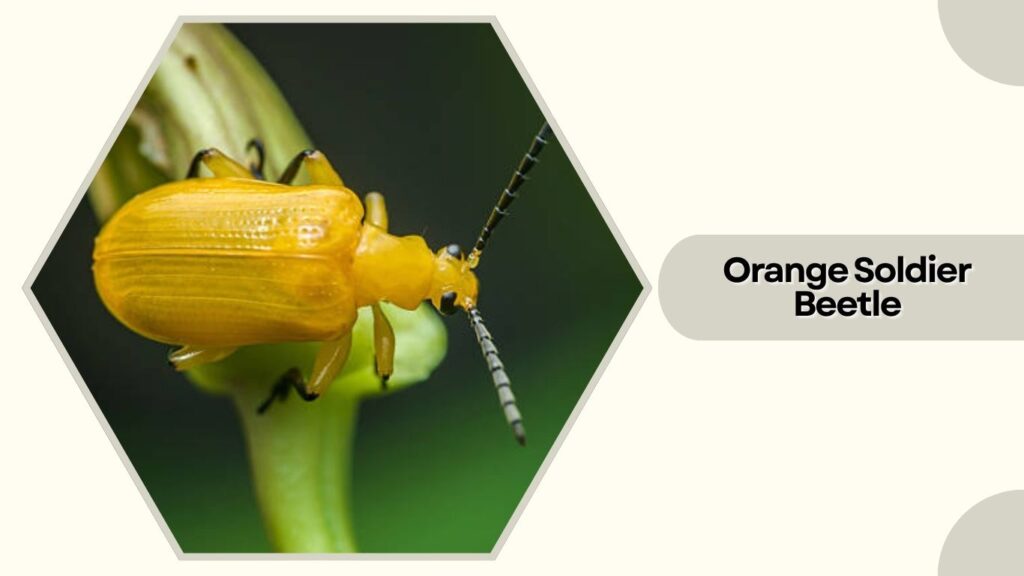
Orange Soldier Beetle is another descriptive name that can apply to several orange members of the Cantharidae family rather than a single universally accepted species. Orange coloration is particularly common among genera such as Chauliognathus and Rhagonycha. These beetles are usually easy to notice on summer flowers because their bright bodies contrast strongly against green foliage.
Identification
- Common Name: Orange Soldier Beetle
- Family: Cantharidae
- Typical Color: Orange, yellow-orange, or reddish-orange
- Markings: Dark patches may occur on the head, pronotum, or wing covers
- Body Shape: Long and somewhat flattened
- Wing Covers: Soft and flexible
- Antennae: Long and threadlike
- Legs: Slender
- Typical Location: Flowers and upper foliage
Color patterns vary considerably between species, so an orange body alone is not enough to determine the exact species.
Habitat and Distribution
Orange-colored soldier beetles occur in numerous regions, including North America and Europe, depending on the species involved. They are strongly associated with flower-rich habitats.
Meadows, prairies, gardens, roadsides, field margins, woodland clearings, and grasslands can support large numbers. North American Chauliognathus species are particularly familiar visitors to goldenrod, coneflowers, and other flowering plants.
Behavior and Diet
Adults spend much of their time on flowers feeding on nectar and pollen. Some species also capture aphids and other small insects. Frequent movement between flowers can make them useful pollinators.
They are generally harmless to people and healthy plants. Even when many individuals gather on one plant, they are normally using it for food and mating rather than causing serious damage.
Lifespan and Life Cycle
Females usually lay eggs in soil or protected plant debris. Larvae hatch and live close to the ground, where they prey on insect eggs, larvae, and other small organisms.
In many temperate species, larvae survive the winter and resume development when conditions improve. Pupation occurs later, followed by the emergence of winged adults.
Adults then gather around flowering plants during their seasonal flight period. After mating and egg laying, the cycle begins again with a new generation of predatory larvae.
FAQs
1. Are soldier beetles harmful to humans?
No. Soldier beetles are generally harmless to people. They do not normally sting and are not considered dangerous household pests. They are most often encountered outdoors on flowers and vegetation.
2. What do soldier beetles eat?
Adult soldier beetles commonly eat nectar and pollen, while some also capture aphids, caterpillars, and other small insects. Their larvae are generally more predatory and feed on insect eggs, larvae, and other small ground-dwelling invertebrates.
3. Are soldier beetles good for gardens?
Yes. Many soldier beetles are considered beneficial because adults visit flowers and can contribute to pollination, while adults and larvae of predatory species help reduce populations of small insects. They normally do not damage healthy garden plants.
4. Where do soldier beetles live?
Soldier beetles occur in habitats such as meadows, gardens, grasslands, woodland edges, wetlands, prairies, hedgerows, and roadsides. Adults are usually found on vegetation and flowers, whereas larvae live mainly in soil, leaf litter, and plant debris.
5. What is the life cycle of a soldier beetle?
Soldier beetles undergo complete metamorphosis with four stages: egg, larva, pupa, and adult. Eggs are usually laid close to the ground. Predatory larvae develop in soil or litter before pupating, and winged adults later emerge to feed, mate, and produce the next generation.