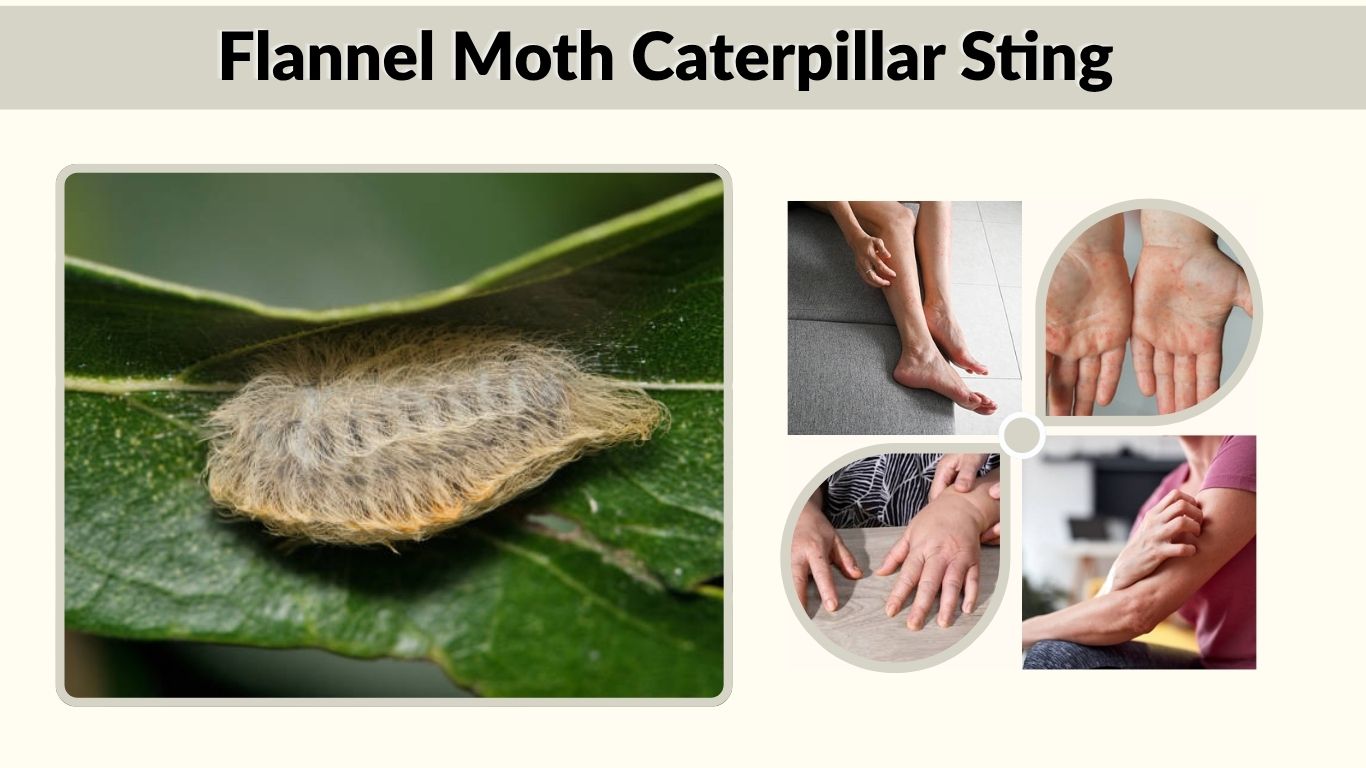
A flannel moth caterpillar sting can produce intense burning pain, redness, swelling, and a raised skin rash. The injury occurs when venomous spines hidden beneath the caterpillar’s soft-looking hairs penetrate the skin. Southern, white, and black-waved flannel moth caterpillars can all sting, but the southern species—often called the puss caterpillar or asp—is responsible for many serious encounters in the United States. Promptly removing embedded spines, washing the skin, and applying a cold compress may reduce pain and prevent continued irritation.
Do Flannel Moths Sting?
Flannel moths belong to the family Megalopygidae, a group known for woolly-looking adults and unusually hairy larvae. The caterpillars use venomous spines for defense, but they do not actively attack people. Most stings happen when someone unknowingly touches a caterpillar resting on a leaf, tree trunk, railing, outdoor chair, or piece of clothing.
Caterpillars vs. Adult Moths
Adult flannel moths do not sting. Their fuzzy bodies are covered with scales rather than the venom-delivering spines found on their larvae. The caterpillar stage presents the actual contact hazard.
A caterpillar does not have a conventional stinger and does not bite. Instead, physical contact causes its concealed spines to penetrate the skin, break, and release venom.
Flannel Moth Caterpillars That Can Sting
Several North American species can cause painful reactions:
- Southern flannel moth: Its puss caterpillar resembles a dense teardrop-shaped tuft of tan, gray, or reddish fur.
- White flannel moth: Its caterpillar has a dark central patch, pale spots, yellow sides, and long projecting hairs.
- Black-waved flannel moth: Its caterpillar may be white, cream, caramel, or reddish, with long or crinkled hairs.
- Other flannel moth species: Related caterpillars in the Americas may also possess defensive spines.
Because harmless and venomous caterpillars can look similar, avoid touching any unfamiliar hairy caterpillar.
What Does a Flannel Moth Caterpillar Sting Feel Like?
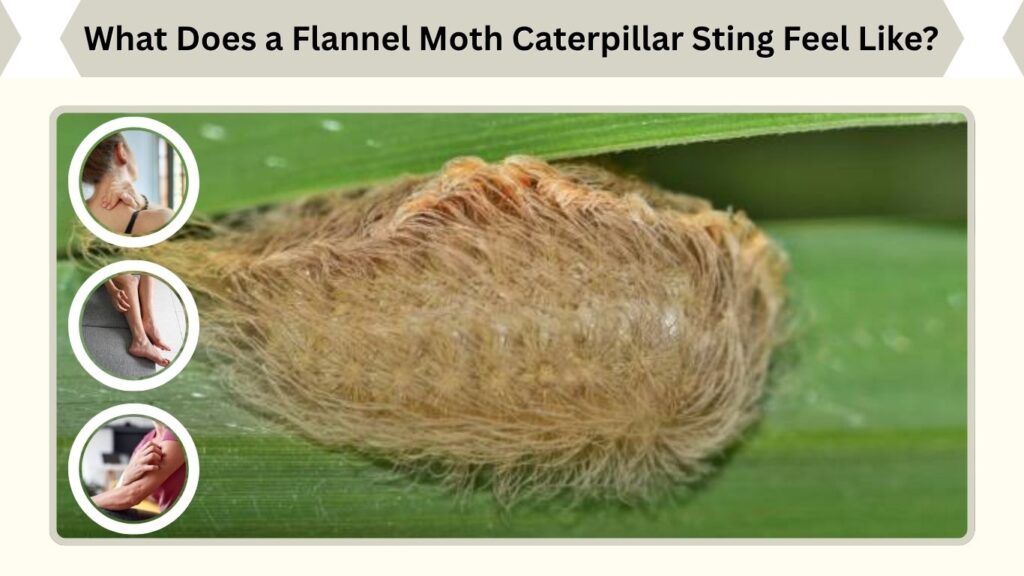
Pain may begin immediately after contact. Its intensity depends on the species, number of embedded spines, affected body part, and individual sensitivity. A brief brush may produce localized burning, while firm contact can cause significant pain that travels beyond the original sting site.
Pain Description
People commonly describe the pain as:
- Sharp and immediate
- Burning or throbbing
- Similar to a strong bee or wasp sting
- Disproportionately intense for such a small insect
- Radiating up an arm or leg
- Continuing after the caterpillar is gone
Southern flannel moth caterpillar stings are generally considered especially painful. The discomfort may begin to improve within an hour, but some reactions persist for several hours or longer.
Common Sting Symptoms
A localized reaction may include:
- Burning pain
- Redness
- Itching
- Swelling
- Tenderness
- Raised bumps or welts
- Blisters
- Numbness or tingling
- A visible outline matching the spines
When numerous spines enter the skin, the rash may form a grid-like or patterned mark. However, the appearance alone cannot reliably identify the caterpillar responsible.
Can a Sting Cause Leg Cramping?
Muscle discomfort or cramping can occur, particularly when the sting affects a leg or when pain radiates from the contact site. Cramping may also have an unrelated cause, so it should not automatically be attributed to the caterpillar.
Seek medical advice if cramping is severe, continues to worsen, affects multiple muscles, or occurs with weakness, vomiting, breathing difficulty, chest discomfort, or unusual changes in heart rate.
Is a Flannel Moth Caterpillar Sting Dangerous?
Most reactions remain limited to pain and inflammation around the contact area. Nevertheless, some people experience more extensive symptoms, especially after heavy exposure or contact with a southern flannel moth caterpillar.
Possible Systemic Symptoms
Symptoms beyond the immediate sting site may include:
- Headache
- Nausea or vomiting
- Dizziness
- Muscle discomfort
- Swollen lymph nodes
- Abdominal distress
- Anxiety caused by severe pain
- General weakness
Children may have difficulty describing the pain or other symptoms. A child who has experienced a suspected sting should be monitored closely.
Signs of a Medical Emergency
Call emergency services immediately if the affected person develops:
- Difficulty breathing
- Swelling of the lips, tongue, face, or throat
- Difficulty swallowing
- Widespread hives
- Fainting or confusion
- Chest pain
- Seizure-like activity
- Rapidly spreading swelling
- Severe weakness
Contact involving an eye, mouth, or another sensitive area also requires prompt medical evaluation. People with a history of serious insect-sting reactions should seek professional guidance without delay.
Flannel Moth Caterpillar Sting Treatment
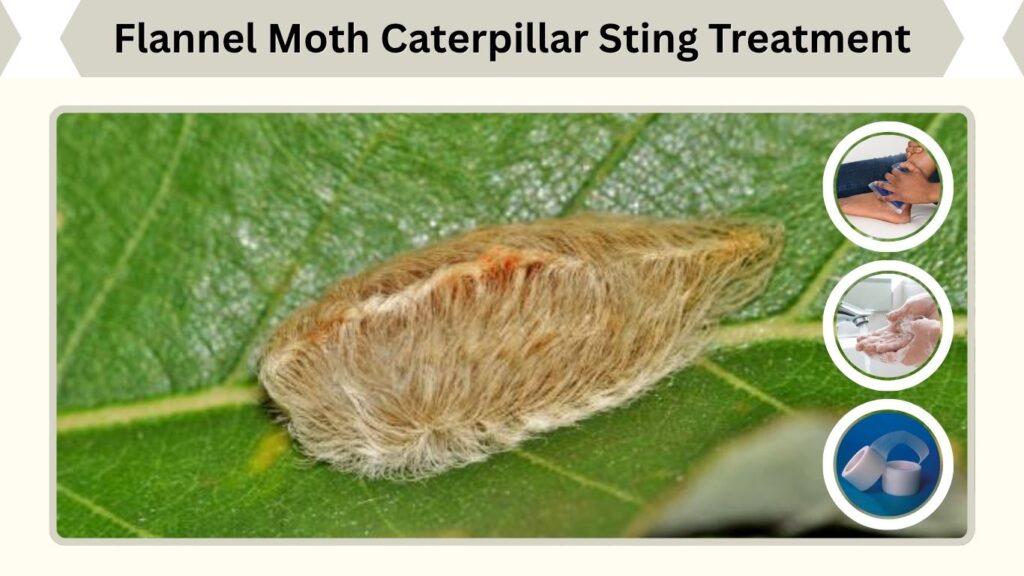
Immediate treatment focuses on removing the tiny spines and controlling pain and inflammation. Avoid rubbing the affected area because rubbing may break additional spines or push them deeper into the skin.
First-Aid Steps
- Remove the caterpillar safely: If it remains on the skin, use a stick, card, or another object. Do not touch it with the opposite hand.
- Use adhesive tape: Place clear tape gently over the sting site and pull it away. Repeat several times with fresh pieces to remove embedded spines.
- Wash the area: Gently clean the skin with soap and water to remove loose hairs and residual venom.
- Apply a cold compress: Use an ice pack wrapped in a cloth for short intervals. Never place ice directly against the skin.
- Avoid scratching: Scratching can increase inflammation and create an opening for infection.
- Monitor symptoms: Watch for increasing pain, spreading swelling, breathing problems, or other symptoms beyond the affected area.
Hydrocortisone cream may help reduce itching or inflammation. An oral antihistamine may be suitable for some people, while an over-the-counter pain reliever may help control discomfort. Follow product directions and ask a healthcare professional about medication for children, pregnancy, existing health conditions, or possible drug interactions.
What Not to Do
Avoid unproven or potentially harmful remedies. Do not:
- Squeeze or cut the skin
- Rub the sting site
- Attempt to suck out the venom
- Apply heat directly to the skin
- Use gasoline, bleach, or strong chemicals
- Handle the caterpillar to confirm its identity
- Reuse tape that has collected spines
After treatment, wash any clothing that may contain loose hairs. Handle the clothing carefully to avoid transferring spines to another part of the body.
When to Contact Poison Control
Contact Poison Control or a healthcare professional if the species is unknown, pain is intense, or symptoms are spreading. Medical advice is also appropriate for multiple stings, extensive blistering, persistent muscle cramps, or an exposure involving a young child.
In the United States, Poison Control can be reached at 1-800-222-1222. People outside the United States should contact their local poison-information service.
Southern Flannel Moth Caterpillar Sting
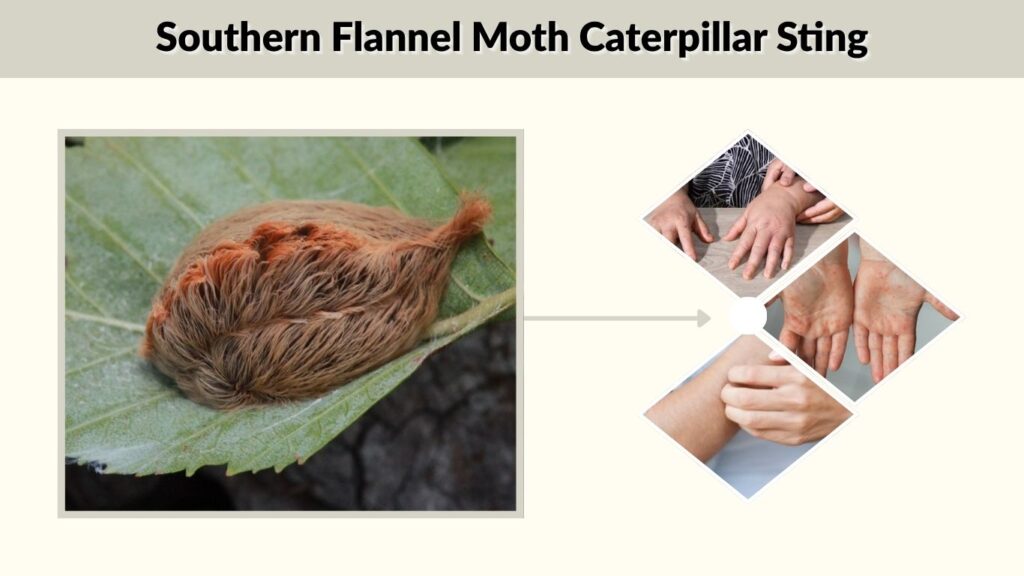
The southern flannel moth caterpillar, Megalopyge opercularis, is often called a puss caterpillar, tree asp, or asp. It is one of the most medically significant stinging caterpillars found in the United States.
Identification and Sting Risk
The caterpillar usually resembles a small piece of fur with a tapered or tail-like end. Its color ranges from pale gray and tan to yellowish brown or dark reddish brown. The dangerous spines are hidden beneath its dense outer coat.
Never use appearance alone as a reason to touch one. The soft-looking covering provides no protection from its venomous spines.
Where Stings Commonly Occur
Southern flannel moth caterpillars are especially familiar in Texas and Florida, although their range extends through much of the Southeast and nearby regions. They inhabit oaks, elms, pecans, hackberries, and numerous other trees and shrubs.
Stings commonly occur when caterpillars:
- Fall from trees
- Crawl onto outdoor furniture
- Rest on fences or railings
- Become trapped inside clothing
- Occupy low branches near walkways
- Are picked up by curious children
Warm southern areas may support activity over an extended season, while encounters in cooler locations are more seasonal.
White and Black-Waved Flannel Moth Stings
White and black-waved flannel moth caterpillars may receive less attention than puss caterpillars, but their spines can still cause painful dermatitis.
White Flannel Moth Caterpillar
The white flannel moth caterpillar has visible dark and rusty patches with rows of pale spots. It commonly feeds on redbud, hackberry, elm, beech, black locust, mimosa, and greenbrier.
Its sting can cause wasp-like pain, redness, blistering, and a persistent rash. Treatment follows the same basic procedure: remove spines with tape, wash the skin, apply a cold pack, and monitor the reaction.
Black-Waved Flannel Moth Caterpillar
The black-waved flannel moth caterpillar has variable coloration and may resemble a loose tuft of white, cream, brown, or reddish hair. Its venomous spines can cause burning pain, inflammation, headache, or swollen lymph nodes in some cases.
Because it can resemble related species, identification is best made from a clear photograph taken without handling the insect.
How to Prevent Flannel Moth Caterpillar Stings
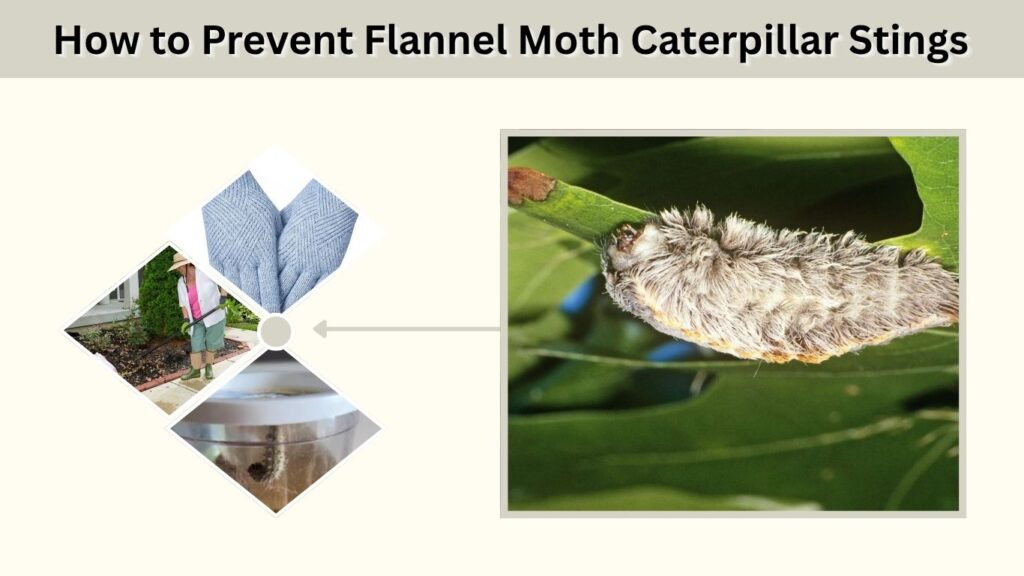
Avoidance is the most effective protection. Caterpillars may be difficult to see when resting under leaves or blending into bark, so additional precautions are helpful while gardening.
Safety Around the Home
- Teach children not to touch hairy caterpillars.
- Wear gloves, long sleeves, closed shoes, and a hat outdoors.
- Inspect outdoor furniture before sitting.
- Check clothing and towels left outside.
- Avoid walking barefoot beneath infested trees.
- Keep pets away from caterpillars.
- Use tools rather than hands for removal.
- Contact a pest-control professional during a large outbreak.
Do not crush or sweep caterpillars with unprotected hands. Their detached hairs and spines may remain capable of irritating skin.
FAQs
How long does a flannel moth caterpillar sting last?
Severe pain may improve within an hour or continue for several hours. Redness, itching, tenderness, or a rash can last longer. Seek medical advice if symptoms persist or worsen.
Can a flannel moth sting more than once?
The caterpillar does not sting deliberately. However, multiple spines can enter the skin during one contact, and remaining spines may continue causing irritation until removed.
Can an adult southern flannel moth sting?
No. The adult moth lacks the caterpillar’s venomous spines and does not sting people.
Should I photograph the caterpillar after a sting?
A photograph may help with identification, but take it from a safe distance. Do not touch, move, or capture the caterpillar merely to obtain a picture.
Can pets be stung by flannel moth caterpillars?
Yes. Dogs and cats may contact the spines with their paws, nose, or mouth. Drooling, facial swelling, persistent pawing, distress, or breathing trouble requires immediate veterinary attention.