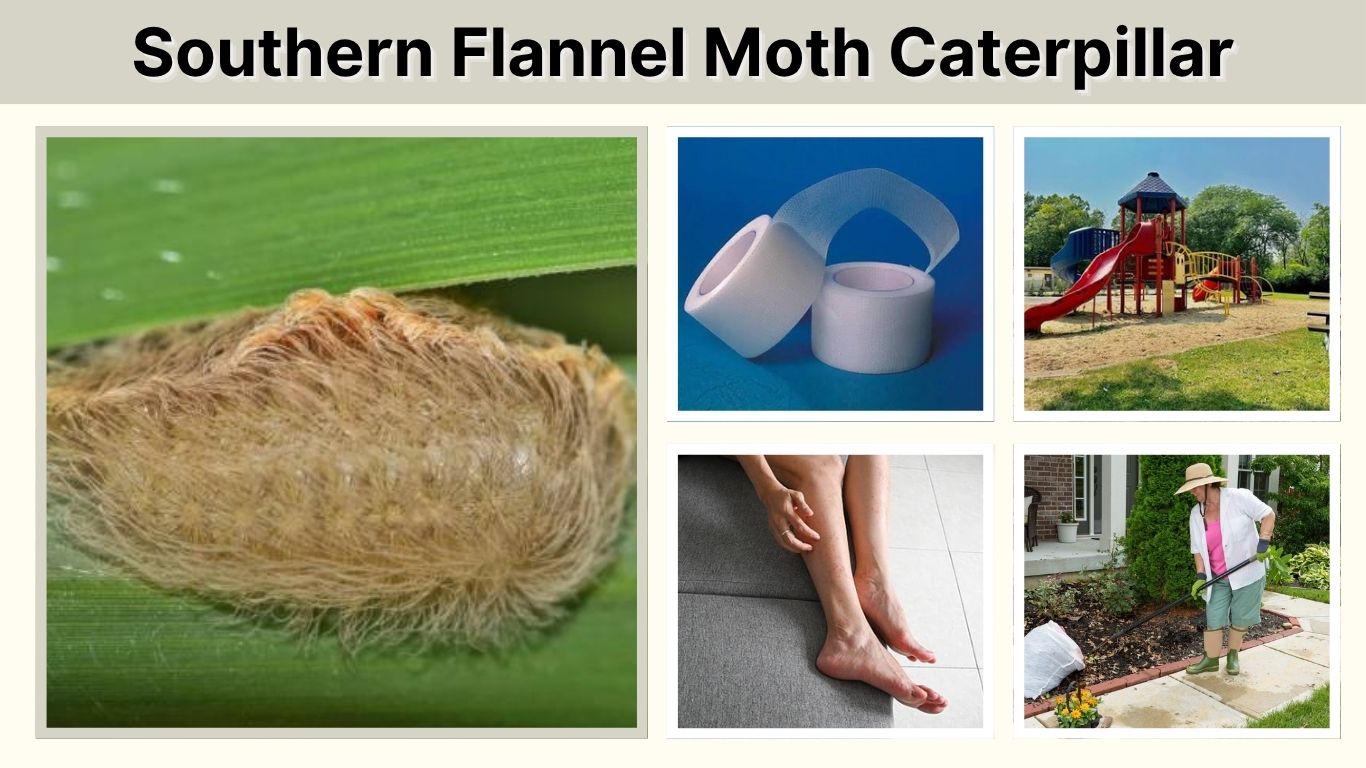
The southern flannel moth caterpillar may resemble a soft tuft of fur, but touching it can cause an intensely painful sting. Also called the puss caterpillar or asp, this venomous larva hides sharp spines beneath its dense outer hairs. It commonly inhabits trees and shrubs across the southeastern United States, particularly in Texas and Florida. Learning how to identify this caterpillar, avoid accidental contact, treat a sting, and manage its presence can help protect adults, children, and pets.
What Is a Southern Flannel Moth Caterpillar?
The southern flannel moth caterpillar is the larval form of Megalopyge opercularis. It belongs to the flannel moth family, Megalopygidae. Although the adult moth cannot sting, its caterpillar is medically important because its concealed spines release venom when they penetrate skin.
Common Names
This caterpillar has several regional names:
- Puss caterpillar
- Asp caterpillar
- Tree asp
- Woolly slug
- Puss moth caterpillar
- Southern flannel moth larva
The name “puss caterpillar” comes from its soft, fur-like appearance. However, the apparent fur hides defensive spines, so it should never be handled.
Identification and Appearance
A mature southern flannel moth caterpillar usually measures approximately one inch long. Its body narrows toward the rear, giving it a teardrop-shaped or miniature toupee-like appearance.
Important identification features include:
- Thick, long, fur-like outer hairs
- Teardrop-shaped or rounded body
- A small tail-like tuft at the rear
- Gray, tan, cream, yellowish, or reddish-brown coloration
- A darker central stripe on some individuals
- Short legs and a face mostly hidden beneath the hair
- Venomous spines concealed under the outer covering
Color varies with age, location, and developmental stage. Therefore, any small, densely furry caterpillar should be observed without touching it.
Is the Southern Flannel Moth Caterpillar Poisonous?
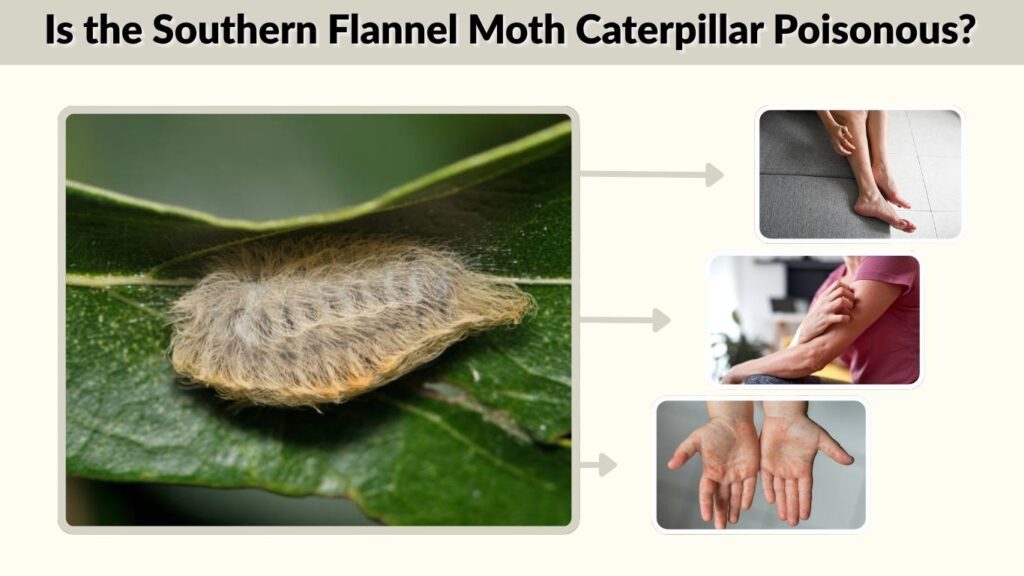
The caterpillar is more accurately described as venomous rather than poisonous. Poison generally causes harm when swallowed or absorbed, while venom is delivered through a specialized structure. In this case, hollow or toxin-bearing spines inject venom when they pierce the skin.
Does It Bite or Sting?
The southern flannel moth caterpillar does not bite people. Injuries happen when someone touches, brushes against, steps on, or accidentally presses the caterpillar against the skin.
Its hidden spines may break off and remain embedded in the affected area. This is why removing the spines is an important part of immediate treatment.
How Dangerous Is the Sting?
A sting can cause immediate, severe burning or throbbing pain. Some people describe the sensation as more intense than a bee or wasp sting. Pain may radiate from the contact site into the arm, leg, or nearby lymph nodes.
Possible symptoms include:
- Intense burning pain
- Redness and swelling
- Raised welts or a grid-like rash
- Itching or numbness
- Headache
- Nausea or vomiting
- Muscle discomfort
- Swollen lymph nodes
- Anxiety caused by sudden pain
Serious reactions are uncommon but possible. Difficulty breathing, facial or throat swelling, faintness, widespread hives, chest discomfort, or difficulty swallowing requires emergency medical attention.
Southern Flannel Moth Caterpillar Sting Treatment
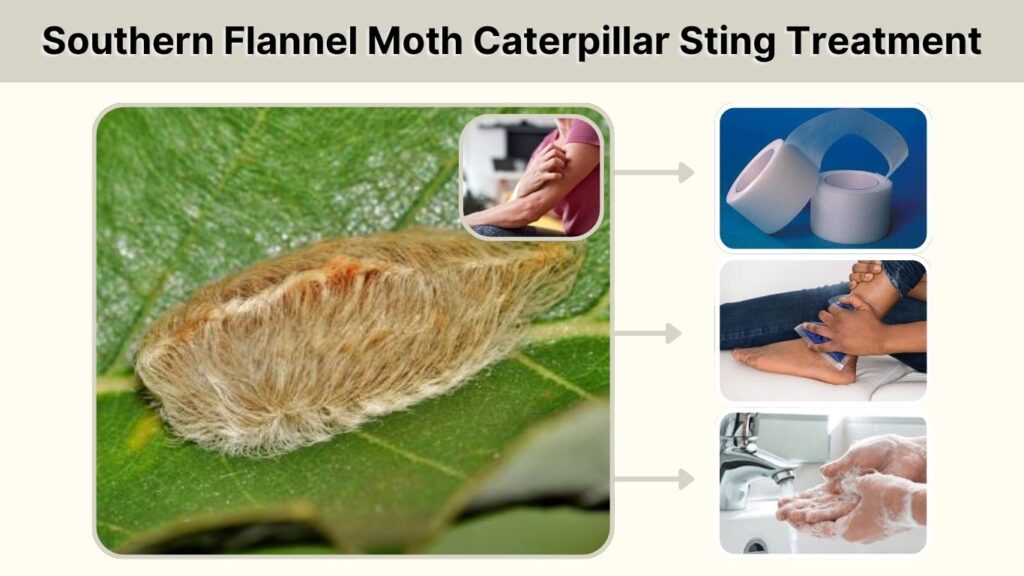
Acting promptly can reduce continued irritation from spines left in the skin. Do not rub or scratch the area because this may push the spines deeper or spread them across nearby skin.
Immediate First Aid Steps
- Remove the caterpillar safely: If it remains on the body, use a stick, card, or another object rather than bare fingers.
- Apply adhesive tape: Gently place clear tape over the affected skin and lift it away. Repeat with fresh pieces to remove embedded spines. Avoid pressing excessively hard.
- Wash the area: Clean the skin gently with soap and water after removing as many spines as possible.
- Apply a cold pack: Wrap ice or a cold pack in a cloth and hold it against the area for short intervals to reduce pain and swelling.
- Manage irritation: Hydrocortisone cream or an oral antihistamine may help itching when appropriate. Follow product directions and consult a healthcare professional regarding medication for children or people with medical conditions.
Do not attempt to squeeze the venom out, cut the skin, or apply strong household chemicals.
When to Seek Medical Care
Contact a healthcare professional or poison center if the pain is severe, persistent, or spreading. Prompt medical assessment is also appropriate for a young child, multiple stings, extensive blistering, or contact involving the eyes, mouth, or face.
Call emergency services immediately if the person experiences breathing difficulty, throat swelling, weakness, fainting, confusion, or another rapidly worsening reaction. In the United States, Poison Control can be reached at 1-800-222-1222.
Where Do Southern Flannel Moth Caterpillars Live?
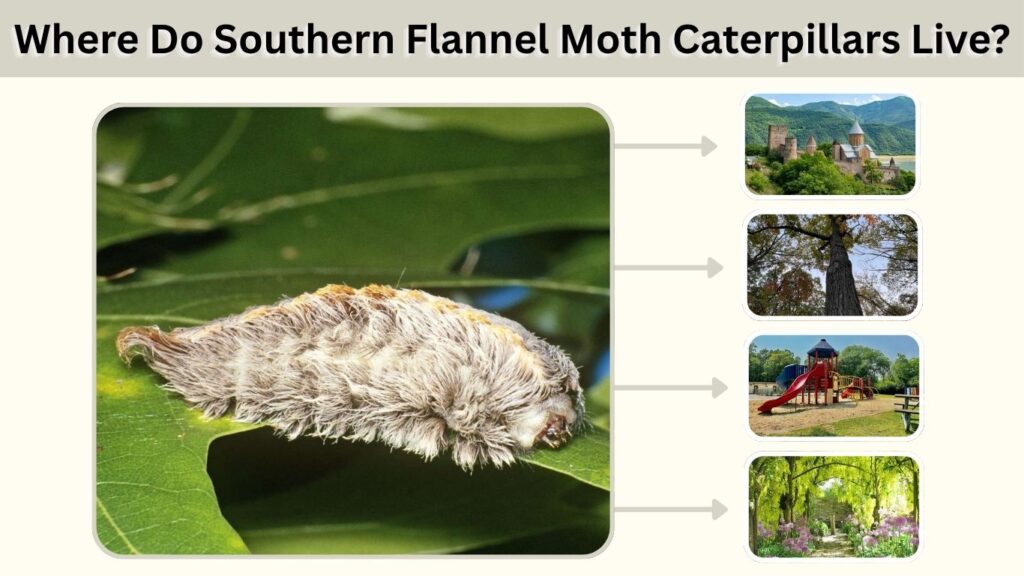
Southern flannel moth caterpillars are associated with deciduous forests, parks, gardens, school grounds, and residential landscapes. They spend much of their larval stage feeding on foliage but may crawl onto fences, outdoor furniture, walls, vehicles, or the ground when seeking a place to pupate.
Geographic Range
Their established range covers much of the southeastern and south-central United States. They are especially familiar in Texas and Florida but also occur in many surrounding states.
Reported locations include:
- Texas
- Florida
- Georgia
- Louisiana
- Tennessee
- North Carolina
- South Carolina
- Oklahoma
- Arkansas
- Missouri
- Virginia
- West Virginia
- Maryland
- New Jersey
Occasional sightings may occur beyond the central range. A photograph or specimen should be verified by a local extension office because several harmless fuzzy caterpillars have a similar appearance.
Habitat and Host Plants
The caterpillars feed on numerous broadleaf trees and shrubs. Oaks and elms are particularly common hosts, but they may also occur on:
- Pecan
- Hickory
- Hackberry
- Sycamore
- Apple
- Persimmon
- Maple
- Birch
- Citrus
- Almond
- Rose bushes
Accidental stings frequently happen beneath infested trees when caterpillars fall, crawl down trunks, or land on clothing.
Life Cycle and Seasonal Activity
The southern flannel moth develops through four stages: egg, caterpillar, pupa, and adult. Understanding this cycle explains why the caterpillars may suddenly become noticeable at particular times of year.
From Egg to Adult Moth
Female moths place eggs on suitable host plants. Newly hatched larvae may initially remain together and feed on leaf surfaces. As they mature, they spread out and consume larger portions of foliage.
A fully grown caterpillar creates a tough cocoon using silk and body hairs, often attaching it to bark, branches, fences, or sheltered structures. The adult later emerges through a lid-like opening in the cocoon.
Adult southern flannel moths are small and fuzzy, with yellowish, cream, orange, and black markings. Unlike the larva, an adult moth does not possess venomous stinging spines.
When Are They Most Active?
Timing varies by climate. Caterpillars may appear during spring, summer, and fall, with more than one generation possible in warm areas. In parts of Texas, encounters are particularly common during fall. Florida’s warm conditions may support activity across a longer portion of the year.
How to Get Rid of Southern Flannel Moth Caterpillars
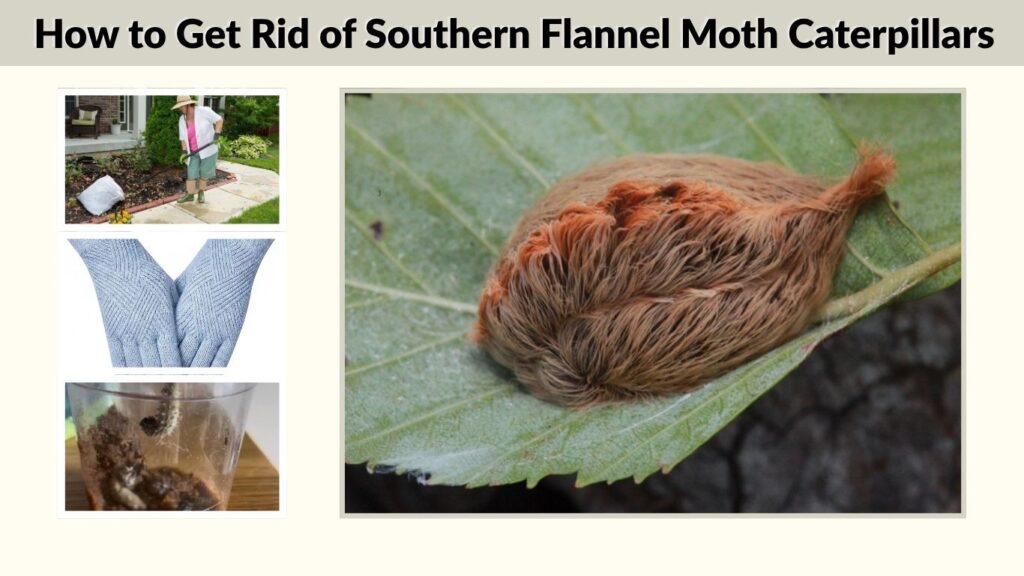
One caterpillar does not always indicate an infestation. If it is in a low-risk location, leaving it undisturbed may be safer than attempting to handle it. Control becomes more important when caterpillars appear near entrances, playgrounds, walkways, patios, or frequently used trees.
Safe Removal and Control
Never crush, sweep, or pick up these caterpillars with bare hands. Instead:
- Keep children and pets away from the area.
- Wear long sleeves, closed shoes, eye protection, and thick gloves.
- Use long-handled tools to remove accessible caterpillars without direct contact.
- Place collected caterpillars in a secure container.
- Inspect outdoor furniture, play equipment, and clothing before use.
- Carefully remove abandoned cocoons from high-contact areas.
- Prune heavily affected branches only when this can be done safely.
- Contact a licensed pest-control professional for numerous caterpillars or tall-tree infestations.
Insecticides are rarely necessary for isolated individuals. If treatment is needed, select a product labeled for caterpillar control on the affected plant and follow every label direction. A local extension service or certified arborist can recommend an approach appropriate for the tree and season.
Prevention Around the Home
Prevention mainly involves reducing accidental contact rather than eliminating every caterpillar from the landscape. Teach children that fuzzy caterpillars should never be touched, regardless of how soft or harmless they appear.
Wear gloves, long sleeves, and a hat when gardening beneath host trees. Check towels, toys, shoes, and clothing left outdoors. Keep branches trimmed away from patios, play areas, and frequently used paths. Regular inspection is particularly valuable during seasons when caterpillars are common.
FAQs
Can a southern flannel moth caterpillar kill you?
Death is not a typical outcome, but the sting can produce severe pain and occasionally a dangerous allergic or systemic reaction. Breathing problems, throat swelling, fainting, or rapidly worsening symptoms require emergency care.
Can you touch the adult southern flannel moth?
The adult moth does not have the caterpillar’s venomous spines. Nevertheless, unnecessary handling may injure the moth, so it is best observed without touching.
Are southern flannel moth caterpillars dangerous to dogs?
Yes. A curious dog may contact one with its nose, mouth, or paws. Drooling, facial swelling, pawing at the mouth, distress, or breathing difficulty requires immediate veterinary advice.
How long does a puss caterpillar sting last?
Duration varies according to the amount of contact and individual sensitivity. Some pain improves within an hour, while redness, tenderness, or irritation may continue longer. Persistent or worsening symptoms should be medically evaluated.
Should I touch it while wearing gloves?
No. Spines can penetrate or remain attached to some gloves and later transfer to the skin. Use a long-handled tool or obtain professional assistance instead.