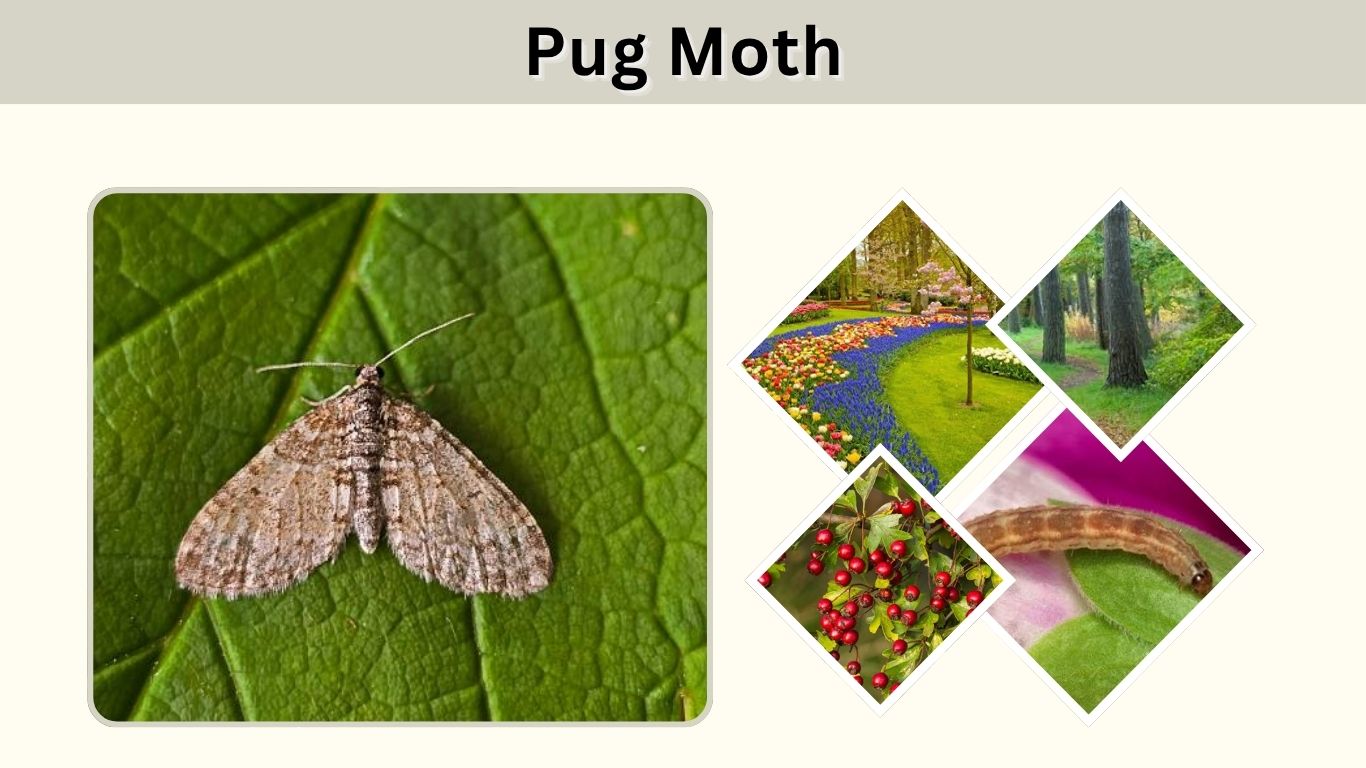
Pug moths are small geometer moths best known for their narrow wings, delicate markings, and slender inchworm-like caterpillars. Many belong to the large genus Eupithecia, although some moths with “pug” in their common name belong to related genera. Most pug caterpillars eat flowers, leaves, seeds, or developing plant material. However, Hawaii is home to extraordinary Eupithecia caterpillars that evolved into ambush predators and capture other insects instead of feeding on plants. Pug moths occur in many habitats and include Common, Foxglove, Grey, Lime-speck, Satyr, and White-spotted Pugs.
What Is a Pug Moth?
“Pug moth” is a common name applied to numerous small moths in the geometer moth family, Geometridae. Many familiar species belong to Eupithecia, one of the largest genera of moths. Adults are generally small and subtle, often resting with their wings spread flat. Their intricate gray, brown, white, or greenish markings help them disappear against bark and vegetation.
Pug Moth Identification
Typical features include:
- Small adult body size
- Usually 15–25 mm wingspan
- Narrow or triangular forewings
- Gray, brown, greenish, or mottled coloration
- Fine cross-lines and small dark wing spots
- Wings normally held flat while resting
- Slender caterpillars
- Inchworm-style larval movement
Individual pug species can be difficult to separate because many have remarkably similar wing patterns. Even experienced observers sometimes need close examination to confirm identification.
The Common Pug (Eupithecia vulgata), for example, has a wingspan of only about 15–18 mm and occurs widely across Britain.
Pug Moth Caterpillar
Pug moth larvae generally resemble other geometrid caterpillars. Their reduced number of abdominal prolegs produces the characteristic looping or “inching” motion for which geometrid caterpillars are famous.
Color varies considerably between species and sometimes according to the flower or plant on which a caterpillar is feeding.
Caterpillar Identification
A typical pug caterpillar may have:
- Long, slender body
- Green, brown, reddish, or mottled coloration
- Few abdominal prolegs
- Looping movement while walking
- Fine longitudinal or diamond-shaped markings
- Strong camouflage against stems and flowers
- Length usually much greater than body width
Some species are remarkably well camouflaged. Mottled Pug larvae, for example, can be green with reddish markings that help them blend into their food plants.
What Do Pug Moth Caterpillars Eat?
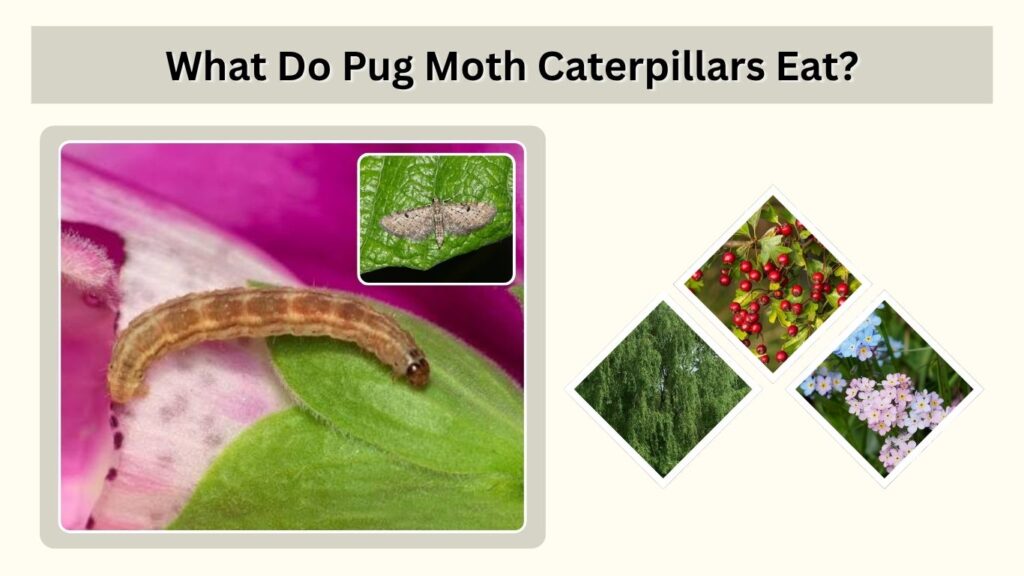
Most pug moth caterpillars are herbivores. However, different species specialize on very different parts of plants. Some eat leaves, while others concentrate on flower buds, petals, developing seeds, or fruit-tree blossoms.
Common Pug Caterpillar Food
Common Pug larvae feed on numerous trees and herbaceous plants, including:
- Willow or sallow
- Hawthorn
- Various flowering plants
- Flower buds
- Leaves
The species is relatively flexible compared with pugs that depend strongly on one particular host plant.
Foxglove Pug Caterpillar
The Foxglove Pug (Eupithecia pulchellata) has a much more specialized diet.
Its caterpillars live inside foxglove flowers, where they eat stamens and developing seeds. Their feeding behavior and coloration make them difficult to notice unless the flowers are examined carefully.
Hawaiian Carnivorous Pug Moth Caterpillar
The most remarkable pug moth caterpillars occur in Hawaii. Numerous endemic Hawaiian Eupithecia species have abandoned the normal plant-eating lifestyle and evolved into predatory caterpillars.
Rather than crawling around looking for leaves, these larvae wait motionless for small insects to approach.
How Do Carnivorous Pug Caterpillars Hunt?
Hawaiian predatory Eupithecia caterpillars typically position themselves along vegetation and remain extremely still.
Their hunting strategy involves:
- Waiting along the edge of a leaf or twig.
- Detecting prey when it touches specialized trigger hairs.
- Snapping the front part of the body rapidly toward the prey.
- Grabbing the insect with enlarged forelegs.
- Holding and consuming the captured arthropod.
Hawaii’s State Wildlife Action Plan describes these caterpillars as ambush predators with backward-pointing trigger hairs and specialized grasping forelegs. It also states that many Hawaiian Eupithecia species are entirely carnivorous.
What Do Hawaiian Carnivorous Caterpillars Eat?
Potential prey includes small arthropods such as:
- Fruit flies
- Small moths
- Other caterpillars
- Flies
- Spiders
- Other insects small enough to capture
Historical research has documented predation on a broad variety of arthropods by Hawaiian Eupithecia.
These caterpillars represent one of the most extraordinary departures from the overwhelmingly herbivorous lifestyle of butterfly and moth larvae.
Are All Pug Moth Caterpillars Carnivorous?
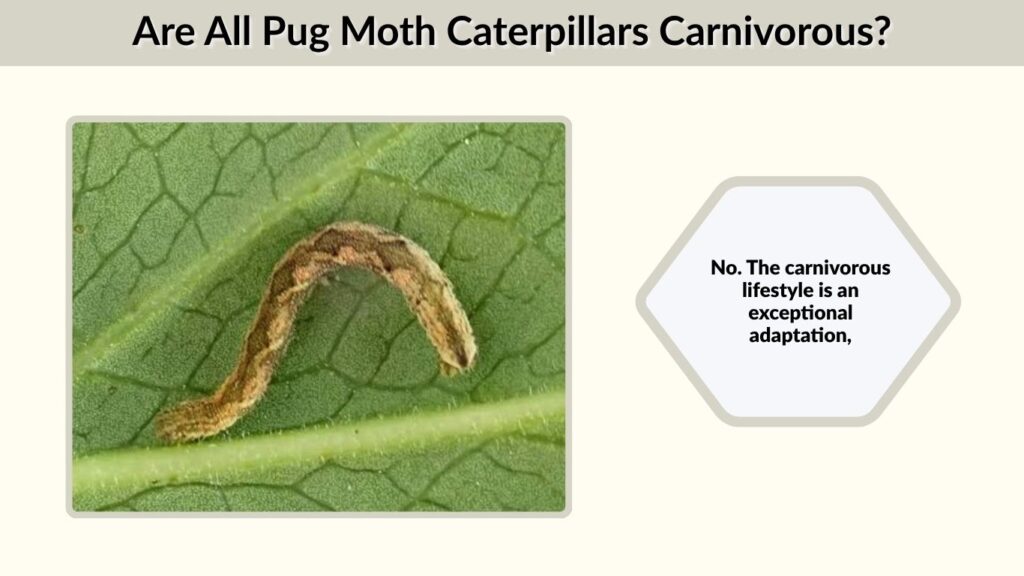
No. The carnivorous lifestyle is an exceptional adaptation associated particularly with Hawaiian Eupithecia.
Most pug moth caterpillars elsewhere remain ordinary plant feeders.
Hawaiian vs Typical Pug Caterpillars
| Feature | Typical Pug Caterpillar | Hawaiian Predatory Eupithecia |
| Main food | Plants | Small arthropods |
| Hunting | None | Ambush predator |
| Movement | Inchworm-like | Waits, then strikes |
| Forelegs | Normal feeding role | Modified for grasping |
| Trigger hairs | Not used for hunting | Detect approaching prey |
| Distribution | Widespread | Hawaiian Islands |
The unusual Hawaiian radiation demonstrates how dramatically an insect lineage can change when isolated in a unique environment.
Common Types of Pug Moths
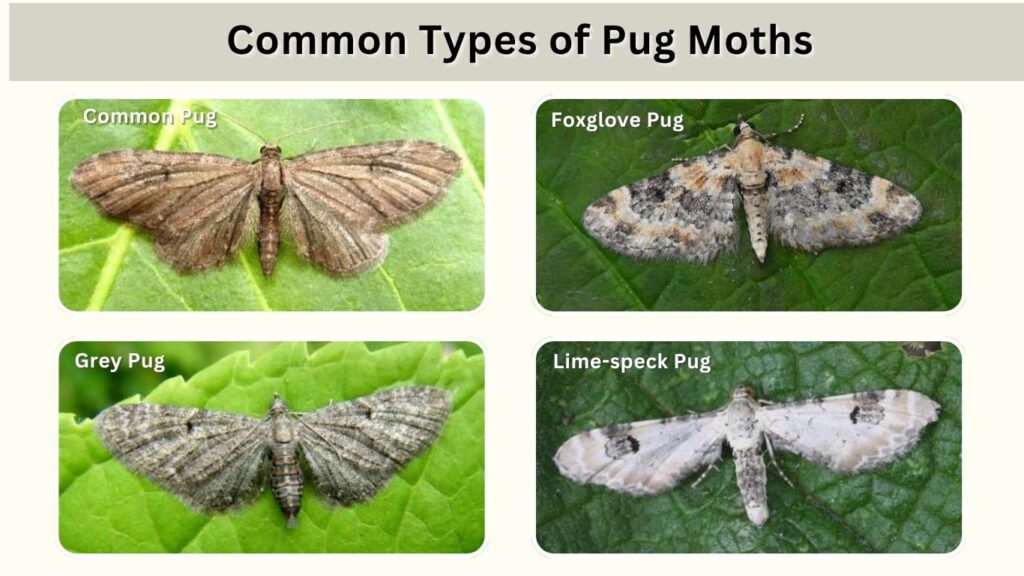
Hundreds of pug species occur worldwide, and many are very similar in appearance. British species alone include numerous Eupithecia moths with names reflecting their appearance, habitat, or food plants.
1. Common Pug
The Common Pug (Eupithecia vulgata) is widespread in Britain. Adults have mottled gray-brown wings and a wingspan of approximately 15–18 mm.
Larvae eat a variety of plants, including hawthorn and sallow.
2. Foxglove Pug
The Foxglove Pug (Eupithecia pulchellata) is strongly associated with foxglove.
Its caterpillars hide inside the flowers while eating reproductive tissues and developing seeds. Adults generally fly from May through July.
3. Grey Pug
The Grey Pug (Eupithecia subfuscata) is widespread across much of Britain.
Despite its name, typical adults can appear brownish as well as gray. Caterpillars feed on the flowers and leaves of various herbaceous plants.
4. Lime-speck Pug
The Lime-speck Pug (Eupithecia centaureata) is one of the easier pug moths to recognize.
Its narrow pale wings carry conspicuous dark markings, giving the moth a pattern thought to resemble bird droppings. Caterpillars eat flowers of various low-growing plants.
5. White-spotted Pug
The White-spotted Pug (Eupithecia tripunctaria) occurs in woodland and damp habitats.
Its yellowish-green caterpillars have attractive brown markings and feed on flowers and seeds of plants such as wild angelica and hogweed.
6. Satyr Pug
The Satyr Pug (Eupithecia satyrata) is another variable species.
Its larvae feed on flowers from several different plant species, with food choice varying according to habitat.
What About the Green Pug Moth?
The Green Pug is interesting because, despite its name and resemblance to many Eupithecia, its currently accepted scientific name is Pasiphila rectangulata.
Adults may show attractive green coloration when fresh, although this often fades with age.
Green Pug Caterpillar
Green Pug caterpillars feed primarily on the blossoms of:
- Apple
- Pear
- Other fruit trees
The species commonly occurs in woodland, parks, gardens, and other places containing its food plants. Adults are most frequently seen in June and July in Britain.
Pug Moth Life Cycle
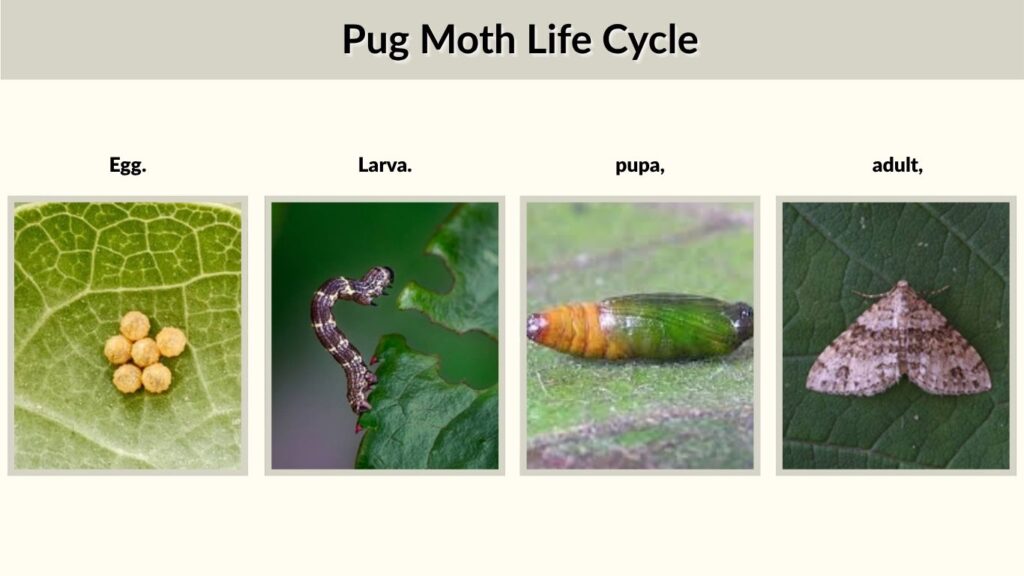
Pug moths undergo complete metamorphosis just like other moths. Exact timing differs substantially among species, but all pass through the same four fundamental developmental stages.
Four Life Stages
- Egg: Females lay eggs on or near appropriate food plants.
- Larva: Caterpillars feed and grow through multiple instars.
- Pupa: Mature larvae transform into pupae.
- Adult: Moths emerge, mate, and produce the next generation.
Some species have one generation annually, while others can produce two depending on climate and location.
The Lime-speck Pug, for example, may have one or two broods and can be seen as an adult from spring into early autumn.
Pug Moth Habitat
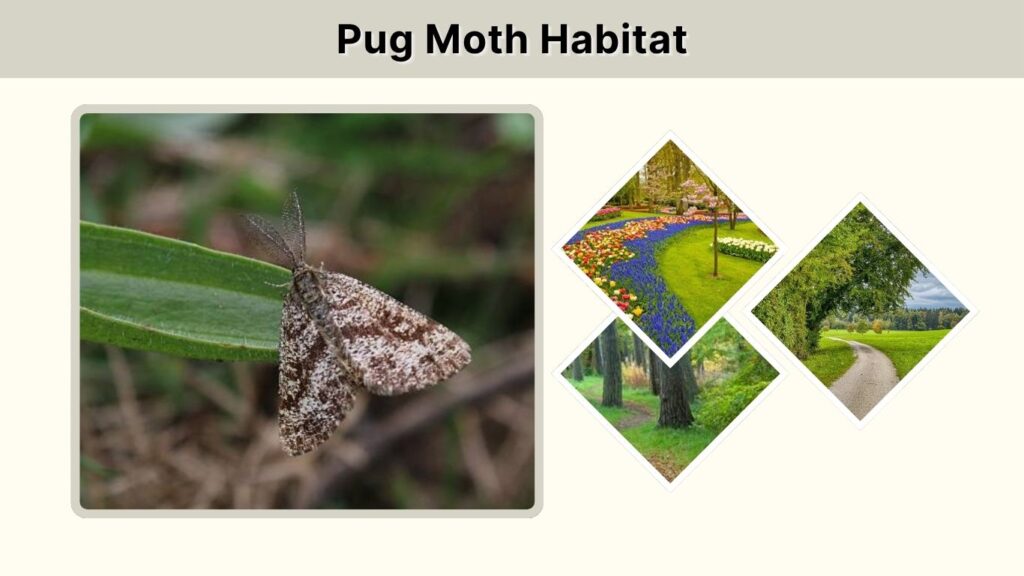
Because “pug moth” includes many species, there is no single pug habitat. Different species have evolved alongside different host plants and environmental conditions.
Common Habitats
Pug moths may occur in:
- Gardens
- Woodland
- Forest edges
- Hedgerows
- Grassland
- Moorland
- Wetlands
- Parks
- Flower-rich areas
Foxglove Pugs naturally occur wherever sufficient foxglove grows, while Green Pugs are particularly associated with woodland, gardens, and fruit trees.
Hawaiian predatory Eupithecia, meanwhile, are part of Hawaii’s highly specialized native ecosystems, where habitat loss and invasive species threaten many endemic invertebrates.
FAQs
1. What is a pug moth?
A pug moth is generally a small geometer moth, with many species belonging to the genus Eupithecia. Adults often have subtle gray or brown patterned wings.
2. Are pug moth caterpillars carnivorous?
Most are not. Most pug caterpillars eat plant material, but many Hawaiian Eupithecia species evolved into specialized insect predators.
3. How does a Hawaiian carnivorous pug caterpillar catch prey?
It waits motionless until an arthropod contacts trigger hairs, then rapidly bends its body and captures the prey using specialized forelegs.
4. What does a Green Pug caterpillar eat?
Green Pug caterpillars mainly feed on apple and pear blossoms and flowers of other fruit trees.
5. What do Common Pug caterpillars eat?
Common Pug caterpillars feed on a variety of trees and plants, including sallow and hawthorn.