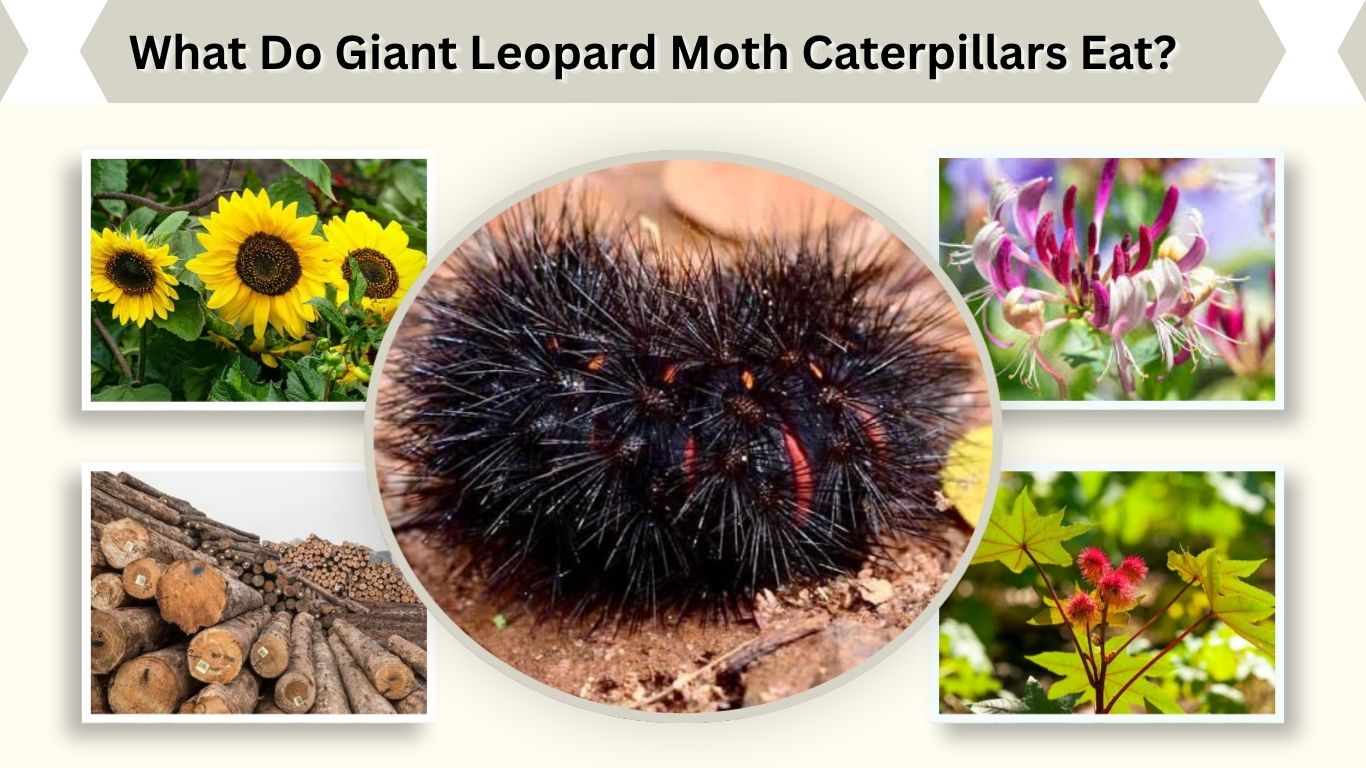
Giant leopard moth caterpillars (Hypercompe scribonia), also called giant woolly bears, eat the leaves of many broad-leaved plants. Their diet includes dandelions, sunflowers, violets, willows, cherries, citrus, plantain, cabbage, and numerous other herbs, shrubs, and trees. Unlike caterpillars restricted to one host plant, giant leopard moth larvae are polyphagous, meaning they can feed on many plant species. Most feeding occurs during the caterpillar stage, when they must store enough energy to complete pupation and eventually become adult moths.
What Do Giant Leopard Moth Caterpillars Eat?
Giant leopard moth caterpillars are generalist plant feeders. Instead of depending on one particular tree or flower, they can use a surprisingly diverse collection of host plants. UF/IFAS describes the giant woolly bear as polyphagous and reports it feeding on both low-growing herbaceous plants and woody vegetation. Researchers believe its true host range is even larger than documented records suggest.
Common Foods
Recorded host plants include:
- Dandelion
- Sunflower
- Violet
- Willow
- Cherry
- Cabbage
- Lemon
- Orange
- Plantain
- Magnolia
- Avocado
- Banana
- Black locust
- Honeysuckle
- Pokeweed
- Castor bean
- Paperflower
- Flamevine
BugGuide additionally lists maple among commonly used food plants.
Do They Only Eat Leaves?
Leaves are their primary food. Young and mature caterpillars use chewing mouthparts to remove plant tissue and obtain the nutrients required for growth.
Because they feed on such a broad range of vegetation, they may be seen on weeds, garden plants, shrubs, or trees.
Their presence on a plant does not always prove they were feeding on it, however. Mature caterpillars frequently wander while looking for shelter or suitable overwintering and pupation sites.
10 Common Plants Giant Leopard Moth Caterpillars Eat
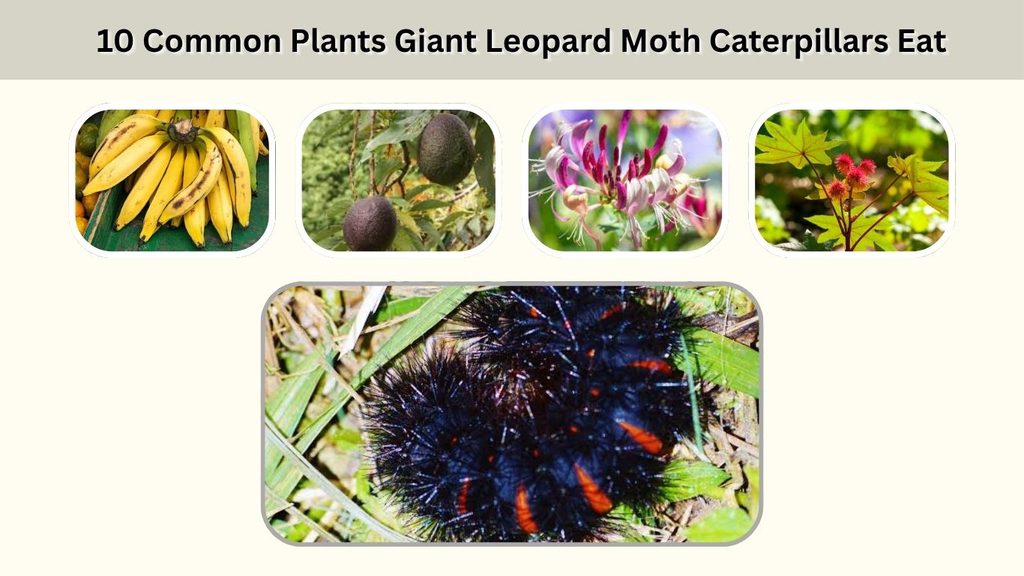
Host records show that giant leopard moth caterpillars can use plants belonging to many unrelated botanical families. This flexible diet helps explain why the species occurs across a broad range of habitats. Some plants are low-growing weeds, while others are shrubs or trees. The following are among the better-documented foods associated with Hypercompe scribonia.
1. Dandelion
Dandelions are a documented food plant and are especially convenient for caterpillars living in lawns, roadsides, fields, and other open habitats.
The broad leaves grow close to the ground and may provide readily accessible food.
2. Sunflower
Sunflowers and thinleaf sunflowers are recorded hosts.
Giant leopard moth caterpillars may consume the foliage rather than the seeds or flower heads that people normally associate with sunflowers.
3. Violet
Violets are another documented food source.
Their low-growing leaves fit well with the caterpillar’s tendency to forage among ground vegetation.
4. Willow
Willows demonstrate that giant leopard moth larvae do not restrict themselves to small herbaceous plants.
Caterpillars may climb woody vegetation and feed on foliage when suitable species are available.
5. Cherry
Species of Prunus, recorded broadly as cherry, are documented hosts.
This makes gardens, woodland edges, and landscapes containing cherry trees possible feeding habitats.
6. Plantain
Plantain—not the banana-like fruit, but plants in the genus Plantago—is another important recorded food.
Both narrowleaf plantain and blackseed plantain appear among published host records.
7. Cabbage
Cabbage (Brassica oleracea) is included among recorded hosts.
However, giant leopard moth caterpillars are not usually considered major cabbage pests. Texas A&M describes the species as generally insignificant as a pest, although caterpillars can sometimes be abundant.
8. Citrus
Several citrus plants have been reported as food, including lemon, sweet orange, rough lemon, and unshu orange.
Caterpillars feed on foliage rather than the citrus fruit itself.
9. Magnolia
Magnolia is another woody host recorded for giant leopard moth caterpillars.
Their ability to feed on both trees and low-growing plants highlights how flexible their diet can be.
10. Pokeweed
American pokeweed is also documented as a host.
This is particularly interesting because giant leopard moth caterpillars may obtain defensive chemicals from some of the plants they consume.
Why Do Giant Leopard Moth Caterpillars Eat Different Plants?
Many caterpillars are specialists, but giant leopard moth larvae appear to benefit from dietary flexibility. UF/IFAS notes that tiger moth larvae may feed briefly on one plant before moving to another species, a behavior known as food mixing. Giant leopard moth caterpillars are thought to use a similar strategy.
Food Mixing
A caterpillar may therefore eat one plant and later move to a completely different type of vegetation.
This behavior helps explain why lists of giant leopard moth host plants are unusually long.
It also means finding one caterpillar on a sunflower does not mean sunflowers are the only food it can eat.
Plant Chemicals and Defense
Changing foods may provide another advantage.
Some host plants contain defensive chemicals. Giant leopard moth caterpillars may sequester certain compounds from their diet and retain them as chemical protection against predators.
Their black bristles, curling behavior, red warning coloration, and chemical defenses together can make them unattractive prey.
When Do Giant Leopard Moth Caterpillars Eat?
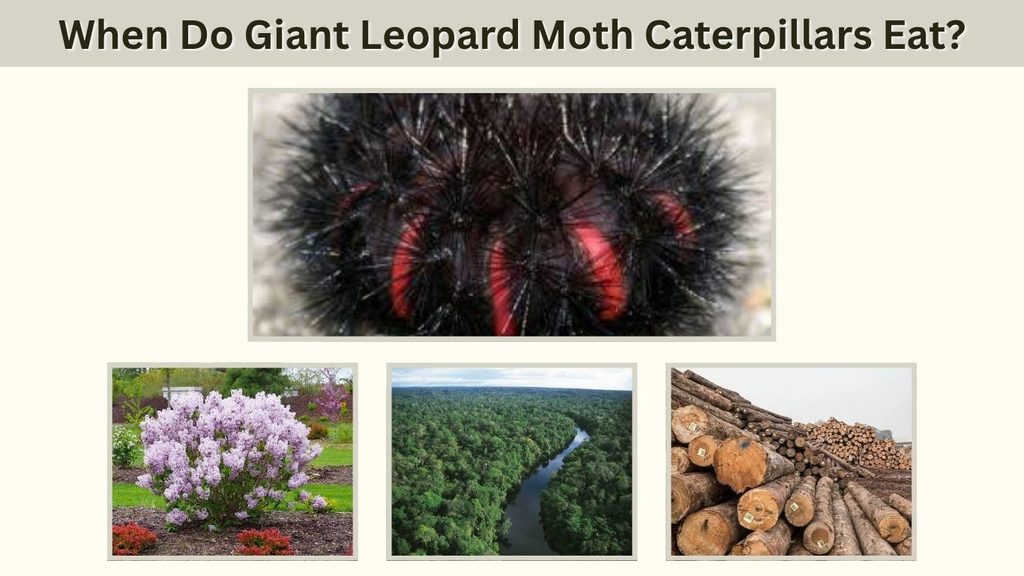
These caterpillars are primarily nocturnal, so much of their feeding occurs after dark. During daylight they may remain concealed beneath vegetation, fallen leaves, wood, or other sheltered locations. They become especially noticeable in fall when mature larvae wander across roads, sidewalks, and yards while searching for places to overwinter.
Feeding Before Winter
Giant leopard moths commonly overwinter as nearly mature caterpillars.
In colder regions, they remain dormant through winter and resume development when conditions improve in spring.
Northern populations generally have one generation annually, while southern populations can produce two or more broods.
Do They Eat During Winter?
A caterpillar in winter diapause is not actively feeding as it does during the growing season.
Instead, it shelters and waits for favorable conditions.
Once spring arrives, overwintered caterpillars can resume their development before pupating and transforming into adults.
Do Giant Leopard Moth Caterpillars Damage Gardens?
Despite their broad diet, giant leopard moth caterpillars generally are not regarded as serious garden pests. They may chew leaves, but occasional caterpillars rarely cause enough damage to justify control. Texas A&M characterizes them as largely inconsequential pests, with occasional importance in pastures.
Signs of Feeding
Possible signs include:
- Irregularly chewed leaf edges
- Missing sections of foliage
- Black fuzzy caterpillars near plants
- Caterpillars feeding after dark
- Small amounts of caterpillar droppings nearby
One caterpillar eating a few leaves usually poses little threat to an established plant.
Should You Remove Them?
In most gardens, control is unnecessary.
If a caterpillar is feeding on a valued small plant, it can simply be relocated to nearby suitable vegetation rather than treated with insecticide.
Because identification can be difficult, avoid handling unidentified hairy caterpillars directly.
What Should You Feed a Giant Leopard Moth Caterpillar?
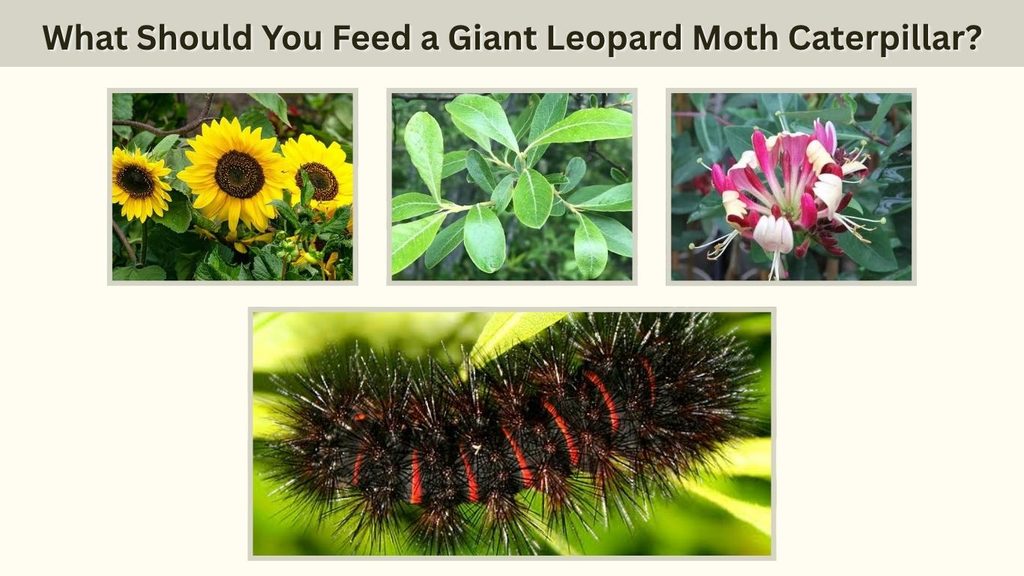
If you are temporarily observing a caterpillar, the safest feeding choice is usually fresh leaves from the same plant on which you found it actively feeding.
Although the species has a broad host range, that does not guarantee an individual caterpillar will immediately accept every plant appearing on a published host list.
Suitable Host Plants
Depending on what is locally available, documented options include:
- Dandelion leaves
- Violet leaves
- Sunflower leaves
- Willow leaves
- Cherry leaves
- Plantain leaves
Provide fresh, pesticide-free foliage and replace wilted material regularly.
Avoid collecting leaves from plants recently treated with insecticides or other garden chemicals.
What Do Adult Giant Leopard Moths Eat?
Most documented diet information for this species concerns the caterpillars. Butterflies and Moths of North America lists numerous larval host plants but does not provide an adult food source, while Texas A&M educational material notes that adults do not have fully developed mouthparts. This means the caterpillar stage is the major feeding and energy-storage stage of the life cycle.
Why Caterpillar Feeding Matters
The caterpillar must obtain resources for growth, pupation, and adulthood.
Once mature, it eventually forms a thin cocoon and pupates.
The striking white-and-black adult then focuses largely on reproduction rather than the intensive feeding seen during larval development.
Frequently Asked Questions
1. What is the favorite food of a giant leopard moth caterpillar?
There is no single known favorite. They are generalist feeders that eat many broad-leaved plants, including dandelion, sunflower, violet, willow, cherry, and plantain.
2. Do giant leopard moth caterpillars eat dandelions?
Yes. Dandelion is a well-documented host plant for Hypercompe scribonia.
3. Do giant leopard moth caterpillars eat trees?
Yes. They can feed on woody plants including willow, cherry, magnolia, citrus, and other trees and shrubs.
4. Do giant leopard moth caterpillars eat fruit?
Their normal diet consists primarily of leaves and other plant foliage, not fruit. Host records mentioning banana or orange refer to the plants used by caterpillars rather than proving that fruit is their normal food.
5. Do adult giant leopard moths eat?
Adult feeding appears limited; standard species references focus on the extensive larval diet, and Texas A&M material reports that adults lack fully formed mouthparts. Caterpillars therefore perform the main feeding stage of the life cycle.