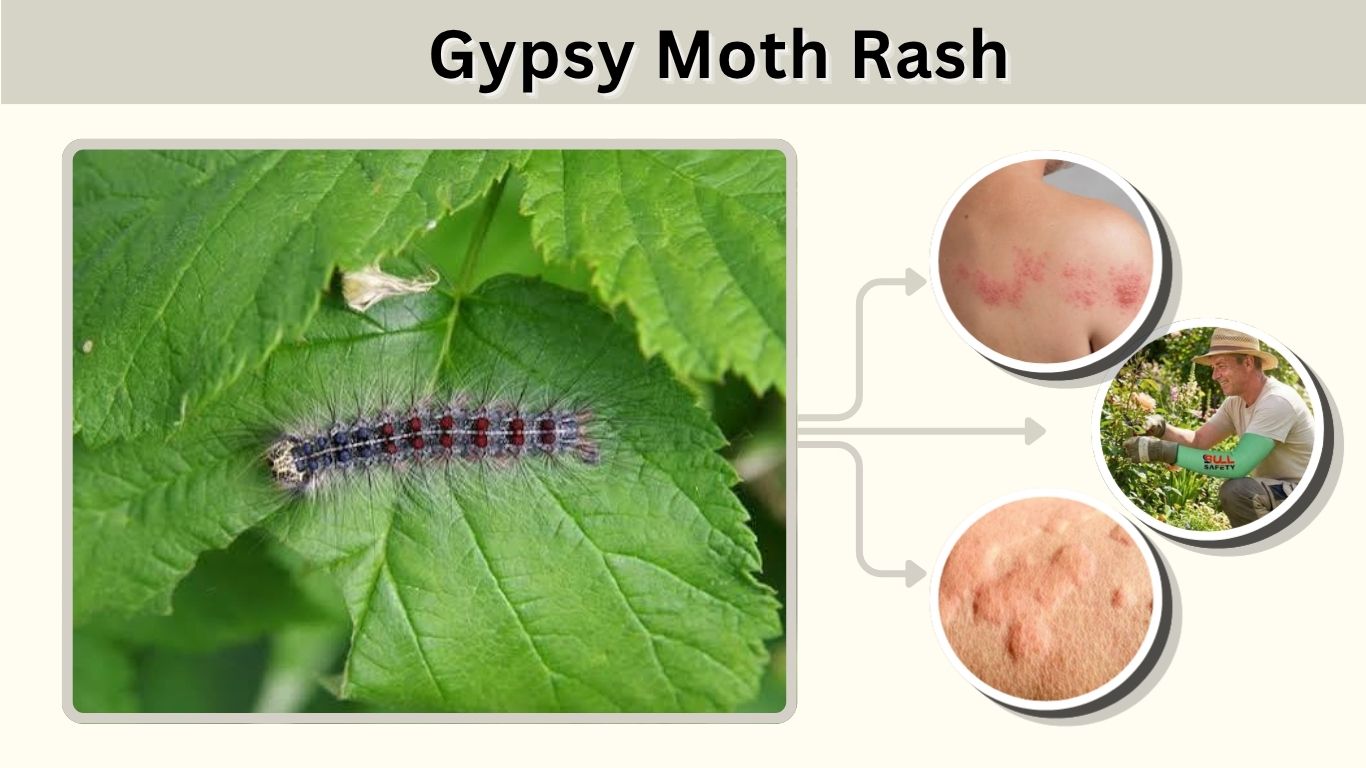
Gypsy moth rash is an itchy skin reaction caused by contact with the microscopic hairs of gypsy moth caterpillars, now officially called spongy moth caterpillars. The caterpillars do not bite or sting, but their hairs can lodge in skin and trigger mechanical irritation or an inflammatory reaction. A rash may develop after touching a caterpillar, contaminated clothing, outdoor furniture, or airborne hairs during a large outbreak. Most reactions are mild and temporary, although severe allergies, breathing problems, and eye exposure require medical attention.
What Causes Gypsy Moth Rash?
A spongy moth caterpillar has numerous fine hairs, or setae, covering its body. These hairs help protect the caterpillar from predators but may irritate human skin. Contact can occur directly or indirectly, especially when large caterpillar populations leave hairs on outdoor surfaces or release them into the surrounding environment.
Common Ways People Are Exposed
Exposure may occur after:
- Touching or handling a caterpillar
- Removing caterpillars from trees without gloves
- Leaning against an infested tree trunk
- Handling contaminated outdoor furniture
- Wearing clothing carrying loose caterpillar hairs
- Mowing or working beneath heavily infested trees
- Contact with pets that have walked through an infested area
- Handling pupae or shed caterpillar skins
- Swimming in a pool containing caterpillars or hairs
- Encountering windblown hairs during an outbreak
Some people have no reaction, while others develop significant itching after limited exposure. Children and individuals with sensitive skin, asthma, eczema, or allergies may experience stronger symptoms.
Do Gypsy Moth Caterpillars Bite or Sting?
No. Spongy moth caterpillars do not bite people and lack venomous stingers. The reaction comes from their tiny hairs contacting or becoming embedded in the skin.
The irritation is sometimes called caterpillar dermatitis or lepidopterism. Cornell notes that these setae can produce an itchy, red rash in susceptible individuals.
What Does Gypsy Moth Rash Look Like?
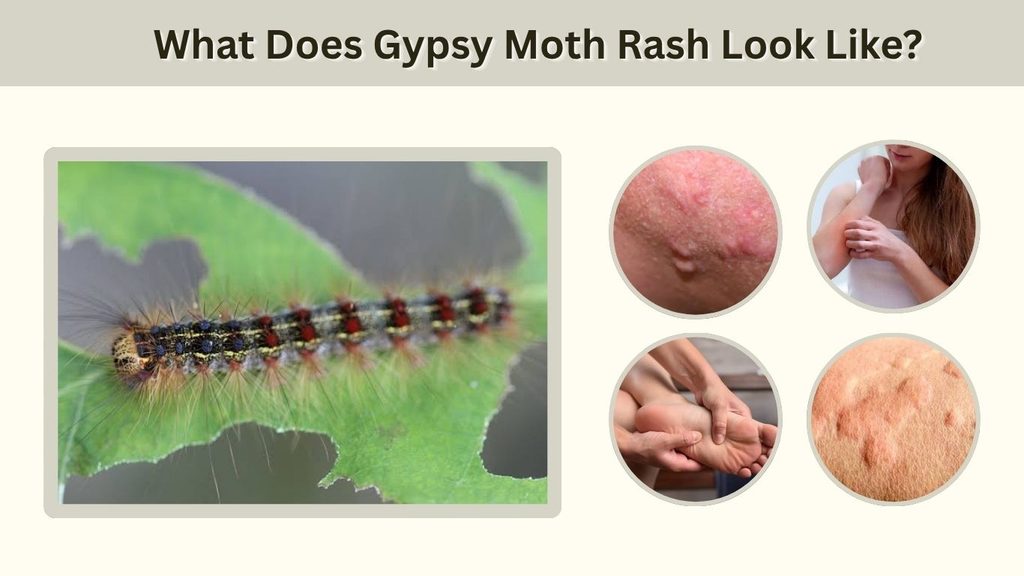
The appearance depends on a person’s sensitivity, the number of hairs involved, and where exposure occurred. It commonly affects uncovered areas such as the hands, arms, neck, face, and lower legs. Areas beneath loose clothing may also be affected when hairs become trapped against the skin.
Common Symptoms
A gypsy moth caterpillar rash may include:
- Small red or pink bumps
- Intense or moderate itching
- Burning, prickling, or tingling
- Red patches around the contact area
- Raised welts resembling hives
- Localized swelling
- Tender or sensitive skin
- Small blisters in stronger reactions
- Watery, red, or itchy eyes after airborne exposure
- Sneezing, coughing, or nasal irritation
The rash may appear in clusters, scattered bumps, or lines where the skin brushed against contaminated material. Scratching can make the area redder, increase swelling, and damage the skin.
Early-Stage Rash
An early reaction may begin with mild prickling, warmth, or itching. Small red bumps can appear within minutes or several hours after exposure.
Some reactions remain limited to a few bumps, while others develop into a larger patch of inflamed skin. Delayed symptoms are possible, so people may not immediately connect the rash to earlier outdoor activity.
Can Pictures Confirm the Cause?
Gypsy moth rash pictures cannot provide a definite diagnosis. Poison ivy, heat rash, eczema, insect bites, folliculitis, contact dermatitis, and other caterpillar hairs may produce similar appearances.
Location, recent outdoor exposure, visible caterpillars, and local outbreak activity are more useful than the rash pattern alone. A clinician should assess an unexplained, severe, painful, or persistent eruption.
Does Gypsy Moth Rash Spread?
The rash is not contagious and cannot pass from one person to another like an infection. It also does not spread through fluid from a bump or blister.
However, new spots may continue appearing if caterpillar hairs remain on the skin, beneath fingernails, in clothing, on bedding, or on a pet’s coat. Scratching can move loose hairs to another area and make it appear that the reaction is spreading.
Why New Bumps May Appear
Apparent spreading can result from:
- Delayed reactions in previously exposed skin
- Additional contact with contaminated clothing
- Loose hairs being transferred by the hands
- Hairs remaining beneath a watch or tight clothing
- Repeated outdoor exposure
- Inflammation worsening after scratching
- A different medical condition being mistaken for caterpillar rash
Shower after exposure and wash contaminated items separately to reduce repeated contact. Avoid shaking affected clothing indoors because this can release hairs into the air.
How Long Does Gypsy Moth Rash Last?
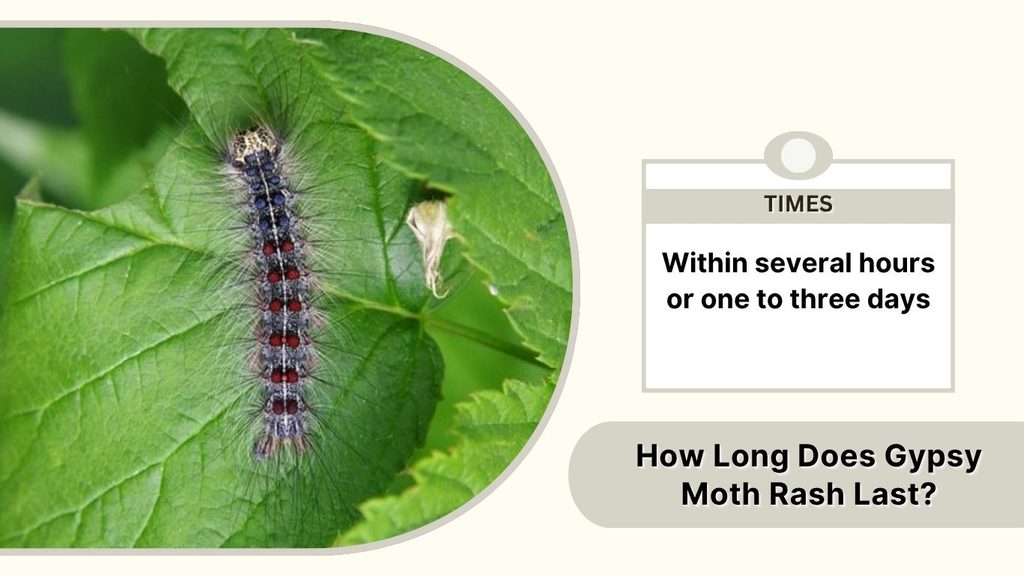
A mild reaction may improve within several hours or one to three days. More irritated skin can remain itchy for several days, especially when hairs were not removed promptly or scratching damaged the area.
Severe or allergic reactions may last longer and should be evaluated by a healthcare professional. Continuing exposure can also repeatedly restart symptoms. Seek medical advice if the rash is worsening, painful, infected-looking, or not improving after several days.
How to Treat Gypsy Moth Rash
Treatment begins by removing the microscopic hairs and preventing additional exposure. Act promptly but gently because rubbing or scratching can push hairs deeper into the skin.
Immediate First-Aid Steps
Follow these steps after suspected contact:
- Move away from the infested location.
- Avoid rubbing or scratching the exposed skin.
- Remove contaminated clothing carefully.
- Press adhesive tape gently onto the area and lift it away.
- Repeat with fresh tape to remove additional hairs.
- Wash the skin gently with soap and cool water.
- Apply a wrapped cold pack for 10–15 minutes.
- Cover scratched skin with a clean, loose dressing if needed.
- Wash clothing and shower to prevent reexposure.
Do not use the same piece of tape repeatedly because it may redeposit hairs. Avoid vigorous scrubbing, which can increase irritation.
Medicines for Itching
An over-the-counter 1% hydrocortisone cream or calamine lotion may help reduce mild itching and inflammation when used according to its label. An oral antihistamine may help some allergic or hive-like reactions.
Ask a pharmacist or clinician before giving medicine to a young child or using it during pregnancy. People taking other medications or living with chronic medical conditions should also confirm which products are appropriate.
Home Remedies to Avoid
Do not apply:
- Bleach or household disinfectants
- Gasoline, kerosene, or WD-40
- Undiluted essential oils
- Strong vinegar or ammonia
- Very hot water
- Harsh scrubs or exfoliating tools
- Unknown plant preparations
- Creams containing ingredients that previously caused allergies
Essential oils are not proven to remove caterpillar hairs and may create additional contact dermatitis. Cool water, adhesive tape, a cold compress, and appropriately labeled skin treatments are safer choices.
Eye Exposure
Do not rub an eye exposed to caterpillar hairs. Remove contact lenses if this can be done easily, and rinse the eye continuously with clean lukewarm water for at least 15 minutes.
Seek prompt medical care for continued pain, redness, light sensitivity, blurred vision, swelling, or the feeling that something remains trapped in the eye. Embedded hairs may require examination and removal by an eye-care professional.
When to Seek Medical Care
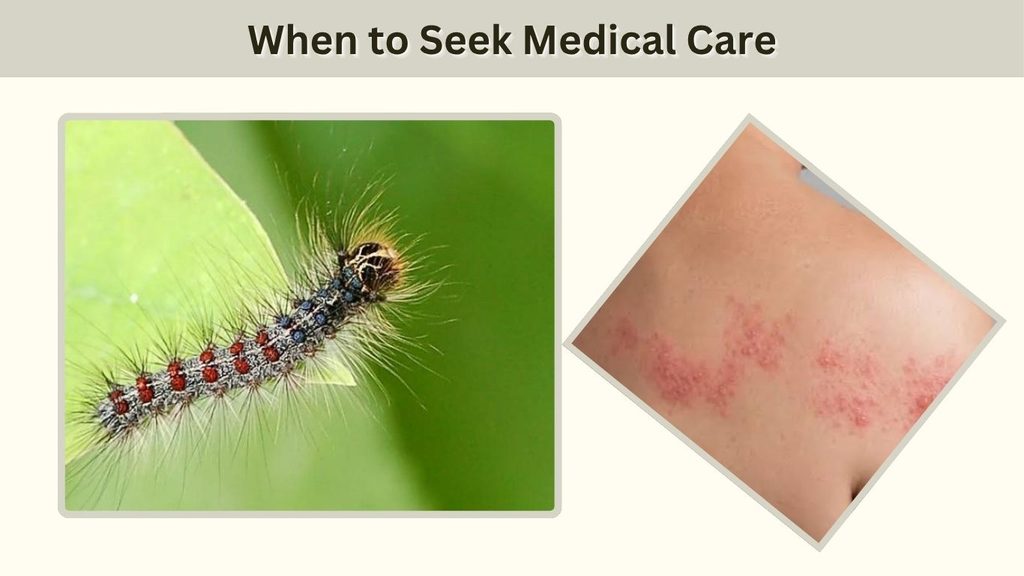
Most mild skin reactions can be managed at home, but certain symptoms need professional attention.
Warning Signs
Contact a medical professional if you experience:
- A rash that continues worsening
- Severe pain or extensive blistering
- Increasing warmth, pus, or spreading redness
- Fever or other signs of infection
- Swelling around the eyes or mouth
- Persistent eye irritation
- Widespread hives
- Repeated reactions after minor exposure
- Symptoms that do not improve after several days
Call emergency services immediately for difficulty breathing, wheezing, throat tightness, faintness, confusion, or swelling of the tongue, lips, or face. In the United States, Poison Control can provide individual guidance at 1-800-222-1222.
Gypsy Moth Rash vs. Poison Ivy
Both conditions can cause itchy, red bumps after outdoor activity, but they originate from different substances and often develop differently.
| Feature | Gypsy Moth Rash | Poison Ivy Rash |
| Cause | Caterpillar hairs | Urushiol plant oil |
| Usual onset | Minutes to several hours | Commonly hours to days |
| Pattern | Clusters or scattered bumps | Often streaks or lines |
| Duration | Often hours to several days | Frequently one to three weeks |
| Contagious | No | No |
| Reexposure source | Hairs on surfaces or clothing | Oil on tools, clothes or pets |
Neither rash spreads through blister fluid. Poison ivy oil or caterpillar hairs left on objects can cause fresh exposure, creating the impression that the rash is contagious.
Preventing Gypsy Moth Caterpillar Rash
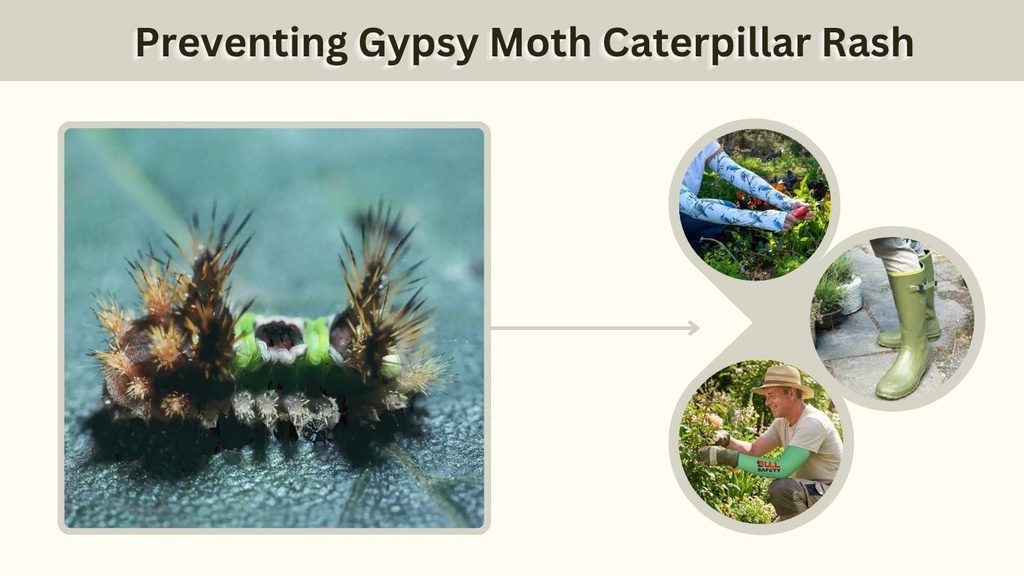
Risk is highest during spring and early summer when caterpillars are actively feeding. During major outbreaks, avoid unnecessary activity beneath heavily infested trees.
Protective Measures
- Wear long sleeves, long pants, gloves, and closed shoes
- Avoid touching caterpillars, pupae, and shed skins
- Teach children not to handle hairy caterpillars
- Wear gloves when cleaning outdoor furniture
- Shower after working in an infested area
- Wash exposed clothing before wearing it again
- Keep infested laundry separate from other items
- Rinse outdoor toys and equipment carefully
- Check pets before allowing them onto furniture
- Close windows when airborne hairs are causing irritation
Wear gloves when removing caterpillars or egg masses. Virginia Cooperative Extension similarly advises against handling larvae or pupae with bare skin because their hairs can cause reactions in sensitive individuals.
FAQs
Is gypsy moth rash contagious?
No. It cannot spread between people, but hairs carried on clothing, pets, or furniture can cause new reactions.
How quickly does the rash appear?
It may appear within minutes or several hours. Delayed reactions are also possible, depending on individual sensitivity.
How do I get rid of the rash quickly?
Remove hairs with fresh pieces of adhesive tape, wash gently, apply a cold compress, and use an appropriate anti-itch product according to its label.
Can a baby gypsy moth caterpillar cause a rash?
Yes. Newly hatched larvae are covered with fine hairs and can cause irritation, particularly when large numbers are carried by wind.
Should I pop gypsy moth rash blisters?
No. Opening blisters increases the risk of infection. Keep the area clean and seek medical advice if blistering is extensive or painful.