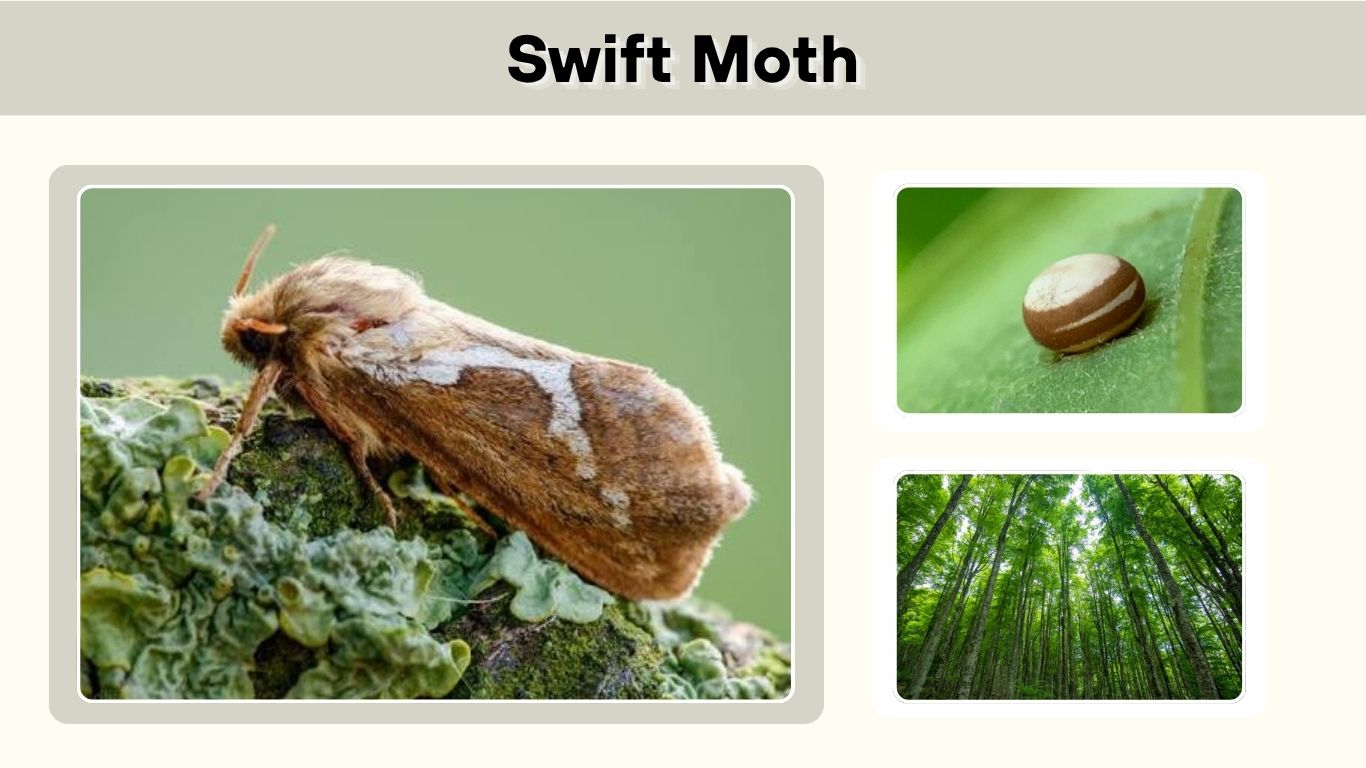
The swift moth is a member of the moth family Hepialidae, a group of primitive moths found in many parts of the world. These insects are known for their rapid, direct flight and unusual underground caterpillars. Species include the common swift moth, ghost moth, gold swift, and orange swift. Adults usually live for only a short period and focus mainly on reproduction, while the larvae may spend months or even years feeding underground. Their appearance, behavior, life cycle, and habitat make swift moths fascinating insects to observe.
What Is a Swift Moth?
Swift moths belong to the family Hepialidae, commonly called ghost moths or swift moths. They differ from many familiar moths because of their relatively simple mouthparts, short adult life, and distinctive reproductive behavior. Several species occur in Europe and the United Kingdom, while Australia and other regions support their own diverse groups of swift moths.
Swift Moth Identification
Typical swift moth characteristics include:
- Medium to large moth body
- Long or broad wings depending on species
- Rapid, direct flight
- Brown, orange, gray, cream, or patterned wings
- Relatively short antennae
- Thick-bodied appearance
- Nocturnal or evening activity
- Adults commonly seen flying close to vegetation
Exact colors and markings vary considerably between species.
Why Are They Called Swift Moths?
The name comes largely from their fast flight.
Adult males of some species fly rapidly over grass or low vegetation while searching for females. Their movement can be noticeably different from the slower fluttering flight associated with many other moths.
The alternative name “ghost moth” comes from pale species such as the male ghost moth, whose white wings can make it appear almost ghostlike while flying at dusk.
Common Swift Moth
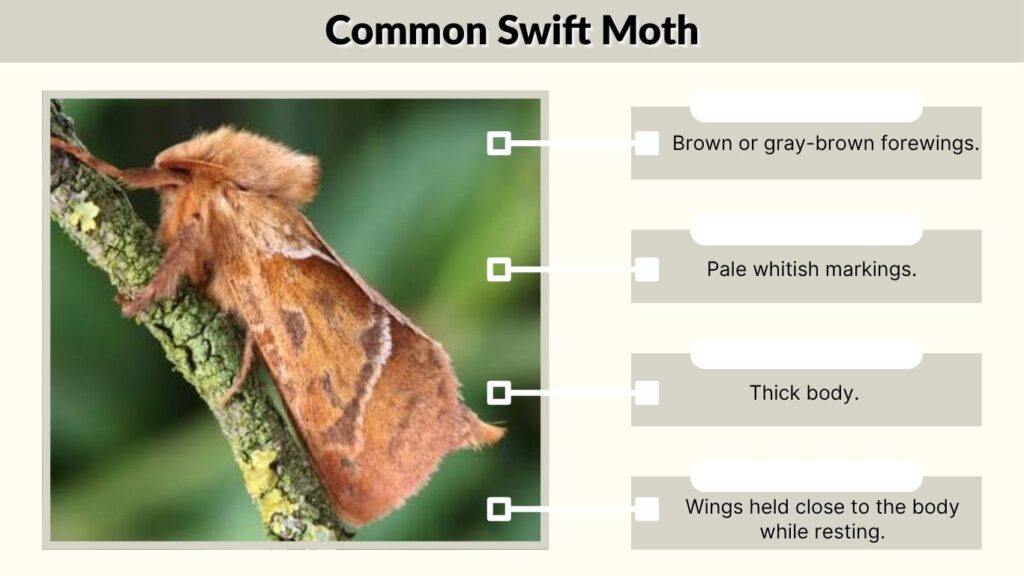
The common swift moth (Korscheltellus lupulina) is one of the best-known European swift moths. It occurs in grasslands, gardens, roadsides, farmland, and other habitats containing grasses and herbaceous vegetation. Adults generally appear from late spring into summer.
What Does a Common Swift Moth Look Like?
Adult common swift moths are usually brownish with pale markings across the forewings. Males and females can differ somewhat in size and pattern.
Look for:
- Brown or gray-brown forewings
- Pale whitish markings
- Thick body
- Wings held close to the body while resting
- Relatively small size compared with giant swift moths
- Evening or nighttime activity
They may sometimes be attracted to outdoor lights.
Common Swift Moth Caterpillar
The common swift moth caterpillar lives mostly underground rather than openly on leaves.
Its larvae feed on roots and underground portions of various plants. They may consume the roots of grasses and cultivated plants, which is why large populations can occasionally cause damage in gardens or agricultural areas.
Unlike brightly colored leaf-feeding caterpillars, swift moth larvae are usually pale and adapted to a hidden underground lifestyle.
Ghost Swift Moth
The ghost moth, sometimes called the ghost swift moth, is one of the most distinctive members of the family. The European ghost moth, Hepialus humuli, is particularly famous because adult males can have striking white wings.
Why Is the Ghost Moth Unusual?
Male ghost moths perform an impressive mating display during summer evenings.
The pale males may hover over a small area of vegetation while releasing chemical signals to attract females. Their white wings can remain highly visible in fading evening light, producing the ghostlike appearance responsible for their name.
Females are usually more yellowish or brownish and therefore look very different from the males.
Ghost Swift Moth Caterpillar
Ghost moth larvae develop underground and feed mainly on plant roots.
Their underground lifestyle can continue for a considerable portion of the life cycle. The caterpillars are generally:
- Creamy white or pale
- Elongated
- Equipped with a darker head
- Hidden within soil
- Root-feeding
- Difficult to observe without digging
When fully developed, the caterpillar eventually pupates before emerging as an adult moth.
Gold Swift and Orange Swift Moths
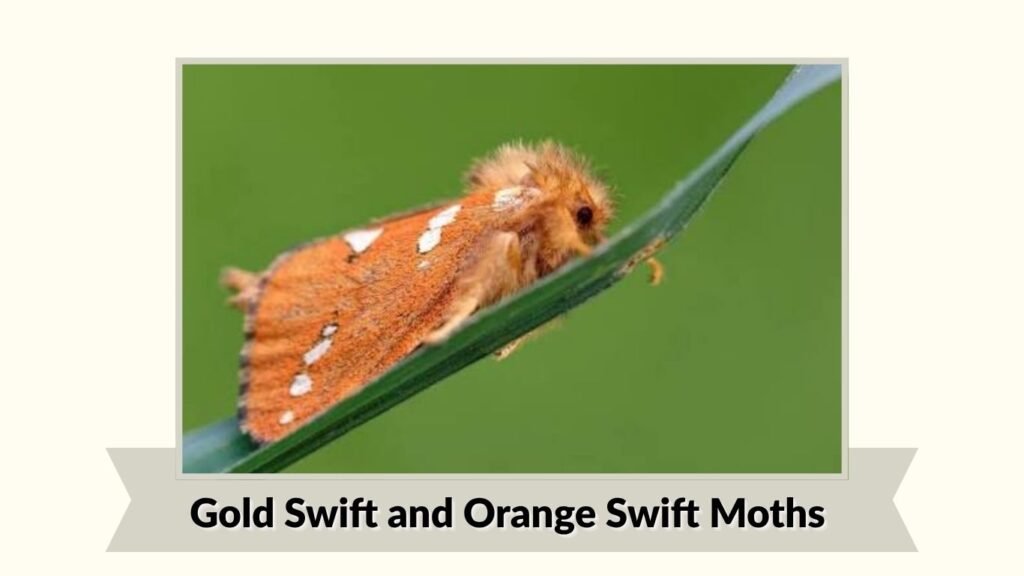
Not every swift moth is gray or white. Some members of this group show warm golden, orange, reddish, or purple-brown coloration. Two names frequently encountered in Europe are the gold swift and orange swift.
Gold Swift Moth
The gold swift, Phymatopus hecta, is a colorful species associated with woodland edges, heaths, and areas containing suitable low vegetation.
Adults can display rich orange, reddish, brown, or golden tones. Males are especially interesting because they use specialized scent-producing structures during courtship.
Like other swift moths, their adult stage is comparatively short.
Orange Swift Moth
The orange swift, commonly associated with Triodia sylvina, has warm orange-brown wings marked with lighter patterns.
It is often seen in:
- Grasslands
- Gardens
- Hedgerows
- Woodland edges
- Areas containing abundant herbaceous plants
Adults typically fly during summer and early autumn.
Its caterpillars feed underground on roots, following the characteristic developmental pattern of many swift moth species.
Swift Moth Caterpillar and Larvae
The caterpillar stage occupies much more of a swift moth’s life than the adult stage. While adults may survive for only a relatively short period, larvae can remain underground for many months. Some larger members of the family take considerably longer to complete development.
What Do Swift Moth Larvae Look Like?
Common features include:
- Pale or creamy body
- Darker brown head
- Long cylindrical form
- Small legs near the front
- Underground lifestyle
- Strong association with plant roots
Because they remain concealed in soil or plant material, people are much less likely to encounter the caterpillars than the adult moths.
What Do Swift Moth Caterpillars Eat?
Depending on species, larvae may feed on:
- Grass roots
- Herbaceous plant roots
- Bracken
- Dock
- Dandelions
- Cultivated plant roots
- Underground plant stems
- Decaying or living plant material
Root feeding normally occurs below the surface, making an infestation less obvious than damage caused by caterpillars feeding directly on leaves.
Swift Moth Life Cycle
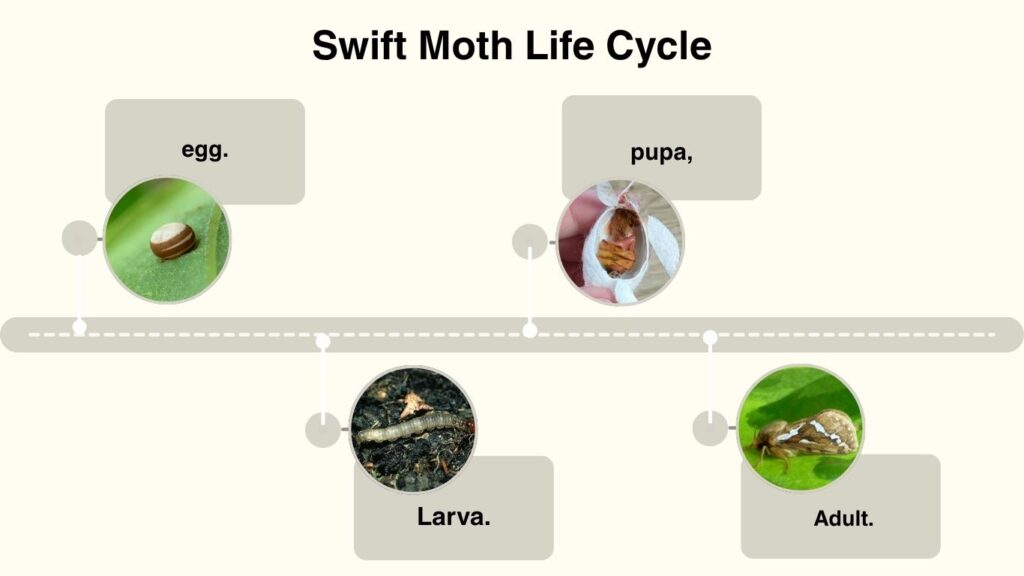
Swift moths undergo complete metamorphosis with four major stages: egg, caterpillar, pupa, and adult. However, their reproductive behavior and underground larval development distinguish them from many commonly encountered garden moths.
Four Life Cycle Stages
- Egg: Females release or scatter numerous eggs over vegetation or suitable habitat.
- Larva: Caterpillars hatch and move into soil or plant material, where they feed and grow.
- Pupa: Mature larvae pupate below or near the soil surface.
- Adult: Adults emerge, mate, lay eggs, and complete the cycle.
Some females can produce very large numbers of eggs because only a proportion of the young are likely to survive.
How Long Do Swift Moths Live?
The total life cycle can last far longer than the visible adult stage.
Larvae may develop for many months or longer, depending on species and climate. Adults generally have a relatively brief lifespan because their primary purpose is reproduction.
Many adult hepialid moths have reduced mouthparts and feed little or not at all.
Swift Moths in Australia
Australia has an impressive diversity of swift and ghost moths. Some Australian members of the Hepialidae family grow much larger than familiar European species, making searches for giant swift moths particularly relevant there.
Giant Australian Swift Moths
Australian swift moths can include species with:
- Very large wings
- Heavy bodies
- Brown or patterned coloration
- Large underground larvae
- Strong nighttime flight
- Seasonal mass emergence
Some Australian hepialid larvae have historically been recognized as important traditional foods by Aboriginal peoples.
Australia’s enormous variety of habitats has allowed many different swift moth species to evolve.
Are Swift Moths Harmful?
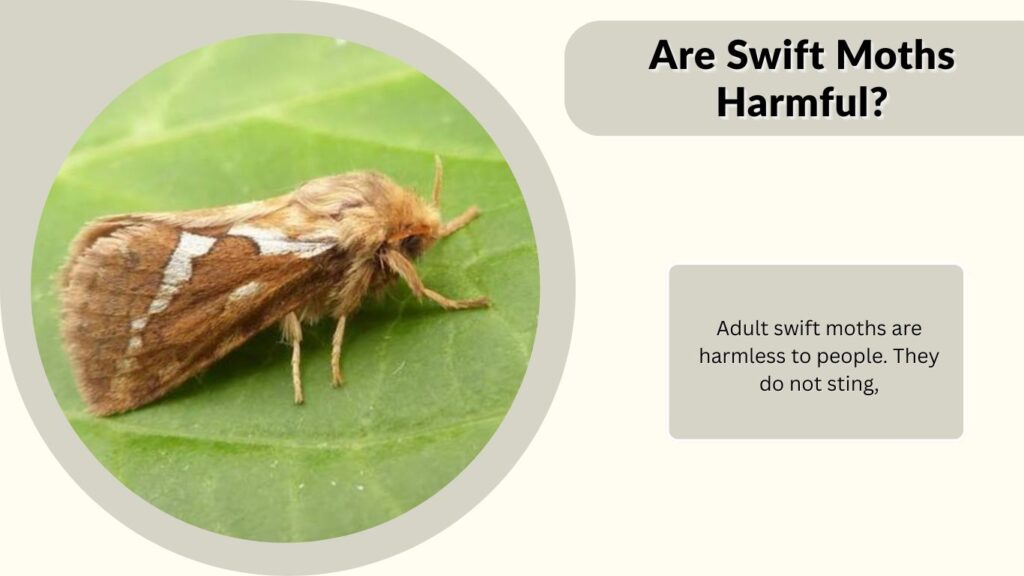
Adult swift moths are harmless to people. They do not sting, and they are not aggressive. Seeing one flying around outdoor lighting does not indicate a danger to your home or family.
Can Swift Moth Larvae Damage Plants?
Root-feeding larvae can sometimes damage plants when present in high numbers.
Possible signs include:
- Weak plant growth
- Wilting despite sufficient water
- Damaged roots
- Declining grass
- Plants becoming easy to pull from soil
However, finding an occasional swift moth outdoors does not mean plant damage will occur.
Control is usually unnecessary unless root-feeding larvae are confirmed as the cause of significant damage.
Interesting Swift Moth Facts
Swift moths represent an ancient and fascinating branch of moth diversity. Their underground caterpillars, fast-flying adults, unusual mating displays, and short adult lives distinguish them from many more familiar moth families.
Quick Facts
- Swift moths belong to the family Hepialidae.
- They are sometimes called ghost moths.
- Caterpillars of many species live underground.
- Larvae commonly feed on plant roots.
- Adults often have short lifespans.
- Some adult swift moths feed very little.
- Male ghost moths can be almost completely white.
- Adults may perform aerial mating displays.
- Australia has numerous large swift moth species.
- Swift moths are not dangerous to humans.
FAQs
What is a swift moth?
A swift moth is a moth belonging to the family Hepialidae. The family contains many species commonly known as swift moths and ghost moths.
What does a swift moth caterpillar eat?
Most swift moth larvae feed underground on roots, stems, and other plant material. The exact food plants vary by species.
Are swift moths dangerous?
No. Adult swift moths do not sting or pose a danger to humans. Some larvae can damage plant roots if populations become unusually high.
Where are swift moths found?
Swift moths occur in many regions, including Europe, Asia, Australia, Africa, and the Americas. Individual species have much more restricted distributions.
Why is the ghost swift moth called a ghost moth?
Male ghost moths can have brilliant white wings and perform hovering mating displays around dusk. Against darker vegetation, their pale moving bodies can look ghostlike.