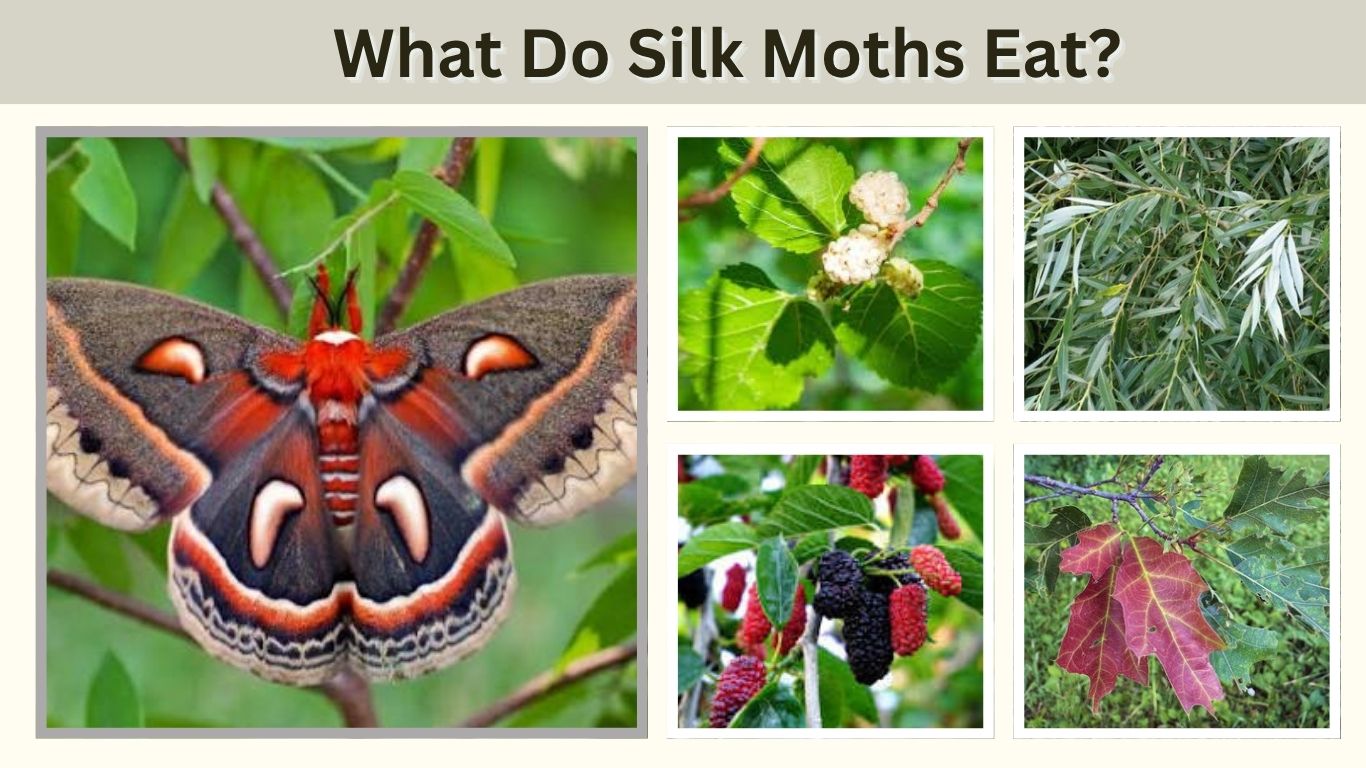
What do silk moths eat? The answer depends heavily on their life stage and species. Adult silk moths generally eat little or nothing because many have reduced or nonfunctional mouthparts. Their caterpillars, however, are active feeders that consume leaves from specific host plants before spinning cocoons. Domestic silkworms rely mainly on mulberry leaves, while giant silk moth caterpillars may feed on oak, maple, willow, birch, and other trees. Here are 10 common foods eaten by silk moth caterpillars and important differences among species.
What Do Silk Moths Eat?
Silk moths include the domesticated silk moth (Bombyx mori) as well as numerous wild giant silk moths. Their diets are not identical. Most feeding takes place during the caterpillar stage, when larvae must consume enough plant material to support rapid growth, cocoon formation, pupation, and eventual development into adult moths.
Do Adult Silk Moths Eat?
Most adult giant silk moths do not eat at all. Members of the giant silk moth family Saturniidae commonly have reduced mouthparts and survive on energy accumulated while they were caterpillars.
Adult domestic silk moths also do not normally feed.
Their short adult lives are primarily devoted to reproduction. They emerge from their cocoons, find mates, lay eggs, and eventually die.
This means that when people ask what silk moths eat, the most useful answer generally concerns their caterpillars rather than the adults.
10 Foods Silk Moth Caterpillars Eat
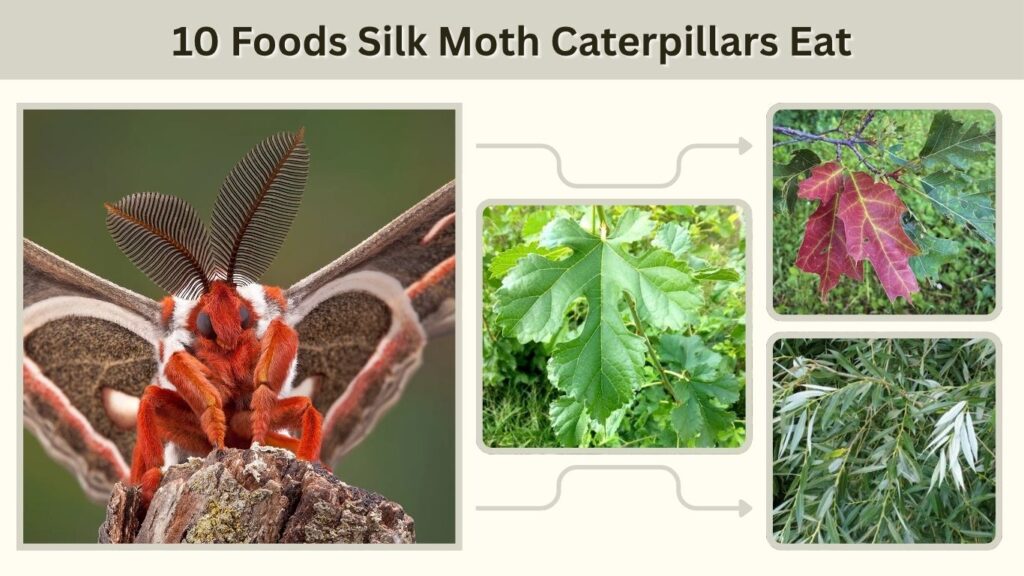
Different silk moth species require different host plants. A leaf that works perfectly for one species may be unsuitable for another. Never assume that every silk moth caterpillar can survive on all plants listed below. These are common host foods used by domestic or wild silk moth species.
1. Mulberry Leaves
Mulberry leaves are the most famous silk moth food because they are the primary diet of domestic silkworms.
The domestic silk moth caterpillar, commonly called a silkworm, feeds heavily on leaves from mulberry trees, particularly species in the genus Morus.
Fresh leaves provide the moisture and nutrients larvae need for rapid growth. Young caterpillars generally receive tender leaves, while larger silkworms can handle more mature foliage.
Commercial silkworm diets are also available, but many are formulated largely around mulberry leaf material.
2. Oak Leaves
Oak is an important host plant for several wild giant silk moth caterpillars.
Species associated with different oak trees may feed on fresh foliage throughout their larval development. Oak leaves provide substantial plant material for the rapidly growing caterpillars.
Giant silk moth larvae can become impressively large before pupating, so they may consume considerable amounts of foliage.
However, a caterpillar found on an oak should ideally continue receiving leaves from the same type of plant rather than being suddenly switched to an unfamiliar host.
3. Maple Leaves
Maple trees provide food for several species of giant silk moth caterpillars.
Larvae may feed along the leaf edges and gradually consume large portions of individual leaves. As caterpillars mature, their appetite increases considerably.
Maples can support wild silk moth species in forests, parks, gardens, and suburban landscapes.
Because host preferences differ among species, identifying the caterpillar before attempting to raise it is important. A silk moth larva naturally found eating maple is much more likely to thrive when supplied with fresh maple foliage.
4. Birch Leaves
Birch foliage is another food consumed by certain giant silk moth caterpillars.
The tender leaves provide moisture along with carbohydrates and other nutrients required for development.
Wild caterpillars typically remain associated with suitable host trees until they have completed their feeding stages.
When keeping caterpillars temporarily, fresh birch branches should remain clean and pesticide-free. Leaves that have been treated with garden insecticides can poison larvae even when they appear perfectly healthy.
5. Willow Leaves
Willows serve as host plants for multiple moth species, including some wild silk moths.
Their abundant foliage can provide caterpillars with a steady food supply during spring and summer.
Larvae usually eat leaves rather than bark or wood. They use strong chewing mouthparts to remove sections of plant tissue.
If a caterpillar was collected from willow, continuing to provide the same willow species is generally preferable to experimenting with unrelated plants, especially after the caterpillar has already established a feeding preference.
6. Cherry and Plum Leaves
Trees in the genus Prunus, including cherries and plums, can provide food for several giant silk moth caterpillars.
Larvae may consume:
- Wild cherry leaves
- Cultivated cherry leaves
- Plum leaves
- Related Prunus foliage
Wild cherry is particularly important for numerous native caterpillars.
Avoid offering leaves from trees that have recently been treated with pesticides or systemic insecticides. Even small residues can be harmful to caterpillars.
7. Sweetgum Leaves
Sweetgum is an important caterpillar host in areas where the tree naturally grows.
Several large moth caterpillars can use sweetgum foliage as food. Its star-shaped leaves make the tree relatively easy to recognize.
When abundant, sweetgum trees can support feeding caterpillars for several weeks until they reach the stage at which they stop eating and prepare to pupate.
As with other host plants, feeding preferences vary, so sweetgum should not automatically be offered to every silk moth species.
8. Walnut Leaves
Walnut trees provide foliage for some wild silk moth caterpillars.
Larvae feed directly on the leaves, consuming increasingly larger quantities as they pass through successive molts.
Walnut foliage has a distinctive chemistry that many insects cannot tolerate, but caterpillars adapted to walnut hosts can use it successfully.
Wild silk moths may also use related trees depending on species and geographic location.
When rearing them, supplying the plant on which the caterpillar was originally feeding is usually the safest approach.
9. Ceanothus Leaves
Ceanothus leaves are particularly important for the Ceanothus silk moth and help explain the species’ common name.
Its caterpillars may feed on ceanothus shrubs as well as certain other suitable host plants.
The larvae consume leaves throughout their growth stages, storing enough energy to later form a cocoon and develop into adults.
Once adult Ceanothus silk moths emerge, they do not continue eating leaves. Like many giant silk moth adults, their primary adult function is reproduction rather than feeding.
10. Alder and Aspen Leaves
Alder and aspen are host plants for some northern giant silk moth species, including caterpillars adapted to cooler forest habitats.
For example, Columbia silk moth caterpillars may use several deciduous trees in their natural range.
These larvae feed heavily while young and gradually become larger before spinning their cocoons.
The exact host selection can differ geographically, making local tree species important. Caterpillars should therefore be identified before deciding which foliage to provide.
What Do Domestic Silk Moths Eat?
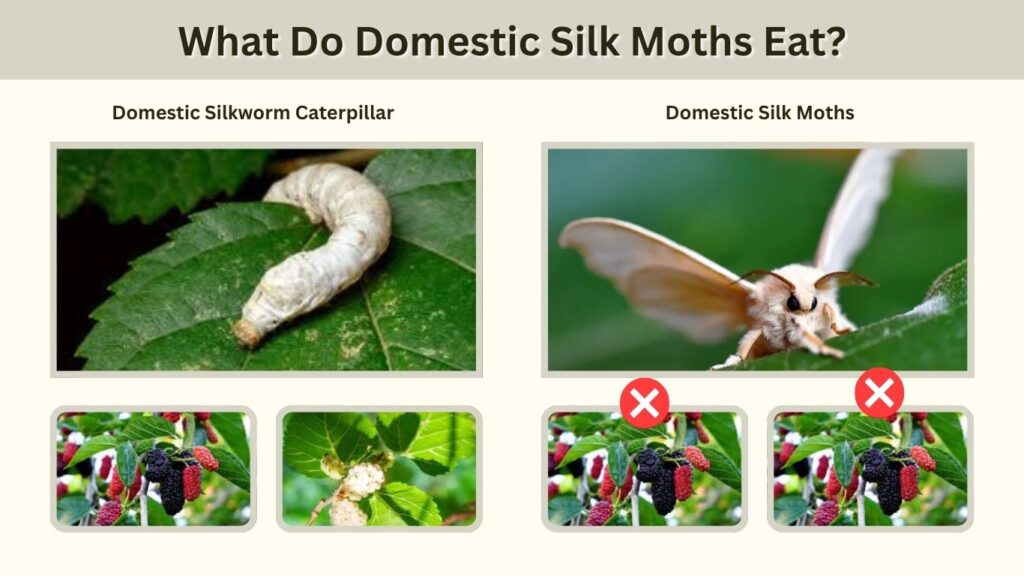
Domestic silk moths are different from many wild giant silk moths because humans have selectively bred them for silk production for thousands of years. Their caterpillars have particularly specialized dietary requirements and are strongly associated with mulberry trees.
Domestic Silkworm Caterpillar Diet
Domestic silkworms mainly eat:
- White mulberry leaves
- Other suitable mulberry leaves
- Prepared mulberry-based silkworm chow
Mulberry is preferred because it provides the nutrients domestic silkworms need for growth and silk production.
Silkworms should not simply be given random garden leaves. Their digestive biology is specialized, and unsuitable plants may cause starvation or digestive problems.
Fresh leaves should also be free from pesticide residues.
Do Domestic Silk Moth Adults Eat?
Adult domestic silk moths generally do not eat or drink.
Their mouthparts are greatly reduced, and the adults survive using energy stored during the caterpillar stage.
After emerging from the cocoon, their priorities are mating and reproduction rather than finding food.
Their inability to feed contributes to their relatively short adult lifespan.
What Do Giant Silk Moths Eat?
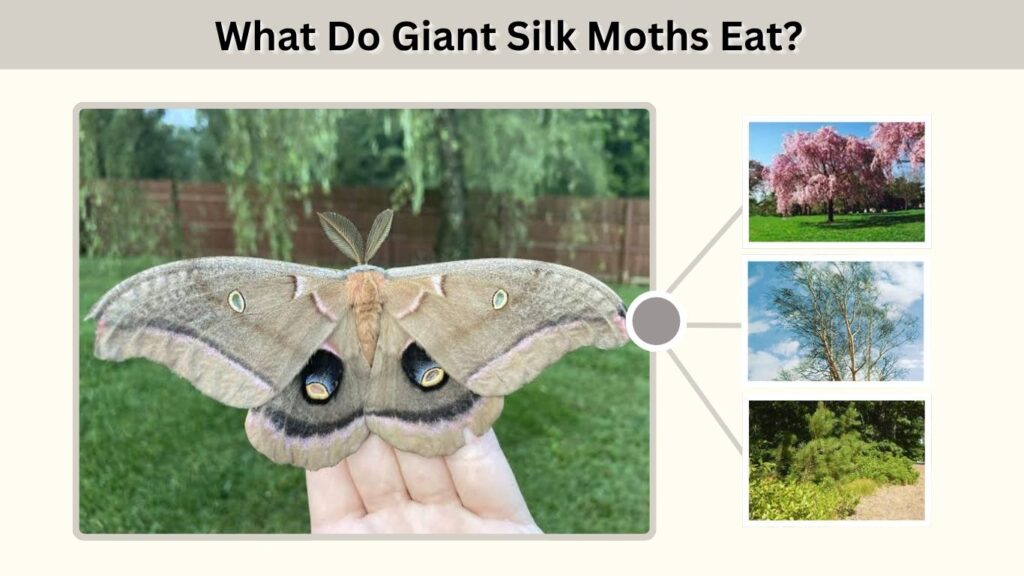
Giant silk moths belong primarily to the family Saturniidae. Familiar members include luna moths, cecropia moths, polyphemus moths, atlas moths, imperial moths, and several regional silk moth species.
Giant Silk Moth Caterpillar Diet
Depending on species, caterpillars may use host plants such as:
- Oak
- Maple
- Birch
- Willow
- Cherry
- Walnut
- Sweetgum
- Aspen
- Alder
- Ceanothus
Many species can use several related host plants, while others have narrower preferences.
A caterpillar that has already begun feeding on one plant should usually remain on that host whenever possible.
Do Giant Silk Moths Eat as Adults?
Most adult giant silk moths eat nothing.
They emerge with energy reserves accumulated while feeding as caterpillars. Because they have limited or nonfunctional feeding mouthparts, they cannot simply switch to nectar, fruit, or sugar water.
Their adult stage may last only days or a couple of weeks, depending on species and conditions.
During that time, they focus almost entirely on locating mates and producing the next generation.
What Do Ceanothus and Columbia Silk Moths Eat?
Different named silk moth species can have noticeably different caterpillar diets. Their common names sometimes reflect preferred plants or geographic distribution rather than a universal silk moth diet.
Ceanothus Silk Moth
Ceanothus silk moth caterpillars may feed on ceanothus and several woody plants available within their range.
Adults do not normally feed.
The caterpillars perform virtually all of the eating necessary for the moth’s entire life cycle, making the quality and availability of host foliage especially important.
Columbia Silk Moth
Columbia silk moth caterpillars feed on suitable deciduous host trees, including species such as larch, birch, alder, and related plants depending on location and population.
The caterpillars become progressively larger through successive molts before eventually spinning cocoons.
Adult Columbia silk moths, like other giant silk moths, generally rely on stored larval energy rather than eating after emergence.
What Do Silk Moths Eat and Drink?
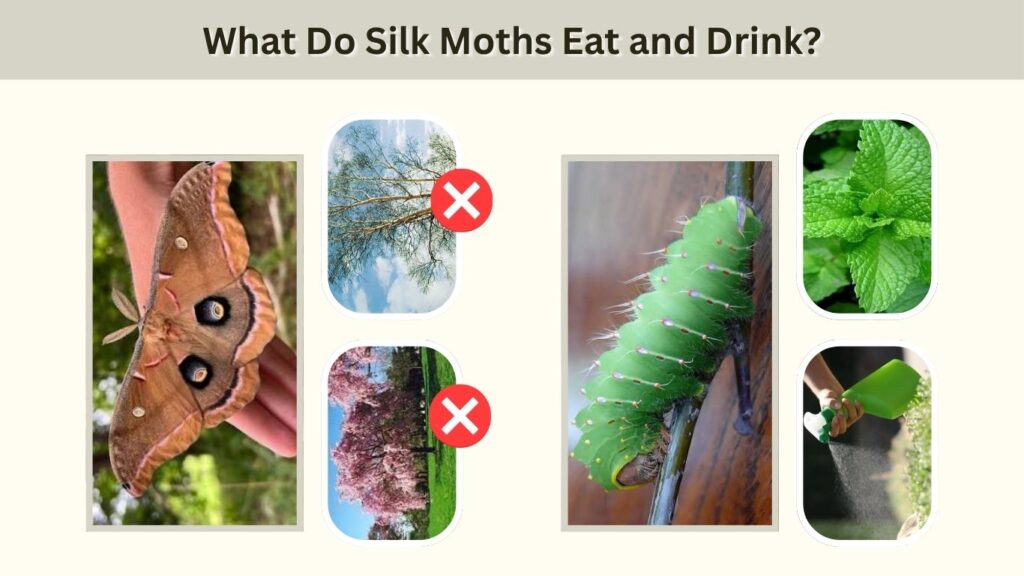
Silk moth caterpillars usually obtain both nutrition and much of their moisture directly from fresh leaves. They generally do not need an open bowl of water, which can actually present a drowning risk to small larvae.
How Caterpillars Get Water
Fresh host leaves naturally contain moisture.
To keep captive caterpillars healthy:
- Provide fresh appropriate leaves.
- Replace wilted leaves regularly.
- Avoid soaking the enclosure.
- Keep foliage pesticide-free.
- Maintain appropriate ventilation.
- Remove spoiled plant material.
The correct host plant is far more important than offering additional foods or drinks.
FAQs
1. What is the main food of silk moths?
The caterpillars are the main feeding stage. Domestic silkworms primarily eat mulberry leaves, while wild giant silk moth caterpillars may eat oak, maple, willow, birch, cherry, sweetgum, walnut, ceanothus, and other species-specific host plants. Most adults eat nothing.
2. What do domestic silk moths eat?
Domestic silk moth caterpillars, or silkworms, mainly eat mulberry leaves. They can also be raised on specially formulated mulberry-based silkworm chow. Adult domestic silk moths generally do not eat because their mouthparts are reduced and they depend on stored energy.
3. What do giant silk moth caterpillars eat?
Their diet depends on species. Common host plants include oak, maple, cherry, birch, willow, sweetgum, walnut, alder, and aspen. Caterpillars should ideally be fed the same plant species on which they were originally found because not every giant silk moth accepts every host.
4. Do adult giant silk moths eat or drink?
Most adult giant silk moths neither eat nor drink. Their mouthparts are reduced or nonfunctional, so they survive using fat and energy reserves accumulated as caterpillars. Their adult lifespan is therefore relatively short and focused mainly on mating and reproduction.
5. Can silkworms eat leaves other than mulberry?
Domestic silkworms are highly specialized for feeding on mulberry. Although experimental or artificial diets exist, random garden leaves should not replace mulberry. If raising silkworms, provide fresh pesticide-free mulberry foliage or an appropriate commercially prepared silkworm diet rather than experimenting with unsuitable plants.