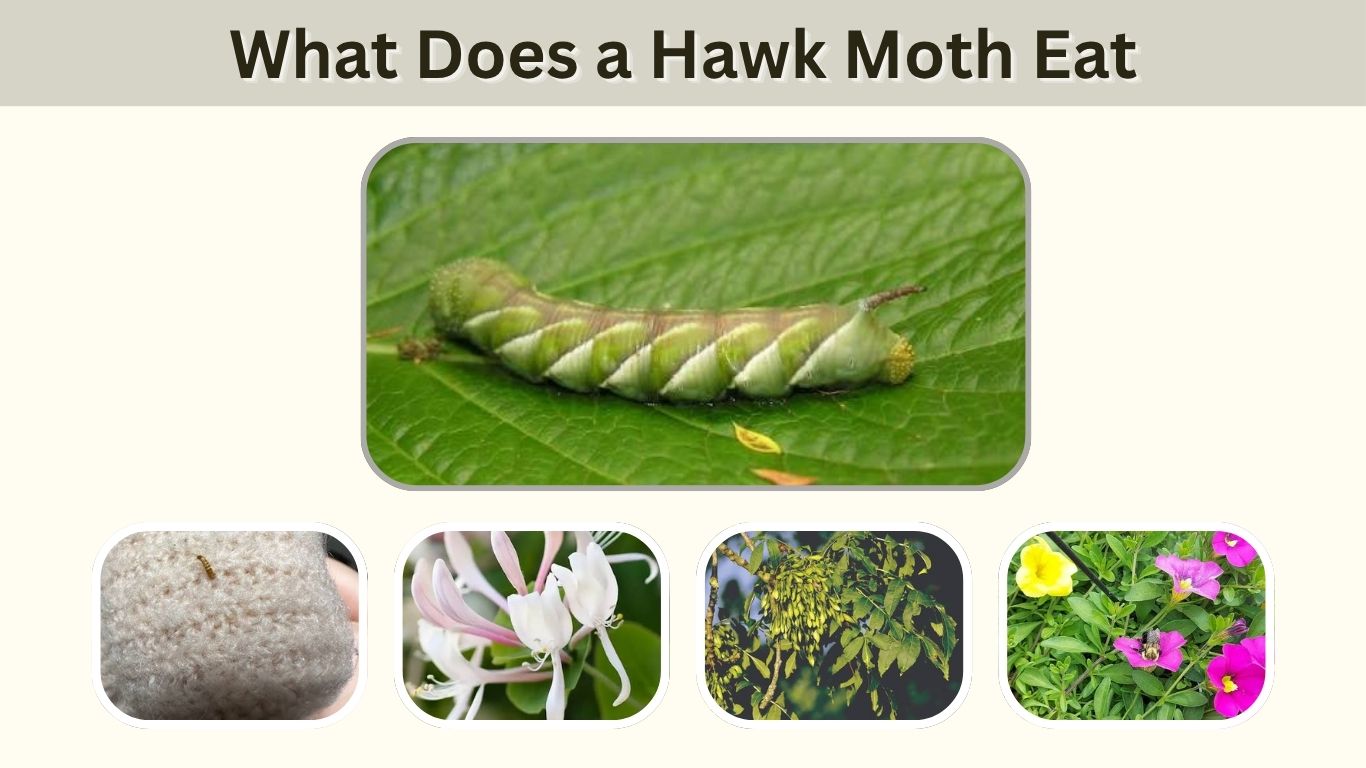
Hawk moths have very different diets depending on their life stage. Adult hawk moths mainly drink nectar from flowers using a long proboscis, while their caterpillars feed on leaves from specific host plants. Some species, such as the death’s-head hawk moth, have unusual feeding habits, while others may barely feed as adults. Knowing what hawk moths eat can help identify caterpillars, understand their role as pollinators, and explain why certain species frequently appear around gardens, flowers, tomatoes, willowherb, bedstraw, and other plants.
What Do Hawk Moths Eat?
Adult hawk moths generally depend on liquid food rather than solid plant material. Many species visit flowers after sunset and hover in front of blooms while extending a long proboscis deep into the flower.
Their excellent flight control allows some species to feed without landing, creating behavior remarkably similar to a hummingbird.
10 Foods Hawk Moths Commonly Eat
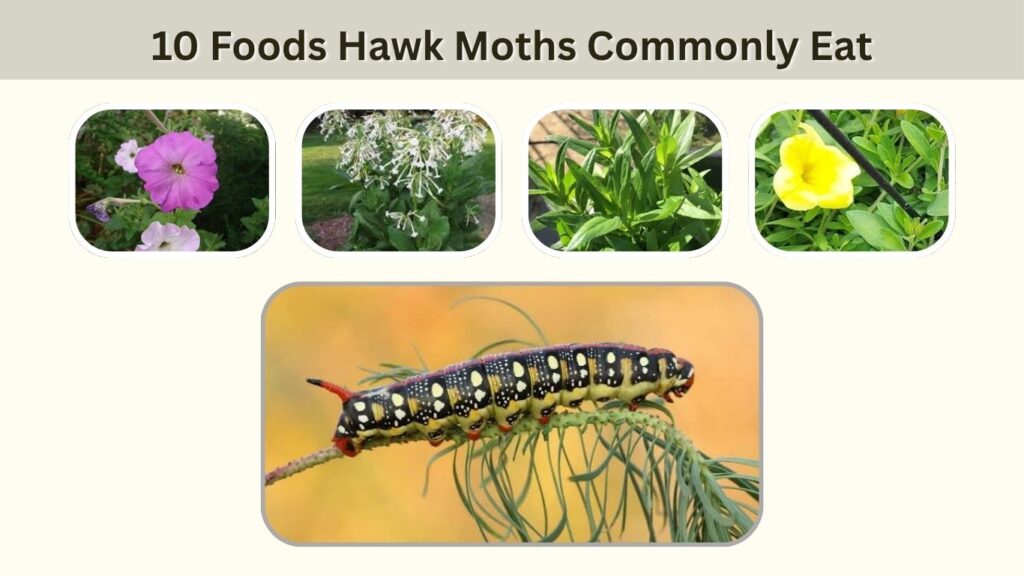
Hawk moth diets vary by species and life stage. Most adults rely on nectar and other sugary liquids for quick energy, while caterpillars feed heavily on leaves from specific host plants. Some species also have unusual feeding habits, such as consuming honey or using stored energy without feeding much as adults. The following are 10 common foods associated with hawk moths and their larvae.
- Flower nectar
- Honeysuckle nectar
- Jasmine nectar
- Petunia nectar
- Tobacco-flower nectar
- Willowherb leaves
- Bedstraw leaves
- Privet leaves
- Tomato foliage
- Potato foliage
The first several foods are primarily consumed by adults, while leaves are eaten by hawk moth caterpillars.
Do Adult Hawk Moths Eat Leaves?
No. Adult hawk moths generally do not chew leaves.
Their mouthparts are adapted for drinking liquids rather than biting plant tissue. In many species, adults use a long, tube-like proboscis to reach nectar hidden deep inside tubular flowers.
Caterpillars are responsible for most foliage consumption.
What Do Hawk Moth Caterpillars Eat?
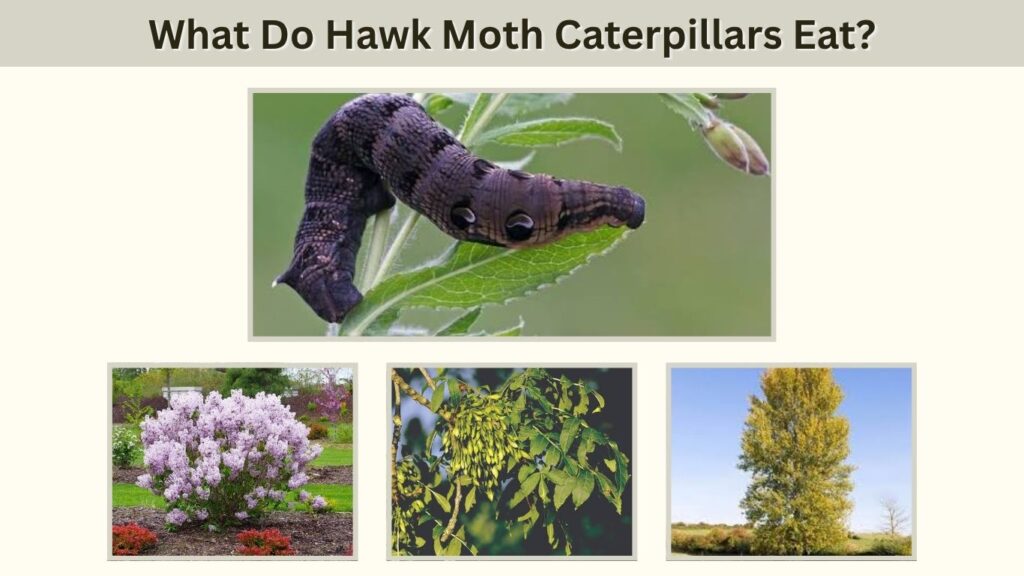
Hawk moth caterpillars are herbivores and can consume surprisingly large amounts of foliage while growing.
However, not every hawk moth caterpillar can survive on every plant. Different species have preferred host plants, and some are highly specialized.
Common Hawk Moth Caterpillar Food Plants
Frequently used plants include:
- Willowherb
- Bedstraw
- Fuchsia
- Privet
- Lilac
- Ash
- Poplar
- Willow
- Lime trees
- Tomato
- Potato
- Nightshade
- Oleander
A caterpillar discovered on one of these plants may be easier to identify by examining both the larva and its host plant.
Why Do Caterpillars Eat So Much?
The caterpillar stage is primarily devoted to growth.
A newly hatched larva may be tiny, but after repeated feeding and several molts it can become one of the largest caterpillars in a garden.
The energy stored during this period supports pupation and eventually the development of the adult moth.
What Do Elephant Hawk Moths Eat?
The elephant hawk moth is particularly well known for visiting gardens. Adults primarily drink flower nectar, especially from plants that produce strong scents during evening hours.
Their caterpillars have a very different diet.
Elephant Hawk Moth Caterpillar Food
Elephant hawk moth caterpillars commonly feed on:
- Rosebay willowherb
- Other willowherbs
- Bedstraw
- Fuchsia
Willowherb is among their best-known natural host plants.
Caterpillars may occasionally be found crawling across paths or lawns when they leave their feeding plant to search for somewhere to pupate.
What Do Adult Elephant Hawk Moths Eat?
Adults primarily drink nectar from flowers.
They are active mainly at night and are attracted to strongly scented blooms. Their long proboscis allows them to feed from flowers that many short-tongued insects cannot easily access.
What Do Hummingbird Hawk Moths Eat?
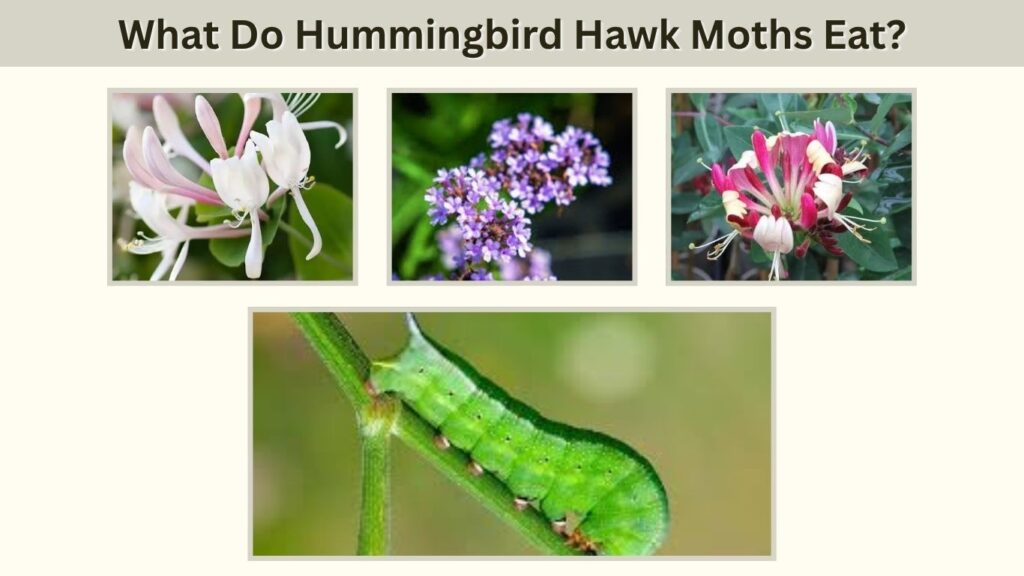
Hummingbird hawk moths are famous for hovering in front of flowers while feeding.
Adults drink nectar and are often active during daylight, making them easier to observe than many nocturnal hawk moths.
Favorite Flowers
They commonly visit nectar-rich plants such as:
- Buddleia
- Lavender
- Red valerian
- Honeysuckle
- Jasmine
- Verbena
Their rapid wingbeats and hovering flight explain why they are frequently mistaken for tiny hummingbirds.
Hummingbird Hawk Moth Caterpillar Diet
Their caterpillars primarily feed on bedstraws and related plants.
This difference between adult and larval food is important: adults seek nectar-producing flowers, while females search for suitable host plants where their caterpillars can feed.
What Do Death’s-Head Hawk Moths Eat?
The death’s-head hawk moth has one of the most unusual diets in the hawk moth family.
Adults are famous for entering honeybee colonies and feeding on stored honey.
Death’s-Head Hawk Moth Adult Food
Adult death’s-head hawk moths may consume:
- Honey
- Flower nectar
- Other sugary liquids
Their strong, relatively short proboscis differs from the extremely long feeding tubes of some other hawk moths.
What Do Death’s-Head Hawk Moth Caterpillars Eat?
Their caterpillars feed on foliage and are particularly associated with plants such as:
- Potato
- Nightshade-family plants
- Jasmine
- Privet
- Related suitable host plants
Large caterpillars require considerable foliage before entering the pupal stage.
What Do Five-Spotted Hawk Moths Eat?
The five-spotted hawk moth is the adult form of the tomato hornworm.
Adult moths feed primarily on nectar, whereas their caterpillars are strongly associated with nightshade-family plants.
Five-Spotted Hawk Moth Caterpillar Food
Tomato hornworms commonly eat:
- Tomato leaves
- Potato foliage
- Eggplant leaves
- Pepper plants
- Nightshade plants
Large caterpillars can remove significant amounts of foliage from tomato plants, making them familiar garden visitors.
What Do Privet Hawk Moths Eat?
Adult privet hawk moths and their caterpillars again have different food requirements.
The larvae primarily feed on woody plants and shrubs rather than nectar.
Privet Hawk Moth Caterpillar Food
Common host plants include:
- Privet
- Lilac
- Ash
- Occasionally other related shrubs
A mature privet hawk moth caterpillar is large, green, and typically marked with contrasting diagonal stripes.
Adult moths rely primarily on stored energy and feeding behavior can be limited compared with strongly nectar-feeding species.
What Do Lime Hawk Moths Eat?
Lime hawk moth caterpillars feed primarily on tree leaves.
Typical host plants include:
- Lime or linden trees
- Elm
- Birch
- Alder
- Other suitable deciduous trees
Do Adult Lime Hawk Moths Eat?
Adult lime hawk moths have reduced functional feeding ability and generally do not feed significantly.
Instead, much of the energy needed during adulthood comes from reserves accumulated while they were caterpillars.
Their adult life is therefore largely concentrated on reproduction.
What Do Poplar Hawk Moths Eat?
Poplar hawk moth caterpillars specialize mainly on trees.
Common foods include:
- Poplar
- Willow
- Aspen
The larvae consume foliage until they become mature enough to pupate.
Adult Poplar Hawk Moth Diet
Adult poplar hawk moths have reduced mouthparts and generally do not feed.
Like lime hawk moths, they depend heavily on energy stored during their caterpillar stage.
This is an excellent example of why there is no single answer to what every adult hawk moth eats.
What Do Eyed Hawk Moths Eat?
Eyed hawk moth caterpillars primarily feed on woody plants.
Common host plants include:
- Willow
- Apple
- Poplar
- Aspen
Adult eyed hawk moths generally have reduced mouthparts and do not normally feed.
The caterpillar stage therefore provides nearly all the nutritional reserves needed for adult survival and reproduction.
Do Hawk Moths Eat Clothes?
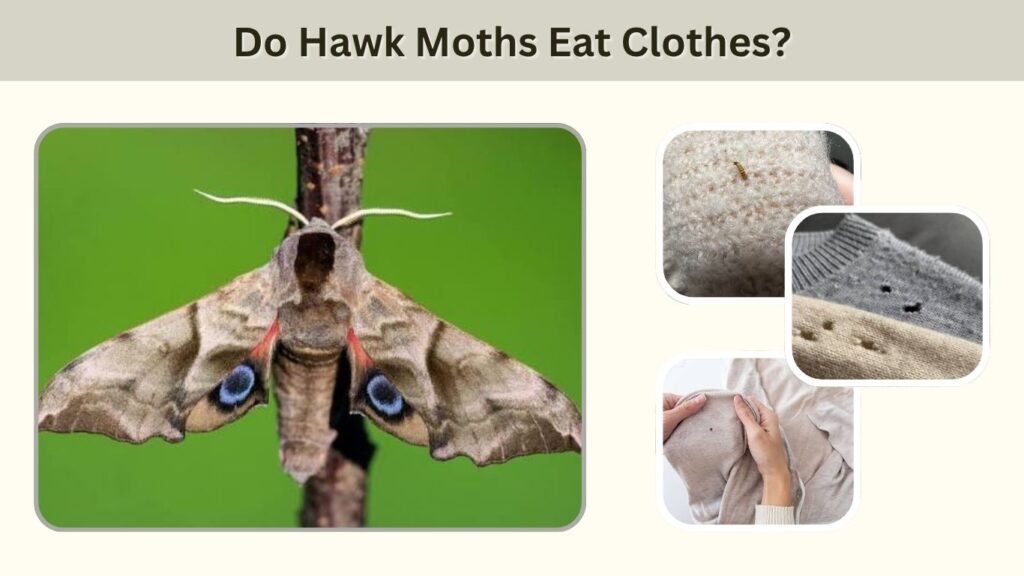
No. Hawk moths are not clothes moths.
They do not normally eat:
- Wool
- Cotton clothing
- Carpets
- Furniture fabrics
- Stored textiles
Damage to clothing is generally associated with caterpillars of certain small clothes moth species, not large hawk moths.
A hawk moth flying into a house is usually there accidentally and is not interested in clothing.
Can Hawk Moths Drink From Hummingbird Feeders?
Nectar-feeding hawk moths may sometimes investigate hummingbird feeders because the sugar solution resembles nectar.
However, flowers are their natural food source.
Hawk Moths as Pollinators
While feeding, hawk moths can transfer pollen between flowers.
They are particularly important to certain night-blooming plants with:
- Long floral tubes
- Pale-colored flowers
- Strong nighttime fragrance
- Deep nectar sources
Their long proboscis makes hawk moths highly effective pollinators for flowers that other insects cannot easily reach.
What Eats Hawk Moths?
Hawk moths themselves are an important food source for many animals.
Common Hawk Moth Predators
Predators may include:
- Bats
- Birds
- Owls
- Praying mantises
- Spiders
- Lizards
- Frogs
- Small mammals
- Predatory insects
- Parasitoid wasps
Caterpillars are particularly vulnerable to birds and parasitoid insects, while flying adults face significant predation from bats.
Many hawk moth adaptations, including camouflage, eyespots, and rapid flight, help reduce this risk.
Adult Hawk Moth vs Caterpillar Diet
The most important distinction is the moth’s life stage.
| Life Stage | Typical Food |
| Egg | Does not feed |
| Caterpillar | Leaves and other host-plant foliage |
| Pupa | Does not feed |
| Adult nectar-feeding species | Flower nectar and sugary liquids |
| Adult non-feeding species | Depend on stored caterpillar energy |
This explains why someone may see a hawk moth drinking nectar while its caterpillar appears elsewhere eating large quantities of leaves.
FAQs
1. What does a hawk moth eat?
Most adult hawk moth species feed on flower nectar using a long proboscis. Their caterpillars eat leaves from specific host plants. Some adult species, including certain poplar, lime, and eyed hawk moths, feed very little or not at all.
2. What do hawk moth caterpillars eat?
Hawk moth caterpillars eat plant foliage. Host plants depend on the species and may include willowherb, bedstraw, privet, willow, poplar, lime, tomato, potato, nightshade, oleander, fuchsia, and other suitable plants.
3. Do hawk moths eat clothes?
No. Hawk moths do not normally eat clothes, carpets, or household fabrics. Clothes damage is associated with certain small moth species whose larvae consume animal-based fibers such as wool. Hawk moths have completely different feeding habits.
4. What do elephant hawk moth caterpillars eat?
Elephant hawk moth caterpillars commonly feed on rosebay willowherb, other willowherbs, bedstraw, and fuchsia. Adults switch to a liquid diet and primarily drink nectar from flowers, particularly strongly scented blooms visited at night.
5. Do all adult hawk moths drink nectar?
No. Many species are active nectar feeders, but some hawk moths have reduced mouthparts and do not feed significantly as adults. These species depend largely on energy accumulated while feeding extensively during their caterpillar stage.