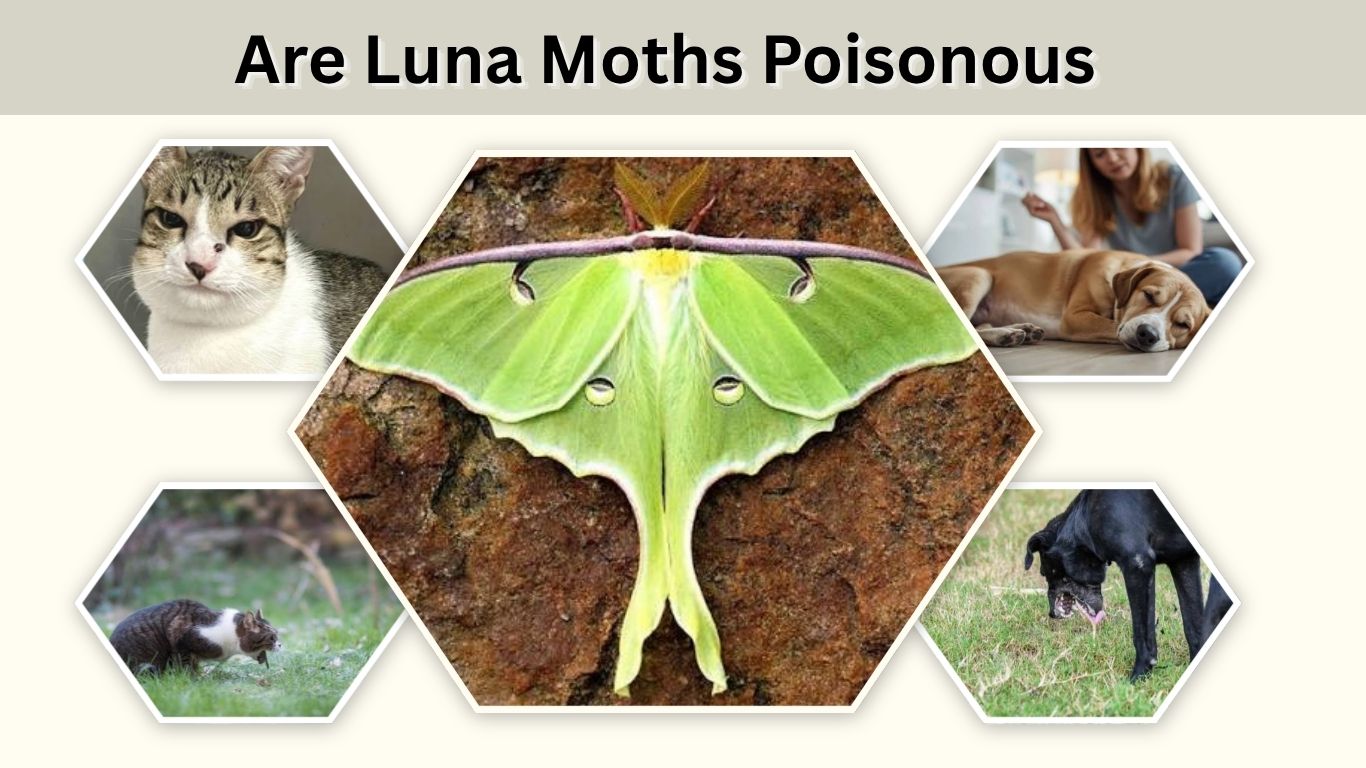
Luna moths (Actias luna) are not poisonous or venomous to humans. Adult Luna moths cannot sting, and their caterpillars do not have the toxin-filled stinging spines found on dangerous species such as puss, saddleback, and Io moth caterpillars. Luna moth caterpillars may look intimidating because they are large, bright green, and covered with small hairs and bumps, but they are considered harmless to people. Texas A&M Forest Service specifically describes the caterpillar as harmless.
Are Luna Moths Poisonous?
No. Adult Luna moths are not poisonous.
They do not have:
- Venom glands
- A stinger
- Toxic wing scales
- Poisonous tails
- Defensive biting behavior toward humans
Their pale-green wings and dramatic hindwing tails may make them look unusual, but these structures are not dangerous.
Luna moths belong to the giant silk moth family Saturniidae. Their defenses are based much more on camouflage, appearance, and predator avoidance than on venom.
Can a Luna Moth Bite or Sting You?
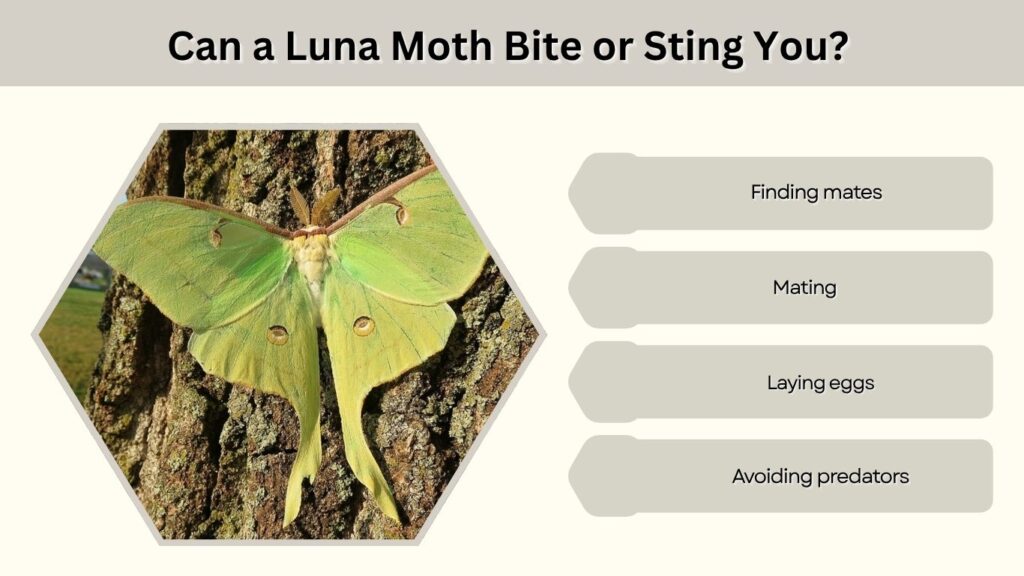
Luna moths cannot sting.
They also do not pose a meaningful biting risk to humans. Adult Luna moths have greatly reduced mouthparts and do not feed during their brief adult lives.
Once they emerge from their cocoons, their primary activities are:
- Finding mates
- Mating
- Laying eggs
- Avoiding predators
Adults survive using energy stored during the caterpillar stage.
Their long hindwing “tails” are simply extensions of the wings and contain no stinger.
Are Luna Moth Caterpillars Poisonous?
No. Luna moth caterpillars are not considered poisonous or venomous.
A mature caterpillar can grow to around 3 inches long and is usually bright green with small reddish bumps and short hairs.
Texas A&M describes mature Luna moth caterpillars as large but harmless to people.
Luna Moth Caterpillar Identification
Look for:
- Bright green body
- Thick, segmented shape
- Small red or orange bumps
- Fine short hairs
- Yellowish lines between segments
- Brownish or dark head in some stages
- Length approaching about 3 inches when mature
The small hairs should not be confused with the specialized venomous spines of truly stinging caterpillars.
Do Luna Moth Caterpillars Sting?
No. Luna moth caterpillars do not have the venom-bearing urticating spines responsible for painful caterpillar stings.
UF/IFAS identifies important stinging caterpillars such as:
- Puss caterpillar
- Saddleback caterpillar
- Io moth caterpillar
- Hag moth caterpillar
These species possess specialized spines or hairs associated with toxins. Luna moth caterpillars are not included among these medically important stinging species.
| Caterpillar | Sting Risk |
| Luna moth | No venomous sting |
| Io moth | Yes |
| Saddleback | Yes |
| Puss caterpillar | Yes |
| Hag moth | Yes |
Why Do Luna Moth Caterpillars Have Hairs?
Their hairs and small body projections can make them appear dangerous, but they are not equivalent to venomous caterpillar spines.
Luna caterpillars mainly rely on other defenses.
Camouflage
Their green bodies blend closely with foliage.
Defensive Posture
When threatened, a caterpillar may raise the front of its body.
Clicking Sounds
Luna moth caterpillars can make clicking noises with their mandibles when disturbed.
Regurgitation
They may also regurgitate unpleasant fluid when attacked. UF/IFAS describes this behavior as a defensive response that may help discourage predators.
This defensive fluid is intended for predators and does not make the caterpillar a venomous or stinging species.
Can You Touch a Luna Moth Caterpillar?
A Luna moth caterpillar is generally considered safe to touch, but handling it unnecessarily is still best avoided.
There are several reasons:
- Caterpillars are delicate.
- Oils or chemicals on your hands may affect them.
- Handling can stress the insect.
- A person may misidentify another green caterpillar as a Luna moth.
If you are uncertain about the species, avoid touching it with bare hands.
This is particularly important because some genuinely venomous caterpillars can also be bright green.
Luna Moth Caterpillar vs. Io Moth Caterpillar
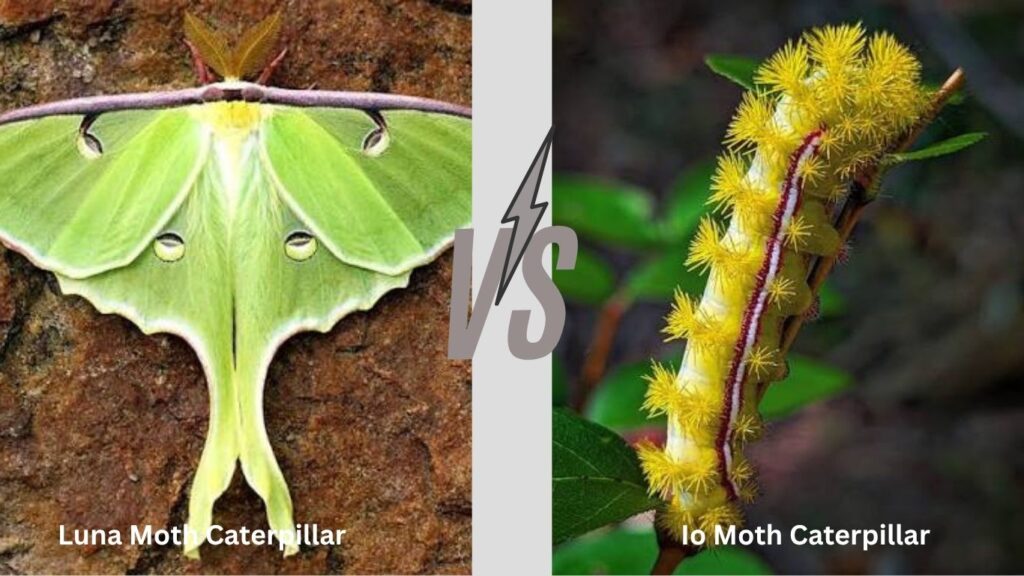
The Io moth caterpillar (Automeris io) is one dangerous look-alike worth knowing.
Both can be green, but the Io caterpillar is covered with prominent branching spines.
| Feature | Luna Caterpillar | Io Caterpillar |
| Main color | Green | Green |
| Body | Thick, relatively smooth | Covered in branching spines |
| Red/orange bumps | Yes | Less characteristic |
| Venomous spines | No | Yes |
| Dangerous to touch | Generally no | Yes |
UF/IFAS specifically lists Io moth caterpillars among stinging caterpillars whose spines can cause pain and inflammation.
If you see a green caterpillar covered in obvious clusters of sharp branching spines, do not handle it.
Are Luna Moths Poisonous to Dogs?
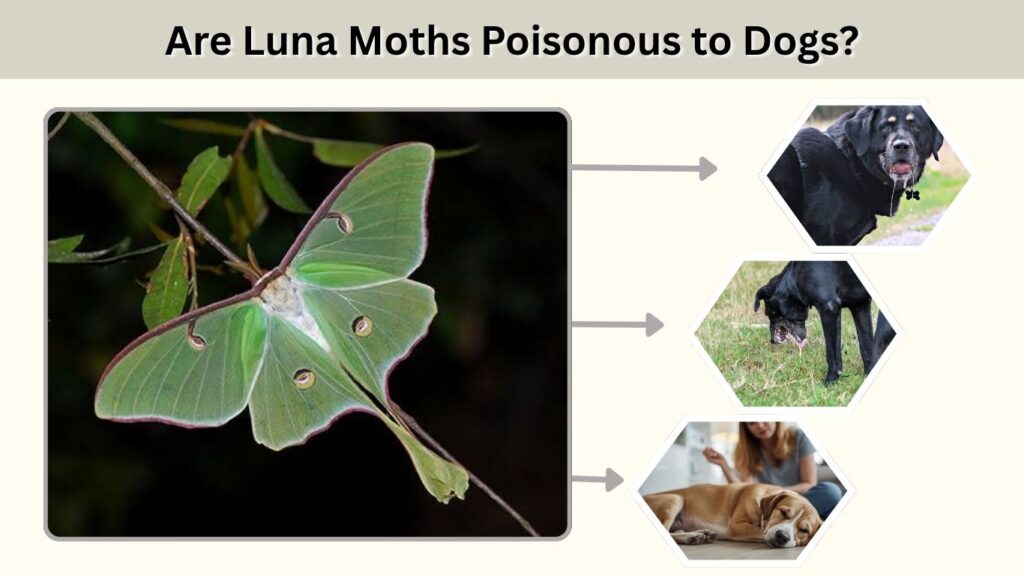
Luna moths are not known as poisonous insects for dogs.
However, allowing a dog to eat moths or caterpillars is still not recommended.
Swallowing an insect could potentially cause:
- Drooling
- Vomiting
- Mild stomach upset
- Gagging
- Irritation from plant material attached to the caterpillar
Another concern is misidentification. A dog may investigate a genuinely stinging caterpillar that resembles another moth larva.
If a dog develops facial swelling, heavy drooling, repeated vomiting, severe discomfort, difficulty breathing, or unusual behavior after contacting a caterpillar, seek veterinary care promptly.
Are Luna Moths Poisonous to Cats?
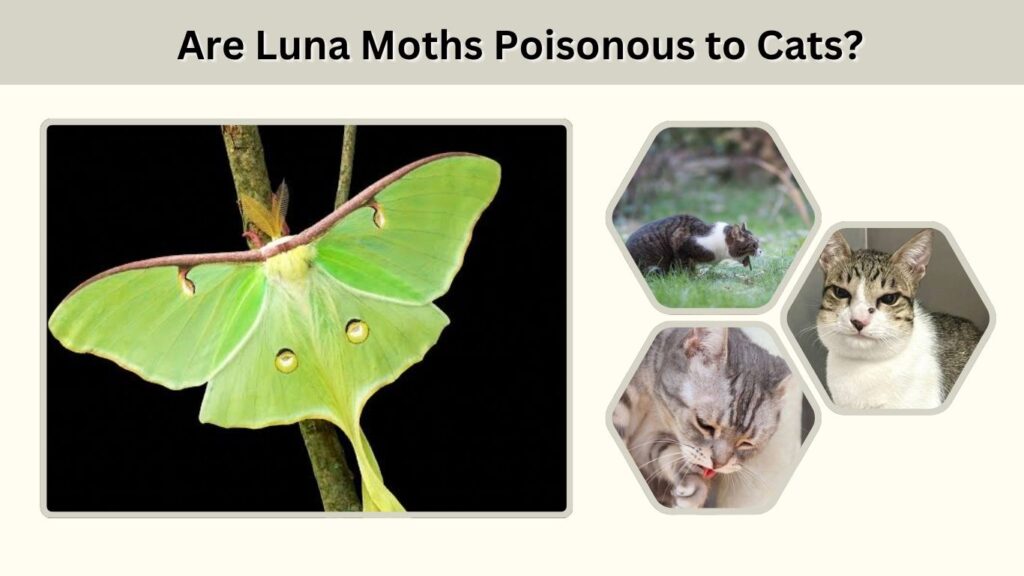
Luna moths are also not regarded as poisonous to cats.
A cat may naturally chase a large moth, but it is still better to prevent pets from chewing or eating unknown insects.
The larger danger is that a pet could encounter another caterpillar species with venomous spines.
If your cat shows excessive drooling, pawing at the mouth, swelling, vomiting, or breathing problems after contact with an unidentified caterpillar, contact a veterinarian.
Is a Brown Luna Moth Poisonous?
No.
A true Luna moth does not become poisonous because it appears brownish.
Adult Luna moths are normally green, although aging, wing wear, lighting, or natural brownish wing margins can change their appearance.
Their cocoons and pupae are naturally brown.
A large completely brown moth may actually be another giant silk moth, such as the Polyphemus moth, which is also generally harmless to humans.
Are Orange Luna Moth Caterpillars Poisonous?
A mature Luna moth caterpillar may change from green to reddish or brownish shortly before pupating.
This color change does not make it poisonous.
The caterpillar usually:
- Stop feeding.
- Begins wandering.
- Changes color.
- Find a protected location.
- Spins a cocoon.
So an orange, red-brown, or brownish mature Luna caterpillar may simply be preparing to pupate.
Is the Luna Moth Tail Poisonous?
No.
The long tails extending from the adult’s hindwings contain:
- No venom
- No stinger
- No poisonous secretion
These tails actually help Luna moths defend themselves from bats.
The long extensions can interfere with a bat’s echolocation and redirect attacks toward expendable parts of the wings rather than the moth’s body.
They are defensive structures, but they are completely harmless to people.
Are Luna Moths Dangerous?
Overall, Luna moths are among the least dangerous large insects you are likely to encounter.
| Risk | Luna Moth |
| Poisonous | No |
| Venomous | No |
| Stings | No |
| Dangerous bite | No |
| Caterpillar has venomous spines | No |
| Harmful to touch | Generally no |
| Aggressive | No |
Their impressive size should not be mistaken for danger.
What Should You Do If You Find One?
If you find an adult Luna moth, simply allow it to rest.
Avoid touching its wings because moth wing scales are delicate.
If you find a caterpillar:
- Leave it on its host plant.
- Avoid spraying pesticides nearby.
- Do not repeatedly handle it.
- Keep pets from chewing it.
- Observe or photograph it instead.
Luna caterpillars are also not considered serious tree pests because they rarely occur in numbers high enough to significantly damage healthy host trees.
FAQs
1. Are Luna moths poisonous to humans?
No. Luna moths are neither poisonous nor venomous to humans. Adults cannot sting and pose essentially no danger. Their dramatic tails are simply extensions of their hindwings and contain no venom or stinger.
2. Is a Luna moth caterpillar poisonous?
No. Luna moth caterpillars are considered harmless to people and do not possess the toxin-filled stinging spines found on species such as Io moth, puss, or saddleback caterpillars.
3. Can Luna moth caterpillars sting you?
No. Their short hairs are not specialized venomous stinging hairs. Luna caterpillars may defend themselves by making clicking sounds or regurgitating unpleasant material when threatened, but they cannot deliver a venomous sting.
4. Are Luna moths poisonous to dogs or cats?
Luna moths are not known to be poisonous to dogs or cats. Still, pets should not be encouraged to eat wild insects because stomach irritation or misidentification with a genuinely stinging caterpillar is possible.
5. Can you safely touch a Luna moth?
A Luna moth is not poisonous or venomous, but handling should still be minimized. Adult wings are delicate, and caterpillars can be stressed or injured by unnecessary handling. If identification is uncertain, avoid touching an unknown caterpillar.