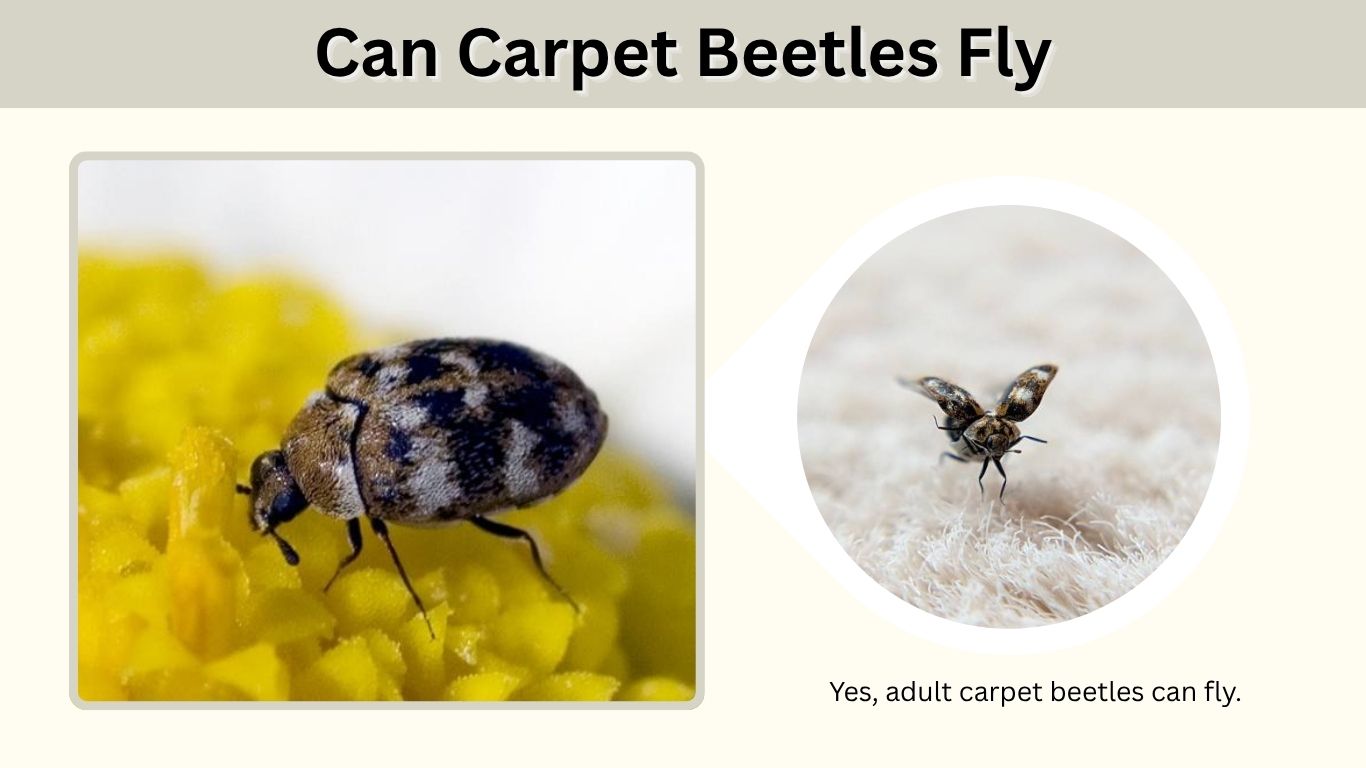
Yes, adult carpet beetles can fly. They commonly live outdoors, where they feed on flower pollen, but may fly through open doors and windows during spring and summer. Once indoors, females search for protected places containing wool, fur, feathers, hair, dead insects, or stored foods where they can lay eggs.
Carpet beetle larvae cannot fly. They crawl through carpets, closets, furniture, wall voids, and other dark areas while searching for food. Understanding the difference between adults and larvae is essential because the larvae—not the flying adults—cause most household damage.
Can All Carpet Beetles Fly?
Most adult carpet beetle species have functional wings and can fly. This includes varied carpet beetles, furniture carpet beetles, common carpet beetles, and black carpet beetles.
Adults are often found:
- Flying near windows
- Resting on windowsills
- Crawling across walls
- Visiting outdoor flowers
- Entering through doors or screens
- Moving from one building to another
Black carpet beetles can also fly, despite their elongated, dark appearance. Adults are generally most noticeable during spring and summer, when they become active and visit flowers.
Can Carpet Beetle Larvae Fly?
No. Carpet beetle larvae do not have wings and cannot fly. They move by crawling and may travel surprisingly far from their original food source before finding a protected place to molt or pupate.
Larvae may crawl along baseboards, climb walls, enter closets, move beneath furniture, or wander into beds. Finding a larva in one location does not always mean the infestation began there.
Can Carpet Beetles Jump?
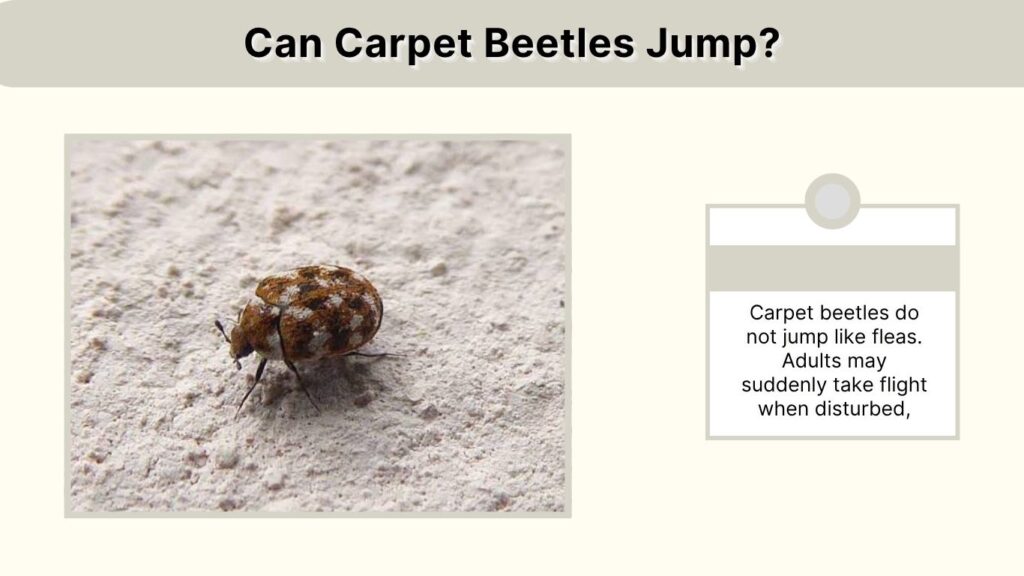
Carpet beetles do not jump like fleas. Adults may suddenly take flight when disturbed, which can make them appear to jump. Larvae only crawl.
To distinguish them from fleas, examine the body:
| Feature | Carpet beetle | Flea |
| Movement | Crawls or flies as an adult | Jumps |
| Adult shape | Rounded or elongated beetle | Narrow and flattened sideways |
| Wings | Adults have wings | Wingless |
| Feeding | Adults eat pollen; larvae eat materials | Adults drink blood |
| Human bites | No | Yes |
Can Carpet Beetles Bite Humans?
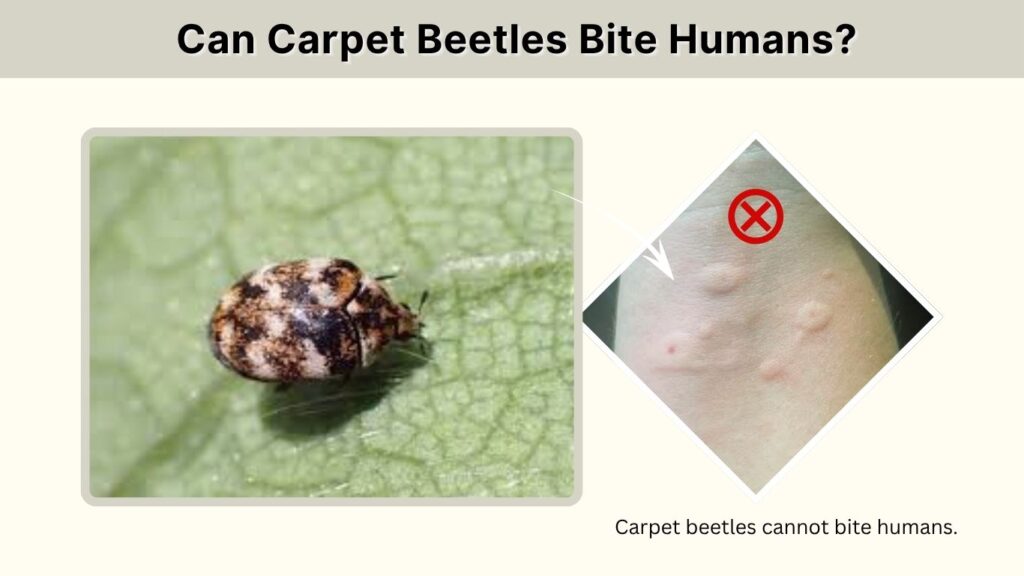
Carpet beetles cannot bite humans. Adults feed primarily on pollen, while larvae consume materials containing animal proteins. Neither life stage drinks blood or treats people as hosts.
However, carpet beetle larvae are covered with defensive hairs. Contact with those hairs can cause itching, red bumps, or a rash in sensitive people. This reaction is known as carpet beetle dermatitis and is an allergic response—not a bite.
Can Carpet Beetle Larvae Bite?
No. Their mouthparts are adapted for chewing dry materials such as wool, hair, feathers, and dead insects. They do not pierce human or animal skin.
A person may feel as though something has bitten them after sleeping near contaminated bedding. In reality, larval hairs or shed skins may have contacted the skin.
Can Carpet Beetles Cause a Rash?
Carpet beetle larval hairs can cause:
- Intense itching
- Small red bumps
- Papule-like skin eruptions
- Localized inflammation
- Eye or respiratory irritation in some sensitive people
Long-term exposure may increase the chance of becoming sensitized. Because carpet beetle irritation can resemble eczema, hives, or insect bites, a rash alone cannot confirm an infestation.
Seek medical care for severe, spreading, infected, or persistent skin symptoms. Breathing difficulty, facial swelling, or another serious allergic reaction requires urgent medical attention.
Can Carpet Beetles Live in Your Hair?
Carpet beetles do not live on humans or establish colonies in human hair. Larvae eat detached hair because it contains keratin, but they do not behave like lice, fleas, or ticks.
A wandering larva might accidentally crawl onto clothing, bedding, or hair, but it will not remain on the person. Carpet beetles also do not lay eggs in human hair, burrow beneath the skin, or cause hair loss by feeding on the scalp.
Pet hair that accumulates beneath furniture, along baseboards, or inside vents can support larvae. This does not mean the beetles live on dogs or cats.
Can Carpet Beetles Live in Beds?
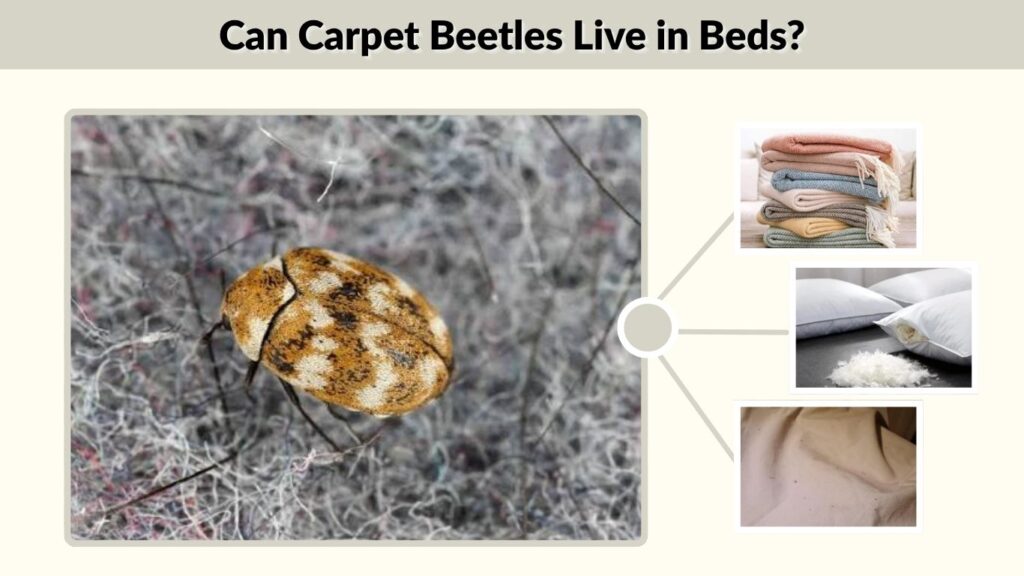
Carpet beetles can enter beds, but they do not feed on sleeping people. Larvae may be attracted to materials or debris around the bed, including:
- Wool blankets
- Feather or down pillows
- Hair and skin debris
- Pet hair
- Natural-fiber mattress padding
- Dead insects
- Lint beneath the bed
- Upholstered headboards
They may hide in mattress seams or bed-frame cracks, but ordinary synthetic foam provides little nutrition. Repeated sightings usually indicate a nearby food source rather than an insect that depends on the mattress itself.
Carpet Beetle or Bed Bug?
Carpet beetles are often mistaken for bed bugs, but their appearance and feeding habits differ significantly.
| Feature | Carpet beetle | Bed bug |
| Adult body | Hard, rounded or elongated | Flat, broadly oval |
| Color | Black or mottled white, brown and yellow | Reddish brown |
| Young stage | Hairy larva | Smooth, pale nymph |
| Flight | Adult beetles can fly | Bed bugs cannot fly |
| Feeding | Natural materials and debris | Human or animal blood |
| Bed signs | Hairy skins and fabric damage | Dark fecal spots, eggs and bloodstains |
Skin marks are unreliable for identifying bed bugs. The EPA recommends looking for physical evidence such as live bugs, fecal spots, eggs, shed nymph skins, and rusty stains.
Can Carpet Beetles Damage Wood, Clothes or Plastic?
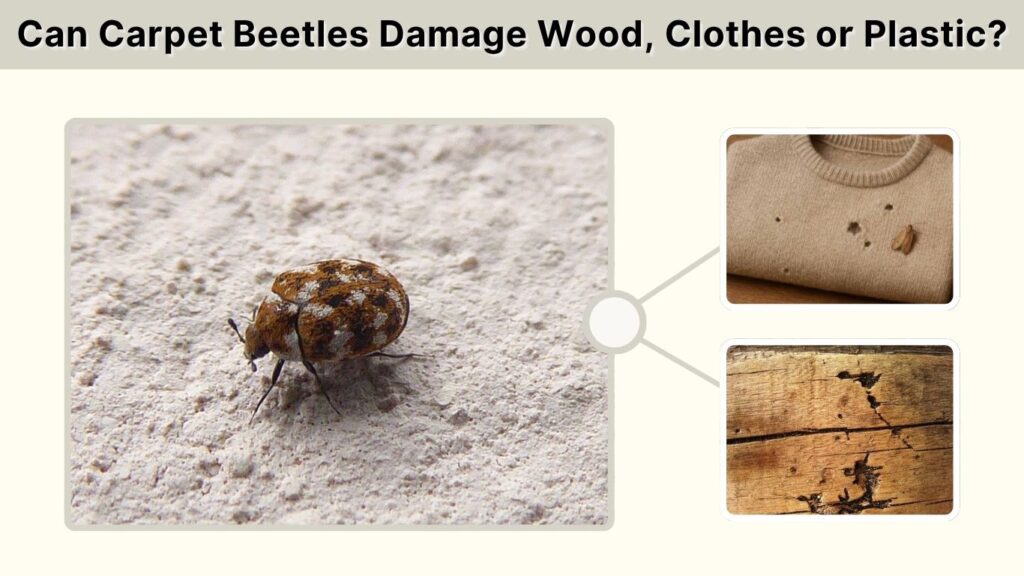
Carpet beetles do not eat structural wood. Finding larvae near wooden furniture may mean they are feeding on hair stuffing, wool upholstery, dead insects, animal glue, or debris inside cracks.
Materials Larvae May Damage
Carpet beetle larvae commonly feed on:
- Wool carpets and clothing
- Fur and animal hides
- Feathers and down
- Silk
- Felt
- Taxidermy specimens
- Dead insects
- Dry pet food
- Hair and lint
- Some stored grains or seeds
They usually do not digest cotton, linen, rayon, polyester, or acrylic unless those fabrics are blended with animal fibers or contaminated with sweat, food, oils, or other organic matter.
Carpet beetles do not use plastic as food. However, poorly sealed bags may have gaps that allow small larvae to enter. Clean vulnerable items before placing them in durable, tightly sealed containers.
Can Carpet Beetles Harm People or Pets?
Carpet beetles are not blood-feeding parasites and do not sting. They do not normally transmit disease to humans or pets. Their primary risks are textile damage and allergic irritation from larval hairs.
Pets may experience skin irritation if they contact large numbers of larvae or shed hairs, but carpet beetles do not live on cats or dogs. Consult a veterinarian if a pet develops unexplained itching, sores, hair loss, or other symptoms rather than assuming carpet beetles are responsible.
Can You Have Carpet Beetles Without Carpet?
Yes. Their name is misleading because larvae can survive anywhere suitable food accumulates. Infestations can develop in homes with hardwood, tile, or laminate flooring.
Common sources include:
- Wool clothing in closets
- Feather-filled furniture
- Dead insects in attics or walls
- Bird or rodent nests
- Dry pet food
- Stored animal products
- Lint inside air ducts
- Natural-fiber decorations
Finding one adult near a window does not automatically indicate an infestation. Adults often enter accidentally from outside. Larvae, shed skins, repeated adult sightings, or damaged materials provide stronger evidence.
How to Get Rid of Carpet Beetles
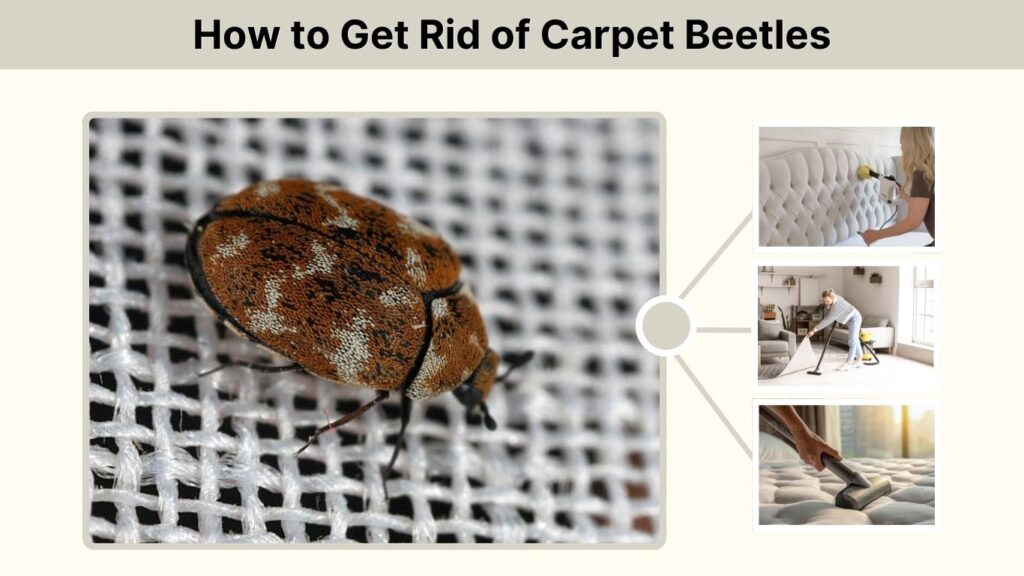
Successful control depends on finding and removing the material supporting the larvae.
Clean and Inspect
Vacuum carpet edges, closets, air vents, upholstered furniture, mattress seams, baseboards, and areas beneath furniture. Dispose of vacuum contents in a sealed outdoor container.
Inspect woolens, feathers, fur, stored foods, pet food, animal nests, dead insects, and forgotten fabrics. Discard heavily damaged materials or clean them according to their care labels.
Treat Vulnerable Items
Wash washable items and dry them using the highest temperature permitted by the label. Dry-clean delicate wool, silk, fur, or feather-filled materials. Store clean items in sealed containers.
Prevent Adult Entry
Repair screens and seal gaps around windows, doors, vents, siding, and rooflines. Remove abandoned bird or wasp nests when it is safe and legal to do so.
Use Pesticides Carefully
A correctly labeled product may be applied to cracks, crevices, carpet edges, or other approved locations. Never spray mattresses, bedding, clothing, toys, food-storage areas, or pet bedding unless the label specifically permits it. Always follow the product directions and safety precautions.
A pest-control professional can help when larvae continue appearing, the source is inaccessible, valuable textiles are threatened, or the infestation extends into wall voids.
FAQs
Can carpet beetles come through windows?
Yes. Adults may fly through open windows or enter through damaged screens. They are also attracted to light and are frequently discovered on windowsills while attempting to return outdoors.
Can carpet beetles climb walls?
Both adults and larvae can crawl up walls. Adults often move toward windows and light, while mature larvae may leave a food source and climb as they search for a sheltered pupation site.
Can carpet beetles make you sick?
They are not generally considered disease vectors. However, larval hairs can cause skin, eye, or respiratory irritation in sensitized individuals. Persistent symptoms should be evaluated by a healthcare professional.
Can one carpet beetle indicate an infestation?
Not necessarily. A single adult may have flown inside from flowers. Inspect for hairy larvae, shed skins, fabric damage, and additional adults before concluding that an indoor infestation is present.
Can carpet beetles spread to another house?
Yes. Adults can fly between locations, while eggs or larvae may be transported inside infested clothing, furniture, rugs, stored foods, taxidermy, or other natural-fiber items. Inspect and clean secondhand belongings before bringing them indoors.