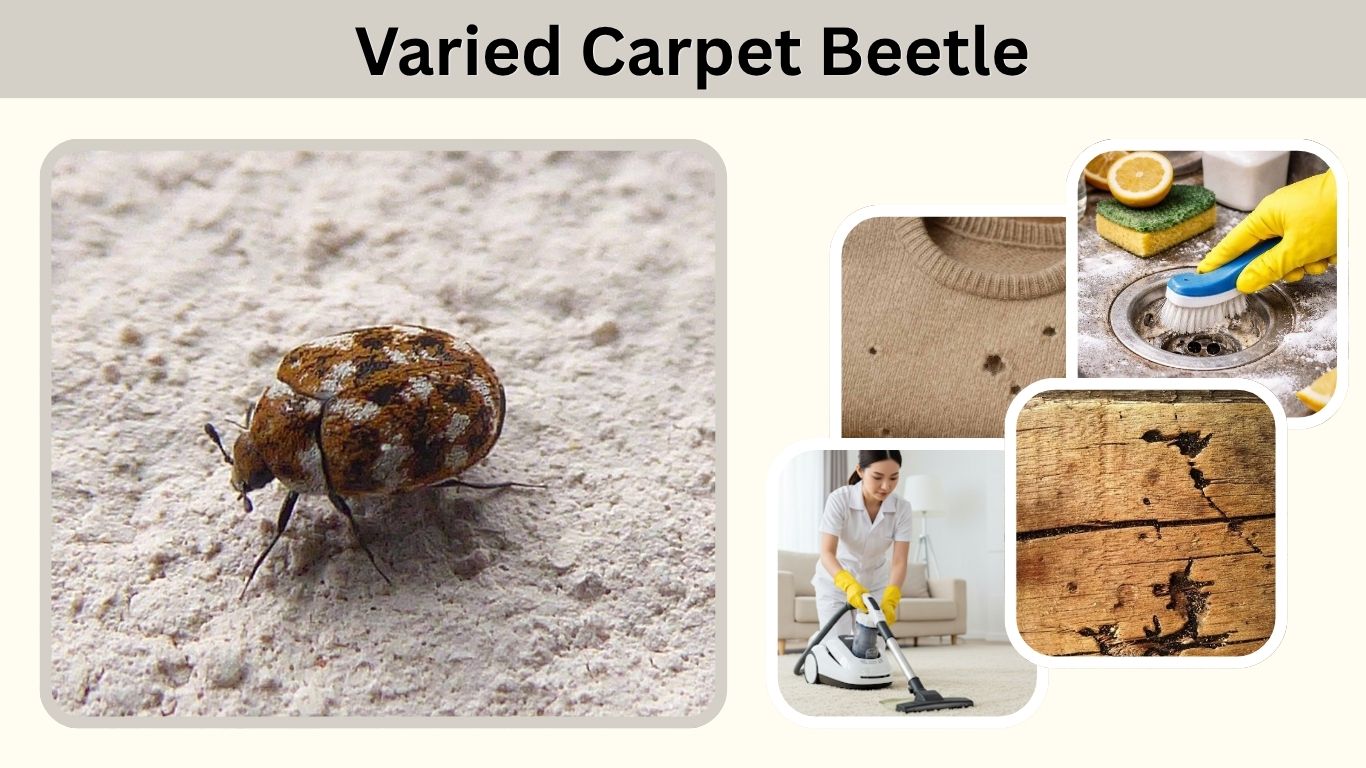
The varied carpet beetle (Anthrenus verbasci) is a tiny, mottled household beetle whose larvae can damage wool, silk, feathers, fur, leather, and other animal-based materials. Adults often appear near windows or on flowers, while the hairy larvae remain hidden beneath furniture, along carpet edges, and inside closets. Varied carpet beetles do not bite people, but contact with larval hairs may cause an itchy rash in sensitive individuals. Effective control requires finding and removing the larvae’s food source.
Varied Carpet Beetle Facts
| Feature | Description |
| Scientific name | Anthrenus verbasci |
| Adult size | About 2–3 millimeters |
| Adult color | Mottled white, yellow, brown, and black |
| Larva | Brown, striped, and densely hairy |
| Diet of adults | Pollen and nectar |
| Diet of larvae | Animal fibers and dried organic material |
| Can adults fly? | Yes |
| Do they bite? | No |
| Main household damage | Clothing, rugs, upholstery, feathers, and stored materials |
What Does a Varied Carpet Beetle Look Like?
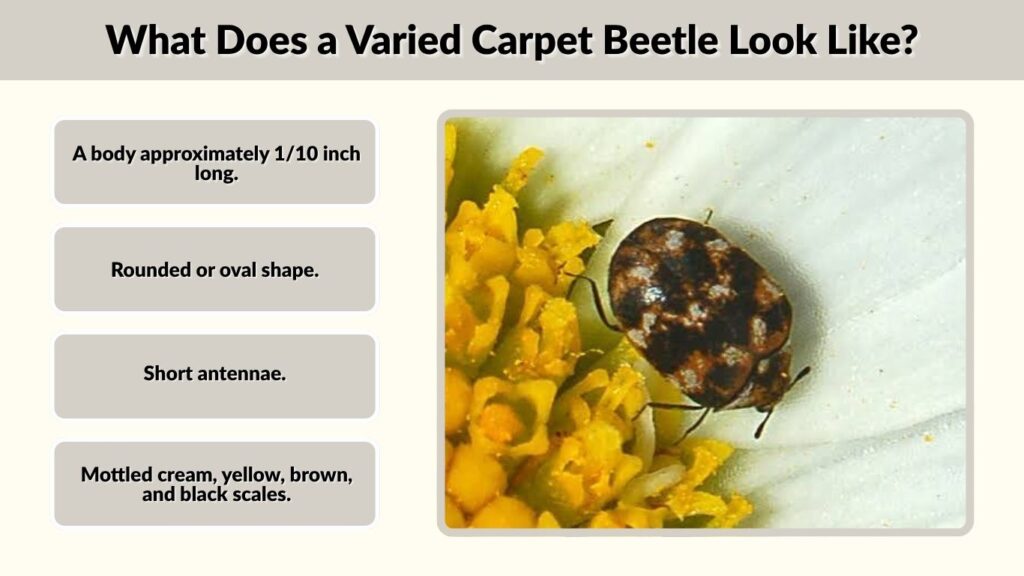
Adult varied carpet beetles are extremely small, oval, and almost round when viewed from above. Their wing covers are patterned with irregular white, brown, yellow, and black scales.
Older adults may appear darker because these scales gradually wear away. Adults are often found crawling on windowsills because they are attracted to light and attempt to fly outdoors.
Adult Identification
Look for:
- A body approximately 1/10 inch long
- Rounded or oval shape
- Short antennae
- Mottled cream, yellow, brown, and black scales
- Hard wing covers
- Slow crawling around windows
- Ability to fly
An adult found near a window does not necessarily prove that fabrics are infested. Adults commonly enter through open windows, doors, vents, or on cut flowers.
Varied Carpet Beetle Larvae
The larvae are longer than the adults and have alternating light and dark brown bands. Their bodies are wider near the rear and narrower toward the head.
Dense hairs cover the body, with distinctive tufts toward the back. When disturbed, mature larvae may raise these hairs into a rounded plume. Empty, bristly larval skins are an important sign of infestation.
Where Do Varied Carpet Beetles Come From?
Adult beetles naturally live outdoors and feed on pollen. They can fly indoors through windows, doors, roof gaps, and vents or arrive on freshly cut flowers.
Outside, females may lay eggs in bird nests, bee or wasp nests, and spider webs because these sites contain feathers, pollen, wax, and dead insects that larvae can eat. Indoors, eggs are deposited near suitable materials such as wool rugs, animal hair, feathers, silk, leather, and dried food.
Common indoor sources include:
- Wool carpets and clothing
- Feather-filled pillows
- Fur and animal skins
- Pet hair beneath furniture
- Dead insects in windows or attics
- Old bird or wasp nests
- Taxidermy and insect collections
- Dried pet food
- Spices, grain, and seeds
- Natural-bristle brushes
What Do Varied Carpet Beetles Eat?
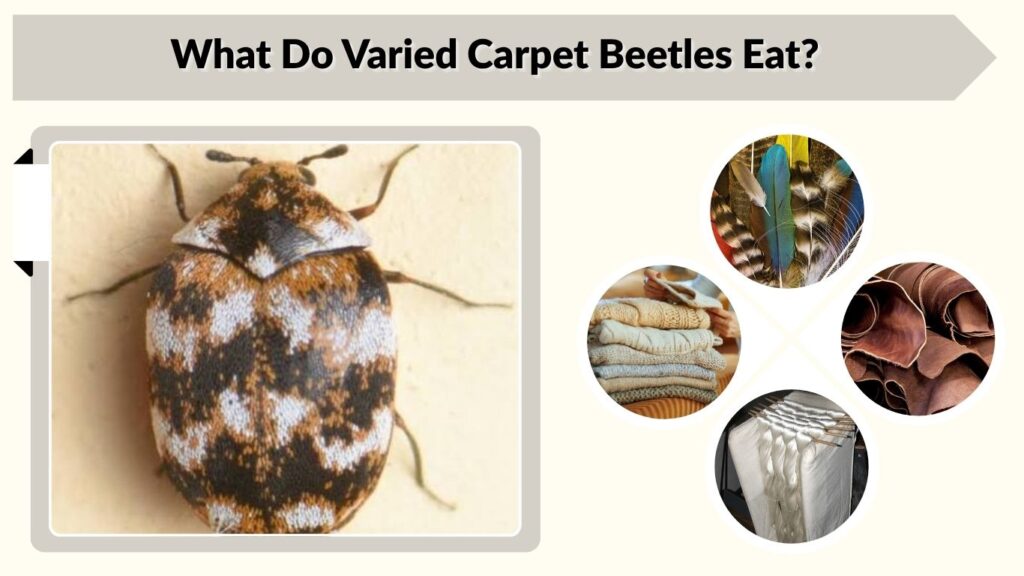
Adult varied carpet beetles mainly consume pollen and do not damage household fabrics. The larvae are responsible for infestations and property damage.
Larvae digest animal proteins such as keratin, allowing them to feed on wool, hair, fur, feathers, silk, leather, and dead insects. They generally do not digest clean synthetic fibers, although synthetic carpets or clothing may be damaged when mixed with wool or contaminated with food, perspiration, hair, or animal material.
Varied Carpet Beetle Life Cycle
The life cycle consists of egg, larva, pupa, and adult stages.
| Stage | Approximate duration |
| Egg | 10–20 days |
| Larva | 220–630 days |
| Pupa | 10–13 days |
| Adult female | 2–6 weeks |
| Adult male | 2–4 weeks |
A female typically lays around 40 eggs close to a suitable food source. The long larval stage is one reason infestations can persist for months or appear to return after visible adults have been removed.
Larvae prefer dark, quiet areas and may move through cracks, closets, wall voids, and furniture while searching for food. They pupate within their final larval skin before emerging as adults.
What Damage Do Varied Carpet Beetles Cause?
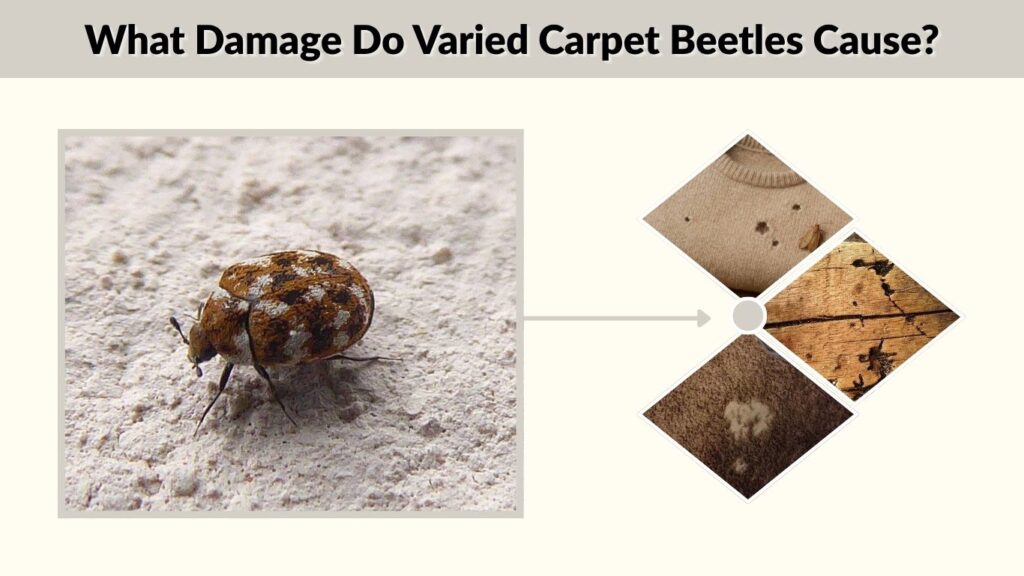
Damage is normally concentrated in undisturbed locations rather than exposed sections of carpet or clothing.
Signs include:
- Irregular holes in wool clothing
- Bare patches along carpet edges
- Damage beneath furniture
- Thinning fur or feathers
- Damaged upholstery stuffing
- Broken natural-bristle brushes
- Shed larval skins in closets
- Larvae around pet bedding
- Damage to museum or taxidermy specimens
Carpet beetle damage may resemble clothes-moth damage. Carpet beetles tend to damage a concentrated area and leave hairy cast skins, while clothes moths often leave silk webbing and more scattered holes.
Do Varied Carpet Beetles Bite?
Varied carpet beetles do not bite people or pets. Neither adults nor larvae feed on blood.
However, the tiny spear-shaped hairs of larvae can irritate the skin. Sensitive people may develop itching, red bumps, or a papular rash after contact with larvae, cast skins, contaminated clothing, or bedding. Eye and respiratory irritation have also been reported in sensitized individuals.
Varied Carpet Beetle Rash vs Bed Bug Bites
| Feature | Carpet beetle irritation | Bed bug bites |
| Cause | Contact with larval hairs | Blood-feeding bites |
| Beetle feeds on people | No | Bed bugs do |
| Pattern | Irregular itchy rash | Often grouped or lined bites |
| Household clues | Hairy larvae and shed skins | Bed bugs, dark spots, and shed shells |
| Fabric damage | Possible | No |
Skin marks alone cannot confirm either pest. Persistent, severe, infected, or unexplained rashes should be evaluated by a healthcare professional.
Why Are Varied Carpet Beetles in the Bed?
Finding a beetle or larva in a bed does not mean it lives on people. Larvae may be attracted to pet hair, lint, feathers, wool blankets, or natural materials inside pillows and mattresses.
Remove and wash the bedding, vacuum the mattress seams and bed frame, and inspect beneath the bed. Feather- or hair-filled items may require professional treatment if larvae have entered the stuffing. Do not spray insecticide directly on bedding or mattresses unless the product label specifically permits it.
How to Get Rid of Varied Carpet Beetles
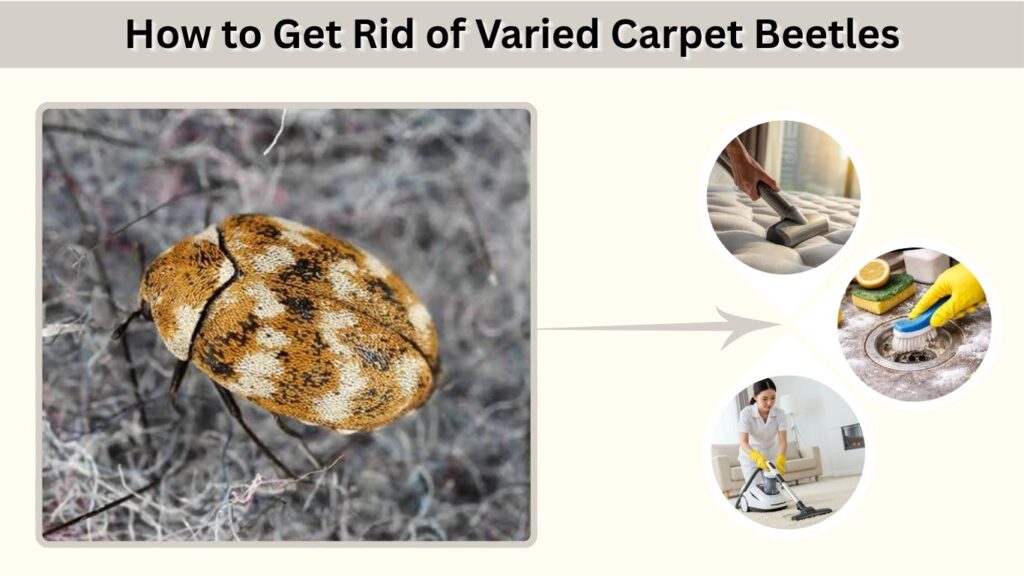
Control should focus on larvae and their food sources rather than only the adults seen near windows.
Find the Infested Material
Inspect closets, carpets, furniture, pet areas, stored clothing, air vents, attics, and dry-food cupboards. Look for larvae, cast skins, and localized damage.
Discard badly infested, low-value materials in sealed bags. Remove abandoned animal nests only when it is legal, safe, and confirmed that they are inactive.
Vacuum Thoroughly
Vacuum:
- Carpet edges and baseboards
- Beneath beds and furniture
- Upholstery seams
- Closets and drawers
- Heating vents
- Pet sleeping areas
- Window tracks
- Attic corners
Frequent vacuuming removes eggs, larvae, adults, lint, hair, and dead insects. Empty the vacuum outdoors immediately after cleaning an infested area.
Treat Clothing and Fabrics
Wash washable items in hot water when allowed by the care label, or have them professionally dry-cleaned. Laundering and dry cleaning can kill all life stages.
After treatment, place vulnerable wool, silk, fur, and feather items inside airtight containers or sealed garment bags.
Use Traps for Monitoring
Plain sticky traps near windows can catch adults, while species-specific pheromone traps attract adult males. Traps can show where beetles are most active and whether control measures are working.
Traps will not eliminate larvae hidden in fabrics or debris, so they must be combined with cleaning and source removal.
When Is Insecticide Needed?
Insecticide may be unnecessary when the source is found and removed. For persistent infestations, use only a product labeled for carpet beetles and the intended indoor surface.
Depending on the label, treatment may be appropriate along carpet edges, beneath rugs, inside cracks, and around closet floors. Never spray clothing, bedding, or food-storage surfaces unless specifically directed by the label. Widespread or inaccessible infestations should be handled by a licensed pest-management professional.
How to Prevent Another Infestation
Regularly vacuum hidden areas, remove pet hair and dead insects, and store clean natural-fiber clothing in sealed containers. Inspect cut flowers and secondhand furniture before bringing them inside.
Repair damaged screens, seal gaps around vents and doors, and keep dry pet food and pantry products in airtight containers. Cedar alone is not a dependable control method because its repellent oils weaken over time.
FAQs
Are varied carpet beetles harmful to humans?
They do not bite, sting, or live on humans. Their main risks are damage to household materials and skin irritation caused by larval hairs. Sensitive individuals may develop an itchy rash after contact with larvae or contaminated fabrics.
Can varied carpet beetles fly?
Yes. Adults can fly and commonly enter homes through open windows, doors, vents, and other gaps. They are attracted to light, which explains why they are frequently found crawling along windowsills.
How long do varied carpet beetles live?
The larval stage can last approximately 220–630 days, while adults usually live only several weeks. Environmental conditions and food availability influence development, so the complete life cycle can take more than a year.
Do varied carpet beetles eat clothes?
The larvae eat clothing made from wool, silk, fur, feathers, leather, and other animal materials. They do not normally digest clean synthetic fibers, but blended or soiled synthetic fabrics may still be damaged.
Are pheromone traps enough to eliminate them?
No. Traps mainly catch adult male beetles and help monitor activity. They do not remove eggs or hidden larvae. Permanent control requires locating infested materials, vacuuming, laundering, and removing larval food sources.